What to Wear & Pack for the Rwenzori Mountains: The Complete Packing List for Every Trek

Discover the complete Rwenzori Mountains packing list, including clothing, footwear, equipment, and seasonal advice for trekking to Margherita Peak and other Rwenzori trails.

What to Wear & Pack for the Rwenzori Mountains: The Complete Trekking Packing Guide

The complete Rwenzori Mountains packing list: clothing, boots, gear & FAQs for every trek length, from Kilembe & Central Circuit Trails to Margherita Peak and other peaks.

The Rwenzori Mountains do not ask politely. Across a single trekking day you will move through steaming lowland forest, cathedral-like bamboo groves, otherworldly heather glades, spongy Afro-alpine bog, and, if you are bound for Margherita Peak, glacier and rock at nearly 5,109 meters. Few ranges on earth compress so much climate into so little distance, and fewer still reward the well-prepared traveler so generously. This guide is the definitive answer to the question every Rwenzori trekker asks before they book: what do I actually need to bring? Read it once before you pack and once more the night before you fly. Everything you need to know, and nothing you don’t, is right here.

Understanding the Rwenzori Climate: Why Every Item on This List Exists

Before you buy a single item, it helps to understand exactly what the ‘Mountains of the Moon’ will throw at you. The Rwenzori range sits almost on the equator, straddling the border between Uganda and the Democratic Republic of Congo, and its weather is governed less by season than by altitude. On a single trek, you can pass through five distinct vegetation zones, each with its own microclimate, and your body will feel them all.

Rainfall throughout the year
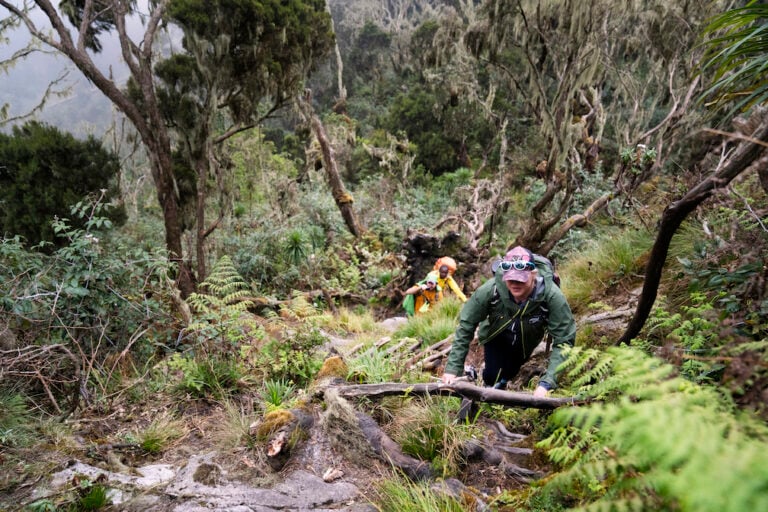
How safe is it to Climb cheptegei PeakThe Rwenzoris are among the wettest mountains in Africa. There is no true ‘dry’ month here, only drier ones. Even in the best trekking windows (roughly mid-December to mid-February, and June to August), afternoon showers are common and should be expected on any given day, particularly in the lower forest zones. Waterproofing is not optional gear; it is the single most important category on this entire list.

Cold nights at higher elevations

Daytime warmth in the lower forest can lull travelers into a false sense of security. By the time you reach the heather and Afro-alpine zones (roughly 3,000m and above), night-time temperatures regularly fall below freezing, and wind chill at camps such as Kiharo, Kalalama, Elena, or Margherita can make it feel colder still. Expect frost on tents at the higher camps and near-freezing conditions before dawn on any summit attempt.

Warm, humid lower forests
Conversely, the first one to two days of both the Kilembe Trail and the Central Circuit pass through dense montane forest where humidity is high and temperatures are mild to warm. You will sweat heavily here, often more from humidity than exertion, which is precisely why moisture-wicking base layers matter from day one, not just at altitude.

Strong equatorial sun at altitude

Above the tree line, UV exposure intensifies sharply with altitude, and there is little to no shade across the heather and Afro-alpine zones. Sunburn, including on the underside of the chin and inside the nostrils from light reflected off clouds, is a genuine and frequently underestimated risk, even on overcast days.

Mud, and lots of it

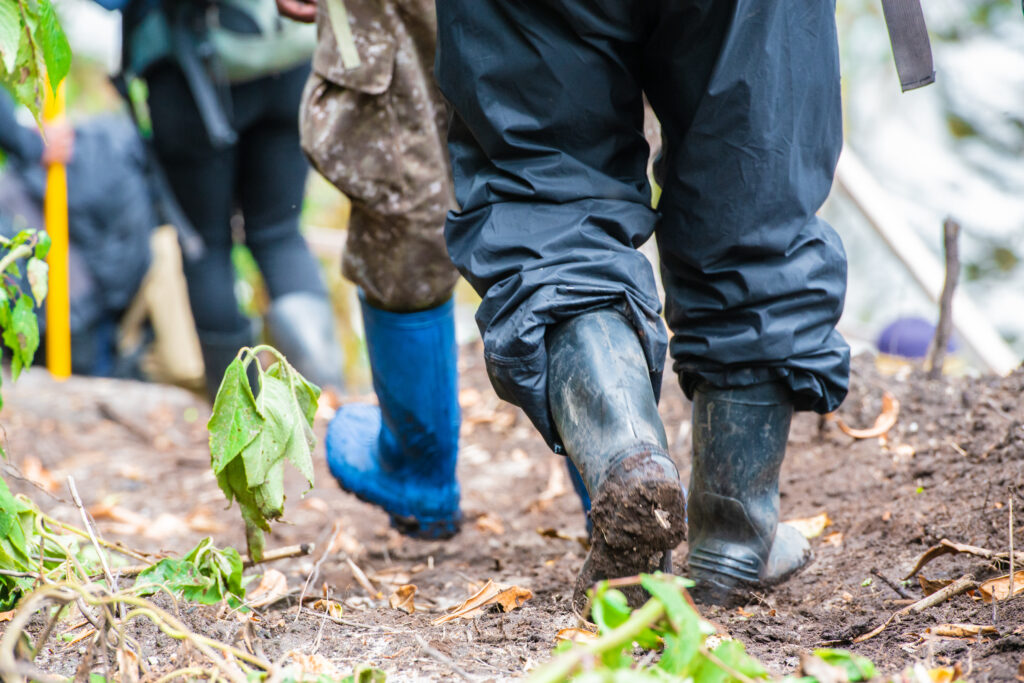
The Rwenzoris are famous, and occasionally infamous, for their mud. The lower bamboo and heather zones in particular can involve deep, sucking mud that tests both footwear and patience. Boardwalks have improved conditions considerably on both main trails in recent years, but mud remains a constant presence, especially after rain.

Rapid, unpredictable weather changes

Perhaps the single most important thing to understand about the Rwenzoris is how quickly conditions change. Clear morning skies can give way to driving rain within the hour, and temperature swings of 15–20°C between midday sun and pre-dawn summit pushes are entirely normal. This is why layering, not any single ‘perfect’ jacket, is the guiding principle behind everything on this list.

The Clothing Guide: Layer by Layer

Good mountain clothing works as a system, not a collection of individual items. Each layer has a specific job, and knowing what that job is allows you to make smart substitutions if your existing wardrobe already covers part of the list.

Base Layers

Your base layer’s only job is to move sweat away from your skin so it can evaporate, rather than sit against you and chill you when you stop moving. Look for synthetic fabrics (polyester or polypropylene blends) or merino wool, both of which wick moisture and, in the case of merino, resist odor over several days without washing, a real advantage on a multi-day trek where laundry is not an option.

  • Avoid cotton entirely. Cotton absorbs moisture and holds it against your skin, and on the Rwenzoris, where humidity and rain are near-constant companions, a cotton T-shirt that gets wet stays wet and cold for the rest of the day. This single substitution (cotton for synthetic or merino) is the most impactful change most first-time trekkers can make.
  • 2–3 long-sleeve base layer tops (synthetic or merino wool)
  • 2–3 pairs of moisture-wicking base layer bottoms or thermal leggings
  • Avoid cotton T-shirts, jeans, and cotton thermals entirely

Mid Layers

The mid layer traps the warm air your body generates, holding it close as insulation. A fleece jacket or lightweight synthetic-fill jacket is ideal: warm for its weight, quick-drying, and comfortable to hike in during cooler stretches or to throw on the moment you stop for a break, when your body’s heat production drops and the chill sets in fast.

  • 1–2 mid-weight fleece jackets or pullovers
  • 1 lightweight insulated (synthetic-fill) jacket for camp and breaks

Outer Layers

Your outer shell is your primary defense against the Rwenzoris’ signature weather: wind, driving rain, and sudden temperature drops. A proper waterproof, breathable jacket—genuinely waterproof, not merely ‘water-resistant’—with a hood is essential, as are waterproof trousers that you can pull on quickly when the sky opens. Breathability matters as much as waterproofing itself; a shell that traps sweat inside will leave you just as wet and cold as one that lets rain in.

  • 1 waterproof, breathable jacket with hood (Gore-Tex or equivalent recommended)
  • 1 pair of waterproof, breathable trousers
  • Check taped seams and a storm-worthy hood; cheap ponchos are not sufficient at altitude

The Insulated Jacket, When It Becomes Essential

Below 3,000m, a fleece and a rain shell are usually sufficient. Above 3,000m, a proper insulated jacket (down or high-quality synthetic fill) becomes essential kit, especially in the heather zone, the Afro-alpine zone, and at the higher camps. It is the layer you will live in during cold evenings at camp, at pre-dawn starts, and, if you are attempting Margherita Peak, throughout the summit push itself. Down is warmer for its weight but loses insulating power when wet; synthetic fill stays warmer when damp, which is important given the Rwenzoris’ rainfall. Whichever you choose, this layer is not an item to leave at home.

CTA Banner Widget — Rwenzori Trekking Expeditions

Experience Rwenzori Beyond Expectations

Spots Filling Fast — Schedule Your Trek Today

Footwear, Hand Protection & Head Wear

If there is one category of gear worth spending real money and real time on, it is footwear. Your boots will spend more hours in mud, on wet rock, and on root-crossed boardwalks than any other piece of equipment you own, and the consequences of getting this wrong—blisters, twisted ankles, and soaked feet for days—can derail an otherwise well-prepared trek.
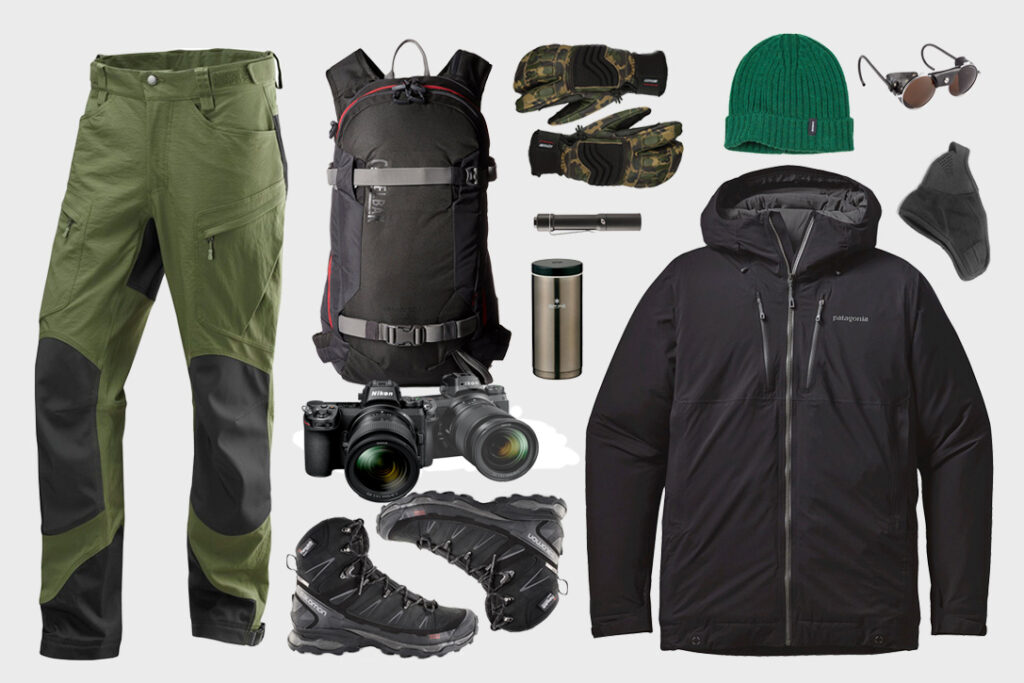
What to Pack & Wear For Rwenzori Mountains National Park -Complete Gear.packing list


Waterproof hiking boots with ankle support

Choose a mid-to-high-cut waterproof hiking boot with a genuinely waterproof membrane (Gore-Tex or equivalent) and a stiff, supportive sole. The ankle support matters as much as the waterproofing: Rwenzori trails are uneven, root-strewn, and often submerged in mud that can shift underfoot, and a rolled ankle several hours from camp is a serious problem.

Break your boots in before you arrive

This point cannot be overstated: new, unworn boots are one of the most common causes of a ruined trek. Wear your boots on at least several long walks, ideally 40–60 km of cumulative distance over a few weeks, before you fly so they have molded to your feet and you know exactly where any hot spots will form.

Why trail running shoes fall short on longer treks

Trail shoes are lighter and can feel appealing, but their low ankle cut and thinner, more flexible soles offer little defense against the Rwenzoris’ mud, submerged roots, and multi-day accumulated fatigue on rock. They may suffice for a short, dry, low-elevation day walk, but for the Kilembe Trail or Central Circuit’s multi-day itineraries, and certainly for any Margherita Peak attempt, full waterproof hiking boots are strongly recommended.

Camp footwear

Bring a lightweight pair of camp shoes, sandals, Crocs, or similar to let your feet breathe and dry out each evening while your boots air out overnight. This small comfort makes a noticeable difference to foot health across a multi-day itinerary.

  • 1 pair of well broken-in, waterproof hiking boots (mid- or high-cut)
  • 1 pair of lightweight camp shoes or sandals
  • Gaiters, to keep mud and water out of boot tops (see Trekking Equipment)

Socks

Sock choice is a frequently underestimated factor in blister prevention. Wool or wool-blend hiking socks manage moisture far better than cotton and retain warmth even when damp. Many experienced trekkers wear a thin liner sock beneath a thicker hiking sock to reduce friction, the leading cause of blisters, and always carry more pairs than they think they need, since wet socks that cannot dry overnight in humid conditions are a genuine daily risk.

  • 4–6 pairs of wool or synthetic hiking socks
  • 2–3 pairs of thin liner socks (optional but recommended for blister prevention)
  • 1–2 pairs of warm socks reserved for sleeping only

Hand Protection

Hands lose heat fast at altitude, and on the Rwenzoris you’ll want a small system rather than a single pair of gloves.

  • Lightweight liner gloves: worn for general hiking and for tasks requiring dexterity, like adjusting a pack strap or using a camera, without exposing bare skin.
  • Warm insulated gloves: for cold mornings, camp evenings, and the heather/Afro-alpine zones.
  • Waterproof outer gloves or mittens: essential for any Margherita Peak attempt and useful insurance during heavy rain lower down.
4-Day Margherita Peak Rwenzori Trek


Headwear

Because Rwenzori weather can shift from strong equatorial sun to freezing wind within the same afternoon, your head and neck need options for both extremes, often within the same hour.

  • 1 warm beanie or wool hat, for camp evenings and cold mornings
  • 1 wide-brimmed sun hat or cap, for exposed, high-UV stretches
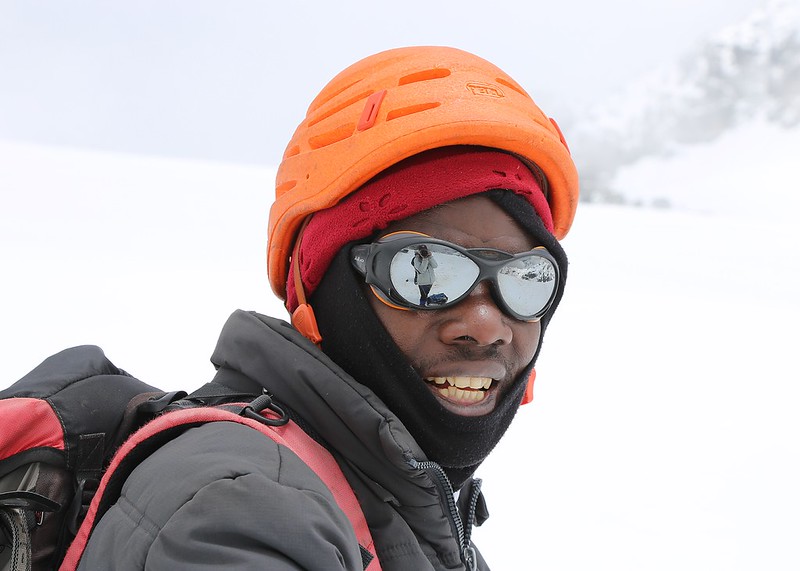
  • 1 buff or neck gaiter, doubling as sun protection, wind block, or an extra warm layer around the neck and face
  • 1 pair of sunglasses with full UV protection, glare off clouds, and, near the summit, off ice and rock, is intense
CTA Banner Widget — Rwenzori Trekking Expeditions

Experience Rwenzori Beyond Expectations

Spots Filling Fast — Schedule Your Trek Today

Backpack Guide: Daypack vs Duffel

Trekkers on the Rwenzoris carry two separate bags, each with a distinct job, and confusing the two is a common first-timer mistake.


Daypack (carried by you)

The daypack is the bag you carry on your back throughout the trekking day. It should be sized around 25–35 liters, enough for the essentials, without inviting you to overload it. Everything you might need without stopping to dig through your main bag belongs here.

  • Water (2–3 litres capacity) or a hydration bladder
  • Snacks and energy food for the day
  • Camera and any electronics you’re using that day
  • Rain jacket, even if the morning is clear
  • An extra warm layer for sudden temperature drops
  • First aid essentials: plasters, blister treatment, personal medication
  • Sunscreen, sunglasses, and a hat

Duffel Bag (carried by your porter)

Your main kit travels in a soft-sided duffel bag carried by porters — hard-shell suitcases are unsuitable for the terrain and should not be used. Aim for a duffel in the 60–90 liter range, and be mindful of porter weight limits, which exist for the well-being of your entire trekking team as much as for practicality. Pack efficiently rather than simply packing everything you own; a lighter, well-chosen duffel makes the whole trek smoother for everyone involved, porters included.
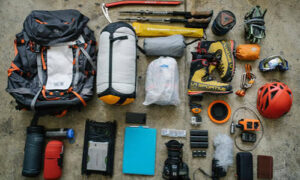
Rwenzori Mountains Gear Packing List: What to wear & Pack for Central circuit & Kilembe trail to Margherita Peak, Mount Stanley, Weismann Peak, Edward peak on Mount Baker, mOunt Emin, MOunt Gessi, Mount Luigi di Savoia, Mount Speak


For exact current weight limits and duffel specifications, speak with our team when you book — we’ll confirm the figures for your specific itinerary and can advise on rental duffels if you’d prefer not to travel with your own.

Sleeping Gear

A poor night’s sleep compounds quickly on a multi-day trek, and temperature is almost always the culprit. Bring a sleeping bag rated to at least -5°C to -10°C (comfort rating, not ‘extreme’ rating) for the higher camps on the Central Circuit and Kilembe Trail and a warmer bag still if you’re attempting Margherita Peak, where camp temperatures near Elena Hut regularly drop below freezing.

  • 1 four-season sleeping bag, comfort-rated to at least -5°C to -10°C
  • 1 sleeping bag liner, for extra warmth and hygiene
  • 1 inflatable travel pillow, or use rolled clothing as a substitute

Huts and camps along both the Kilembe Trail and Central Circuit Trail generally provide mattresses or sleeping pads but not sleeping bags or bedding. Confirm exact provisions for your chosen route and season when you book, as facilities are periodically upgraded.

Trekking Equipment

Trekking poles

Highly recommended rather than strictly essential, trekking poles meaningfully reduce strain on your knees during long, muddy descents and improve stability on slick boardwalks and river crossings. Most trekkers who use them once do not go back to hiking without them.
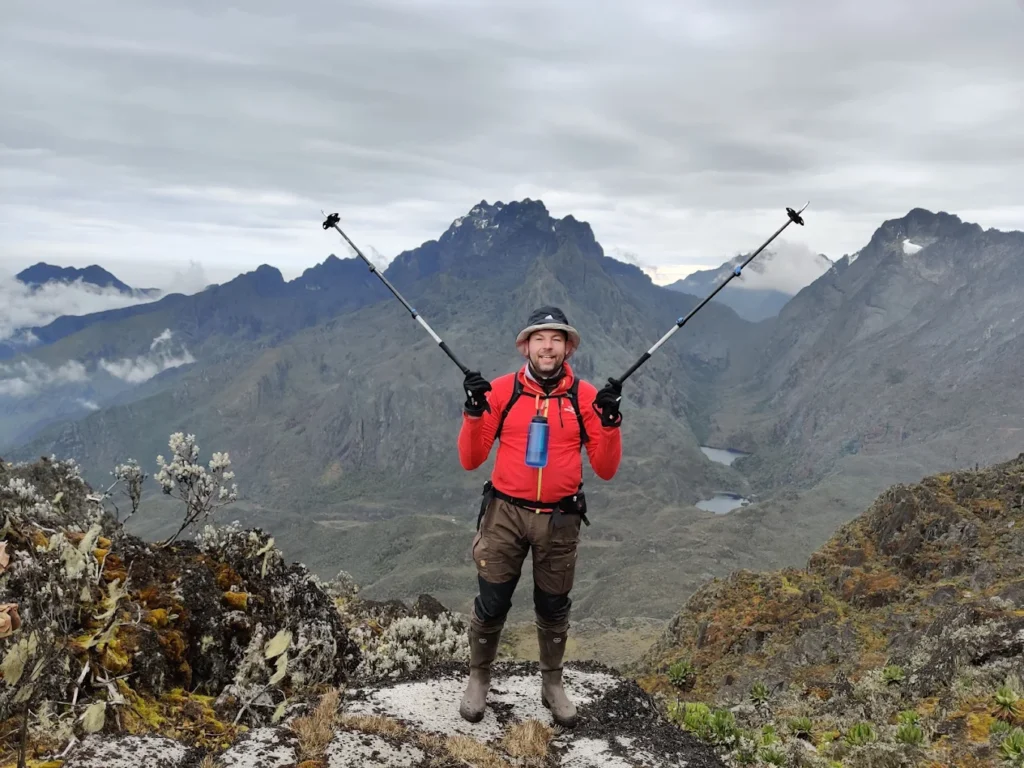
Frequently asked Questions about Rwenzori Mountains National Park


Headlamp and spare batteries

Essential for early starts, camp use after dark, and any summit push, which typically begins well before dawn. Bring spare batteries; cold temperatures drain them faster than usual, rather than relying on a single set.

Dry bags

Given the near certainty of rain, pack your duffel’s contents, particularly your sleeping bag, spare clothing, and electronics, inside dry bags or heavy-duty liner bags. A soaked sleeping bag on night three of a seven-day trek is a genuinely miserable, and entirely avoidable, situation.

Waterproof pack cover

A rain cover for your daypack is a small, cheap item that keeps its contents (and your camera) dry during sudden downpours.

Gaiters

Gaiters keep mud, water, and debris out of your boot tops, which is invaluable through the notoriously muddy bamboo and heather zones.

Water bottles or hydration bladder

Carry at least 2–3 liters of capacity. Altitude and exertion increase fluid needs significantly, and staying well hydrated also helps mitigate altitude-related symptoms.

  • Trekking poles (adjustable, with rubber tips for boardwalk sections)
  • Headlamp plus spare batteries
  • 2–3 dry bags or heavy-duty liner bags
  • Waterproof daypack cover
  • 1 pair of gaiters
  • Water bottles or hydration bladder (2–3 litre capacity)

Personal Items

Small, personal items make a disproportionate difference to comfort on a multi-day trek where showers are limited or unavailable and conditions are consistently damp.

  • Toiletries (travel-sized): toothbrush, toothpaste, biodegradable soap
  • Wet wipes — invaluable when showers aren’t available
  • Quick-dry travel towel
  • Lip balm with SPF — wind and altitude chap lips quickly
  • Sunscreen (SPF 30+), reapplied often, even on overcast days
  • Insect repellent — mainly useful in the lower forest zones
  • Hand sanitizer
  • Toilet paper / tissues

First Aid Kit: What You Bring vs What Your Guides Carry

Your Rwenzori Trekking Expeditions guides carry a comprehensive group first aid kit and are trained in wilderness first response, including altitude-related symptom management. That said, you should always bring your own supply of anything personal — particularly prescription medication, which no group kit can substitute for.

  • Any prescription medications, in their original packaging, plus a few days’ spare supply
  • General pain relief (paracetamol/ibuprofen)
  • Blister treatment (moleskin or blister plasters)
  • Personal allergy medication, including any prescribed emergency medication
  • Oral rehydration salts

We strongly encourage every traveler to consult their doctor or a travel health clinic before departure, particularly regarding altitude sickness prevention (such as Diamox, where appropriate), routine vaccinations, and malaria prophylaxis for the lower elevations.

Electronics

Charging facilities on the mountain are limited to non-existent at most camps, so plan for full self-sufficiency once you leave the trailhead.

  • 1–2 power banks, fully charged before departure, sized generously (10,000mAh+ recommended)
  • Camera, with spare batteries or a means to recharge them
  • A sturdy phone case, and a plastic or dry bag for rain protection
  • Waterproof camera case or bag, if bringing dedicated camera equipment
  • GPS device, if you use one — though your guides carry their own navigation equipment and local knowledge

Assume you cannot recharge devices at camp and pack accordingly; power banks, kept dry and reasonably warm inside your daypack, are your most reliable solution.

CTA Banner Widget — Rwenzori Trekking Expeditions

Experience Rwenzori Beyond Expectations

Spots Filling Fast — Schedule Your Trek Today

Documents Checklist

  • Valid passport (with at least 6 months’ validity remaining)
  • Uganda visa or East Africa visa, arranged in advance where required
  • Comprehensive travel insurance, including trekking and emergency evacuation cover at altitude
  • Rwenzori Mountains National Park permits (arranged by Rwenzori Trekking Expeditions as part of your booking)
  • Emergency contact details, both for home and for our office
  • Yellow fever vaccination certificate, and any other vaccination documentation required for entry

Seasonal Packing Advice
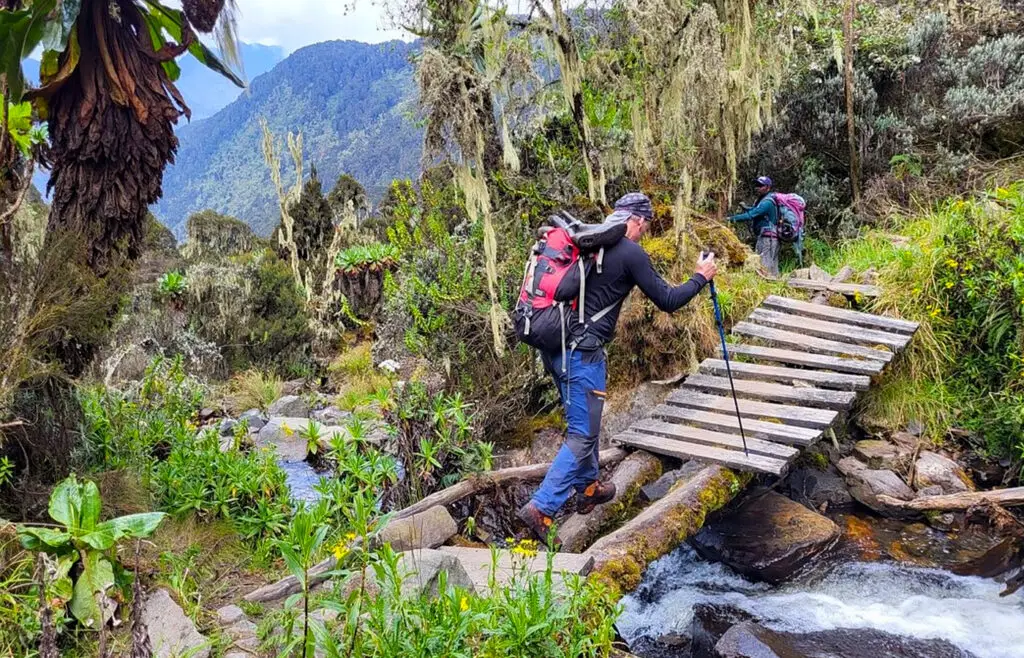
2 Days Rwenzori Trekking to mahoma Lake


Drier Months (mid-December to mid-February and June to August)

Trails are comparatively firmer and river crossings lower, and you may enjoy longer stretches of clear visibility, especially for summit views from Margherita Peak. That said, ‘drier’ on the Rwenzoris still means rain is possible on any given day; do not leave your waterproofs behind just because you’re travelling in the favoured window.

Wetter Months (March–May, and September–November)

Expect more frequent and heavier rain, muddier trail sections, and a greater need for redundancy in your kit. Prioritise extra pairs of socks, additional dry bags, a spare set of base layers you can change into at camp, and thorough waterproofing of your duffel’s contents.

Packing by Trek Length

1–2 day treks (lower forest zone walks)

A lighter packing list applies: base layers, one mid-layer, a rain shell, sturdy boots, sun protection, and a daypack are generally sufficient, since you won’t reach the colder upper zones or overnight at altitude.

3–4 day treks

You’ll likely reach or approach the heather zone and camp at least one cold night, so a proper insulated jacket, warm sleeping bag, and full hand/head protection become important.

5–6 day treks

Multiple nights at altitude mean the full clothing system described above applies in earnest. Pack spare base layers and socks generously since laundry and drying opportunities are minimal.

7–9 day summit expeditions

The complete list applies, plus the additional Margherita Peak-specific items below. As trek length increases, redundancy (spare socks, spare gloves, extra dry bags) becomes increasingly important, since a single wet or lost item has more days to matter.

Packing for Margherita Peak:
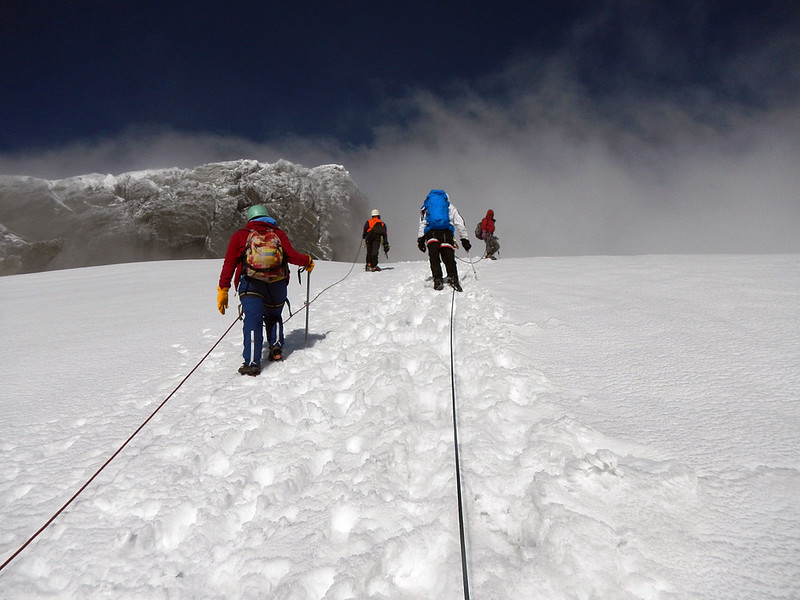
6 days Rwenzori trek to Margherita Peak Central circuit Trail


Additional Considerations

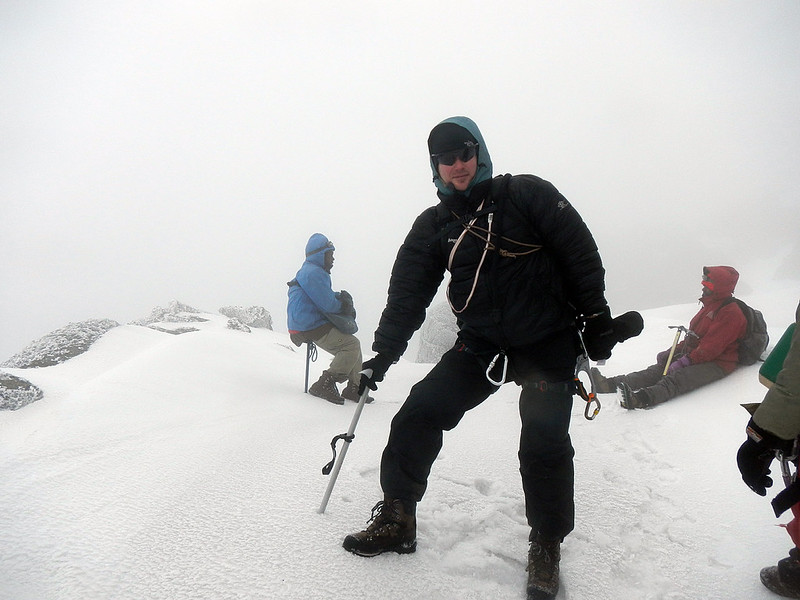
Summiting Margherita Peak (5,109 m), Africa’s third-highest summit and the highest point in the Rwenzori range, takes you across glaciers and technical rock and ice sections above Elena Hut and demands additional preparation beyond a standard trekking kit.

  • A warmer, higher-loft insulated jacket for pre-dawn, sub-zero conditions
  • Technical mountaineering gear where required by current glacier conditions: crampons, harness, and ice axe, arranged and briefed by our mountain guides
  • An additional, warmer pair of waterproof gloves or mittens, plus liner gloves worn beneath them
  • Thermal base layers, top and bottom, dedicated to the summit day itself
  • Glacier glasses or goggles offering full UV and glare protection

Glacier conditions on the Rwenzoris change from season to season, so we confirm the specific technical equipment required closer to your departure date. Much of this specialized gear is included or available for rental through Rwenzori Trekking Expeditions; see the rental section below, and our guides brief every summit team thoroughly before the technical sections begin.

Gear Rental: What You Can Hire vs What to Bring From Home

Traveling with a full mountaineering kit isn’t always practical, and many of our guests, sensibly, choose to rent certain items locally rather than purchase equipment they’ll use once.

Generally available to rent

  • Sleeping bags and liners
  • Trekking poles
  • Gaiters
  • Technical mountaineering equipment for Margherita Peak (crampons, ice axe, harness)
  • Duffel bags

Better brought from home

  • Hiking boots: fit is too personal, and untested rental boots risk blisters
  • Base layers and socks, for hygiene and fit
  • Your own waterproof jacket and trousers, ideally already tested in the rain at home

Rental equipment is maintained to a good standard, but availability is not unlimited, particularly in peak season. We recommend confirming any rental items with our team at the time of booking, rather than assuming availability on arrival.

Common Packing Mistakes to Avoid

  • Bringing cotton clothing; it holds moisture and chills you the moment it’s wet
  • Arriving in brand-new, unworn boots
  • Overpacking with too many clothes, adding needless weight for porters to carry
  • Underestimating insulation needs for the heather and Afro-alpine zones
  • Skimping on waterproofing: a ‘water-resistant’ jacket is not the same as a waterproof one
  • Forgetting dry bags, leading to soaked sleeping bags or electronics
  • Assuming the ‘dry season’ means no rain gear is needed
  • Packing a hard-shell suitcase instead of a soft duffel for porters to carry

What’s Included / What’s Excluded

We believe a Rwenzori trek should involve as few surprises as possible, which is precisely why we spell out, in plain terms, exactly what your trek fee covers and what it doesn’t. Every itinerary with Rwenzori Trekking Expeditions is built around full-service support: professional, government-licensed guides, porters, camp staff, and park logistics are all handled on your behalf, so your only job on the mountain is to walk, look up, and take it all in.

What’s Included

  • Professional, English-speaking mountain guides and support crew
  • Porters for group and personal duffel bags (within specified weight limits)
  • Rwenzori Mountains National Park permits and entry fees
  • Accommodation in huts or tents along your chosen route
  • All meals during the trek, prepared by our camp cooks
  • Group first aid kit and emergency evacuation planning
  • Pre-trek briefing and equipment check

What’s Excluded

  • International and domestic flights
  • Visa fees and travel insurance
  • Personal trekking gear (unless specifically arranged as a rental)
  • Tips and gratuities for guides, porters, and camp staff
  • Personal expenses, including drinks and souvenirs
  • Optional technical mountaineering equipment for Margherita Peak, where not pre-arranged

Best Time to Visit/Trek/Hike Rwenzori

For most Kilembe Trail and Central Circuit itineraries, the two drier windows—mid-December to mid-February and June to August—offer the firmest trails, lowest river crossings, and best odds of clear summit views, making them the preferred choice for first-time trekkers and for anyone attempting Margherita Peak, where visibility and rock/ice conditions matter most.
8 Days Rwenzori trek/hike to Margherita Peak at 5,109m

Travelers who are especially interested in the Rwenzoris’ famous biodiversity, including giant lobelias, otherworldly groundsel, and dense birdlife in the lower forest zones, may find the wetter months rewarding, as rainfall keeps the vegetation lush and photogenic, as long as they pack the extra redundancy mentioned above. Whichever window you choose, book your permits and guide team well in advance; the Rwenzoris remain wonderfully uncrowded compared to Kilimanjaro, but capacity on both main trails is not unlimited.

CTA Banner Widget — Rwenzori Trekking Expeditions

Experience Rwenzori Beyond Expectations

Spots Filling Fast — Schedule Your Trek Today

The Rwenzori’s Finest Scenic Viewpoints

Margherita Peak’s summit ridge offers the single most complete panorama in the range on a clear morning, with Stanley’s ice fields, Speke and Baker beyond, and the Albertine Rift fading toward the horizon, though it is earned only through a genuine technical summit attempt. The Bujuku Valley delivers a similarly dramatic, far more accessible reward, with all three central massifs visible from the trail itself, without requiring any summit.

Scott Elliot PassScott Elliot Pass and Freshfield Pass both offer sweeping high-altitude views across neighboring valleys and toward the range’s glaciers; the former is reached on the way to Kitandara Lakes, and the latter on longer Central Circuit trail traverses. Lake Kitandara itself, with Mount Baker mirrored in its still water, is consistently rated the range’s finest single photographic viewpoint, while the Portal Peaks panorama and Weismann’s Peak’s four-lake summit view round out the shortlist of viewpoints no serious Rwenzori itinerary should skip.

Cultural Attractions: The Bakonzo and the Mountains

The Bakonzo people have lived at the foot of the Rwenzori for generations, and their relationship with the range runs considerably deeper than a simple backdrop to trekking tourism. Traditional Bakonzo belief holds the mountains and their peaks in genuine reverence, with specific summits and features carrying spiritual significance passed down through oral tradition, and many of the porters, guides, and cooks who support every itinerary in this range come from Bakonzo communities with generational, first-hand familiarity with these trails. Visitors with time before or after a trek can arrange visits to villages near Kilembe or Nyakalengija, where community tourism initiatives offer insight into Bakonzo daily life, traditional handicrafts, and, where available, cultural performances of traditional dance and music. These experiences complement a trekking itinerary particularly well for families and first-time visitors to Uganda, adding meaningful cultural context to the physical achievement of the climb itself.

UNESCO World Heritage Status

Rwenzori Mountains National Park was inscribed as a UNESCO World Heritage Site in 1994, recognized for its outstanding universal value as one of Africa’s most biologically diverse and visually dramatic mountain ecosystems. The inscription highlights the park’s exceptional natural beauty, its status as one of only three locations on the continent with permanent equatorial glaciers, and the remarkable diversity of habitats found within its boundaries, from lowland forest to Afro-alpine moorland and glacial ice, all within a single, compact range. This status has real conservation value: the Uganda Wildlife Authority manages the park under UNESCO’s biodiversity protection framework, funding ranger patrols, trail maintenance, and habitat protection directly through park permit fees, and every trekker who visits contributes, in a small but direct way, to the continued protection of this genuinely globally significant landscape.

For a full account of the inscription and its significance, see our dedicated UNESCO World Heritage Status guide.

Which Attraction Is Right for Me?

If You like…

Visit…

Uganda’s highest point and a genuine mountaineering achievement

Margherita Peak

A shorter, accessible scenic hike suited to families and first-timers

Lake Mahoma

Rare alpine plants and the range’s most iconic botanical scenery

Bujuku Valley and the Bigo Bog

The best birdwatching in the range

The lower montane forest zones

Dramatic mountain views without a technical summit

Portal Peaks or Weismann’s Peak

The single best photography location in the range

Lake Kitandara and Scott Elliot Pass

A rarely visited, genuinely remote objective

Mount Gessi or Mount Emin

A cultural dimension alongside the trekking

Bakonzo village and community tourism experiences near Kilembe

CTA Banner Widget — Rwenzori Trekking Expeditions

Experience Rwenzori Beyond Expectations

Spots Filling Fast — Schedule Your Trek Today

Attractions by Trek Duration

Not every visitor has 9 days to give to the Rwenzori, and the range rewards shorter visits just as genuinely as longer expeditions, provided expectations are matched to the time available.

1 Day Nyabitaba Hut Trek

A single day from Nyakalengija reaches Nyabitaba and the lower rainforest zone, giving the best chance for primate and bird sightings in the entire range in a short time, ideal for travelers who want a brief Rwenzori taste along with a wider Uganda itinerary.

Two to Three Days

This window comfortably reaches Lake Mahoma or the John Matt area, taking in waterfalls and the transition into giant heather forest, without the altitude or technical demands of the higher camps.

Four to Six Days

Four to six days opens up Mutinda Lookout, the full Bujuku Valley, and Kitandara Lakes, the range’s most photogenic middle-altitude attractions, generally without requiring a technical summit attempt.

Seven to Nine Days

A genuine Margherita Peak, Mount Stanley, or combined multi-peak expedition requires a full seven-to-nine-day itinerary, taking in the range’s highest glacial landscapes and high alpine passes.

How the Rwenzori Change Through the Seasons

Waterfall flow peaks during and immediately after the wetter months, when the range’s rivers run fullest, though heavier cloud cover during these periods often reduces summit and long-distance visibility.

8 Das Cheptegei Peak

Photography of the giant lobelia and groundsel fields benefits from the clearer light of the drier windows, roughly December to February and June to August, when trail conditions across the Bigo Bog and similar boggy sections are also noticeably firmer underfoot. Bird activity in the lower forest zones remains fairly consistent year-round, making birdwatching one of the few Rwenzori attractions genuinely unaffected by seasonal timing. No season in this range guarantees a fully clear summit view or entirely dry trail conditions; the Rwenzori’s persistent cloud cover is part of what kept the range hidden from outside knowledge for so long, and every itinerary should be planned with that reality in mind rather than an expectation of guaranteed sunshine.

Routes of the Rwenzori Mountains

Two principal trails access the range’s major attractions. The Central Circuit Trail starts at Nyakalengija near Kasese and goes through the Mubuku and Bujuku valleys, passing Nyabitaba, John Matte, and Bujuku huts, and leads to Mount Stanley, Mount Speke, Mount Baker, and Kitandara Lakes via Scott Elliot Pass, making it the standard approach for most summit and Portal Peaks itineraries.

Mount Gessi is situated adjacent to Mount Emin, in the Northern part of Mount Stanley, Speke and Mount Baker

The Kilembe Trail departs from the town of Kilembe on the range’s southern flank and climbs through Sine, Mutinda, and Bugata camps toward Weismann’s Peak and, on longer itineraries, Margherita Peak from the opposite direction, offering a quieter trail with a different sequence of vegetation zones and waterfalls. Neither route is objectively superior; the right choice depends on which attractions matter most to you and how the two trails’ distinct pacing and scenery suit your travel style.

Read our detailed comparisons of the Central Circuit Trail and the Kilembe Trail for a full route-by-route breakdown.

CTA Banner Widget — Rwenzori Trekking Expeditions

Experience Rwenzori Beyond Expectations

Spots Filling Fast — Schedule Your Trek Today

Cost of Rwenzori Trekking

Costs across the range scale primarily with trek duration, technical demand, and group size. Shorter, non-technical itineraries such as the 3-Day Lake Mahoma Trek or 4-Day Rwenzori Waterfalls Hike sit at the more accessible end of the range’s pricing, reflecting their shorter duration and simpler logistics. Multi-day summit itineraries to Margherita Peak, Mount Speke, or Mount Baker cost significantly more because they require more days, specialist technical equipment, and a higher guide-to-client ratio for safe glacier or rope-protected travel. Park entry and trekking permit fees, payable to the Uganda Wildlife Authority, apply across every itinerary regardless of route or duration, and group size also affects per-person cost, with smaller private groups generally costing more per traveler than larger shared departures. We provide a precise, current quotation for any itinerary or combination of routes upon inquiry, since park fee schedules and operating expenses shift from season to season.

Practical Visitor Information

Every visitor to Rwenzori Mountains National Park must be accompanied by a Uganda Wildlife Authority ranger and a licensed mountain guide for the duration of any trek, a mandatory requirement rather than an optional add-on, and park entry and trekking permits are arranged as part of every itinerary we run. Fitness expectations vary considerably by route: a short Lake Mahoma trek demands only general good health and basic hiking comfort, while a Margherita Peak or Mount Speke summit attempt requires a genuine base of cardiovascular fitness built over months rather than weeks beforehand. Accommodation throughout the range consists of maintained wooden mountain huts and tented camps rather than hotels, with all meals prepared fresh by a dedicated camp cook regardless of itinerary. Private road transport connects Entebbe or Kasese to whichever trailhead your itinerary uses, and travel insurance covering trekking at altitude, along with a valid Uganda visa obtainable online in advance, is required for every visitor. Packing recommendations vary by season and by whether your itinerary includes a technical summit, and we provide a tailored gear list, including rental options, ahead of every departure.

What to Wear and Pack for a Rwenzori Trek

Layering is the universal packing principle across every Rwenzori itinerary, given how far any single day moves between warm lowland forest and the genuine cold of a high mountain camp.

A technical base layer, an insulating mid layer, and a genuinely waterproof and windproof outer shell are the foundation for any trek, and a heavier insulated jacket is essential for any itinerary above 3,500 meters. Sturdy, well broken-in waterproof hiking boots with solid ankle support are non-negotiable given how boggy the range’s middle elevations become, and gaiters make a considerable difference through the bamboo and Bigo Bog sections in particular.

  • Waterproof hardshell jacket and trousers, genuinely waterproof rather than merely resistant
  • Insulated mid and outer layers, warm hat and gloves for camps above 3,000 metres
  • A four-season sleeping bag rated to at least minus 5°C, available for rental
  • Trekking poles, particularly valuable through boggy sections and long descent days
  • Headlamp with spare batteries for early starts and camp routines
  • Personal first-aid kit, sunscreen and UV-rated sunglasses
  • Technical mountaineering gear (crampons, harness, ice axe) for any glacier-crossing summit itinerary, available for rental

Full gear rental across every itinerary can be arranged in advance through our team; see our Rwenzori packing and gear rental guide for a complete route-by-route breakdown.

CTA Banner Widget — Rwenzori Trekking Expeditions

Experience Rwenzori Beyond Expectations

Spots Filling Fast — Schedule Your Trek Today

What You Need to Do Before Visiting the Rwenzori

A general medical check-up before booking is worthwhile for any itinerary that reaches above 3,000 meters, especially for travelers with a history of respiratory, cardiac, or altitude-related conditions. Additionally, travel insurance that covers trekking at altitude and emergency evacuation is a requirement for joining any of our itineraries. A valid Uganda visa, obtainable online well in advance of travel, is required for entry, and we recommend beginning route-appropriate fitness preparation, ranging from a few weeks for a short lake trek to several months for a summit expedition, as early as your itinerary demands. Uganda Wildlife Authority permits and park fees are arranged on your behalf as part of any itinerary booked with us, and we ask every client to arrive with realistic expectations of the physical demand involved, whichever route or attraction draws you to this range.

How to Get to the Rwenzori Mountains

Almost every visitor begins their journey by flying into Entebbe International Airport, Uganda’s principal international gateway. From Entebbe, the Rwenzori trailheads near Kasese are roughly 400 kilometers to the west, and the private road transfer takes around 7 to 9 hours depending on the trailhead. We typically break this journey with a stop at the equator crossing and, where the itinerary allows, an overnight stay near Fort Portal or Queen Elizabeth National Park before continuing on. Domestic flights connect Entebbe to Kasese airstrip in under an hour for travelers short on time, and every transfer we arrange, from airport to trailhead and back, uses a private vehicle with a dedicated driver rather than a shared shuttle.

For a broader look at logistics and planning across the range, our Rwenzori Mountains travel guide covers transport, permits and regional context in more depth.


Best Time to Visit and Trek the Rwenzori Mountains

June through August and December through February offer the most reliable conditions across the range as a whole, with firmer trail conditions through the boggier middle elevations and a meaningfully higher chance of clear views from high passes and summits alike. The June-to-August window tends to bring the driest underfoot conditions of the year, while December and January often deliver the clearest summit mornings alongside excellent lower-forest wildlife viewing. Photography of the alpine lakes and lobelia fields benefits from both windows, though the giant heather and moorland zones remain visually rewarding throughout the year. We generally advise caution around the wetter windows of March to May and September to November, when persistent cloud cover reduces summit visibility and boggy sections become considerably harder going. However, every attraction in this guide, short of the most weather-dependent summit views, remains genuinely visitable year-round for well-prepared travelers.


Suggested Itineraries by Attraction

Translating the attractions in this guide into an actual travel plan is straightforward once you know which experience matters most to you.


What’s Included

Every Rwenzori itinerary booked with us is arranged so that no logistical decision is left in your hands on the mountain, whichever attraction or route draws you to this range.

  • Accommodation in mountain huts or tented camps for the full duration of your chosen itinerary
  • All park entry and trekking permit fees for Rwenzori Mountains National Park
  • A dedicated UWA-licensed lead guide and mandatory park ranger throughout
  • Full porter and cook team, tents, cooking equipment and camp furniture
  • All meals on the mountain, prepared fresh at each camp
  • Technical summit equipment where your chosen itinerary requires it
  • Private road transfers between Kasese and your trailhead
  • Pre-trek briefing and completion certificate


What’s Excluded

A short list of items remain outside every package, generally by client preference or personal requirement rather than necessity.

  • International and domestic flights to and from Uganda
  • Uganda visa fees and travel/medical/evacuation insurance
  • Accommodation in Kasese or Kampala before and after the trek
  • Personal hiking clothing and equipment not listed as rental items
  • Tips and gratuities for guides, porters and cooks
  • Alcoholic and bottled beverages beyond standard camp drinking water
CTA Banner Widget — Rwenzori Trekking Expeditions

Experience Rwenzori Beyond Expectations

Spots Filling Fast — Schedule Your Trek Today

Frequently Asked Questions: Attractions Of The Rwenzori Mountains

The Rwenzori’s main attractions include Margherita Peak, Africa’s third-highest summit; the range’s remaining equatorial glaciers; alpine lakes, including Bujuku, Kitandara, and Mahoma; six distinct vegetation zones with rare giant lobelias and groundsels; and diverse wildlife, including the Rwenzori turaco and colobus monkeys, alongside Bakonzo cultural experiences near the trailheads.

Margherita Peak, at 5,109 meters on Mount Stanley, is the range’s most famous single attraction, as Africa’s third-highest summit and the objective of most multi-day expedition itineraries.

Yes. The Rwenzori Mountains carry permanent equatorial glaciers on Mount Stanley, Mount Speke, and Mount Baker, one of only three locations in Africa, alongside Kilimanjaro and Mount Kenya, where such a phenomenon occurs, though the ice has retreated significantly over the past century.

Yes, though sightings are never guaranteed in any wild mountain environment. In the lower forest zones, you can realistically spot black and white colobus monkeys, blue monkeys, and a wide range of birds, including the Rwenzori turaco, while rarer species like forest elephants and the Rwenzori otter are occasionally recorded.

Lake Bujuku, beneath Mount Stanley, Speke, and Baker; Lake Kitandara, the range’s most photographed twin glacial lakes; and Lake Mahoma, the most accessible short-trek option, are the three lakes most worth prioritizing.

Lake Kitandara and Scott Elliot Pass are consistently rated the range’s finest accessible viewpoints, while Margherita Peak’s summit offers the most complete panorama for those attempting a technical summit.

Lake Bujuku is reached via the Central Circuit Trail, which is included in our 5-day Bujuku Hut Trek and in all longer Central Circuit summit and Portal Peaks itineraries.

Yes. Shorter, non-technical itineraries such as the 3-Day Lake Mahoma Trek, 4-Day Mutinda Lookout Trek, and 6-Day Portal Peaks Trek all showcase major Rwenzori attractions without requiring a Margherita Peak summit attempt.

Lake Kitandara and the giant lobelia fields of the Bigo Bog are consistently rated the range’s finest photographic subjects, alongside the four-lake summit panorama from Weismann’s Peak.

The Kilembe Trail departs from Kilembe on the range’s southern flank via Sine, Mutinda, and Bugata camps toward Weismann’s Peak, while the Central Circuit departs from Nyakalengija via Nyabitaba, John Matte, and Bujuku huts toward Mount Stanley, Speke, and Baker; both reach Margherita Peak on longer combined itineraries.

Difficulty ranges widely by itinerary, from gentle, non-technical short treks such as Lake Mahoma to genuinely demanding, technical multi-day summit expeditions requiring glacier travel on Margherita Peak, Mount Speke, or Mount Baker.

Yes. A Uganda Wildlife Authority park ranger and a licensed mountain guide are mandatory for every visitor to Rwenzori Mountains National Park, regardless of route or itinerary length.

Most itineraries pass through montane rainforest, bamboo forest, heather forest, and Afro-alpine moorland, with the highest summit itineraries continuing into the bare rock and glacial zone above roughly 4,500 meters.

Their written accounts reflect genuine astonishment at an unfamiliar landscape, which is a different thing from deliberate exaggeration. Many features that seem extraordinary in these accounts, the giant plants, the glaciers, and the mist, have since been independently verified by science, suggesting that the explorers were, if anything, describing reality as accurately as their frame of reference allowed.

Giant lobelias and groundsels are adapted specifically to the unusual combination of intense equatorial sunlight and near-freezing overnight temperatures found only in East Africa’s high mountains above roughly 3,800 meters, a botanical community found in comparable form only on Kilimanjaro and Mount Kenya.

June to August and December to February generally offer the firmest trail conditions and best chance of clear summit and viewpoint conditions, though the range remains visitable year-round for well-prepared travelers.

Yes. The park has held UNESCO World Heritage status since 1994, recognized for its exceptional biodiversity, equatorial glaciers, and outstanding universal value as one of Africa’s most ecologically diverse mountain ranges.

The park hosts approximately 217 recorded bird species, seventeen of which are found only within this specific range, making it a significant destination for serious birdwatchers.

Yes, shorter, non-technical itineraries like the 3-Day Lake Mahoma Trek are particularly suitable for younger family members, while longer, higher-altitude, and technical summit itineraries are better suited to older, more experienced family members with a genuine hiking background.

Endemic and near-endemic species include the Rwenzori turaco, the Rwenzori red forest duiker, the three-horned Rwenzori chameleon, and the Rwenzori otter, alongside several bird species found nowhere else in the world.

Costs scale with trek duration, technical demand, and group size, with short non-technical treks costing considerably less than multi-day technical summit expeditions; we provide a precise, current quotation for any itinerary on inquiry.

Yes. Bwindi Impenetrable National Park, Kibale Forest National Park, and Queen Elizabeth National Park are all within reach of the Rwenzori foothills, and we regularly build combined itineraries pairing a Rwenzori trek with gorilla trekking, chimpanzee trekking, or classic savannah wildlife viewing.

Yes, and it’s one of the more memorable parts of many itineraries; our Bakonzo guides frequently share oral traditions and historical context at relevant points along the trail, offered as living cultural knowledge rather than scripted trivia.

Most travelers who’ve heard this history before setting out describe a noticeably different relationship with the landscape once they’re inside it, the mist feels less like weather and more like something the mountain has always done, and the moment a peak breaks through cloud lands with considerably more weight.

CTA Banner Widget — Rwenzori Trekking Expeditions

Experience Rwenzori Beyond Expectations

Spots Filling Fast — Schedule Your Trek Today

Why Rwenzori Trekking Expeditions

We are a Ugandan-owned operator working exclusively within the Rwenzori Mountains National Park, and that singular focus is precisely the point. We do not treat this range as one line item among a dozen unrelated safari products stretched thin across the country; the Rwenzori is what we do, every season, across every one of its six massifs, every lake, valley, and vegetation zone described in this guide. Our guides, porters, and cooks are drawn from communities at the foot of these mountains who have known this terrain their entire lives; every itinerary we run is privately guided, never merged with other groups without your knowledge, and every practical detail, from permits to pacing to gear rental, is handled well ahead of your arrival so that no decision is left to chance once you are on the trail. When you plan a Rwenzori expedition with us, whatever attraction has drawn you to this guide, you are booking the accumulated, on-the-ground judgement of people who genuinely know how this entire range behaves, season by season, valley by valley.

Begin Planning Your Rwenzori Expedition

If you have read this guide far, some part of you has likely already begun picturing it: giant lobelias rising from the mist, a still glacial lake mirroring three magnificent peaks at once, and the particular quiet of a range still visited by only a fraction of the travellers who know Kilimanjaro’s name. That is precisely the moment we want to help you reach, without a single logistical decision left to chance along the way. Tell us which attractions matter most to you, your dates, your experience, and who you are traveling with, and we will build a private itinerary around you, not a generic template.

Enquire now through our trip planning page to begin building your Rwenzori expedition, or explore our full range of itineraries to find the route and pacing that suits you best

CTA Banner Widget — Rwenzori Trekking Expeditions

Experience Rwenzori Beyond Expectations

Spots Filling Fast — Schedule Your Trek Today

Rwenzori Trekking Packing List- What To Wear For Rwenzori

Attractions of the Rwenzori Mountains: Complete Visitor Guide

Essential Rwenzori Trekking Packing List, Technical Equipment, Personal Gear, Other Equipment, and Rwenzori Trekking Packing Guide.

Rwenzori Packing List consists of what to pack & what to wear for Rwenzori trekking safaris in Rwenzori Mountains National Park. Get the essential Rwenzori trekking packing list, Technical Equipment, Personal Gear, Other Equipment, and Rwenzori Trekking Packing Guide

Rwenzori trekking Expeditions offers a list of essential gear/equipment for hiking the Rwenzori Mountains including: camping, cooking, photography, lighting, trekking poles, and personal items

The Rwenzori Mountains, commonly known as the Mountains of the Moon, offer an exciting Rwenzori trekking expedition for hiking, necessitating significant preparation and planning. The packing list for the Rwenzori Mountains is one of the most crucial elements for the preparation of the amazing Rwenzori trekking Hiking Safari. Proper packing guarantees comfort, safety, and a good experience throughout the demanding Rwenzori Mountains trekking adventure. The Rwenzori Mountains are characterized by unpredictable weather, rugged terrain, humid regions, and extensive grasses, along with high altitudes. Therefore, a thorough review of Rwenzori packing list is essential for ensuring comfort and facilitating a remarkable Rwenzori trekking Expedition. Before packing, hikers should think about the items they plan to bring because those who do not plan to reach the peak might not need to bring hiking gear. Here are some things to think about regarding the Rwenzori climb, including its importance and necessity.

  1. BAGGAGE AND SLEEPING

Large Holdall or Rucksack (a suitcase is not appropriate)

Day Rucksack (for carrying sun cream, camera, film, water bottles etc)

Sleeping Bag (four season)

2. CLOTHING

Long-sleeved Shirt

T-shirts

Tracksuit bottoms

Down jacket or ski jacket – essential for Mts Baker and Stanley

Fleece

Thermal long johns and vests. Two sets.

Lightweight trekking trousers (avoid jeans)

Shorts

Socks (hiking / leisure) – bring several pairs

Good quality waterproofs (jacket and trousers)

Plastic poncho

Walking boots (sturdy well worn-in boots)

Ankle gaiters

Rubber boots/wellies

Wide brimmed hat (or buff to protect head and neck from sun)

Insulated gloves or mittens and ALSO thermal inner gloves

Cotton scarf, bandana or dust mask(optional)

3. HYGIENE

Wash Bag

Toothbrush & Toothpaste

Travel Towel

Soap (anti-bacterial or bio-degradable)

Deodorant(optional)

Wet wipes (preferably antiseptic)

Toilet Paper/Tissues.

Hairbrush/comb(options)

Sanitary products(options)

Lip Salve with Sun Protection

4. HEALTH

Insect repellent (containing DEET)

Vitamins

Malaria Tablets (seek advice from your GP)

After Sun / Moisturiser

Sun protection (Factor 30 minimum)

5. DOCUMENTS

Passport (with 6 months to run from end of expedition)

Visa (Ugandan Entry Visa Required)

Drivers Licence- incase you want to rent a car

Passport Photographs

Cash

Credit Card

Travel Insurance

Vaccination Certificates

OTHER

Ice axe

Crampons

Hiking ropes

Water Bottle (two 1 litre bottles minimum)

Steel thermos flask

Camera

Binoculars

Sunglasses

High Energy Snacks (Tracker bars, dried fruit and nuts)

Contact Lenses (bring spare lenses, and glasses in case of dust)

Notebook and pen(s)

Watch

Torch (with spare batteries and bulb) – head torch recommended

Water Purification Tablets / Iodine drops

Ear Plugs

Re-sealable plastic bags (for dirty washing etc)

Spare boot laces

Telescopic walking pole or two

small first aid kit

Pain Killers / Paracetamol

Adhesive dressing (plasters)

Compact Blister Pads

Antiseptic spray

Diarrhoea Tablets

Any medication you normally use

Vaseline

6. SECURITY

Padlock for main luggage bags; & body belt or safe pocket in day pack

Scroll to Top