Margherita Peak, at 5,109 m, is the highest point in Uganda and the third-highest mountain in Africa. Margherita Peak, the tallest point of the Rwenzori Mountains, stands at an elevation of 5,109 meters (16,762 feet) on Mount Stanley, straddling the border between Uganda and the Democratic Republic of Congo in the heart of Rwenzori Mountains National Park. Margherita Peak is the highest point in Uganda and Africa’s third-highest mountain, after Kilimanjaro in Tanzania and Mount Kenya. A technical alpine summit in the Rwenzori Mountains featuring glaciers, ropes, Routes, difficulty, cost, gear & best time and skilled guides
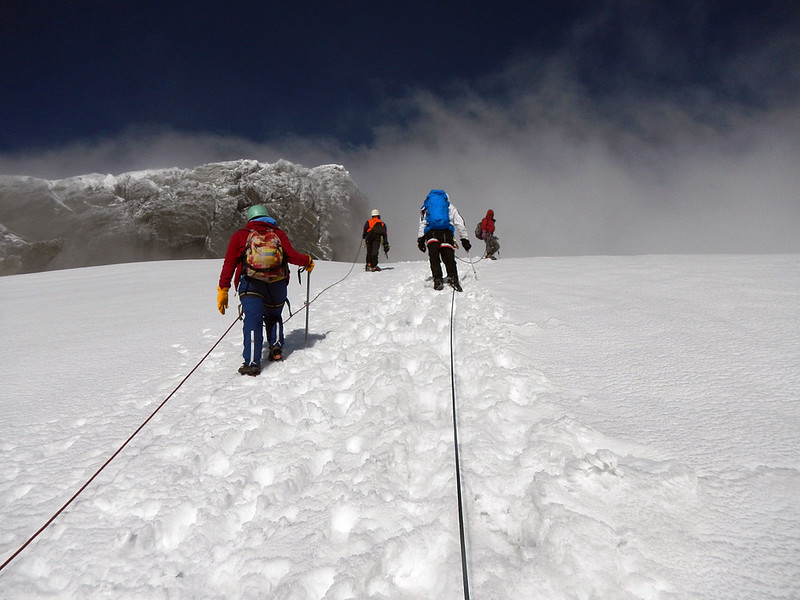 There is a moment, usually somewhere on the Stanley Plateau, ice axe in hand and your breath loud in your ears, when most climbers stop and simply look. To the west, the Democratic Republic of Congo falls away into the clouds. Above you, the last pitch to Margherita Peak rises across bare glacier ice that has been retreating for a century but has not yet gone. This is precisely why serious mountaineers rank the Rwenzori among Africa’s most extraordinary and most underrated climbs.
At Rwenzori Trekking Expeditions, we have guided this mountain for solo climbers arriving with Kilimanjaro and Mont Blanc already in their logbook, for couples wanting a shared expedition unlike anything else available in East Africa, for families with older, fit teenagers ready for their first genuine mountaineering objective, and for groups training together toward something bigger. This guide is written the way we brief every one of them before departure: honestly, in detail, and without the marketing gloss that so much writing about this mountain carries. If you are weighing whether Margherita Peak belongs on your itinerary, everything you need to decide and plan properly once you have is below.
Elevation | 5,109 metres (16,762 feet) |
Location | Summit of Mount Stanley, Rwenzori Mountains National Park, Uganda, on the border with the Democratic Republic of Congo |
Ranking | Africa’s third-highest peak, and the highest point in Uganda |
First ascent | 1906, by the Duke of Abruzzi (Luigi Amedeo of Savoy) with guides Joseph Petigax, Cesar Ollier, and Joseph Brocherel |
Main routes | Central Circuit Trail (7–9 days) and Kilembe Trail (8–10 days) |
Technical grade | A trekking approach with a genuinely technical, glaciated summit day requiring rope, crampons, and ice axe |
Guide requirement | Mandatory, independent climbing is not permitted inside Rwenzori Mountains National Park |
Best season | Mid-December to late February, and June to August |
Fitness level | High, sustained multi-day trekking fitness plus comfort on exposed, technical terrain |
Combine with | Gorilla trekking in Bwindi Impenetrable National Park, chimpanzee tracking in Kibale, or wildlife safari in Queen Elizabeth National Park |
What Is Margherita Peak, and Where Is It?
Margherita Peak is the highest summit of Mount Stanley, which is itself the tallest of the six great glaciated massifs that make up the Rwenzori Mountains, straddling the border between Uganda and the Democratic Republic of Congo in the heart of Rwenzori Mountains National Park. At 5,109 meters above sea level, it stands as the highest point in Uganda and the third-highest mountain on the African continent, surpassed only by Kilimanjaro in Tanzania and Mount Kenya. Unlike those two mountains, which rise as solitary volcanic cones from surrounding plains, Margherita is the highest point of a real mountain range that is sixty-five kilometers wide and stretches for over a hundred kilometers along the Albertine Rift, so reaching its summit means crossing valleys, ridgelines, and vegetation zones that are very different from what a single-cone climb requires.
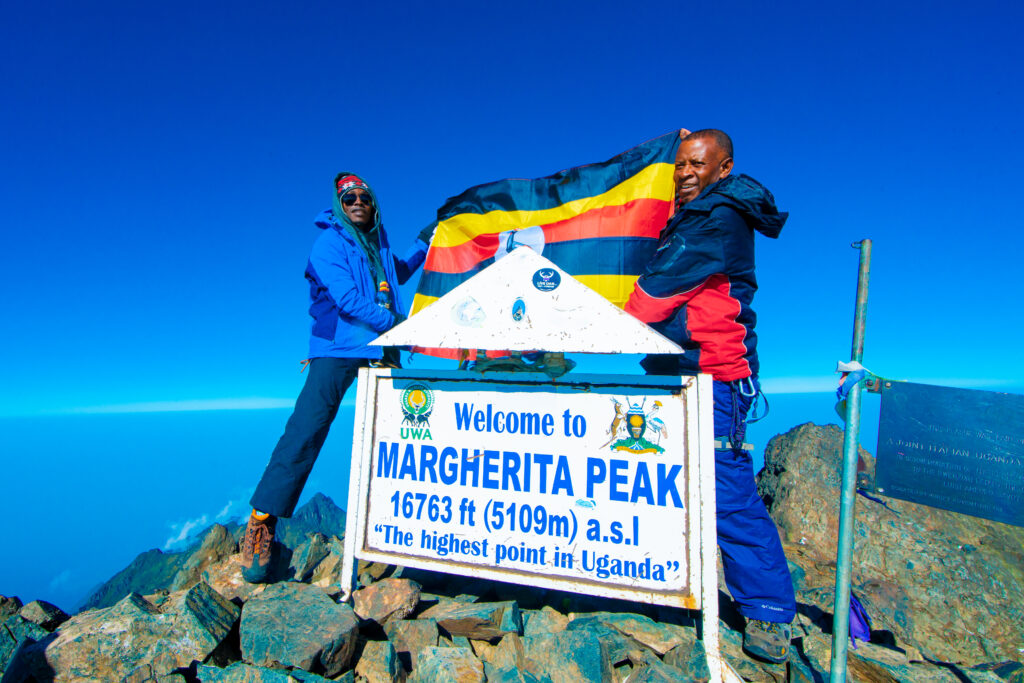
The peak takes its name from Margherita of Savoy, Queen of Italy, honored by the Duke of Abruzzi’s 1906 expedition, the first party to stand on the summit. The Duke, travelling with the experienced Alpine guides Joseph Petigax, Cesar Ollier, and Joseph Brocherel, established the route via what is now known as Elena Hut, and remarkably, more than a century later, the ascent remains substantially the same line that guides follow today.
Margherita Peak and the Six Rwenzori Mountains
The Rwenzori Mountains are built around six named massifs, Mount Stanley, Mount Speke, Mount Baker, Mount Emin, Mount Gessi, and Mount Luigi di Savoia, each its own cluster of summits carrying permanent or near-permanent ice. Mount Stanley, home to Margherita Peak and its neighboring summit, Alexandra Peak, is the tallest and the mountaineering objective most trekkers have in mind when they say they are climbing the Rwenzori. If your ambitions extend beyond a single peak, our dedicated pages on Mount Speke, Mount Baker, Mount Emin, Mount Gessi, and Mount Luigi di Savoia set out what climbing each of the other massifs involves, and we regularly design multi-peak expeditions that combine two or more of them with a Margherita summit push.
How Difficult Is Margherita Peak — and Is It Safe?
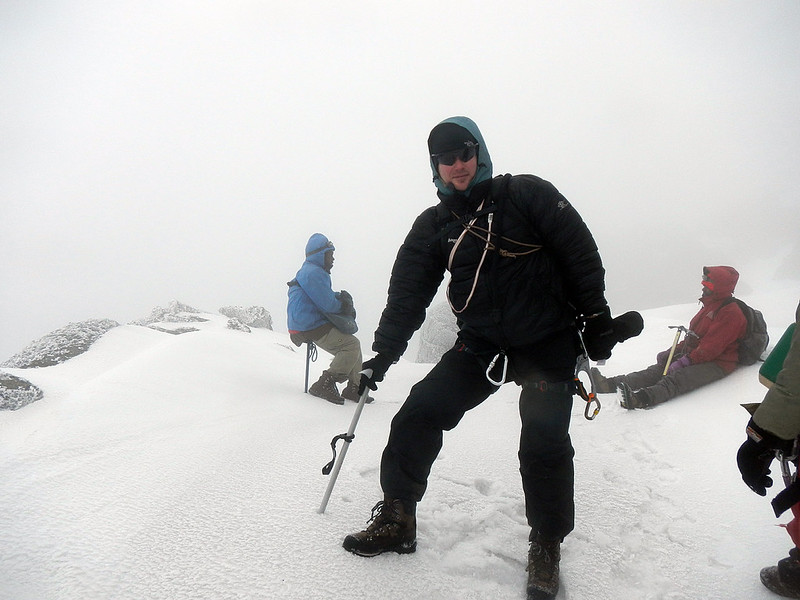
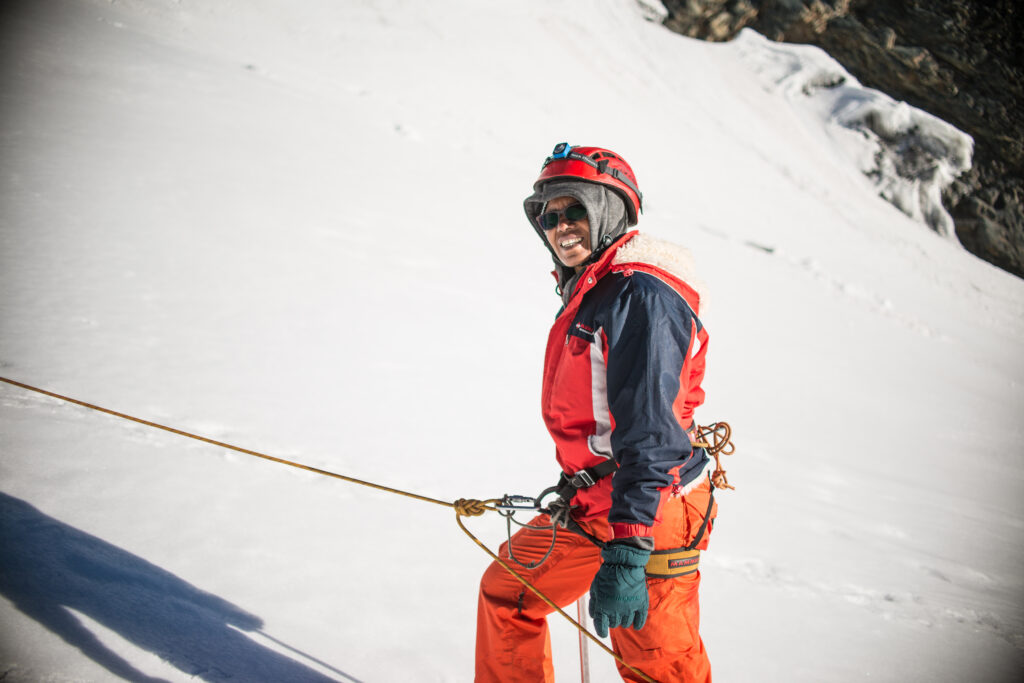
We tell every prospective climber the same thing: Margherita Peak is harder than Kilimanjaro, and it is not a walk-up. For roughly six days it is a demanding but non-technical trek across some of the wettest, muddiest terrain in African mountaineering, with gradients on certain sections reaching as steep as sixty percent underfoot. Then, on summit day, it becomes something else entirely — a genuine alpine ascent across the Elena Glacier and the Stanley Plateau, requiring crampons, an ice axe, a climbing harness, a helmet, and fixed-rope technique on exposed rock and ice. This combination, a long wet approach followed by a short but serious technical summit day, is what separates Margherita from almost every other beginner-accessible high peak in Africa.
Safety on this mountain rests on three things: a properly paced itinerary that allows real acclimatization, an experienced guide team that will make an honest call on summit day, and a climber who has trained realistically beforehand. The Uganda Wildlife Authority requires every climbing party to be accompanied by a registered guide, and our guide team carries the equipment and training to manage altitude illness and to turn a party back well before a manageable situation becomes a dangerous one. Acute mountain sickness is the most significant medical risk above roughly 3,500 meters, and it is best managed by the oldest rule in mountaineering: climb high, sleep low, and never rush the days built into your itinerary for acclimatization. Climbers who compress the trek into the shortest possible timeframe measurably raise both their risk of altitude illness and their chance of turning back short of the summit; we do not recommend it, and we will always say so plainly rather than selling a shorter itinerary because it is easier to book.
With that said, Margherita has a strong safety record when climbed properly. Most difficulties climbers encounter on this mountain are the ordinary discomforts of a long, wet, high-altitude trek, fatigue, cold, and mud rather than genuine emergencies, and the overwhelming majority of well-prepared, properly guided parties complete the mountain without serious incident.
Routes to Margherita Peak: Central Circuit vs. Kilembe Trail
Two established routes lead to Margherita Peak, and the choice between them shapes the character of your entire expedition, not just the final summit push. The Central Circuit Trail is the classic line, beginning at Nyakalengija and following the same historic corridor used since the earliest twentieth-century expeditions, through Nyabitaba, John Matte, and Bujuku, before staging at Elena Hut for the summit attempt. It is the shorter, more traveled, and best-supported of the two options and the route we recommend most often to first-time Rwenzori climbers. The Kilembe Trail, approaching from the south through the old copper-mining town of Kilembe and up the Nyamwamba Valley, is longer, quieter, and takes in a different, arguably more dramatic sequence of lakes and ridgelines before joining the same technical summit terrain near the top.
Full route details for each are on our Kilembe Trail and Central Circuit Trail pages; climbers wanting a wilder, less-trodden alternative to both should also read about our Bukurungu Trail, though note that this route is built for lower-altitude wilderness camping rather than a Margherita summit attempt.
| Central Circuit Trail | Kilembe Trail |
Approach | Eastern side, via Nyakalengija | Southern side, via the old Kilembe mining town and Nyamwamba Valley |
Typical duration | 7 to 9 days | 8 to 10 days |
Key camps | Nyabitaba, John Matte, Bujuku, Elena Hut | Sine, Mutinda, Bugata, Margherita Camp |
Character | The classic, most-travelled line; the same corridor used since the earliest expeditions | Longer, quieter, with more sustained ridge walking and arguably finer lake scenery |
Best suited to | First-time Rwenzori trekkers wanting the most proven, best-supported line to the summit | Returning trekkers, or those who want a longer, more immersive traverse with extra acclimatization built in |
Summit Day: What the Final Push Actually Involves
From Elena Hut, the pre-dawn route climbs past the old outpost hut and turns south, reaching a divergence in the terrain where several lines converge toward the Stanley Plateau. One option threads directly through crevasses and gorges, working westward across a sequence of steep rock steps before easier ground above; the alternative swings south past a small tarn beneath the cliffs of Kitasamba and the Coronation Glacier before a decisive westward turn up ice-polished slabs.

Both lines converge on the glacier itself, where the technical climbing genuinely begins: steep snow or ice underfoot, roped travel, and careful navigation across a plateau that is frequently wrapped in fog, meaning the wider views of the range often only reveal themselves in fragments rather than as one sweeping panorama. From the summit ridge, Alexandra Peak stands immediately to one side, and on a clear pocket in the weather, the Afro-montane forest thousands of meters below is visible with a waterfall catching the light on the far rock face.
How Many Days Does It Take to Climb Margherita Peak?
Most properly paced itineraries run seven to nine days on the Central Circuit Trail, or eight to ten days on the Kilembe Trail, with the extra length on the southern route buying additional acclimatization time rather than extra distance. Compressed itineraries of five to six days exist and can succeed for exceptionally fit, well-acclimatized climbers, but they meaningfully raise the risk of altitude illness and reduce the odds of a successful summit, since the body simply has less time to adjust before the technical push. We build every itinerary with at least one dedicated acclimatization day, and we would rather a client add a day to their schedule than shave one off in the name of convenience.
Attractions Along the Way to Margherita Peak
The climb to Margherita is as much a journey through ecosystems as it is an ascent, and the terrain itself is one of the trip’s most significant rewards.
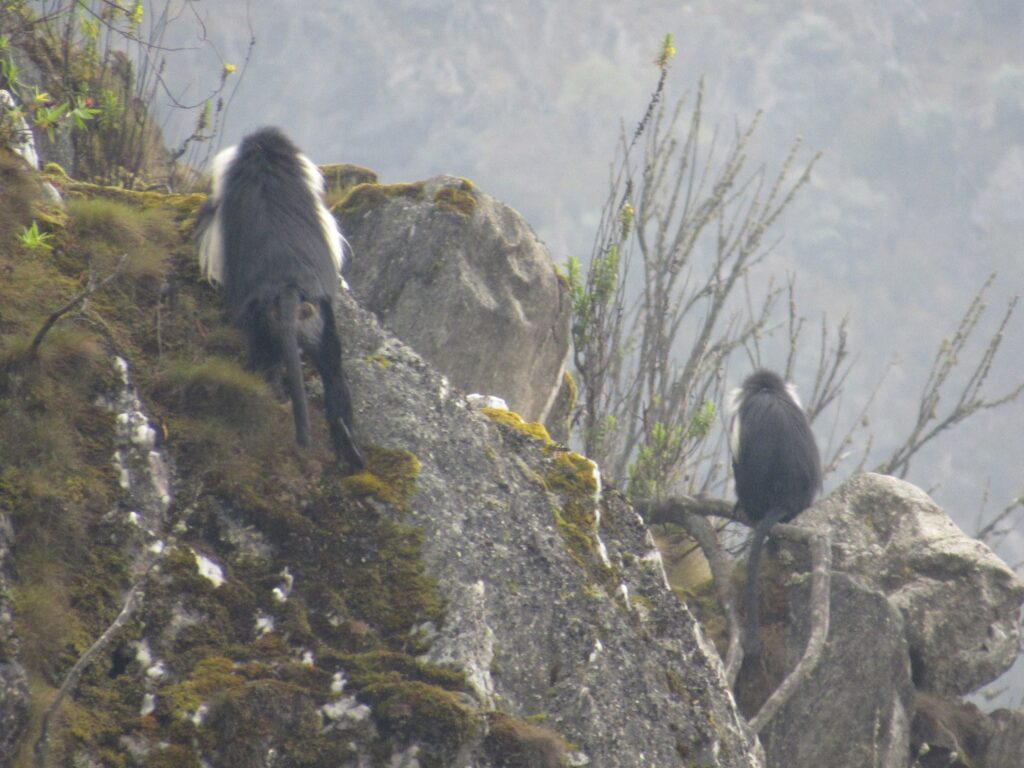
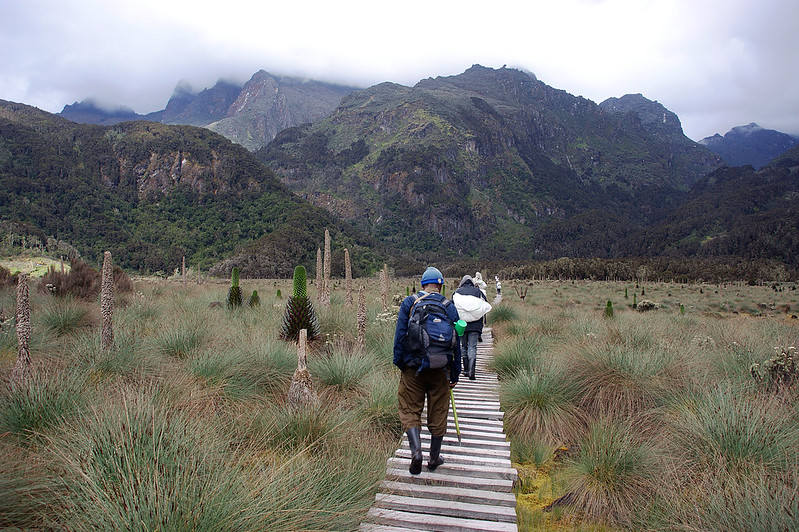
The lower trail moves through dense montane forest alive with blue monkeys, black-and-white colobus, and the calls of forest birds before giving way to a bamboo zone and then the surreal heather and afro-alpine moorland the Rwenzori is famous for, with giant lobelias, ancient tree heathers draped in moss, and a landscape that genuinely feels prehistoric.
The Bujuku Valley on the Central Circuit trail offers some of the finest mountain lake scenery in the range, while the Kilembe Trail’s Nyamwamba Valley is known for its own chain of glacial lakes and long ridge views back toward Kasese and the Rift Valley floor. For a full breakdown of what you will pass through zone by zone, see our guide to the Rwenzori vegetation zones, and for the wider list of sites worth building into a longer stay, see our Rwenzori attractions page.
Related Itineraries to Margherita Peak
Because the Rwenzori rewards a properly paced approach, we offer several itinerary lengths on both routes rather than a single fixed package. Shorter options in the five to six day range suit climbers focused purely on reaching the summit in the least time realistically possible; standard seven- to nine-day Central Circuit itineraries remain our most-booked and most reliably successful option; and longer eight- to twelve-day Kilembe Trail expeditions suit climbers who want maximum acclimatization margin, a quieter trail experience, or the chance to add a secondary peak. Full details of every option, including group departures and private custom scheduling, are on our Rwenzori treks page. Tell us your available dates and fitness background, and we will recommend the itinerary that genuinely fits, rather than the one that is easiest to sell.
Combining Margherita Peak with Gorilla Trekking and Wildlife
Uganda’s great advantage over almost any other serious mountaineering destination is what sits within a few hours’ drive of the trailhead. Bwindi Impenetrable Forest, home to roughly half the world’s remaining mountain gorillas, pairs naturally with a Margherita expedition to create one of the most complete adventure itineraries available anywhere on the continent: glacier and jungle, summit and primate trekking, in a single well-sequenced trip. Kibale Forest for chimpanzee tracking and Queen Elizabeth National Park for open savannah wildlife and boat safaris on the Kazinga Channel both combine just as naturally. We design these combined itineraries regularly and can sequence the mountain and the wildlife components so that your body gets proper rest between the two rather than arriving at Bwindi still depleted from the summit.
Best Time to Climb Margherita Peak
The Rwenzori has two genuine dry-season windows: mid-December through late February and June through August. Both offer firmer trail conditions on the lower muddy sections, more stable weather for the glacier crossing on summit day, and the best odds of the clear skies that make the Stanley Plateau views worthwhile. Between these windows, March to May and September to November bring heavier rain and a higher likelihood of the summit push being weather-delayed or aborted, though the mountain remains climbable year-round for parties equipped and prepared for consistently wet conditions. If your schedule allows real flexibility, book within the dry windows; if you are combining the climb with gorilla trekking permits that are only available on fixed dates, we can advise on how to sequence the trip to make the best of whichever season you are travelling in. Full seasonal detail, month by month, is on our best time to visit Rwenzori page.

What to Carry: Gear for Climbing Margherita Peak
Margherita demands a genuinely mixed kit list, trekking gear for the long wet approach, and mountaineering gear for the technical summit day. On the trail, count on a full waterproof shell, warm thermal layers, and, counter-intuitively for a mountain, rubber Wellington-style boots for the lower bog sections, since conventional leather hiking boots are frequently overwhelmed by the mud between camps; most climbers switch to a sturdier mountaineering boot for the higher, rockier ground. For the summit push itself you will need a climbing harness, helmet, and ice axe, alongside crampons rated for glacier travel. We provide the technical group equipment, including fixed ropes, though crampons are best brought from home, fitted to your boots, with hire available locally if needed. A four-season sleeping bag, headtorch, gloves, a warm hat for altitudes above 4,500 meters, and trekking poles for the descent complete the essential list. Our full, itemized packing list is on our Rwenzori packing list page.
Porters on Margherita Peak
Every Margherita expedition is supported by a team of porters drawn overwhelmingly from Bakonzo communities in the foothills, carrying camp equipment, food, and group technical gear so that climbers can focus their energy on the trail and the altitude rather than a heavy pack.
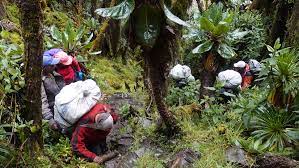
This is not a luxury; on a mountain this wet and this long, porter support is a genuine safety mechanism, freeing climbers to move at a pace that supports acclimatization rather than exhaustion. We pay and treat our porter teams fairly and consistently, and every booking with us contributes directly to the income of the same Bakonzo families who have worked this mountain, in many cases, for generations.
What You Need to Do Before Climbing Margherita Peak
Preparation for this mountain begins months before you fly. Build a genuine cardiovascular and leg-strength training base; hill walking with a loaded pack is the closest simulation most climbers can access at home, and if you can train at altitude or do repeated long days back-to-back beforehand, do so. Secure comprehensive travel insurance that explicitly covers high-altitude trekking and, ideally, helicopter evacuation, since this is not a policy detail to discover you are missing mid-expedition. Obtain your Uganda visa in advance, confirm your Rwenzori Mountains National Park permit and guide booking through us, and if you are combining the climb with gorilla trekking, book those permits early, as they are limited and allocated well ahead of peak season. Finally, spend time honestly assessing your fitness and prior high-altitude experience with us during booking; the single biggest factor in a safe, successful climb is a party whose itinerary genuinely matches their preparation, not the shortest or cheapest option on offer.
What Does It Cost to Climb Margherita Peak?
The cost to climb Margherita Peak depends on the route, itinerary length, group size, and season, since fixed park, staffing, and technical equipment costs are spread differently across a solo climber than a group of six. Longer, better-acclimatized itineraries and smaller private groups both carry a higher per-person cost than a compressed climb in a larger shared party, and this is one area where the cheapest option is rarely the one we would recommend for a mountain of this seriousness.
For a current, honest quote tailored to your dates, route preference, and group size, speak directly with our trekking team; full detail on what typically drives cost up or down is also on our Rwenzori cost page.
What’s Included and What’s Excluded
A Margherita Peak expedition with Rwenzori Trekking Expeditions is built so that every logistical and technical detail is handled before you arrive at the trailhead. Your climb includes national park entrance and hut or camping fees payable to the Uganda Wildlife Authority; an experienced guide and full porter team; all meals on the mountain; group technical mountaineering equipment, including fixed ropes; and accommodation in park huts or tents along your chosen route. What remains for you to arrange is your international travel, Uganda visa, personal travel and medical insurance, tips for your guide and porter team, personal crampons if you prefer to bring your own, and any accommodation before or after the trek in Kasese or Kampala.
Included: Park entry and hut/camping fees · guide and full porter team · all on-mountain meals · group technical climbing equipment and fixed ropes · pre-climb briefing and UWA registration · a contribution to Bakonzo community livelihoods from every booking.
Excluded: International and domestic flights · Uganda visa · travel and medical/evacuation insurance · guide and porter tips · personal crampons and mountaineering boots · pre- and post-trek accommodation.
Ready to Stand on the Roof of Uganda
Margherita Peak is not a mountain to approach casually, and we would never sell it to you that way. It is genuinely difficult, genuinely technical on summit day, and genuinely one of the finest mountaineering objectives on the African continent, a glacier crossing in the heart of the tropics, on a peak that receives a fraction of the attention Kilimanjaro does and rewards every one of the extra days it demands.
When you climb with us, every detail is arranged before your boots touch the trail: your private guide, your porter team, your technical equipment, your transfers from Entebbe or Kasese, and your route choice matched honestly to your fitness and your timeline. Nothing is left for you to figure out on the mountain except the climbing itself. If Margherita Peak is your objective, whether alone, as a couple, with your family, or as part of a wider group, we would be glad to talk through your dates and build the expedition properly around them.