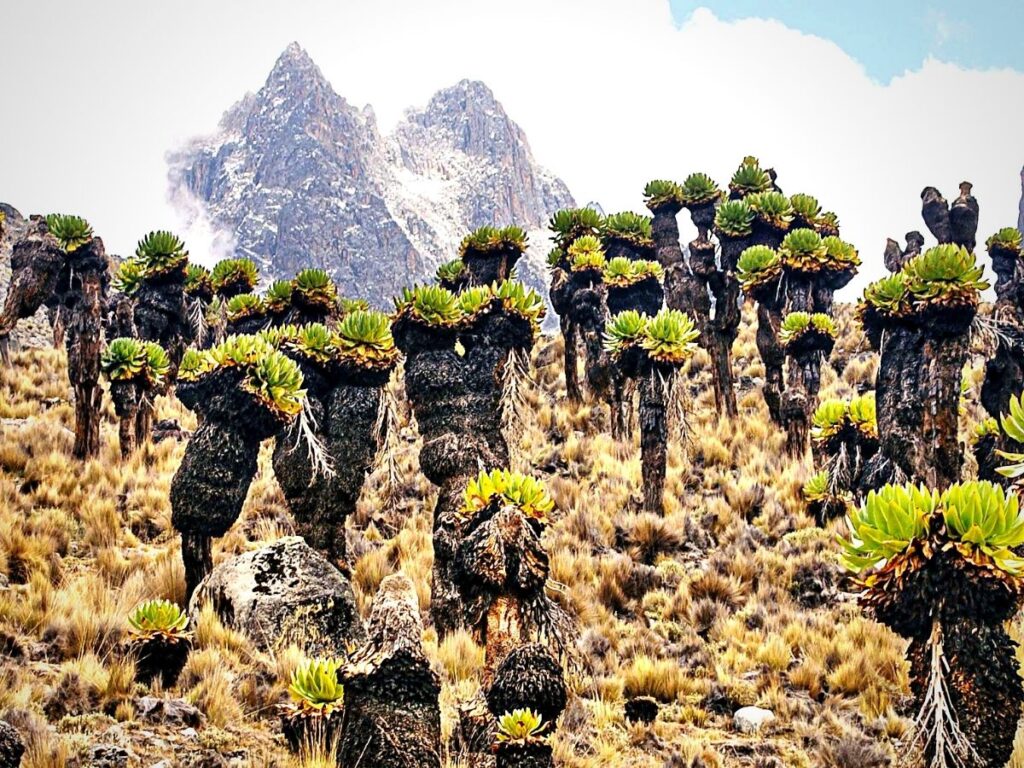
 Mount Kenya exhibits multiple biological zones primarily separated by altitude and meteorological conditions. Ascending from base to summit necessitates navigating through distinctly defined zones, each showcasing particular flora and fauna specially adapted to their different elevations:
- Montane Forest Zone (1,800 – 2,500 meters): Defined by dense montane forests that host animals like bushbucks, elephants, forest hogs, and a variety of avifauna such as turacos and hornbills. Temperatures in this region persist in being temperate, accompanied by regular rains and foggy. These conditions necessitate climbers to use appropriate clothing and moisture control techniques.
- Bamboo and Hagenia Zone (2,500 – 3,000 meters): This zone features forests predominantly composed of bamboo groves intermingled with Hagenia trees. Birdwatchers frequently come upon species of birds, such as the Hartlaub’s Turaco, that have evolved especially for these highland woodlands. Climatic conditions encompass lower temperatures, persistent cloud cover, and significant moisture retention.
- Heath and Moorland Zone (3,000 – 3,800 meters): At this elevation, vegetation shifts to heathland characterized by large heathers, tussock grasses, and distinctive botanical species including enormous lobelias and groundsel. Climbers encounter markedly lower temperatures, intensified winds, and reduced oxygen levels. These conditions necessitate efficient garment layering and improved altitude management.
- Alpine Zone (3,800 – 4,500 meters): Vegetation is limited and primarily consists of diminutive alpine flora. These resilient species can endure extreme wind, low temperatures, and reduced oxygen levels. Climbers must anticipate potential symptoms of altitude sickness, such as headaches, nausea, and exhaustion, requiring meticulous acclimatization strategies and hydration procedures.
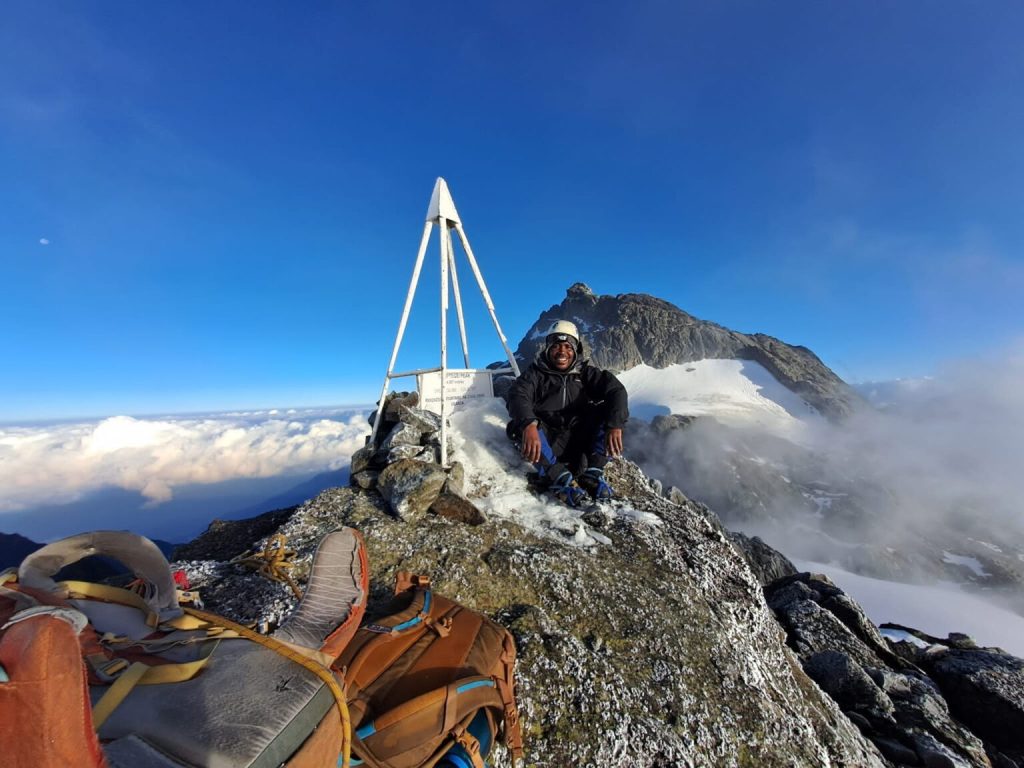
- Glacial and Rocky Summit Zone (4,500 meters and above): The apex of Mount Kenya features craggy rock walls, characterized by steep inclines and remaining glaciers. Climbers face sub-zero temperatures, the threat of ice and snow, potential rockfall hazards, and quickly fluctuating weather conditions. Proficiency in technical climbing, appropriate equipment (crampons, ropes, helmets, and harnesses), and experienced assistance are needed.
1. Sirimon Route For Climbing Mount Kenya
The Sirimon Route, commencing at the northwestern part of Mount Kenya (in proximity to Nanyuki town), has the most progressive elevation gain. The route is exceptionally beneficial for acclimatization. This route is especially appropriate for beginner climbers and birdwatchers seeking to enhance wildlife observation prospects. Moderate hiking ability is necessary for the Sirimon Route until attaining greater altitudes near Lenana Peak.
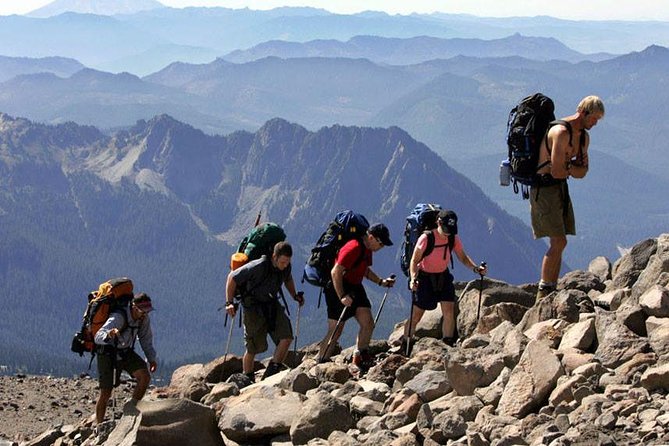 The Sirimon Route begins at the Sirimon Gate (2,650 meters), progressively ascending through montane forests, bamboo, and moorland zones. Subsequently, it traverses the Old Moses Camp (3,300 meters) and ultimately arrives at Shipton’s Camp (4,200 meters), a crucial acclimatization and rest stop. Climbers generally traverse Point Lenana through scree slopes and rocky trails originating from Shipton’s Camp.
How long does it take to reach the peak using the Sirimon Route? The typical period for ascent and descent is roughly 3 to 5 days, facilitating adequate altitude acclimatization and ecological research. The Sirimon Route features accessible routes with exceptional wildlife observation chances, picturesque alpine flora, and photographic vistas, such as the Mackinder’s and Likii North Valleys.
2. Chogoria Route for Climbing Mount Kenya
The Chogoria Route commences on the eastern part of the mountain, adjacent to Chogoria village. It is regarded as the most picturesque ascent, featuring expansive vistas and distinctive geological formations. It requires modest physical fitness and meticulous acclimatization measures. Advanced technical climbing skills are not necessary until the last ascent to Point Lenana. This region encompasses rugged topography and precipitous inclines.
The Chogoria Route commences at the Chogoria Gate (2,950 meters) and ascends through deep montane woods to Lake Ellis (3,500 meters). It further advances to the glacial Lake Michaelson (4,000 meters) and ultimately reaches the Mintos Hut (4,300 meters). The ultimate ascent to Point Lenana is typically conducted prior to daybreak and entails traversing steep rocky scree and inclines.
How long does it take to reach the summit using the Chogoria Route? Typically, a duration of 3 to 6 days is necessary for sufficient acclimatization and optimal appreciation of biological and geological attractions. Hikers are rewarded with breathtaking vistas of glacial lakes such as Michaelson, the Nithi Falls, and several vegetation zones. The Chogoria Route is a haven for birdwatchers.
3. Naro Moru Route Of Climbing Mount Kenya
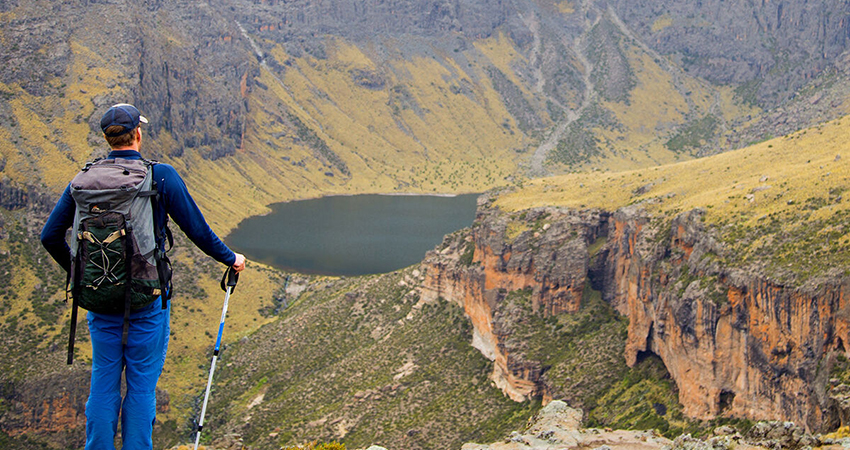 The Naro Moru Route is the most concise and direct route to Point Lenana. The western slope of the mountain, near Naro Moru village, provides access. It is favored by climbers aiming to accomplish Mount Kenya in as little time as possible. Notwithstanding its popularity stemming from accessibility, it entails a challenging and physically rigorous ascent. The Naro Moru trail is extremely demanding because to its high inclines and rugged landscape.
How does a normal hike look like using this route? The hike commences at the Naro Moru Gate (2,400 meters) and ascends swiftly through montane Forest, bamboo, and heather zones. The Met Station is reached at an altitude of 3,050 meters. Climbers subsequently navigate the steep and demanding vertical bog region referred to as the “Vertical Mud” prior to arriving at Mackinder’s Camp (4,200 meters). The ultimate path to the peak traverses severe scree slopes.
The ascent of Mount Kenya via this Naro Moru route typically requires 3 to 4 days. This renders it suitable for short climbing itineraries, although necessitates meticulous altitude management due to the swift elevation increase required. Hikers receive immediate access to the Lenana peak, remarkable alpine vistas, and a well-organized route configuration.
4. Burguret Route Of Climbing Mount Kenya
The Burguret Route is the least frequented trail on Mount Kenya. It is perfect for climbers seeking authentic wilderness seclusion with minimal human intrusion. The Burguret Route is recognized for its difficult navigation, necessitating advanced route-finding abilities or the assistance of professional guides due to sparse trail signs. This route is generally more challenging to hike because of ambiguous trails and thick underbrush. Due to the difficulties in navigation, it is advisable for experienced hikers or under the supervision of qualified guides.
How is a normal hike like using this route? Access is through the Burguret Gate (about 2,500 meters) prior to starting an ascent through deep montane forest and remote wilderness area. Hikers traverse predominantly ambiguous trails prior to linking with the major routes next to the moorland area. They subsequently converge at Mackinder’s Camp or Shipton’s Camp to access Point Lenana. Ascending the peak necessitates a duration of 5 to 7 days, which is adequate time for acclimatization, exploration, and meticulous route navigation.
The Burguret Route is favored by climbers due to its limited human activity, remote environment, opportunity for wildlife observation, and potential for ecological investigation.
 Choosing the ideal climbing season is essential for guaranteeing a successful and safe ascent of Mount Kenya. Climatic trends in the region affect trail accessibility, visibility, climbing safety, and the overall quality of the trip. Climbers and birdwatchers must meticulously plan according to existing conditions.
- Dry Seasons (January to March and July to October): The best climbing conditions on Mount Kenya are experienced during two specific dry seasons – from late December to March and from July to October. These intervals provide bright skies, moderate/low rainfall, and consistent climbing conditions. These parameters markedly mitigate weather-related difficulties. Visibility is typically exceptional during this season, facilitating meticulous observation of natural features, fauna, and bird species. This season is particularly conducive to photography. In these arid seasons, the likelihood of slippery or muddy situations diminishes. Nonetheless, despite predominantly favorable weather conditions, hikers must remain prepared for unforeseen cold, snow, or storms at high altitudes.
- Rainy Seasons (April to June and November to Mid-December): Climbing Mount during the wet seasons, particularly from April to June and November to mid-December, presents heightened challenges. Intense rainfall, dense cloud cover, restricted visibility, and lower temperatures generate difficult conditions. The routes frequently become slippery and boggy, and at times untraversable, heightening the likelihood of accidents or postponements. Although these months provide reduced crowds and tranquility, one must be adequately prepared and vigilant. Birdwatchers may find hiking during the rainy season gratifying; but, weather conditions will limit thorough exploration, particularly at elevated altitudes.
Climbing Mount Kenya – Temperature and Weather Considerations
Temperature on Mount Kenya fluctuates considerably with altitude. The temperature decreases by around 6°C for every 1,000-meter elevation gain. At elevated altitudes, nighttime temperatures consistently drop below freezing. Climbers must consistently prepare for fast weather changes, particularly at elevations beyond 3,500 meters. They must ready themselves for freezing temperatures
Mount Kenya Packing List(What To Pack or wear for Climbing Mount Kenya?)Packing for a Mount Kenya ascent guarantees safety, comfort, and readiness for altering alpine conditions.
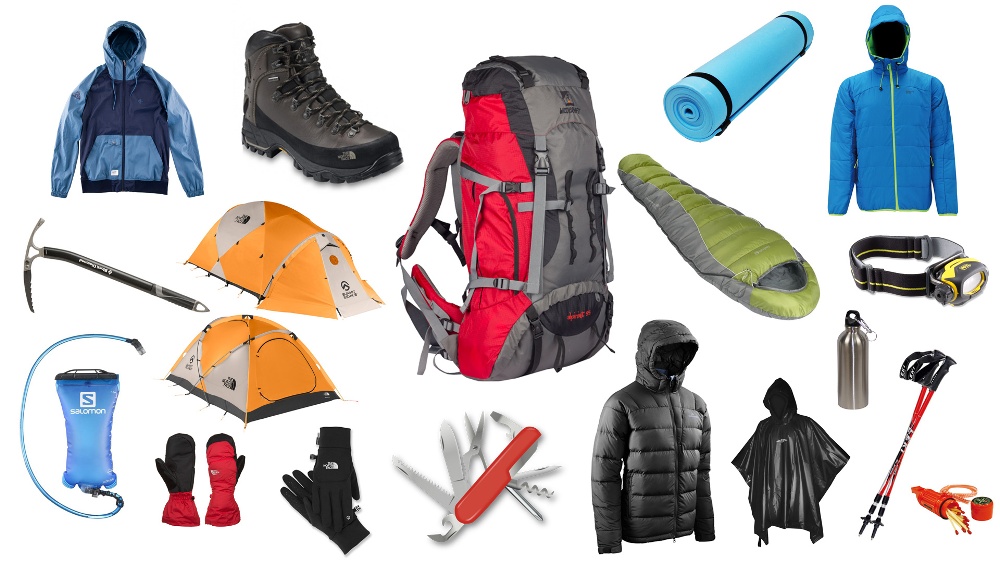 Presented here is a concise checklist enumerating the requisite equipment and supplies for climbers and birdwatchers:
- Clothing: Confirm the inclusion of waterproof hiking boots with substantial ankle support in your packing. Include thermal base layers (leggings and long-sleeved shirts), an insulating mid-layer (synthetic jacket or fleece), a waterproof or wind-resistant outer jacket/pants, and synthetic thermal or woolen socks. Remember to bring warm gloves and an insulated cap.
- Climbing and Hiking Equipment: Ensure you carry a backpack, climbing harness, helmet, ice axe, and crampons. Utilize trekking poles for stability and balance, and consistently carry a headlamp.
- Camping Equipment: Ensure the procurement of alpine tents, a sleeping bag designed for sub-zero conditions, and insulated sleeping mats for warmth and comfort. Climbers must verify the possession of a portable cooking burner and fuel. Additionally, there are culinary implements (dishes, mugs, and spoons).
- Hydration and Nutrition: All hikers must ensure they pack energy-rich foods (chocolate, almonds, energy bars, and dried fruit) before ascending Mount Kenya. To maintain hydration, they ought to consider freeze-dried meals, hydration powders, and electrolyte tablets. A portable water filtration device or water purification tablets, along with reusable insulated water bottles, will improve the quality of the hike.
- Personal Items & Hygiene: When preparing to ascend Mount Kenya, it is essential to bring high-altitude UV protection sunglasses, sunscreen, and lip balm with UV protection. Hikers should also contemplate personal hygiene items such as hand sanitizer, wipes, biodegradable soap, and quick-drying towels. We must not overlook the inclusion of a fundamental first aid kit containing altitude-related medications.
- Navigation and Emergency Supplies: For best navigation when climbing Mount Kenya, assure possession of a topographic map, satellite phone, dependable compass, or preferable a GPS gadget in conjunction with a topographic map. Ensure you carry your identity documents and permits. Consider including a whistle for emergency signaling and waterproof bags.
Mount Kenya provides a remarkable mountaineering experience characterized by its distinctive natural and cultural features. Through meticulous planning and thorough preparation, climbers can adeptly traverse the intricacies and benefits of this prominent African summit