Rwenzori Mountains National Park Rules & Regulations Complete Guide
Rules & Regulations for Rwenzori Mountains: Discover the rules and regulations for visiting Rwenzori Mountains National Park, including trekking safety, environmental protection, permits, wildlife guidelines, and responsible travel—Trekker’s Code of Conduct for the Central Circuit Trail and Kilembe Trail
The first thing our guides tell every new group, before a single boot touches the Nyakalengija trail, is not a rule at all, it is a reason. We explain why the hut you’ll sleep in tonight holds sixteen people and not thirty. Why the giant lobelia glowing beside the path cannot be touched, and why your guide’s word on turning back is final even three hundred meters from a summit you’ve trained a year for? Trekkers who understand the reason for a rule follow it willingly and, more importantly, grasp the mountain they are walking through.
This page is that explanation in full. At Rwenzori Trekking Expeditions, we have guided families taking their first high-altitude trek together, solo travellers testing themselves against genuine wilderness, couples marking an anniversary with something neither of them will forget, and groups training for Margherita Peak, and every one of them has asked some version of the same question. Do I need a guide? Can I camp wherever I like? Are drones allowed? What actually happens if the weather turns on summit day? Below, we answer all of it, not as a list of restrictions handed down from an office in Kampala, but as the working code of conduct that keeps this UNESCO World Heritage Site intact and keeps you safe while you’re in it.
Why the Rwenzori Mountains National Park Has Rules?
Rwenzori Mountains National Park was inscribed as a UNESCO World Heritage Site in 1994, recognised for a combination of glaciated peaks, Afro-alpine moorland, and endemic biodiversity that exists nowhere else on the African continent in quite this form. That designation is not ceremonial; it carries an obligation, shared by the Uganda Wildlife Authority, licensed operators like ourselves, and every trekker who walks through the gate at Nyakalengija or Kilembe to leave this place no more diminished than we found it. The regulations that follow exist to protect five things simultaneously, and understanding each of them changes how a rule feels on the trail, from an imposition into simple common sense.
Conservation of endemic species comes first.
The Rwenzori turaco, the three-horned chameleon, and a range of plants found only in this range depend on habitat that a single careless campsite or a single trampled slope can degrade for years. Alpine ecosystem protection follows closely behind: above roughly 3,500 metres, growth rates slow to a crawl in the cold and thin air, meaning a giant groundsel damaged today may not visibly recover within your lifetime, let alone a season. Trail preservation addresses a more immediate, physical concern, the Rwenzori’s volcanic and crystalline soils turn to deep mud with remarkable speed, and every trekker who steps off the established path to avoid a puddle widens that mud a little further, until a narrow trail becomes a scar visible from the air. Visitor safety is the most personal of the five: this remote, technical area has weather that can change quickly, and a wrong turn or an underestimated storm can have serious consequences, so the rules about guiding, group size, and route discipline are there to help reduce those risks. And responsible tourism ties the other four together; every fee, every regulation, and every guide- and porter-job, this park supports flows back into conservation funding and into the Bakonzo communities whose home this mountain has always been.
Entry Requirements: Every trekker entering Rwenzori Mountains National Park needs a valid park permit, arranged in advance through a licensed operator such as ourselves or directly via the Uganda Wildlife Authority, and a registered guide for the duration of the trek, independent, unguided entry is not permitted on either the Central Circuit trail or Kilembe Trail. On arrival at the trailhead, expect a formal check-in with park rangers, where your permit and identification are verified and your group is registered against the day’s trail records, a step that matters directly for your own safety since it is this record that search-and-rescue teams would use if a party failed to check out on schedule. Before setting off, your guide will run a safety briefing covering the day’s route, expected weather, and group conduct; treat this briefing as essential information rather than formality, since conditions and camp arrangements do shift season to season. Because permit procedures, fees, and required documentation are periodically updated by the Uganda Wildlife Authority, we keep our own Rwenzori cost page current with the latest figures rather than repeating specific numbers here that could go stale.
Stay With Your Guide: Of every rule in this park, the requirement to remain with your registered guide throughout the trek is the one we would keep even if no regulation demanded it. The Rwenzori is not a waymarked European hiking trail; side paths made by wildlife, previous trekkers’ mistaken shortcuts, and seasonal stream changes can look identical to the main route in low visibility, and fog on this mountain can drop in under twenty minutes, turning a familiar ridge into featureless white.
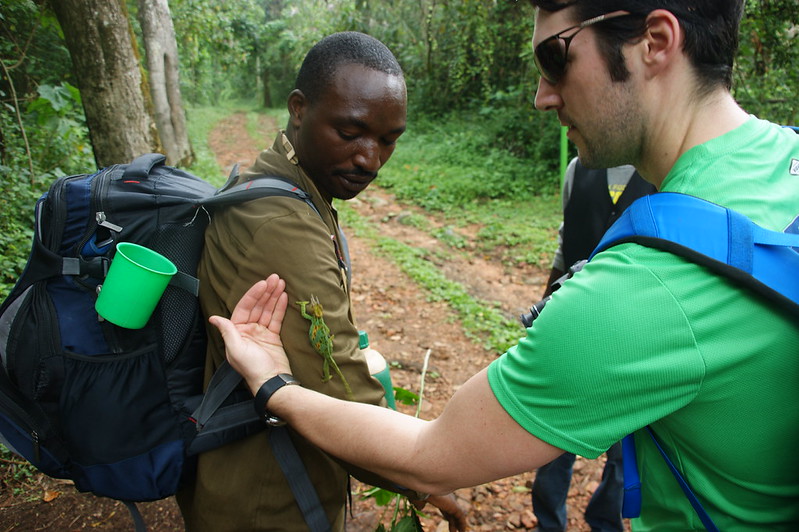
Your guide carries the accumulated knowledge of a route walked hundreds of times, the judgement to read a weather change before it arrives, and, critically, the training to manage an emergency, from a twisted ankle to altitude sickness to a wildlife encounter, in terrain where a rescue helicopter cannot always fly and cellular signal cannot always reach. Staying with your guide is not a constraint on your freedom on this mountain; it is what makes the freedom to be out here at all responsible.
Stay on Designated Trails: The instruction to keep to the established path protects more than tidy scenery. The Rwenzori’s wetland sections, the lower and upper Bigo bogs in particular, hold a fragile hydrology that shifting foot traffic can permanently alter, draining or diverting water that feeds surrounding plant communities. The vegetation itself, particularly the alpine species above the treeline, grows so slowly in the cold that a single season of trampling by hikers cutting corners can visibly set a slope back for years. There is also a straightforward safety dimension: designated trails have been assessed by guides and rangers for stability and drainage, while an improvised route may cross ground that looks solid but is not, or may lead directly into wildlife habitat where an unexpected encounter benefits no one. Every meter you walk on the marked trail rather than beside it is a meter of vegetation and habitat left intact for the trekker behind you.
Respect Wildlife: Encounters with the Rwenzori’s wildlife, black-and-white colobus and blue monkeys in the lower forest, the calls of chimpanzees carrying across the valley, and if you are fortunate, the flash of a Rwenzori turaco through the canopy, are one of the trek’s genuine pleasures, and keeping them that way for future trekkers depends on a few simple behaviours. Observe animals from a respectful distance rather than approaching for a closer photograph; never feed wildlife, since human food habituates animals in ways that can alter their behaviour permanently and to their own detriment; keep noise levels down on the trail, both because sound carries unusually far in mountain air and because a startled animal is a stressed one; and never attempt to touch or handle any wild animal you encounter, however calm it appears. Habituation to humans, once established in a wildlife population, is extremely difficult to reverse, and it is almost always the well-intentioned trekker offering a biscuit, rather than a hunter, who causes it.
Protect the Vegetation: The Rwenzori’s Afro-alpine zone holds some of the most visually startling plant life on the African continent, giant lobelias and giant groundsels that grow nowhere else at this scale, some individual plants old enough to have been standing when the first European expeditions passed beneath them in the early twentieth century. Picking a flower, cutting vegetation for a walking stick, or collecting a plant sample as a souvenir may feel like a small act, but at this altitude and growth rate, the damage is disproportionate and frequently irreversible within a human lifetime. These species also anchor the wider alpine ecosystem, providing habitat and, in some cases, the only significant vegetation cover on otherwise exposed slopes; their loss is not merely aesthetic. Photograph them freely; leave every leaf and stem exactly where you found it.
Leave No Trace: Leave No Trace is the umbrella principle behind most of the specific rules on this page, and it is worth stating plainly rather than leaving implicit: everything you carry in, you or your porter team carries back out, and the mountain should show no sign that your group passed through it. In practice this means packing out all litter regardless of whether it is biodegradable, minimising the waste you generate in the first place by choosing reusable containers over single-use packaging before you arrive, respecting established campsites rather than flattening new ground for a preferred view, and leaving natural objects — rocks, bones, plant matter — exactly as found rather than as a trailside display for the next trekker. Over the decades that this park has hosted expeditions, from the Duke of Abruzzi’s 1906 team to this week’s trekkers, the difference between a trail that still feels wild and one that has been worn to a scar is almost entirely the accumulated discipline of visitors following this one principle.
Waste Management:Practically, this means a reusable water bottle rather than a stream of disposable plastic across a multi-day trek, all non-biodegradable waste, from snack wrappers to batteries, packed out in a dedicated bag rather than left at camp, and any bodily waste disposed of only in the latrines provided at huts and designated camps rather than in the open. Food scraps, even ones that feel harmless, should never be left behind; they attract wildlife to campsites in ways that alter natural foraging behavior and can create genuine safety issues at heavily used camps. Designated disposal points exist at the main huts along both the Central Circuit trail and Kilembe Trail, and your guide will direct you to them; outside of those points, the expectation is simple — it leaves the mountain the way it arrived with you, in your pack.
Fire Safety:Open wood fires are not permitted anywhere inside the park, a restriction that exists because the Rwenzori’s higher vegetation zones — heather, moss, and the tinder-dry understorey beneath them in drier months — carry fire risk far beyond what the visible dampness of the mountain might suggest, and because harvesting wood for fires would strip already-slow-growing vegetation from a landscape that cannot easily replace it. Cooking on the mountain is done on gas, charcoal, or paraffin stoves that our guide and porter teams carry and manage, and trekkers should follow their guide’s direction on where cooking takes place at each camp rather than assuming any clear ground is available for the purpose. This rule, more than most, aligns reasoning and regulation perfectly; an alpine wildfire in this remote terrain would be almost impossible to contain.
Camping Rules:Accommodation along both major routes is limited to the established huts and designated tent camps maintained by the park and its operators, and each hut carries a firm occupancy limit, commonly sixteen people per hut per night on the busier sections , set to prevent overcrowding and to limit the cumulative impact of trekking traffic on the surrounding ground. Because huts are frequently shared between different groups on busy weeks, basic courtesy matters more here than it might at a hotel: share stove space and cooking times without monopolising them, keep conversation at a considerate volume once other trekkers have settled for the night, and treat quiet hours after dark as a shared expectation rather than a house rule enforced by anyone in particular. A crowded hut on a wet, cold night becomes a genuinely pleasant place when everyone inside it extends the same basic consideration they would want extended to them.
Water Sources: The streams and tarns that thread through the Rwenzori’s vegetation zones are not only scenically important but form part of a hydrological system feeding communities well below the park boundary, which makes responsible use of them a matter of downstream consequence rather than just wilderness etiquette.
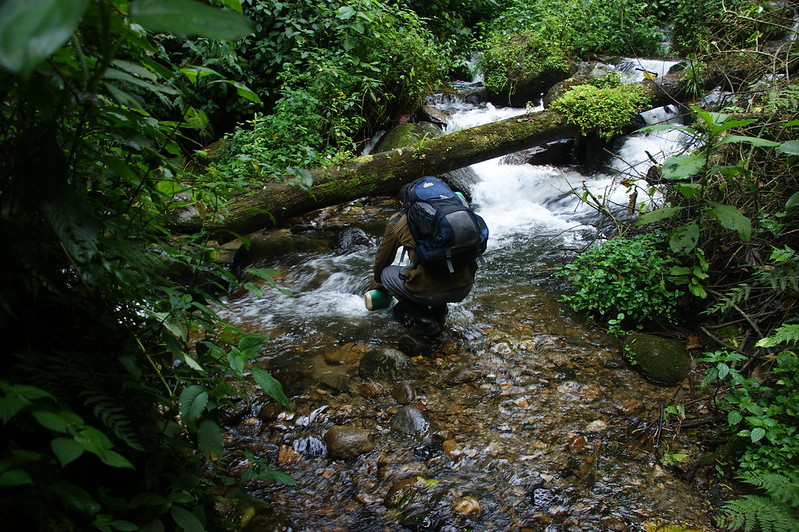
Avoid introducing any contaminant, including soap, sunscreen residue, or food waste, directly into a stream or lake; use only biodegradable personal care products, and even then only at the distance from water sources your guide recommends; and follow your guide’s direction on where and how drinking water is collected and treated, since safe collection points vary along the route and your guide will know the current ones.
Experience Rwenzori Beyond Expectations
Spots Filling Fast — Schedule Your Trek Today
Photography: Photograph the mountain, the wildlife, and your expedition as freely as you like, with three considerations in mind: keep a respectful distance from wildlife rather than approaching for a better angle, be mindful of fellow trekkers who may not want to appear in your shot without being asked, and take particular care around especially sensitive vegetation zones where stepping off the trail for a photograph causes exactly the damage discussed above. Some of the finest images on this mountain come from patience at a respectful distance rather than proximity.
Drones: Drone use inside Rwenzori Mountains National Park is restricted and, where permitted at all, generally requires prior authorization from the Uganda Wildlife Authority, this is not a park where you should assume you can simply launch one from camp. Restrictions of this kind are common across Uganda’s protected areas and can change without extensive public notice, so if flying a drone matters to your trip, confirm the current position directly with us or with UWA before you travel rather than packing one on the assumption that last year’s policy still applies.
Cultural Respect: The foothill communities you pass through on the approach to both trailheads are Bakonzo, the indigenous people of the Rwenzori and the source of nearly every guide and porter working on this mountain today, and the respect you extend to them shapes both your experience and the wider relationship between tourism and this park. Always ask permission before photographing anyone, whether at a roadside market or along the trail itself; take the time to understand and follow local customs around dress and behaviour, particularly in villages rather than deep wilderness; and look for chances to support community businesses directly, whether that is a craft stall, a locally run guesthouse, or a meal at a family-operated stop near Kasese. Tourism revenue that visibly benefits the Bakonzo community is, in our experience, the single strongest guarantee that this park’s conservation will be supported locally for generations rather than resented as an outside imposition.
Noise Levels: Keeping noise to a minimum on the trail and in camp is a small discipline with several genuine payoffs: wildlife is far more likely to reveal itself to a quiet group than a loud one, fellow trekkers sharing your hut or the trail behind you deserve the same wilderness experience you came for, and the Rwenzori’s particular value, as one of Africa’s least-visited major ranges, lies precisely in the quality of quiet it still offers. Portable speakers and loud conversation carry surprisingly far in still mountain air; a considerate volume at camp is one of the easiest ways to be a responsible fellow trekker.
Smoking, Alcohol, and Drug Policies: Smoking inside huts is not permitted, both for the comfort of shared accommodation and for basic fire safety in enclosed wooden structures; if you smoke, do so outdoors, away from other trekkers, and dispose of the butt in your own waste bag rather than the ground. Alcohol is not banned on the mountain, but common sense should guide its use, especially at altitude, where its effects are stronger and impaired judgement on exposed, technical terrain, particularly around summit day on Margherita Peak, significantly increases real physical risk. Illegal drug use is not tolerated on any of our expeditions, both as a matter of Ugandan law and because the mental clarity a technical alpine ascent demands is incompatible with impairment of any kind. Our guides are trained to prioritize safety over comfort and will make conservative calls on summit attempts and route timing where judgment, for any cause, is in question.
Health and Safety: Report any illness, injury, or unusual symptom to your guide immediately rather than waiting to see if it resolves on its own; altitude-related conditions in particular are far easier to manage when caught early than once they have progressed. Follow your guide’s instructions during the trek without exception, since their judgement is built on training in altitude illness recognition, weather pattern reading, and evacuation protocol that no amount of personal hiking experience elsewhere fully replicates in this specific range. Understand from the outset that your guide has both the authority and the responsibility to adjust your itinerary, including postponing or cancelling a summit attempt, if conditions or your own physical state give reason for caution — this is a safety mechanism, not an inconvenience, and we would rather bring every client home having missed a summit than push toward one against sound judgement.
Weather Decisions: Mountain weather in the Rwenzori changes with a speed that first-time trekkers consistently underestimate,clear morning skies can give way to driving rain and near-zero visibility within an hour, particularly on exposed ridges and the glaciated approach to Margherita Peak. Build genuine flexibility into your expectations before you arrive: itineraries may shift by a day, summit attempts may be postponed to a better weather window within your trip, or in rare cases cancelled outright if conditions do not improve, and none of this reflects a failure of planning so much as the basic reality of mountain travel at this latitude and altitude. Trekkers who arrive with rigid single-day summit expectations are, in our experience, the ones who struggle most when the mountain does what mountains do; those who build in a buffer day or two consistently have the better trip.
Conservation Responsibilities: Every trekker who enters this park contributes to its conservation in ways beyond simply following the rules above. Park entry and permit fees flow directly into the conservation and ranger programmes of the Uganda Wildlife Authority, meaning your booking itself is a material contribution before you take a single step. Beyond that, the cumulative choice to respect habitats, minimize your environmental footprint, and follow the guidance on this page compounds across the roughly one to two thousand trekkers who visit this range each year, keeping the Rwenzori’s impact per visitor far lower than at more heavily trafficked mountains. Responsible tourism of exactly this kind is, in the long run, what keeps a UNESCO World Heritage Site both accessible to travelers and intact for the ecosystems and communities that depend on it.
Common Mistakes to Avoid:None of what follows is a criticism, every guide on this mountain has watched capable, well-meaning trekkers make some version of these mistakes, and pointing them out plainly is more useful than pretending they don’t happen. Arriving with unsuitable footwear, typically trail-runners or fashion hiking boots without the ankle support or grip the Rwenzori’s mud demands, is the single most common regret we hear on day one. Leaving the marked trail, even briefly, to avoid a puddle or reach a better photograph angle causes exactly the vegetation and erosion damage discussed earlier, and it happens far more often through habit than through disregard for the rules. Underestimating the weather, packing a single light rain jacket for a mountain that can deliver sustained cold rain for days, is a close second, alongside packing too little genuinely waterproof clothing overall rather than layering redundancy into a kit list. Ignoring or second-guessing guide instructions, particularly around pace and turnaround decisions, is the mistake with the most serious potential consequences, and it is almost always driven by summit ambition outrunning sound judgement. And disturbing wildlife, even unintentionally through noise or a too-close approach for photographs, remains common enough that it is worth repeating: distance and quiet are what let you see more, not less.
Notes From the Trail: Practical Guide Insights The following are observations from our own guiding experience rather than official park regulations, offered because they consistently make the difference between a good trek and a difficult one.
Keep your waterproof shell accessible at all times, not buried at the bottom of your pack — Rwenzori weather changes faster than most trekkers can dig for a jacket, and the difference between reaching for it in ten seconds versus two minutes is often the difference between staying warm and starting a slow decline into a chill that’s difficult to reverse on the trail. Moving through the mountain’s notoriously muddy sections is its own small skill: rather than fighting for the driest-looking edge of the trail, which is usually where the vegetation damage from previous trekkers doing exactly that has already begun, walk the centre line your guide takes and accept that wet feet in rubber boots are a minor discomfort compared to a twisted ankle from an unstable edge. On narrow sections shared with other groups, basic trail etiquette—the descending party generally yielding to the ascending one, given how much harder it is to regain lost momentum going uphill keeps the whole day moving smoothly for everyone on the trail, not just your group. And when your guide’s tone shifts during a stretch of changing weather, that shift is worth listening to closely; experienced Rwenzori guides read incoming conditions well before they’re obvious to a first-time visitor, and the moments they choose to speak up are rarely idle chatter.
Combining Rwenzori Rules with a Gorilla Trekking Extension: Many of our clients pair a Rwenzori expedition with gorilla trekking in Bwindi Impenetrable Forest, and doing so responsibly means treating both activities’ rules as a single combined code of conduct rather than two separate sets. Gorilla trekking permits are booked separately through the Uganda Wildlife Authority and are limited in number, so confirm your Rwenzori and Bwindi dates align with enough transfer time between them before committing to either. Basic health precautions before gorilla trekking, including avoiding contact with the gorillas if you are unwell, protect a population highly vulnerable to human respiratory illness, and we build adequate rest time into combined itineraries so that a client arriving at Bwindi is not still physically depleted from a Margherita summit push days earlier.
Preparing to Trek: Getting There, Timing, and Gear
These rules sit within a wider set of practical planning questions we cover in depth elsewhere on our site, and it’s worth linking them together here rather than repeating them in full. Details on reaching the trailhead from Entebbe or Kampala are on our Getting to Rwenzori page; seasonal guidance for choosing your trekking dates is on our best time to visit Rwenzori page; a full account of the forest, bamboo, heather, and afro-alpine zones you’ll pass through is on our Rwenzori vegetation zones page; and a complete, itemised kit list — including the waterproof layers and rubber boots this mountain’s mud makes essential — is on our Rwenzori packing list page. If you are weighing which route to take, our Central Circuit Trail and Kilembe Trail pages set out the differences in full, and our dedicated Margherita Peak guide covers the technical summit day in detail for anyone making that their objective.
Your Printable Visitor Code of Conduct
Before you travel, it helps to have the essentials from this page in one place you can glance at the night before departure. Below is the condensed version we recommend printing or saving to your phone; the full downloadable checklist is also available from our team on request when you book.
Permits & Guide | Confirm your park permit and registered guide are arranged before arrival; independent entry is not permitted. |
Trail discipline | Stay on the marked trail and with your guide at all times, even in good weather. |
Wildlife | Observe from a distance, never feed animals, and keep noise levels down. |
Vegetation | Photograph, don’t pick, cut, or collect any plant, however common it looks. |
Waste | Pack out everything non-biodegradable; use latrines only for bodily waste. |
Fire | No open wood fires anywhere in the park; cooking is on gas, charcoal, or paraffin stoves only. |
Camping | Use approved huts and camps only, respect hut occupancy limits, and keep quiet hours. |
Water | No soap, sunscreen, or waste directly in streams or lakes; follow your guide on safe collection points. |
Drones | Confirm current authorization requirements with us or UWA before packing one. |
Culture | Ask before photographing people, and support community businesses where you can. |
Weather | Expect itinerary flexibility; summit attempts may shift for safety. |
Gear essentials | Full waterproofs, warm layers, sturdy boots, a headtorch, and a four-season sleeping bag. |
Experience Rwenzori Beyond Expectations
Spots Filling Fast — Schedule Your Trek Today
Frequently Asked Questions About Rwenzori Rules & Regulations
Do I need a permit to trek the Rwenzori Mountains?
Yes. A valid park permit issued by the Uganda Wildlife Authority is required for every trekker, arranged in advance through a licensed operator or directly with UWA.
Can I enter the park without a guide?
No. A registered guide is mandatory for both the Central Circuit and Kilembe Trail; independent, unguided trekking is not permitted inside Rwenzori Mountains National Park.
Are children allowed to trek in the Rwenzori Mountains?
Older children and teenagers with genuine trekking fitness and experience can join shorter, lower-altitude itineraries; we assess suitability individually given the technical demands of the higher routes.
Do I need travel insurance to trek?
It isn’t formally checked at the gate, but comprehensive travel insurance covering high-altitude trekking and emergency evacuation is strongly required by any responsible operator, including ours.
Is there an age limit for trekking Margherita Peak?
There’s no fixed legal age limit, but the technical summit day demands a level of fitness and judgement that we assess case by case, particularly for younger teens and older trekkers.
Trekking
Can I hike alone in the Rwenzori Mountains?
No. Guided trekking is mandatory throughout the park, both as a park regulation and as a genuine safety requirement given the terrain and weather.
Can I leave the group during a trek?
You should never leave your guide’s supervision or wander from the group without informing them; doing so removes the safety oversight the whole system is built around.
Can I camp anywhere I like on the mountain?
No. Camping is restricted to approved huts and designated campsites along the established routes, both to protect vegetation and to keep trekkers within reach of safety infrastructure.
How many people share a hut?
Standard huts along the busier sections of the Central Circuit typically hold up to sixteen trekkers per night, a limit set to prevent overcrowding and environmental strain.
Can I choose my route instead of the standard trail?
Custom itineraries combining sections of different trails are possible with proper planning, but you cannot deviate from the marked path during any given day’s trek.
What happens if I can’t keep up with the group’s pace?
Guides adjust pace to the group’s slowest capable member and will never abandon a struggling trekker; in more serious cases, a guide may accompany a trekker back down separately.
Can I feed the animals I see on the trail?
No. Feeding any wildlife is prohibited, since it habituates animals to humans in ways that harm both the animals and future trekkers.
Can I collect plants or flowers as souvenirs?
No. Picking, cutting, or collecting any plant material is not permitted, given how slowly Afro-alpine vegetation regenerates at altitude.
Can I take rocks or other natural objects home?
No. Leave No Trace principles apply to natural objects as much as to plants and wildlife; take photographs, not souvenirs.
What should I do if I encounter wildlife up close unexpectedly?
Stay calm, keep your distance, avoid sudden movements or loud noise, and follow your guide’s direction; never attempt to approach or touch the animal.
Are there dangerous animals on the Rwenzori trekking routes?
Direct dangerous encounters are rare on the established trails; the greater practical risks on this mountain are terrain and weather rather than wildlife.
Can I fly a drone in Rwenzori Mountains National Park?
Drone use is restricted and generally requires prior authorization from the Uganda Wildlife Authority; confirm current rules with us before bringing one.
Can I photograph local people in nearby villages?
Always ask permission first; it’s a simple courtesy that’s expected and appreciated throughout the Bakonzo communities around the park.
Are there restrictions on photographing wildlife?
Only a respectful distance and avoiding disturbance to the animal for photographs are formally required.
Can I livestream or use social media tools on the trail?
There’s no park rule against it, but signal is limited and unreliable above the lower forest zone, so plan accordingly.
What happens to rubbish generated during the trek?
All non-biodegradable waste is carried out of the park by trekkers or porters and disposed of properly off the mountain; designated bins exist only at specific points, not throughout.
Can I light a campfire at camp?
No. Open wood fires are banned throughout the park; cooking is done on gas, charcoal, or paraffin stoves managed by your guide and porter team.
Is it okay to wash with soap in a mountain stream?
No, or only with fully biodegradable products used well away from the water source, following your guide’s direction on safe practice.
Why can’t I pick even one flower if there are so many?
Afro-alpine plants at this altitude grow extremely slowly, and cumulative small losses across thousands of annual visitors add up to real ecological damage over time.
Are there recycling facilities on the mountain?
No; all waste, recyclable or not, must be carried out of the park rather than sorted on-site.
What happens if the weather turns bad during my trek?
Your guide may adjust the day’s plan, delay a summit attempt, or in rare cases end it early; this flexibility is a core safety mechanism rather than a service failure.
What if I get altitude sickness?
Report symptoms to your guide immediately; mild cases are managed with rest and monitoring, while worsening symptoms mean a controlled descent, always prioritized over continuing.
Is smoking allowed on the mountain?
Not inside huts; if you smoke, do so outdoors away from others and pack out the waste.
Is alcohol allowed during the trek?
It isn’t banned outright, but its use is discouraged, particularly at altitude and around summit attempts, given its effect on judgement and physical performance.
What emergency support exists if something goes wrong?
Guides are trained in altitude illness management and basic emergency response, and evacuation procedures exist for serious situations, though response times reflect the mountain’s genuine remoteness.
Can my itinerary be changed once the trek has started?
Yes; guides retain authority to adjust pacing, routes, and summit timing throughout the trek based on conditions and trekker well-being.
Do I need any vaccinations before trekking?
General travel vaccinations for Uganda apply; if combining with gorilla trekking, additional health precautions protect the gorilla population from human illness.
Experience Rwenzori Beyond Expectations
Spots Filling Fast — Schedule Your Trek Today
Walk Across Millions of Years of Earth’s History
Every step on the Rwenzori Mountains crosses ancient rock, glacial valleys, and landscapes shaped by tectonic forces that have been at work for millions of years. Trekking here is a physical adventure and, at the same time, a walk through one of Africa’s most remarkable geological stories, one that our guides are as glad to explain on the trail as they are to lead you safely along it.
You don’t need a geology background to appreciate what you’re walking through here; you just need a guide to point it out. That is precisely what we offer: local experts who know this mountain’s rock as well as their own trails and who plan every itinerary around the terrain’s real demands rather than a generic template. Every detail, from acclimatisation to route timing to what you’ll see at each turn, is planned in advance, so nothing is left to chance once you’re on the mountain.
Experience Rwenzori Beyond Expectations
Spots Filling Fast — Schedule Your Trek Today
The DOs and DON’Ts, or rules and regulations for hiking in the Rwenzori Mountains in Rwenzori National Park are as follows. These rules & regulations are intended to protect the park for both current and future generations.
The Ugandan government, in collaboration with the Uganda Wildlife Authority (UWA) and the Uganda Tourism Board (UTB), has established rules & regulations managing Rwenzori National Park, a UNESCO World Heritage Site. Adhere to the park’s restriction of 16 individuals per hut each night.
- Please refrain from discarding non-flammable or biodegradable materials such as cans, plastic, and aluminum foil in the park. Make sure you or your porters remove these objects from the park after personally gathering them.
- Please dispose off all bodily waste in the latrines.
- Show consideration for people in the huts by sharing stoves, chatting quietly (no radios), and sharing space. Crowded places can be significantly more enjoyable when basic civility and politeness are demonstrated.
- Note the ban on wood fires. It is not permitted to create fires in the park using local wood. Use the provided gas or charcoal or your own paraffin stove. Please bring as little equipment as possible out of consideration for your porters. Additional personal equipment results in increased loads or the necessity for extra porters, which adversely affects both the porters and the environment.
- Reduce trail damage by adhering closely to your guide and refraining from creating new route. With each new route established by a hiker, the trails expand, and vegetation transforms into mud.
- Trekking Permits: Acquiring the correct permits is essential for hiking in the Rwenzori Mountains. The Uganda Wildlife Authority (UWA) issues these permits, which are essential for managing tourist numbers and safeguarding the delicate ecosystem.
- Types of Permits: Permits vary according on the type and length of the trek. Common permits encompass the Rwenzori National Park entry permit and designated climbing licenses for peaks such as Margherita.
- How to Apply: You should apply for permits well in advance of your hike. The application procedure requires the submission of personal information, preferred trekking dates, and payment verification. Permits may be acquired via the UWA website or through accredited tour operators such as Rwenzori Trekking Expeditions.
- Qualifications for Guides and Porters: It is necessary to hire knowledgeable porters and guides when trekking in the Rwenzori Mountains. These local professional guides are crucial for negotiating the difficult terrain and guaranteeing security.
- Guides: Competent guides have comprehensive expertise regarding the Rwenzori treks, weather patterns, and evacuation procedures. They assist trekkers in conquering the hardest stages of the hike and offer significant knowledge regarding the local ecosystem and fauna.
- Porters: Porters help hikers carry supplies and equipment so they may concentrate on the ascent. Hiring native porters guarantees a more enjoyable hiking trip while also benefiting the community.
- Principles of Leave No Trace: Preserving the immaculate nature of the Rwenzori Mountains is key. Complying with Leave No Trace principles reduces ecological impact.
- Waste Management: Trekkers are required to remove all waste from the park. This encompasses refuse, food leftovers and personal sanitation items. Designated garbage disposal locations are established at base camps.
- Camp Management: To avoid causing harm to the plants, campsites should be set up in approved locations. Make sure you only use fires in locations that have been allowed and abide by the rules when setting up tents.
- Conservation of Fauna and Flora: The Rwenzori Mountains are home to numerous endemic species and fragile vegetation. Safeguarding these natural resources is essential to safeguarding biodiversity.
- Respect Wildlife: Don’t feed animals and stay a safe distance away from them. Engagements with wildlife must be limited to avert habituation and disruptions.
- Conserve Vegetation: To avoid trampling on delicate plants, stick to designated Rwenzori trekking Routes. Do not pick plants or tamper with the natural environment.
- Health and Safety Measures: Prioritizing personal safety and health is crucial during the expedition. Following safety guidelines reduces the risk of accidents and health problems.
- Acclimatization: Adequate acclimatization is essential for minimizing altitude sickness. Incrementally elevate to greater elevations and provide your body adequate time to acclimatize.
- Emergency Preparations: Acquaint yourself with safety measures and evacuation routes. Possess a fundamental first aid pack and notify guides of any medical issues.
- Integrating a hike in the Rwenzori Mountains with gorilla trekking in Bwindi Impenetrable National Park provides a distinctive and interesting experience. Complying with regulations for both activities guarantees a smooth and responsible experience.
- Organizing Permits: Gorilla trekking requires separate permits, which can be acquired from the Uganda Wildlife Authority. Confirm that your trekking dates coincide with both events to prevent booking difficulties.
- Health and Safety Tips/Health Precautions: Before participating in either activity, be sure you are healthy and have had the necessary immunizations. This covers immunizations against illnesses that can impact Gorillas.
- Switching Between Activities (Logistics): When planning your itinerary, make sure to factor in enough time for transport between the Bwindi Impenetrable National Park and the Rwenzori Mountains. Work together with tour operators to guarantee a seamless changeover and optimize logistics.
- Cultural Sensitivity(Honoring Local Communities): Engagement with Local Communities Building goodwill and promoting sustainable tourism require respect for local populations, such as the Bakonzo people who live near the Rwenzori Mountains.
- Cultural Respect: Show consideration for local customs and traditions while interacting with them in a courteous manner. Respect local customs and get permission before snapping pictures.
- Economic Impact: Local economies can be significantly impacted by tourism. By buying goods, services, and crafts from locals, you may support small businesses.
- Physical Preparation/ Training: Sufficient physical preparedness is crucial for navigating the difficult topography of the Rwenzori Mountains. Participate in cardiovascular exercise, resistance training, and trekking to enhance endurance.
- Gear and Equipment(Essential Equipment): Make sure you have climbing equipment, waterproof clothes, and good hiking boots. Appropriate equipment guarantees comfort and safety throughout your expedition.
- Travel Insurance/ Insurance Coverage: Acquire extensive travel insurance that encompasses hiking activities, including emergency evacuation and medical costs. This ensures tranquility in the event of unexpected situations.
Conclusion: Guaranteeing a Responsible and Indelible Expedition
Compliance with the laws and regulations for hiking Mountain Rwenzori is crucial for guaranteeing a safe, enjoyable, and environmentally sustainable experience. By obtaining necessary permissions, adhering to environmental and safety regulations, and honoring local communities, trekkers can aid in the conservation of the Rwenzori Mountains while enjoying the exhilaration of one of Africa’s most breathtaking mountain ranges. For expert advice and assistance regarding your Rwenzori hiking expedition, reach out to Rwenzori Trekking Expeditions. Our crew is committed to assisting you in navigating the regulations and optimizing your experience in this stunning area.