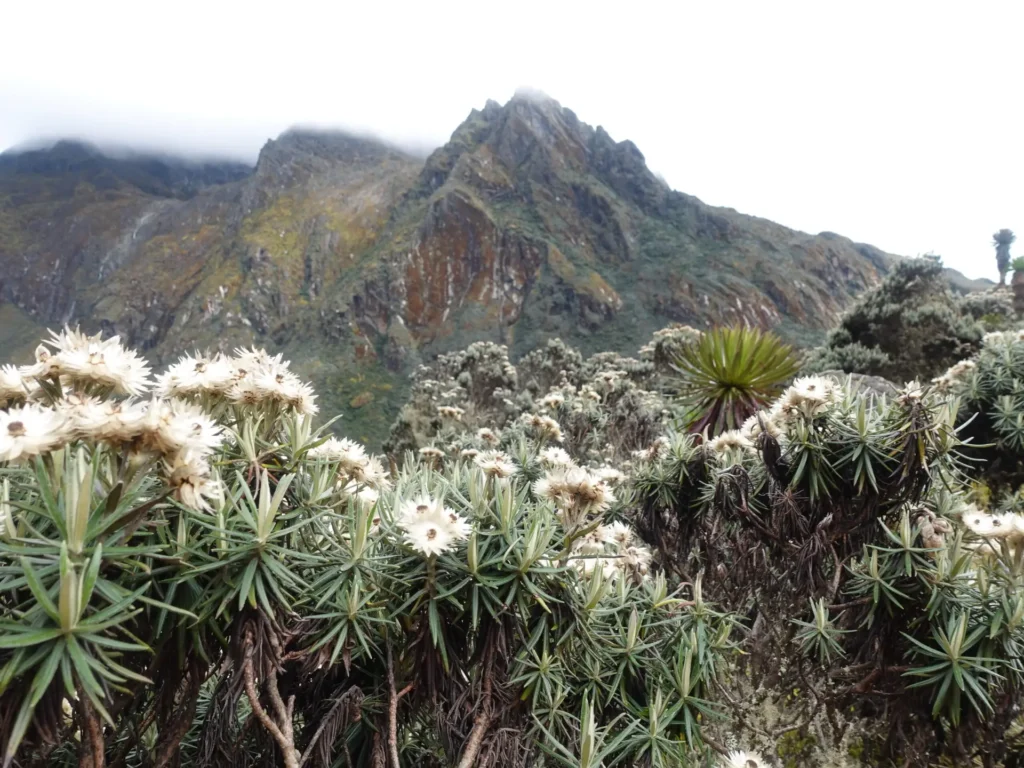
Day 1: Arrival – Transfer to Nyakalegija in Kasese
Your Rwenzori Trekking Expeditions representative meets you at Entebbe International Airport or your Kampala hotel and settles you into a private 4WD vehicle for the westward journey to Kasese. The road crosses the equatorial interior of Uganda, the suburban outskirts of Kampala giving way to red-earth farmland, the expansive papyrus wetlands of the Katonga, and the western rift valley opening into space and eventually delivers the Rwenzori onto the horizon: dark, vast, cloud-wrapped, generating its own weather with the authority of a range that has been doing so for millions of years. By the time Kasese appears, the mountain fills the western sky in a way that photographs never quite prepare you for.
Your guesthouse in Kasese is comfortable and calm, the right energy for the eve of a seven-day Mount Gessi Rwenzori expedition. Over dinner, your lead guide conducts the pre-trek briefing with the thoroughness that this itinerary’s altitude profile demands: the Central Circuit Trail’s character, the Gessi approach terrain, the altitude management strategy at Bujuku and Gessi High Camp, the specific character of the Bottego Peak summit, and the emergency protocols above 4,000 meters. Equipment is checked and confirmed tonight. The morning and the mountain will not wait.
Day 2: Nyakalengija Gate (1,646m) – Nyabitaba Hut (2,651m)
After breakfast and the short drive to Nyakalengija Gate, the northern entry point to Rwenzori Mountains National Park, Uganda Wildlife Authority permit formalities are completed while the Bakonjo porter team loads with the efficient calm of professionals who have worked every season the mountain produces. The trailhead crossing marks a clear transition: within ten minutes of entering the park, the forest has closed completely and the outside world has receded entirely.
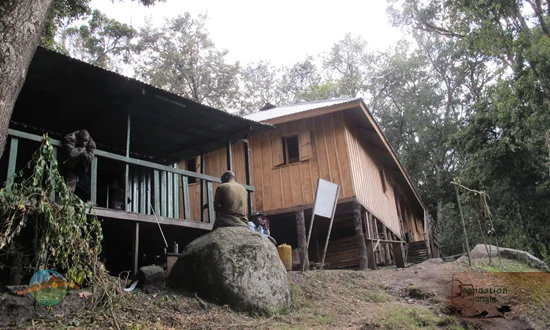
The lower Mubuku River valley forest is the Rwenzori at its most tropically abundant: tall Podocarpus trees draped with moss and epiphytic ferns, the river audible below, and the canopy alive with Colobus monkeys and Rwenzori turacos. The birding here is exceptional, and your guide’s knowledge of the forest’s avifauna turns every rest stop into a sighting opportunity. The Rwenzori turaco, the handsome spurfowl, the African hill babbler, and the various sunbird species that patrol the forest margins are all reliably present in this section. The trail climbs steadily through the upper forest as the character transitions to giant heather, and Nyabitaba Hut arrives on its ridge perch in the mid-afternoon, with views down the valley and the first cool air of altitude. Hot dinner, early night, and the particular silence of a mountain camp above the treeline.
Day 3: Nyabitaba Hut (2,651m) – John Matte Hut (3,505m)
The river crossing below Nyabitaba on the suspended log bridge marks the transition into the Rwenzori’s most celebrated ecological character. The trail climbs through bamboo and then giant heather, its trunks at this elevation as thick as a trekker’s torso, encased in meters of accumulated moss, before the heather opens into the extraordinary Afro-alpine moorland that has earned the range the title of Africa’s Galapagos.
Giant groundsel trees (Senecio adnivalis) stand five meters tall, their prehistoric rosette heads mounted on shaggy bark-wrapped trunks. Giant lobelias (Lobelia wollastonii) erupt from the saturated peat in two-meter spires. Between them, the trail winds through sphagnum moss gardens and tussock grass, the Bujuku River following the valley below, waterfalls audible from unseen sources in the clouds above. The upper valley has a scale and a remoteness that are felt as physical sensations; the mountain is large here in the specific way that high, open terrain makes largeness felt in the body as well as perceived by the eye. John Matte Hut, at 3,505 meters, named for the renowned Ugandan mountain guide who became one of the Rwenzori’s most celebrated figures, sits at the head of this valley with the central peaks massing above it on clear evenings.
Day 4: John Matte Hut (3,505m) to Bujuku Hut (3,977m), Acclimatisation & Rest
The approach to Bujuku Hut from John Matte is a shorter but richly scenic four- to five-hour day through the Portal Peaks section of the Central Circuit, where the full Bujuku Valley cirque opens before the trail in a natural amphitheater of extraordinary scale. The peaks of Speke, Baker, and Stanley close the valley’s head. Bujuku Lake, at the valley’s heart, catches whatever sky the Rwenzori chooses to offer: on clear days, a deep blue mirror; on cloudy days, a dark slate surface that reflects the moving grey above.

The Rwenzori mud reaches its full expression in the Bujuku valley floor, deep peat negotiated on a trail system of log bridges that reward attention and build a particular kind of confident engagement with mountain terrain. Your porters navigate it with fluency; you navigate it with gaiters and poles and the growing assurance of someone who has been in this landscape for three days and has begun to understand its character.
The afternoon at Bujuku Hut is dedicated to acclimatization at 3,977 meters, the most important afternoon of the expedition’s middle section. Hydration, rest, a gentle walk around the hut perimeter to keep the body moving without taxing it, and your guide’s pulse oximeter check to confirm that blood oxygen saturation is at the expected level for this altitude. The acclimatization afternoon at Bujuku is the investment that makes the Gessi summit possible the day after tomorrow. The cold here is genuine; nights at Bujuku drop to near 0°C even in the dry season, and the sleeping bag rated to -5°C earns its pack weight on this night.
Guide Insight: “People often ask why we spend a night at Bujuku before going to Gessi High Camp. The answer is altitude arithmetic; going from John Matte at 3,505 m directly to High Camp at 4,300 m in one day is too much gain too fast. Bujuku provides the body one night at altitude before the final push. That extra night is the difference between a summit attempt and a summit.” Lead Guide, Rwenzori Trekking Expeditions |
Day 5: Bujuku Hut (3,977m) – Hike up Gessi High Camp (~4,300m) Summit Preparation
The branch trail toward the Gessi massif leaves the main Central Circuit route east of Bujuku Lake and climbs into terrain that most trekkers passing through the Bujuku basin have never taken. Within the first thirty minutes, the established trail character of the circuit gives way to a narrower, rockier path that ascends the eastern edge of the basin toward the Gessi approach ridge, and with it, the quality of solitude that this expedition’s remoteness delivers. The Bujuku basin is still visible below, with Bujuku Hut a small structure on the moorland. Above, the Gessi massif’s rocky upper terrain fills the eastern horizon.
The approach to Gessi High Camp gains approximately 320 meters from Bujuku Hut, a shorter gain than many days on this itinerary, but at an altitude where every hundred meters of gain is felt with a clarity that lower elevations cannot produce. The terrain above the Bujuku basin is boulder-strewn and open, with the cushion plant communities and high moorland grasses of the Rwenzori’s uppermost non-glacier zone replacing the giant lobelias and heather of the lower altitude. The air is thinner, cleaner, and carries the particular quality that altitudes above 4,000 meters universally produce: a stillness and a sharpness that make the senses more acute rather than less.
Gessi High Camp, at approximately 4,300 meters, is the expedition’s highest sleeping position and the most exposed camp of the entire route, a rocky plateau above the main moorland with an unobstructed view westward over the Bujuku Basin, north toward the Porter Peaks, and south toward the central massif. The camp setup here is deliberate and efficient: your porter team has everything positioned, and the cook has the stove running before the main trekking party arrives. The summit briefing covers the dinner route to Bottego Peak, the technical nature of the summit terrain, the departure time, the pace protocol, and emergency procedures. The alarm is set for 5:00 AM. The stars at 4,300 meters on a clear night are not an incidental detail.
Day 6: Summit Day — Bottego Peak (4,715m) → Return to Bujuku Hut
The alarm at 5:00 AM in the cold of Gessi High Camp is followed by a breakfast of hot porridge and tea, the specific fuel that altitude and cold morning air require, before the rope team assembles in the pre-dawn light for the final ascent. The stars are still visible above the western massif as the first steps are taken from camp toward the Gessi approach ridge, headlamps illuminating the boulder terrain, the Bujuku basin invisible in darkness below. 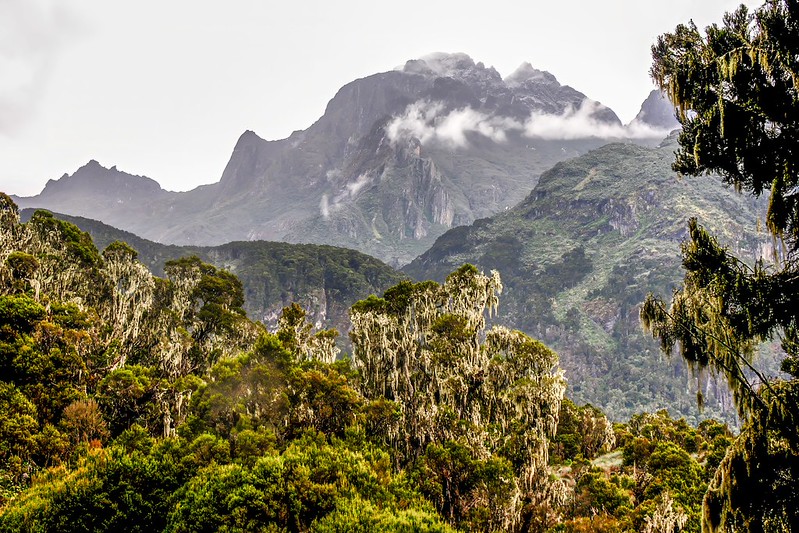
The ascent to Bottego Peak from High Camp takes approximately three to four hours, climbing through the boulder terrain and rocky ridge sections that characterize the Gessi massif’s upper approach. There is no glacier on this route; Bottego Peak is the highest Rwenzori summit accessible on trekking terrain alone, but the rocky scrambles of the upper ridge require hands as well as feet on the steeper sections and a good head for exposure. Your guide leads through the technical sections with the specific efficiency of someone who has made this ascent many times and knows precisely where to place each step.
Bottego Peak arrives in the late morning with a completeness of arrival that remote summits provide: no other trekkers, no infrastructure, and no noise except for the wind and the occasional clatter of rock dislodged somewhere below. At 4,715 meters, the highest non-glacier point in the Rwenzori range, the view is one that few trekkers in East Africa have ever experienced from this angle. The Stanley massif and Margherita Peak are to the west, their glaciated faces close enough to read in detail from this elevation. Speke and Baker stand to the northwest. The Bujuku basin is below, and the Central Circuit Trail is a thread through the moorland. Uganda spreads east and south below the mountain’s lower slopes. The Congo Basin is a dark mass to the west, its equatorial forest stretching to the horizon.
“Bottego Peak gives you the central Rwenzori massif as a subject rather than as a place you are standing on. You see Stanley and Margherita from the outside, from across the basin, at an angle that the summit expeditions cannot provide. For understanding what this mountain range actually looks like, it is the finest viewpoint in the Rwenzori.” — Senior Guide, Rwenzori Trekking Expeditions |
The summit registers, less frequently signed than those on the major summits, receive your names and the date. Photographs are taken with the unhurried attention that a summit reached after six days of sustained effort deserves. And then the descent: careful on the rocky upper sections, progressively more confident as the terrain eases toward High Camp, and then the long descent through the approach terrain back to Bujuku Hut for the night. Bujuku in the evening, familiar now, comfortable in the way that a place known through two previous nights becomes comfortable, receives the returning team with hot food and the warm satisfaction of a summit day completed.
Day 7: Bujuku Hut – Descent to Nyakalengija to Kasese then Return Transfer
The descent day covers the full Central Circuit’s main approach in reverse, from Bujuku Hut through the Bujuku Valley moorland and Portal Peaks section, descending to John Matte Hut (a brief rest stop) and then down through the bamboo and giant heather to Nyabitaba, and finally through the lower montane forest to Nyakalengija. It is the longest single trekking day of the expedition in terms of elapsed distance, and the body that makes it feels the cumulative weight of the six preceding days. It is also, in the specific way of mountain returns, one of the most satisfying days.
The forest re-entered in the final two hours of descent is the same forest that opened the expedition five days ago but is now encountered from the other side of a summit and with the depth of familiarity that spending seven days on a single mountain creates. The colobus monkeys in the upper canopy, the sound of the Mubuku River below, and the quality of light through the Podocarpus canopy in the afternoon are all the same and all are different in the perception of a trekker returning from 4,715 meters rather than approaching it for the first time.
The trailhead at Nyakalengija marks the formal end of the mountain section of the expedition. The farewell to the Bakonjo porter team, conducted with the specific ceremonial warmth of a tradition that has been practiced on this mountain for generations, carries a weight that organized travel rarely produces. These individuals managed the expedition’s logistics for seven days under conditions that most travelers never encounter, demonstrating professionalism and mountain knowledge that your guide will speak of with genuine respect. The vehicle is waiting. The cold drinks are in the cooler. The return to Kasese and then to Kampala or Entebbe completes an expedition that has earned its weight in memory.
Day-by-Day Altitude Profile
Day | Location / Camp | Altitude |
Day 1 | Kasese (overnight guesthouse) | ~1,000m |
Day 2 | Nyakalengija Gate → Nyabitaba Hut | 1,646m → 2,651m |
Day 3 | Nyabitaba Hut → John Matte Hut | 2,651m – 3,505m |
Day 4 | John Matte Hut → Bujuku Hut (rest afternoon) | 3,505m – 3,977m |
Day 5 | Bujuku Hut → Gessi High Camp | 3,977m – ~4,300m |
Day 6 | High Camp, Bottego Peak, Bujuku Hut | ~4,300m – 4,715m → 3,977m |
Day 7 | Bujuku – John Matte – Nyabitaba – Nyakalengija – Kasese | 3,977m – 3,505m – 2,651m – 1,646m |
7-Day Mount Gessi vs. 9-Day Margherita Rwenzori Summit Treks
Feature | Mount Gessi — 7 Days (This Trek) | Margherita Peak—9 Days |
Duration | 7 Days | 9 Days |
Summit | Bottego Peak, Mt Gessi (4,715m) | Margherita Peak (5,109m) |
Glacier Travel | No! Highest non-glacier Rwenzori summit | Yes! crampons & ice axe required |
Difficulty | Challenging to Very Challenging | Very Challenging, technical |
Altitude Risk | Significant above 4,000m | High above 4,000m |
Summit Solitude | Very high few trekkers reach Bottego | Moderate, established summit route |
Panoramic View | Full central massif from the east | DRC plains and Uganda from above glacier |
Technical Skills | None, rocky scramble approach | Glacier mountaineering skills required |
Acclimatisation | Bujuku night at 3,977m before Gessi | Multiple nights above 3,500m |
Best For | Serious trekkers, Rwenzori solitude seekers | Climbers, summit collectors, glacier enthusiasts. |
What Is Included in the 7-Day Mount Gessi Trek?
The 7-day Mount Gessi Rwenzori trekking expedition is offered as a fully inclusive package. Rwenzori Trekking Expeditions curates and manages every element, from private airport transfer to the completion certificate at the trek’s end. There are no hidden permit charges and no logistical gaps between you and the summit.
Category | What Is Covered |
Transfers | Private return transfers: Entebbe/Kampala, Kasese, Nyakalengija |
Park Fees & Permits | Uganda Wildlife Authority entry and trekking permits for all days |
Guide Services | Certified lead guide throughout; assistant guides per group size |
Porter Team | Full Bakonjo porter team for group and communal equipment |
Accommodation | Nyabitaba, John Matte, Bujuku Huts & Gessi High Camp, and Kasese guesthouse (Nights 1 & 7) |
All Meals on Trek | Full board: breakfast, lunch, dinner, and hot drinks throughout |
Emergency Equipment | First aid kit, pulse oximeter, supplemental oxygen, rescue coordination |
Pre-Trek Briefing | Full route brief, equipment check, and altitude awareness session in Kasese |
Summit Certificate | Mount Gessi / Bottego Peak summit certificate |
Rescue Insurance | Mountain rescue insurance included in expedition fee |
What Is Excluded?
Category | Notes |
International Flights | Arrange independently via your preferred carrier |
Uganda Visa | USD 50 on arrival or via evisa.go.ug in advance |
Travel Insurance | Required; must include medical evacuation cover |
Personal Porter | Available at additional cost; strongly recommended |
Gratuities | For guides and porters, voluntary but culturally important |
Alcoholic Beverages | Not provided at mountain huts |
Personal Gear | Your personal trekking equipment (see packing list) |
Pre/Post Accommodation | Kampala or Entebbe hotel nights before/after trek |
Safari Extensions | Gorilla trekking and game drives are arranged separately on request |
The 7-day Mount Gessi Rwenzori trek is classified as challenging to very challenging, a serious mountain trek that requires excellent physical fitness, genuine multi-day trekking experience, and a respectful understanding of high-altitude physiology. It is not technically demanding in the glacier mountaineering sense; there are no crampons, no ice axe, and no roped glacier sections on this route, but the summit of Bottego Peak at 4,715 meters requires rocky scrambling on exposed terrain at high altitude, and the overall expedition makes physical demands that should not be underestimated.
The daily trekking times of five to eight hours, the sustained altitude gain from 1,646 meters at the trailhead to 4,715 meters at the summit, and the long descent day on Day 7 all require a cardiovascular and musculoskeletal fitness base that regular exercise alone does not provide without specific mountain preparation. The altitude above 4,000 meters, reached on Day 5 and sustained through Day 6, presents a genuine altitude sickness risk that the itinerary’s acclimatization design mitigates but cannot eliminate. The rocky upper terrain of the Gessi approach and the exposed summit ridge demand a confident head for heights and the ability to move on uneven, steeply inclined rock with sure footwork.
Our preparation recommendation: three to four months of sustained cardiovascular training combining running, cycling, and loaded-pack hill walks, with particular emphasis on long days (six to eight hours) in the final six weeks before departure. Prior multi-day trekking experience, ideally at altitude, is strongly recommended. The Mount Gessi expedition is not an appropriate first mountain expedition; it is the right choice for an experienced trekker ready for the Rwenzori’s upper altitude without the glacier commitment of the Margherita routes.
Category | Assessment |
Overall Difficulty | Challenging to Very Challenging |
Daily Trekking | 5–8 hrs (Days 2–5); 8–10 hrs (Day 6 summit); long day (Day 7) |
Max Elevation | 4,715 m — Bottego Peak, Mount Gessi |
Total Altitude Gain | ~3,070m over 4 ascending trekking days |
Terrain | Forest, moorland, boulder field, rocky summit scramble |
Altitude Risk | High above 4,000m, AMS protocols applied |
Technical Sections | Rocky scramble on summit ridge, exposed, hands required |
Glacier Travel | None. Highest non-glacier Rwenzori summit |
Minimum Fitness | Excellent 3–4 months structured prep advised |
Prior Experience | Multi-day mountain trekking strongly recommended |
Best Time for the 7-Day Mount Gessi Trek
The Mount Gessi expedition shares the Rwenzori’s general seasonality and is particularly affected by conditions on the upper Gessi approach terrain, a rocky, open ridge that becomes significantly more demanding in wet, icy, or high-wind conditions outside the primary dry season. For this reason, the primary dry season is more strongly recommended for the Gessi summit than for some of the lower-altitude Rwenzori treks, and we schedule most departures accordingly.
Primary Season: June to August
The East African long dry season provides the best conditions for navigating the Gessi approach terrain, with less trail mud, a dry and secure rocky summit ridge, and summit day weather that is most likely to deliver the panoramic clarity that Bottego Peak’s eastern position offers.
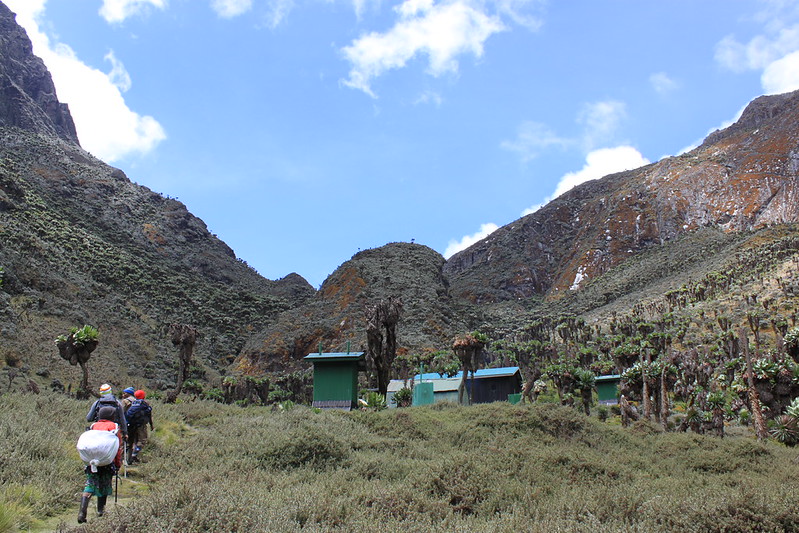
The view of the central massif from Bottego Peak on a clear July or August morning, Stanley and Margherita in full and unobscured from 4,715 meters, is one of the finest mountain views in Africa. This time is the period of highest demand; book six to nine months in advance.
Secondary Season: December to February
Uganda’s short dry season is an excellent alternative window, with summit conditions approaching those of the primary season. January is particularly reliable for clear summit mornings on the Gessi, and the low trekker volumes of this month deliver a mountain solitude that the peak season cannot match. The Bujuku basin and Gessi-approach terrain in January have a sharp, cold quality, the air is clear, the views are long, and the experience of the mountain is at its most distilled.
Shoulder Seasons: Not Ideal for Summit Attempts
The wet-season shoulder months, March through May and September through November, bring increased precipitation to the upper Gessi terrain, making the rocky summit ridge significantly more challenging and cloudy summit days more likely. In these months, the lower forest and Bujuku basin offer an atmospheric and biologically rich experience, but trekkers will find the Gessi summit experience compromised. Trekkers whose schedules require shoulder-season departures should discuss realistic summit expectations with our team before booking and may prefer the 4-day John Matte Hut itinerary as an alternative for this period.
How to Get to the Rwenzori Mountains
The Rwenzori Mountains National Park is located in western Uganda near Kasese town, approximately 370 kilometers from Kampala and 420 kilometers from Entebbe. The Central Circuit Trail begins at Nyakalengija Gate, a short drive from Kasese on a laterite road through the Rwenzori foothills.
Entebbe International Airport (EBB) is the primary international gateway, served by Kenya Airways, Ethiopian Airlines, Turkish Airlines, Qatar Airways, RwandAir, and others. Aerolink Uganda operates domestic flights from Entebbe to Kasese Airport (approximately one hour), subject to schedule availability. Rwenzori Trekking Expeditions privately arranges all airport transfers and road logistics in comfortable 4WD vehicles. The overland drive from Kampala or Entebbe to Kasese takes five to six hours through Uganda’s western equatorial landscapes.
What Should I Pack for the 7-Day Mount Gessi Trek?
Packing for the Mount Gessi expedition requires the same layering strategy as any Rwenzori high-altitude trek, with one additional consideration: the summit day on the rocky Gessi ridge requires footwear with sufficient ankle support and sole grip for scrambling on exposed, potentially damp rock at 4,500+ meters. There is no glacier travel on this route, so crampons and an ice axe are not required. Everything else is standard high-altitude Rwenzori equipment.

Item | Notes |
Waterproof Boots | Ankle-support, waterproof, stiff sole, broken in before trek |
Gaiters | Knee-length, essential for Bujuku valley mud |
Waterproof Jacket | Full outer shell, Gore-Tex quality required |
Waterproof Trousers | Essential from John Matte Hut upward |
Base Layer | Moisture-wicking thermal top, merino wool preferred |
Mid Layer | Fleece or down vest |
Heavy Down Jacket | Required for Gessi High Camp and summit morning |
Warm Hat & Gloves | Essential at high camp, temperatures are below -5°C before dawn |
Trekking Poles | Adjustable, essential for moorland and descent; stowed on summit scramble |
Sleeping Bag | -10°C rated minimum, Gessi High Camp is cold and exposed |
Sleeping Liner | Adds warmth; maintains hut hygiene |
Headlamp | With spare batteries, summit departure is pre-dawn |
Dry Bags | To protect electronics, sleeping kit, spare clothing |
Water Bottles | 2–3 litres; purification tablets as backup |
Sunscreen | SPF 50+ — UV intensity significant above 4,000m |
Sunglasses | UV400-rated, clear days at altitude require eye protection |
Binoculars | 8×42—forest and moorland birding throughout |
Personal First Aid | Blister care, personal medications, Diamox (consult physician) |
Camera | Waterproof case: moisture is constant below 4,000 m. |
How Safe Is the 7-Day Mount Gessi Trek?
The Mount Gessi expedition presents no glacier hazards; there is no ice travel on this route, and no technical climbing equipment is required. Its primary safety considerations are altitude sickness above 4,000 meters and the exposed rocky terrain of the Gessi summit ridge, which requires careful footwork and a confident head for heights but presents no technical climbing hazard with proper guidance.
All lead guides hold Uganda Wildlife Authority certification and wilderness first aid qualifications. Every party carries a comprehensive first aid kit, a pulse oximeter for blood oxygen monitoring from Day 3 onward, supplemental oxygen for altitude emergencies, and emergency communication equipment. The Gessi High Camp at approximately 4,300 meters is the expedition’s most exposed sleeping position, and the guide’s assessment of weather and wind conditions on summit morning determines whether the attempt proceeds or is held. The summit ridge’s exposed rocky character means that summit attempts in high-wind or wet conditions are modified or postponed rather than forced. Mountain rescue insurance is included in the expedition fee.
Safety Element | Provision |
Guide Certification | UWA accredited; wilderness first aid trained |
Medical Equipment | First aid kit, pulse oximeter, supplemental oxygen per group |
Altitude Monitoring | Blood oxygen is tracked from Day 3 with an oximeter. |
Summit Ridge Protocol | The guide assesses conditions; rocky scramble sections guided individually |
Weather Assessment | Daily check; summit timing adjusted for optimal conditions |
Rescue Coordination | Emergency communication; mountain rescue insurance included |
Porter Welfare | Proper equipment, living wages, formal welfare policy |
Pre-Trek Health Screen | All clients complete health disclosure before departure |