Rwenzori Mountains Beginner's Guide For Trekking & Climbing
The Rwenzori Mountains in Rwenzori Mountains National Park are located in East Africa, at the border between Uganda and the Democratic Republic of Congo. The Rwenzori Mountains are situated inside the Albertine Rift of the western section of the East African Rift Valley. The Rwenzori Mountains are renowned for their high peaks, which are among Africa’s tallest, establishing Uganda as an outstanding destination due to their significance. The Rwenzori Mountains, characterized by towering peaks, stunning landscapes, and a rich diversity of ecosystems, are designated as a UNESCO World Heritage Site due to its natural wonders and extraordinary beauty.
The Rwenzori Mountains are distinctive due to their peculiar phenomenon of possessing snow and snowy summits, despite their geographical location. The Rwenzori Mountains exhibit diverse climatic conditions, ranging from tropical rainforests to snow-capped peaks, making it one of the few locations on Earth where one may experience many climate variations in a same area
Why Rwenzori Mountains Are Called "Mountains Of The Moon"
At first, the inhabitants called the mountain a rainmaker, connecting the quantity of rainfall to their gods’ tales. Subsequently, when the ancient Greek photographer Ptolemy saw the mountain, he designated it as the Mountains of the Moon because of its cloudy, mist-laden, snow-capped, and fog-covered peaks. Ptolemy claimed that the Rwenzori Mountains were connected to the source of the Great Nile River, a claim subsequently validated by later explorers.
. The Rwenzori Mountains are perpetually snow-covered due to their great elevation, which exceeds 5,109 meters (16,404 feet) above sea level, despite the fact that, the Rwenzori Mountains’ proximity to the equator is believed to be linked to hot temperatures that prevent the mountains from having snow and glacier peaks
How High Are The Rwenzori Mountains
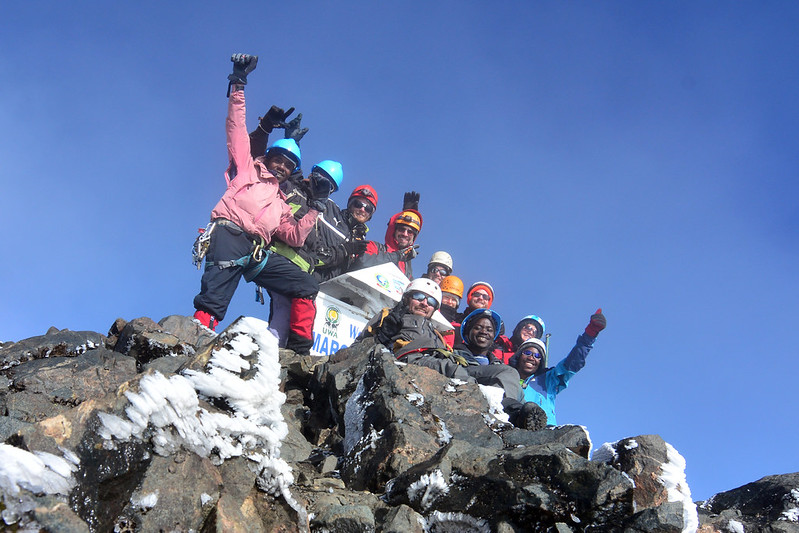
The height of the Rwenzori Mountains cannot be measured independently, as the designation “Rwenzori Mountains” refers to a range comprising multiple peaks. Margherita Peak is the highest point in the Rwenzori mountain range, standing at 5,109 meters (16,762 feet) above sea level, putting it as the third highest peak in Africa, next to Mount Kilimanjaro and Mount Kenya. The Rwenzori Mountains feature more prominent peaks that rank among Africa’s highest, including Mount Speke, Mount Baker, Mount Emin, Mount Gessi, and Mount Luigi di Savoia, enhancing its status as a leading destination for mountain trekkers worldwide.
The cost of trekking the Rwenzori Mountains is not fixed; it is influenced by various factors, including the duration of the trek, the selected Rwenzori trekking route, the number of peaks to ascend, and the services offered, such as gear rental. Hikers aiming to climb to Margherita Peak should budget at least $1,350, including for expenses such as transportation to the Rwenzori Mountains and accommodation prior to the hike.
The cost for the Rwenzori can exceed $3,500 solely for the mountain, depending on the hikers’ requirements. Those aiming to conquer all the peaks may incur additional expenses, including airfare, visa fees, transportation, accommodation, and gratuities, which could significantly increase the total cost. Rwenzori trekking Costs often include park entrance fees, meals, mountain accommodation, guides, porters, and trekking equipment. Hikers should budget meticulously to prevent frustration, taking into account additional expenses they may incur before and after their Rwenzori trip.
How Many Days Does It Take To Hike/Trek/Climb Rwenzori Mountains
The Rwenzori Mountains are extensive, including a vast area characterized by unique terrains that include ascents to high heights followed by descents to lower elevations. Hiking the Rwenzori Mountains is a distinctive expedition unlike any other. The time required to hike/climb/trek Rwenzori Mountains will depend on various aspects, including the chosen Rwenzori trekking route and the precise itinerary, as well as the peak the hiker intends to summit. A typical Rwenzori trek to Magherita Peak summit typically requires 7 to 10 days via the central circuit trail and 8 to 12 days via Kilembe Trail, influenced by the hikers’ expertise and pace. For very skilled hikers, the central circuit trail can be completed in as little as 4 days, however 5 days is advisable, and 7 days is the standard for a more leisurely experience. Hikers may choose short excursions lasting from 1 to 5 days, focusing on discovery and soaking up into the Rwenzori Mountains’ breathtaking beauty, which includes waterfalls, glacial lakes, and notable summits.
Accommodations In Rwenzori Mountains (Where To Sleep/Stay)
“Accommodation in Rwenzori Mountains” is the first consideration for hikers intending to explore the Rwenzori Mountains, as it significantly influences the planning of your expedition.
On the Central Circuit and Kilembe trails, hikers can relax in the simple mountain cottages made of wood. The camps are equipped with well-established beds, and several along the Kilembe path feature solar systems to provide hikers with charging capabilities and lights during the night. These huts provide shelter and a resting place following the day’s trek, with the Central Circuit comprising Nyabitaba Camp, John Matte Camp, Bujjuku Camp, Ellena Camp, Kitandara Camp, and ultimately Guy Yeoman Camp. While the Kilembe Trail’s Well–maintained camps that offer equal comfort and coziness include Kalalama Camp, Mutinda Camp, Bugata Camp, Hunwicks Camp, and Margherita Camp. Hikers may also partake in wild camping in ground tents while scaling heights lacking established campsites.
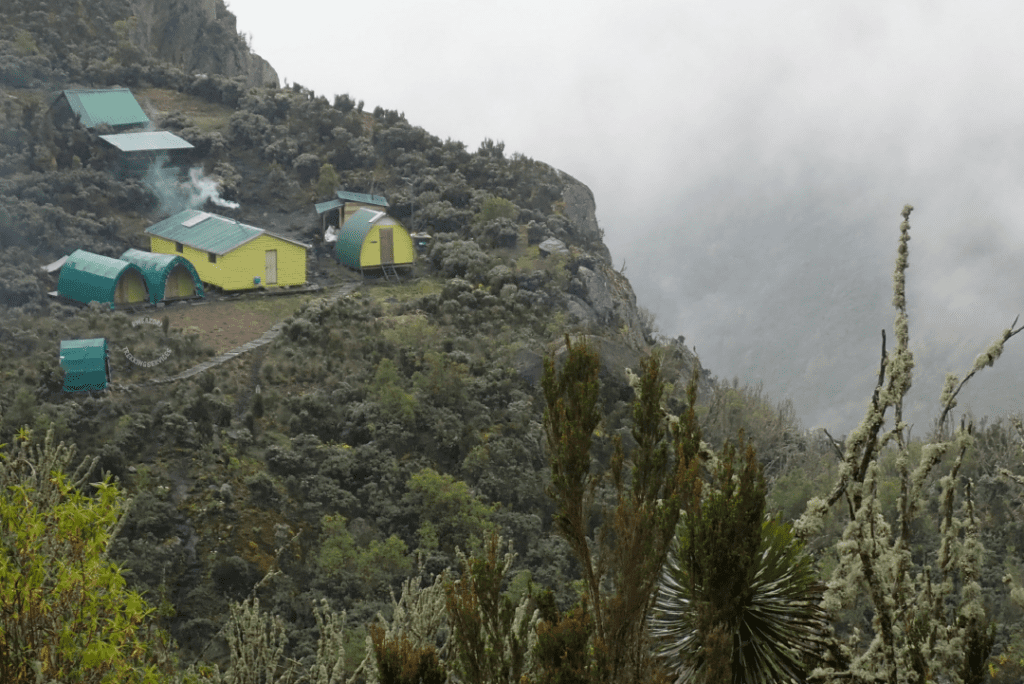
The Rwenzori Kilembe trail features new camps, including Forest Camp, which facilitates adequate acclimatization. The Bukurungu trail, however, enriches the camping experience by providing hikers with the opportunity to set up ground tents each day for overnight rest.
Best Rwenzori Trekking route to climb Rwenzori Mountains
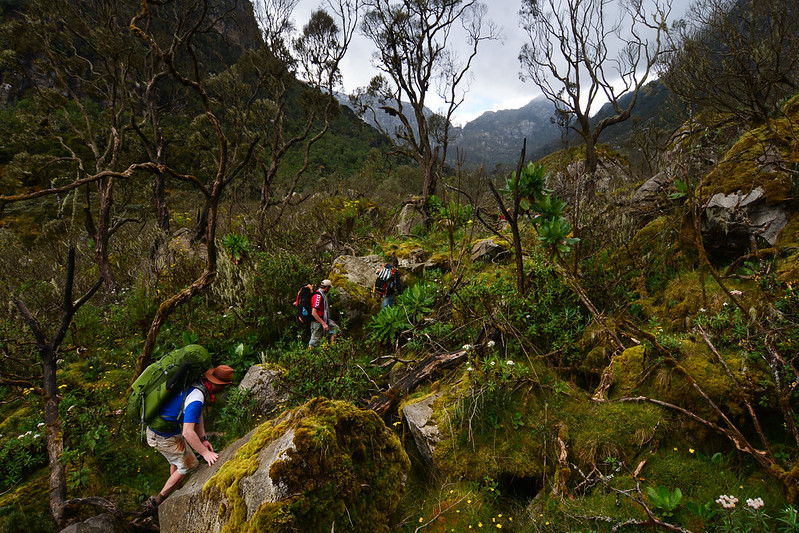
Trekking Rwenzori can be accomplished via 3 different Rwenzori Trekking routes, with three primary rwenzori trekking routes (the Central Circuit route, the Kilembe Trail, and the Bukurungu Trail), leading to all Peaks of Margherita on Mount Stanley, Mount Speke, Mount Baker: Selecting the best route is dependant upon hikers’ interests; less experienced hikers who like a leisurely trip may choose the central circuit trail, renowned for its gentler ascents and shortest path to Margherita, rendering it the most appropriate track for those in this group. The Kilembe trail, meanwhile, is more steeper and requires additional time to attain the peak, yet it offers significant benefits through beautiful views and distinctive characteristics.Alternative routes are available for visiting many destinations in the mountains, such as the Mutinda lookout and the Mahoma trail, among others.
Best Time To Visit /Climb/Hike Rwenzori Mountains
The best time/months/season for hiking/Climbing/Visit the Rwenzori Mountains lies during the dry months, specifically from December to March and from June to September. At this time of year, hikers are assured of stable weather with good weather conditions, rendering the climb possible and less demanding. The routes are dry and the weather is pleasant even for those climbing the peak; yet, rain may occur at any time due to the mountainous environment. Hikers are advised to always carry rain jackets in their backpacks, as rain can occur at any time, even during the dry season.
Other Frequently Asked Questions of REwenzori Mountains National Park
With Whom Should I Book a Rwenzori Trekking expedition
It is essential to engage a reliable tour operator for a fantastic and memorable Rwenzori trekking. At Rwenzori Trekking Expeditions, we possess extensive knowledge and experience, intimately familiar with the mountain from its base. We provide the most reliable and pertinent information necessary for hikers to undertake a successful trek while navigating the challenging yet adventurous terrain of the Rwenzori Mountains. Your safety and comfort are vital, and we take delight in providing exceptional services to our clients, assisting them from the first planning stages of their Rwenzori trekking Expeditions till their return home with lasting memories.
Is Food Provided During Rwenzori Mountains Trekking?
Yes, food is included in all Rwenzori Trekking Safari Packages: The food requirements of hikers are accommodated at every phase of the Rwenzori trek, whether one is a meat lover, a vegan, or adheres to Jewish dietary laws and necessitates the preparation of meals in isolation; all considerations are taken into account. Experienced chefs provide hikers with daily hot meals on a full board basis. Both local and international cuisines are available to meet each client’s needs. The chef will provide a briefing on the various options, allowing you to select your meal based on your preferences which must be communicated prior to the arrival date. The objective is to guarantee that Rwenzori trekkers’ enthuthiast obtain their required energy to undertake the demanding route ahead with a satiated stomach.
Accommodation options prior to the expedition
Accommodation on the eve and following night of the Rwenzori trekking is essential; numerous lodges are available at the base camps of both routes for trekkers to utilize. On the central circuit trail, hikers can choose from a midrange lodge and an economical choice, both providing pleasant and cozy accommodations. Alternative possibilities include Ruboni Base Camp, Rwenzori Turaco, and Rwenzori Backpackers. The Kilembe trail features the Rwenzori Backpackers Hostel, where hikers can spend the night prior to commencing their Rwenzori trekking expedition. Moreover, hikers can spend the night at one of the lodges in Kasese town before proceeding to the mountains the next day.
Who is capable of hiking Rwenzori Mountain?
The Rwenzori Mountains are not as simple as other summits and present a significant challenge that need for planning in advance. Both beginners and professional hikers are capable of overcoming the difficulty by sufficient physical training, mental strength derived from a good outlook, and prior hiking for acclimatization. Hikers are advised to engage in yoga and walking excursions to achieve a commendable level of fitness that guarantees an exceptional experience in the Rwenzori Mountains.
Which extra Peaks are available for hiking aside from Margherita Peak?
The Rwenzori is a mountain range that provides hikers with diverse trekking opportunities and multiple summits to climb. Hikers can experience the summit of Mount Speke at 4890 meters (16,043 feet), an impressive peak that presents a demanding yet gratifying ascent. Mount Baker is a prominent peak in the Rwenzori range, reaching an elevation of 4,844 meters (15,892 feet). Mount Emin, named in honor of Emin Pasha, stands at 4,798 meters (15,741 feet), while Mount Gessi reaches 4,715 meters (15,469 feet), and Mount Luigi di Savor is situated at 4,627 meters (15,180 feet). In addition to the aforementioned mountains, Mount Stanley is distinguished by its many different peaks, including Albert, Alexandra, and Cheptegei, which offer a distinctive experience.
Is a visa required to trek the Rwenzori Mountains?
The Rwenzori Mountains are situated in Uganda, and although a visa is not required for hiking, access to the mountains necessitates clearance at the Immigration office. A visa is an essential need for traveling to Uganda, which can be acquired through an online application two weeks before your travel date or received upon arrival at Entebbe International Airport, although the latter may involve a lengthy process. Hikers must verify the validity of their passports and are highly encouraged to initiate the visa application procedure promptly to prevent any hassles in preparing for their Rwenzori journey.
Is a vaccine required for trekking the Rwenzori Mountains?
While a vaccine is not required for hiking the Rwenzori Mountains, a valid yellow fever vaccination is mandatory for all individuals entering Uganda. It is important to verify that your yellow fever vaccination is current to prevent unforeseen complications.
What is the tipping policy in the Rwenzori Mountains?
No standardized tipping policy exists on the Rwenzori Mountains. However, this does not imply that hikers will refrain from tipping, as guides and porters typically anticipate gratuities from the entire team with whom they trekked. Tipping, though not obligatory, is typically valued in the Rwenzori Mountains as it motivates the team that supported your hike and promotes sustainability through the conservation of the region. The guides, porters, and chefs are local residents, and by tipping, you demonstrate their significance to both the mountain and the tourism activities occurring there. Hikers are encouraged to provide tips according with their pleasure and the quality of service received. Tipping supports their livelihoods and promotes an enhanced quality of service rendered.
Rwenzori Mountains Packing List
A Rwenzori Trekking packing list is an important component for guiding trekkers in their preparation for the Rwenzori trekking Excursions. Ensure possession of warm attire, including waterproof jackets and pants, as well as insulated coats. Hikers should own both rubber and mountaineering boots, sleeping bags, technical equipment for summit ascents including crampons, ice axes, ropes, harnesses, helmets, headlamps, trekking poles, sunscreen, water bottles, energy snacks, a first aid kit, and finally, a camera and binoculars.
What is the Total Distance covered Per day throughout the Rwenzori treks?
The daily distance covered during Rwenzori treks varies; on certain days, hikers may spend approximately 4 hours for campgrounds in close proximity, while on other days, they may cover roughly 10 kilometers over a duration of 8 to 10 hours. The Central circuit trail features moderate lengths that balance the terrain with manageable intervals; however, on the initial days, hikers on the Kilembe trail can trek for up to 10 hours due to its steep gradient. The distances subsequently diminish, enabling hikers to experience a steady rise to elevated altitudes; nonetheless, the campgrounds are considerably more distant compared to the alternative Rwenzori Trekking Routes.
Must I acclimatize?
Acclimatization is essential, particularly for hikers ascending Margherita Peak because of the higher altitudes. Hikers should not be concerned about prior preparation, since the Rwenzori Mountains provide gentle ascents over several days, enabling the body to acclimatize to the high altitude characterized by limited oxygen levels. Hikers are encouraged to maintain a consistent trekking pace while attentively monitoring their bodies and consuming plenty of water to remain hydrated, so ensuring a successful hike.
Should I Carry snacks for packing?
Hikers expend significant calories while walking, and typically need high-energy snacks to sustain their endurance throughout the route. These may include biscuits, glucose, and chocolates to rapidly elevate the energy levels of hikers, ensuring the body receives calories precisely when required, as the treks can be demanding and longer on the trail.
What is the recommended advance booking period for a Rwenzori trek?
We are always prepared to welcome trekkers to the Rwenzori Mountains, even on the same day. Thorough preparation is recommended for effective planning, and hikers are urged to make reservations at least three months in advance or less prior to their excursions. Prior booking facilitates a more seamless and enjoyable climb compared to unplanned excursions; yet, hikers have the option to reserve and begin their Rwenzori trek immediately, irrespective of prior arrangements, as circumstances may shift unexpectedly.
Do mosquitoes inhabit the Rwenzori Mountains?
At high altitudes, mosquitoes are not a threat in the Rwenzori Mountains mostly due to the freezing temperatures associated with these elevations. As a precautionary step, hikers are advised to apply insect repellents and wear long trousers while at low altitudes, should they find themselves in such environments.
Is it possible to trek the Rwenzori Mountains without reaching any summits?
The Rwenzori Mountains boast abundant biodiversity, providing hikers with beautiful landscapes; whether one summits the peaks or not, incredible views are assured. Numerous trekking routes are accessible, including major trekking trails that accommodate shorter excursions such as the 5-day Bujjuku Rwenzori hike, 4-day waterfall hike, 4-day Mutinda lookout, 3-day Mahooma trek, 2-day Mahoma trail, 3-day John Matte, and the 7-day Central circuit trail. These short treks provide hikers the chance to explore the distinctive landscapes characterized by diverse flora and animals in the Rwenzori highlands.
Other Activities(Things To Do) during Rwenzori Trekking?
During a Rwenzori hike, hikers can integrate other activities, as the Rwenzori Mountains are situated near prominent national parks in Uganda. Queen Elizabeth National Park is within an hour’s drive from the Rwenzori Mountains, allowing trekkers to engage in game drives and boat safaris following their Rwenzori trekking safari. Kibale National Park, renowned for chimpanzee trekking in Africa, is approximately a 3-4 hour drive from Bwindi Impenetrable National Park, a premier destination for gorilla trekking, enabling hikers to immerse themselves in the splendor of seeing these gentle giants in their natural habitat. Hikers can also unwind around Lake Bunyonyi or enjoy a thrilling boat excursion to see the islands of one of the world’s deepest lakes. Fort Portal is in proximity, allowing hikers to explore renowned tourist sites such as Mabere nga Nyinawiru, crater lakes, and hot springs, among others.
Essential considerations before to trekking the Rwenzori Mountains
Prior to undertaking a hike in the Rwenzori Mountains, it is important to prepare both physically and mentally for the forthcoming task. Training is crucial for developing stamina and endurance during the hike, as the Rwenzori mountains’ terrain requires traversing diverse heights.
Establishing an accurate packing list is essential for an exceptional expedition in the Rwenzori Mountains.
Accommodations along the hike consist of wooden huts that offer comfort and shelter for hikers following the day’s trek.
Understanding the season and environmental conditions of the mountain is crucial before commencing the trip for a successful trek.
Conclusive Remarks
The Rwenzori Mountains trekking Excursions presents a challenging yet rewarding trip, with breathtaking vistas of difficult terrains, expansive landscapes, and unmatched views of snow-capped peaks. Hikers can ascend some of Africa’s highest peaks with adequate training and preparation, which includes physical conditioning, a suitable packing list, as well as knowledge of the terrain and climatic conditions for a successful Rwenzori expedition. Selecting a reputable operator like Rwenzori Trekking Expeditions is essential, as they can assist in finding the best guides to navigate the Rwenzori Mountains, ensuring safety and an extraordinary adventure. The Rwenzori Mountains provide abundant opportunities for both summit seekers and those desiring to explore and experience Rwenzori mountains’ breathtaking beauty.