Complete guide to Kilembe Trail accommodation, including mountain camps, facilities, sleeping arrangements, meals, pre-trek lodges, and what to expect on the Rwenzori trek.
Accommodation on the Kilembe Trail is part of the mountain experience. Once you leave the trailhead and enter the high Rwenzori landscape, accommodation becomes simpler, more remote, and more closely connected to the mountain environment than a conventional hotel stay. Depending on your itinerary, you may spend nights at designated mountain camps where trekkers rest, eat, dry wet clothing, recover from the day’s climb, and prepare for the next stage of the expedition.
The Kilembe Trail is a luxury-hotel trekking route. Its appeal is the opportunity to sleep deep in the Rwenzori Mountains, surrounded by some of East Africa’s most extraordinary alpine landscapes. For travelers who understand what mountain accommodation involves, that is, cold nights, basic facilities, shared spaces, and limited connectivity. The camps become part of the adventure rather than simply somewhere to spend the night.
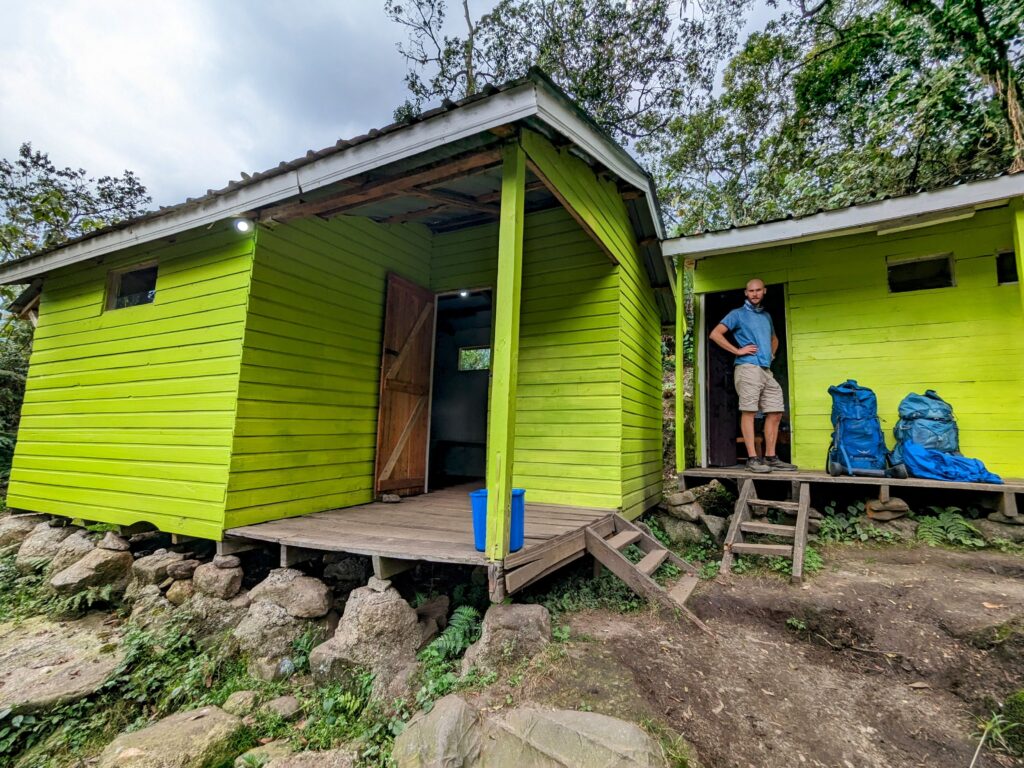
On the Kilembe Trail you do not sleep under canvas in a windswept clearing, wondering whether the guy ropes will hold through the night. You sleep in a chain of timber mountain huts, each one raised by Rwenzori Trekking Services and the Uganda Wildlife Authority at a particular altitude for a particular reason, from the warm forest air around Sine Camp to the thin, star-crowded silence of Margherita Camp beneath the glaciers. Before and after the climb, you rest in a proper bed at a lodge or hostel near Kasese. In between, accommodation depends entirely on the itinerary you choose, how many days you have, and how high you intend to go, and that is precisely what this page sets out to explain, camp by camp, night by night, so that nothing about where you lay your head in the Mountains of the Moon comes as a surprise.
Where Do You Sleep on the Kilembe Trail?
Where you sleep on the Kilembe Trail is not a fixed answer, because the Kilembe Trail is not a single fixed experience; it is a route that unfolds differently depending on how many days you have booked and how far up the Rwenzori massif you intend to travel. What remains constant is the pattern. On the first and last nights of any Kilembe itinerary, you sleep at low elevation, either in a simple hostel at the trailhead near Kilembe town or in a hotel in Kasese, the regional base from which every Rwenzori expedition begins and ends. Once the trek proper starts, you move upward from hut to hut, spending one night at each camp before continuing to the next, with the exact sequence of camps determined by how many days your trek covers and whether your goal is a shorter acclimatisation hike, a mid-mountain lookout like Mutinda, or the full push to Margherita Peak. A two- or three-day trek may only ever take you as far as Sine Camp or Kalalama Camp. A five- or six-day trek will usually add Mutinda and Bugata.
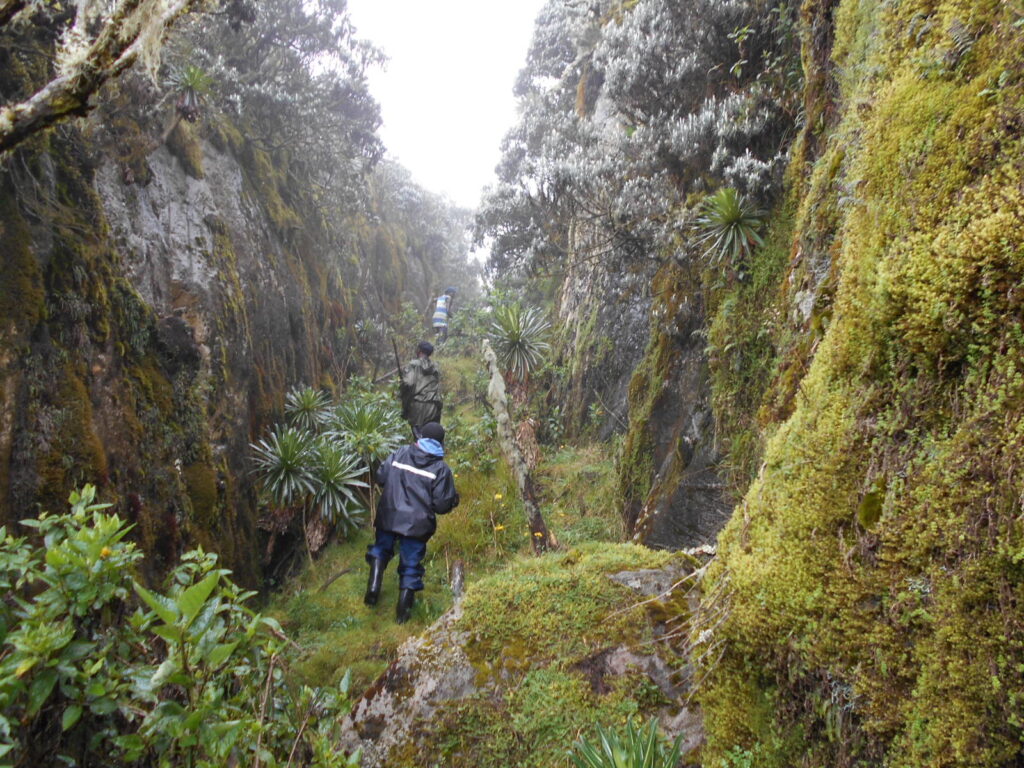
Only the longer expeditions, seven days and beyond, go all the way to Hunwick’s Camp and Margherita Camp for the summit attempt. Not every itinerary touches every hut described on this page, and Rwenzori Trekking Expeditions Mountain Specialists will tell you in advance exactly which camps your particular trek will use rather than presenting the full chain as though it applies to everyone.
Kilembe Trail Accommodation at a Glance
Before the detail, here is the shape of the trail at a glance, the camps in the order you would generally encounter them heading up from the Nyamwamba Valley, their approximate altitude, and the vegetation zone each one sits within. Treat the figures as a reliable guide rather than a survey-grade measurement; different sources round differently, and the mountain itself has a way of making precise numbers feel slightly beside the point once you are standing in the mist.
Camp | Approx. Altitude | Vegetation Zone | Typical Role |
Sine Camp | 2,596 m | Montane rainforest | First night out of the rangers’ post |
Samalira Camp | 3,140 m | Heather zone | Alternative camp near Kalalama, used on falls-focused itineraries |
Kalalama Camp | 3,147 m | Heather zone | Second night; views toward Kilembe and the western Rift Valley |
Kiharo Camp | 3,460 m | Heather / bamboo transition | Descent-route camp on the return leg of longer treks |
Mutinda Camp | 3,588 – 3,700 m | Upper heather zone | Lookout camp with views over the Mutinda peaks |
Bugata Camp | 4,100 m | Afro-alpine zone | High camp overlooking Bugata Lake and the Nyamugasani Valley |
Hunwick’s Camp | 3,974 m | Afro-alpine zone | Camp above Lake Kitandara, named for the founder of Rwenzori Trekking Services |
Margherita Camp | 4,485 m | Alpine / glacial margin | Final camp before the Margherita Peak summit attempt |
Mountain Camps Along the Kilembe Trail
What follows is a closer look at each camp along the Kilembe Trail, in the order that a trekker moving from the rangers’ post toward Margherita Peak would typically reach them. Each one has its character, shaped as much by altitude and vegetation as by the view it happens to command.
Sine Camp
Sine Camp sits at roughly 2,596 meters, still within the tropical montane rainforest that cloaks the lower flanks of the Rwenzori. It is usually the first camp of the trek, reached after a climb through forest where colobus and blue monkeys move through the canopy and the Rwenzori turaco occasionally flashes crimson through the leaves.
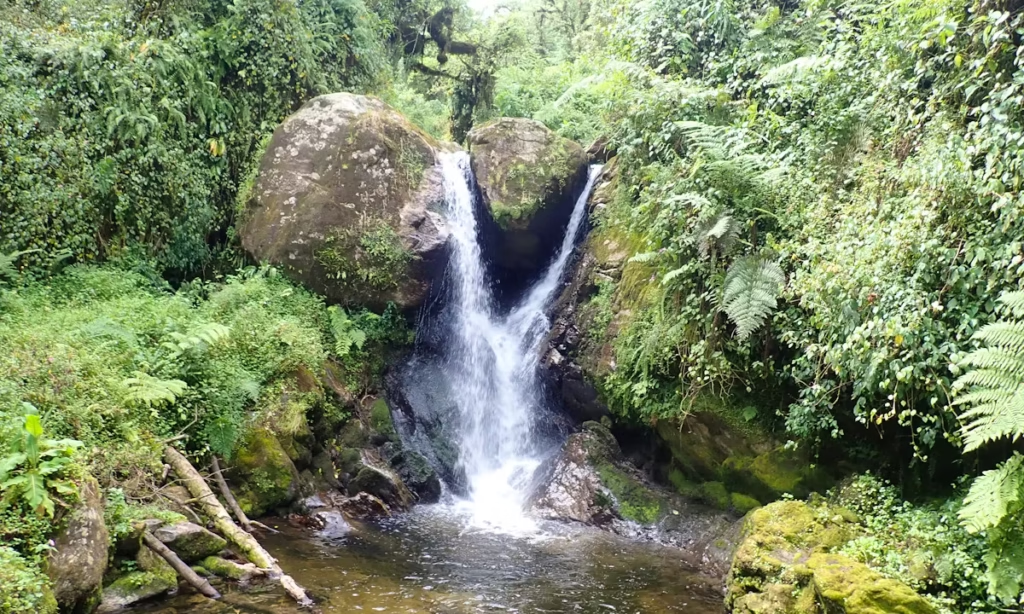
Enock Falls tumbles down the hillside only two hundred meters before the camp, a fitting overture to a night spent among towering Podocarpus and Pouteria trees, wild ferns, and the flowering Scadoxus that pushes up through the undergrowth. Accommodation here is four timber cottages arranged around a shared washroom, lit in the evenings by solar power, simple, dry, and warm enough that most trekkers sleep soundly on their first night at altitude.
Samalira Camp
Samalira Camp lies close to Kalalama at around 3,140 meters, and it does not appear on every Kilembe itinerary. It is mainly for shorter acclimatisation treks that focus on waterfalls and lead to Samalira Falls, one of five nearby cascades, rather than the main route to Margherita Falls. For travellers on those routes, Samalira offers the same heather-zone character as Kalalama, with the added reward of falling water within comfortable reach of camp, making it a favourite for families and first-time trekkers who want a genuine Rwenzori night in the mountains without committing to a full glacier expedition.
Kalalama Camp
Kalalama Camp, at approximately 3,147 metres, marks the trekker’s first real arrival in the heather zone, where giant heather trees, Hypericum and Rapanea shrubs, and stands of Alchemilla and Senecio crowd the trail edges. The camp itself is prized for its outlook: on a clear afternoon you can pick out Kilembe town far below, glimpse portions of Queen Elizabeth National Park, and, if the haze lifts, trace the silver lines of Lake Edward and Lake George on the valley floor. Like Sine, Kalalama runs on solar-powered lighting, and its position as the second night’s camp is when most trekkers first feel the altitude beginning to matter and first appreciate how welcome a warm meal and a dry bunk can be.
Kiharo Camp
Kiharo Camp, sitting at around 3,460 metres in the transition between heather and bamboo, plays a slightly different role than the other huts on this page: it is most often used on the descent, as trekkers make their way back down from the high camps toward the rangers’ post at the close of a longer expedition. After days spent above 4,000 metres, the thicker air and gentler terrain around Kiharo feel like a small mercy, and many trekkers describe their night here as the first properly restful sleep since Bugata or Margherita.
Mutinda Camp
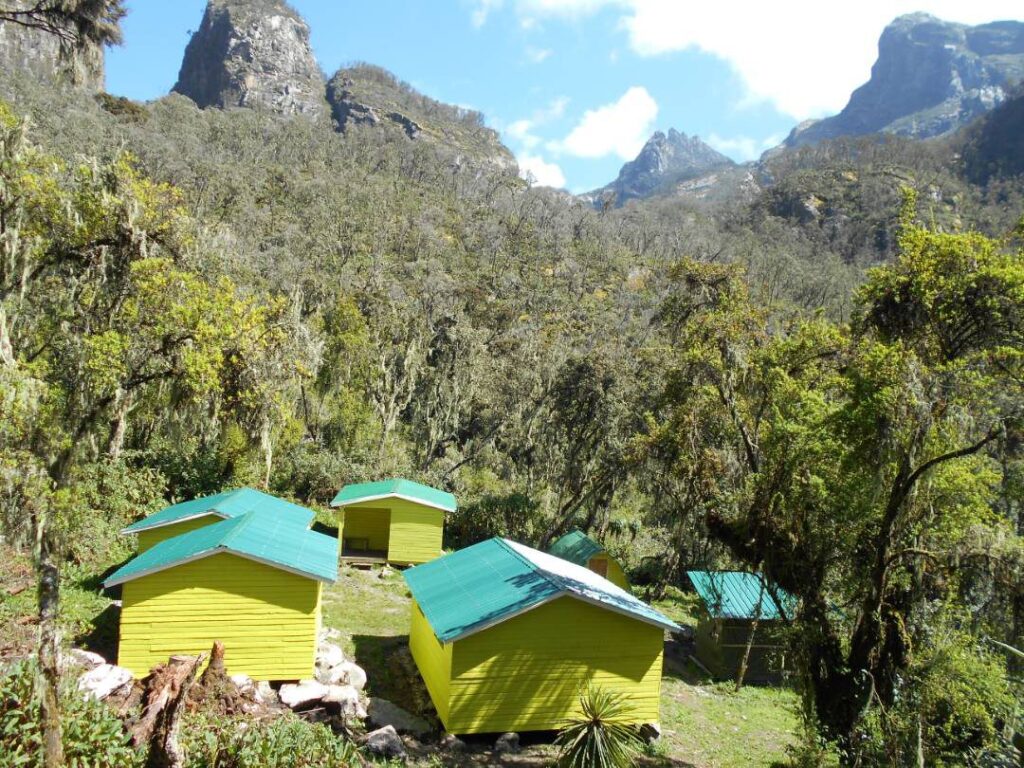
Mutinda Camp, situated between 3,588 m and 3,700 m depending on the source, ranks as one of the trail’s genuine highlights. It sits within the upper heather zone among Dendrosenecio and giant lobelias, and the short climb up to the lookout above the camp rewards the effort with sweeping views of streams threading through the valley below and a skyline of unclimbed peaks. Mutinda is also notable for its infrastructure: several of the huts here are fitted with solar panels generous enough to keep head torches, cameras, and phones charged, a level of comfort the older Central Circuit trail huts have not yet matched. Sleeping arrangements are the now-familiar shared wooden cottages with external washing facilities, but the view from the lookout, best caught at dawn or dusk, is what trekkers tend to remember longest.
Bugata Camp
Bugata Camp stands at roughly 4,100 meters, squarely in the Afro-alpine zone where the vegetation turns dramatic, with giant heather trees, Lobelia wollastonii rising like sentinels, tussock grass, and the pale everlasting flowers of Helichrysum. The camp overlooks the Nyamugasani Valley and Bugata Lake itself, home to a resident population of black African swans, with Keki Peak and a scatter of lesser summits arranged around it and, on the clearest days, a distant view toward Mount Luigi di Savoia. Accommodation consists of communal wooden cottages with external washing amenities, and by this point in the trek, most trekkers are moving more slowly and deliberately, appreciating a hut that provides real shelter from the wind that funnels up the valley after dark.
Margherita Camp
Margherita Camp, at around 4,485 meters, is the trail’s final staging post and the launch point for the Margherita Peak summit attempt. It sits in genuinely rugged, high-alpine terrain, its shared wooden cabins and outdoor sanitation facilities offering panoramic views across the Kitandara Valley and its lakes toward Weismann’s Peak, Mount Speke, the Elena Peaks, and the glaciers of Mount Stanley itself. Scott Elliot Pass and the Coronation Glacier on Elena Peak are both visible from nearby, and the surrounding ground supports little beyond hardy Dendrosenecio and everlasting flowers. Nights here are cold in the way only nights above 4,400 metres can be, and most summit parties are woken well before dawn, but the camp’s position, tucked beneath the mountain’s crowning glaciers, is unlike anywhere else on the Kilembe Trail.
Hunwick’s Camp
Hunwick’s Camp sits at approximately 3,974 meters in the Afro-alpine zone, named in honor of John Hunwick, the founder and long-serving director of Rwenzori Trekking Services and the man most responsible for opening the Kilembe route in the first place. The camp commands a view down the Butawu Valley toward Kitandara, with Mount Luigi di Savoia, the glaciers of Mount Baker, and, on an exceptionally clear day, even Mount Speke visible through the gap beside Baker.
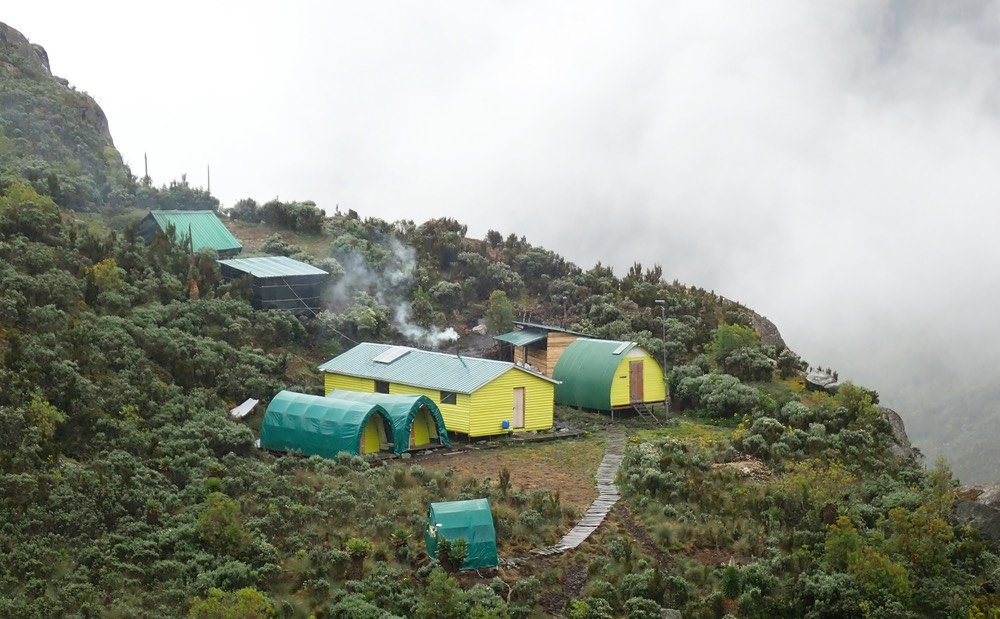
A short five- to ten-minute walk above the camp opens a distant view across the border into the Democratic Republic of Congo, reminding you just how far into the wilderness the trail has carried you by this stage.
What Is Accommodation Actually Like?
Knowing the names and altitudes of the camps only answers half the question. What trekkers really want to know, understandably, is what a night in one of these huts actually feels like, where you sleep, what is provided, what you are expected to bring, and what daily life around camp looks like once the sun goes down.
Sleeping Arrangements
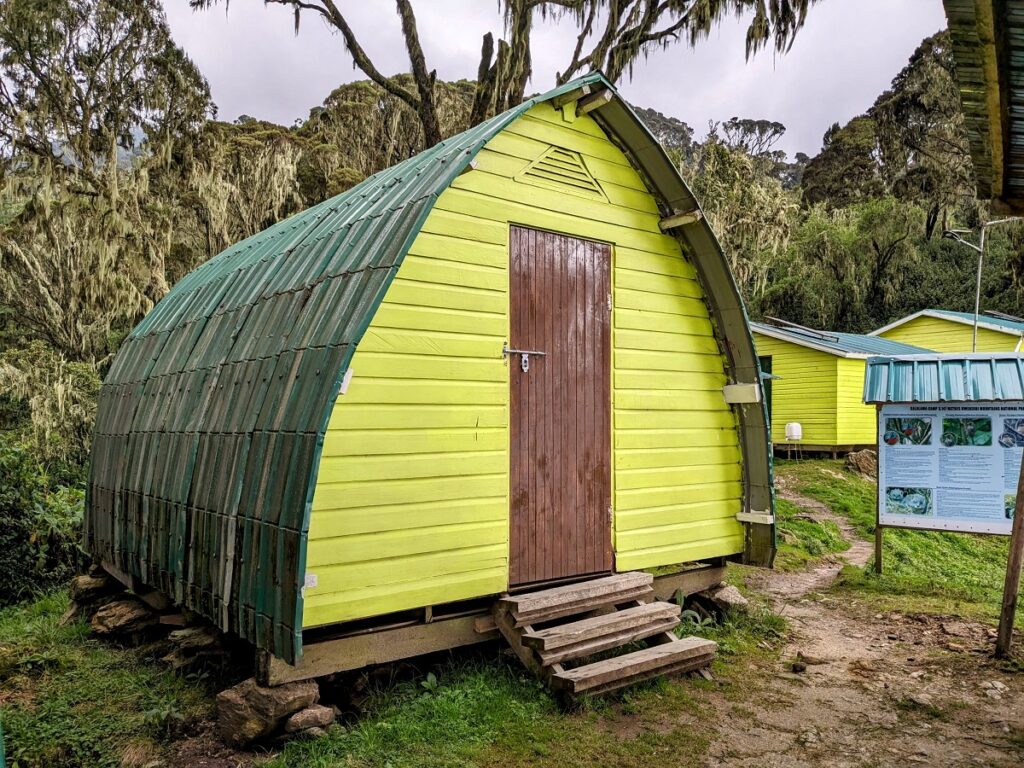
On the Kilembe Trail you sleep in a hut, not a tent; every mountain camp described above is a timber cottage or cabin, built to withstand the rain and wind of the Rwenzori and organized, in most cases, as a dormitory with bunk beds able to accommodate a group of trekkers under one roof rather than in a scattering of individual tents. This arrangement surprises some first-time visitors, who arrive expecting to pitch camp each evening; in reality, tents are carried by the trekking team mainly as an emergency backup, kept in reserve should a hut be full, under repair, or unreachable in extreme weather, rather than as the everyday sleeping solution. Rooms at most camps are shared among your trekking party and, on busier nights, with other groups moving through the same camp, since bunk space is allocated on a first-come basis by the park authority rather than reserved exclusively for a single operator. Couples travelling together can usually be given a bunk area to themselves within the same cottage, and if privacy matters to you, it is worth raising the issue when you book, since Rwenzori Trekking Expeditions can request quieter or more secluded bunk placements and, on select nights, can arrange a private tent as an alternative, where camp layout and group numbers allow.
Beds & Mattresses
Every hut along the Kilembe Trail is fitted with wooden sleeping platforms or bunk frames, and each of these carries a foam mattress, so you are never simply lying on bare boards or the ground. The mattresses are basic mountain-hut mattresses rather than hotel bedding, perfectly serviceable, but not something you would want to rely on for warmth. That warmth is your responsibility, in the form of a reliable sleeping bag, which is why we return to it more than once on this page.
Tents
Tents exist on the Kilembe Trail as a contingency rather than the primary form of shelter. Your porters and guides carry at least one lightweight tent per trek as standard practice, ready to be pitched should a hut be over capacity, damaged, or otherwise unusable, and mountain rescue protocol always assumes a tent may be needed at short notice.
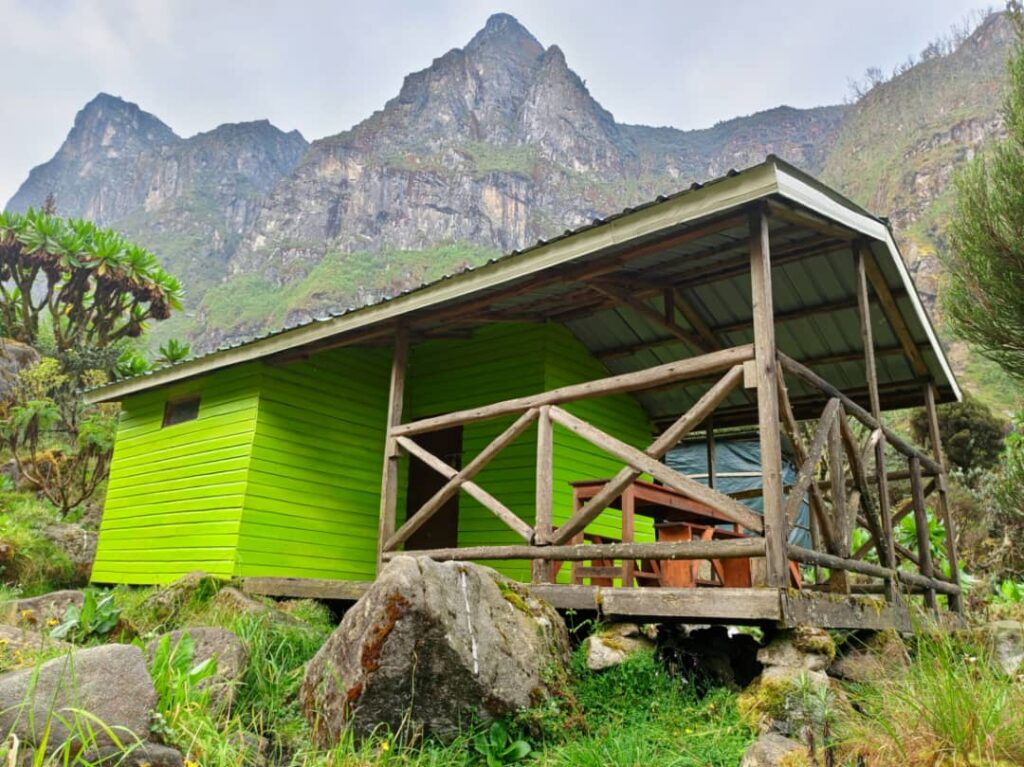
For the vast majority of nights, though, you will be under a solid timber roof rather than nylon, which is one of the quiet advantages the Kilembe route holds over trails elsewhere in East Africa where tented camping is the norm.
Blankets
Camp cottages are not supplied with blankets as standard, and relying on one is not a plan we would recommend at any altitude on this trail, let alone above 4,000 meters, where night temperatures regularly fall below freezing. Your own four-season sleeping bag, rated to at least minus five degrees Celsius for the higher camps, is the piece of equipment that actually keeps you warm through the night; blankets, where they exist at all, are a supplement, not a substitute.
Toilets
Toilet facilities at every Kilembe camp are external to the sleeping cottages, typically simple pit latrines built a short walk from the huts. They are basic by design; the site is a working mountain trail, not a lodge, but they are maintained by the camp caretakers and kept as clean as their construction allows. Trekkers should carry their toilet paper and hand sanitizer, since neither is routinely supplied at altitude.
Showers & Washing
Expect no hot showers at any of the mountain camps; plumbed showers are unavailable above Sine Camp, and even at the lower camps, washing facilities are basic and shared. What is genuinely available and genuinely welcome after a long day’s climb is warm water brought to you in a basin by your camp crew for washing at the end of the day, a small ritual that becomes one of the more comforting parts of your daily rhythm on the mountain. Full showers return once you are back down at a lodge or hostel at the base of the trail.
Electricity & Charging
Electricity on the Kilembe Trail comes from solar power, and its reliability varies noticeably from camp to camp. Sine and Kalalama both run solar lighting systems, and Mutinda in particular has been fitted with panels generous enough to charge cameras and phones, a genuine point of difference from the older huts on the Central Circuit trail. Even so, solar charging at altitude is dependent on sunshine, cloud cover, and how many trekkers are drawing power on a given night, so it should be treated as a welcome bonus rather than a guarantee, which is precisely why we recommend a fully charged power bank as standard kit for anyone serious about keeping a phone or camera alive for the whole trek.
Lighting
Lighting inside the huts is solar-powered at most camps, generally enough for a soft ambient glow in the evening rather than bright reading light. It is not something to depend on for moving around camp after dark or for reading in bed, which is why a reliable headlamp belongs near the top of every Kilembe packing list.
Water
Drinking and washing water on the Kilembe Trail is drawn from the many streams, springs, and falls that thread through the Rwenzori’s slopes, the same watercourses that feed Enock Falls near Sine and the Samalira cascades further up the valley. Your guides and cooks know which sources are reliable at each camp and treat or boil water before it reaches your cup, so trekkers are not expected to manage their purification, though carrying a personal water bottle and, if you prefer, your own purification tablets or a filter as a backup is sensible practice on any high-altitude trek.
Meals & Dining
Meals are provided throughout the trek and form one of its genuine pleasures. A dedicated cook travels with the trekking team and prepares three meals a day: a hot breakfast before the day’s climb, a packed or hot lunch depending on the terrain, and a proper cooked dinner once camp is made, usually a hearty combination of rice, potatoes, stews, and vegetables designed to replace the calories a day on the mountain burns through. Dining generally happens in a communal cooking or mess hut at each camp, where the day’s aches are traded for conversation and the next day’s plan, and trekkers with dietary requirements or allergies are asked to flag them in advance so the kitchen can plan accordingly.
Heating & Warmth
There is no heating system inside the huts, no fireplace, no stove in the sleeping quarters, and nothing beyond the shelter the timber walls themselves provide from wind and rain. Warmth on the Kilembe Trail comes from three things: a properly rated sleeping bag, layered clothing worn to bed on the coldest nights, and, at some camps, the simple fact of sharing a dormitory with other bodies. Above 3,500 metres, this is not a detail to treat lightly; it is the difference between a good night’s rest and a miserable one.
Wi-Fi & Mobile Network
Mobile network coverage on the Kilembe Trail is intermittent at best and disappears completely above the mid-mountain camps; do not expect to post updates from Bugata or Margherita. A weak signal occasionally reaches Sine or Kalalama depending on your network provider and the weather, but Wi-Fi does not exist anywhere on the route itself. For most trekkers the lack of connectivity turns out to be one of the trip’s quiet gifts rather than an inconvenience: a genuine, enforced disconnection in one of the most remote mountain ranges in Africa.
What Should I Bring for Camp?
What you carry into camp each evening matters as much as what the camp itself provides, and a handful of items make the difference between an uncomfortable night and a genuinely restful one. A four-season sleeping bag rated for sub-zero conditions is non-negotiable once you climb past Mutinda, since it does the real work that the huts themselves cannot. A reliable headlamp, with spare batteries, lets you move safely between hut and latrine after dark and read or pack by more than guesswork. Earplugs are worth their negligible weight in a dormitory shared with other trekkers and porters settling in for the night. Warm clothing, a proper insulated jacket, thermal base layers, gloves, and a hat should be packed to be worn to bed on the coldest nights rather than left in the bag. Basic toiletries, biodegradable where possible, along with your toilet paper and hand sanitizer, cover the gap left by the camps’ simple facilities. And a fully charged power bank, ideally supplemented by a solar charger, is the sensible hedge against the days when cloud cover leaves the camp’s own solar system running low. None of this is exotic kit, but all of it earns its place in your bag.
Are Kilembe Camps Private or Shared?
Kilembe camps are, by default, shared spaces, dormitory-style cottages allocated by the park authority to whichever groups are passing through on a given night, rather than private accommodation reserved for a single party. That said, shared does not mean chaotic. Rwenzori Trekking Expeditions works to secure comfortable, well-positioned bunk space for its trekkers within each hut. Where numbers and camp layout allow, we can arrange a quieter corner of a cottage, a bunk area reserved for just your group, or occasionally a private tent pitched apart from the main hut for couples or small private groups who value their own space. If privacy is a priority for you, it is worth telling us at the planning stage rather than discovering the arrangement on arrival.
Can I Get Luxury Accommodation?
What “Luxury” Means on the Kilembe Trail
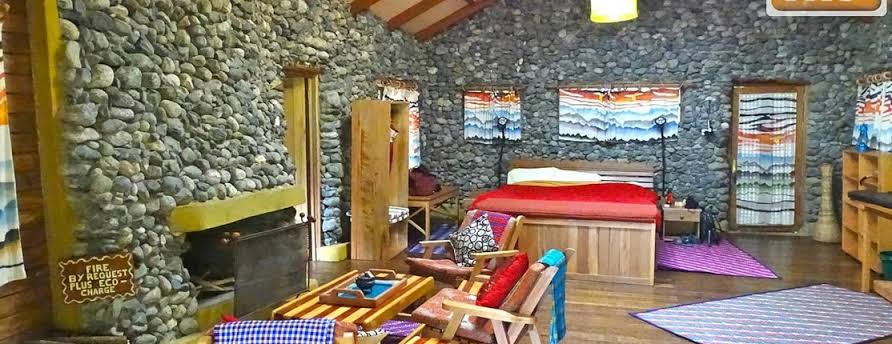
“Luxury” is a word that needs recalibrating once you step onto the Kilembe Trail. There are no heated lodges above Sine Camp, no infinity pools overlooking the Rift Valley, and no turn-down service at 4,485 metres; the terrain and the conservation status of the national park simply do not allow for it, and frankly should not. What luxury does mean, on this trail, is comfort engineered with intelligence rather than extravagance: the best sleeping bag money can reasonably buy, a private or near-private bunk arrangement wherever the camp allows it, a skilled cook producing genuinely good food at altitude, porters carrying the weight so you carry only what you need for the day, and guides experienced enough to read the weather, the terrain, and your body before either becomes a problem. Before and after the trek, real comfort returns in the form of a proper lodge room, a hot shower, and a satisfying meal at the base of the mountain. On the Kilembe Trail, the luxury is not marble and thread count; it is the quiet confidence that every detail above 3,000 metres has already been thought through on your behalf.
Accommodation Before the Trek
The night before you set off, you will stay at the base of the Kilembe Trail rather than on the mountain itself, most commonly at the Rwenzori Trekkers Hostel or Trekker’s Hostel Kilembe, both simple, welcoming lodgings built specifically for climbers preparing for the Rwenzori. Travellers wanting a more rustic, community-based experience sometimes choose Ruboni Community Camp, set against the mountain’s lower slopes, while those who prefer a wider choice of hotels, restaurants, and a livelier evening before an early start typically base themselves in Kasese town, roughly half an hour from the trailhead. Wherever you stay, this final night at low altitude matters more than it might seem; it is your last proper bed, hot shower, and full night’s sleep before several days of climbing, and we build our itineraries to make sure it is a restful one rather than a rushed one.
Accommodation After the Trek
Coming down off the mountain, the same options wait for you at the base, the Trekkers Hostel, Ruboni Community Camp, or a hotel in Kasese, depending on which you chose at the outset and what your onward plans require. Most trekkers describe that first shower after a week among the huts as one of the finer moments of the entire trip, and we recommend building at least one night into your schedule at the base before travelling onward, both to properly celebrate reaching Margherita or your chosen high point and to let your body begin readjusting to a lower altitude before a long road journey.
Accommodation for Different Trek Durations
Accommodation on the Kilembe Trail depends directly on the number of days you choose to spend on the mountain, as it follows the itinerary rather than the other way around. Here is how that generally breaks down.
2-Day
A two-day Kilembe experience is really an introduction rather than an expedition, typically reaching no further than Sine Camp before returning to the base. It suits families with younger trekkers, first-timers testing their fitness at altitude, or travellers combining a short mountain taste with other Ugandan safari plans.
3-Day
A 3-day itinerary usually extends as far as Kalalama Camp or, on some routes, across to Samalira Camp near its waterfalls, giving trekkers a genuine night in the heather zone and a taste of proper mountain altitude without the commitment of the full glacier route.
4-Day
Four days is enough to reach Mutinda Camp and its celebrated lookout or to loop via Hunwick’s Pass and Kiharo Camp on the descent, making it one of the most popular short expeditions for trekkers who want real Rwenzori scenery without pushing toward Margherita itself.
5-Day
A five-day trek typically pushes on to Bugata Camp, placing trekkers firmly in the Afro-alpine zone among Bugata Lake’s black swans and the wide views toward Mount Luigi di Savoia, before beginning the return journey.
6-Day
Six days generally allows a more comfortable pace to and from Bugata, or an extension to Hunwick’s Camp for trekkers who want to stand above Lake Kitandara before turning back, with an extra night built in for acclimatisation and recovery.
7-Day
Seven days is the classic full Kilembe circuit for trekkers aiming at Margherita Peak, moving through Sine, Kalalama, Mutinda, Bugata, Hunwick’s, and Margherita Camp itself before descending via Kiharo back to the rangers’ post, a night at nearly every major camp described on this page.
8-Day+
Eight days and beyond add a buffer for weather, fatigue, or a more gradual acclimatisation schedule, often with an extra night at a lower camp like Sine or Kalalama before heading to the high camps, reducing the risk of altitude sickness disrupting a tightly packed itinerary.
Margherita Peak Expeditions
Any Margherita Peak expedition, regardless of the exact number of days, will include a night at Margherita Camp itself, since it is the only realistic staging point close enough to the Stanley Glacier and Scott Elliot Pass for a summit attempt to begin before dawn.
Kilembe Trail vs. Central Circuit Accommodation
Trekkers researching the Rwenzori often ask how Kilembe accommodation compares to the older, more established Central Circuit Trail. The honest answer is that Kilembe generally has the edge in infrastructure, largely because its camps were built more recently, from 2009 onward, with a clearer plan for solar power and durable timber construction from the outset. Central Circuit huts, some of them decades old, tend to be more basic and, at a few points on that route, closer to genuine camping. Kilembe’s solar systems, particularly at Mutinda, are more consistent, and its huts are generally regarded as slightly more comfortable and better maintained, though both routes share the same fundamental character: timber huts, shared dormitories, external washing, and a trekking team that carries your gear and cooks your meals regardless of which side of the mountain you choose.
Who Provides Camp Equipment?
Camp equipment on the Kilembe Trail is a shared responsibility between the fixed infrastructure already in place, the huts, mattresses, and solar systems described throughout this page, and the trekking team that travels with you.
Role of Porters
Porters carry the bulk of what makes a comfortable expedition possible: food supplies for the entire trek, cooking equipment, the backup tent kept in reserve, fuel, and a share of each trekker’s kit beyond a daily day pack. What porters do not generally need to carry is bedding for the huts themselves; since mattresses are already fixed in place at each camp, their load is concentrated on food, cooking gear, and contingency equipment rather than furniture.

This is one of the reasons a well-run Kilembe trek feels lighter and more manageable than trekkers often expect: the mountain has already been prepared for you, and the team travelling alongside you exists to fill the gaps the fixed camps cannot.
How Rwenzori Trekking Expeditions Handles Accommodation
Rwenzori Trekking Expeditions treats accommodation planning as one of the most important parts of preparing your Kilembe trek, not an afterthought arranged once you arrive. That means confirming, before you ever set foot on the trail, which camps your specific itinerary will use, securing well-positioned bunk space at each one, briefing our cooks on any dietary requirements you have flagged in advance, and carrying the equipment needed to adapt if weather, group size, or camp conditions change your plans midway through the trek. Where privacy matters to you, we discuss options at the planning stage rather than leaving it to chance on the mountain. Our guides know each camp intimately, not just its altitude and view, but its quirks, its best sleeping spots, and the small local knowledge that turns an adequate night into a genuinely exceptional one. Nothing about where you sleep on this trek is left to improvisation.
Responsible Mountain Accommodation
Every camp described on this page sits inside Rwenzori Mountains National Park, a UNESCO World Heritage Site and one of the last great untouched mountain ecosystems in Africa, and the way accommodation is managed here reflects that responsibility. Solar power reduces reliance on generators or firewood at altitude; waste and sanitation at each camp are managed to minimize impact on watercourses and the surrounding Afro-alpine vegetation; and the fixed hut system itself, rather than scattered wild camping, concentrates human presence at a small number of durable sites instead of spreading it across the mountain. Choosing an operator who takes this responsibility seriously, employs local guides and porters fairly, and works within park regulations is not a peripheral consideration on the Rwenzori; it is part of what keeps this landscape worth visiting for the trekkers who come after you.