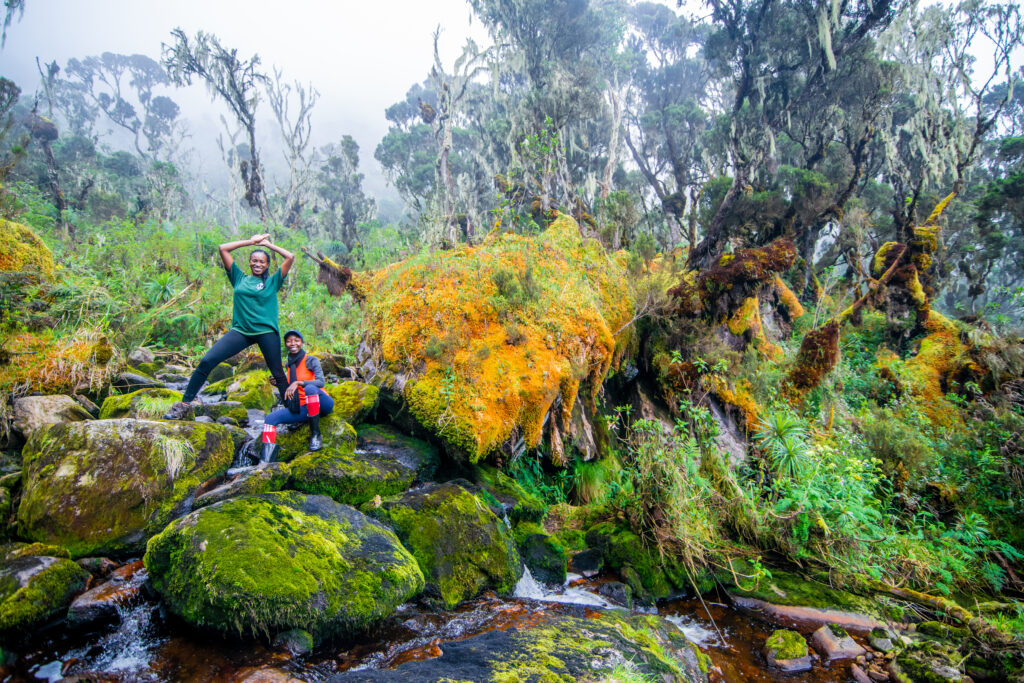
3 Days Rwenzori Trek To Sine & Samalira Camp Kilembe Trail

The 3-day Rwenzori Trek to Sine Camp & Samalira Camp via the Kilembe Trail is one of the best short Rwenzori trekking safaris in Uganda’s Rwenzori Mountains National Park. This 3-day Rwenzori trek to Sine & Samalira Camp navigates a mountain journey, taking hikers through dense tropical forests, bamboo zones, dramatic ridges, and panoramic viewpoints while exploring two of the most beautiful camps on the southern Rwenzori route.

The 3-day Sine & Samalira Rwenzori trek is perfect for travelers with limited time; this trek offers an authentic experience of the legendary Mountains of the Moon without the physical demands of a high-altitude summit expedition. The 3-day Rwenzori trek to the Sine & Samalira Kilembe trail combines stunning scenery, wildlife encounters, birdwatching opportunities, and overnight stays deep within the mountain wilderness.

There is a valley in the Rwenzori Mountains of Uganda that time appears to have forgotten. The Nyamwamba Valley, carved over millennia by glaciers that have since retreated to the highest peaks, descends in a series of cascades and old-growth forest benches that feel profoundly untouched by the modern world — and it is the valley that the Kilembe Trail follows from the moment you leave the historic copper mines at Kyanjuki and enter the mountain’s interior. This 3-day Rwenzori trek to Sine Camp and Samalira Camp via the Kilembe Trail is the best short mountain immersion in the Rwenzori Mountains: a complete 72-hour journey through three of the range’s five distinct vegetation zones, past Enock Falls and the Samalira River cascades, through bamboo corridors of extraordinary atmosphere, and into the otherworldly heather zone at 3,170 meters, where giant lobelias stand in the mist and the silence is so complete it feels physical. 

3 day Rwenzori trek to sine & Samalira Camp

Guided by certified mountain experts from Rwenzori Trekking Expeditions and starting from Kyanjuki village just 12 kilometers south of Kasese, this three-day itinerary is the ideal Rwenzori introduction for motivated first-time trekkers, the perfect short break for experienced hikers with limited Uganda time, and a deeply rewarding standalone adventure for anyone who wants to know what Africa’s Mountains of the Moon feel like from the inside.

Why Trek Via the Kilembe Trail?

The Rwenzori Mountains are served by two principal trekking routes: the Central Circuit Trail, which departs from Nyakalengija on the northern side of the range, and the Kilembe Trail, which enters the mountain’s interior from the southern Nyamwamba Valley near the historic Kilembe Copper Mines. Both trails ultimately reach Margherita Peak on longer expeditions, but for short treks of three to four days, the Kilembe Trail offers a distinctly different experience and, in several important ways, a distinctly superior one.

4 days Rwenzori Waterfalls Circuit Trekking Safaris Expeditions i Kilembe Trail


The Kilembe Trail’s signature is the Nyamwamba Valley itself: a deep, glacier-carved gorge of extraordinary drama, where the river runs white over ancient boulders and the valley walls rise steeply into forest. Waterfalls are a recurring feature of this trail in a way that no other Rwenzori route can match: Enock Falls at Sine Camp, the Samalira River cascades above Kalalama, and the unnamed falls that punctuate the lower forest on both the ascent and descent provide a visual and acoustic drama that defines the character of this trek. The trail also passes through a particularly dense and atmospheric bamboo zone between Sine and Kalalama Camps, a section unlike anything found on the Central Circuit trail before emerging into the heather zone with its giant lobelias and panoramic ridge views.

The Kilembe Copper Mines at the trailhead add a unique layer of cultural and industrial history to this route. The mines operated from the 1950s through to the late 1970s, and the landscape around Kyanjuki still bears the marks of that era. Your guide can speak to the history of the mines, the communities that grew up around them, and the gradual return of the mountain environment as the mining activity receded, a context that gives the trail’s opening kilometers an unusual depth of human story.

CTA Banner Widget — Rwenzori Trekking Expeditions

Experience Rwenzori Beyond Expectations

Spots Filling Fast — Schedule Your Trek Today

Why Choose the 3-Day Sine & Samalira Camp Trek?

The question for any visitor to western Uganda with three days and a pair of trekking boots is simple: which Rwenzori route delivers the most complete mountain experience for the time available? The 3-day Kilembe Trail Rwenzori trek to Sine and Samalira Camps is the answer when the priority is ecological variety, dramatic scenery, and the genuine feeling of alpine remoteness, all within 72 hours of leaving Kasese.

In three days on the Kilembe Trail, you pass through no fewer than three distinct vegetation zones: the Afro-montane forest, the bamboo zone, and the lower heather zone, each with its own climate, flora, and wildlife. The maximum altitude of 3,170 meters at Samalira Camp is high enough to deliver a true alpine experience, thinner air, sweeping views, giant lobelias, and the distinctive quiet of the heather zone but comfortably within the reach of any fit adult without requiring supplemental oxygen or technical climbing equipment. This journey is the trek that gives you the Rwenzori in concentrated form: wild, beautiful, demanding enough to be genuinely earned, and precisely managed by a guide team that knows every section of the trail in every season.

For trekkers weighing up options, the 3-day Sine and Samalira route also serves as the natural first chapter in a longer Rwenzori story. Many guests who complete this trek return to Rwenzori Trekking Expeditions specifically for the 8-day Kilembe Trail expedition to Margherita Peak, having discovered on these three days that the Rwenzori is worth far more of their time than they originally allocated.

“The Nyamwamba Valley on the Kilembe Trail is one of the great mountain corridors of East Africa. Three days in it changes your understanding of what African mountains can be.” — Rwenzori Trekking Expeditions Head Guide

Quick Facts — 3-Day Sine & Samalira Camp Trek

Trek Duration

3 Days / 2 Nights

Trail

Kilembe Trail — Nyamwamba Valley, Rwenzori Mountains

Starting & Ending Point

Trekkers Hostel, Kyanjuki Village (1,450 m) — near Kilembe, Kasese

Maximum Altitude

3,170 m / 10,400 ft — Samalira Camp

Camps Reached

Sine Camp (2,596 m) | Kalalama Camp (3,147 m, pass-through) | Samalira Camp (3,170 m)

No Summit

This trek reaches alpine camps only—no technical climbing required

Difficulty

Moderate — Suitable for Fit Beginners & Casual Trekkers

Total Distance

~23.6 km (9.5 km Day 1 | 4.1 km Day 2 | 10 km Day 3)

Total Elevation Gain

~1,720 m ascent / ~1,720 m descent

Daily Trekking

Day 1: 7–8 hrs | Day 2: 3–4 hrs | Day 3: 5–7 hrs

Best Months

June–August & December–February (dry seasons)

Group Size

Private & Small Group — 1 to 12 trekkers

Guides

Certified UWA-Registered Rwenzori Mountain Guides

Accommodation

Wooden mountain huts at Sine Camp & Samalira Camp

Meals

Full board on the mountain — breakfast, lunch, dinner, hot drinks

Park Fees

Included — Uganda Wildlife Authority entry & trail permit

Operator

Rwenzori Trekking Expeditions — Kasese, Uganda

Itinerary at a Glance

Over three days, you will experience three vegetation zones and stay at two mountain camps:

Day 1

Kyanjuki Trailhead (1,450 m) → UWA Ranger Post (1,727 m) → Sine Camp (2,596 m) | ~9.5 km | 7–8 hrs

Day 2

Sine Camp (2,596 m) → Bamboo Zone → Kalalama Camp (3,147 m) → Samalira Camp (3,170 m) | ~4.1 km | 3–4 hrs

Day 3

Samalira Camp (3,170 m) → Heather Zone Descent → Bamboo → Forest → Kyanjuki (1,450 m) | ~10 km | 5–7 hrs

Altitude & Distance Profile

The Kilembe Trail climbs steadily through the Nyamwamba Valley, with Day 1 delivering the greatest single-day elevation gain:


Location / Camp

Altitude (m)

Altitude (ft)

Distance

Trek Time

Day 1 Start

Kyanjuki Trailhead

1,450 m

4,757 ft

Day 1, Mid

UWA Ranger Post

1,727 m

5,666 ft

~2.2 km

~1 hr

Day 1 End

Sine Camp

2,596 m

8,517 ft

~9.5 km

7–8 hrs

Day 2, Mid

Kalalama Camp (pass-through)

3,147 m

10,325 ft

~3 km from Sine

~2.5 hrs

Day 2 End

Samalira Camp

3,170 m

10,400 ft

~4.1 km

3–4 hrs

Day 3 High

Samalira Ridge Views

~3,200 m

~10,499 ft

~0.5 km

30 min

Day 3 End

Kyanjuki Trailhead

1,450 m

4,757 ft

~10 km

5–7 hrs

CTA Banner Widget — Rwenzori Trekking Expeditions

Experience Rwenzori Beyond Expectations

Spots Filling Fast — Schedule Your Trek Today

Detailed 3-Day Rwenzori Trekking | Sine & Samalira Camps via Kilembe Trail

Starting and Ending at Kyanjuki Village (Kilembe Trailhead), Kasese, Uganda

Day 1 — Into the Nyamwamba Valley: Kyanjuki Trailhead to Sine Camp (2,596 m)

Altitude: 1,450 m → 2,596 m | Distance: ~9.5 km | Trekking Time: 7–8 hours | Terrain: Montane forest, rooted trail, sustained ascent

The drive from Kasese to Kyanjuki is a short one, barely twenty minutes along the road that passes through the ghost architecture of the old Kilembe Copper Mine, its rusting headframes and processing sheds slowly being reclaimed by the vegetation that was always here before them. It is an atmospheric beginning: a reminder that even industrial ambition is temporary in this landscape and that the mountains endure. Your dedicated Rwenzori Trekking Expeditions guide meets the team at the Trekkers Hostel in Kyanjuki, conducts the pre-trek briefing with the efficiency of long practice, and leads the first steps up the track toward the Uganda Wildlife Authority ranger post at 1,727 meters.

The first two kilometers are the gentlest of the entire trek, a warm-up walk through agricultural land and the forest margin before the trail enters the Nyamwamba Valley in earnest at the ranger post. Your guide helps you complete the park entry formalities here. You only need your passport and booking confirmation. From the ranger post, the forest closes around the trail immediately and completely, and the world outside disappears.

The next six kilometers through the Afro-montane forest are the most wildlife-rich hours of the entire trek. Podocarpus trees, ancient, column-straight, draped in old man’s beard lichen, form the upper canopy. Beneath them, the understory is an unbroken wall of giant ferns, flowering shrubs, and moss carpets so thick that exposed rock is the exception rather than the rule. The trail climbs steadily, and the river, the Nyamwamba, running cold and clear to the left of the path, is audible for much of the ascent. Your guide pauses at intervals: to identify the liquid call of the Rwenzori turaco in the canopy overhead, to point out the bright turquoise bead of a three-horned chameleon on a moss-covered root, and to crouch and show you where a family of blue monkeys has left fresh feeding signs on a fruiting fig branch at the trail’s edge.
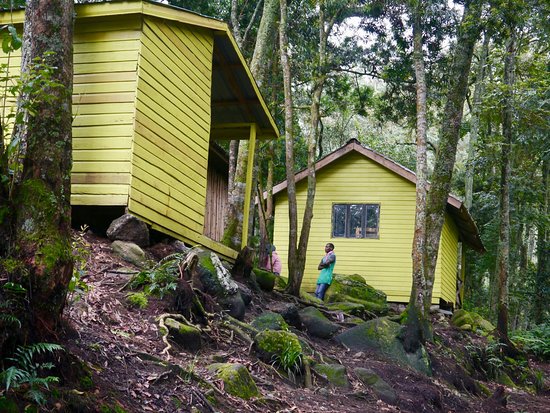
2 days Rwenzori trekking to Sine CampThe final two kilometers before Sine Camp are the day’s hardest section, a sustained, steep push through increasingly mossy forest where the roots become the staircase and the valley falls away steeply to the south. The sound of waterfalls begins before the camp is visible: a deep, continuous rush that grows louder with each upward step. Sine Camp, at 2,596 meters, announces itself with that sound and then materializes: wooden huts on a forested ridge, your mountain cook already at work, hot drinks on the camp table, and two hundred meters along a side path, Enock Falls: a curtain of white water dropping through a frame of hanging ferns and bright green lichen into a pool far below. The waterfall is one of the most photographed spots on the entire Kilembe Trail, and it earns every photograph taken of it. The evening at Sine Camp is cool and deeply atmospheric; the temperature drops to 8–12°C after dark, the sound of the falls never stops, and sleep arrives without difficulty.

Meals: Lunch (trail), Dinner (camp) | Highlight: Enock Falls | Wildlife: Blue monkeys, Rwenzori Turaco, chameleons | Accommodation: Sine Camp wooden mountain huts

Day 2 — Through the Bamboo to the Heather: Sine Camp to Samalira Camp (3,170 m)

Altitude: 2,596 m → 3,170 m | Distance: ~4.1 km | Trekking Time: 3–4 hours | Terrain: Bamboo zone, heather zone, ridge walking

Day 2 is shorter in distance but longer in atmosphere. The trail leaves Sine Camp almost immediately for the bamboo zone, and the transition is abrupt and theatrical. Within two hundred meters of camp, the forest character changes completely. Giant mountain bamboo, Arundinaria alpina, rises eight to twelve meters on both sides of the path, the stalks pale and thick-walled, the canopy filtering the morning light into a pale green luminescence. The trail here is narrower and frequently muddy, and the acoustic environment shifts entirely: the bamboo dampens all sound except its own, creating a whispering, clicking cathedral of vegetation that is unlike anything in the lower forest.

Trekking poles are invaluable in the bamboo zone; the ground is consistently wet, and the roots underfoot require constant attention. Your guide sets a measured, deliberate pace that both manages the terrain safely and allows maximum time for observation. The bamboo zone of the Kilembe Trail is exceptional for birdlife: the Rwenzori Turaco is a near-constant presence, its vivid crimson-and-green plumage flashing through gaps in the canopy when flushed from a bamboo cluster, and its territorial call is a distinctive series of descending notes that echoes for remarkable distances. Malachite sunbirds descend from the heather zone into the bamboo-forest ecotone during drier months, hovering at flowering lobelias with the particular hovering urgency of territorial males.

Above the bamboo, the landscape undergoes a second, more dramatic transformation. At approximately 3,000 meters, the bamboo gives way to the heather zone, and giant tree heather in the Rwenzori is not the low-growing heath of European moors. Here, Erica arborea and Erica trimera grow to fifteen meters, their trunks as thick as mature oak trees, their branches smothered in sphagnum moss and silver-green lichen. The effect is surreal and profoundly beautiful: a slow-motion forest of enormous, moss-draped figures standing in the mist, their scale and silence giving the zone an atmosphere that is more geological than botanical. It is the landscape feature that defines the Rwenzori for most visitors, and nothing quite prepares you for it on first encounter.

You reach Kalalama Camp at 3,147 meters in the mid-morning, where it serves as a natural pause point. On clear mornings, the views from the ridge near Kalalama are remarkable, west across the Rwenzori foothills toward Lake George in Queen Elizabeth National Park, two protected areas visible from a single vantage point across vastly different elevation zones. The first giant lobelias appear here, Lobelia wollastonii, their towering grey-green spike inflorescences rising two to three meters from ground-level rosettes. A short final climb from Kalalama leads to Samalira Camp in its shallow alpine basin.

Samalira Camp, at 3,170 meters, is the emotional high point of this trek. The camp sits in an open basin with ridge views on three sides, the heather forest enclosing it on the fourth. The silence at this altitude is complete and specific — the particular quiet of high mountain air, where sound carries differently and the small sounds of water and wind take on an unexpected prominence. Your mountain cook has a hot supper and warm drinks ready. The temperature will drop to 4–8°C after sunset. An extra layer is a good idea. Sitting outside before dinner for twenty minutes in the cooling evening air, watching the cloud systems move through the heather trees, is time well spent.

Meals: Breakfast (camp), Lunch (trail), Dinner (camp) | Highlights: Bamboo corridor, first giant lobelias, Kalalama panorama | Accommodation: Samalira Camp wooden mountain huts

Day 3 — The Long Descent: Samalira Camp to Kyanjuki Trailhead (1,450 m)

Altitude: 3,170 m → 1,450 m | Distance: ~10 km | Trekking Time: 5–7 hours | Terrain: Heather zone, bamboo, montane forest, river sections

A pre-dawn cup of tea is the best way to begin the last morning at Samalira Camp, and the best reason to step outside into the dark and cold before breakfast is the sky. At 3,170 meters, on a clear morning before the clouds build from the west, the stars are extraordinary, the equatorial sky is dense and low, and the Milky Way is a physical presence rather than a background feature. As dawn arrives and the heather trees emerge from darkness into silhouette against the lightening sky, the quality of the morning is genuinely singular. Breakfast is served with the warmth of the mountain cook’s practiced hospitality, and the team leaves camp by 7:00–8:00 AM.

The descent through the heather zone on the morning of Day 3 offers an entirely different visual experience from the upward journey. The morning light — coming at a low angle from the east, filtered through the mossy heather canopy — turns the lichen a pale gold and the sphagnum surfaces amber. Giant lobelias, passed quickly in yesterday’s ascent, are worth the slow inspection of descent: their architectural precision, the perfect concentric arrangement of their rosette leaves, and the tiny insects that live only on their surfaces are details that a second, unhurried look reveals. Your guide points out a Rwenzori double-collared sunbird working the lobelia towers methodically, hovering at each floret with the focused economy of a professional.

The re-entry into the bamboo zone begins mid-morning, and the descent through it is notably easier than the ascent but requires no less care on the muddy, rooted sections where a careless step can mean a fall. Trekking poles take the load off knees, as the descent is already taxing, and a deliberate pace is more important here than speed. The bamboo on the way down is frequently more alive with bird activity than during the ascent: the morning feeding peak in the transitional zone brings Rwenzori Turacos, sunbirds, and flycatchers into close proximity with the trail in numbers that reward the patient observer.

Re-entering the Afro-montane forest below the bamboo brings warmth, richer birdsong, and the return of the river sounds that accompanied the ascent. At the Omusita Rest Area, your guide presents an option: the direct descent to the ranger post along the main trail or a scenic diversion following the Nyamwamba River through a section of old-growth forest that is among the most atmospheric stretches of the lower Kilembe Trail, with ancient trees whose root systems clasp river boulders like enormous slow hands, the water moving between them in glassy slides and white falls. Take this route if time and conditions allow. It is the Nyamwamba Valley at its most primeval.

The trail concludes at the UWA Ranger Post and then Kyanjuki Village, typically by early to mid-afternoon. At the trailhead your Rwenzori Trekking Expeditions guide presents the trek completion certificates, the porter team exchanges farewells, gratuities are distributed, and your private vehicle is ready for the return to Kasese or onward to Fort Portal. The three days feel both very long and very short at the same time, a reliable measure of an experience that has genuinely occupied your full attention.

Meals: Breakfast (camp), Lunch (trail) | Highlights: Dawn heather zone, Nyamwamba River forest path, trek completion | Wildlife: Blue monkeys on descent, Turaco activity in bamboo

What Makes the 3-Day Sine & Samalira Camp Rwenzori Trek Special?

Among all the short trekking options in Rwenzori Mountains National Park, the 3-day Rwenzori Trek to Sine and Samalira Camps stands out for a specific combination of qualities that no other short route can fully replicate. The most singular feature is the ecological cross-section it delivers: three vegetation zones in three days, each genuinely distinct in climate, character, and wildlife, arranged in an ascending sequence that mirrors the mountain’s actual ecological architecture rather than offering a surface-level sample of any single zone.

The waterfall experience on the Kilembe Trail is exceptional and unmatched on any other Rwenzori short trek. Enock Falls at Sine Camp, audible from the moment you approach on Day 1, is one of the most spectacular low-altitude waterfalls in the entire national park — a full-volume curtain of water through a forest frame that photographs beautifully in any light and any weather. The Samalira Falls and the Nyamwamba River cascades visible from different sections of the trail add to a continuous theme of moving water that gives the Kilembe Trail its distinctive acoustic and visual signature.

The Kilembe Trail also carries a depth of cultural and historical context that enriches the experience in a way few mountain trails in East Africa can match. The Kilembe Copper Mines, operational from the 1950s through the 1970s and now being rehabilitated, represent one of the most significant chapters in western Uganda’s twentieth-century economic history. The Bakonzo community, whose members make up the guide and porter teams, are the indigenous custodians of these mountains, and the knowledge that a Rwenzori Trekking Expeditions guide has about the ecology and human history of the Nyamwamba Valley is part of what makes a guided expedition different from a self-guided walk through remarkable scenery.

Vegetation Zones & Wildlife on the Kilembe Trail

The 3-day Sine and Samalira Camp trek is one of the most ecologically rich short trekking itineraries in the entire Albertine Rift Biodiversity Hotspot — a region identified by Conservation International as one of the world’s most concentrated repositories of endemic species. The table below summarizes the three zones traversed and their key inhabitants:

Vegetation Zone

Altitude Range

Key Flora

Wildlife Highlights

Afro-Montane Forest

1,450 – 2,500 m

Podocarpus, Symphonia, Giant Ferns, Wild Orchids

Blue Monkeys, Rwenzori Turaco, African Green Broadbill, Civet

Bamboo Zone

2,500 – 3,000 m

Arundinaria alpina (Giant Mountain Bamboo), Mosses

Rwenzori Turaco, Malachite Sunbirds, African Wood Owl

Heather Zone

3,000 – 3,800 m

Giant Tree Heather (Erica arborea), Giant Lobelias, Sphagnum Moss

Rwenzori Double-Collared Sunbird, Duiker, Alpine Chat

Birding on the Kilembe Trail is of world-class quality throughout both trail days. The Rwenzori turaco, with its bright crimson and green plumage and its distinctive descending call, is almost always seen in both the lower forest and the bamboo zone. The African Green Broadbill, endemic to the Albertine Rift, is a regular sighting in the dense understory of the Afro-montane forest on Day 1 and Day 3. The handsome Francolin and the African Hill Babbler are reliably heard along the entire trail. Rwenzori Trekking Expeditions provides a dedicated birding checklist to all guests and can arrange a specialist birding-focused pace for the Day 1 ascent and Day 3 descent for guests with particular ornithological interests.

How difficult is the 3-day Rwenzori trek to Sine and Samalira Camps?

The 3-day Kilembe Trail to Sine and Samalira Camps is rated moderate to challenging, making it the most demanding of the accessible short Rwenzori trekking options and significantly more physically rigorous than a typical day hike on well-maintained trails. An honest assessment of what to expect is essential for proper preparation.
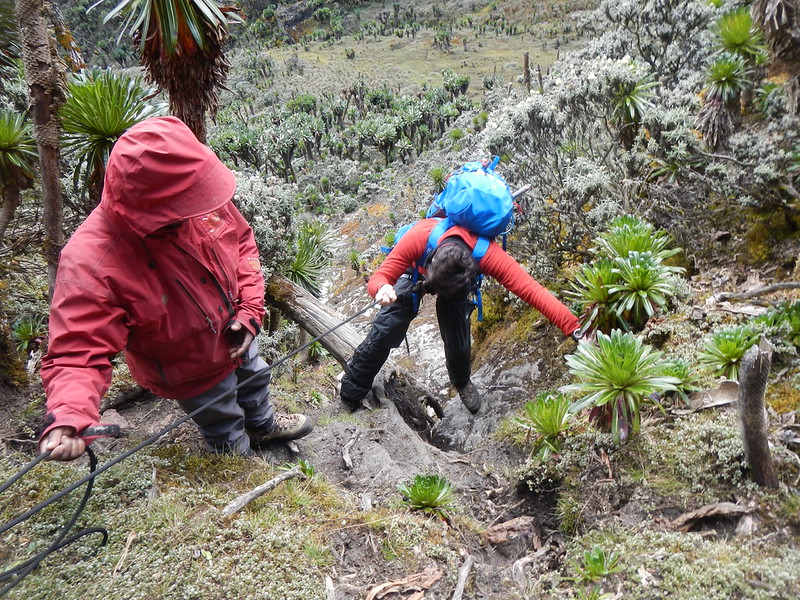
3 day Rwenzori trek to sine & samalira camp


Physical Demands — Day by Day

Day 1 is the most physically demanding day of the entire trek. The trail covers 9.5 kilometers with 1,146 meters of elevation gain across 7–8 hours of active trekking. The final two kilometers before Sine Camp involve a sustained steep ascent on a rooted, sometimes muddy trail that requires both cardiovascular endurance and careful footwork. This is a genuinely long mountain day by any standard, and arriving at Sine Camp is a genuine achievement. Day 2, by contrast, is short, 4.1 kilometers over 3–4 hours, but the altitude gain into the heather zone makes it aerobically demanding in a different way, and the bamboo zone trail requires concentration on every step. Day 3 is a 10-kilometer descent over 5–7 hours that tests the knees consistently throughout; trekking poles are essential, and a slow, deliberate pace prevents the fatigue-related slips that are the most common cause of minor injury on mountain descents.

Technical Demands

There is no technical climbing on this trek. No glacier travel, no scrambling, no ropes or harnesses, and no specialist equipment beyond a reliable pair of waterproof trekking boots and trekking poles. The trail surface throughout is rooted, rocky, and wet, typical of the Rwenzori, but it is a walking trail in the fullest sense, requiring no climbing skills whatsoever. Rubber gumboots are available free at the Kyanjuki trailhead for trekkers who prefer them to hiking boots in the muddier sections.

Altitude

The maximum altitude on this trek, 3,170 meters at Samalira Camp, is well below the threshold at which serious acute mountain sickness becomes a significant risk for the majority of healthy adults. A mild headache or slightly reduced appetite is possible on Day 2 for some individuals and is a normal physiological response to modest altitude gain. Informing your guide immediately of any symptoms and slowing the pace are the standard responses. A descent of 200–300 meters resolves symptoms rapidly if they progress. For trekkers with any cardiovascular concerns, consultation with a physician before departure is recommended.

Fitness Recommendation

Any adult who is capable of completing a 15-kilometer day hike with 700–800 meters of elevation gain carrying a 10-kilogram daypack is a suitable candidate for this trek. A six-to-eight-week preparation program of three cardiovascular sessions per week (45–60 minutes each), one longer weekend hike per week, and strengthening exercises for the quadriceps and knee stabilizers is strongly recommended. The knee strengthening is particularly important for managing the Day 3 descent.

CTA Banner Widget — Rwenzori Trekking Expeditions

Experience Rwenzori Beyond Expectations

Spots Filling Fast — Schedule Your Trek Today

Kilembe Trail vs. Central Circuit Trail — Which Short Trek Is Right for You?

The two principal Rwenzori trekking routes offer meaningfully different short-trek experiences at the three-day level. The comparison below helps you determine which route aligns best with your priorities:

Feature

Kilembe Trail (This Trek)

Central Circuit Trail

Trailhead

Kyanjuki Village, near Kilembe Copper Mines

Nyakalengija, north of Kasese

Valley Followed

Nyamwamba Valley — glacially carved

Mubuku & Bujuku Valleys

3-Day Destination

Samalira Camp — 3,170 m

John Matte Hut — 3,414 m

Key Waterfalls

Enock Falls, Samalira Falls

Mubuku River falls (lower)

Bamboo Zone

Dramatic & prominent Day 2

Less prominent

Cultural Context

Historic Kilembe Copper Mines at start

Agricultural community at Nyakalengija

Summit Potential

Up to Margherita Peak (8 days)

Up to Margherita Peak (7–9 days)

Best For Short Treks

Waterfalls, bamboo, heather variety

Forest lakes, Nyabitaba ridge

Difficulty (3 Days)

Moderate–Challenging (Day 1 steep)

Moderate (gentler gradient)

If dramatic waterfalls, the distinctive bamboo zone corridor, and the cultural context of the Kilembe Copper Mines appeal to you, the Kilembe Trail is your route. If a gentler first-day gradient, a high-ridge forest camp with valley views, and proximity to the Mubuku River are more compelling, the Central Circuit’s three-day option to John Matte Hut is worth considering. Rwenzori Trekking Expeditions can help you choose the right option based on your specific fitness, interests, and previous trekking experience.

Mountain Camps — Sine Camp & Samalira Camp

Sine Camp (2,596 m)

Sine Camp occupies a narrow, densely forested ridge above the Nyamwamba Valley, its position announced by the sound of waterfalls well before the camp itself comes into view. The camp consists of Uganda Wildlife Authority wooden mountain huts offering bunk-style sleeping with basic mattresses and blankets. The huts are functional and well-maintained, positioned among tall Podocarpus trees that filter both rain and wind. The camp kitchen, run by your Rwenzori Trekking Expeditions cook team, produces hot meals and warm drinks throughout the evening. The defining feature of Sine Camp is its relationship with the Nyamwamba River valley; the sound of water from the falls below is a constant companion, and Enock Falls, accessible via a two-hundred-meter side path from camp, is the essential evening excursion. Facilities are basic: pit latrines, no electricity, no mobile phone signal in most conditions, no charging facilities. The guide team treats all drinking water from the river.

Samalira Camp (3,170 m)

Samalira Camp sits in a broad, shallow alpine basin deep in the heather zone, and its defining quality is silence. At this altitude, the ambient noise of the lower mountain falls away entirely, and what remains is wind through the heather trees, the occasional call of a sunbird, and the distant sound of water from the Samalira Falls below the basin rim. The camp infrastructure matches Sine Camp: wooden huts, pit latrines, and no electricity, but the setting feels markedly more remote and alpine. Night temperatures at Samalira drop to 4–8°C and occasionally lower; a sleeping bag rated to 0°C is the minimum comfortable option. Giant lobelias stand in clusters at the camp’s perimeter, and the views from the basin rim in clear conditions take in the surrounding ridges and heather-covered valleys in both directions. Samalira is, for many guests, the moment the Rwenzori becomes genuinely extraordinary.

CTA Banner Widget — Rwenzori Trekking Expeditions

Experience Rwenzori Beyond Expectations

Spots Filling Fast — Schedule Your Trek Today

Best Time to Trek the 3-Day Kilembe Trail to Sine & Samalira Camps

The Rwenzori Mountains receive rainfall every month of the year; this is one of the wettest mountain ranges on Earth, and that wetness is inseparable from the extraordinary ecological richness that makes the range so remarkable. Understanding the seasonal patterns helps you select the experience that best aligns with your tolerance for wet conditions and your preference for either trail firmness or ecological drama.

Primary Dry Season: June to August

June, July, and August represent the most reliably dry trekking window on the Kilembe Trail. Rainfall decreases significantly, trail surfaces firm up, river crossings are at their safest, and the heather zone at Samalira Camp is most likely to deliver clear morning views across the surrounding ridges. This is the peak trekking season and the period when Rwenzori Trekking Expeditions receives the highest demand for Kilembe Trail departures. Booking well in advance for June–August is strongly recommended.

Secondary Dry Season: December to February

The short dry season of December to February offers excellent trekking conditions on the Kilembe Trail, with January and February typically the driest months of this window. Daytime temperatures in the Nyamwamba Valley are warm and clear; nights at Samalira Camp are cold but still and crisp. The Christmas and New Year period has a particular appeal for those seeking a Uganda mountain adventure far from the mainstream: the trail is quiet, the camps are uncrowded, and the festive-season evenings at Sine Camp have an atmosphere that is entirely their own.

Shoulder and Wet Seasons: March–May and October–November

The long rains of March to May and the shorter wet season of October and November increase trail mud significantly, particularly on the steep sections below and above Sine Camp. Waterfalls are louder, fuller, and more dramatic during these months. Enock Falls in the rains is a genuinely thunderous spectacle. The bamboo zone in heavy rain is uniquely atmospheric: the drumming of raindrops on the bamboo canopy above, the mist threading between the stalks, and the deepened green of all surfaces. For trekkers who are well-equipped for wet conditions and value solitude and ecological intensity over trail comfort, the wet season Kilembe Trail is a compelling choice. Full waterproof gear is essential. Rubber gumboots provided at the trailhead are strongly recommended.


How to Get to the Kyanjuki Trailhead — Kilembe Trail, Kasese

The Kyanjuki Trailhead lies approximately 12 kilometers from Kasese town along the Kilembe Road, the same road that leads to the historic Kilembe Copper Mines in the Nyamwamba Valley. The drive from Kasese center takes 20–30 minutes by private vehicle or boda-boda (motorcycle taxi). Rwenzori Trekking Expeditions seamlessly arranges all ground transfers between Kasese and Kyanjuki as part of every trek package, with your private vehicle waiting at the trailhead for the Day 3 return.

From Entebbe International Airport, the drive to Kasese takes approximately 7–8 hours by private vehicle along the Kampala–Fort Portal–Kasese highway, a journey of approximately 450 kilometers through Uganda’s western highlands that is itself a rewarding scenic experience, particularly the descent from the Fort Portal escarpment into the Kasese basin with the Rwenzori range rising ahead. Arriving in Kasese the evening before your trek begins is strongly recommended, both for rest and to allow the guide team to conduct the pre-trek briefing and equipment check at the Trekkers Hostel in Kyanjuki before the Day 1 morning start.

The most popular Uganda combinations for Kilembe Trail trekkers are chimpanzee tracking in Kibale Forest National Park, approximately two hours north of Kasese, and gorilla trekking in Bwindi Impenetrable National Forest, approximately three hours to the south. Queen Elizabeth National Park, with its tree-climbing lions, hippo-dense Kazinga Channel, and game-rich Ishasha sector, lies forty-five minutes east of Kasese and is easily incorporated into a pre- or post-trek itinerary.

What Is Included in the 3-Day Sine & Samalira Camp Trek?

Rwenzori Trekking Expeditions operates the Kilembe Trail to Sine and Samalira Camps on a fully inclusive basis. Every logistical element of your three days on the mountain is arranged, managed, and delivered so that your entire focus from the moment you reach Kyanjuki is on the experience itself.

What Is Included

We cover all Uganda Wildlife Authority national park entry fees and Kilembe Trail trekking permits in full.

Your certified, English-speaking Rwenzori Mountain guide accompanies the team throughout all three days, with a guide-to-trekker ratio that ensures individual attention at every section of the trail.

An experienced porter team carries all communal equipment, food, and camp supplies; personal bags may also be carried within the standard weight allocation. Your dedicated mountain cook prepares all meals from the first trail lunch on Day 1 through the final trail lunch on Day 3, with full board and hot drinks available throughout. Mountain hut accommodation at Sine Camp and Samalira Camp is booked and secured in advance. Trekkers who require them can use rubber gumboots at the Kyanjuki trailhead free of charge. A comprehensive first aid kit is carried by the guide team at all times. Private 4WD vehicle transfer between Kasese and Kyanjuki is included.

What Is Not Included

International and domestic flights to Uganda are not included. Each trekker arranges their Ugandan tourist visa, which they can obtain on arrival at Entebbe International Airport or in advance through the Uganda e-Visa portal.

Travel insurance, which must include coverage for emergency mountain evacuation, is mandatory and not provided. Personal trekking equipment, including boots, gaiters, trekking poles, rain gear, and a sleeping bag, is the trekker’s own responsibility, though a detailed packing list and local rental guidance in Kasese are provided to all confirmed guests. Guide and porter gratuities, while deeply appreciated and a significant part of the mountain community’s income, are not included in the package price; your Rwenzori Trekking Expeditions coordinator provides clear tipping guidance upon booking. Accommodation in Kasese before and after the trek, and any onward transfers beyond Kasese, are not included unless specifically added to a combined Uganda itinerary.

What Should I Pack for the 3-Day Kilembe Trail Trek?

The Kilembe Trail passes through forest, bamboo, and heather zones where conditions change significantly with altitude and time of day. Packing correctly for all three environments within a single compact system is the essential skill. A full itemized gear list is provided to every confirmed Rwenzori Trekking Expeditions guest, but the essential framework is as follows.

Waterproofing — The Non-Negotiable

The Rwenzori Mountains are among the wettest ranges in Africa. Waterproofing is not an optional upgrade for unlucky days; it is the baseline requirement for every day on every trail in every season. A fully waterproof hardshell jacket with sealed seams is essential. Waterproof trekking trousers or shell overpants are required in the bamboo and heather zones, where vegetation quickly drips water onto everything. A waterproof pack liner or dry bag system protects your sleeping bag, spare clothing, and electronics. Do not bring cotton in any form; it becomes dangerously cold when wet and dries almost impossibly slowly at these altitudes.

Layering System

A moisture-wicking base layer for active trekking, a mid-layer fleece or insulated jacket for rest stops and camp evenings, and the hardshell outer layer described above constitute the three essential clothing layers. A lightweight down jacket for camp evenings at Samalira, where temperatures drop to 4–8°C after sunset, adds a fourth comfort layer that is well worth its pack weight. A warm hat, lightweight waterproof gloves, and a buff or neck gaiter complete the cold-weather kit.

Footwear

Waterproof hiking boots with ankle support are the best choice for the Kilembe Trail. The steep sections on Day 1 need ankle stability that trail runners cannot provide, and the rooted, muddy descents on Day 3 need a deep-lugged sole with good grip. Alternatively, rubber gumboots are provided free at the trailhead and are the choice of most local guides and porters for the muddier sections. Trekking poles are essential, two poles rather than one, and should be treated as part of your safety equipment rather than an optional accessory on this route. Two pairs of wool or synthetic hiking socks per day minimize the blister risk on long trail days.

Sleep Kit

A sleeping bag rated to 0°C is the minimum comfortable option for Samalira Camp at 3,170 meters, where night temperatures may drop below 5°C. A sleeping liner adds warmth and hygiene. The huts provide foam mattresses; your sleeping bag is your primary thermal protection overnight.

Day Pack Essentials

A 20–30 liter daypack carries your rain gear, water (minimum 2 liters per person per day), personal medication, camera equipment, snacks, and spare layers. A headtorch with spare batteries is required for the early-morning departures and the pre-dawn cup of tea at Samalira Camp on Day 3. Sunscreen SPF 50, insect repellent for the lower forest sections, and a small personal first aid kit complete the personal pack.


How Safe Is the 3-Day Rwenzori Trek to Sine & Samalira Camps?

Rwenzori Mountains National Park is a well-managed, secure conservation area with a consistent safety record for trekking tourism. The park is administered by the Uganda Wildlife Authority, and the Kilembe Trail infrastructure, huts, bridges, and trail markers are maintained by UWA in partnership with local guide and porter associations. The Kasese region and the national park itself provide stable and secure environments for international visitors.

Rwenzori Trekking Expeditions maintains rigorous operational safety standards on all its Kilembe Trail departures. Every guide holds current UWA mountain guide certification and wilderness first aid qualifications. A comprehensive emergency first aid kit is carried throughout all three days. The guide team is trained in acute mountain sickness recognition and emergency descent protocols, and an evacuation plan is briefed with every trekking team before departure from Kyanjuki. The maximum altitude on this trek, 3,170 meters, is well below the threshold where serious altitude illness becomes a significant risk for healthy adults, and the gradual ascent profile of Day 1 provides natural acclimatization before the push to Samalira Camp on Day 2.

The most common minor hazards on the Kilembe Trail are slips on wet, rooted trail surfaces, managed by trekking poles, appropriate footwear, and a deliberate pace; and blister development on the long Day 1 ascent and Day 3 descent. Your Rwenzori Trekking Expeditions guide team effectively manages both hazards with the packing and pace guidance they provide. In over a decade of operations, Rwenzori Trekking Expeditions has maintained an unblemished safety record on the Kilembe Trail, built not on fortune but on preparation, experienced personnel, and a culture that places trekker safety unambiguously above schedule pressure.

CTA Banner Widget — Rwenzori Trekking Expeditions

Experience Rwenzori Beyond Expectations

Spots Filling Fast — Schedule Your Trek Today

Frequently Asked Questions — 3-Day Rwenzori trek to Sine & Samalira Camps Kilembe Trail

Yes, with an important qualification. This trek is accessible to motivated first-time mountain trekkers who have a solid cardiovascular fitness base and who have prepared specifically for the demands of the route. Day 1’s 9.5-kilometer ascent with 1,146 meters of elevation gain over 7–8 hours is genuinely challenging and should not be underestimated by anyone without recent long-distance hiking experience. Trekkers who regularly complete 15–20 kilometer day hikes with significant elevation change or who have followed the 6-to-8-week preparation program provided upon booking will find this trek very manageable. First-timers with limited recent hiking experience should consider the 2-day Rwenzori Trek to Sine Camp as an initial Rwenzori experience before attempting the three-day itinerary.

The highest point on this trek is Samalira Camp at 3,170 meters above sea level. Kalalama Camp, at 3,147 meters, is passed through on Day 2 but is not the overnight camp on this itinerary. The altitude at Samalira is well below the threshold where serious acute mountain sickness becomes a significant concern for most healthy adults, typically 3,500–4,000 meters and above. Mild symptoms such as a slight headache or reduced appetite are possible for some individuals on Day 2 and are a normal physiological response to the altitude gain.

Enock Falls is a spectacular waterfall located approximately 200 meters from Sine Camp on a short side trail, and it is one of the most celebrated natural features on the entire Kilembe Trail. A full-volume curtain of water drops through a frame of hanging ferns and bright green lichen into a deep pool far below; the setting is dramatic in every weather condition and in every season, and it is arguably the single most photogenic spot on the lower Kilembe Trail. The side trail to the falls takes approximately 10–15 minutes round trip from camp and is visited by every Rwenzori Trekking Expeditions team after arriving at Sine Camp on the evening of Day 1. It is a non-negotiable part of the Sine Camp experience.

The two trails offer meaningfully different short-trek experiences. The Kilembe Trail delivers a more dramatic waterfall experience, a more prominent and atmospheric bamboo zone, and the added cultural context of the Kilembe Copper Mines at the trailhead. Day 1 on the Kilembe Trail is steeper and more physically demanding than the equivalent day on the Central Circuit Trail. The Central Circuit’s 3-day Rwenzori trek to John Matte Hut at 3,414 meters reaches a slightly higher maximum altitude and offers a different wildlife profile, with the Mubuku River valley and its associated birdlife as the central ecological feature. Rwenzori Trekking Expeditions can help you select the route that best matches your fitness, interests, and previous trekking experience through a pre-booking consultation

All meals are included from the first trail lunch on Day 1 through the final trail lunch on Day 3. Breakfasts at camp consist of porridge, eggs, toast, tea or coffee, and fresh fruit where available. Packed lunches are carried on the trail — sandwiches, boiled eggs, fruit, snacks, and juice. Evening dinners are hot, cooked meals prepared at camp by your dedicated mountain cook: rice, pasta, beans, potatoes, vegetables, and meat or fish depending on availability. Dietary requirements, vegetarian, vegan, or allergy-related, must be declared at the time of booking to ensure your kitchen team is fully prepared before departure.

Absolutely, and the 3-day Sine and Samalira Camp Rwenzori trek is specifically designed as the first chapter in a longer Kilembe Trail story. The natural next step is the 4-day Mutinda Lookout Trek, which adds a fourth day and reaches the dramatic Mutinda ridge at a higher elevation, offering panoramic upper-mountain views. The 4-day Rwenzori Waterfalls Hike on the Kilembe Trail offers an alternative extension focused on the trail’s exceptional waterfall sequence. The ultimate 8-day Margherita Peak Rwenzori Trek via Kilembe Trail expedition is the complete route for those aiming to reach Margherita Peak, Africa’s third highest summit at 5,109 meters, as it passes through all major camps and reaches the Elena Glacier. Rwenzori Trekking Expeditions can design a seamless extended itinerary beginning with the 3-day route and continuing to any level of the Kilembe Trail above it.

The primary dry seasons of June to August and December to February offer the most reliable trail conditions, with firmer trail surfaces, safer river crossings, and the highest probability of clear ridge views from Samalira Camp. June through August is the most popular and most recommended window for first-time trekkers. December through February is excellent and significantly less crowded. The wet seasons, March to May and October to November, are feasible for well-equipped trekkers who are comfortable with mud and rain and who value the heightened drama of full waterfalls and lush forest over dry trail surfaces. Rwenzori Trekking Expeditions operates year-round on the Kilembe Trail and provides honest, experience-based seasonal advice for every inquiry.

Tipping is not included in the package price but is a significant and valued component of the income of your guide and porter team. For a 3-day Rwenzori trek, the commonly recommended guideline is USD $10–$15 per day for your lead guide and USD $5–$8 per day for each porter. For a solo trekker with one guide and one porter, a total tip budget of USD $45–$70 for the full trek is appropriate. Gratuities are distributed at the Kyanjuki trailhead at the end of Day 3, before the team disperses. Your Rwenzori Trekking Expeditions coordinator provides full guidance on appropriate tipping etiquette and distribution protocol upon booking confirmation.

Yes, western Uganda is exceptionally well-suited to multi-activity combination itineraries, and Rwenzori Trekking Expeditions coordinates all inter-destination logistics end to end. The most popular combinations pair the 3-day Kilembe Trail trek with chimpanzee tracking in Kibale Forest National Park (approximately two hours north of Kasese), gorilla trekking in Bwindi Impenetrable National Park (approximately three hours south), game drives and the Kazinga Channel boat cruise in Queen Elizabeth National Park (45 minutes east), or a white-water rafting day on the Nile at Jinja (approximately six hours east). Rwenzori Trekking Expeditions can design and manage a 7–10 day Uganda itinerary that incorporates the Rwenzori trek alongside one or two of these experiences.

Your Rwenzori Trekking Expeditions porter team carries all communal equipment, tents or hut bedding where applicable, cooking equipment, and all food supplies, as well as your main personal luggage within the standard 15-kilogram porter load limit. Your daypack for the trail carries personal items: water, rain gear, spare layers, a camera, snacks, first aid essentials, and documents. The guideline is a daypack of 20–25 liters with a total carry weight of 8–12 kilograms for the trail days. If your personal gear exceeds the porter load limit, an additional porter can be arranged at the time of booking.

Yes! Travel insurance is a mandatory requirement for all Rwenzori Trekking Expeditions guests, regardless of trek duration or altitude. The policy must include emergency mountain rescue and medical evacuation cover. The 3-day Sine & Samalira Camp trek goes up to 2,596 meters, which is well below the altitude where serious mountain illness is a significant risk, but the remote forest environment means that emergency medical evacuation cover is an essential safety requirement, not just a precautionary luxury. Your Rwenzori Trekking Expeditions reservation team will confirm insurance requirements upon booking and can suggest suitable providers upon request.

Chimpanzees are not reliably present in the lower Nyamwamba Valley forest on the Kilembe Trail to Sine Camp, and sightings should not be expected as part of this trekking experience. For dedicated chimpanzee trekking, Kibale Forest National Park, approximately two hours north of Kasese, is the outstanding destination, the world’s highest density of chimpanzees in a protected area, with fully habituated groups and reliable daily encounter rates. Rwenzori Trekking Expeditions can coordinate a Kibale Forest chimpanzee trekking permit and transfer as part of a broader western Uganda itinerary that combines the 3-day Rwenzori Trek to Sine & Samalira Camp on the Kilembe Trail with a Kibale day experience.

The 2-day Sine Camp trek is achievable for trekkers over 60 who have maintained good cardiovascular fitness and are experienced with steep, multi-hour hiking on varied terrain. The key variables are consistent aerobic fitness, strong leg and knee health, and a willingness to set a pace determined by the terrain rather than any external time pressure. The guide team is experienced in working with older trekkers and adjusting the pace, rest stop frequency, and support level accordingly. Trekking poles are especially important for older trekkers on both the Day 1 ascent and the Day 2 descent. A pre-departure consultation with your physician is recommended if you have any cardiovascular, respiratory, or joint concerns.

The Rwenzori Mountains receive rainfall throughout the year, and trekkers can use the Kilembe Trail in wet conditions with appropriate equipment. Light to moderate rain on Day 1, Day 2, or Day 3 is a normal part of the Kilembe Trail experience rather than an exceptional event and does not constitute grounds for cancellation or postponement. Your full waterproof kit, hardshell jacket, waterproof trousers, and waterproof pack liner manage these conditions effectively. In the event of genuinely severe and sustained weather that poses a safety risk to the trekking team, your Rwenzori Trekking Expeditions guide team will make the appropriate call on pace, route, and any necessary delay or modification, with trekker safety as the absolute overriding priority.

Why book a 2-day Rwenzori Kilembe Trail Trek with Rwenzori Trekking Expeditions?

Rwenzori Trekking Expeditions is a specialist mountain environment, and the 3-day Rwenzori trek to Sine and Samalira Camps’ Kilembe route is wet, steep, rooted, and ecologically complex, which requires a guide team with genuine, specific knowledge of every section. Rwenzori Trekking Excursions was founded in Kasese by guides who have walked this trail in every season and every weather condition the Rwenzori produces. The company operates exclusively on the Rwenzori range, which means that every operational procedure, every piece of equipment, and every emergency protocol is designed specifically for this mountain environment and for no other.

The porter and guide teams employed by Rwenzori Trekking Expeditions are members of the Bakonzo community, the indigenous custodians of the Rwenzori range for generations, trained to internationally recognized standards and compensated in accordance with responsible porter welfare guidelines. When you book this trek, a portion of the package proceeds will be directed to community support initiatives in the villages around Kyanjuki and Kasese. Your three days in the mountains contribute directly to the well-being of the families that live at their base.

Small group sizes, private departure options, a guide team with genuine naturalist knowledge, and the logistical efficiency that comes from years of operating the same trails in all conditions, these are the standards that every Rwenzori Trekking Expeditions departure maintains, on the Kilembe Trail and on every other route in the range. You arrive at Kyanjuki prepared to trek. The rest is handled.

“This valley is in our blood. We have guided it in sunshine and in cloud, in the dry season and in the rains. We know every root and every bird on it. That is what we offer, not just a guide, but a mountain companion.” Rwenzori Trekking Expeditions

CTA Banner Widget — Rwenzori Trekking Expeditions

Experience Rwenzori Beyond Expectations

Spots Filling Fast — Schedule Your Trek Today

Book Your 3-Day Rwenzori Trek to Sine & Samalira Camps Today

Three days. Three vegetation zones. Two mountain camps. One valley that changes how you understand Africa’s mountains. The 3-day Rwenzori Trek Kilembe Trail to Sine and Samalira Camps is waiting, and it is better in person than any description of it can convey.

Rwenzori Trekking Expeditions invites you to begin planning your Kilembe Trail expedition today. Whether you are confirming specific departure dates, requesting a group pricing document, or exploring how the 3-day Rwenzori Trek to Sine & Samalira Camp might fit within a broader Uganda itinerary, the team is ready to answer every question with the precision and honesty of people who have guided these trails hundreds of times. We leave no logistics to chance. No decision is left to you that should not be. You arrive at Kyanjuki focused on the mountain. Everything else has already been arranged.

Contact Rwenzori Trekking Expeditions at trek@rwenzoritrekkingexpeditions.com to submit your inquiry, request a full itinerary and pricing document, or begin building a bespoke Rwenzori trekking package around the Kilembe Trail. The Nyamwamba Valley begins just twelve kilometers from Kasese. Your three days on it begin here.

Scroll to Top