2 Days Rwenzori Trekking To Sine Camp
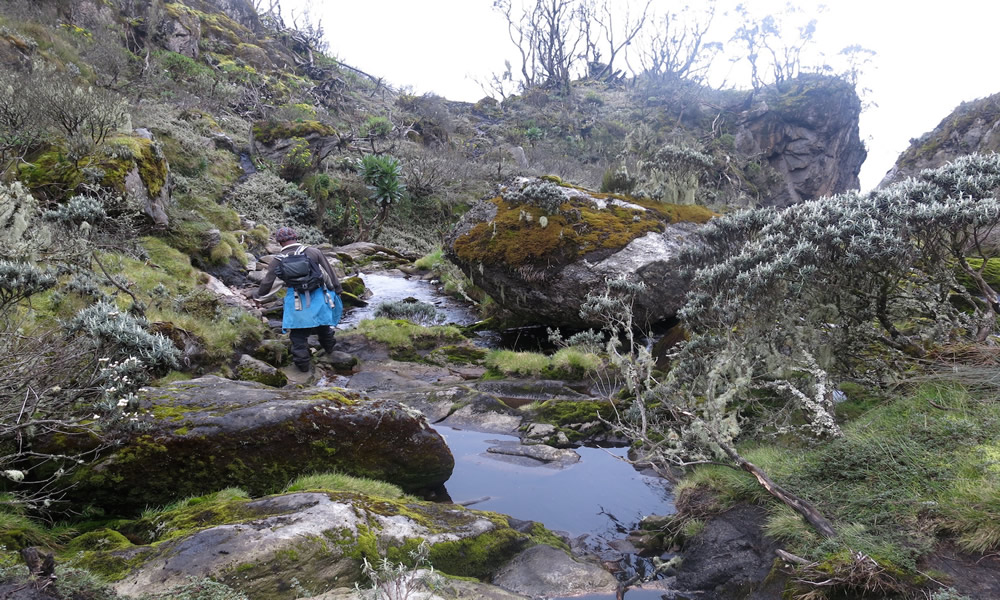
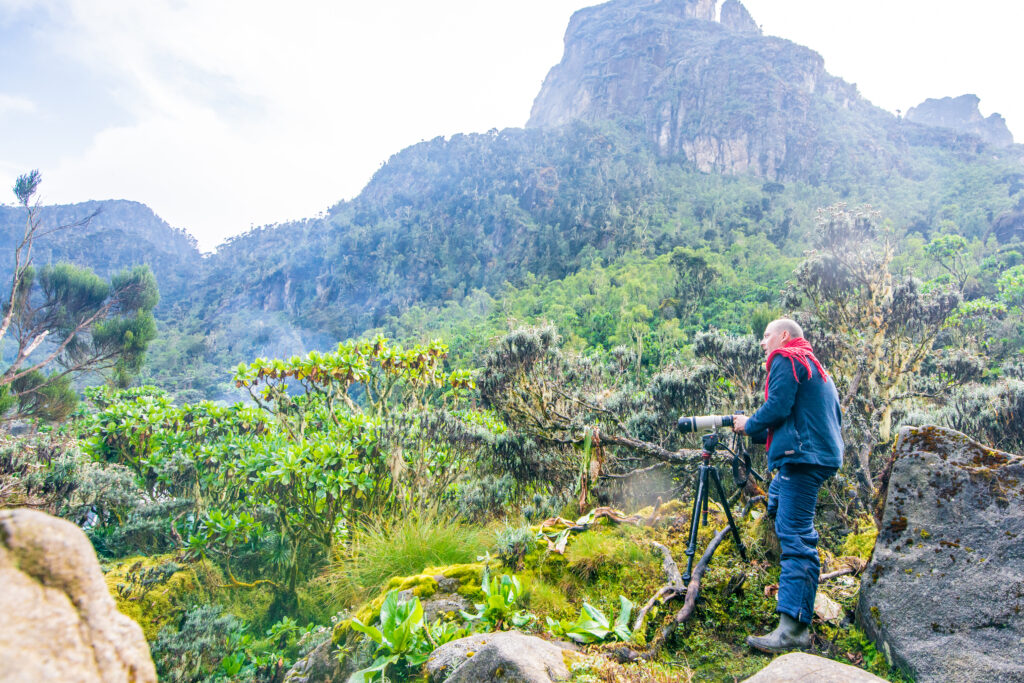
The 2-day Rwenzori trek/hike to Sine Camp via the Kilembe Trail takes you to Sine Camp (2,596 m) in 2 days. This 2-day Rwenzori trekking excursion traverses lush montane forests, bamboo zones, scenic ridges, and spectacular viewpoints overlooking the legendary Mountains of the Moon in Rwenzori Mountains National Park.
This 2-day Rwenzori trek to Sine Camp via the Kilembe Trail is one of the best Rwenzori Trekking Expeditions’ short hiking adventures in Uganda’s Rwenzori Mountains National Park. Perfect for travelers with limited time, this trek offers an authentic mountain experience to nature enthusiasts, birdwatchers, photographers, or safari travelers looking to add an adventure experience to their Uganda safaris; this trek delivers unforgettable scenery and wilderness experiences.
Sine Camp serves as the first overnight stop on the Kilembe Trail route, making it an excellent choice for hikers who want to experience the beauty of the Rwenzori Mountains without undertaking multi-day summit Rwenzori trekking expeditions.
There is a moment somewhere in the first kilometer of the Rwenzori Mountains’ afro-montane forest when the world behind you, the road, the sound of Kasese, and the twenty-first century simply cease to be relevant. The canopy closes overhead, the moss carpet muffles every footfall, and the first call of a Rwenzori turaco somewhere in the green distance above is the only sound that matters. This is the 2-Day Rwenzori Trek to Sine Camp via the Kilembe Trail: Africa’s finest 48-hour mountain immersion and the shortest route to genuinely understanding what the Rwenzori Mountains are about. Beginning at the historic Kyanjuki trailhead near the Kilembe Copper Mines, 12 kilometers south of Kasese, this 2-day Rwenzori trek to Sine Camp round trek carries you through nine and a half kilometers of intact equatorial mountain forest, past the thundering cascade of Enock’s Falls, and up to Sine Camp at 2,596 meters, a narrow ridge camp perched above the Nyamwamba Valley gorge where the sound of rapids replaces silence and the forest presses close on every side.
Day 2 returns through the same forest, now familiar in its detail: the three-horned chameleon on the understory branch you missed going up; the blue monkeys following the descent from the canopy overhead; and the morning light doing something extraordinary to the lichen on the valley walls. Guided by certified mountain experts from Rwenzori Trekking Expeditions, this two-day trek is the perfect introduction to the Kilembe Trail for first-time Rwenzori visitors, an outstanding birdwatching expedition for ornithologists, and the ideal fitness and acclimatization test for anyone preparing for a longer Rwenzori summit expedition.
Why Trek Via the Kilembe Trail?
The Kilembe Trail is the southern entrance to the Rwenzori Mountains National Park, beginning near the historic Kilembe Copper Mines in the Nyamwamba Valley, approximately twelve kilometers from Kasese. Unlike the Central Circuit Trail, which comes from the northern Nyakalengija gate and is the main route for longer summit expeditions, the Kilembe Trail provides a more intimate and quieter mountain experience, especially on short treks where the solitude of a less-trafficked forest corridor is its reward.
The Nyamwamba Valley, which the trail follows throughout, is one of the most dramatically sculpted glacial valleys in equatorial Africa. Carved over millennia by ice that has since retreated to the highest peaks, the valley descends in tiers of rapids, waterfalls, and ancient forest that feel completely undisturbed by the world beyond them. The trail follows this valley with a directness and ecological richness that rewards every hour committed to it. On a two-day itinerary, the Kilembe Trail delivers more concentrated forest depth, more waterfall drama, and more wildlife encounter potential than any comparable short route in the Rwenzori range.
The Kilembe Trail also carries a cultural dimension unique among Rwenzori trekking routes. The copper mines at Kyanjuki, operational through the mid-twentieth century and now in the early stages of rehabilitation, represent a significant chapter in western Uganda’s industrial history. The landscape around the trailhead still bears the architectural memory of that era, and the contrast between the mine’s utilitarian legacy and the ancient forest that rises immediately above it gives the first steps of the Kilembe Trail an unexpected depth of human story.
Why Choose the 2-Day Rwenzori Trek to Sine Camp?
For a visitor with 48 hours and a desire to understand, genuinely understand, what the Rwenzori Mountains are, the 2-day Rwenzori trek to Sine Camp is the answer. It is not a sampler, not a teaser, not a viewpoint with a photograph. It is a complete forest immersion that asks real things of you and gives real things back in return.
In 2 days on the Kilembe Trail, you move through the richest wildlife zone of the entire Rwenzori range, the lower Afro-montane forest, in both directions, which means experiencing it at different times of day, in different light, with different bird activity, and with the particular clarity that comes from walking a trail the second time with eyes that are already trained to its character. Enock’s Falls at golden hour on Day 1 and in the diffuse morning mist of Day 2 of the 2-day Rwenzori trek to Sine Camp offer two different experiences of the same extraordinary place. The blue monkeys overhead on the ascent and the three-horned chameleons on the descent are two different windows into the same extraordinary ecosystem.
The 2-day Rwenzori Trek to Sine Camp is also the ideal strategic choice for trekkers planning a longer Rwenzori expedition. Sine Camp, at 2,596 meters, will give you an accurate and honest measure of your body’s relationship with this terrain, this altitude, and this mountain. Many guests who complete this trek return to Rwenzori Trekking Expeditions specifically for the 8-day Kilembe Trail expedition to Margherita Peak, having discovered in two days that the Rwenzori is worth considerably more of their time than they originally planned to give it.
“Two days in the Kilembe forest changes how you understand Africa. It is the fastest way to feel what the Mountains of the Moon actually mean.” — Rwenzori Trekking Expeditions Head Guide
Quick Facts Of The 2-Day Rwenzori Trek to Sine Camp
Trek Duration | 2 Days / 1 Night |
Trail | Kilembe Trail — Nyamwamba Valley, Rwenzori Mountains |
Starting & Ending Point | Trekkers Hostel, Kyanjuki Village (1,450 m) — ~12 km from Kasese |
Maximum Altitude | 2,596 m / 8,517 ft — Sine Camp |
Camp Reached | Sine Camp (2,596 m) — 1 night in wooden mountain huts |
No Summit | No technical climbing or peak summiting, forest & ridge trekking |
Difficulty | Moderate Day 1 steep; suitable for fit beginners |
Total Distance | ~19 km (9.5 km ascent Day 1 | 9.5 km descent Day 2) |
Elevation Gain/Loss | 1,146 m ascent on Day 1 | 1,146 m descent on Day 2 |
Trekking Time | Day 1: 7–8 hours | Day 2: 5–6 hours |
Best Months | June–August & December–February (dry seasons) |
Group Size | Private & Small Group — 1 to 12 trekkers |
Guides | Certified UWA-Registered Rwenzori Mountain Guides |
Accommodation | 1 night wooden mountain huts at Sine Camp (2,596 m) |
Meals | Full board — lunch Day 1, dinner; Night 1, breakfast & lunch; Day 2 |
Highlights | Enock’s Falls | Blue Monkeys | Rwenzori Turaco | Afro-Montane Forest | Nyamwamba Valley |
Park Fees | Included — Uganda Wildlife Authority entry & Kilembe Trail permit |
Operator | Rwenzori Trekking Expeditions — Kasese, Uganda |
Itinerary at a Glance
Two days, one camp, and a forest that stays with you long after you leave:
Day 1 | Kyanjuki Trailhead (1,450 m) → UWA Ranger Post (1,727 m) → Afro-Montane Forest → Sine Camp (2,596 m) | ~9.5 km | 7–8 hrs | Enock’s Falls visit |
Day 2 | Sine Camp (2,596 m) → Dawn birding → Enock’s Falls (morning light) → Forest descent → Kyanjuki Trailhead (1,450 m) | ~9.5 km | 5–6 hrs |
Altitude & Distance Profile
The 2-day Sine Camp trek is a straightforward out-and-back route along the Kilembe Trail:
Location / Waypoint | Altitude (m) | Altitude (ft) | Distance | Trek Time | |
Day 1 Start | Kyanjuki Trailhead | 1,450 m | 4,757 ft | — | — |
Day 1, Mid | UWA Ranger Post (park entry) | 1,727 m | 5,666 ft | ~2.2 km | ~1 hr |
Day 1 Forest | Afro-Montane Forest Core | ~2,000 m | ~6,562 ft | ~5.5 km | ~3–4 hrs |
Day 1 End | Sine Camp | 2,596 m | 8,517 ft | ~9.5 km | 7–8 hrs total |
Day 2: Visit | Enock’s Falls (side trail) | ~2,560 m | ~8,399 ft | ~0.2 km from camp | ~30 min return |
Day 2 End | Kyanjuki Trailhead | 1,450 m | 4,757 ft | ~9.5 km | 5–6 hrs |
Detailed 2-Day Itinerary — Sine Camp via the Kilembe Trail
Starting and Ending at Kyanjuki Village (Kilembe Trailhead), Kasese, Uganda
Day 1: Into the Forest: Kyanjuki Trailhead to Sine Camp (2,596 m)
Altitude: 1,450 m → 2,596 m | Distance: ~9.5 km | Trekking Time: 7–8 hours | Terrain: Afro-montane forest, river crossing, steep ridge approach
The morning begins at the Trekkers Hostel in Kyanjuki village, where your dedicated Rwenzori Trekking Expeditions guide meets the team for the pre-trek briefing. Arrival the previous evening is strongly recommended; this allows a full night’s rest before what is, by any standard, a serious mountain day. The briefing covers the route, the safety protocols, the porter team introductions, and a detailed preview of what the day’s forest has in store. Departure is by 8:30 AM at the latest, because seven to eight hours is exactly what the day requires.
The first 2.2 kilometers are the gentlest of the entire trek, a warm-up walk along the valley track past the last agricultural plots and into the lower forest margin, arriving at the Uganda Wildlife Authority Ranger Post at 1,727 meters, where park entry formalities are completed with your guide’s assistance. Your passport and booking confirmation are the only documents required. From the ranger post, the Kilembe Trail enters the national park forest immediately, and the transition is as abrupt as throwing a switch: the road noise disappears, the shade deepens, and the temperature drops several degrees within a hundred meters.
The next six kilometers through the Afro-montane forest are the experiential heart of this trek. Podocarpus trees rise twenty to thirty meters overhead, their trunks wrapped in thick moss and trailing old man’s beard lichen. Symphonia globulifera, Ficalhoa laurifolia, and Hagenia abyssinica fill the middle and understory layers with a botanical complexity that takes a trained eye years to fully read. The forest floor is a deep carpet of liverwort, decomposing leaf material, and moss so thick that exposed rock is the exception. The forest smells of damp earth and wet vegetation, a richness that is simultaneously ancient and immediate.
Birdsong fills every layer of the canopy throughout the ascent. Your guide walks with the unhurried attention of someone who has walked this trail hundreds of times and found something new on every occasion: a Rwenzori Turaco calling from the canopy to the right, its distinctive descending notes hanging in the humid air; the nasal, buzzing call of an African Green Broadbill in the mid-canopy above a fruiting branch; and the clucking alarm call of a Handsome Francolin retreating into the undergrowth at your approach. Blue monkeys, slate-grey and dark-faced, moving through the canopy with an unhurried confidence, are encountered with near-certainty on the forest ascent, often in family groups of ten to twenty individuals who watch the trekking team from above with a curiosity that feels remarkably mutual.
After crossing the river bridge in the mid-forest section, the trail steepens sharply for the final two to three kilometers. This is the hardest section of the entire two-day trek: a sustained push on a rooted, often muddy trail where the valley drops away steeply to the left and the forest closes tighter overhead. Trekking poles are invaluable here; they transform what is a leg-burning slog into a manageable, rhythmic climb. Your guide sets a measured pace that is slower than your instinct will suggest and faster than your legs will sometimes want. Trust it. Breathe steadily. Shorten your stride.
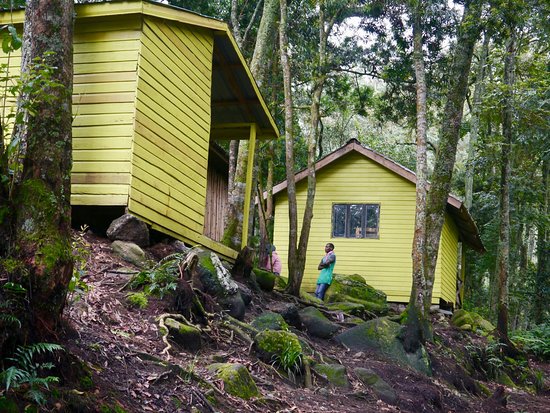
The sound of Enock’s Falls arrives before the camp is visible, a deep, continuous rush from the valley below that grows distinctly louder with each upward step. Sine Camp materializes at 2,596 meters: wooden huts on a narrow forested ridge, your mountain cook already at work, and the smell of hot food cutting through the damp forest air. The camp veranda overlooks a section of the Nyamwamba Valley where rapids and waterfalls cascade through the gorge far below in an unbroken white line of moving water. After seven to eight hours on the trail, it is one of the finest views you have ever sat down in front of.
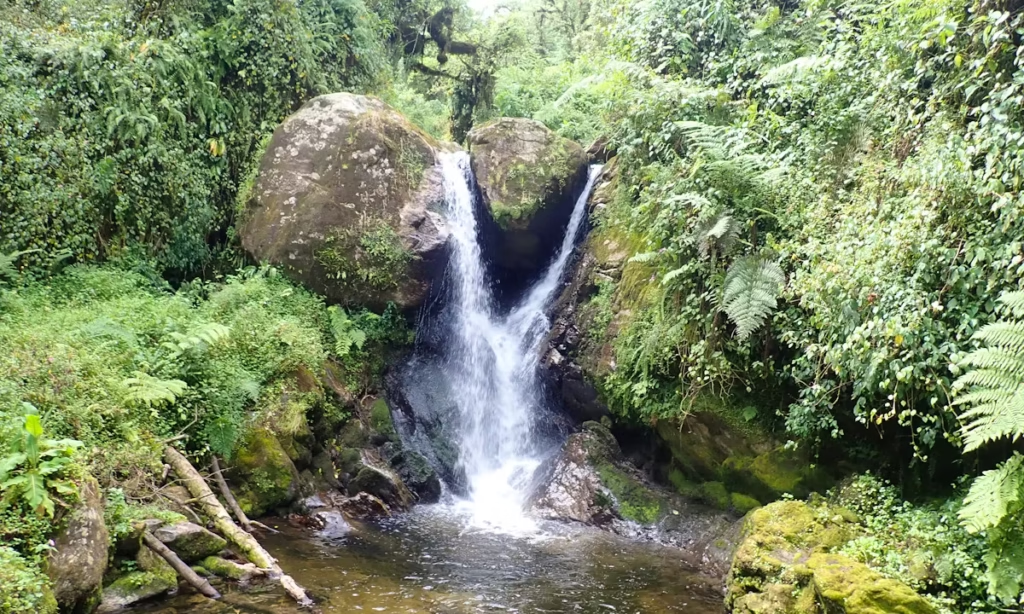
Before dinner, the visit to Enock’s Falls is not optional. A two-hundred-meter side trail from camp leads through hanging vines and brilliantly green lichen-covered rocks to the falls themselves, a multi-tiered cascade dropping through the valley forest in a perpetual mist of its own making. In the late afternoon light, with the mist backlit gold and the sound filling the valley, it is the kind of scene that bypasses the analytical mind entirely and goes straight to whatever part of you responds to genuinely wild things. Your camera will try and largely fail to capture it. Take the photograph anyway and then put the camera away and simply stand there for a while.
Dinner is served at the camp table, hot and substantial. Night temperatures at Sine Camp drop to 8–12°C. The sound of the falls below is the last thing heard before sleep and the first thing heard upon waking.
Meals: Lunch (trail), Dinner (camp) | Wildlife: Blue monkeys, Rwenzori Turaco, African Green Broadbill | Highlight: Enock’s Falls at golden hour | Accommodation: Sine Camp wooden mountain huts
Day 2 — The Forest at Dawn: Sine Camp to Kyanjuki Trailhead (1,450 m)
Altitude: 2,596 m → 1,450 m | Distance: ~9.5 km | Trekking Time: 5–6 hours | Terrain: Ridge descent, forest, river crossing, valley exit
Wake up before the cloud moves in. This is consistent, reliable advice at Sine Camp: the morning window before the mist arrives from the Congo basin to the west can be spectacularly clear, and the camp veranda in early daylight is the finest birdwatching platform on the entire lower Kilembe Trail. A cup of tea, fifteen minutes of deliberate stillness, and the forest comes alive around you; the Rwenzori Nightjar that was calling from the tree above camp at dusk is replaced by the morning feeding activity of the sunbirds and flycatchers that work the flowering shrubs at the forest edge. The Rwenzori Double-Collared Sunbird, iridescent at this hour in the low morning light, hovers at the flowers of a shrub three meters from the veranda rail. Your guide identifies every call without looking up from his tea.
After breakfast, if Enock’s Falls was visited the previous evening, the morning light offers a genuinely different experience of the same waterfall: softer, more diffuse, with rising mist filling the valley below the falls and creating a layered depth that the afternoon’s harder light does not produce. If the evening visit was missed entirely, the morning is the essential alternative; allow thirty to forty-five minutes for the round trip from camp before beginning the descent.
The descent from Sine Camp retraces the Day 1 route in reverse, but it is not the same trail experienced twice; it is the same trail experienced differently. The steep ridge section that demanded everything on the ascent becomes a test of a different skill on the way down: patience, deliberate footwork, and trekking poles absorbing the downhill load on the knees through the rooted and occasionally muddy sections. Resist the urge to rush. A slow descent is a safe descent, and the forest richly rewards this slower pace.
Back in the main body of the forest, the descent unlocks a new observational layer. When the upward attention was on breathing and footwork, the surrounding forest became a backdrop. Going down with settled legs and clear lungs, the descent becomes the primary experience. This moment is when the three-horned Rwenzori chameleons appear, on low branches in the understory, perfectly still, their lateral compression making them read as a leaf until the eye learns to look for the eye, the turret gaze, and the careful three-toed grip on the branch. These extraordinary endemic reptiles are spotted far more reliably on the Day 2 descent than on the ascent, precisely because the slower pace and the now-trained eye are looking for them. Your guide knows exactly which branches to check.
The Rwenzori Turaco is more vocal on the descent, particularly in the lower forest where the canopy opens slightly and the acoustic environment carries sound further. Birders who spent the ascent watching their feet can properly observe during the descent, and the guide team manages a slow, observation-focused pace for trekkers with specialist ornithological interests.
At the mid-forest section near the Omusita Rest Area, your guide may offer you the choice of either the direct trail descent or a short diversion along the Nyamwamba River through a stretch of old-growth forest that is among the most atmospheric sections of the lower Kilembe Trail, tall trees whose root systems clasp river boulders in slow, centuries-old embrace, the water moving between them in glassy slides and short, white falls. Take this route when time and energy allow. It extends the day by thirty to forty-five minutes and returns every minute of that investment.
The trek concludes at the UWA Ranger Post and Kyanjuki Trailhead, typically by early to mid-afternoon. Trek completion certificates are issued, farewell exchanges with the porter team happen at the trailhead, gratuities are distributed, and your private vehicle is ready for the twenty-to-thirty-minute return to Kasese. The afternoon is free for rest, for onward travel, or for sitting somewhere quiet and beginning to process what two days in the Nyamwamba Valley forest actually felt like.
Meals: Breakfast (camp), Lunch (trail) | Wildlife: 3-horned chameleons, Rwenzori Turaco descent activity, sunbirds | Highlight: Dawn birding from Sine Camp veranda, Nyamwamba River forest diversion
Experience Rwenzori Beyond Expectations
Spots Filling Fast — Schedule Your Trek Today
What Makes the 2-Day Sine Camp Trek So Special?
Among all the short trekking options in the Rwenzori Mountains, of which there are several excellent ones, the 2-day Kilembe Trail to Sine Camp occupies a specific, unrepeatable niche. It is the shortest route to a genuine overnight mountain experience on the Kilembe Trail. It is the finest 2-day birdwatching itinerary in Rwenzori Mountains National Park. And it is, through the two-directional forest traverse, the trek that builds the most efficient understanding of how a living equatorial mountain forest is structured and organized.
Enock’s Falls is the single defining landmark of the lower Kilembe Trail, and its inclusion as both an evening and a morning experience on this itinerary gives the two-day trek a natural rhythm and a memorably cinematic structure: arrival and golden hour on Day 1, dawn and departure on Day 2, the same extraordinary waterfall seen twice in entirely different light and mood. Very few short treks anywhere in East Africa offer this kind of scenic repetition that rewards rather than diminishes.
The wildlife encounter quality on this trail is also exceptional in a way that longer, higher-altitude treks can paradoxically underdeliver. On a 6-day Rwenzori trek to Margherita Peak expedition, the focus of days 1 and 2 in the forest zone is altitude gain, pace, and logistics. On the 2-day Rwenzori trek to Sine Camp, the forest is the only goal, and this focus, along with experienced naturalist guides and a pace for observation instead of altitude gain, creates wildlife encounter quality that the longer routes, rushing through the same forest on their way to the high mountains, cannot match.
Experience Rwenzori Beyond Expectations
Spots Filling Fast — Schedule Your Trek Today
Wildlife & Birdlife on the 2-Day Kilembe Trail to Sine Camp
The entire 2-day Rwenzori Trek to Sine Camp passes through the richest wildlife zone in the Rwenzori Mountains, the lower Afro-montane forest of the Nyamwamba Valley, which forms part of the Albertine Rift Biodiversity Hotspot. The table below identifies the key species you are most likely to encounter:
Species / Group | Common Name | Zone & Sighting Notes |
Primates | Blue Monkey (Cercopithecus mitis) | Forest canopy throughout, both days, best on slow-paced ascent |
Primates | Black-and-White Colobus | Lower trail canopy — occasional, dawn descent |
Reptiles | 3-Horned Rwenzori Chameleon (Trioceros johnstoni) | Low understory branches are endemic. Day 2 descent most reliable |
Bird — Endemic | Rwenzori Turaco (Ruwenzorornis johnstoni) | Mid-canopy, forest/bamboo edge near camp; vivid crimson flight feathers |
Bird — Endemic | African Green Broadbill | Dense mid-canopy understory, call often heard before bird is seen |
Bird — Endemic | Handsome Francolin | Forest floor and undergrowth, clucking call, early morning |
Bird — Endemic | Rwenzori Double-Collared Sunbird | Upper forest near Sine Camp; flowering shrubs |
Bird — Endemic | Yellow-Eyed Black Flycatcher | Mid-canopy throughout the forest section |
Bird — Nocturnal | Rwenzori Nightjar | Around camp at dusk, heard at Sine Camp most evenings |
Flora Highlights | Podocarpus, Symphonia, Giant Ferns, Mosses | Entire forest, ancient trees, every surface moss-carpeted |
Birdwatching on the Kilembe Trail to Sine Camp is of world-class quality for Albertine Rift endemic species. With over 37 Albertine Rift endemics in the Rwenzori Mountains, and the lower forest being the richest zone for species encounters on any Kilembe Trail departure, guests with specific birding lists can expect meaningful sightings with an experienced guide who knows this forest’s acoustics, seasonal patterns, and favored micro-habitats across the full altitude range of the trail.
How Difficult Is the 2-Day Rwenzori Trek to Sine Camp?
The 2-day Sine Camp Rwenzori trek via the Kilembe Trail is rated moderate, the most physically demanding of the accessible 48-hour Rwenzori trekking options, and a trek that requires honest preparation and genuine cardiovascular fitness. Understanding the nature of that difficulty, specifically where and why it occurs, allows for confident preparation.
Day 1: The Most Demanding Day
Day 1 covers 9.5 kilometers with 1,146 meters of elevation gain across seven to eight hours. The profile is deceptive: the first 2.2 kilometers to the UWA Ranger Post are genuinely easy, giving a false sense of what follows. The six kilometers through the forest core are a consistently moderate but unrelenting ascent, and the final two to three kilometers before Sine Camp steepen significantly, requiring a sustained push on rooted, wet trail where adequate cardiovascular fitness is the primary requirement and trekking poles are the most valuable pieces of equipment in the pack. This day is not technically difficult; there is no climbing, no scrambling, and no exposed sections, but it is consistently aerobically demanding from the ranger post onward, and it is the day that determines whether this trek is a rewarding challenge or a survival exercise. Preparation makes that distinction.
Day 2: Technically Easier, Still Demanding
Day 2 is the same 9.5-kilometer trail in reverse, descending 1,146 meters over five to six hours. The descent is physically easier than the ascent from a cardiovascular perspective, but it demands sustained attention to footwork on the rooted and occasionally muddy trail surfaces, particularly on the steep upper section immediately below Sine Camp, where wet roots are the most common cause of slips and falls. Trekking poles are as important on the descent as on the ascent. Knee strength, which can be built through dedicated pre-trek training, determines how the descent feels in its final kilometers.
Technical Requirements & Altitude
There is no technical climbing on this trek. No glacier travel, no scrambling, no ropes, and no specialist equipment beyond trekking boots and trekking poles. The maximum altitude of 2,596 meters at Sine Camp is comfortably below the threshold where serious acute mountain sickness becomes a significant risk for healthy adults. Mild headache or reduced appetite on the Day 1 ascent is possible for some individuals and is a normal physiological response to the altitude gain rate. Informing your guide immediately of any symptoms and moderating your pace are the standard responses. A descent of 200–300 meters resolves symptoms rapidly if they progress.
Fitness Recommendation
Any adult who can complete a 12–15 kilometer day hike with 600–800 meters of elevation gain carrying a 10-kilogram daypack is a strong candidate for this trek. A four-to-six-week preparation program of three cardiovascular sessions per week, one longer weekend hike per week, and specific knee-strengthening exercises for the descent is strongly recommended. Trekkers over 50 with good aerobic health complete this route regularly and successfully; the key variables are consistent cardiovascular fitness and a willingness to set a pace that matches the terrain rather than the ambition.
Experience Rwenzori Beyond Expectations
Spots Filling Fast — Schedule Your Trek Today
2-Day Kilembe Trail vs. 2-Day Central Circuit
The two principal short two-day Rwenzori trekking options — Sine Camp on the Kilembe Trail and Lake Mahoma on the Central Circuit — offer meaningfully different experiences. The comparison below helps determine which route best matches your interests and fitness level:
Feature | Kilembe Trail — Sine Camp 2-Day | Central Circuit — 2-Day (Lake Mahoma) |
Trailhead | Kyanjuki Village — near Kilembe Mines | Nyakalengija, north of Kasese |
Valley | Nyamwamba Valley — glacially carved gorge | Lower Mubuku Valley — forest ridge |
Destination | Sine Camp — forested ridge, 2,596 m | Lake Mahoma — crater lake, 2,500 m |
Key Feature | Enock’s Falls — waterfall drama | Lake Mahoma — still water reflection |
Wildlife Focus | Primates, Albertine Rift birds | Forest birds, lake birds, primates |
Birding Quality | Outstanding — broadbill, turaco, francolin | Excellent — turaco, sunbirds, lake birds |
Day 1 Difficulty | Challenging — 1,146 m gain over 9.5 km | Moderate — 854 m gain over 10–12 km |
Day 2 | Return descent (same trail) | Continue loop or return |
Best For | Waterfall, forest immersion, birdwatching | Scenic mountain lake, gentler gradient |
For trekkers whose priority is waterfall drama, deep forest immersion, and exceptional Albertine Rift birding within a two-day window, the Kilembe Trail to Sine Camp is the definitive choice. For trekkers seeking a slightly gentler Day 1 gradient, a high-altitude glacial lake as a destination, and the scenic character of the Central Circuit trail, the Lake Mahoma trek is the appropriate alternative. Rwenzori Trekking Expeditions can help you choose the right option based on your specific interests and physical profile.
About Sine Camp — Your Mountain Home for the Night
Sine Camp, at 2,596 meters, is the only overnight stop on this two-day itinerary, and it is the kind of mountain camp that justifies the entire ascent from the moment you arrive. The camp is located on a narrow forested ridge above the Nyamwamba Valley, where the lower Afro-montane forest meets the bamboo zone, giving it a unique character that no other camp on the Kilembe Trail has.
The Uganda Wildlife Authority wooden mountain huts at Sine Camp provide bunk-style sleeping with mattresses and blankets included. The camp kitchen, staffed by your Rwenzori Trekking Expeditions cook team, produces hot meals and warm drinks throughout the evening. The defining feature of Sine Camp is acoustic: the constant, ambient sound of rapids and waterfalls cascading through the valley gorge below is the auditory backdrop to every waking and sleeping hour at 2,596 meters, and it has the particular quality of white noise that produces deep and surprisingly restful sleep even in unfamiliar surroundings.
Night temperatures at Sine Camp range between 8 and 12°C, dropping toward the lower end on clear nights when the cloud cover is absent. A sleeping bag rated to 0–5°C is the comfortable minimum. The camp has no electricity, no mobile signal in most conditions, and no charging facilities, a fact that most guests initially register as an inconvenience and within a few hours recognize as one of the camp’s finest features. Enock’s Falls, accessed via a 2-hundred-meter side trail from camp, is the essential evening and morning excursion.
2-Day Kilembe Trail vs. 2-Day Central Circuit
Best Time to Trek the 2-Day Kilembe Trail to Sine Camp
The Kilembe Trail is trekked year-round by Rwenzori Trekking Expeditions, and the Nyamwamba Valley forest is extraordinary in every season. Understanding the seasonal character of the trail helps you choose the experience that best matches your preferences.
Primary Dry Season: June to August
June, July, and August provide the most reliable trail conditions of the year. Rainfall decreases significantly on the Kilembe Trail, the path surfaces firm up, and the river crossings on the lower trail are at their most manageable. This period is the most popular window and coincides with the Northern Hemisphere summer holiday season; advance booking is essential for June through August departures, particularly for private group departure dates.
Secondary Dry Season: December to February
The short dry season of December through February is consistently excellent on the Kilembe Trail, with January and February frequently the driest months of the entire year on this route. Daytime temperatures in the Nyamwamba Valley are warm and clear; the forest light in January has a particular quality that photographers specifically seek. Trekker numbers are lower than in June–August, and the intimacy of the trail in a quieter season adds to the experience.
Shoulder and Wet Seasons: March–May and September–November
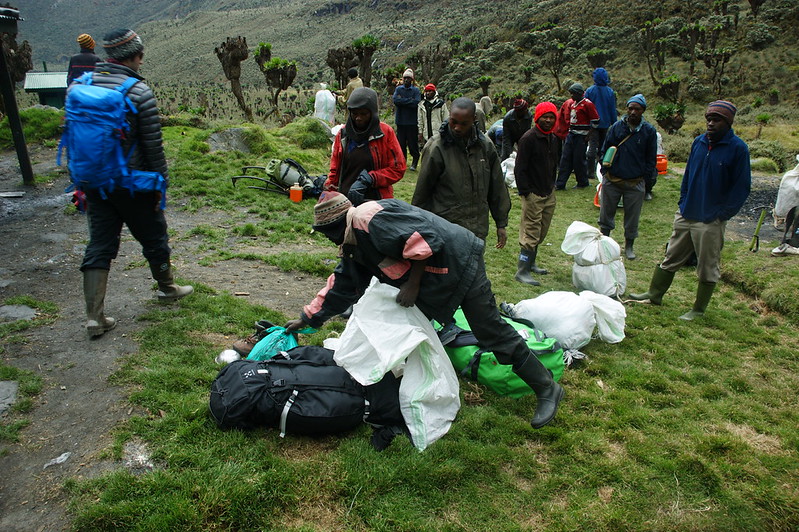
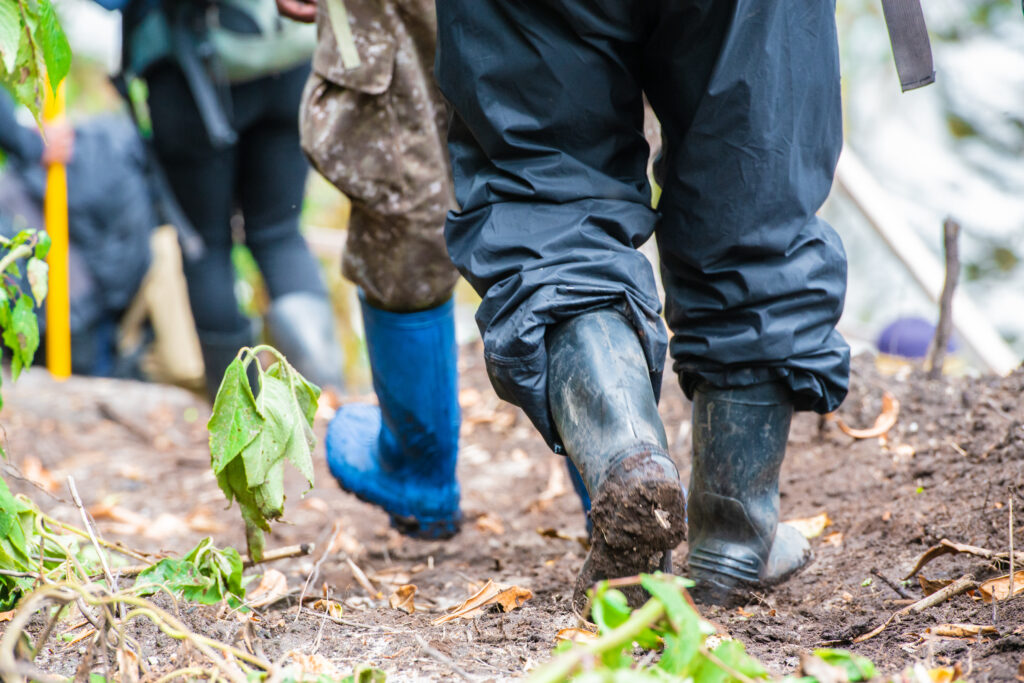
The long rains of March to May and the shorter wet season of September to November bring heavier precipitation to the Kilembe Trail, making the rooted sections muddier and the river crossings higher. Waterfalls are dramatically fuller and more powerful in the wet season. Enock’s Falls during heavy rain is a genuinely thunderous experience, and the forest reaches a depth of green that the dry season cannot match. Full waterproof gear is essential in the wet seasons rather than merely recommended. Rubber gumboots, provided free at the Kyanjuki trailhead, are the footwear of choice for the wetter months. Rwenzori Trekking Expeditions operates year-round and provides honest, current seasonal conditions information for every inquiry.
How to Get to the Kyanjuki Trailhead — Kilembe Trail, Kasese
The Kyanjuki Trailhead is located twelve kilometers from Kasese town along the Kilembe Road, the same road that passes the historic Kilembe Copper Mines before entering the Nyamwamba Valley. From Kasese center, the journey to Kyanjuki takes twenty to thirty minutes by private vehicle or boda-boda motorcycle taxi. Rwenzori Trekking Expeditions seamlessly arranges all ground transfers between your Kasese accommodation and the Kyanjuki trailhead as part of every trek package, with your private vehicle waiting at the end of Day 2 for the return to Kasese.
From Entebbe International Airport, the overland journey to Kasese takes approximately seven to eight hours by private vehicle along the Kampala–Fort Portal–Kasese highway, a 450-kilometer route through Uganda’s western highlands. Arriving in Kasese the evening before the trek departs is strongly recommended; it allows a full night’s rest, the pre-departure briefing at the Trekkers Hostel, and an 8:30 AM departure start without fatigue. Rwenzori Trekking Expeditions coordinates all Kasese transfer logistics upon booking, including connections from Entebbe, Kampala, or Fort Portal.
The 2-day Rwenori trek to Sine Camp/hut fits cleanly into western Uganda multi-activity itineraries: chimpanzee tracking in Kibale Forest National Park lies two hours north of Kasese, gorilla trekking in Bwindi Impenetrable National Forest lies three hours to the south, and Queen Elizabeth National Park is forty-five minutes east. Rwenzori Trekking Expeditions coordinates all inter-destination logistics as part of a bespoke Uganda safari itinerary.
What Is Included in the 2-Day Sine Camp Trek?
Rwenzori Trekking Expeditions operates the 2-day Rwenzori Trek to Sine Camp via the Kilembe Trail on a fully inclusive basis. Every logistical detail of your two days on the mountain is arranged and managed so that from the moment you arrive at Kyanjuki, your attention is entirely on the forest and the experience of it.
What Is Included
All Uganda Wildlife Authority national park entry fees and Kilembe Trail trekking permits are fully included for both days.
Your certified, English-speaking Rwenzori mountain guide accompanies the team throughout both days, with a guide-to-trekker ratio designed for individual attention at every section of the trail.
An experienced porter carries communal equipment and food — personal bags may also be carried within the standard weight allocation.
All meals are provided: trail lunch on Day 1, dinner and breakfast at Sine Camp, and trail lunch on Day 2; hot drinks are available throughout. One night of wooden hut accommodation at Sine Camp is booked and secured in advance. Free use of rubber gumboots at the Kyanjuki trailhead is provided for trekkers who prefer them to hiking boots. The guide always carries a comprehensive first aid kit. Private 4WD vehicle transfer between Kasese and Kyanjuki is seamlessly arranged.
What Is Not Included
International and domestic flights to Uganda are not included.
Each trekker arranges their Ugandan tourist visa, which can be obtained on arrival at Entebbe International Airport or in advance through the Uganda e-Visa portal. Travel insurance, which must include emergency mountain rescue and medical evacuation cover, is a mandatory requirement and is not provided.
Personal trekking equipment including boots, trekking poles, rain gear, and a sleeping bag rated to 0–5°C are the trekker’s own responsibility, though a full packing list and Kasese gear rental guidance are provided to all confirmed guests.
Guide and porter gratuities are not included in the package price — tipping guidance is provided upon booking confirmation. Accommodation in Kasese before the trek and any onward transfers beyond Kasese are not included unless they are specifically added to a combined itinerary package.
What Should I Pack for the 2-Day Kilembe Trail Trek to Sine Camp?
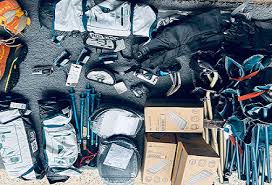
Packing for the Kilembe Trail requires a specific understanding of what the forest does to equipment, clothing, and footwear. Moisture is the defining environmental condition on every Rwenzori trail in every season, and gear that is not specifically waterproofed will be wet, cold, and potentially unsafe by the end of Day 1. A full itemized packing list is provided to every confirmed Rwenzori Trekking Expeditions guest upon booking.
Waterproofing — The Foundation of Everything
A fully waterproof hardshell jacket with sealed seams is essential for the Kilembe Trail at all times of year. A waterproof pack liner or dry bag system keeps sleeping bags, spare clothing, and electronics dry regardless of rain duration or intensity. Waterproof overpants or shell trousers protect against both rain and vegetation drip in the denser forest sections. Do not bring cotton of any description. Cotton holds moisture and provides no thermal protection when wet, and wet cotton in a 9°C camp at 2,596 meters is a genuine safety concern.
Layering System
A moisture-wicking base layer for active trekking, a mid-layer fleece for rest stops and camp evenings, and the waterproof hardshell described above form the three-layer core system. A lightweight additional insulating layer, a down or synthetic vest or jacket, is the optional fourth layer for the Sine Camp evening, where temperatures drop to 8–12°C and the camp’s damp forest environment increases the perceived cold beyond what the thermometer suggests. A buff or neck gaiter, warm hat, and lightweight waterproof gloves complete the cold-weather set.
Footwear
Waterproof hiking boots with ankle support are the primary recommendation because the steep, rooted Day 1 approach to Sine Camp puts a lot of sideways stress on the ankle joint that trail runners cannot safely handle, and the Day 2 descent on wet roots needs a deep-lugged sole with excellent grip.
Alternatively, rubber gumboots are provided free at the Kyanjuki trailhead and are the footwear of choice for the porter team and local guides; they perform exceptionally well in the muddy sections and are worth considering as a primary footwear option for the wet season months. Two pairs of wool or synthetic hiking socks per day significantly reduce blister development on the longer ascent.
Essential Pack Items
Trekking poles, two, not one, are the single most valuable pieces of equipment for both days of this trek. A 20–25 liter daypack carries water (2 liters minimum per day), rain gear, personal medication, a camera in a waterproof case, snacks, and spare layers. A headtorch with spare batteries is required for the early camp morning. A sleeping bag rated to 0–5°C is the minimum for Sine Camp. Sunscreen SPF 50 and insect repellent for the lower forest sections complete the personal kit.
How Safe Is the 2-Day Rwenzori Trek to Sine Camp?
Rwenzori Mountains National Park is a well-managed, secure conservation area with an excellent visitor safety record. The Kilembe Trail infrastructure, huts, bridges, and trail markers are maintained by the Uganda Wildlife Authority, and the Kasese region surrounding the national park is consistently stable and safe for international tourism. Rwenzori Trekking Expeditions maintains rigorous operational safety standards for every Kilembe Trail departure.
All guides hold current UWA mountain guide certification and wilderness first aid qualifications. A comprehensive emergency first aid kit is carried throughout both trail days. Emergency communication equipment is available on all departures. The guide team is trained in altitude sickness recognition, emergency descent protocols, and injury management, and an evacuation plan is briefed before every departure. The maximum altitude of 2,596 meters on this trek is well below the threshold where serious altitude illness becomes a significant risk for healthy adults, and the physical hazards of the trail—slippery roots, wet rocks, and river crossings—are all managed through appropriate pacing, equipment, and guide leadership.
The most common minor issues encountered on the 2-day Rwenzori Trek To Sine Camp are blister development on the Day 1 ascent and knee fatigue on the Day 2 descent, both preventable through proper footwear, trekking poles, and the six-to-eight-week preparation program recommended to all confirmed guests. In the company’s years of operating the Kilembe Trail, no serious injury has occurred on the Sine Camp route, a record built on meticulous preparation, experienced personnel, and an operational culture that prioritizes the safety of every trekking team above every other consideration.
Experience Rwenzori Beyond Expectations
Spots Filling Fast — Schedule Your Trek Today
Frequently Asked Questions — 2-Day Rwenzori Trek to Sine Camp
The 2-day Rwenzori Trek To Sine Camp Kilembe Trail is accessible to motivated first-time mountain trekkers who have prepared specifically for it, but it is not suitable for anyone with limited recent hiking experience who arrives without preparation. Day 1’s 9.5-kilometer ascent with 1,146 meters of elevation gain over seven to eight hours is genuinely demanding and requires a solid cardiovascular base. Trekkers who regularly hike, cycle, swim, or engage in sustained cardiovascular exercise three to four times per week, and who complete one long hike of twelve to fifteen kilometers per week in the two months before the trek, will find the 2-day Rwenzori Trek to Sine Camp itinerary a challenging but manageable and deeply rewarding experience.
The highest point on this trek is Sine Camp at 2,596 meters above sea level. This is well below the threshold, generally 3,500 to 4,000 meters, at which significant acute mountain sickness becomes a concern for most healthy adults. The Day 1 ascent rate of 1,146 meters in a single day is steep, and some individuals may experience a mild headache or fatigue at this altitude, particularly if they arrived in Uganda from sea level within the previous 24–48 hours. Staying well-hydrated and trekking at your guide’s measured pace are the primary mitigation strategies on this route.
Enock’s Falls is a multi-tiered waterfall located approximately 200 meters from Sine Camp via a short forest-side trail, and it is the most celebrated natural feature on the lower Kilembe Trail. The falls cascade through hanging vines and vivid green lichen-covered rocks in the Nyamwamba Valley forest, and the setting is dramatic in every weather condition and every season. The falls are visited twice on the 2-day Rwenzori trek to Sine Camp itinerary: in the late afternoon on Day 1, upon arrival at camp, and in the morning light on Day 2 before the descent begins. Both visits offer a genuinely different experience of the same extraordinary waterfall; the afternoon provides harder, more dramatic light, and the morning produces softer diffusion and rising mist from the valley that adds atmospheric depth to the scene.
Blue monkeys are the most reliably encountered mammal on the 2-day Sine Camp trek, typically spotted in the forest canopy on both the Day 1 ascent and the Day 2 descent in family groups of ten to twenty individuals. Three-horned Rwenzori chameleons, endemic to the Rwenzori range, are most reliably spotted on the Day 2 descent when the slower pace and trained eye find them on low understory branches. For birdwatchers, the Rwenzori turaco is encountered with near-certainty in the bamboo and upper forest transition zone near camp. The African Green Broadbill, Handsome Francolin, Rwenzori Double-Collared Sunbird, and Yellow-Eyed Black Flycatcher are regular sightings with an experienced guide working the trail at an observation-focused pace.
Trekking poles are strongly recommended and should be treated as essential equipment rather than an optional accessory for this trek. On the Day 1 ascent, poles reduce the cardiovascular effort on the steep upper section by transferring significant load from the legs to the arms and upper body. On the Day 2 descent, poles protect the knees from the cumulative impact of 1,146 meters of descent on a rooted, sometimes muddy trail. Two poles rather than one provide the most effective support. Trekkers who arrive without poles and wish to use them can arrange rental in Kasese; your Rwenzori Trekking Expeditions coordinator provides guidance on Kasese gear rental options upon booking confirmation.
The primary dry seasons of June to August and December to February offer the most reliable trail conditions, with firmer trail surfaces, lower river levels, and less frequent rainfall. June through August is the most popular window, and advance booking is essential for this period. December through February is excellent and significantly less crowded. The wet seasons, March to May and September to November, bring heavier rain and muddier trail conditions but produce dramatically full waterfalls and extraordinary forest lushness. The trek is hikeable year-round with appropriate waterproof preparation, and Rwenzori Trekking Expeditions provides honest, up-to-date advice on current conditions for every inquiry.
The evening before the trek begins is best spent resting, eating a hearty meal, and reviewing your gear with the packing list provided by Rwenzori Trekking Expeditions. Arriving in Kasese the evening before the trek start date is strongly recommended; it allows for a full night’s rest, avoids any transport timing risk on the morning of Day 1, and gives time for the pre-departure gear check at the Kyanjuki Trekkers Hostel. Your Rwenzori Trekking Expeditions team can recommend pre-trek accommodation in Kasese and coordinate your arrival transfer from Entebbe, Kampala, or Fort Portal as part of the booking process.
The two main 2-day Rwenzori trekking options are the Kilembe Trail to Sine Camp and the Central Circuit Trail to Lake Mahoma. The Sine Camp trek is more physically demanding on Day 1, which is 1,146 meters of gain versus 854 meters for Lake Mahoma, but delivers a more dramatic waterfall experience, a more challenging and rewarding climb, and exceptional birdwatching in the Albertine Rift forest zone. Lake Mahoma offers a gentler gradient, a glacial lake destination, and a route that is accessible to a slightly wider fitness range. Both are outstanding short experiences in the Rwenzori. Rwenzori Trekking Expeditions can help you choose the right option based on your fitness profile and priorities.
Yes, the 2-day Rwenzori Trek to Sine Camp is specifically designed as the opening chapter of a longer Kilembe Trail story. The immediate extension is the 3-day Sine and Samalira Camp Rwenzori trek, which adds a second night at Samalira Camp in the heather zone at 3,170 meters and passes through the atmospheric bamboo corridor on Day 2. The 4-day Mutinda Lookout trek and the 4-day Rwenzori Waterfalls Hike are further extensions before the full 8-day Rwenzori Trek expedition to Margherita Peak at 5,109 meters. Many guests who complete the 2-day trek return specifically to Rwenzori Trekking Expeditions for the longer routes, having found in just two days that the Kilembe Trail has considerably more to offer than the original 48-hour window contained.
Your Rwenzori Trekking Expeditions porter team carries all communal equipment, tents or hut bedding where applicable, cooking equipment, and all food supplies, as well as your main personal luggage within the standard 15-kilogram porter load limit. Your daypack for the trail carries personal items: water, rain gear, spare layers, a camera, snacks, first aid essentials, and documents. The guideline is a daypack of 20–25 liters with a total carry weight of 8–12 kilograms for the trail days. If your personal gear exceeds the porter load limit, an additional porter can be arranged at the time of booking.
Tipping is not included in the package price but is a significant and deeply appreciated component of your guide and porter team’s income. For a 2-day trek, the commonly recommended guideline is USD $10–$15 per day for your lead guide and USD $5–$8 per day for each porter. For a solo trekker with one guide and one porter, a total tip budget of USD $30–$46 for the full trek is appropriate. Tips are distributed at the Kyanjuki trailhead at the end of Day 2, before the team disperses. Your Rwenzori Trekking Expeditions coordinator provides full guidance on tipping etiquette and distribution protocol upon booking confirmation.
Yes! Travel insurance is a mandatory requirement for all Rwenzori Trekking Expeditions guests, regardless of trek duration or altitude. The policy must include emergency mountain rescue and medical evacuation cover. While the 2-day Sine Camp trek operates at a maximum of 2,596 meters, well below the altitude where serious mountain illness becomes a significant risk, the remote forest environment means that emergency medical evacuation cover is an essential safety requirement rather than a precautionary luxury. Your Rwenzori Trekking Expeditions reservation team will confirm insurance requirements upon booking and can suggest suitable providers upon request.
Chimpanzees are not reliably present in the lower Nyamwamba Valley forest on the Kilembe Trail to Sine Camp, and sightings should not be expected as part of this trekking experience. For dedicated chimpanzee trekking, Kibale Forest National Park, approximately two hours north of Kasese, is the outstanding destination, the world’s highest density of chimpanzees in a protected area, with fully habituated groups and reliable daily encounter rates. Rwenzori Trekking Expeditions can coordinate a Kibale Forest chimpanzee trekking permit and transfer as part of a broader western Uganda itinerary that combines the 2-day Rwenzori Trek to Sine Camp on the Kilembe Trail with a Kibale day experience.
The 2-day Sine Camp trek is achievable for trekkers over 60 who have maintained good cardiovascular fitness and are experienced with steep, multi-hour hiking on varied terrain. The key variables are consistent aerobic fitness, strong leg and knee health, and a willingness to set a pace determined by the terrain rather than any external time pressure. The guide team is experienced in working with older trekkers and adjusting the pace, rest stop frequency, and support level accordingly. Trekking poles are especially important for older trekkers on both the Day 1 ascent and the Day 2 descent. A pre-departure consultation with your physician is recommended if you have any cardiovascular, respiratory, or joint concerns.
The Rwenzori Mountains receive rainfall throughout the year, and trekkers can use the Kilembe Trail in wet conditions with appropriate equipment. Light to moderate rain on Day 1 or Day 2 is a normal part of the Kilembe Trail experience rather than an exceptional event and does not constitute grounds for cancellation or postponement. Your full waterproof kit, hardshell jacket, waterproof trousers, and waterproof pack liner manage these conditions effectively. In the event of genuinely severe and sustained weather that poses a safety risk to the trekking team, your Rwenzori Trekking Expeditions guide team will make the appropriate call on pace, route, and any necessary delay or modification, with trekker safety as the absolute overriding priority.
Why Book Your Kilembe Trail Trek with Rwenzori Trekking Expeditions?
The 2-day Sine Camp trek on the Kilembe Trail is a short itinerary with long consequences. The forest you enter on Day 1 morning does not let you go lightly, and the guide who walks it with you determines whether you experience it as a beautiful but generic mountain forest or as the extraordinary, specific, irreplaceable ecosystem it actually is. Rwenzori Trekking Expeditions was founded in Kasese by guides who have walked the Kilembe Trail in every season, in every weather condition, and with trekkers of every level and ambition. The company operates exclusively on the Rwenzori range, which means that every piece of knowledge, every piece of equipment, and every operational protocol is designed for this mountain environment and for no other.
The guide team’s naturalist knowledge of the lower Kilembe forest is the difference between a hike and an education. When your guide stops on the trail, names the bird calling from the canopy, and explains which fruiting trees it prefers and why that determines where it is found, at which altitude, and in which season, that is not information from a field guide. That is years of daily observation in a specific forest, offered as part of a standard guiding service rather than as a premium add-on. It is what makes a short trek with Rwenzori Trekking Expeditions worth infinitely more than its two-day duration.
The porter and guide teams are members of the Bakonzo community, the indigenous custodians of the Rwenzori Mountains. They are trained to internationally recognized standards and compensated in accordance with responsible porter welfare guidelines. A portion of every trek package price supports community initiatives in the villages around Kyanjuki and Kasese. When you book two days on the Kilembe Trail with Rwenzori Trekking Expeditions, you are not just buying a guided hike, you are participating in the economic ecosystem that makes the long-term protection of these mountains possible.
“Every time I walk into the Nyamwamba Valley, I find something I have not noticed before. The forest gives something new to every person willing to be present in it. That is what we try to share.” — Rwenzori Trekking Expeditions Head Guide
Experience Rwenzori Beyond Expectations
Spots Filling Fast — Schedule Your Trek Today
Book Your 2-Day Rwenzori Trek to Sine Camp Today?
Forty-eight hours. Nine and a half kilometers of forest. One night at 2,596 meters above the world you came from. Enock’s Falls at golden hour. Blue monkeys at midday. The dawn forest before the clouds arrive.
This adventure is the 2-day Sine Camp trek, and it is available to you. Rwenzori Trekking Expeditions invites you to inquire today, whether you are confirming specific dates, requesting a private group quotation, or building the 2-day trek into a broader Uganda itinerary that includes gorilla trekking, wildlife safaris, or chimpanzee tracking. We manage every logistical detail on your behalf. No decision is left to chance. You arrive at Kyanjuki ready to walk into the forest. The rest is already handled.
Contact Rwenzori Trekking Expeditions at trek@rwenzoritrekkingexpeditions.com to submit your inquiry, receive a full itinerary and pricing document, or begin designing your perfect western Uganda adventure with the Kilembe Trail at its center. The forest is patient. Sine Camp will be there. Begin here.