Why the Rwenzori Mountains Are Protected: Understanding Their UNESCO World Heritage Status
Discover why the Rwenzori Mountains were designated a UNESCO World Heritage Site, the conservation and biodiversity behind this recognition, what makes them globally significant, and how conservation protects Africa’s legendary Mountains of the Moon. Rwenzori Mountains National Park earned the UNESCO World Heritage status in 1994 and is protected because it is internationally recognized as holding a natural value of a kind found almost nowhere else on Earth, and understanding why deepens rather than diminishes the experience of trekking through it.
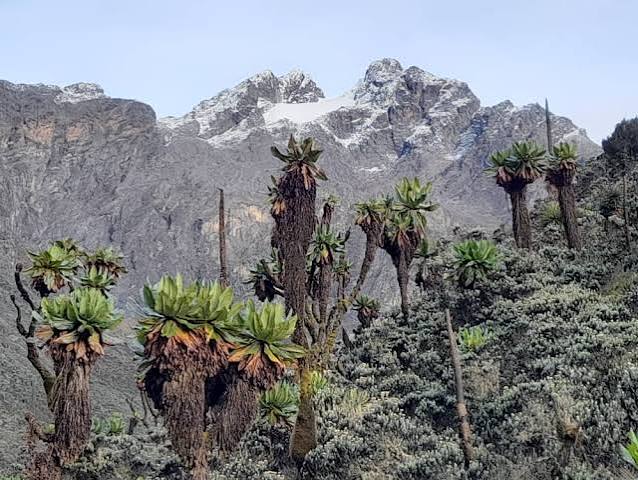
In 1994, UNESCO inscribed the park on the World Heritage List, placing it alongside a small number of sites worldwide judged to hold Outstanding Universal Value, significance so exceptional that it is considered important to all of humanity, not only to Uganda. That recognition rests on the park’s extraordinary mountain landscapes: snow and ice sitting almost on the equator, glacially carved valleys, alpine lakes, and dramatic ridgelines rising to Africa’s third-highest peak. It rests equally on what lives within those landscapes, an Afro-alpine ecosystem of giant lobelias, giant groundsels, and moss-shrouded heather forests found in only a handful of East African mountain ranges, alongside endemic wildlife and plant species unique to the wider Albertine Rift, one of the continent’s most biologically important regions.
The Rwenzori’s glaciers add a further, rarer dimension still: they are among just three remaining tropical glacier systems on the entire African continent, making the range a genuine outlier in global terms, not merely a scenic highlight of East Africa.
This page sets out, in plain language and grounded in UNESCO’s own published criteria and Uganda Wildlife Authority reporting, exactly why this recognition exists, what it protects, how that protection functions in practice, and why it matters, to science, to biodiversity, to the communities who live alongside the mountains, and to the trekkers who walk through them. Protection of this kind exists so that the Rwenzori’s landscapes, species, and research value remain available not just to this generation of scientists and travellers, but also to those who come after.
What Is UNESCO?
UNESCO stands for the United Nations Educational, Scientific and Cultural Organization, the arm of the United Nations responsible for promoting international cooperation in education, science, culture, and heritage protection.
A World Heritage Site is a place that is either natural, cultural, or a mix of both, and that a UNESCO committee of member states has formally judged to hold Outstanding Universal Value, significance so exceptional that its protection is considered important to humanity as a whole, transcending national borders. As of the most recent listings, just over 1,200 sites worldwide hold this status, spanning everything from the Serengeti to the Great Barrier Reef to the Pyramids of Giza.
UNESCO Recognition vs. National Park Status
These are related but distinct things. National park status is a legal protection created and enforced entirely under a country’s own laws, in Uganda’s case, by the Uganda Wildlife Authority. UNESCO World Heritage status is an additional, international layer of recognition, awarded on top of existing national protection, that formally acknowledges a site’s global significance and brings a degree of international monitoring, technical support, and reputational weight. It does not replace or override national management.
Why World Heritage Sites Matter to Everyone
The underlying idea is straightforward: some places are so exceptional, geologically, biologically, or culturally, that their loss would represent a loss for everyone, not only for the country in which they happen to sit. Formal recognition is intended to help ensure these places receive the attention, funding, and international goodwill needed to survive long term, regardless of where they are located or how much domestic resource is available to protect them.
2. When Did the Rwenzori Mountains Become a UNESCO World Heritage Site?
Rwenzori Mountains National Park was established as a national park in 1991 and inscribed on the UNESCO World Heritage List three years later, in 1994.
The nomination reflected the park’s exceptional scenic qualities and its outstanding concentration of species and habitats found nowhere else in comparable form, with these qualities detailed further in the sections below. Notably, the park’s history has not been without setback: between 1999 and 2004, it was placed on UNESCO’s List of World Heritage in Danger, following a period of poaching, encroachment, and armed conflict in the region, before improved security and management allowed it to be removed from that list.
On the ground, the park is managed day-to-day by the Uganda Wildlife Authority (UWA), the same government body responsible for Uganda’s other national parks, including Bwindi Impenetrable National Park, Queen Elizabeth Natuonal Park, and Murchison Falls National Park. UWA rangers, wardens, and community liaison staff handle permitting, patrols, infrastructure, and conservation planning, while periodically reporting on the property’s condition to UNESCO’s World Heritage Committee. This relationship, with the national body managing and the international body monitoring and recognising, is the same structure used at World Heritage Sites worldwide.
3. Why UNESCO Recognized the Rwenzori Mountains
Rather than a vague appeal to natural beauty, UNESCO’s recognition rests on specific, describable qualities, each of which a trekker can encounter directly on the trail.
Exceptional Mountain Scenery
The range combines snow and ice sitting almost on the equator with glacially carved valleys, cascading waterfalls, still alpine lakes, and knife-edge ridgelines, a combination of features rarely found together on a single mountain system anywhere on the continent. This scenic drama is amplified by the near-constant cloud and mist that wraps the upper mountain, giving rise to the range’s long-standing nickname, the Mountains of the Moon.
Outstanding Biodiversity
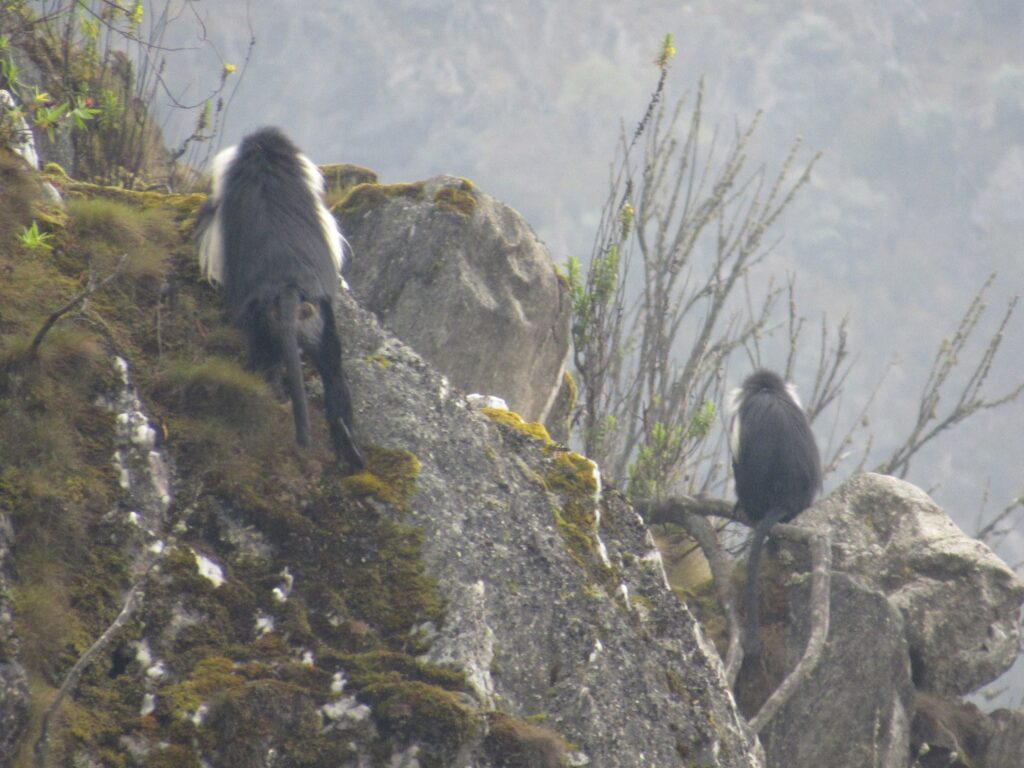
The park sits within the Albertine Rift, a region recognized as holding one of the highest concentrations of endemic vertebrate species anywhere in Africa. Within the park itself, this biodiversity includes rare mammals such as the Rwenzori duiker and L’Hoest’s monkey, about 217 recorded bird species, including 15 of the region’s 24 Albertine Rift endemics, and plant communities, described further below, that are found in only a few other places on Earth.
Rare Afro-Alpine Ecosystems
Above the treeline, the park protects a genuinely rare ecosystem type: Afro-alpine moorland dominated by giant lobelias, giant groundsels, and giant heathers, which have independently evolved extreme size as an adaptation to the harsh combination of intense equatorial sun and nightly frost. This vegetation type occurs on only a small number of East African peaks, and the Rwenzori’s populations are botanically distinct from those found on Kilimanjaro or Mount Kenya, meaning their loss here could not simply be offset by their survival elsewhere.
Equatorial Glaciers
Glacial ice ordinarily forms at far higher latitudes, where average temperatures are consistently low. Finding permanent ice within a few degrees of the equator is scientifically remarkable, and the Rwenzori is one of only three places in Africa, alongside Kilimanjaro and Mount Kenya, where this occurs. These equatorial glaciers exist in a uniquely delicate thermal balance, making them acutely sensitive indicators of even small shifts in global temperature.
4. UNESCO Criteria: What They Mean on the Trail
UNESCO evaluates natural World Heritage nominations against ten possible criteria. Rwenzori Mountains National Park was inscribed under two of them—Criteria (vii) and (x)—and rather than simply reproducing the technical wording, it is more useful to translate what each one means and how it shows up underfoot.
Criterion (vii): Superlative Natural Phenomena and Exceptional Natural Beauty
In plain terms, this criterion recognizes places whose visual and aesthetic impact is considered exceptional on a global scale. For a trekker, this is the criterion behind the sight of glacier ice glowing at sunrise above the Stanley Plateau, giant groundsels silhouetted against the peaks, and river valleys carved by ice into dramatic U-shapes, scenery judged not merely attractive, but among the most striking of its kind anywhere on the planet.
Criterion (x): Outstanding Habitats for Biodiversity Conservation
This criterion recognizes sites containing the most important natural habitats for conserving biological diversity, particularly those holding threatened species of Outstanding Universal Value. On the ground, this is why a short stretch of trail through the Afro-alpine moorland can put a trekker within meters of plant and animal lineages that exist nowhere else on Earth in comparable form, providing a practical, walkable expression of a criterion that can otherwise sound abstract on paper.
VERIFY WITH THE SOURCE As with all UNESCO listings, criteria are periodically reviewed and documentation updated; readers seeking the current, authoritative listing should consult the UNESCO World Heritage Centre’s official entry for Rwenzori Mountains National Park (Site No. 684) directly. |
5. What Is Protected Inside Rwenzori Mountains National Park?
Landscapes
- Peaks: including Margherita Peak (5,109 m), Africa’s third-highest point, along with Mount Speke, Mount Baker, Mount Gessi, Mount Emin, and Mount Luigi di Savoia.
- Valleys: glacially carved U-shaped valleys such as the Bujuku and Mubuku, shaped by ice over tens of thousands of years.
- Lakes: still, often mist-wrapped alpine lakes, including Lake Bujuku and Lake Kitandara, set among the high moorland.
- Rivers: fast-flowing rivers and waterfalls that begin as glacial and rain-fed meltwater high on the range.
- Glaciers: the last remaining tropical ice fields on Mounts Stanley, Speke, and Baker, among Africa’s rarest geographic features.
Wildlife
- Primates: including chimpanzees, Rwenzori Angola colobus, black-and-white colobus, L’Hoest’s monkey, and blue monkey.
- Forest and Alpine Mammals: forest elephants, the high-altitude Rwenzori duiker, and a rich small-mammal fauna, including several rodent and shrew species, found only in the Albertine Rift.
- Endemic Birds: 217 recorded species, including the Rwenzori turaco and a substantial share of the region’s Albertine Rift endemic birds.
- Amphibians and Reptiles: species adapted to the cool, wet montane and bamboo forest environments, many still incompletely documented.
Plants
- Giant Lobelias (Lobelia wollastonii) — towering, monocarpic flower spikes unique to a handful of East African peaks.
- Giant Groundsels (Dendrosenecio / Senecio adnivalis), tree-like rosette plants that may live for centuries.
- Bamboo Forests: dense stands of Yushania alpina forming one of the mountain’s most distinctive habitat bands.
- Heather Forests: moss- and lichen-draped giant heather woodland, among the most atmospheric habitats on the mountain.
- Afro-Alpine Flora: Tussock moorland, cushion plants, and everlasting flowers forming the backdrop to the park’s most photographed zone.
Water Resources
The Rwenzori Mountains are among the highest and most consistent sources feeding the River Nile system, and their rivers constitute a vital water catchment for communities across the surrounding region. Protecting the mountain’s forest cover and wetlands directly protects the reliability of this water supply, making conservation here a matter of practical regional importance well beyond tourism or biodiversity value alone.
Experience Rwenzori Beyond Expectations
Spots Filling Fast — Schedule Your Trek Today
6. Why the Rwenzori Mountains Matter Globally
The significance of the Rwenzori Mountains National Park extends well beyond scenery and species lists into several distinct fields of ongoing research and international concern.
- Biodiversity Conservation: the Rwenzori forms part of the Albertine Rift, a globally significant reservoir of endemic species whose long-term survival depends on intact, connected habitat across this exact landscape.
- Climate Science: the retreat of the range’s equatorial glaciers offers one of the clearest physical records available anywhere of how rising global temperatures affect tropical high-altitude environments.
- Geological Research: As a tectonic, non-volcanic mountain block with basement rock roughly two billion years old, the Rwenzori offers geologists a rare window into deep Rift Valley formation processes distinct from the volcanic peaks nearby.
- Botanical Research: Ongoing plant surveys, particularly in the comparatively under-documented montane forest zone, continue to add species to the scientific record.
- Glaciology: as one of only three African locations with tropical glaciers, the Rwenzori is an essential field site for understanding how such rare ice systems behave and disappear.
- Bird Conservation: the presence of numerous Albertine Rift endemic species makes the park a priority monitoring site for regional and international bird conservation bodies.
- Evolutionary Biology: the independent evolution of giant rosette plants across several isolated East African peaks, including the Rwenzori, is a textbook case study in convergent adaptation to extreme environments.
7. Conservation Challenges
An honest account of the conservation status of the Rwenzori Mountains National Park has to include the pressures it faces, not only its protections.
Climate Change and Glacier Retreat
The park’s glaciers have lost the large majority of their historical extent over the past century, with the pace of retreat accelerating in recent decades. Current scientific assessments consider continued, and potentially complete, glacier loss within the coming decades to be likely under existing climate trends, with associated knock-on effects for the Afro-alpine plant communities that depend on the cold conditions the ice helps sustain.
Poaching, Encroachment, and Historical Instability
The Rwenzori Mountains National Park was placed on UNESCO’s List of World Heritage in Danger between 1999 and 2004, following a period of poaching, encroachment, and armed conflict associated with regional instability. More recent Uganda Wildlife Authority reporting has noted renewed increases in poaching and encroachment linked to rising human population pressure around the park boundary, underscoring that this issue is an ongoing management challenge rather than a solved historical episode.
Declining Elephant Population
A 2019 census commissioned by the Uganda Wildlife Authority recorded only 13 elephants remaining within the park, with subsequent counts indicating continued decline, a trend that has prompted calls from UNESCO’s advisory bodies for an urgent, dedicated elephant conservation action plan and stronger ecological connectivity with neighboring protected areas.
Illegal Logging and Resource Harvesting
Illegal timber extraction and unauthorized harvesting of bamboo remain recognized pressures on the park’s forest zones, driven in part by demand from communities surrounding the boundary.
Tourism Infrastructure and Management
Proposals for new tourism infrastructure, including a debated cable car project, have drawn scrutiny from UNESCO’s monitoring bodies because they could change the scenic values and fragile ecosystems that justify the park’s protected status, reminding us that tourism must be carefully managed rather than assumed to be automatically benign.
How Park Authorities and Communities Are Responding
The Uganda Wildlife Authority maintains ranger patrols specifically targeting illegal logging, poaching, and encroachment, while pursuing community engagement programs intended to increase local appreciation of conservation value and reduce dependence on resource extraction from within the park. International partners, including UNESCO’s advisory bodies, continue to monitor the property’s condition and recommend management adjustments through periodic state-of-conservation reporting.
8. How Tourism Supports Conservation
Responsible tourism is one contributor to the park’s conservation funding and community relationships, not a solution to its challenges on its own, but a meaningful part of a wider effort.
- Park Entrance Fees: a portion of every trekking permit and park entrance fee goes to park management, ranger operations, and infrastructure maintenance.
- Employment: Trekking creates direct income for local guides and porters, work that provides an economic alternative to activities such as poaching or illegal logging.
- Community Enterprises: lodges, cultural tours, and craft markets run by surrounding communities generate additional income streams tied directly to the park’s continued protection.
- Conservation Funding: Uganda’s revenue-sharing framework returns a portion of park-derived income to communities living around the boundary, helping align local economic incentives with conservation outcomes rather than resource extraction.
- Environmental Education: guides and park staff routinely communicate conservation principles to visitors on the trail, extending the reach of formal education and outreach programs.
It is worth being direct about the limits here: tourism revenue alone cannot resolve pressures such as climate-driven glacier loss, and it is only one part — alongside government funding, international conservation partnerships, and community-led initiatives — of what sustains the park’s protection over time.
9. Responsible Trekking
Every visitor’s individual choices on the trail contribute to a meaningful conservation impact over the course of an entire trekking season.
- Stay on Designated Trails: off-trail routes accelerate erosion and damage slow-growing moss, peat, and alpine plant communities that can take decades to recover.
- Do Not Disturb Wildlife: Observe animals from a distance, never feed them, and avoid altering your route or pace to force an encounter.
- Carry Out All Waste: biodegradable waste decomposes far more slowly in the cold, wet conditions above 3,000 metres, so please pack everything out.
- Respect Local Communities: the Bakonzo communities living around the mountain hold deep cultural ties to this landscape; treat villages, staff, and local customs with the same respect you would want shown to your own.
- Follow Guide Instructions: guides carry both safety expertise and conservation responsibility; their instructions on routing, pace, and camp behaviour are there for good reason.
- Minimize Environmental Impact: choose reusable equipment where possible, avoid single-use plastics on the mountain, and use only designated fire and water sources.
10. UNESCO Status vs. National Park Status
These two designations are often confused, but they operate at different levels and serve different purposes.
National Park Status | UNESCO World Heritage Status |
Created and enforced under Ugandan national law | Awarded by an international committee for Outstanding Universal Value |
Day-to-day management by the Uganda Wildlife Authority | Periodic international monitoring via state-of-conservation reporting |
Funded primarily through national budgets and park revenue | Can attract international technical support and emergency assistance |
Enforces rules: permits, trail access, ranger patrols | Recognizes significance; does not issue permits or manage trails directly |
Can exist without World Heritage status (most Ugandan parks) | Cannot exist without underlying national protection already in place |
THE KEY DISTINCTION UNESCO does not manage Rwenzori Mountains National Park. It recognizes, monitors, and can mobilize international support and attention, but the rangers on patrol, the guides on the trail, and the permits in your pocket all come from the Uganda Wildlife Authority. |
Best Time to Experience the Park’s Protected Landscapes
Uganda’s two drier trekking windows, roughly December to February and June to August, offer the clearest conditions for appreciating the qualities that earned the Rwenzori Mountains National Park its UNESCO status. Dry-season clarity gives the best odds of unobstructed views of the glaciated peaks that justify Criterion (vii), while firmer underfoot conditions make it easier to move carefully through the boggy, slow-recovering Afro-alpine habitats protected under Criterion (x). Wildlife and bird activity in the montane forest zone is good throughout the year, so travellers primarily interested in biodiversity rather than summit views have more flexibility in timing than those hoping for clear glacier photography.
Experience Rwenzori Beyond Expectations
Spots Filling Fast — Schedule Your Trek Today
Frequently Asked Questions About Why Rwenzori Mountains National Park protected
The park is protected because it has landscapes, wildlife, and plant communities that are irreplaceable on a global scale, glaciated equatorial peaks, one of Africa’s richest concentrations of endemic Afro-alpine species, and a water catchment relied on by millions of people downstream. National protection under Ugandan law and international UNESCO recognition work together to safeguard these values for the long term.
UNESCO inscribed the Rwenzori Mountains National Park in 1994 because it met two of the ten natural criteria for Outstanding Universal Value: exceptional natural beauty (Criterion vii) and outstanding biodiversity significance (Criterion x). Only a few sites on Earth combine glaciers on the equator with this density of endemic species.
The Rwenzori Mountains National Park was inscribed on the UNESCO World Heritage List in 1994, following its earlier establishment as a national park in 1991.
Their combination of ancient tectonic geology, an equatorial glacier system found in only three places on the entire continent, and levels of plant and animal endemism among the highest recorded on any African mountain range makes them significant well beyond Uganda’s borders.
Protection covers all types of landscapes (peaks, glaciers, valleys, lakes, rivers), wildlife (primates, forest mammals, endemic birds, amphibians, and reptiles), plant communities (giant lobelias, giant groundsels, bamboo and heather forests, Afro-alpine flora), and the water catchment that feeds the Nile system.
Notable protected species include six diurnal primate species (among them chimpanzees, Rwenzori Angola colobus, and L’Hoest’s monkey), forest elephants, the Rwenzori duiker, and a large number of small mammals and birds endemic to the Albertine Rift
The Rwenzori’s glaciers are among only three tropical glacier systems remaining on Earth, alongside Kilimanjaro and Mount Kenya. They hold scientific value as long-term climate records, cultural value to local communities, and practical value as a (modest but real) contributor to river flow in the dry season.
Documented challenges include rapid glacier retreat linked to climate change, poaching and encroachment pressure from a growing population around the park boundary, a sharp historical decline in the park’s elephant population, illegal logging and bamboo harvesting, and the need to manage tourism infrastructure proposals — such as a debated cable car project — without compromising the park’s fragile ecosystems.
Because the ecosystems being protected—bogs, moss forests, and slow-growing alpine plants in particular—recover very slowly from disturbance, and because responsible visitor behavior directly reduces the pressure that rules such as staying on the trail and packing out waste create, it is important to obey these rules.
It means the international community has formally recognised the site as having Outstanding Universal Value, significance so great it matters to humanity as a whole, not only to the country in which it lies. It does not transfer ownership or day-to-day management away from the national government.
The Uganda Wildlife Authority manages the park on a daily basis, including ranger patrols, permit issuance, and conservation planning, while reporting periodically to UNESCO’s World Heritage Committee on the property’s condition.
No. UNESCO does not employ rangers, set entry fees, or manage trails. Its role is recognition, monitoring, and international support; practical management remains entirely with the Uganda Wildlife Authority and the Ugandan government.
Yes, in fact, responsible visitation is one of the mechanisms that helps sustain protection, provided visitors follow park regulations, trek with licensed guides, and stay within designated trails and campsites.
The Rwenzori Mountains National Park was inscribed under Criterion (vii), covering superlative natural beauty and aesthetic importance, and Criterion (x), covering the most important natural habitats for biodiversity conservation, including threatened species of outstanding universal value.
The Rwenzori Mountains National Park is not currently on UNESCO’s List of World Heritage in Danger, though it held that status between 1999 and 2004 due to poaching, encroachment, and armed conflict in the region. Ongoing challenges such as glacier loss and elephant decline mean vigilance remains necessary.
A 2019 census commissioned by the Uganda Wildlife Authority recorded only 13 elephants within the property, and more recent counts suggest the figure has continued to decline, a trend that has prompted calls for an urgent elephant conservation action plan.
The Albertine Rift is a section of the western branch of the East African Rift System recognized as one of the continent’s most biologically diverse and endemic-rich regions; the Rwenzori Mountains National Park forms one of its most significant high-altitude components.
Because their glaciers have existed near the equator for a very long geological period, their retreat provides one of the clearest, most direct visual and physical records available anywhere of how global warming is affecting tropical high-altitude environments.
A national park is a legal protected-area designation created and enforced under a country’s own laws. A World Heritage Site is an additional, international recognition awarded by UNESCO to properties judged to have Outstanding Universal Value. The two statuses overlap here, but they are not the same thing.
Yes, our team regularly builds itineraries around a traveller’s available time and budget, whether that means a shorter non-summit route, a scheduled group departure, or adjusting which additional peaks are included.
Yes, through employment as guides and porters, community-based tourism enterprises, and Uganda’s revenue-sharing arrangements, which return a portion of park-derived income to communities living around the boundary.
Giant lobelias, giant groundsels, giant heathers, bamboo forest stands, and the broader Afro-alpine moorland flora are all protected habitat features, alongside two tree species — Hypericum bequaertii and Schefflera polysciadia — found nowhere else on Earth.
Yes, Rwenzori Mountains National Park borders Virunga National Park in the Democratic Republic of Congo (itself also a UNESCO World Heritage Site) for roughly 50 kilometres, forming part of one of Africa’s largest connected trans-frontier conservation landscapes.
Licensed local guides enforce trail discipline, deter off-trail damage, report wildlife sightings and illegal activity to park authorities, and carry conservation messaging directly to visitors, making them an active part of the park’s day-to-day protection system, not just trekking support.
Current scientific projections are uncertain on the exact timeline, but the trend is unambiguous: the glaciers have already lost the great majority of their historical extent, and continued retreat, potentially to complete disappearance within a few decades, is considered likely under current climate trends.
Experience Rwenzori Beyond Expectations
Spots Filling Fast — Schedule Your Trek Today
Explore One of the World’s Great Mountain Landscapes
A trek through the Rwenzori Mountains is an opportunity to experience a UNESCO-recognized landscape shaped by glaciers, ancient forests, and remarkable biodiversity. By traveling responsibly with knowledgeable local guides, you not only enjoy an unforgettable adventure but also contribute to the long-term appreciation and conservation of this extraordinary mountain ecosystem.
WALK A LANDSCAPE THE WORLD HAS AGREED IS IRREPLACEABLE You do not need to piece the puzzle together yourself. Tell us what draws you to the Rwenzori, the glaciers, the giant plants, the birdlife, or simply the chance to stand somewhere this rare, and we will handle every detail of getting you there safely, respectfully, and well. Nothing about your trek is left to chance, from permits and guides to pace and route; every decision is handled by people who know this mountain intimately. |
Experience Rwenzori Beyond Expectations