Rwenzori Mountains Park Entrance Fees & Trekking Permits

Complete guide to Rwenzori Mountains National Park entrance fees, hiking permits, trekking costs, payment, inclusions, and what travelers need before their trek.

There is a moment, usually somewhere past the second hour of walking, when the tin-roofed edges of Kasese fall away behind you and the forest simply closes over the trail like water over a stone. The air changes first, thicker, cooler, and scented with wet bark and crushed leaf litter, and then the light changes, filtered green through a canopy that has stood since long before anyone thought to draw a border across this part of Africa. Colobus monkeys move somewhere above you, unseen but audible, and a Rwenzori turaco flashes crimson across a gap in the trees before vanishing again. This experience is the moment every Rwenzori trekker remembers afterward, the moment the mountain stops being an idea on a website and becomes a place you are actually inside. It is also, quietly, the moment your park entrance fee starts working, funding the ranger walking a pace ahead of you, the trail beneath your boots, the sacred Bakonzo ground you are being guided to treat with respect, and the conservation programs holding this entire equatorial wilderness together for the trekkers who will come after you. Before you reach that moment, though, there is a question worth answering clearly, without the jargon that so often clouds it: what, exactly, are you paying for when you trek the Rwenzori Mountains, and how does that differ from everything else that makes up the price of your expedition?

Are you planning to trek the Rwenzori Mountains in Uganda? One of the first questions most travelers ask us is disarmingly simple: how much does it cost to enter Rwenzori Mountains National Park, and do I need a trekking permit? The honest answer is that it is slightly more layered than a single figure, because a Rwenzori expedition is built from several distinct charges, including park entrance fees, hiking or trekking activity fees, mountain accommodation, guiding and porterage, transport, equipment, and the other logistics of a multi-day wilderness expedition. Understanding the difference between these components is essential when you are comparing quotations from different operators, and it is the entire purpose of this page. What follows explains, clearly and without unnecessary complication, what Rwenzori park fees actually are, how they differ from your total trek cost, what a trekking permit does and does not mean in this particular mountain range, and how all of it fits together into the price you will ultimately pay to stand among these glaciers.

Note That: Uganda Wildlife Authority periodically revises its conservation tariffs, and the Rwenzori is not exempt from that cycle. The figures on this page reflect the officially published UWA Conservation Tariff and are accompanied by a clearly stated verification date below. Always confirm the tariff applicable to your specific travel dates with Rwenzori Trekking Expeditions before making any payment.


How Much Are Rwenzori Park Entrance Fees?

The Uganda Wildlife Authority publishes the official conservation tariffs for every national park it manages, and Rwenzori Mountains National Park falls under what UWA classifies as a Category B park, alongside Mount Elgon and Semuliki. Under the currently published tariff, the standard adult park-entrance rates and the separate activity charge for the Rwenzori Mountain Hike are set out below.

Visitor Category

Park Entrance Fee (per day)

Foreign non-resident

US$35

Foreign resident

US$25

East African citizen

UGX 15,000


Visitor Category

Rwenzori Mountain Hike Fee (per day)

Foreign non-resident

US$50

Foreign resident

US$40

East African citizen

UGX 50,000

Both charges are levied per twenty-four-hour period inside the park, which means a multi-day expedition accumulates park entrance fees and activity fees for every day you spend on the mountain rather than paying a single flat sum at the gate. Do not confuse this park entrance fee, or the hiking activity fee that sits alongside it, with the total cost of climbing the Rwenzori; a multi-day expedition carries a great many other logistical costs beyond what UWA charges, and we unpack every one of them on this page.

Who Sets Rwenzori National Park Fees?

The Uganda Wildlife Authority, commonly known by its acronym “UWA,” is the government body responsible for managing Uganda’s ten national parks, including Rwenzori Mountains National Park, and for publishing the conservation tariffs that govern access to them. UWA’s official Rwenzori Mountains materials identify the park’s fee categories and record the range’s highest point, Margherita Peak on Mount Stanley, at 5,109 meters above sea level, making it the third-highest summit on the African continent. For travellers, the practical implication is straightforward: the official UWA tariff, published directly by the authority rather than repeated secondhand on an unofficial blog or an outdated trekking website, is the correct reference point whenever you want to check a government park charge. Rwenzori Trekking Expeditions works from that same official source, and we would always rather point you toward it than let you rely on a figure that may have quietly gone stale.

CTA Banner Widget — Rwenzori Trekking Expeditions

Experience Rwenzori Beyond Expectations

Spots Filling Fast — Schedule Your Trek Today

What Is the Difference Between a Park Entrance Fee and a Trekking Permit?

This difference is one of the most important distinctions on this entire page and one that trips up even experienced travellers, because the words “park fee,” “trekking permit,” and “Rwenzori permit” are so often used interchangeably when they in fact refer to different components of your expedition.

Park Entrance Fee

The park entrance fee is the charge levied for entering the protected area itself, calculated according to the applicable UWA conservation tariff described above and charged per day of your presence inside the park boundary. It is, in essence, the government’s admission price for the mountain, and it applies regardless of what activity you plan to undertake once you are inside.

Hiking or Trekking Fee

Separately from the entrance fee, UWA publishes an activity-related charge specifically for Rwenzori mountain hiking, listed above as the Rwenzori Mountain Hike fee. This is the tariff attached to the act of trekking itself, distinct from simply being present in the park, and it too is charged on a daily basis for the duration of your hiking activity.

Trekking Package

Your complete trekking package, arranged through an operator such as Rwenzori Trekking Expeditions, is an entirely different and much broader category of cost. It typically bundles together a professional mountain guide, the porters who carry expedition equipment and supplies, accommodation in the mountain huts and camps along your chosen route, meals prepared throughout the trek, drinking water, the park-related charges described above, transportation to and from the trailhead, technical or camping equipment as required, rescue and emergency arrangements where applicable, pre- and post-trek accommodation where included, and the general logistical coordination that turns a mountain full of huts and trails into an actual, manageable expedition. Park entrance fee, in short, does not equal total Rwenzori trek cost; the entrance fee is one line among many, and understanding that distinction is the single most useful thing this page can teach you.

Is There a Rwenzori Trekking Permit?

Travellers researching the Rwenzori often assume, based on their experience with gorilla trekking in Bwindi Impenetrable Forest National Park or Mgahinga Gorilla National Park, that a specific, individually numbered gorilla permit is the most important and most expensive part of the entire experience. The Rwenzori does not work that way. Rwenzori trekking involves park-entry and activity charges of the kind described above, combined with the operational arrangements, guiding, porterage, accommodation, and logistics required for your particular route and objective, rather than a single bookable permit product with its own dedicated price tag and limited daily quota. The exact combination of fees, authorizations, and bookings that applies to your expedition depends on the route you choose, the duration of your trek, your summit objective, current park regulations, the live UWA tariff, and the specific arrangements your trekking operator puts in place. This is precisely why Rwenzori Trekking Expeditions provides every client with a clear, itemized breakdown of the government fees and the expedition services included in their quotation, rather than reducing the whole exercise to a single misleading number.

Rwenzori Park Fees vs. Total Trek Cost

A traveller searching for the “Rwenzori permit price” is very often, in reality, trying to understand the total cost of the expedition, and these are genuinely different questions with genuinely different answers. The table below sets out the components that typically make up a full Rwenzori trek cost, distinct from the government fee for park entrance itself.

Cost Component

What It Covers

Park entrance fee

Government entry into the protected area

Hiking / trekking activity fee

The applicable mountain activity charge

Professional guide

Trained trekking support for your route and objective

Porters

Transport of luggage and expedition equipment

Mountain accommodation

Huts or camps along the chosen route

Meals

Food throughout the expedition

Transport

Transfers to and from the trailhead

Equipment

Technical or camping gear, depending on package

Pre-trek hotel

Accommodation before the trek begins, depending on package

Post-trek hotel

Accommodation after the trek concludes, depending on the package

Technical climbing support

Where required by summit objective or route

Personal expenses

The traveller’s own responsibility

A professional Rwenzori quotation should clearly state which costs are included in your price and which remain your responsibility. If a quotation does not do so, ask for it to be broken down before you commit; a good operator will never hesitate to show you exactly where your money is going.

Current Rwenzori Park Entrance Fees

To restate the figures clearly in one place: the published UWA tariff lists Rwenzori Mountains National Park’s park-entrance rate at US$35 per adult per day for foreign non-residents, US$25 per adult per day for foreign residents, and UGX 15,000 per adult per day for East African citizens. UWA separately lists the Rwenzori Mountain Hike activity charge at US$50 per day for foreign non-residents, US$40 per day for foreign residents, and UGX 50,000 per day for East African citizens.

CTA Banner Widget — Rwenzori Trekking Expeditions

Experience Rwenzori Beyond Expectations

Spots Filling Fast — Schedule Your Trek Today

Why the Date Matters

Fees are not permanent, and treating them as such is a common mistake travelers make when researching a Rwenzori trek from secondhand sources. UWA’s rates publications currently reflect the tariff period noted in the verification box above and periodically flag upcoming revisions. This page is updated whenever the official tariff changes, and we would rather tell you plainly that a number might shift than let an outdated figure sit here pretending to be current.

Do Children Pay the Same Rwenzori Park Fee?

Do not automatically assume that children pay the adult rate, and do not assume that a children’s fee quoted for one Uganda national park applies equally to the Rwenzori. UWA’s tariff structure uses different categories and rates across its different parks and visitor groups, so a child’s fee for Rwenzori Mountains National Park should be checked against the current tariff specifically applicable to this park rather than copied across from Bwindi, Murchison Falls, or any other park entirely. This is one more reason we always recommend confirming the current UWA tariff directly, or checking with our team, before finalising a family itinerary.

Who Qualifies as a Foreign Resident?

A foreign resident, in UWA’s terms, is not simply someone spending a few weeks in Uganda as a tourist. Eligibility for the resident rate depends on the current UWA requirements and documentation rules, typically involving proof of legal residency such as a valid work permit or long-term visa. If you are uncertain which category genuinely applies to you, the sensible course is to ask your trekking operator or UWA directly before payment, rather than assume and risk a discrepancy at the park gate.

Who Qualifies as an East African Citizen?

Citizens of East African Community member states may qualify for the EAC rate where the current UWA tariff provides for it, and travelers in this category should carry the identification or documentation required to confirm eligibility before entering the park. Nationality alone does not automatically determine which fee applies in every circumstance, so it is worth confirming your specific eligibility in advance rather than assuming at the gate.

What Is Included in the Rwenzori Park Entrance Fee?

A park entrance fee should never be interpreted as payment for your entire trekking expedition. What it covers is access to the protected area under UWA’s applicable conservation tariff, together with the government’s ongoing management of the trail network, ranger presence, and conservation work that keeps the park functioning. It does not automatically extend to a private guide, porters, meals, hotel accommodation, mountain huts, technical equipment, transport, personal gear, technical climbing support, or travel insurance. Any of these may be included in your trekking package with an operator or may need to be arranged and charged separately, and that is the distinction the next two sections will make clear.

What’s Included in Your Trekking Package

A properly structured Rwenzori trekking package, arranged through Rwenzori Trekking Expeditions, is built with the intention that nothing essential to your safety or comfort on the mountain is left for you to arrange piecemeal at the last minute. Below is what a complete package typically brings together so that you know precisely what your quoted price is for buying before you commit to a departure date.

A complete package generally includes the applicable government park and activity fees calculated for your specific itinerary, a qualified professional mountain guide matched to your route and objective, porter support arranged according to the agreed expedition plan, mountain accommodation in the huts or camps along your chosen route, meals prepared throughout the expedition by an accompanying cook, drinking water managed according to our on-mountain water arrangements, and transfers between your accommodation and the trailhead where specified in your package. Pre- and post-trek accommodation is included only where explicitly stated in your particular itinerary, and we always confirm this detail with you before booking rather than leaving it implied.

What’s Excluded from Your Trekking Package

Just as important as knowing what is included is knowing, with equal clarity, what typically sits outside a standard trekking package, not because these things are unimportant, but because they are either highly personal to each traveller or depend on choices you make independently of your core expedition.

What is generally excluded includes personal travel insurance, which we regard as non-negotiable for any high-altitude expedition and which you should arrange before departure; personal trekking gear such as boots, sleeping bags, and technical clothing, unless specific hire arrangements have been agreed in advance; visa and international flight costs to and from Uganda; personal expenses such as tips for your guide and porter team, drinks, and souvenirs; and any additional nights of accommodation beyond what your specific itinerary states. Where technical climbing equipment or specialist gear is required for your chosen summit objective, we will always specify clearly whether the equipment is included in your package price or available as a separate hire arrangement.

Are Park Fees Included in Rwenzori Trek Prices?

They can be, but this depends entirely on the trekking company and the specific package you choose. Some operators quote a single all-inclusive price that already folds in the applicable park and trekking charges; others present government fees as a separate, itemized line alongside their own operational expenses. Neither approach is inherently wrong, and the format of the invoice is not really the point. What matters is that your quotation clearly explains what you personally pay, what your operator pays to UWA on your behalf, and what, if anything, remains entirely your own responsibility to settle.

Who Pays the Rwenzori Park Fees?

If you book through Rwenzori Trekking Expeditions, we typically organize and settle the applicable park charges as part of your overall expedition arrangements so that you are not left navigating UWA’s payment systems alone at the park gate. Even so, we encourage every traveller to ask for explicit confirmation rather than assume. Before booking, ask us directly: are all applicable UWA park and trekking fees included in the quoted price? Then follow up with a second question: are there any government or park charges I will need to settle separately? Asking both questions, plainly and in advance, prevents almost every unpleasant surprise we have ever seen a trekker encounter on arrival.

When Are Rwenzori Park Fees Paid?

The timing of fee payment depends on the applicable UWA booking and payment procedures in force at the time, combined with how your specific trekking operator structures your expedition. If you are booking through us, we recommend confirming, before you pay any deposit, exactly when your booking is considered secured, when the government fees are actually paid to UWA, whether those fees are refundable or transferable under any circumstance, what happens if you need to change your trekking dates, what our cancellation terms are, and how we handle disruption caused by weather. These conditions can shift as UWA updates its own rules, so we always confirm the current position with you directly rather than relying on assumptions from a previous season.

Are Rwenzori Park Fees Refundable?

Do not assume that government or park charges are automatically refundable simply because your circumstances change. Refund and cancellation conditions depend on the UWA regulations in force at the time, the specific booking terms you agreed to, and the circumstances surrounding any cancellation. Your trekking contract with Rwenzori Trekking Expeditions states our cancellation policy in plain terms, and we would always rather you read it before booking than discover it after the fact.

Can Park Fees Change?

Yes, government conservation tariffs can and do change, and treating any published figure as permanent is a mistake we try to help every traveller avoid. This is precisely why an authoritative Rwenzori fee page needs to show far more than a bare number; it needs the fee amount, the currency, the visitor category it applies to, the tariff period it belongs to, the date it was last verified, and the official source it was drawn from. Avoid trusting any page that simply states “Rwenzori permit costs $50” without explaining what that figure represents, when it applied, and whether it remains current at the time you are reading it. This page carries that full context deliberately, and we update it whenever UWA’s published tariff changes.

CTA Banner Widget — Rwenzori Trekking Expeditions

Experience Rwenzori Beyond Expectations

Spots Filling Fast — Schedule Your Trek Today

How Much Does a Complete Rwenzori Trek Cost?

The total cost of a complete Rwenzori trek runs considerably higher than the park entrance fee alone, because a multi-day expedition into genuine high-altitude wilderness requires substantial logistics that the government fee was never designed to cover. Your total Rwenzori trekking cost depends on the number of trekking days you choose, your route, your summit objective, the number of trekkers and porters involved, guide requirements, mountain accommodation standards, meal arrangements, transport, any equipment rental, pre- and post-trek hotel nights, technical climbing support where relevant, whether you travel privately or as part of a group, the season you choose, and whether you add further safari activities to your itinerary. A short introductory hike will never carry the same total price as a full multi-day Margherita Peak expedition; the enormous difference in logistics between the two is honestly reflected in the price. Our own team can talk you through a detailed breakdown of these costs on our Rwenzori trekking cost information page, where we set out realistic pricing across different route and duration combinations.

Does Margherita Peak Have a Separate Permit?

This question deserves particular care, because it is one of the easiest places for a fee page to mislead a traveler. We would never simply publish a single “Margherita Peak permit fee” without being certain of the current official fee structure and precisely what that figure covers, and we would encourage you to treat any page that does so with healthy skepticism. A Margherita Peak expedition genuinely involves several distinct components, including park access, mountain activity charges, professional guiding, porter support, mountain accommodation, meals, technical climbing equipment for the glacier crossing, summit-day logistics, transportation, and the general expedition services that safely bring together a multi-day, high-altitude climb. Rather than reducing the entire expedition to one misleading permit figure, our Margherita Peak itinerary page sets out a transparent account of exactly what is included in the summit price, so you can see the full picture before you commit.

Rwenzori Fees for the Central Circuit Trail

If you are planning a route through the wider Rwenzori trail network beyond Kilembe, the same underlying principle applies without exception: your total trekking price is never simply the park entrance fee. Your package may include the applicable UWA park fees, applicable mountain activity fees, mountain accommodation, guiding, porterage, meals, transport, and any other agreed services, and the exact total depends on your chosen duration and package level. Our Rwenzori Trekking Routes page sets out the full range of route options we operate, so you can compare structures before settling on your itinerary.

Rwenzori Fees for the Kilembe Trail

The same principle applies with equal force to the Kilembe Trail, the route that carries most of our clients toward Margherita Peak from the southern flank of the range. The total price for a Kilembe expedition is never simply the park entrance fee; your package may include the applicable park charges, mountain accommodation at camps such as Sine, Kalalama, Mutinda, Bugata, Hunwick’s, and Margherita Camp, guiding, porterage, meals, transportation, equipment, and the other expedition logistics we coordinate on your behalf. See our Kilembe Trail Guide for route-specific planning detail, and our Kilembe Trail Accommodation page for a full account of exactly where you will sleep and what each mountain camp provides.

What Documents Do I Need Before Trekking?

Before you set foot on the trail, you will need the documentation required for entry into Uganda generally, together with anything UWA’s current booking and visitor rules require specifically. Depending on your individual circumstances, this can include a valid passport, appropriate Uganda entry documentation such as your visa, residency documentation if you are claiming the foreign resident rate, identification supporting an East African Community rate where applicable, your trekking booking confirmation, evidence of appropriate travel insurance, and emergency contact details for the duration of your trip. Our team will confirm exactly what documentation your specific expedition requires as part of your pre-departure planning, so nothing is left to guesswork on the morning you arrive at the gate.

Why You Should Book Through Rwenzori Trekking Expeditions

Rwenzori trekking involves considerably more than simply buying access to a national park. A genuine multi-day expedition requires careful coordination between UWA’s requirements, your chosen route, the guides and porters who will accompany you, the mountain accommodation along your path, your meals, your transport, your equipment, the weather, your safety, and your summit objectives, and an experienced operator exists precisely to ensure all of those pieces are aligned before you ever arrive at the mountain. This is relevant especially for first-time Rwenzori trekkers who have no reference point for what to expect, for international travellers coordinating logistics from a great distance, for private expeditions built around a specific group’s needs, for the long multi-day Central Circuit and Kilembe Trail treks where small oversights compound over many days, and for technical Margherita Peak summit attempts where the margin for logistical error narrows considerably.

How to Avoid Hidden Rwenzori Trekking Costs

The single most useful habit any Rwenzori traveller can develop is asking, plainly and before paying a deposit, exactly what a quoted price includes. Before booking with any operator, ask directly whether the price covers park entrance fees, hiking and trekking activity fees, mountain accommodation, your guide, your porters, meals, drinking water, trailhead transfers, general equipment, any technical climbing equipment your route requires, pre-trek accommodation, post-trek accommodation, rescue and emergency arrangements, and any taxes or service charges that might otherwise appear later. Then ask the mirror-image question: what expenses are not included? That single follow-up question, asked early and answered honestly, resolves more misunderstandings than almost anything else we could tell you on this page.

Rwenzori Trek Fees: What Travellers Should Remember

If you take nothing else from this page, take these seven points with you into every conversation you have with a Rwenzori trekking operator, because together they cover almost every misunderstanding we have ever seen a traveller run into.

UWA sets the official park tariffs for the Rwenzori, and the current published UWA tariff is always the correct authoritative reference, not an unofficial blog, and not a trekking website that has quietly gone out of date.

Park entrance is only one part of the total cost. A multi-day expedition carries substantial additional operational expenses beyond what the government charges at the gate.

Hiking fees are published separately from entrance fees. UWA’s tariff lists a distinct Rwenzori Mountain Hike charge alongside the standard park entrance fee, and both apply per day.

Fees can change. Always check the tariff period stated alongside any figure you are quoted, and confirm it against the current UWA publication before paying.

Your nationality and residency status matter. Foreign non-residents, foreign residents, and East African citizens are charged at genuinely different rates under UWA’s tiered structure.

Your itinerary matters enormously. A short low-altitude hike and a multi-day summit expedition to Margherita Peak carry entirely different cost structures, and neither should be compared to the other on price alone.

Always ask what is included. Never compare trekking prices between operators without first comparing exactly what each price actually covers.

Official Source for Rwenzori Park Fees

For the most authoritative fee information available, always check the Uganda Wildlife Authority’s official conservation tariff and rates publications before making a final payment. UWA’s publications page provides access to its conservation tariff documents, and its rates page carries tariff information and updates as they are issued. We reference that same official source in preparing every quotation we issue, and we would encourage you to do the same before finalizing any booking, with us or with any other operator.

Official UWA Rates: Uganda Wildlife Authority Rates & Tariffs

Best Time to Visit the Rwenzori Mountains

Park and permit fees on the Rwenzori do not vary by season; the UWA tariff you pay is identical whether you trek in January or in June, but the season you choose still shapes your expedition in ways worth understanding before you commit to a date.

The two drier windows, roughly December through February and again from June through August, generally offer the clearest visibility on the high passes and the most stable underfoot conditions on the boggy sections of both the Kilembe Trail and the wider trail network, making them the seasons we most often recommend for a serious Margherita Peak summit attempt where visibility and glacier conditions genuinely matter.

The wetter months, particularly March through May and September through November, bring heavier rainfall and more challenging, slippery terrain, but they also bring a lush, dramatic character to the forest and heather zones that some trekkers, especially those focused on shorter acclimatisation hikes, waterfall routes, or birdwatching rather than a summit push, find genuinely rewarding rather than simply an obstacle. Families and first-time trekkers on shorter itineraries such as a two- or three-day Sine Camp or Samalira Falls hike have considerably more flexibility across the calendar, since they are not depending on a narrow weather window at 4,485 meters the way a Margherita summit party is. Whatever season you choose, we build a small weather buffer into every itinerary, because the Rwenzori’s rainfall is genuinely significant even in the drier months, and a contingency day scheduled from the outset is always a better outcome than one improvised midway through your trek.

CTA Banner Widget — Rwenzori Trekking Expeditions

Experience Rwenzori Beyond Expectations

Spots Filling Fast — Schedule Your Trek Today

Frequently Asked Questions About Rwenzori Mountains Park & Trekking Permits

The published UWA tariff lists adult park entrance at US$35 per day for foreign non-residents, US$25 per day for foreign residents, and UGX 15,000 per day for East African citizens. Always confirm the current tariff for your travel dates before booking, since UWA periodically revises these figures.

There is no single figure that should be described as “the Rwenzori trekking permit.” The applicable park, hiking, and expedition charges depend on your activity, route, and the current UWA tariff and are combined with your operator’s own package fee rather than sold as one standalone permit product.

It can vary depending on the operator and package. Always check the written inclusions in your trekking quotation rather than assuming, and ask directly whether government fees are included in your price or charged separately.

A Margherita Peak expedition requires the applicable park and mountain activity charges rather than a single dedicated summit permit. Confirm the current UWA charges and your operator’s complete summit package, including guiding, porterage, and technical equipment, before booking.

No. UWA applies a tiered structure with different rates for foreign non-residents, foreign residents, and East African citizens, and it charges children differently again. Please confirm which category applies to you before making the payment.

Yes. UWA updates its conservation tariffs periodically, and the Rwenzori is not exempt from that cycle. This page states its last-verified date clearly for that reason, and we recommend confirming current rates before finalizing your booking.

Payment arrangements depend on UWA’s current procedures at the point of entry. If you are booking through Rwenzori Trekking Expeditions, ask us directly whether we are handling the applicable fees on your behalf as part of your package.

Park fees are government conservation charges for entering the park and undertaking the hiking activity. The total trek price also covers services such as your guide, porters, mountain accommodation, meals, transport, and other expedition logistics that UWA’s tariff does not touch.

No. Porter services are arranged and charged as part of your trekking package with your operator, not as part of the government entrance fee for the park.

Do not assume so. Mountain hut accommodation is generally arranged and charged through your trekking package rather than through the UWA park entrance fee, so confirm it explicitly with your operator.

Ask for a detailed written quotation that shows every included service, every applicable government charge, and every exclusion before you pay your deposit, and follow up by asking directly what is not included.

CTA Banner Widget — Rwenzori Trekking Expeditions

Experience Rwenzori Beyond Expectations

Spots Filling Fast — Schedule Your Trek Today

Plan Your Rwenzori Trek With Confidence

You came to this page wanting a straight answer to what should be a simple question, and we hope you now have it: the park entrance fee is a government conservation charge, calculated daily under a published UWA tariff, and it is only one part of what a complete Rwenzori expedition actually costs. Everything else, your guide, your porters, the huts you will sleep in, the meals that will carry you up to Margherita Camp, and the equipment that will get you across the glacier are arranged separately, and at Rwenzori Trekking Expeditions we believe you deserve to see all of it laid out plainly before you commit a single dollar. Whether you are drawn to a short introduction to the lower Kilembe camps, a full Central Circuit traverse, or the demanding push to Margherita Peak itself, we will walk you through exactly what the government charges, exactly what we provide, and exactly what remains yours to arrange, so that the only thing left to think about, once you are standing at that first forest gate with the turaco calling somewhere above you, is the mountain itself.

CTA Banner Widget — Rwenzori Trekking Expeditions

Experience Rwenzori Beyond Expectations

Spots Filling Fast — Schedule Your Trek Today

Rwenzori Mountains National Park Entrance fees costs $35 per person per day for  Non Foreign Residents, $25 Usd for Foreign Residents, 15000 for East African residents, foreign children (15 – 5) year at $5 USD, and free for children under 5 years old. 

Detailed Entrance fees and permits for Rwenzori Mountains National Park: $35 per day UWA fees, peak charges, trail costs, and how to book.

A distinctive silence envelops you at the Nyakalengija trailhead, wet, old, and infused with the aroma of highland forest, signaling that you are about to undertake an extraordinary mountain experience. The Rwenzori Mountains, renowned as the Mountains of the Moon, have captivated adventurers since Ptolemy hypothesized about snow-covered equatorial peaks supplying the Nile’s headwaters. The Rwenzori Mountains, ascending steeply from Uganda’s western Rift Valley between clouds and glaciers, need respect, preparedness, and, most importantly, knowledge from all who enter their domain.
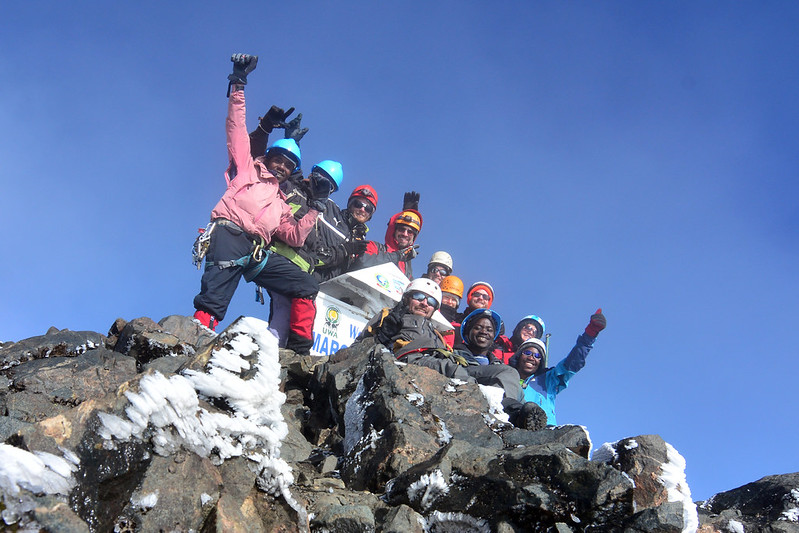
Margherita Peak on Mount Stanley at 5109m


That understanding commences far in advance of strapping your footwear. The process commences with meticulous planning, encompassing a comprehensive awareness of the prerequisites for accessing this UNESCO World Heritage Site, the associated costs, and the significance of each dollar spent at the park entrance as a contribution to a broader initiative beyond your personal experience. This article aims to address all inquiries regarding Rwenzori Park entrance fees and permissions, even those you may not have considered. Regardless of whether you intend to undertake the complete Central Circuit Trail to Margherita Peak, navigate the remote Kilembe Trail, or go on an extensive multi-peak Rwenzori Mountains Expedition encompassing Mount Stanley, Mount Speke, and Mount Baker, knowing the cost structure is a key initial step.

Is a permit required for trekking in the Rwenzori?

This is undoubtedly the first question most foreign hikers have, and its response is one of the things that truly sets Rwenzori apart from many other popular mountain destinations in Africa. In contrast to gorilla trekking in Bwindi Impenetrable Forest or chimpanzee tracking in Kibale, which necessitate advance permits that are limited in availability and often sold out months ahead, trekking the Rwenzori Mountains does not require a distinct, reservable hiking permit in conventional terms. You will not face a permit lottery, a yearly quota system, or the possibility of landing in Uganda only to find that your mountain slot has already been taken.

The Rwenzori employs a daily fee for park entry, managed by the Uganda Wildlife Authority (UWA), the organization responsible for the conservation and sustainable administration of Uganda’s national parks and wildlife. All trekkers entering Rwenzori Mountains National Park are required to pay a charge for each day spent within the park’s boundaries. This fee serves as the principal means by which UWA regulates visitor access, generates funds for conservation efforts, and supports the welfare of the traditional Bakonzo populations, whose traditional ties to these mountains extend through centuries of history and belief.

This is important for you as a trekker because it means you don’t have to book months in advance just to get a ticket slot. It is essential to have your finances sorted prior to arriving at the gate, as the total cost of your Rwenzori trekking Safari consists of daily park entrance fees for the entire duration of your Rwenzori Expedition. During a 7-day Rwenzori summit adventure, the daily costs significantly contribute to your overall budget and should be meticulously considered from the beginning.

The Uganda Wildlife Authority implements a graded pricing structure that differentiates among three types of visitors: foreign non-residents, foreign residents, and East African citizens. This is a common procedure throughout Uganda’s national parks, and the Rwenzori was particularly exempt from the broad UWA tariff hikes that impacted numerous other Ugandan parks in recent years, rendering it one of the more affordable major mountain destinations on the continent concerning Park entrance fees relative to experience.

Best Attractions in Rwenzori Mountains National Park

Non-Resident Foreigners

The appropriate cost of park entrance fees for most foreign trekkers from the United States, the United Kingdom, Europe, Australia, Asia, and other regions is USD $35 per person per day. This is the charge applicable for each calendar day spent within the park, starting from the day of entry to the day of leaving. During a typical 9-day summit Rwenzori trekking along the Kilembe Trail, the park entrance costs total USD $315, exclusive of the basic trekking cost provided by your operator. The 7-day Central Circuit Rwenzori trekking incurs park fees amounting to USD $245. These statistics are not trivial; they constitute a substantial and budgeted line item, and any credible operator will disclose them fully in their pricing structure, as we do in all our Rwenzori trekking packages.

Foreign Residents

A discounted charge of USD $25 per person per day is paid by foreign citizens and expatriates who are lawfully residents of Uganda. This category necessitates confirmation of residency and is authenticated at the park entrance. If you reside in Kampala or elsewhere in Uganda on a long-term visa or work permit, this price is applicable to you and signifies a substantial savings on extended expeditions.

Citizens of East Africa

Citizens of Uganda and other East African Community member nations including Rwanda, Kenya, Tanzania are charged a fee of UGX 15,000 per individual each day in local currency. East African trekkers have progressively recognized the Rwenzori as a significant mountaineering destination nearby, and this graduated pricing structure demonstrates UWA’s overarching dedication to rendering Uganda’s remarkable natural heritage accessible to both regional and international tourists.

Children/Minors | Rwenzori Park Fees & Permits

Children are charged a substantially reduced fee of USD $5 per individual, irrespective of their resident or non-resident status. The Rwenzori is unsuitable for very young children due to the physical demands of even the lower-elevation trails; however, for families with older, physically adept teenagers, this rate renders family trekking at the park’s lower reaches, including the splendid Mahoma Loop, truly attainable.

Methods and Locations for Payment of Park Fees

UWA has substantially upgraded its payment infrastructure recently due to the implementation of the National Payment System Act, which required a shift to a cashless system throughout Uganda’s national parks. Entrance fees for the Rwenzori National Park are now payable through mobile money or credit card at the entry gate; trekkers should not anticipate paying solely in cash. This is especially significant for international visitors who may possess US dollar notes: although US dollars continue to serve as the operational currency for all fee transactions and trekking quotations in the Rwenzori, the cashless payment mandate necessitates that the actual transaction at the gate is conducted electronically.

Registered operators, such as Rwenzori Trekking Expeditions, often manage the mechanics of fee payment within the logistics of expeditions for trekkers. Fees for the Central Circuit Trail are collected at the Nyakalengija park gate, the conventional access point located at the northern extremity of the Rwenzori range. While Park Entrance fees on the Kilembe trail, is managed at UWA rangers’ post is located about 2.2 kilometers from the Trekkers’ Hostel at Kyanjuki in Kilembe, at an altitude of 1,727 meters, where trekkers receive a briefing on park regulations prior to continuing their ascent. Your guide will manage the gate procedures; but, it is essential for you to comprehend the nature of your payment and its rationale, as this awareness links you to the conservation initiative in which you are engaged merely by your presence.

It is essential to clarify that Rwenzori Mountains National Park Entrance fees are submitted directly to UWA, rather than to the trekking operator. The operator’s package cost includes: services, guides, porters, cooks, equipment, hut housing, and operational costs. The admission fee for UWA park is a distinct governmental levy, payable at the gate, and it is allocated directly to Uganda’s national conservation budget. Certain operators incorporate these fees into their package price for convenience, while others itemize them separately. Consistently verify with your operator which model is applicable to avoid any unforeseen issues at the gate on the first day.

Extra Charges: Summit Ascents and Prolonged Accommodations

The standard admission cost of $35 per day permits access to the park; however, the Rwenzori’s remarkable multi-peak terrain necessitates comprehension of supplementary pricing categories for dedicated mountaineers.

Additional Peak Charges

The six prominent peaks of the Rwenzori—Mount Stanley, Mount Speke, Mount Baker, Mount Emin, Mount Gessi, and Mount Luigi di Savoia—each present a unique summit objective, characterized by individual approaches and challenges. Upon committing to a major peak during your expedition, any subsequent peak you desire to pursue incurs an additional fee of USD $100 for each extra peak. This price is distinct from the daily park entrance fee and accounts for the enhanced utilization of park resources, guide proficiency, and infrastructure associated with multi-peak crossings.

Trekkers undertaking an extensive expedition encompassing multiple summits, such as linking Margherita on Mount Stanley with Vittorio Emanuele on Mount Speke and Edward Peak on Mount Baker, should account for the additional peak fees in their overall budget from the outset of their planning. We welcome you to explore the framework of our multi-peak expedition itineraries, crafted to provide optimal transparency and predictability in costs of Rwenzori Trekking.

Additional Day Fees

Should your Rwenzori Trekking Expedition be prolonged beyond its initially scheduled duration, whether due to meteorological conditions, acclimatization requirements, or the frequent inclination to linger in these remarkable high-altitude terrains, each supplementary day in the park beyond the original itinerary incurs a charge of USD $150 per day. This rate exceeds the regular daily entry fee and signifies the unexpected nature of the extended stay. This is a simple practical lesson: plan for emergency days from the beginning of your adventure. The Rwenzori mountains region records one of the highest average annual rainfall totals globally, exceeding three meters per year, and the weather can necessitate rest days for even the most athletic and seasoned trekkers. A planned extra day is consistently less expensive than an unanticipated prolongation.

What’s Included in the Rwenzori Park Fee

It is important to pause and comprehend what your park entrance fee specifically finances, as this is not a mere theoretical conservation charge. It is a fee that directly supports the mountain you are exploring. Rwenzori Mountains National Park encompasses over 386 square miles of highly biologically diverse and ecologically delicate landscape in Africa. The park’s infrastructure, including its maintained trail network, manned huts and campgrounds, ranger presence, anti-poaching initiatives, and care of sacred Bakonzo cultural sites, is partially supported by the cash generated at the park entrance.

The glaciers of the Rwenzori are decreasing. This claim is not an exaggeration but a substantiated scientific fact: the ice fields that contributed to the mythological significance of the Mountains of the Moon have significantly decreased over the last century, and the rate of loss is intensifying. The UWA is tasked with monitoring and documenting environmental alterations, preserving the park’s distinctive flora and fauna, including endemic species of the Albertine Rift, its 217 bird species, and its colossal lobelias, groundsels, and heathers, which are unparalleled globally in size, while also safeguarding the mountain for future generations. Your park entry fee is, in the most literal sense, an investment in that endeavor.

The UWA framework also governs the management and care of the mountain’s eighteen sacred Konzo sites, which are designated, documented, and safeguarded as places of worship inside the park’s boundaries. The Bakonzo people do not perceive their connection with the Rwenzori, where the summits are the abode of their primary deity, Kitasamba, whose name is often prohibited from being uttered on the mountain, as a tourism commodity. The park management framework aims to respect the living cultural reality. By paying your entry fee, you are, albeit in a little yet significant manner, engaging in that commemoration.

Understanding the Total Cost of a Rwenzori Trek.

The park entrance fee constitutes one element of a multifaceted cost structure, and dedicated trekkers greatly benefit from comprehending each element thoroughly prior to finalizing a departure date. A reputable operator such as Rwenzori Trekking Expeditions delineates the overall cost of the Rwenzori excursion into several distinct categories.

The Operator Trek Charge | Rwenzori Park Fees & Permits

The Operator Trek Fee encompasses the primary payment made to the trekking company, which covers all essentials for the expedition: seasoned mountain guides; an adequate number of porters (typically one per hiker, with the option for additional support); a chef responsible for meal preparation; all meals throughout the trek; accommodations in the park’s huts or camps; required climbing equipment such as crampons, ice axes, rubber boots, and harnesses for glacier ascents; along with expenses associated with maintaining a licensed operation within the national park. 

The Entrance Fees & Permits for UWA Park – Rwenzori  National Park

The Uganda Wildlife Authority Park Entrance Fee is a daily charge of $35 USD, as detailed in this page, payable directly to the Uganda Wildlife Authority at the park entrance. The entire cost for a 7-day Central Circuit hike amounts to USD $245. During a ten-day expedition with aspirations to conquer multiple peaks, the cost approaches or surpasses USD $350, with supplementary peak fees added.

Trekkers lacking specialized gear, especially technical summit equipment such as crampons, ice axes, and suitable high-altitude boots, can rent equipment at the operator’s base office. The expense is supplementary to the trek fee but affordable, and it alleviates the logistical challenges of hauling sophisticated mountain gear via international flights. Our gear and equipment guide offers a comprehensive inventory of necessary items to bring and those available for local rental.

Tipping for Porters and Guides

This is not an official cost; rather, it constitutes an ethical commitment that dedicated trekkers incorporate into their budget. The porters and guides of the Rwenzori constitute the mountain’s unrecognized infrastructure. They carry huge loads over rough terrain that would be hard for most high-altitude hikers. They know every change in the weather, every shortcut that they can take when the route calls for it, and every camp where the stove flame will fight to fill the room. Their expertise is comprehensive, and their patience is exceptional. The conventional tipping ranges suggested by operators significantly augment their income and directly circulate inside the local Bakonzo economy. Allocate funds for it and contribute lavishly.

Trail-by-Trail Fee Context – Rwenzori Park Fees & Permits

The cost structure is applicable to all three primary trail systems in the Rwenzori; nonetheless, it is beneficial to examine how the fees correlate with the unique duration and characteristics of each route.

The Central Circuit Trail Of Rwenzori

The Rwenzori Central Circuit trail/route, is the traditional route of the Rwenzori Mountains,  which starts at Nyakalengija and goes around the entire high Rwenzori with access to all six major Peaks of Rwenzori Mountains. The journey to Margherita Peak can be accomplished in as little as seven days, while an eight or nine-day duration facilitates a more enriching experience and improved acclimatization. The park entrance price for a typical seven-day circuit is USD $245 at a rate of $35 per day.
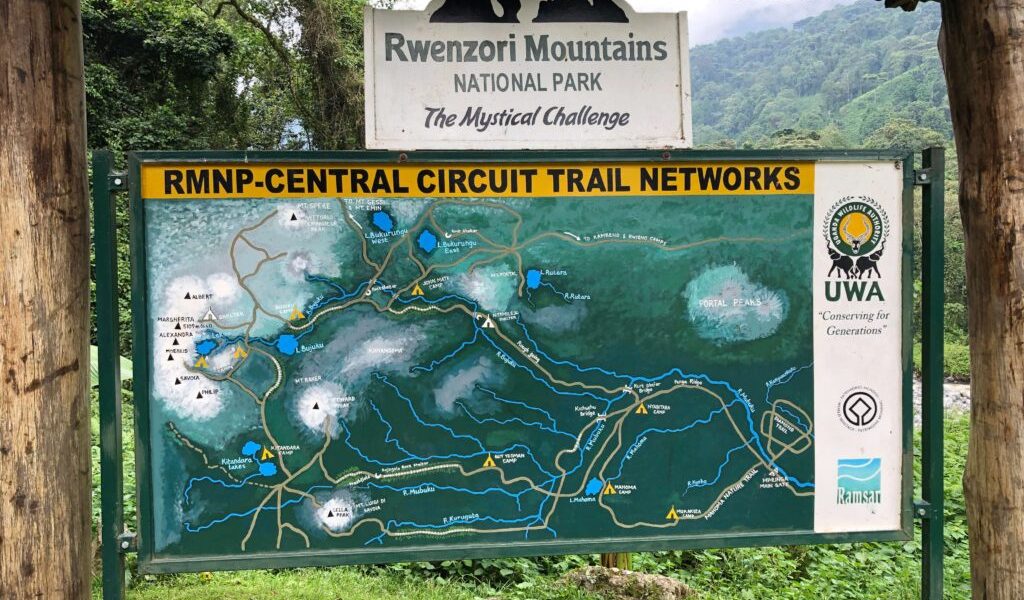
Rwenzori Mountains National Park Entrance/entry Fees and Permits of Central circuit trail route

The Central Circuit delineates a route that traverses the diverse ecosystems of the Rwenzori, commencing in the dense rainforest at the base, progressing through bamboo and heather zones, and culminating at the distinctive high-altitude plateau and glacial summits over 4,500 meters.

The Kilembe Trail | Rwenzori  National Park Fees

The Kilembe Trail, rising from the copper-mining town of Kilembe on the southern route, has been established as a unique and often more striking access to the high Rwenzori. It traverses a terrain of remarkable natural diversity, passing through nine lakes in a high valley unparalleled in Africa. An 8-Day Kilembe Trail Rwenzori Mountains trekking expedition to Margherita Peak requires seven nights of park entrance fees amounting to USD $245, in addition to the operator’s trekking cost. A 10-day Rwenzori trekking expedion to various summits, including: Mount Speke, Mount Stanley, Mount Baker & Weiseman, will entail fees of USD $315 for park access, in addition to the requisite peak prices. The Kilembe Trail’s confluence of biological diversity, striking landscapes, and comparative seclusion relative to the Central Circuit trail renders it one of the most gratifying mountain treks on the continent for those prepared to dedicate the time.

The Bukurungu Trail Route

The Bukurungu Trail heads up from Kitumba via a secluded rarely traveled route, and is mostly used for expeditions aiming at Mount Gessi and the western summits. This route is the least used of the three major Rwenzori trail routes and possesses a distinctive wilderness quality that attracts trekkers in search of ultimate solitude and difficulty. Fees are applied uniformly on a daily basis, and the normally extended approach time of the route results in a total park fee contribution that is generally on the higher end of the regular range. For individuals who have already traversed the Central Circuit Trail and Kilembe Trail and seek to see an aspect of the Rwenzori that is mostly unexplored by tourists, the Bukurungu presents an exceptional endeavor.

The Mahoma  Loop Trail

The Mahoma Loop is the most accessible circuit in the Rwenzori, a circular path that can be traversed in two to three days without ascending to high alpine zones, meandering through montane forest and providing exceptional birdwatching opportunities as well as a compelling introduction to the mountain’s lower-elevation ecosystem. The Mahoma Loop, priced at $35 each day for non-residents, results in a total of USD $70 in park admission fees for two days, rendering it one of the most economical methods to visit a UNESCO World Heritage Site of this significance. For trekkers contemplating  longer Rwenzori treks, it serves as an exceptional reconnaissance opportunity to evaluate the mountain’s characteristics and one’s fitness prior to undertaking a whole summit attempt.

Process of Reserving Your rwenzori Trek and Paying Fees

It’s one thing to figure out the cost structure; it’s quite another to navigate the actual reservation procedure, which is where hiring a trained operator makes a huge practical difference. At Rwenzori Trekking Expeditions, the procedure is as follows.

You start by getting in touch with us and letting us know the dates you have in mind, the trail you have selected, your goals for which peak(s) you will be summiting, and the size of your group. We offer a detailed, listed cost breakdown that distinctly separates our operator package fee from the Uganda Wildlife Authority park entrance costs relevant to your particular itinerary. Upon confirmation and deposit payment, we manage all pre-expedition logistics, encompassing coordination with Uganda Wildlife Authority, allocation of your guiding team, getting ready with your equipment, and planning of your trailhead transportation.

Upon departure, you will reach at the Nyakalengija park gate for the Central Circuit trail, or the Kilembe rangers’ post for the Kilembe Trail, where your guides handle the gate procedures with Uganda Wildlife Authority rangers. The entrance fee is processed here, and you receive a briefing on park laws prior to the commencement of the journey. Park fees may be paid at this juncture via the UWA cashless payment system (credit card or mobile money) or, in certain instances, incorporated into a pre-arranged operator payment. Kindly verify the precise mechanics with us upon booking.

It is important to note that all trekking expenses, including the operator fee and park admission fees, are non-refundable once the expedition has begun. Weather-related delays or prolonged stays result in the extra daily charges outlined previously. Comprehensive travel insurance encompassing trip interruption, medical evacuation, and high-altitude rescue is important for the Rwenzori; it is a fundamental aspect of prudent expedition planning, and we will address these issues during our pre-departure meeting.

The Rwenzori Shows Extraordinary Significance

Pause momentarily at Elena Hut, situated at 4,541 meters, on a clear morning. Observe the sunrise dissipate the mist over the Stanley Plateau, unveiling Margherita Peak suspended in a pale sky, and contemplate the value of this moment. The Rwenzori, when evaluated solely on park entrance prices relative to experiential value, is among the most underestimated prominent mountain locations globally.

Contemplate the contrast. Kilimanjaro, which is technically less complex, environmentally less diversified, and significantly more congested, imposes Park Entrance Fee prices that far exceed those of the Rwenzori. The cost of a regular Kilimanjaro summit permit is several hundred dollars, excluding any expenses for guides or crew. The Rwenzori demands a daily entry fee of $35 for park access, encompassing comprehensive guiding and porter services. It also offers summit experiences that are equally elevated but provide greater diversity and aesthetic appeal, all at a cost that genuinely represents the worth of an expedition.

There aren’t many tourists who visit the Mountains of the Moon. They represent an authentic wilderness, an atmosphere where the path may vanish into a thigh-deep bog, where heather trees reach heights of five meters and have moss as if it were an overcoat, where the colossal groundsel forests of the Bigo Bog plateau resemble a surreal vision, and where the remaining summit glacier emanates a frigid, primordial luminescence, unrelated to the equatorial sun radiating above. The experience significantly exceeds the cost of admission. Basically, the entry fee is just the cost of getting into Rwenzori Mountains National Park.

Frequently Asked Questions about the Rwenzori Park Entrance Fees & Permits

Do I need a special permit to trek in Rwenzori Mountains National Park?

There is no distinct trekking permit for the Rwenzori Mountains, in contrast to the gorilla trekking permits mandated in Bwindi Impenetrable Forest and Mgahinga National Park. There is no requirement to reserve a specific permit slot months in advance or to be concerned about restricted daily quotas for the mountain. Entry to Rwenzori Mountains National Park is regulated by a daily charge system managed by the Uganda Wildlife Authority. Each trekker incurs a cost of USD $35 per day (for international non-residents) for every day spent within the park, payable at the park entrance on the day 1 of the trek. Advance permit booking is unnecessary; nonetheless, it is highly advisable to arrange your entire trip through a licensed operator well in advance to ensure guide availability, especially during peak trekking seasons.

What is the entrance charge for Rwenzori Mountains National Park?

The Uganda Wildlife Authority’s current Park entry fee for Rwenzori Mountains National Park is USD $35 per person per day for foreign non-residents, which pertains to the bulk of international visitors from the US, UK, Europe, Australia, and Asia. Foreign residents in Uganda incur a fee of USD $25 per individual per day, whereas East African citizens are charged UGX 150,000 per individual per day. Children are billed at a discounted cost of USD $5 per individual. The costs are payable at the park entrance and are supplementary to any charges for trek packages provided by operators.

How are the park fees paid, and can I pay in cash?

The Uganda Wildlife Authority has instituted a cashless payment system throughout its national parks in accordance with the National Payment System Act. Entrance costs to the park can be settled using a credit card or mobile money at the gate. Trekkers should not depend exclusively on cash US dollars for gate transactions, despite the fees being advertised and computed in US dollars. Your trekking operator will inform you of the exact payment procedures relevant to your entry point. Nyakalengija serves as the entry point for the Central Circuit, while the Kilembe trail rangers’ post facilitates access to the Kilembe Trail, often overseeing gate payment as an aspect of expedition logistics.

What does the park entrance price cover?

The daily park entry fee for Rwenzori Mountains National Park includes your permitted presence for that day, access to the trail network and park amenities, including manned huts, the assistance of UWA park rangers at critical locations along the route, and a donation to the conservation fund that supports ecosystem management, anti-poaching initiatives, trail conservation, and the safeguarding of the mountain’s 18 revered Bakonzo cultural sites. The services of your private mountain guide, porters, chef, food, equipment, and accommodation in the mountain huts are not included; these are addressed separately through your operator’s package charge.

What is the total cost of park fees for a complete Rwenzori trek to Margherita Peak?

The total cost of park entry charge is based upon the particular path and the length of your adventure. A foreign non-resident incurs a total of USD $245 in park fees for a 7-day Central Circuit hike (7 days × $35). The park cost for an 8-day Kilembe Trail trek to Margherita Peak amounts to USD $280 (8 days × $35). During a 10-day multi-peak trip, the park fees amount to USD $350, with an extra USD $100 for each additional peak beyond the original target. These fees are independent of the operator’s fundamental trek fee and should be allocated as a separate line item in the budget. Our expedition pricing page displays all fees with complete transparency.

Is there a charge for climbing specific peaks in the Rwenzori range?

In addition to the usual daily park entrance cost, there is an extra charge of USD $100 for each additional peak hiked beyond your original summit objective of your excursion. Trekkers organizing multi-peak excursions, such as connecting Margherita on Mount Stanley with summits on Mount Speke and Mount Baker during a prolonged Rwenzori trekking expedition, must account for these extra peak costs in the overall expedition budget from the planning phase. An extra price of USD $150 per day will be charged for any unanticipated extension of your stay in the park beyond the initially agreed time frame.

Is travel insurance necessary for a Rwenzori trek?

Comprehensive travel insurance is not merely recommended for a Rwenzori excursion; it is a fundamental requirement of prudent planning. The mountain’s elevation poses a risk of altitude sickness, the weather can be severe and may prolong your ascent, and the route to the peak includes icy sections that require specialized equipment and present the typical hazards associated with high-altitude climbing. Your insurance must specifically cover trekking and hiking at high altitudes, medical emergencies, and having to cut short your Rwenzori trek. Verify with your insurance that the maximum altitude of your intended excursion, reaching 5,109 meters on Margherita Peak, falls within the policy’s covered elevation limits.

What is the best time of year to trek the Rwenzori, and does it affect fees?

Park entrance prices are fixed throughout the year and do not fluctuate with the seasons. The Rwenzori features two principal seasons that significantly influence trekking conditions: the drier months from December to February and June to August generally provide clearer skies and perfect summit conditions, although the region’s notable rainfall ensures that no month is consistently dry. The rainy seasons, from March to May and September to November, result in increased rainfall that complicates routes and heightens the likelihood of necessitating extra contingency days, incurring an additional price of USD $150 per day. Scheduling your journey during the dry periods mitigates that risk; nonetheless, the mountain’s distinctive features, such the moss, mist, and unusual flora diversity, are often most pronounced in the wet conditions.

What is the recommended advance booking period for a Rwenzori trek?

Although there is no permit quota system necessitating months of prior reservations as seen in gorilla trekking, it is highly advisable to schedule your Rwenzori trekking safari at least three to six months in advance, especially if you aim to climb during the dry high seasons. This provides your operator with the opportunity to verify guide availability, arrange your comprehensive logistical package, offer guidance on pre-trek fitness preparation and gear procurement, and ensure that your Rwenzori excursion insurance, flights, and in-country logistics are coordinated. Last-minute reservations may occasionally be feasible, although they restrict your choices and heighten the likelihood of complications. Get in touch with us in advance, and we will arrange an adventure that fits your schedule, level of fitness, and objectives while treating the Mountains of the Moon with the respect they deserve.

Begin Your Rwenzori Expedition

The Mountains of the Moon don’t make an announcement. They conceal themselves within clouds, they descend with equatorial precipitation, they appear unexpectedly in a gap of brilliant sky between storms, and then they disappear once again, perhaps assessing your focus. To traverse their domain is to immerse oneself in a realm that appears authentically pre-human in its magnitude and peculiarity, a domain of primordial ice and extraterrestrial vegetation, accompanied by a quiet so profound that the only one audible sound is your breath, laboring slightly at elevation, vibrant. The daily charge is $35. The mountain is irreplaceable.

If you are committed to a Rwenzori trek, whether your objective is to reach the summit of Margherita Peak at 5,109 meters, traverse the Central Circuit, explore the nine lakes of the Kilembe Valley, or engage in an immersive experience within one of Africa’s most remarkable and least-explored wilderness regions, we are prepared to assist you in planning every detail. Our staff has dedicated years to these trails, enduring various weather conditions and seasons, and we use that experiential knowledge to every adventure we create.

Contact Rwenzori Trekking Expeditions today to commence preparing your excursion. Provide your dates, aspirations, skill level, and group size, and we will respond with a customized, openly priced proposal encompassing all expenses from the park entrance to the top glacier and return.

The Mountains of the Moon await. They have been waiting an extended period and exhibit remarkable patience.

Scroll to Top