Discover how to prepare for a Rwenzori hike, including fitness, training, altitude, packing, permits, weather, footwear, and practical trekking advice—the complete guide from Uganda’s Rwenzori specialists.
Trekking in the Rwenzori Mountains requires more preparation than simply booking a guided hike. The mountains combine steep terrain, muddy trails, high altitude, rapidly changing weather, and several days of trekking through remote mountain environments. Good preparation should therefore include choosing the right itinerary, improving your fitness, preparing for altitude, testing your hiking equipment, packing waterproof and warm clothing, arranging appropriate travel documents and insurance, and understanding what to expect on the trail. The level of preparation required depends on your route and objective, with a short Rwenzori hike requiring less preparation than a multi-day expedition to high-altitude summits such as Margherita Peak.
Somewhere between the banana groves of Kasese and the equatorial glaciers of the Rwenzori, the ground begins to argue with the sky. Mist rises through giant lobelia forests, bogs swallow the unwary ankle, and the air thins with every switchback toward Africa’s third-highest mountain range. The Mountains of the Moon do not ask to be conquered; they ask to be respected, and respect here is a matter of preparation.
What You Need to Prepare for a Rwenzori Trek
To prepare for a Rwenzori trek, you need three to six months of progressive cardio and strength training, broken-in waterproof hiking boots, a layered rain-and-cold clothing system, a realistic altitude acclimatisation plan, a valid Uganda visa and travel insurance covering trekking above 4,500 metres, and a mindset built for wet, muddy, ever-changing terrain rather than a manicured trail. The Rwenzori Mountains are Africa’s wettest and most botanically dramatic range, and the trekkers who thrive here are the ones who trained for mud, rain, and altitude in equal measure, not just distance. |
This guide walks you through every stage of that preparation, in the order you will actually need it: what to check before you book, how to train your body over twelve weeks, how to choose boots and layers that survive genuine equatorial rain, how to prepare your lungs and mind for altitude above 4,500 meters, what documents and insurance protect your trip, and what to do in the final forty-eight hours before your boots touch the Kilembe or Central Circuit trailhead.
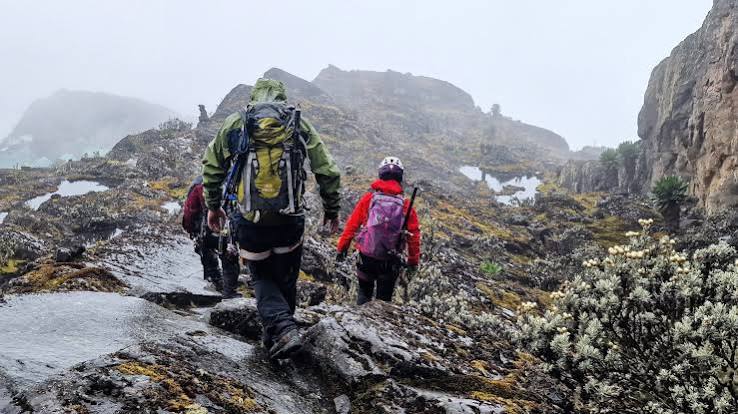
Whether you are eyeing the tranquil 3-Day Lake Mahoma Trek as a first taste of the range or the technical 5-Day Mount Baker (Edward Peak) climb as your once-in-a-lifetime summit, the preparation principles below are the same, only the intensity changes.
Quick Preparation Checklist
Use this guide as your master reference. This guide expands on every item in detail later.
- 3–6 months before: Book your trek, confirm dates, begin cardio base-building, and apply for your Uganda visa or East Africa Tourist Visa.
- 8–12 weeks before: Start the structured training plan below, buy your boots, and begin breaking them in.
- 6–8 weeks before: Arrange travel insurance with trekking and high-altitude evacuation cover, complete any recommended vaccinations, and finalize your gear list.
- 4 weeks before: Complete at least two long, weighted hikes on consecutive days to simulate multi-day fatigue.
- 2 weeks before: Begin to taper your training, confirm your packing list, test every piece of gear in real rain if possible, and reconfirm logistics with your operator.
- 1 week before: Rest, hydrate, eat well, pack your duffel and daypack, and mentally rehearse your daily rhythm on the mountain.
- Day before: Final gear review early night, a light carbohydrate-rich dinner, and a calm mind.
Hiking Boots: What You Actually Need For Rwenzori
You need a pair of waterproof, mid-to-high ankle hiking boots with an aggressive lugged sole, broken in over at least 60–80 kilometers of walking before departure. The Rwenzori’s mud, bogs, and stream crossings make waterproofing non-negotiable, and its uneven, root-strewn terrain makes ankle support essential; lightweight trail runners, however comfortable elsewhere, are inadequate for this range. |
How to Prepare Your Rwenzori Hiking Boots
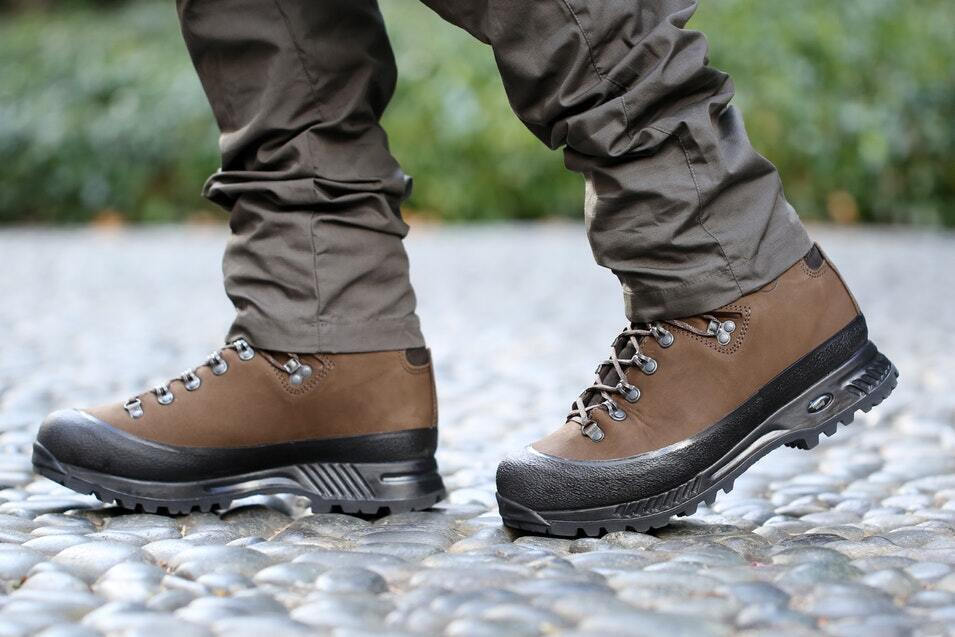
Ask any guide who has walked the Kilembe Trail or Central Circuit Trail in the rain what separates a comfortable trek from a miserable one, and boots will be the first answer, before tents, before rain jackets, before anything else. The Rwenzori’s famous ‘bog zone’ between 2,600 and 3,200 meters is not an occasional inconvenience; it is a defining feature of the range and will expose the weaknesses of inadequate footwear within the first two hours.
What to Look For
- Waterproof membrane: a genuine waterproof-breathable membrane (such as Gore-Tex or an equivalent), not merely a water-resistant coating.
- Mid-to-high ankle cuff: for stability on root systems, boulder fields, and boardwalk edges, and protection against mud ingress.
- Aggressive lugged outsole: deep tread for grip on wet roots, wooden boardwalks, and loose volcanic scree near the higher camps.
- A stiffer midsole: for trekkers attempting Mount Baker or Margherita Peak, where crampon compatibility and rock scrambling demand more structure than a flexible day-hiking boot provides.
- Correct sizing with room to swell: feet expand on multi-day treks; a half-size larger than your everyday shoe, fitted with your trekking socks, is a common and sensible choice.
Buy your boots at least eight weeks before departure. This advice is not a suggestion born of caution alone; it is the minimum realistic window to break in a leather or synthetic upper, identify hot spots before they become blisters, and confirm the boot performs the same on Day 5 of training as it did in the shop.
Testing Your Equipment Before You Fly
Test every piece of gear, including boots, rain shell, daypack, sleeping system, and trekking poles, on at least two real outdoor hikes before departure, ideally including one in genuine rain. The Rwenzori trailhead is the wrong place to discover that your ‘waterproof’ jacket wets through at the shoulder seams or that your daypack straps chafe after three hours. |
The single most common preparation mistake we see is gear that is new, expensive, and completely untested. A rain jacket’s waterproof rating means little until it has been walked in for four continuous hours in actual rain; a daypack’s comfort claims mean little until it has carried your real trekking weight, not an empty showroom fitting.
Your Pre-Departure Equipment Test Checklist For Rwenzori
- Boots: minimum 60–80 km of walking, including at least one long hike on consecutive days.
- Rain jacket and rain trousers: worn together in genuine rain, ideally while moving uphill, to confirm breathability and seam sealing under real conditions.
- Daypack: loaded to your expected trekking weight (6–8 kg) and worn for at least 3–4 hours to identify pressure points.
- Sleeping bag liner or personal sleep layers: if bringing your own, test warmth rating in a genuinely cold room or during a cool-weather camping trip.
- Trekking poles: practiced on a downhill descent, where their real value—knee protection—becomes obvious.
- Headlamp: tested with fresh batteries for a full evening; early starts on summit day happen well before sunrise.
Preparing for Rain and Cold: What Happens If It Rains in the Rwenzori?
It will very likely rain at some point during your Rwenzori trek; this is one of the wettest mountain ranges in Africa, and rain can fall in any month, though the driest windows generally fall in December–February and June–August. Prepare with a full waterproof shell system (jacket and trousers), waterproof pack liners or dry bags, gaiters, and a change of dry base layers kept sealed for camp each evening. Preparing for rain is not a contingency; it is a core part of Rwenzori trekking, not an exception. |
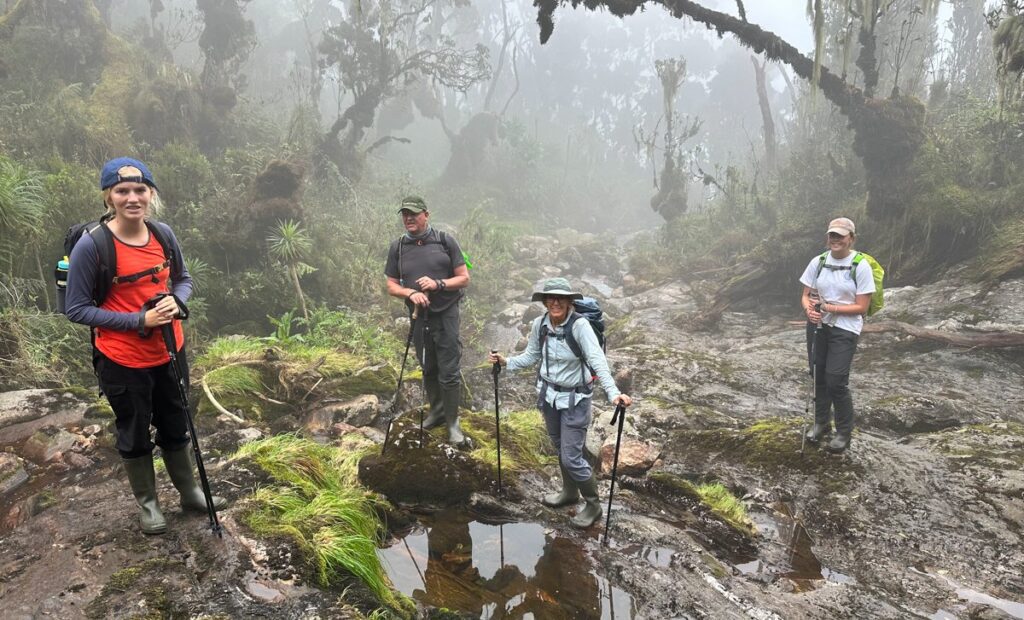
New trekkers sometimes pack a rain jacket the way they might pack an umbrella as insurance against an unlikely event. On the Rwenzori, this way of thinking fails by the end of the first afternoon. Rain here is a landscape-shaping force: it is what feeds the bogs, what keeps the vegetation zones so dramatically layered, and what makes this range so different from its drier East African cousins. Treat rain gear as primary equipment, used on most days, not emergency equipment used on rare ones.
The Layering System for Rain and Cold in the Rwenzori
- Base layer: a moisture-wicking synthetic or merino wool top and bottom, never cotton, which holds moisture against the skin and accelerates heat loss.
- Mid layer: a fleece or lightweight insulated jacket for warmth at camp and during colder ascents above 3,500 meters.
- Insulating layer: a packable down or synthetic-fill jacket for evenings at Bujuku, Elena, or Kitandara camps, where temperatures regularly approach freezing.
- Outer shell: a genuinely waterproof and breathable jacket and trousers; this is the layer that determines your comfort more than any other single item on the packing list.
- Extremities: waterproof gloves, a warm hat, and gaiters to keep mud and water out of your boots on the bog sections.
Two details matter more than trekkers often expect. First, waterproof pack liners or individual dry bags for your sleeping bag and spare clothing: a wet duffel bag is a far more common failure point than a wet jacket, because trekkers focus on what they wear and forget what they carry. Second, you should have a genuine change of completely dry clothing sealed away solely for camp each evening; arriving at camp wet and staying wet overnight is where cold genuinely becomes dangerous, not merely uncomfortable.
The Complete Packing System For Rwenzori
What should I pack for a Rwenzori trek? The honest answer is a system, not a list, of clothing and gear organized in layers and dry-bagged groups so that whatever the weather does, you can access what you need without unpacking everything you own onto a wet tent floor. Below is the packing framework we recommend to every client, from the 3-Day Lake Mahoma Trek to the 8-Day Triple Peaks expedition.
Clothing
- 2–3 moisture-wicking base layer tops and 2 bottoms
- 1 fleece or light insulated mid-layer
- 1 packable down or synthetic insulated jacket
- 1 waterproof jacket and 1 pair waterproof trousers
- 3–4 pairs of trekking socks (wool-blend, not cotton) plus a dedicated pair of dry camp socks
- 1 warm hat, 1 sun hat or cap, and a buff or neck gaiter
- 1 pair of waterproof gloves plus a lightweight liner glove pair
- Gaiters for bog and mud sections
- Camp shoes or sandals for evenings
Equipment
- Broken-in waterproof hiking boots
- Daypack (30–35 liters) with rain cover
- Trekking poles
- Headlamp with spare batteries
- Reusable water bottles or hydration bladder (3-liter capacity recommended)
- Dry bags or waterproof pack liners for your main duffel
- Sunglasses (UV exposure is significant above the tree line) and sunscreen
Health and Personal Items For Rwenzori
- Personal first-aid kit including blister plasters, any personal medication, and basic pain relief
- Hand sanitizer and a small quick-dry towel
- Any altitude medication discussed with your doctor
- Travel insurance documents and a physical or digital copy of your passport
PACKING PHILOSOPHY: ORGANIZE, DON’T ACCUMULATE The best-prepared trekkers we guide are rarely the ones with the most gear. They are the ones whose gear is organized into clearly labeled dry bags: one for camp clothing, one for trekking-day clothing, and one for electronics and documents. This system means that in driving rain at 4,000 metres, you open exactly one bag for exactly what you need, rather than exposing your entire kit to the weather while you search. |
Trekking Poles: Why They Matter More Here (In Rwenzori Mountains) Than Elsewhere
QUICK ANSWER Yes, trekking poles are strongly recommended for every Rwenzori trek. They reduce knee strain on the range’s frequent steep descents, provide crucial balance on muddy boardwalks and stream crossings, and offer a genuine safety margin on the boulder fields near Elena and Kitandara camps. Adjustable, collapsible poles with wide mud/snow baskets are the ideal choice. |
If boots are the most important item on the packing list, trekking poles are the most underestimated. The Rwenzori’s terrain alternates constantly between boggy flats, root-woven inclines, and loose boulder sections — exactly the kind of unpredictable footing where a third and fourth point of contact prevents both falls and the slow cumulative joint strain that turns Day 4 into a struggle. On the steep, often slippery descent from Mount Baker’s high camps, poles are not a comfort item; they are a genuine safety tool.
- Choose adjustable, collapsible poles so length can be shortened for ascents and lengthened for descents.
- Fit wide baskets designed for mud and soft ground, not the narrow baskets sold for hard-packed trail use.
- Practice the adjustment mechanism before you arrive; fumbling with locking collars in the rain is a small but avoidable frustration.
Mental Preparation for a Rwenzori Trek/Hike:
Prepare mentally for a Rwenzori trek by accepting, in advance, that you will be cold, wet, and tired at some point, and that such discomfort is normal, not a sign that anything has gone wrong. Mental preparation means setting realistic daily expectations, practicing patience with slow, deliberate pacing, and trusting your guide’s judgement on rest, pace, and turnaround decisions, especially near the summit. |
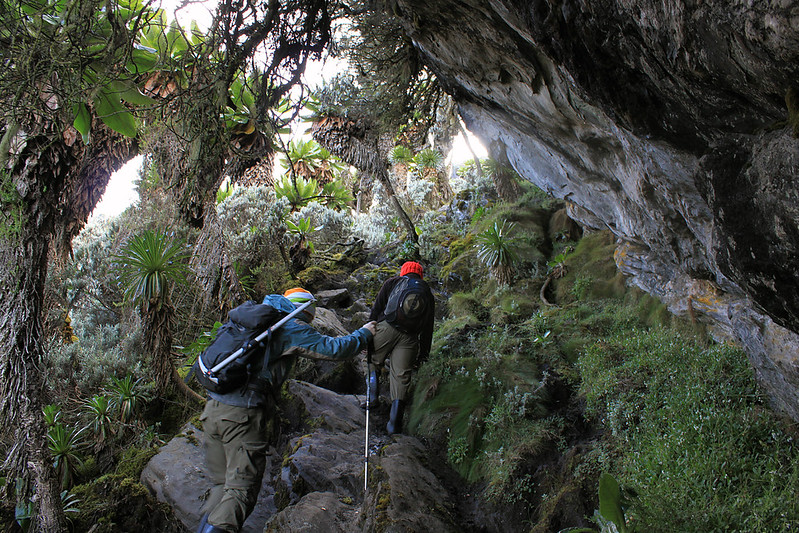
Physical training earns you the capacity to trek the Rwenzori. Mental preparation is what allows you to enjoy it. Trekkers who arrive expecting a postcard experience at every turn are often the ones who struggle most when the mist rolls in on Day 3 or when the promised summit view is, for an hour, simply cloud. The trekkers who arrive having made peace with discomfort as part of the story, not a flaw in it, are the ones who come home already planning their next mountain trek.
Three Mindsets Worth Practicing Before You Arrive
- Patience with pace: the deliberately slow, steady rhythm your guides set above 3,000 metres is a strategy, not a limitation; fighting it wastes energy you will need later.
- Comfort with discomfort: wet socks, a cold tent, and an early 2am summit start are part of the genuine Rwenzori experience, not signs of a trip gone wrong.
- Trust in your guide’s judgement: if a guide recommends turning back before a summit, that decision is made from experience with altitude, weather, and safety, not a lack of belief in your ability.
There is a particular kind of quiet that settles over a trekking group on the final approach to Elena Hut, or on the glacier traverse toward Margherita’s summit ridge, where conversation fades and each person is simply present with the effort, the cold, and the extraordinary fact of being there at all. Trekkers who have mentally rehearsed for hardship arrive at that moment able to actually experience it, rather than merely endure it.
Documents and Travel Planning for Rwenzori
You will need a passport valid for at least six months beyond your travel dates, a Uganda visa (or East Africa Tourist Visa if combining with Kenya and Rwanda), proof of yellow fever vaccination, and a confirmed booking with your trekking operator well in advance of arrival. The Rwenzori Trekking Expeditions team arranges permits for the Rwenzori Mountains National Park and requires advance notice. |
Visa and Entry Requirements
Most nationalities require a visa to enter Uganda, obtainable online in advance through the official Uganda e-visa portal. If your itinerary also includes Kenya or Rwanda, as with our 19-Day Uganda Grand Safari, the East Africa Tourist Visa covers all three countries within a single 90-day validity and is generally the more economical and convenient choice. Trekkers planning an overland crossing between Uganda and Rwanda typically use the Katuna–Gatuna border post.
Park Permits and Booking Lead Time for Rwenzori
Rwenzori Mountains National Park, a UNESCO World Heritage Site, requires trekking permits arranged in advance through a licensed operator; independent, unguided trekking is not permitted within the park. As your operator, we handle permit arrangements, Uganda Wildlife Authority gate fees, ranger and porter logistics, and campsite bookings as part of every itinerary. We recommend booking your trek at least three months ahead for standard dates and up to six months ahead for peak season (December–February and June–September) or larger private groups.
Confirm the current Uganda e-visa fee and East Africa Tourist Visa fee figures before booking, as government fees are subject to periodic change. Also confirm the current requirements for the yellow fever vaccination certificate with the latest Uganda immigration guidance, as entry requirements can be revised. |
Documents Checklist
- Passport valid 6+ months beyond travel dates, with at least one blank visa page
- Uganda e-visa or East Africa Tourist visa approval printout (digital and physical copy)
- Yellow fever vaccination certificate
- Travel insurance policy documents, including emergency contact numbers
- Booking confirmation and itinerary from Rwenzori Trekking Expeditions
- Copies of all documents stored separately from originals, plus a digital copy accessible offline
Travel Insurance For Rwenzori: What Cover You Actually Need
You need travel insurance that explicitly covers trekking at altitudes above 4,500 meters, includes emergency medical evacuation from remote mountain terrain, and covers trip cancellation and delay. Many standard travel policies exclude ‘mountaineering’ or hiking above a stated altitude threshold by default; always confirm your policy’s altitude limit before booking, especially for Margherita Peak (5,109 m), Mount Baker (Edward Peak), or Mount Speke. |
This is the single most overlooked preparation step and the one with the highest stakes if neglected. Standard travel insurance, the kind purchased as a checkbox add-on to a flight booking, very often excludes activities above a certain altitude, frequently as low as 3,000 or 4,000 meters. Since nearly every Rwenzori itinerary in this guide reaches or exceeds that threshold, a generic policy may leave you uninsured at precisely the point of the trek where insurance matters most.
What to Confirm With Your Insurer
- Altitude limit: confirm the policy explicitly covers trekking up to at least 5,200 meters, with no exclusion for ‘mountaineering’ activities that might be interpreted to include glacier travel on Margherita Peak.
- Emergency evacuation: confirm cover for helicopter or ground evacuation from remote mountain terrain, including cost limits. Evacuation from high camps is logistically complex and can be costly without cover.
- Trip cancellation and delay: given the advance planning and non-refundable permit costs involved, cancellation cover protects a meaningful financial investment.
- Medical treatment abroad: confirm adequate cover for treatment in Uganda and, if needed, referral or evacuation to a regional medical center.
We are not insurance brokers, and this guide is not financial advice, but we ask every client, without exception, to confirm altitude and evacuation cover before their trek begins, and we are always glad to answer questions about the specific altitudes and terrain involved in any itinerary so you can find the right policy.
Health Preparation For Rwenzori
Health preparation for a Rwenzori trek includes a pre-trip check-up if you have any cardiovascular or respiratory condition, a discussion with a travel medicine clinic about malaria prophylaxis and altitude medication, yellow fever vaccination, and general readiness for basic first-aid situations such as blisters, minor cuts, and stomach upset. |
Before You Travel
- Consult a travel medicine clinic 6–8 weeks before departure regarding malaria prophylaxis, routine vaccinations, and any personal risk factors for altitude illness.
- Confirm yellow fever vaccination and carry the certificate, as it may be required for entry or onward travel within East Africa.
- Address any existing medical conditions, particularly cardiovascular, respiratory, or joint conditions, with your doctor, who can advise on the specific demands of high-altitude, multi-day trekking.
- Pack a personal first-aid kit including blister treatment, any prescribed medication in its original packaging, basic pain relief, and rehydration salts.
On the Mountain
Your Rwenzori Trekking Expeditions guides and porters carry comprehensive first-aid kits and are trained in altitude illness recognition, but the fastest and most effective response to a developing problem is always early reporting from you. A headache treated at the first sign, with rest, water, and honesty with your guide, resolves in hours. A headache concealed out of a wish not to slow the group can become a genuine problem by nightfall. There is no pride in silence on a mountain, only in the good judgement to speak up.
Understanding Your Route
Preparation is sharper when specific, and nothing sharpens it more than genuinely understanding the ground ahead. The Rwenzori’s classic routes, the Central Circuit and the Kilembe Trail, both pass through the range’s famous vegetation zones: montane forest, bamboo, heather, and Afroalpine moorland studded with giant lobelia and groundsel, and finally Afroalpine rock and glacier above 4,300 meters. Each zone has its own underfoot character, and knowing what is coming reduces the disorientation that otherwise compounds fatigue.
Vegetation Zone | Approx. Altitude | Underfoot Character |
Montane Forest | 1,600–2,500m | Root systems, occasional slippery clay, warm and humid |
Bamboo Zone | 2,500–2,800m | Dense vegetation, narrow trail, moderate mud |
Heather / Bog Zone | 2,800–3,500m | Boardwalks, deep mud, the range’s most technically demanding underfoot terrain |
Afroalpine Moorland | 3,500–4,300m | Giant lobelia and groundsel, boulder sections, cooler and more exposed |
Rock and Glacier Zone | 4,300m+ | Rock scrambling, glacier travel on Margherita and Speke routes, sub-zero conditions |
For a trek such as the 5-Day Mount Baker route, this means your legs will move through nearly every one of these vegetation zones in a single expedition: forest, bamboo, bog, moorland, and finally the rocky approach to Edward Peak’s summit, each demanding a slightly different rhythm. Understanding this in advance turns what could feel like relentless, unpredictable terrain into a landscape with a legible logic, one zone opening into the next like chapters in an old expedition journal.
Camp Life: What Evenings on the Mountain Are Really Like
Camp life on the Rwenzori has its own gentle rhythm, and knowing it in advance removes one more unknown from your first night on the mountain. You will arrive at huts or campsites, Nyabitaba, John Matte, Bujuku, Elena, Kitandara, or Hunwick’s, depending on your route, typically in the mid-to-late afternoon, with enough daylight to change into dry camp clothing, eat a hot meal prepared by your trekking crew, and rest before an early night.
- Accommodation: simple mountain huts or tents, depending on route and camp, always with basic sleeping platforms.
- Meals: hot, carbohydrate-rich meals prepared by your trekking crew, timed around arrival and an early departure the following morning.
- Water: sourced and treated by your crew at each camp; bring a reliable personal water bottle or bladder to carry your daily supply.
- Evening routine: on arrival, change into dry clothing, eat, hydrate, and rest; most groups settle in well before dark, given the early starts ahead.
- Toilet facilities: basic long-drop facilities at established camps; a headlamp and hand sanitizer are essential evening companions.
This simplicity brings a particular pleasure that surprises many first-time trekkers: the quiet satisfaction of dry socks, a hot cup of tea, and the sound of rain on a tent roof after a demanding day, with nothing left to do but rest for the one ahead.
Nutrition in The Rwenzori: Fuelling the Climb
Eat carbohydrate-rich meals throughout your trek to sustain long hiking days, snack consistently on the trail rather than waiting until you feel hungry, and drink 3–4 liters of water daily. Appetite often decreases at altitude even as energy demands increase; eating on a schedule, not by appetite alone, is one of the most effective and least discussed altitude strategies. |
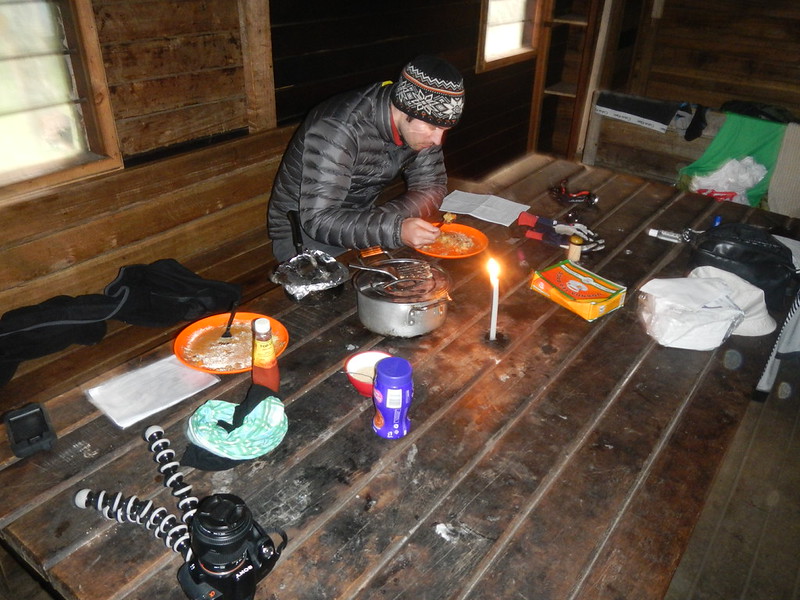
Your trekking crew prepares hot, substantial meals at camp. Porridge and hot drinks in the morning, a packed lunch on the trail, and a hearty carbohydrate-and-protein dinner each evening. Your role in this system is smaller but still important: carry easily digestible snacks for the trail, eat consistently even when altitude dulls your appetite, and treat hydration as a scheduled task rather than a response to thirst, since thirst itself becomes an unreliable signal above 3,500 meters.
- Trail snacks: energy bars, dried fruit, nuts, and simple carbohydrates that digest easily at altitude
- Hydration: 3–4 liters of water daily, supplemented with electrolyte tablets or rehydration salts on longer trekking days
- Eating rhythm: small, frequent snacks on the trail rather than large, infrequent meals, which are harder to digest during sustained exertion
- Limit alcohol and caffeine: both can worsen dehydration and interfere with sleep quality at altitude
Day-Before Checklist
The night before your trek begins is not the time for new decisions; it is the time to execute a plan you have already made. Use this final checklist.
- Lay out and pack your full kit, dry-bagged and organized by category, the evening before, not the morning of
- Charge all electronics, headlamp, phone, and camera fully
- Confirm you have your passport, visa printout, insurance documents, and booking confirmation in an accessible, waterproof pouch
- Trim toenails to reduce blister and nail-pressure risk on descents
- Eat a substantial, carbohydrate-rich dinner and avoid alcohol
- Hydrate well but avoid overloading fluids right before sleep
- Set out trekking-day clothing separately so your first morning is calm and unhurried
- Get to bed early, the mountain rewards trekkers who start rested, not trekkers who stay up finalizing gear
- Do a final mental run-through of your daily rhythm: wake, dress, eat, walk, arrive, rest, repeat
Common Mistakes to Avoid
Years of guiding trekkers through the Rwenzori’s bogs, boulder fields, and glacier approaches have revealed the same handful of avoidable mistakes, again and again.
- Buying boots too close to departure is one of the most common mistakes. Untested boots are one of the most common causes of a trek-ending blister on Day 2.
- Underestimating the rain. Trekkers who pack a light rain jacket ‘just in case’ consistently regret it; the Rwenzori’s rain is a daily probability, not a rare exception.
- Choosing the shortest itinerary for a summit attempt. Compressing a summit trek into fewer days to save time or money often sacrifices the acclimatisation days that are essential for success.
- Ignoring altitude symptoms because of a wish not to slow the group is a mistake. Every guide would rather hear about a headache at 2pm than discover a serious case of altitude illness at 8pm.
- Training only on flat ground. Cardiovascular fitness alone does not prepare ankles and stabilizer muscles for the Rwenzori’s uneven, root-strewn terrain.
- Skipping altitude checks for travel insurance. Discovering an altitude exclusion after an incident, rather than before booking, is an entirely avoidable risk.
- Overpacking cotton clothing. Cotton retains moisture and loses insulating value when wet, precisely the wrong property for a range this damp.
- Arriving without any back-to-back hiking practice is a mistake. A single long training hike does not simulate what Day 4 of a multi-day trek genuinely feels like.
Pre-Departure Timeline at a Glance
Timeframe | Key Actions |
6 months before | Choose your trek and dates; book with Rwenzori Trekking Expeditions; begin visa research. |
3–4 months before | Apply for a Uganda visa or East Africa Tourist Visa; book flights; begin base cardio training |
8–12 weeks before | Start a structured 12-week training plan; purchase and begin breaking in boots; book a travel medicine consultation. |
6–8 weeks before | Arrange travel insurance with altitude and evacuation cover; complete recommended vaccinations; finalize gear list. |
4 weeks before | Complete back-to-back weighted training hikes; test all gear in real rain if possible. |
2 weeks before | Begin your training taper and confirm your final logistics and packing list with your operator. |
1 week before | Pack fully; rest; hydrate; eat well; reconfirm documents |
Day before | Final gear check; early night; calm mind |
Every trekker who has stood on Vittorio Emanuele, Portal Peaks, Weismann’s Peak, or Edward Peak’s summit or watched dawn break over the glaciers of Margherita from Elena Hut will tell you the same quiet truth: the mountain rewarded the work done long before the first footstep on the Kilembe Trail. The training hikes on tired legs, the boots broken in over unglamorous weekend miles, the insurance policy read closely rather than glanced at, the rain jacket tested in actual rain, none of this makes for dramatic storytelling, and all of it is what makes the summit possible.
The Rwenzori does not forgive carelessness, but it is remarkably generous to those who arrive prepared. Its bogs become a manageable rhythm rather than an obstacle course. Its altitude becomes a respected companion rather than an ambush. Its rain becomes simply weather, met by a jacket that works and a mind that expected it. This is what preparation actually buys you: not the absence of difficulty, but the ability to meet it well.
You Have Read the Guide. Now let us handle the rest.
You have done the reading that most trekkers skip, which tells us something about how you approach a challenge worth taking seriously. That same care is what defines every trek we run. As a Uganda-owned operator working exclusively within Rwenzori Mountains National Park, we do not send you into the Mountains of the Moon with a generic itinerary and a hope that things go well. We plan your permits, your porters, your camps, your pacing, and your safety margins with the same attention you have just given to your preparation.
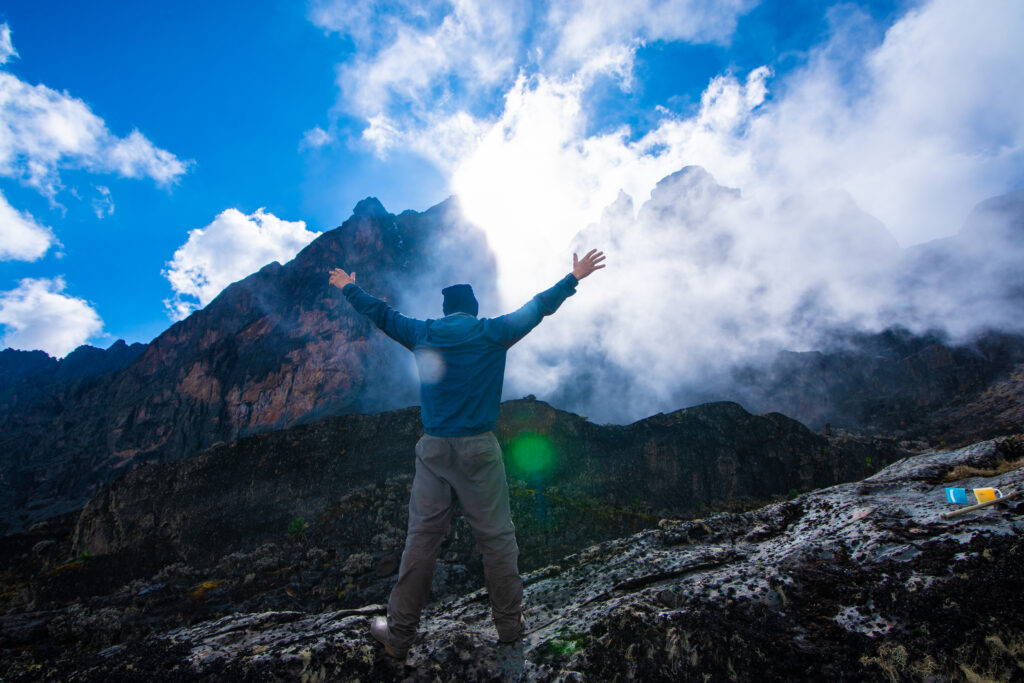
Every private departure, solo, as a couple, or as a group of up to eight, is built around your fitness, your timeline, and your ambition, whether that ambition is a gentle three days among waterfalls or a hard-won summit on Mount Baker’s Edward Peak. No detail is left to chance: not the route, not the gear briefing, not the guide who will be watching your pace above 3,500 metres and quietly, expertly ensuring you get there and back safely.
READY WHEN YOU ARE If the Rwenzori has been calling you, the next step is simply a conversation about your fitness, your dates, and the trek that fits both. We will take it from there. |