The 19-day Uganda gorillas, chimpanzees, wildlife, white-water rafting & Rwenzori trekking safari features Rwenzori Mountains hiking, gorilla trekking, chimpanzee tracking, Big Five game drives & boat rides, and Nile River white-water rafting. This unique 19-day Uganda safari includes a Rwenzori hike, chimp and gorilla treks, wildlife viewing, and whitewater rafting. It takes you to Kibale Forest National Park for chimpanzee tracking, Murchison Falls National Park for Big Five game viewing, Queen Elizabeth National Park for game drives and a boat cruise, Rwenzori Mountains National Park for hikes, Bwindi Impenetrable National Park for gorilla trekking, and Lake Bunyonyi for leisure.
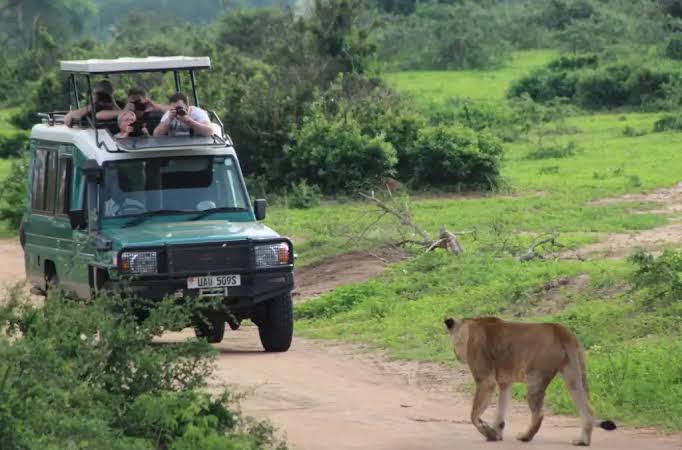 The 19-day Uganda safari offers Rwenzori Mountains trekking, gorilla trekking in Bwindi, chimpanzee tracking in Kibale, Big Five game drives in Queen, boat rides on Kazinga Channel & whitewater rafting on the Nile River.
This 19-day Uganda safari includes about half the world’s remaining mountain gorillas, living in family groups in the mist-forests of Bwindi Impenetrable National Park, where they have been habituated to human presence through years of patient conservation work; chimpanzee communities in the fig-tree forests of Kibale, Africa’s most productive primate-watching destination; a vast network of savanna parks where elephant, lion, leopard, buffalo, and hippo move through landscapes of extraordinary open beauty; and the source of the Nile, the world’s longest river, bursting through rock at Murchison Falls in the largest volume of water forced through the narrowest channel anywhere on Earth.
Beginning in Entebbe with the equatorial warmth of Lake Victoria and ending nineteen days later at the same airport, the itinerary carries you through mountain trekking in the Rwenzori, primate encounters in Kibale and Bwindi, the Big Five in Queen Elizabeth and Murchison Falls National Parks, white-water adventure on the Nile at Jinja, and the cultural depth of a Batwa community experience in the Bwindi forest, all privately guided, all seamlessly arranged, all in the hands of a team that has made every leg of this journey many times before.
What follows is the complete briefing: the route, the daily experience, the practical requirements, and the honest account of what 19 days in Uganda’s finest wildlife and mountain landscapes actually delivers. Every question you carry has an answer in these pages. And every detail of the journey has been thought through by people who love this country the way you will by Day 19.
Day 1: Arrival at Entebbe — The Pearl of Africa Receives You
The flight path into Entebbe International Airport delivers one of aviation’s finer approaches: the final descent over Lake Victoria, the world’s second-largest freshwater lake, its surface a vast, glittering expanse in the equatorial light, before the wheels find the runway of the airport that serves one of Africa’s most concentrated collections of wild experiences. Your Rwenzori Trekking Expeditions representative is in the arrivals hall with a name card in hand. Within minutes, the logistics of your arrival are handled, and you are in a private vehicle heading to your lakeside hotel in Entebbe.
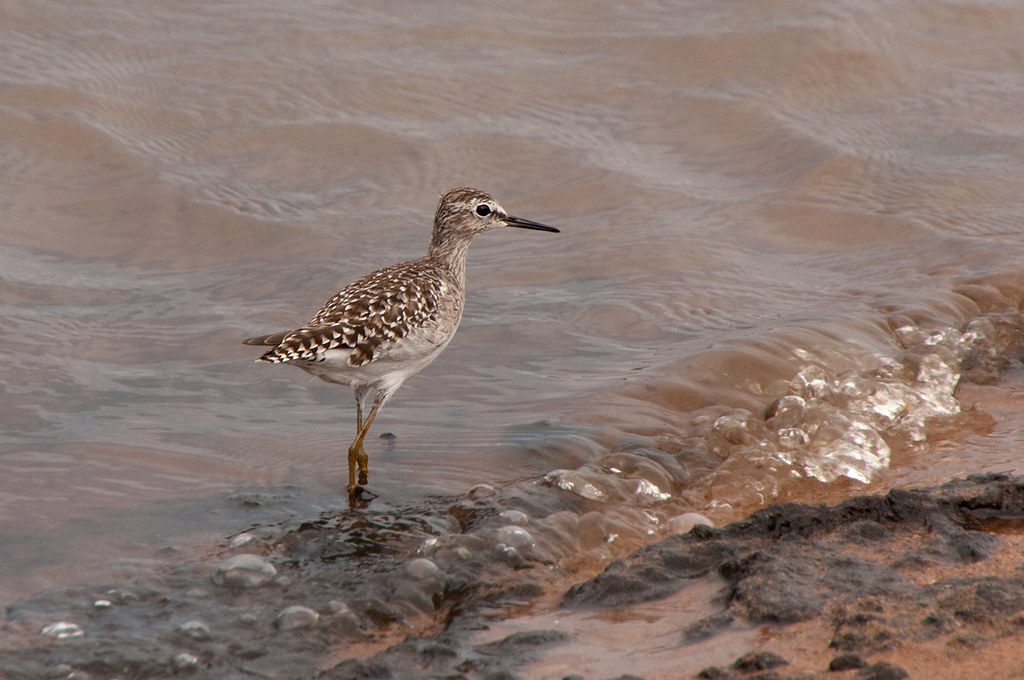
Entebbe is a town of particular charm: small, botanical, unhurried, set directly on Lake Victoria’s northern shore. The Uganda Wildlife Education Centre, the country’s most distinguished zoological facility, is a ten-minute walk from most Entebbe hotels and worth an hour’s exploration if the flight arrives early. The Entebbe Botanical Gardens, where they filmed Tarzan in 1958, are a short walk and a genuine pleasure in the late afternoon. You’re welcome; dinner that evening is a curated introduction to Ugandan cuisine: matoke, groundnut stew, fresh tilapia from the lake, and a briefing from your lead guide on the nineteen days ahead. The adventure is beginning.
Day 2: Transfer to Jinja: Source of the Nile & Sezibwa Falls
The two-hour drive east from Entebbe to Jinja crosses the Owen Falls Dam, where the White Nile begins its 6,650-kilometer journey to the Mediterranean and delivers you to Uganda’s adventure capital: a town built on the Nile’s upper reaches, surrounded by rapids and waterfalls, and internationally recognized as one of the finest white-water destinations in the world. The morning begins with a boat cruise to the Source of the Nile, the precise point at Jinja where Lake Victoria’s outflow becomes the river, a geography lesson delivered by water rather than in a classroom, with hippos and African fish eagles as your fellow passengers.
The Sezibwa Falls, encountered on the return route, are both a Buganda cultural landmark and a natural one. This waterfall system on the Sezibwa River has been the site of Buganda spiritual practice for centuries, with its rocky pools and surrounding forest managed as a cultural site and nature reserve. The Kabaka’s clan traditionally visited the falls for blessings, and the site carries a layered significance, natural, historical, and cultural, that your guide brings alive through the stories embedded in this landscape. White-water rafting on the Nile at Jinja is available as an afternoon option for those who want it: Grade 4 and 5 rapids on one of the world’s most celebrated rivers, operated by fully certified outfitters. Your accommodation tonight is a Jinja riverside lodge with views that make the post-activity sunset something to plan around.
Day 3: Ziwa Rhino Sanctuary, Tracking Uganda’s White Rhino on Foot
The drive northwest from Jinja to Ziwa Rhino Sanctuary takes approximately two hours through the green interior of central Uganda. Ziwa is the only place in Uganda where wild white rhinoceroses can be encountered; the country’s rhino population was exterminated during the Idi Amin era, and the Ziwa sanctuary, established in 2005, has been the patient reconstruction of a species in its native landscape. The rhinos at Ziwa are not zoo animals; they are wild animals in a managed sanctuary, habituated to ranger presence and encountered on foot, at close range, in the company of dedicated guides who know each individual animal by name and behavior.
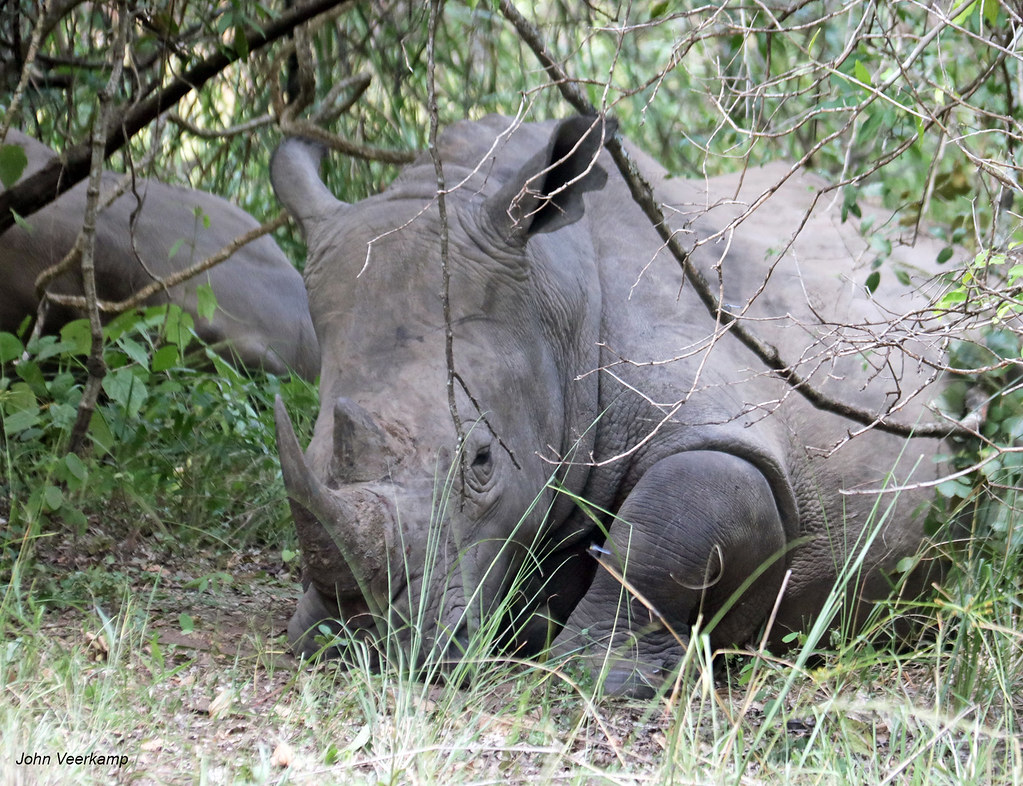
Rhino tracking on foot at Ziwa is one of Uganda’s most distinctive wildlife experiences; the combination of genuine proximity to an animal of this scale, the absence of a vehicle between you and the wildlife, and the quiet expertise of the sanctuary rangers creates an encounter of unusual intensity. The sanctuary also supports shoebill storks in its wetland margins, one of Africa’s most sought-after birds, and the afternoon marsh walk for shoebills is worth the time if schedules permit. Your lodge at Ziwa is comfortable and positioned within the sanctuary boundaries, with the particular satisfaction of knowing that the rhinos are outside in the dark.
Day 4: Murchison Falls National Park — The Nile’s Most Dramatic Moment
The three-hour drive north from Ziwa to Murchison Falls National Park, Uganda’s largest protected area at 3,840 square kilometers, crosses the Albert Nile’s western bank and enters a savanna landscape that is, in its open scale and wildlife density, the classic East African game park experience. The afternoon game drive in Murchison’s northern sector introduces the park’s extraordinary lion population, which is one of Uganda’s largest lion prides, alongside elephants, giraffes (the endangered Rothschild’s subspecies, found only in Uganda and Kenya), buffalo, oribi, and hartebeest. Your lodge for the night is positioned on the Nile’s southern bank, with hippos audible from the tent and the river visible from the bar.
Day 5: Murchison Falls National Park: Game Drive, Nile Cruise & the Falls
The full day at Murchison Falls begins at dawn, when the northern sector’s predators are most active and the light is most extraordinary: lions on the kopjes, Rothschild’s giraffes moving in slow procession through the acacia woodland, and elephant families at the river margin. The morning game drive is followed by the Nile boat cruise: a three-hour journey upstream from Paraa Ferry to the base of Murchison Falls, where the entire volume of the Nile, one of the most powerful rivers on earth, is forced through a rock cleft seven meters wide in a cataract of extraordinary force. The boat reaches the plunge pool at the falls’ base, and the experience of standing on the water directly below while the river falls forty-three meters overhead in a continuous roar is one of Uganda’s most visceral and memorable moments. The afternoon game drive on the return covers the southern sector, where hippos and crocodiles congregate at the river’s edge and the wildlife density is consistently among the highest in East Africa.
Day 6: Murchison Falls – Transfer to Kibale Forest National Park
The drive south from Murchison Falls National Park through Fort Portal to Kibale Forest National Park takes approximately four hours, following the western escarpment of the Albertine Rift through tea plantations and small-scale agriculture before the road drops into the crater lakes district around Fort Portal, a landscape of extraordinary beauty, the volcanic craters filled with dark water and surrounded by forest, the Rwenzori Mountains appearing on the western horizon as the final day’s driving begins. Kibale Forest National Park, at 795 square kilometers, is the finest chimpanzee habitat in East Africa and home to thirteen primate species, a biodiversity concentration that no comparable forest in Africa approaches. Your lodge here is set in or adjacent to the forest, and the sounds of the night, chimpanzee calls echoing through the canopy, and tree hyrax screaming from the darkness, are the best possible preparation for tomorrow morning.
Day 7: Kibale Forest: Chimpanzee Tracking & Bigodi Wetland
The chimpanzee tracking experience at Kibale begins before dawn, with a briefing at the park gate at 7:00 AM, then the entry into the forest with a Uganda Wildlife Authority ranger and your private guide. Kibale’s chimpanzee communities have been habituated over years of consistent research presence, and the experience of finding and spending one hour with a wild chimpanzee group watching their social interactions, their foraging, their play, and their remarkably human expressions and gestures, is one of Uganda’s most profound wildlife encounters. Chimpanzees share approximately 98.7% of human DNA, and the forest hour with a habituated community is the specific experience that makes that statistic felt rather than merely known.
The Bigodi Wetland Sanctuary, a community conservation area next to the park boundary, is the afternoon’s program: a guided walk through a seasonally flooded papyrus wetland that has an extraordinary concentration of birds, including the Great Blue Turaco, African pitta, papyrus gonolek, and several kingfisher species, as well as red colobus and black-and-white colobus monkeys in the surrounding canopy. The community guides at Bigodi are among the finest birding guides in western Uganda, and the walk is as instructive as it is beautiful.
Day 8: Kibale Forest – Transfer to Rwenzori Mountains National Park
The two-hour drive from Kibale to Kasese carries you westward along the base of the Rwenzori range, the mountain growing progressively larger through the vehicle window, its cloud-wrapped upper slopes and dark forest cover filling the western horizon with an increasing presence. Kasese, the gateway town to the Rwenzori, is where the safari character of the journey shifts to an expedition character. Your Rwenzori trekking guide, who has been in communication with the main safari team throughout the preceding days, meets you at the Kasese guesthouse for the pre-trek briefing: the Central Circuit Trail, the four-day hut trek to Bujuku, altitude management, equipment check, and the ecological context of the Rwenzori’s extraordinary mountain world. Everything is confirmed for tonight, so tomorrow morning begins with the guide rather than at a packing table.
Days 9–12: Rwenzori Mountains National Park (4-Day Central Circuit Trek)
The 4 days in Rwenzori Mountains National Park are the expedition’s physical and ecological centerpiece, the experience that no other element of this nineteen-day journey can replicate or substitute. The Rwenzori is categorically unlike any other mountain in Africa or the world: a range of primordial forests, ancient glaciers, and extraordinary Afro-alpine botanical communities that the Ugandan mountains have developed in complete isolation from the evolutionary pressures of the surrounding savanna. To enter this mountain is to enter a different geological era.
Day 9: Nyakalengija Gate (1,646m) to Nyabitaba Hut (2,651m)
The Nyakalengija trailhead, reached after the short drive from Kasese, is where the Rwenzori begins in earnest. Your Bakonjo porter team assembles with the efficient calm of mountain professionals whose families have served this mountain for generations; loads are organized and distributed; Uganda Wildlife Authority formalities are completed; and within minutes the forest has closed completely around the trail. The lower Mubuku River valley forest is the Rwenzori at its most tropically abundant: Podocarpus trees, colobus monkeys, and Rwenzori turacos, a sensory immersion that establishes the mountain’s extraordinary character within the first hour of walking. Nyabitaba Hut, at 2,651 meters, perched on a ridge above the river confluence, is the first night’s mountain camp: solid, weatherproof, and positioned for the first views of the central peaks on clear evenings.
Day 10: Nyabitaba Hut To John Matte Hut (3,505m)
The transition from the lower forest to the Rwenzori’s celebrated Afro-alpine moorland happens on Day 10: the Mubuku River crossing, the bamboo zone, the giant heather, and then the extraordinary open world of giant lobelias and groundsel trees that has no parallel in any other African mountain ecosystem. John Matte Hut, at 3,505 meters, named for the great Ugandan mountain guide, sits at the head of the upper Bujuku Valley with the glaciated central peaks visible above it on clear evenings. The altitude is genuinely felt by this point; meals are nutritious and served early, sleep is encouraged, and your guide’s oximeter check confirms the group’s acclimatization status.
Day 11: John Matte Hut to Bujuku Hut (3,977 m)—The Glacial Heart
The Bujuku Valley’s full character is revealed on Day 11: the Portal Peaks viewpoint, where the entire upper cirque opens in a panorama of glaciated peaks; the famous Rwenzori mud of the valley floor, negotiated on log bridges; and Bujuku Lake itself at 3,977 meters, dark and still beneath the central massif. Bujuku Hut is the highest point of the four-day itinerary and the deepest penetration into the Rwenzori’s extraordinary landscape, a position above the moorland, below the glacier, with the peaks of Speke, Baker, and Stanley filling the horizon above. The afternoon here is for rest and for the particular engagement with a wild place that altitude and remoteness together produce.

Day 12: Descend from Bujuku Hut to Nyakalengija to Kasese town
The descent from Bujuku retraces the Central Circuit’s approach in a single long day through the Portal Peaks section, past John Matte, through the bamboo and heather, and down through the montane forest to Nyakalengija. The forest re-encountered on descent has a different quality, more familiar now, seen from the perspective of someone returning from 3,977 meters rather than ascending toward it. The porter team farewell at the trailhead is the formal close of the mountain section: handshakes, gratuities, and the particular warmth of a relationship forged over four days of shared mountain terrain. The vehicle returns to Kasese for a hot shower and a proper dinner, both of which have never tasted so delicious.
Day 13: Kasese – Transfer to Queen Elizabeth National Park
The short drive from Kasese to Queen Elizabeth National Park, approximately ninety minutes on the road that skirts the park’s northern boundary, marks another complete transition in the safari’s character: from mountain expedition to classic African savanna game drive. Queen Elizabeth, at 1,978 square kilometers straddling the equator, is Uganda’s most visited national park and one of the most biologically diverse protected areas on the continent, a landscape of savanna, wetland, lake, and forest that supports ten primate species, ninety-five mammal species, and over six hundred bird species. The afternoon game drive in the Kasenyi sector introduces elephants, lions, kobs, waterbucks, warthogs, and the park’s celebrated tree-climbing lions, an Ishasha sector behavior that makes Queen Elizabeth one of only two places in Africa where lions routinely take to the branches.
Day 14: Queen Elizabeth National Park: Full Day, Kazinga Channel Cruise
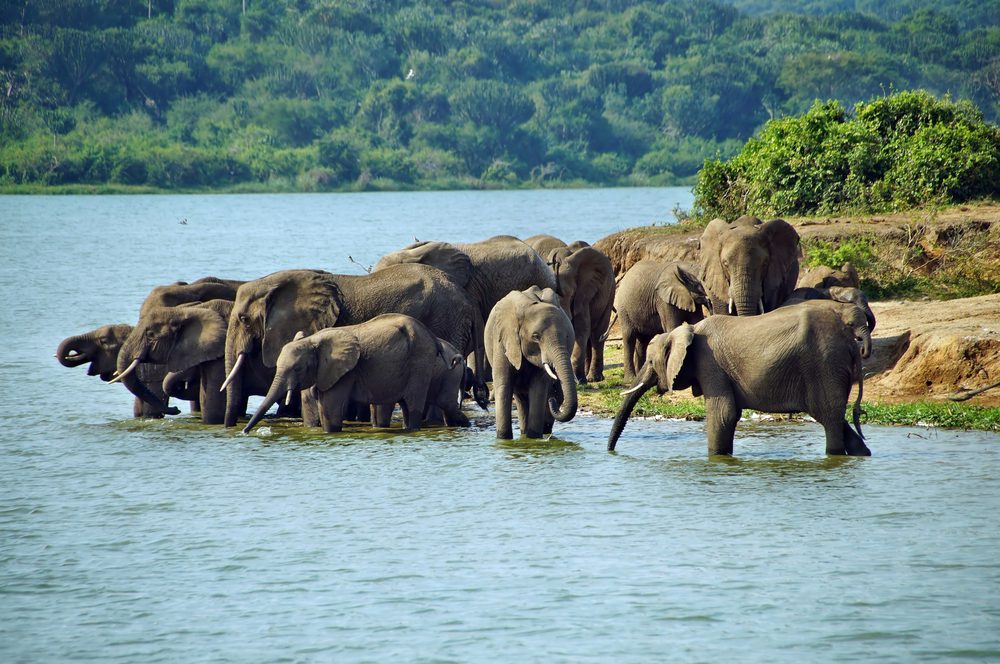
The full day at Queen Elizabeth is organized around the Kazinga Channel, the forty-kilometer waterway that connects Lake Edward and Lake George through the park’s heart and that supports the highest hippopotamus density of any river system in Africa. The morning game drive covers the northern Kasenyi plains; the afternoon Kazinga Channel boat cruise is the safari’s most wildlife-dense two hours, with hippo pods so large they obscure the bank, Nile crocodiles sunning on every sandbar, elephants drinking at the water’s edge, and a waterbird diversity that includes goliath heron, African skimmer, pied kingfisher, and multiple stork and ibis species. The Mweya Peninsula, where your lodge is positioned on a dramatic promontory between Lake Edward and the Kazinga Channel, provides the finest accommodation setting in the park, with hippos visible from the veranda at dusk.
Day 15: Ishasha Sector – Transfer to Bwindi Impenetrable National Park
The drive south from Queen Elizabeth’s Mweya Peninsula through the Ishasha sector, where the tree-climbing lions, Queen Elizabeth’s most famous phenomenon, are found resting in the branches of fig trees on the open floodplain, takes the morning before the road climbs toward Bwindi Impenetrable National Park.
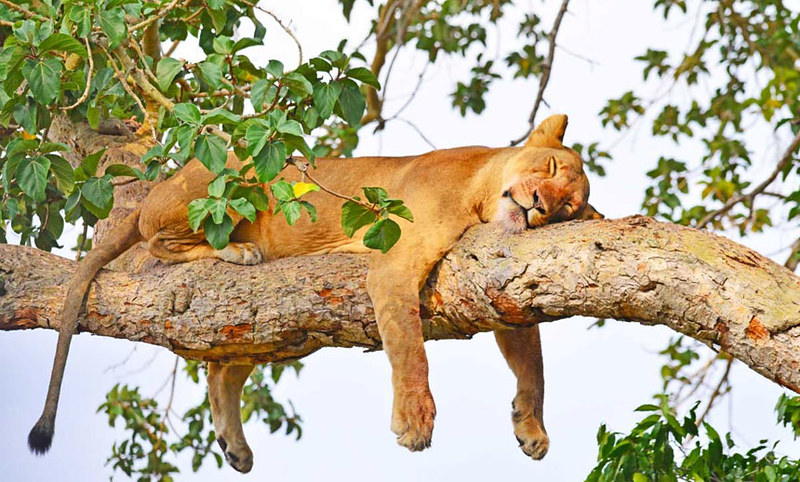
The game drive in the Ishasha sector does not guarantee you will see the tree-climbing lions, but it does guarantee the special satisfaction of searching for them in a landscape of extraordinary open savanna beauty, along with a good chance of seeing elephants, hippos, and kobs in one of the park’s least-visited and most atmospherically wild sections. Bwindi, reached by early afternoon, receives you with its particular quality of darkness and density: a forest so old and so intact that UNESCO designated it a World Heritage Site for its biodiversity alone. Your lodge here is built in or adjacent to the forest, and the mountain gorillas are somewhere in the trees above.
Day 16: Bwindi Impenetrable National Park — Mountain Gorilla Trekking
No experience in African wildlife travel prepares you for the mountain gorilla. Photographs do not prepare you. Other primates do not prepare you. For most people, spending an hour with a habituated gorilla family in the forest of Bwindi Impenetrable National Park is the most profound wildlife encounter of their lives, and those who have experienced it describe a single quality: the feeling of meeting something genuinely kin, something that sees you with a recognition that goes beyond species difference and arrives at something wordless and shared.
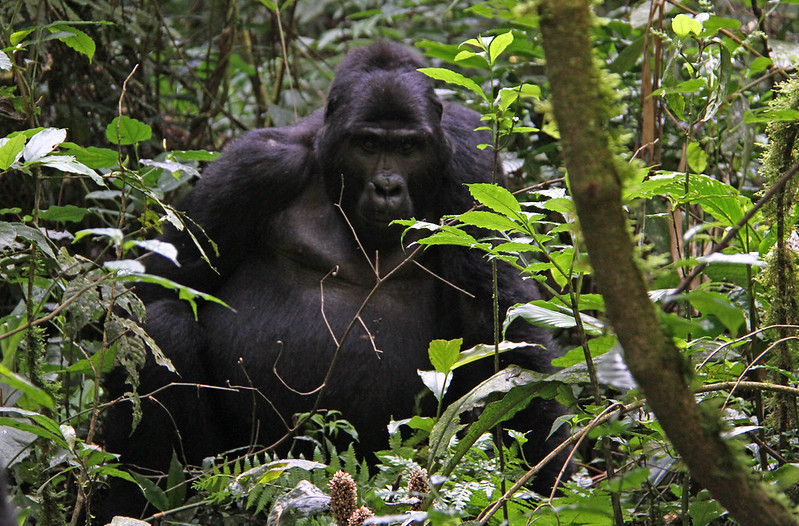
Rwenzori Trekking Expeditions confirms your gorilla family’s trekking permit in advance. The morning begins with a briefing at the park office on rules of conduct, distance protocols, and the conservation story of the gorilla population’s recovery from fewer than 250 individuals in the 1980s to over 1,000 today, before entering the forest with a Uganda Wildlife Authority ranger, a gorilla tracker, and your private guide. The trek to the gorilla family varies from thirty minutes to four hours depending on the group’s daily movement; the hour in their presence passes in a different quality of time entirely. A silverback was observed at three meters in forest shadow. Juveniles tumbling through the undergrowth. A mother nursing an infant in a nest of bent vegetation. These are the images that remain.
Day 17: Bwindi: Gorilla Trekking or Batwa Cultural Experience
A second gorilla trekking permit, available with advance booking and subject to permit availability, allows the extraordinary luxury of two gorilla tracking mornings in the same forest, with different family groups and, consequently, different experiences.
For travelers for whom one gorilla morning is the priority and cultural context is equally important, the alternative is the Batwa Trail: a guided experience with the Batwa people, the Bwindi Forest’s indigenous community, who lived as hunter-gatherers in this forest for millennia before its national park designation in 1991, exploring their forest knowledge, their traditional practices, and the contemporary reality of a community navigating a changed relationship with the forest that defined their culture. The Batwa Trail is a model of community-based conservation tourism and one of the most culturally substantive experiences available in Uganda.
Day 18: Bwindi—Transfer to Kampala Via Lake Mburo National Park
The drive from Bwindi to Kampala via Kabale and Lake Mburo is a full day’s journey through southwestern Uganda’s extraordinary landscape: the terraced hills of Kigezi, known as the Switzerland of Africa for their dramatic topography; the tea estates of Kabale; and the broad savanna of Lake Mburo National Park, Uganda‘s smallest savanna park and the only one in the country home to impala, eland, and Burchell’s zebra. A late morning game drive at Lake Mburo provides a final wildlife moment before the road northeast toward Kampala. The journey to the capital takes approximately two hours from Lake Mburo, arriving in time for a final night in a comfortable Kampala hotel before tomorrow’s departure.
Day 19: Kampala City Tour—Transfer to Entebbe Airport—Departure
The final morning in Uganda belongs to Kampala; if time before the flight permits, a curated city tour covers the Kasubi Tombs (a UNESCO World Heritage Site and the royal burial ground of the Buganda kings), the Uganda Museum, the craft markets of Nakasero, and the panoramic view from Kampala Hill. For flights departing in the afternoon or evening, the forty-five-minute drive from Kampala to Entebbe passes the lake once more, Lake Victoria, in the midday light, the equatorial sun on water that was, nineteen days ago, the first thing you saw in Uganda. Your representative accompanies you to the departure hall and ensures you complete all formalities before the expedition formally closes. The aircraft takes off heading wherever home is. Uganda stays with the person who has spent nineteen days genuinely inside it.
Why Choose the 19-Day Uganda Grand Safari?
The twenty-first century has produced a generation of travelers who are no longer satisfied by the single-experience safari: a week in one park, a single wildlife encounter repeated across similar days in similar vehicles. The 19-day Uganda gorillas, chimpanzees, wildlife, white-water rafting & Rwenzori trekking safari was designed for a different and more demanding traveler, one who wants the full ecological and cultural range of what Uganda, specifically, offers; who understands that Uganda’s wildlife is different in kind from the Maasai Mara and the Serengeti, not merely in location; and who wants the physical engagement of a mountain trek alongside the contemplative pleasure of a gorilla encounter and the classic drama of a savanna game drive.
Uganda’s combination of experiences is, in the specific configuration this itinerary provides, unique in Africa. No other country on the continent offers mountain gorillas, chimpanzees, the Nile, the Big Five, a world-class trekking mountain, and endemic bird diversity of this caliber within a two-week driving radius. The 19-day Uganda gorillas, chimpanzees, wildlife, white-water rafting, and Rwenzori trekking safari covers all of these experiences, not as a checklist but as a curated sequence that builds on itself and, by Day 19, delivers a comprehension of Uganda that most visitors spending a week in one park or a weekend on one mountain never achieve.
What Is Included in the 19-Day Uganda Grand Safari?
The 19-day Uganda gorillas, chimpanzees, wildlife, white-water rafting & Rwenzori trekking safari comes as a fully comprehensive package. Rwenzori Trekking Expeditions curates, arranges, and manages every element of the journey, from the Day 1 airport transfer to the Day 19 departure. There are no hidden permit fees, no unexpected activity charges, and no logistical gaps between you and any of the experiences this itinerary contains.
| Category | What Is Covered |
| All Transfers | Private 4WD vehicle and driver throughout; all road transfers |
| Park Entry Fees | All Uganda Wildlife Authority national park entry fees |
| Gorilla Permits | 2 gorilla trekking permits (Days 16 & 17) — confirmed in advance |
| Chimpanzee Permit | 1 chimpanzee tracking permit — Kibale Forest NP (Day 7) |
| Rhino Tracking | Ziwa Rhino Sanctuary tracking experience (Day 3) |
| Rwenzori Trek | 4-day Central Circuit Trek: UWA permits, certified guide, Bakonjo porter team |
| Nile Cruise | Murchison Falls boat cruise (Day 5) |
| Kazinga Channel Cruise | Queen Elizabeth National Park boat cruise (Day 14) |
| Bigodi Wetland Walk | Community-guided wetland walk at Kibale (Day 7) |
| Batwa Cultural Trail | Bwindi Batwa community experience (Day 17, if selected) |
| All Accommodation | 18 nights: premium lodges, safari camps & mountain huts as per itinerary |
| All Meals | Full board throughout: breakfast, lunch, dinner & hot drinks |
| Game Drives | All scheduled game drives with private guide and 4WD vehicle |
| Emergency Equipment | First aid, pulse oximeter, rescue coordination (Rwenzori section) |
| Mountain Rescue Ins. | Included for the Rwenzori trekking section |
What Is Excluded?
| Category | Notes |
| International Flights | Arrange independently via your preferred carrier to/from Entebbe |
| Uganda Visa | USD 50 on arrival or via evisa.go.ug in advance |
| Travel Insurance | Required — must include medical evacuation and cancellation cover |
| Personal Trekking Gear | Your personal equipment for the Rwenzori section (see packing list) |
| Alcoholic Beverages | Alcoholic drinks at lodges are available at cost |
| Optional Activities | White-water rafting on the Nile; second gorilla permit (if not pre-confirmed) |
| Gratuities | For guides, porters, lodge staff, voluntary; guidelines provided |
| Personal Souvenirs | Market purchases and personal shopping |
| Medical Vaccinations | Yellow fever vaccination and any personal medications |
The Rwenzori Trekking: Mountains of the Moon
The 4-day Central Circuit trail to Bujuku Hut at 3,977 meters is not a walk in a mountain park. This is a real expedition through one of Africa’s most extraordinary mountain ecosystems, including the primordial forest, the giant lobelia moorland, and the glacially carved Bujuku basin, led by certified Rwenzori specialists with years of experience on this specific trail.

For most travelers on this itinerary, the Rwenzori days are the high point of the nineteen: the combination of altitude, botanical spectacle, and genuine remoteness that the savanna days, for all their drama, cannot replicate.
The Mountain Gorillas of Bwindi, a Once-in-a-Lifetime Encounter
The mountain gorilla encounter at Bwindi Impenetrable National Park is the experience most frequently cited in post-safari feedback as the single most moving of the entire nineteen days, and it faces strong competition.
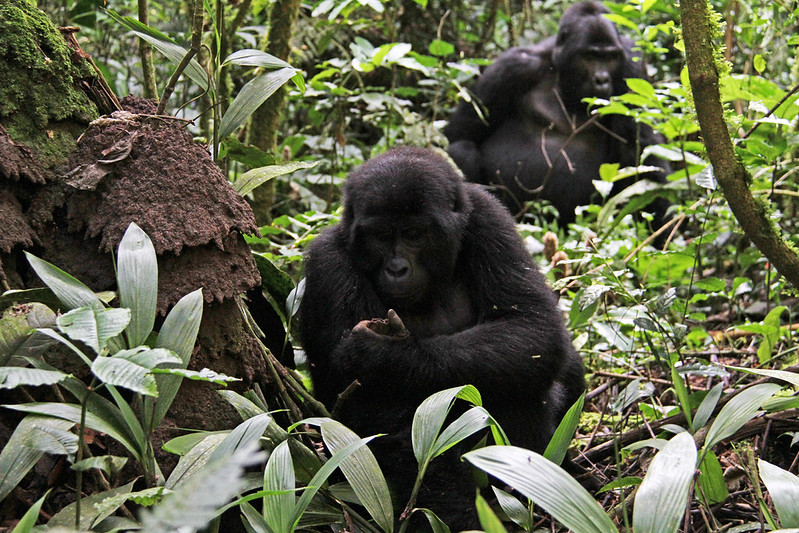
Bwindi’s habituated gorilla families, studied and protected since the 1980s, whose individual members are known by name and history to the rangers who spend their working lives with them, receive a small number of trekking visitors each day under strict protocols that prioritize the animals’ welfare. Your permit is confirmed in advance, and your ranger team is dedicated to your group alone. The hour spent in the forest with the gorilla family is not wildlife viewing; it is more like being part of an audience.
Chimpanzee Tracking in Kibale: Africa’s Primate Capital
Kibale Forest National Park contains the highest density of primates of any African forest, thirteen species in a single protected area, including the East African chimpanzee population that has been the subject of continuous scientific research since the 1970s. The chimpanzee tracking experience here is the finest available in Uganda and among the finest anywhere; the habituated communities are large, well-monitored, and encountered in forest habitats that are intimate enough for close observation without the overgrown impenetrability that makes tracking so difficult in some other chimpanzee habitats.
Murchison Falls: The Nile at Its Most Dramatic
Murchison Falls is not merely a waterfall. It is the most dramatic single point on the world’s longest river, with the entire volume of the White Nile compressed through a seven-meter rock cleft and dropped forty-three meters in a cataract of extraordinary force.
The combination of morning game drives in Uganda’s largest national park, a boat cruise to the base of the falls, and the general wildlife density of the Nile Valley ecosystem (Rothschild’s giraffe, lions, elephants, hippos, crocodiles, and shoebill storks) makes Murchison Falls the most complete single national park experience on the itinerary.
How Difficult Is the 19-Day Uganda Grand Safari?
The 19-day Uganda gorillas, chimpanzees, wildlife, white-water rafting & Rwenzori trekking safari has a range of physical demands, from genuinely challenging to entirely accessible, and understanding the differences between its elements is important for proper preparation.
The Rwenzori trekking section (Days 9–12) is the most physically demanding element of the itinerary. The four-day Central Circuit trek to Bujuku Hut at 3,977 meters requires good cardiovascular fitness, comfort with sustained uphill effort on wet and rooted terrain, and tolerance for altitude effects above 3,000 meters. Daily trekking times of five to seven hours, nights in mountain huts at altitude, and the characteristic Rwenzori mud and root terrain are all realities that require physical preparation and appropriate equipment. We recommend at least two to three months of fitness preparation specifically for this section, including loaded hill walks.
The gorilla and chimpanzee tracking (Days 7 and 16–17) involve forest trekking of variable duration, from thirty minutes to several hours, depending on the location of the primate groups on those days. The terrain is a forest path rather than a maintained trail, and comfortable walking shoes or boots are required. The physical demand is moderate to challenging on long tracking days and mild on shorter ones. The game drives (Days 4–5, 13–14) are entirely accessible—seated in a comfortable safari vehicle and require no physical fitness beyond the ability to sit comfortably for several hours. The Nile activities (Days 2–3) are moderate in demand.
Activity | Difficulty Level |
Rwenzori 4-day trek | Challenging — 5–7 hrs/day, altitude to 3,977m |
Gorilla trekking | Moderate to Challenging — variable forest terrain |
Chimpanzee tracking | Moderate — forest paths, variable duration |
Rhino tracking (foot) | Easy to Moderate—flat sanctuary terrain |
Game drives | Easy—seated in safari vehicle |
Kazinga Channel boat cruise | Easy—flat water boat |
Nile boat cruise | Easy, flat-water boat |
Bigodi Wetland Walk | Easy—flat papyrus wetland boardwalk |
White-water rafting (opt.) | Challenging — Grade 4/5 Nile rapids |