13-Day Rwenzori 6 Peaks Expedition Via Central Circuit Trail

Hike 6 Rwenzori peaks in 13 days: Gessi, Emin, Speke, Margherita (5,109 m), Baker & Weismann. A complete guided Rwenzori expedition to Africa’s Mountains of the Moon in Rwenzori Mountains National Park.

“To climb one Rwenzori peak is to witness something extraordinary. To climb six is to understand the mountain entirely.”

The 13 Days Rwenzori Expedition to Six Peaks (Gessi, Emin, Speke, Margherita (5,109 m), Baker & Weismann) is the ultimate Rwenzori hiking/trekking challenge: a thirteen-day, twelve-night wilderness trek through the full altitude range of the Mountains of the Moon, summiting six peaks across five of the Rwenzori’s six major massifs: Mount Gessi (Iolanda Peak, 4,715 m), Mount Emin (Umberto Peak, 4,798 m), Mount Speke (Vittorio Emanuele Peak, 4,890 m), Mount Stanley (Margherita Peak, 5,109 m), Mount Baker (Edward Peak, 4,843 m), and Mount Luigi di Savoia (Weismann’s Peak, 4,620 m)

Rwenzori Trekking Expeditions guides this expedition with the glacier-certified expertise, comprehensive safety management, and depth of mountain knowledge that only a specialist Rwenzori operator can deliver.

This is the Rwenzori in its entirety traversed in full, at altitude, across thirteen days of sustained and progressively demanding effort that takes you from the Nyakalengija Gate’s equatorial rainforest through the bizarre botanical world of the heather-lobelia zone up into the remote northern massifs of Emin and Gessi, where almost no other trekkers venture, back across the Bigo Bog into the central Bujuku basin, up to Speke’s summit snowfields, across the Elena Glacier to Margherita’s summit ridge, over the Freshfield Pass to Kitandara Lakes, and then up to Baker and Weismann’s in a final double-summit day before the long descent to the gate. Six peaks. One hundred and forty kilometers. Twelve nights in the Rwenzori’s mountain huts and high camps. A lifetime of earned perspective.

Quick Facts About the 13-Day Rwenzori Six Peaks Expedition

Trek Name

13 Days Rwenzori Trekking to 6 Peaks — Grand Circuit Expedition

Location

Rwenzori Mountains National Park, Western Uganda

Peaks Summited

Gessi (Iolanda, 4,715 m), Emin (Umberto, 4,798 m), Speke (Vittorio Emanuele, 4,890 m), Margherita (5,109 m), Baker (Edward, 4,843 m), Luigi di Savoia (Weismann’s, 4,620 m)

Highest Summit

Margherita Peak, 5,109 m (16,763 ft), Africa’s 3rd Highest Point

Trail

Central Circuit Trail + Kilembe / Freshfield Pass traversal

Duration

13 Days / 12 Nights

Difficulty

Extreme, serious mountaineering fitness and altitude experience required

Start Point

Nyakalengija Gate (1,646 m)

End Point

Nyakalengija Gate or Kilembe Village (circuit/traverse options)

Technical Gear

Crampons, ice axe, harness & rope for Margherita summit (Day 10)

Group Size

2 to 12 trekkers (private expeditions strongly recommended)

Best Season

June–August & December–February

Managed By

Uganda Wildlife Authority (UWA)

Operator

Rwenzori Trekking Expeditions — Licensed UWA Partner

The Six Peaks at a Glance

The 13-day Rwenzori Trek/hike 6 peaks expedition across five Rwenzori massifs is an achievement that ranks among the most significant multi-peak accomplishments available on the African continent. The table below summarizes each summit objective, its altitude, the massif it belongs to, and the day you attempt it.

Peak / Summit

Altitude

Massif

Summit Day

Umberto Peak

4,798 m

Mount Emin

Day 5

Iolanda Peak (Gessi)

4,715 m

Mount Gessi

Day 6

Vittorio Emanuele

4,890 m

Mount Speke

Day 9

Margherita Peak

5,109 m

Mount Stanley

Day 11

Edward Peak

4,843 m

Mount Baker

Day 12

Weismann’s Peak

4,620 m

Mount Luigi di Savoia

Day 12

Why Trek via the Central Circuit Trail?

The 13-day Rwenzori 6 Peaks expedition uses the Central Circuit Trail as its main route, first heading west into the remote northern massifs of Emin and Gessi, then crossing the mountains via the Freshfield Pass. The Central Circuit trail is the only route in the Rwenzori that connects all the major huts from Nyabitaba to John Matte, Bigo, Bujuku, and Elena, and it provides the logistical foundation for a safe thirteen-day, six-peak Rwenzori expedition.

The 13-day Rwenzori 6 Peaks expedition features a unique route design that loops north from John Matte to the Skull Cave and Lac de Laluna high camps for the Emin and Gessi summits, then descends to Bigo and traverses east for Speke and Margherita before crossing via Kitandara for Baker and Weismann’s, allowing trekkers to experience the Rwenzori’s full topographical variety. The remote northern massifs, which are rarely visited by any expedition group, are as different from the central Bujuku basin as the Bujuku basin is from the southern Kitandara Lakes. Thirteen days in the Rwenzori on this route means thirteen days in a mountain system that continuously surprises.

Why choose the 13-day Rwenzori 6 Peaks Expedition?

The Rwenzori Mountains have six major massifs. Most trekkers experience one. A small number, on the eight-day Margherita Peak expedition, experience two. The thirteen-day, six-peak expedition is for the serious mountaineer who wants to experience the Rwenzori in its totality: all the major altitude zones, all the major huts, the remote high camps that see perhaps a handful of expedition groups per year, and the sequence of summits that covers five of the six massifs in a single connected journey.

This journey is not an expedition for the casually committed. Thirteen days at altitude, with cumulative fatigue building from Day Three onward, with summit days requiring full effort on Days 5, 6, 9, 11, and 12, demands the kind of physical preparation and mental resilience that only genuine mountaineers bring to a mountain. But for those who bring it, the 13-day Rwenzori expedition is the Rwenzori’s ultimate offering: a complete mountain experience that very few human beings have ever had, on a mountain that Ptolemy described in the second century AD and that the world’s mountaineering community has still not fully discovered.

Rwenzori Trekking Expeditions is the specialist operator for this expedition. The remote northern camps, Skull Cave and Lac de Laluna, are not locations that generalist Uganda safari operators know how to stage safely. The Gessi and Emin summits require guide knowledge that goes beyond the standard Central Circuit route. The sequence of six summits over thirteen days requires an expedition leadership team of the highest caliber to manage altitude and the progressive fatigue it creates.


Itinerary at a Glance

Day 1:  Nyakalengija Gate (1,646 m) to Nyabitaba Hut (2,650 m)

Day 2:  Nyabitaba Hut  Via Kurt Shafer Bridge to John Matte Hut (3,380 m)

Day 3:  John Matte Hut to Skull Cave Camp (~3,900 m)

Day 4:  Skull Cave Camp to Lac de Laluna Camp (~4,200 m)

Day 5:  SUMMIT  Umberto Peak  on Mount Emin (4,798 m) – Return to Lac de Laluna

Day 6:  SUMMIT Iolanda Peak, on Mount Gessi (4,715 m)—Return to Lac de Laluna

Day 7:  Lac de Laluna to Bigo Camp (3,505 m)

Day 8:  Bigo Camp Bujuku Hut (3,962 m)

Day 9:  SUMMIT Vittorio Emanuele Peak on Mount Speke (4,890 m)—Return to Bujuku

Day 10:  Bujuku Hut — Trek to Elena Hut (4,541 m) — Glacier Briefing

Day 11:  SUMMIT 4 — Margherita Peak (5,109 m) → Descent to Kitandara Lakes Camp (4,023 m)

Day 12:  SUMMIT Edward Peak on Mt Baker (4,843 m) & Weismann’s Peak (4,620 m)—trek to Guyeoman Camp (3,505 m)

Day 13:  Guyeoman Camp – Trek to Nyabitaba Hut to Nyakalengija Gate to Kasese / Kampala

Altitude Profile: 13 Days Across the Rwenzori

The altitude progression across the thirteen-day expedition is the most complex of any Rwenzori itinerary, involving deep penetration into the remote northern massifs during the first week and a sustained high-altitude sequence of five summit days on Days 5, 6, 9, 11, and 12. The acclimatization profile is necessarily aggressive, and the expedition’s design relies on the accumulated altitude adaptation of Days 18 to prepare the body for the demanding summit sequence.

Day

Route / Summit

Altitude

Dist.

Duration

1

Nyakalengija Gate → Nyabitaba Hut

1,646 m → 2,650 m

~9 km

5–6 hrs

2

Nyabitaba Hut → John Matte Hut

2,650 m → 3,380 m

~9 km

6–7 hrs

3

John Matte Hut → Skull Cave Camp

3,380 m → ~3,900 m

~8 km

6–7 hrs

4

Skull Cave → Lac de Laluna Camp

~3,900 m → 4,200 m

~8 km

7–8 hrs

5

Summit Emin (Umberto Peak 4,798 m) → Lac de Laluna

4,200 m → 4,798 m

~10 km RT

8–9 hrs

6

Lac de Laluna → Summit Gessi (Iolanda 4,715 m) → Lac

4,200 m → 4,715 m

~8 km RT

7–8 hrs

7

Lac de Laluna → Bigo Camp

4,200 m → 3,505 m

~9 km

6–7 hrs

8

Bigo Camp → Bujuku Camp

3,505 m → 3,962 m

~6 km

4–5 hrs

9

Bujuku → Summit Speke (Vittorio Emanuele, 4,890 m) → Bujuku

3,962 m → 4,890 m

~10 km RT

8–9 hrs

10

Bujuku Camp → Elena Hut

3,962 m → 4,541 m

~7 km

5–6 hrs

11

Elena Hut → Margherita Peak (5,109 m) → Kitandara Lakes

4,541 m → 5,109 m

~14 km

10–12 hrs

12

Kitandara → Summit Baker (Edward, 4,843 m) → Summit Weismann’s (4,620 m) → Guyeoman

4,023 m → 4,843 m → 4,620 m

~16 km

10–11 hrs

13

Guyeoman Camp → Nyabitaba Hut → Nyakalengija Gate

3,505 m → 1,646 m

~18 km

7–8 hrs


Detailed 13-Day Rwenzori 6 Peaks Expedition Itinerary

Written by guides who have led this expedition in full. Every detail that follows has been earned, not imagined.

Day 1: Nyakalengija Gate (1,646 m) to Nyabitaba Hut (2,650 m)

The 13-day Rwenzori 6 Peaks Expedition begins as every Rwenzori journey does, at Nyakalengija Gate, where the Uganda Wildlife Authority permit is registered and the forest receives you with immediate, absolute authority. The nine-kilometer ascent through primary montane rainforest is the same opening chapter shared with shorter expeditions, but the knowledge that thirteen days lie ahead of it gives the forest a different quality of attention. Your certified lead guide, the specialist selected by Rwenzori Trekking Expeditions for a six-peak expedition of this complexity, sets the first day’s pace with the measured calm of someone who has managed accumulated fatigue across 13-day Rwenzori 6 Peaks Expeditions before and knows exactly what Day One requires.
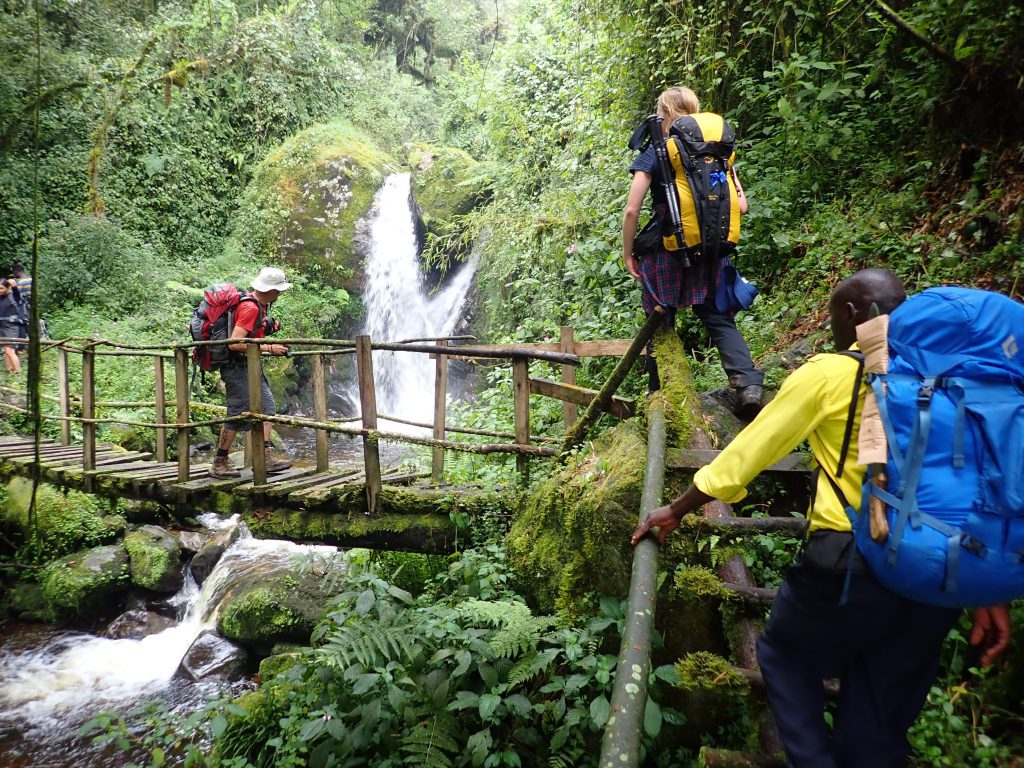
Rwenzori Central Circuit tail trail

The Mubuku River bridge crossing. The colobus monkeys in the upper canopy. The heather ridge at Nyabitaba appears above the tree line as the afternoon light changes. The first hut, the first mountain dinner, the first night at altitude. The expedition has begun.

Accommodation – Night 1

Nyabitaba Hut (2,650 m) — The Grand Expedition’s first overnight, familiar from shorter itineraries but carrying a different weight when thirteen days stretch above it.

Day 2: Nyabitaba Hut (2,650 m) → John Matte Hut (3,380 m)

Crossing the Kurt Shafer Bridge and climbing through the heather-lobelia transition zone reveal the Rwenzori’s rich plant life: giant groundsels on the ridgelines, giant lobelias standing sentinel along the trail, peat bogs crossed via wooden boardwalks, and lichen-draped heather trees ten meters overhead. John Matte Hut arrives after six to seven hours, its name a tribute to one of the Rwenzori’s greatest local guides. This is the last familiar landmark before the expedition turns north toward the remote massifs, a direction that most Rwenzori trekkers never take.

Best Attractions in Rwenzori Mountains National Park

Accommodation — Night 2

John Matte Hut (3,380 m)—The last hut on the standard Central Circuit before the expedition branches north toward the Emin and Gessi massifs.

Day 3: John Matte Hut (3,380 m) – Skull Cave Camp (~3,900 m)

Day Three takes the expedition off the established Central Circuit Trail and into territory that almost no other Rwenzori trekking group enters. The trail north from John Matte climbs through upper heather and moorland into the remote interior of the Rwenzori’s northern sector, the Emin and Gessi massifs, which are rarely visited by any expedition groups and still have a quality of absolute wilderness that even the quiet Central Circuit cannot match. The terrain is challenging: boggy, root-crossed, without the boardwalk infrastructure of the more-trafficked central sections, requiring the guide’s route-reading expertise at every juncture.

Skull Cave Camp is a natural rock shelter at approximately 3,900 meters, one of the high-altitude bivouac points on the northern traverse, used by the handful of expeditions per year that enter this part of the mountain. Tents are pitched here; the rock shelter provides wind protection and a sense of geological shelter that purpose-built huts rarely replicate. The evening at Skull Cave is one of the most atmospherically remote of the entire thirteen days; the nearest other expedition group is potentially an entire mountain sector away, and the silence of the northern Rwenzori interior is absolute.

Accommodation Night 3

Skull Cave Camp (~3,900 m), a tented camp in a natural rock shelter in the remote northern Rwenzori interior. One of the most isolated overnight positions in the entire mountain system.

Day 4: Skull Cave Camp to Lac de Laluna Camp (~4,200 m)

The ascent from Skull Cave to Lac de Laluna Camp climbs steeply through the upper moorland and Afro-alpine zone of the northern Rwenzori, gaining approximately 300 meters of altitude across eight kilometers of demanding terrain. The landscape at this altitude is the Rwenzori at its most extreme and its most botanically pure: giant groundsels of enormous age, moorland bog sections that test every waterproofing system, and the occasional clearing that reveals, to the west, the homesteads of the Congolese highlands far below the mountain’s western escarpment.

Lac de Laluna Camp sits at approximately 4,200 meters in the northern cirque basin, a high camp with lake views and the upper ridgelines of both Mount Emin and Mount Gessi visible from the camp clearing. This location will be the base camp for two summit days and one rest day, making it one of the most important positions of the thirteen-day expedition. Your Rwenzori Trekking Expeditions porter and chef team accomplishes the setup of a functioning high camp here, including tents, a cook facility, and water access, which is a logistical achievement that reflects the efficiency of teams who have done it many times in demanding conditions.

Accommodation — Nights 4, 5 & 6

Lac de Laluna Camp (~4,200 m), a high tented camp in the remote northern Rwenzori cirque, serves as a base for the Emin and Gessi summit days. Three nights at this position.

Day 5: Summit Umberto Peak on  Mount Emin (4,798 m)

The first summit day of the six-peak expedition targets Umberto Peak on Mount Emin at 4,798 meters, one of the most remote and least-visited summits in the entire Rwenzori system. The approach from Lac de Laluna climbs through the upper moorland and boulder zone of the northern cirque, gaining approximately 600 meters of altitude to the bare rock summit. The terrain above 4,500 meters on the Emin approach is characteristically ancient Rwenzori weathered gneiss, stripped of vegetation by altitude, and the rock surface carries the particular texture of a mountain that has been here since before the uplift that created the Rift Valley.

The summit of Umberto Peak at 4,798 meters rewards the effort with a panorama that includes the entire northern Rwenzori interior, the Gessi massif immediately adjacent, the central peaks of Speke, Stanley, and Baker visible in the distance, and the Congo Basin stretching westward from the mountain’s base in a green infinity. This view is available to perhaps a few hundred people per year worldwide, and the silence accompanying it, with no other expedition in sight and the northern Rwenzori entirely private, imparts to it a quality that the more-trafficked southern summits cannot replicate. The return to Lac de Laluna is a day of earned satisfaction, and you receive the dinner your chef has waiting accordingly.

Summit 1 Achieved

Umberto Peak, Mount Emin — 4,798 m. It is remote, rarely climbed, and offers the most private summit panorama in the Rwenzori. One of six.

Day 6: Summit Iolanda Peak on  Mount Gessi (4,715 m)

The second summit day takes the expedition to Iolanda Peak on Mount Gessi, at 4,715 meters, the adjacent massif to Emin, which is also rarely visited. The Gessi approach from Lac de Laluna follows a different ridge line from the Emin route, crossing the cirque basin and ascending the southern face of the Gessi massif through a terrain combination of moorland, boulder field, and the particular Rwenzori rock scramble that characterizes all the northern summit approaches.

Climbing two summits in two days at over 4,700 meters creates a cumulative altitude demand that the body begins to feel by the afternoon of Day Six, due to the combination of altitude fatigue, summit-day effort, and the accumulated exertion of six days in the Rwenzori Mountains. Your guide monitors the situation carefully and manages the Day Six pace from first light to ensure the reserves required for the expedition’s second half remain available. The summit of Mount Gessi, like that of Emin, offers a panorama of the northern Rwenzori interior that almost no other trekkers share. By the time the expedition returns to Lac de Laluna Camp on Day 6 evening, it has achieved two summits above 4,700 meters in the most remote sector of the mountain system, laying a foundation for the more technically demanding summits that lie ahead.

Summit 2 Achieved

Iolanda Peak, Mount Gessi—4,715 m. This is the second of six, located in the remote northern Rwenzori interior. Two summits are complete; four remain.

Day 7: Lac de Laluna Camp to Bigo Camp (3,505 m)

Day Seven of the 13-day Rwenzori 6 Peaks Expedition is a descent and traverse day, with the expedition leaving the remote northern massifs behind and descending back toward the central Rwenzori infrastructure. The trail from Lac de Laluna drops through the moorland and heather zones, crossing the complex boggy terrain of the upper Bigo area, the Bigo Bog, one of the most extensive and most characteristically Rwenzori landscape features on the entire Central Circuit. The descent is welcome after two summit days, and the lower altitude of Bigo Camp at 3,505 meters allows some physical recovery before the next summit sequence begins.

Accommodation — Night 7

Bigo Camp (3,505 m) — A Central Circuit hut on the Bigo Bog plateau, with views of Mount Baker, Mount Stanley, and Mount Speke in clear conditions. A well-earned mid-expedition rest point.

Day 8: Bigo Camp (3,505 m) To  Bujuku Hut (3,962 m)

The shorter walking day from Bigo Camp to Bujuku Hut, four to five hours and six kilometers, is deliberately positioned in the itinerary as a partial rest day before the Speke summit attempt. The trail crosses the Bigo Bog and climbs to the Bujuku basin, where Lake Bujuku appears below the hut in its characteristic turquoise stillness at 3,962 meters. The Bujuku Hut ridge commands views of Mount Baker, Mount Speke, and the Stanley massif simultaneously, the three central Rwenzori peaks visible together for the first time on the expedition, their summit routes becoming specific and real in a way that the map and the briefing have not yet achieved. An afternoon acclimatization walk above the hut allows the body to adapt to 3,962 meters before the Speke summit push on Day Nine.

Accommodation — Night 8

Bujuku Hut (3,962 m), the central plateau hut above Lake Bujuku, has three-peak views and the finest position for observing the relationship between the Rwenzori’s central massifs.

Day 9: Summit 3 — Vittorio Emanuele Peak, Mount Speke (4,890 m)

Mount Speke is the Rwenzori’s second-highest massif, and Vittorio Emanuele Peak, at 4,890 meters, is its highest point, a summit that involves a sustained rock scramble from the Bujuku basin to the snowline and then a final push to the summit ridge. The approach from Bujuku Hut is long and altitude-demanding, gaining nearly 1,000 meters in the day’s ascent and delivering a summit panorama that, at 4,890 meters, is among the most expansive in the entire mountain system.
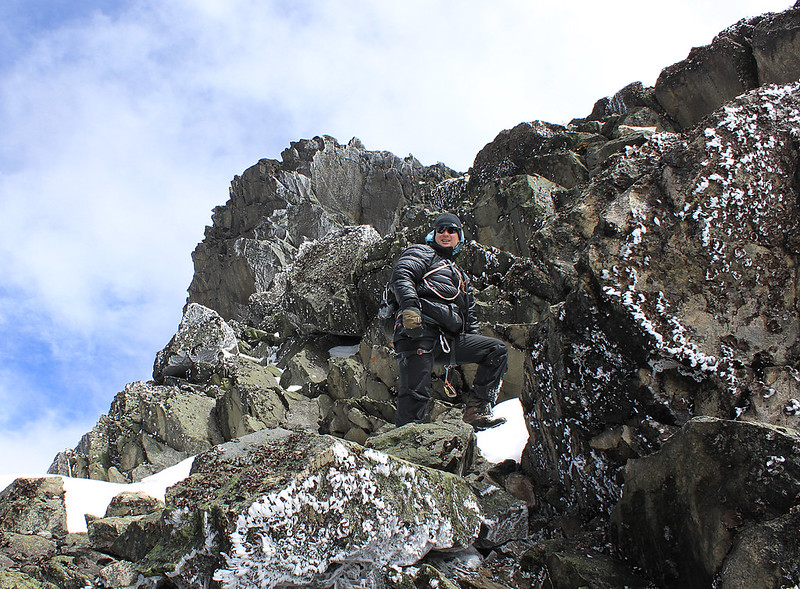
Mount Speke Of Rwenzori Mountains

The Speke summit at this altitude brings the expedition to within 219 meters of Margherita, visible now as an immediate objective rather than a distant aspiration. The view from Vittorio Emanuele encompasses both the Margherita Glacier and the Stanley Plateau above it; the Gessi and Emin massifs to the north, where the expedition spent its first summit days; and the Kitandara Lakes basin to the southwest, where it will spend its final summit sequence. Three summits have been achieved. Three remain.

Summit 3 Achieved

Vittorio Emanuele Peak, Mount Speke4,890 m. Africa’s second-highest Rwenzori summit was achieved. The Stanley Plateau and Margherita are now visible and close.

Day 10: Bujuku Hut (3,962 m) Elena Hut (4,541 m) to Glacier Briefing

Day Ten moves the expedition from the Bujuku basin to Elena Hut at 4,541 meters beside the Elena Glacier, the technical staging point for Margherita Peak. The ascent from Bujuku gains approximately 580 meters over seven kilometers, passing through the upper boulder field above the lake basin and arriving at Elena Hut, where the glacier wall fills the upper horizon. At this point in the thirteen-day expedition, ten days in, three summits achieved, the body carrying the accumulated altitude of nine previous days, the Elena Glacier and the Margherita summit pyramid above it carry a particular quality of proximity.
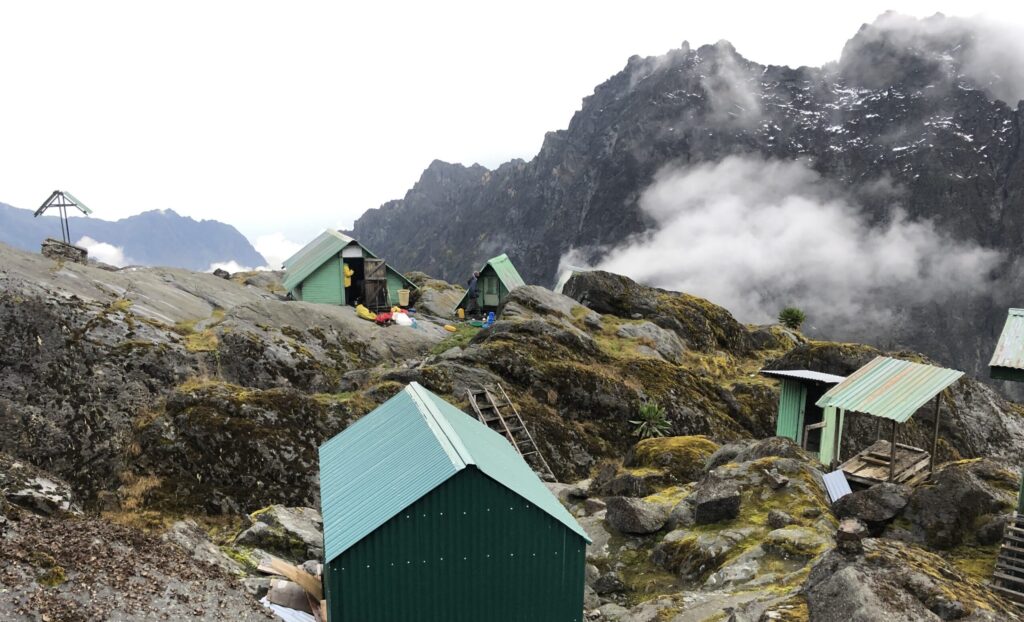
Elena hut on a 7 day Rwenzori trek to Margherita peak via central circuit trail

The evening at Elena Hut focuses on preparation. Your glacier-certified lead guide conducts the full Margherita technical briefing, crampon fitting, harness check, rope technique on ice, and summit route description across the Stanley Plateau and up the final rock scramble. This briefing is more focused at this stage of the expedition than on a standalone Margherita attempt, because the trekkers receiving it have already stood on three summits and carry both the confidence and the fatigue of that accumulation. The alarm is set for 2 a.m. The glacier is very close outside the hut. Sleep, if the altitude and the anticipation allow it.

Accommodation — Night 10

Elena Hut (4,541 m), the highest hut in the Rwenzori, is beside the Elena Glacier. The summit of Margherita Peak is visible above on clear evenings. Tomorrow: Africa’s third-highest summit.

Day 11: Summit Margherita Peak (5,109 m)—Descend to Kitandara Lakes Camp (4,023 m)

Summit day on Margherita. The alarm sounds at two in the morning, and the darkness outside Elena Hut is total and cold. Crampons fitted by headtorch. Harnesses checked. The glacier-certified lead guide moves to the front, and the Elena Glacier receives the expedition. The crossing demands absolute focus; fixed ropes assist on the steeper ice sections, and the guide’s commands are calm and clear across the wind from the Stanley Plateau above. At this stage of the expedition, the trekkers on the glacier have already summited three peaks across eleven days. The body knows altitude now. The mind is experienced in what summits require. The crossing proceeds with the deliberate efficiency of people who have already proven to themselves what they are capable of.

The Stanley Plateau opens above the glacier, the last equatorial ice field in Africa, vast and silent and impossibly ancient. The final rock scramble to Margherita’s summit ridge delivers the fourth summit: 5,109 meters, Africa’s third highest point, the highest summit of the Rwenzori, and the culmination of the expedition’s most technical day. The Congo Basin to the west. The Uganda Rift Valley to the east. The summits of Speke, Baker, and the northern massifs are visible in every direction. Most trekkers who have reached Margherita on a standalone expedition describe this moment as the defining experience of their mountain careers. Trekkers who reach it on Day Eleven of a six-peak expedition, having already stood on Emin, Gessi, and Speke, experience it differently, with the accumulated weight of eleven days and three prior summits behind them and two more summit days still ahead.
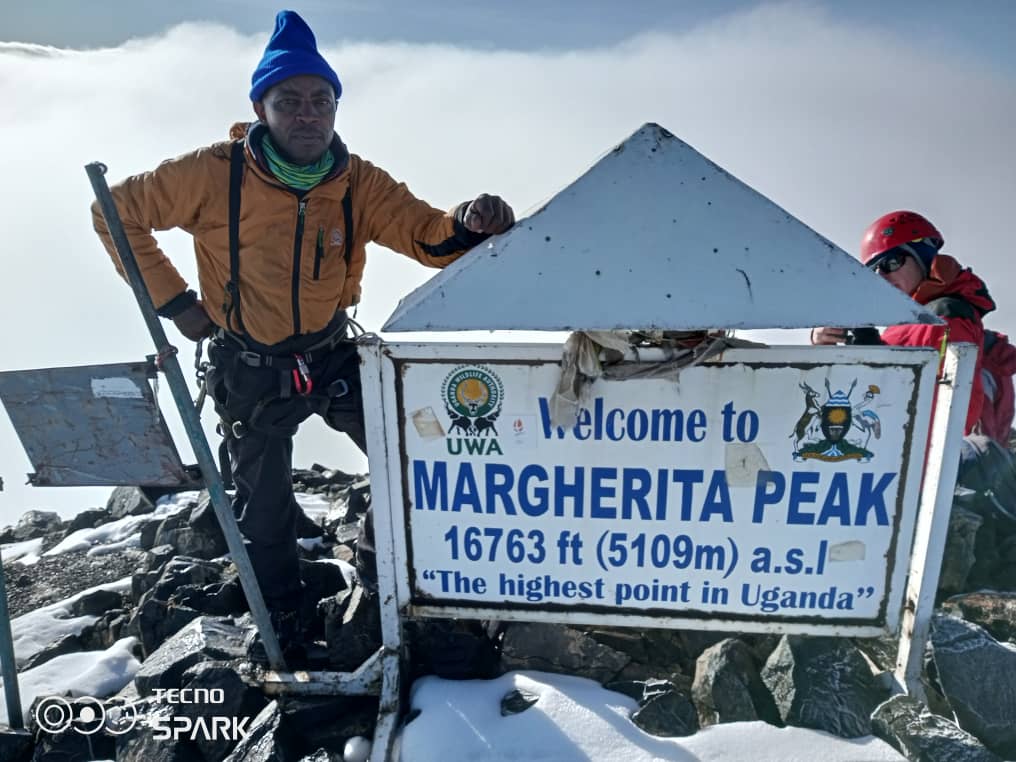
6 days Rwenzori trek to Margherita Peak

The descent from Margherita is long: back across the Elena Glacier, down through the Kitandara Pass, all the way to Kitandara Lakes Camp at 4,023 meters, a descent of over 1,000 meters from the summit in a single afternoon, on legs that have already done both the glacier and the summit. The lakes are dark and still in the late afternoon light when the expedition arrives. The camp is set up by the porter team. The chef has dinner ready. Summit Four is in the body of the report.

Summit 4 Achieved

Margherita Peak, Mount Stanley — 5,109 m. Africa’s third-highest summit. The expedition’s technical centerpiece. Four peaks complete; two remain for tomorrow.

Accommodation — Night 11

Kitandara Lakes Camp (4,023 m) — Twin glacial lakes in a cirque basin between Mounts Stanley and Baker. The most atmospherically beautiful camp on the expedition, reached at the end of the hardest day.

Day 12: Summit To Edward Peak on Mount Baker (4,843 m) & Weismann’s Peak (4,620 m), descend to Guyeoman Camp (3,505 m)

Day twelve is the expedition’s most ambitious single day, a double summit push that targets both Edward Peak on Mount Baker (4,843 m) and Weismann’s Peak on Mount Luigi di Savoia (4,620 m) before descending to Guyeoman Camp. It is also, inevitably, the most demanding day of the final sequence: the body is carrying twelve days of cumulative mountain effort, four summits of accumulated altitude, and the post-Margherita fatigue of the previous day’s glacier crossing and long descent. What carries trekkers through Day Twelve is precisely what the preceding eleven days have built: the physical adaptation to altitude, the mental resilience developed across multiple summit days, and the knowledge that five summits are already achieved and the sixth is within reach.

Rwenzori Mount Baker Trekking

Edward Peak on Mount Baker is approached from the Kitandara Lakes camp via the Freshfield Pass, a high mountain col that connects the Kitandara basin to the Baker massif’s southern approach. The summit at 4,843 meters is a sustained rock scramble with outstanding views of the Kitandara Lakes below and the now-familiar Margherita Glacier on the Stanley massif above. The fifth summit. Then the route descends slightly to approach Weismann’s Peak on Mount Luigi di Savoia, a separate massif, requiring a traverse of the ridge system between Baker and Luigi di Savoia before the final ascent to the 4,620-meter summit. Weismann’s Peak in the afternoon, with five summits already in the legs and the Kitandara Lakes visible far below, is reached with the quiet, complete satisfaction of someone who has spent twelve days earning exactly this moment.

The descent from Weismann’s Peak to Guyeoman Camp is long, and the legs feel every meter of it. The camp arrives in the late afternoon as the light softens over the southern Rwenzori. Six summits. Twelve days on the mountain. One more day to the gate.

Summits 5 & 6 Achieved

Edward Peak, Mount Baker — 4,843 m. Weismann’s Peak, Mount Luigi di Savoia — 4,620 m. Six peaks across five massifs. The Grand Expedition is complete.

Accommodation — Night 12

Guyeoman Camp (3,505 m) — The final mountain night. Six summits achieved. The gate is one day’s descent away.

Day 13: Guyeoman Camp (3,505 m) – Descend to Nyabitaba Hut, down to  Nyakalengija Gate, Kasese / Kampala

The final day descends the full southern approach from Guyeoman Camp through the heather zone, past the Bujongolo Rock Shelter that served the Duke of Abruzzi’s 1906 expedition, through the moss-covered boulder zone, across the Kichuchu Bridge, and through the lower montane forest to Nyakalengija Gate. It is a long day, seven to eight hours of continuous descent, and the body that walks it has changed fundamentally from the one that entered the gate thirteen days ago. The forest is familiar now, read with the confidence of someone who has spent two weeks in the mountain that rises above it.

The gate. The UWA exit register. Your lead guide presented the summit certificate for six peaks across thirteen days in the Mountains of the Moon, showing the particular satisfaction of someone who has led an expedition of this complexity to its full completion. The porter and guide team gathers for a farewell that thirteen shared days in the Rwenzori have given extraordinary weight. Your private vehicle waits on the red dirt road. The drive to Kasese or Kampala begins. The Mountains of the Moon recede in the rearview mirror, diminishing slowly, as mountains that have taken thirteen days to be inside take their time releasing those who have been through them.

Logistics — Day 13

Drive from Nyakalengija Gate to Kasese: ~30 mins. To Kampala: ~5–6 hours. All onward connections to Entebbe Airport, Bwindi, Kibale, and Queen Elizabeth NP can be coordinated by Rwenzori Trekking Expeditions as part of a broader Uganda itinerary.

How Difficult Is the 13-Day Rwenzori Six Peaks Expedition?

The thirteen-day six-peaks expedition is the most demanding trekking itinerary in the Rwenzori Mountains National Park portfolio and one of the most physically demanding multi-peak expeditions in all of East Africa. It is rated extreme, not strenuous, not very strenuous, but extreme, and this rating reflects a specific combination of factors that distinguish it from shorter Rwenzori expeditions.

The cumulative fatigue factor is the primary differentiator. Summit days on any Rwenzori expedition are demanding in isolation. On the thirteen-day itinerary, five summit days are distributed across the second, third, fourth, and final days of the expedition, with the Margherita glacier crossing on Day Eleven and the double Baker-Weismann summit on Day Twelve occurring at the point of maximum accumulated physical depletion. Trekkers who are strong on Day One and have declined to pace themselves carefully across Days Two through Nine will struggle significantly on the expedition’s technical half.

The remote northern camps, Skull Cave and Lac de Laluna, add a logistical complexity and a terrain challenge that is entirely absent from standard Rwenzori itineraries. The trails north of John Matté are less maintained, less clearly marked, and require guide expertise that goes beyond the standard Central Circuit knowledge. The altitude demands of maintaining a base camp at 4,200 meters for three nights while making two summit pushes to above 4,700 meters represent a sustained high-altitude exposure that requires genuine acclimatization capacity.

Trekkers who complete this expedition should have prior experience of multi-day trekking at altitudes above 4,500 meters, ideally including at least one glacier crossing or technical high-altitude summit. A minimum of four months of targeted physical preparation is required, including sustained cardiovascular training, leg-strength work, and practice treks at altitude where accessible. Rwenzori Trekking Expeditions provides a comprehensive expedition training program to all confirmed bookings.

Difficulty Rating

Extreme | 13 days | 6 summits | Max altitude 5,109 m (Margherita Peak). Prior high-altitude experience above 4,500 m essential. A glacier-certified guide was provided for Margherita. Crampons and ice equipment provided. This is not recommended as a first high-altitude experience. Private expedition format strongly recommended.

What is included in the 13-day, six Rwenzori 6 Peaks expedition?

Included

  • Uganda Wildlife Authority park entrance fees and Rwenzori Mountains National Park trekking permits for the full 13 days and 12 nights.
  • A dedicated glacier-certified lead guide with specialist expertise in the northern Rwenzori massifs (Emin and Gessi approach routes) and Margherita Peak summit certification.
  • Secondary certified guide for the six-day northern section and summit sequence support.
  • Full porter team with one personal porter per trekker plus expedition cargo porters for high camp equipment.
  • A dedicated mountain chef providing breakfast, packed trail lunch, dinner, and hot drinks across all thirteen days with fresh ingredients provisioned from Kasese.
  • Accommodation in mountain huts is provided at Nyabitaba, John Matte, Bigo, Bujuku, and Elena Huts, while tented camp accommodation is available at Skull Cave, Lac de Laluna, Kitandara Lakes, and Guyeoman Camp; all necessary camp equipment is included.
  • Technical summit equipment for Margherita Day: crampons, ice axe, rope, harness, and helmet, fitted and briefed at Elena Hut.
  • Ground transportation from Kampala, Entebbe, or Kasese to Nyakalengija Gate and return in private 4WD vehicles.
  • Pre-expedition briefing, fitness assessment, and full equipment audit.
  • Rwenzori Trekking Expeditions’ six-peak Grand Expedition certificate.
  • Satellite communication equipment, emergency first-aid kits, and full evacuation response protocols were maintained throughout.
  • All government taxes, UWA fees, and levies.

Not Included

  • International flights to and from Uganda. Uganda visa fees (approximately USD 50 per entry).
  • Comprehensive travel insurance with emergency medical and evacuation coverage: mandatory, verified before expedition departure.
  • Pre- and post-expedition hotel accommodation, available on request. Personal trekking equipment (boots, clothing, sleeping bag, poles) is available for hire on request.
  • Alcoholic beverages.
  • Tips and gratuities for the guide and porter team are customary and warmly appreciated; detailed guidance is provided on request.
CTA Banner Widget — Rwenzori Trekking Expeditions

Experience Rwenzori Beyond Expectations

Spots Filling Fast — Schedule Your Trek Today

How Safe Is the 13-Day Rwenzori Six Peaks Expedition?

Safety management on the 13-day Rwenzori six-peak expedition operates at the highest level Rwenzori Trekking Expeditions maintains across its full portfolio, and that level is significantly more comprehensive than on shorter itineraries because the duration, altitude, and cumulative fatigue profile of this expedition create a more complex risk environment.

Every trekker on the 13-day Rwenzori 6 Peaks expedition receives a pre-booking fitness and experience assessment by Rwenzori Trekking Expeditions‘ lead guides, not as a formality, but as a genuine evaluation that determines whether the trekker is appropriately prepared for an expedition of this length and altitude profile. Trekkers who do not meet the assessment criteria are offered alternative itineraries rather than allowed to book an expedition that exceeds their current capability. This policy is non-negotiable and has been the foundation of the expedition’s safety record.

The glacier-certified lead guide who manages the Margherita summit day carries the same emergency protocols and technical equipment as on a standalone Margherita expedition. The additional complexity of the northern massif days, Days 3 through 6, is managed by guide team members with specific Emin and Mount Gessi approach expertise. Satellite communication equipment is maintained throughout all thirteen days. Emergency evacuation plans are filed with Uganda Wildlife Authority before departure and updated at each major waypoint. Comprehensive travel insurance with emergency medical and evacuation coverage is mandatory and verified before the expedition begins.

Best Time for the 13-Day Rwenzori Six Peaks Expedition

The 13-Day Rwenzori Six Peaks Expedition’s five summit days make it more weather-dependent than any other Rwenzori itinerary, and the selection of the travel window is correspondingly more consequential. The summit sequence, particularly the Margherita Glacier crossing on Day Eleven to Margherita Peak and the double summit on Day Twelve to Edward’s & Weismann’s peaks, requires reliable weather windows that the Rwenzori’s shoulder rainy seasons cannot consistently provide.

June to August is Peak Season

The best time for the 13-day Rwenzori 6 Peaks expedition is June to August. The long dry season provides the most reliable summit weather across all six peak days, the most manageable conditions in the remote northern camps, and the best trail conditions on the northern massif approach routes between John Matte and Lac de Laluna. Advance booking for departures during the June to August peak season is essential; this expedition format requires significant advance planning and operates with limited annual departures.

December to February Secondary Season

A strong secondary window with comparable summit conditions to peak season. January departures are particularly favored for the quality of early morning light on the Elena Glacier and the Kitandara Lakes. December and January bookings should be secured at least six months in advance.

Shoulder Seasons

The thirteen-day six-peak expedition is not offered by Rwenzori Trekking Expeditions during the March-May and September-November rainy seasons. The summit weather reliability needed for five summit days over thirteen days cannot be assured during these periods, and the remote northern camps add logistical exposure that wet-season conditions make significantly more demanding. All 13-day Rwenzori 6 Peaks expedition departures are scheduled within the two dry-season windows.

How to Get to the Rwenzori Mountains

The thirteen-day expedition begins at Nyakalengija Gate, 15 kilometers north of Kasese town in western Uganda. Rwenzori Trekking Expeditions provides ground transportation from Kampala or Entebbe, taking approximately five to six hours by private 4WD vehicle, as part of the complete expedition package.

Domestic flights from Entebbe to Kasese Airport reduce the overland journey to approximately 45 minutes of flying time and are strongly recommended for trekkers on tight pre-expedition schedules.

Most trekkers arriving for the 13-day Rwenzori 6 Peaks expedition spend one to two nights in Kasese or near Nyakalengija before departure, allowing for final kit checks, guide team introductions, and the mental transition from normal life to mountain expedition. Rwenzori Trekking Expeditions arranges pre-expedition accommodation on request. Kasese is approximately two hours by road from Bwindi Impenetrable Forest and one hour from Kibale National Park, making post-expedition gorilla or chimpanzee trekking a natural and rewarding extension of a western Uganda visit.

CTA Banner Widget — Rwenzori Trekking Expeditions

Experience Rwenzori Beyond Expectations

Spots Filling Fast — Schedule Your Trek Today

What Should I Pack for the 13-Day Six Peaks Rwenzori Expedition?

Packing for thirteen days across six summits and an altitude range from 1,646 meters to 5,109 meters requires the most comprehensive layering system of any Rwenzori itinerary. The northern massif high camps and the Elena Hut glacier night present the most extreme cold of the expedition; the lower forest sections present the most intense humidity. Every item below is non-negotiable.

Rwenzori Trekking Expeditions Packing List & What To Wear

Footwear

Waterproof trekking boots with a stiff sole compatible with crampon attachment are essential for Day Eleven’s glacier crossing. Three or four pairs of moisture-wicking trekking socks. Waterproof gaiters for bog crossings throughout Days Two, Three, Four, and Seven. Lightweight camp shoes for hut evenings.

Clothing System

Moisture-wicking base layers in at least four complete sets. A 700-fill or higher down jacket for Elena Hut and the northern high camps. A fully waterproof, breathable shell jacket and trousers rated for extended alpine conditions. Balaclava, warm hat, and summit gloves (insulated and waterproof outer). Inner glove liner layer. UV-rated glacier goggles for Day Eleven. Trekking trousers should be made of synthetic or merino wool, and cotton should not be worn above the forest zone.

Equipment

Trekking poles are non-negotiable for thirteen days of varied terrain and the long Day Twelve descent. A daypack of 30–35 liters. A headtorch with a full spare battery set for the pre-dawn summit starts. A sleeping bag rated to -20°C for Elena Hut and the northern high camps at 4,200 meters. Water bottles or hydration bladders with a 2-liter minimum capacity. Water purification tablets as backup. Sunscreen SPF 50+ and UV sunglasses for all above-canopy sections.

Health

Personal first-aid kit. Altitude medication, Diamox (acetazolamide), is strongly recommended for prophylactic use during this expedition; discuss it with your physician before departure. High-calorie nutrition for five summit days. A thermos flask is needed for the pre-dawn glacier start on Day Eleven.

Frequently Asked Questions About the 13-Day Six Peaks Rwenzori Expedition

The six peaks are Umberto Peak on Mount Emin (4,798 m) on Day 5; Iolanda Peak on Mount Gessi (4,715 m) on Day 6; Vittorio Emanuele Peak on Mount Speke (4,890 m) on Day 9; Margherita Peak on Mount Stanley (5,109 m) on Day 11; Edward Peak on Mount Baker (4,843 m) on Day 12; and Weismann’s Peak on Mount Luigi di Savoia (4,620 m) on Day 12. Together they span five of the Rwenzori’s six major massifs.

Yes, the 13-day, six-peak Rwenzori expedition is the most demanding trekking itinerary in the Rwenzori Mountains National Park portfolio. This expedition is significantly more demanding than the 8-day Margherita Peak expedition due to its combination of thirteen days of duration, five nights of cumulative altitude exposure above 3,900 m, five summit days that include a glacier crossing, and the remote camps in the northern massif. It is rated extreme and requires prior high-altitude experience above 4,500 meters.

No prior glacier experience is required. On Day Eleven, the Margherita summit includes the Elena Glacier crossing, fully led by Rwenzori Trekking Expeditions‘ glacier-certified lead guide. On the evening of Day Ten, the team conducts a comprehensive technical briefing, crampon fitting, rope technique, and route description at Elena Hut. All other summit days (Emin’s, Gessi’s, Speke’s, Baker’s, and Weismann’s) are non-technical rock scrambles.

Prior experience of multi-day trekking at altitudes above 4,500 meters is essential for the thirteen-day expedition. Trekkers who have completed the eight-day Margherita Peak expedition, a significant Himalayan or Andean trek, or equivalent high-altitude multi-day routes are well-prepared. Trekkers without prior high-altitude experience above 4,000 meters should begin with a shorter Rwenzori expedition before attempting the six-peak circuit. Rwenzori Trekking Expeditions conducts a fitness and experience assessment for all thirteen-day bookings.

The thirteen-day, six-peak expedition is one of the rarest trekking achievements in East Africa; fewer than a hundred trekkers per year complete it globally. The expedition’s extreme difficulty rating, length, and logistical complexity mean it attracts a small community of serious mountaineers rather than the broader trekking public. Completing all six peaks is a significant mountaineering accomplishment that places trekkers among a select community worldwide.

Skull Cave Camp is a natural rock shelter at approximately 3,900 meters in the remote northern Rwenzori interior, used as an overnight bivouac position on the approach to the Emin and Gessi massifs. Lac de Laluna Camp is a tented high camp at approximately 4,200 meters in the northern cirque basin, serving as the base camp for both the Emin and Gessi summit days. Rwenzori Trekking Expeditions manages both positions, providing full camp equipment, cook facilities, and emergency protocols.

The Bigo Bog is an extensive peat bog plateau at approximately 3,505 meters on the Central Circuit Trail, between the northern massifs and the Bujuku basin. It is one of the Rwenzori’s most characteristic landscapes, an expanse of waterlogged heather moorland, crossed via wooden boardwalks and a carefully routed trail, with the central peaks of Speke, Stanley, and Baker visible on clear mornings. The expedition crosses the Bigo Bog on Day Seven during the descent from the northern massifs toward Bujuku Camp.

The thirteen-day itinerary has limited flexibility for weather-related summit delays. In the event of a weather-forced turnaround on any summit day, Rwenzori Trekking Expeditions consults with the trekker and assesses whether the summit can be rescheduled within the remaining expedition days without compromising the overall itinerary. The glacier-certified lead guide always makes summit day decisions based on real-time conditions. No summit is attempted in genuinely unsafe weather, and the expedition’s peak-season departure policy significantly reduces the probability of weather-forced turnarounds.

The 13-day Rwenzori six-peaks expedition is the premium product in the Rwenzori Trekking Expeditions portfolio and is priced accordingly, reflecting the specialist guide team, extended porter and chef support, remote camp infrastructure, and technical summit equipment required. Full transparent pricing is provided upon inquiry. Contact the team for current rates, availability, and private expedition options.

Yes, private expeditions for solo trekkers are available throughout the year and are actually the recommended format for the thirteen-day 6 Peaks Rwenzori expedition. The specialist guide team assignment, the flexibility of pace management, and the personalized safety monitoring that the expedition demands are all better served in a private expedition format. Solo trekkers receive the full two-guide team, porter support, and chef as standard.

The thirteen-day, six-peak Rwenzori expedition is the only Rwenzori itinerary that covers the full mountain system, all five major massifs with summit peaks, the remote northern approach, the complete Central Circuit, the Kitandara traverse, and the Freshfield Pass. No other Rwenzori expedition combines the altitude range, the peak variety, the remote camp experience, and the technical glacier crossing in a single connected journey. It is, in the most precise sense, the complete Rwenzori.

Yes, and this combination represents one of the most complete Uganda adventure itineraries available. Bwindi Impenetrable Forest is approximately two hours from Kasese, and Kibale National Park is approximately one hour away. Rwenzori Trekking Expeditions can coordinate the expedition within a broader Uganda itinerary that includes gorilla trekking, chimpanzee tracking, or Queen Elizabeth National Park. A pre-expedition Bwindi gorilla trek followed by the thirteen-day Rwenzori expedition represents approximately eighteen to twenty days of extraordinary western Ugandan experience.

The thirteen-day expedition’s sustained high-altitude profile, with multiple nights above 4,000 meters and five summit days above 4,600 m, creates a cumulative altitude exposure that makes altitude sickness management a continuous guide team responsibility. Discussing prophylactic Diamox use with your physician before departure is strongly advised. Your glacier-certified lead guide monitors all trekkers continuously for AMS and HACE symptoms and maintains the absolute protocol of immediate descent for any trekker displaying neurological altitude illness symptoms, regardless of summit proximity or expedition position.

With Rwenzori Trekking Expeditions‘ specialist guide team, well-prepared trekkers who have passed the pre-booking fitness assessment and maintained proper training programs achieve the full six-peak circuit at a high rate during peak season. The primary variables are individual acclimatization response and weather on summit days, both factors that the expedition’s design and timing are structured to manage as effectively as possible.

The Stanley Plateau is the high-altitude snowfield at the top of the Rwenzori’s highest massif, shared between Uganda and the Democratic Republic of Congo. It is one of the last remaining equatorial ice fields in Africa; the glaciers that once covered it have retreated by over 80% in the past century, and scientists predict complete loss by 2050. Standing on the Stanley Plateau on Day Eleven, crossing it toward Margherita’s summit ridge, is an encounter with a disappearing world. The urgency of that encounter compels us to attempt this expedition before the glacier disappears.

No other operator has the depth of specialist knowledge for a 13-day, 6-peak Rwenzori expedition that Rwenzori Trekking Expeditions brings. The northern massif approach to Emin and Gessi is not a route that generalist Uganda safari operators manage safely; it requires guide expertise that comes only from repeated expeditions on trails that see perhaps a handful of groups per year. Our glacier-certified lead guides have summited Margherita dozens of times and know the Elena Glacier in every season. We recruit our porter and chef team from the Bakonzo community and pay them at rates that reflect the genuine expertise they provide. Our safety protocols are comprehensive, current, and applied without exception. We have never lost a trekker on this mountain, and that record is not accidental.

International visitors consistently rank Uganda among the safer East African travel destinations. The national parks and wildlife areas covered by this itinerary are all well-managed, staffed with trained rangers, and have long histories of safe, successful tourism operation. Crime rates in the tourism areas are low, and political stability has been consistent over the past decades. Standard travel precautions apply as in any international destination: keeping valuables secure, following your guide’s instructions in all wildlife environments, and purchasing comprehensive travel insurance, including medical evacuation cover. The UK Foreign Office, US State Department, and equivalent agencies all rate Uganda as generally safe for tourists, with standard travel awareness advisories applying.

CTA Banner Widget — Rwenzori Trekking Expeditions

Experience Rwenzori Beyond Expectations

Spots Filling Fast — Schedule Your Trek Today

Why Book Your 6 Peaks Expedition With Rwenzori Trekking Expeditions?

“Six summits. Thirteen days. One mountain. One operator who knows every meter of it.”

The 13-day, 6-peak Rwenzori trekking expedition is the Rwenzori’s ultimate challenge, and it is not a challenge that tolerates average operator quality. The remote northern massifs require specialist route knowledge. The cumulative fatigue management across thirteen days requires expedition leadership experience that goes beyond trail guiding. The glacier crossing on Day Eleven requires certification and genuine glacier expertise. And the double summit day on Day 12, Baker’s and Weismann’s after eleven days and four previous summits, requires a guide team that can read human fatigue at altitude with the fluency of long experience and manage both safety and success simultaneously.

Rwenzori Trekking Expeditions provides all of these services. We are the mountain specialists, the Bakonzo-rooted, glacier-certified, thirteen-day-tested operator whose entire professional identity is the Rwenzori Mountains. When you complete the 6-day Rwenzori Trekking expedition with us, every decision made across thirteen days, from the pre-dawn summit calls to the mid-expedition pace adjustments to the camp positioning in the remote northern sector, will have been made by people who have dedicated their working lives to knowing this mountain well enough to be trusted with yours.

Book Your 13 Day Rwenzori 6 Peaks Expedition Today

The Rwenzori’s equatorial glaciers are retreating at a rate that makes the window for experiencing them, crossing the Elena Glacier to Margherita’s summit, standing on the Stanley Plateau,  measurably shorter with each passing year. Scientists project complete glacier loss by 2050. The six-peak expedition, which stands today as one of Africa’s great mountaineering achievements, will within decades be possible only as a rock route rather than a glacier crossing. This is the moment to experience the Rwenzori in its full, glaciated, six-summit completeness.

Send an inquiry through the form on this page, and a member of the Rwenzori Trekking Expeditions team, including the glacier-certified lead guide responsible for six-peak expedition leadership, will respond within 24 hours with current pricing, available dates, and a personalized expedition assessment. The thirteen-day expedition requires significant advance planning and operates with limited annual departures. Peak season dates fill many months ahead.

Six peaks. Five massifs. Thirteen days in the Mountains of the Moon. The most complete Rwenzori journey available to any trekker anywhere in the world. Begin here.

Scroll to Top