4 Days Rwenzori Trek to John Matte Hut via Central Circuit
Rwenzori Trekking Expeditions allows you to trek to John Matte Hut (3,505 m) in 4 days via Rwenzori’s Central Circuit Trail. This trek includes expert guides, full board, and private transfers. Uganda’s finest mid-range mountain trek.
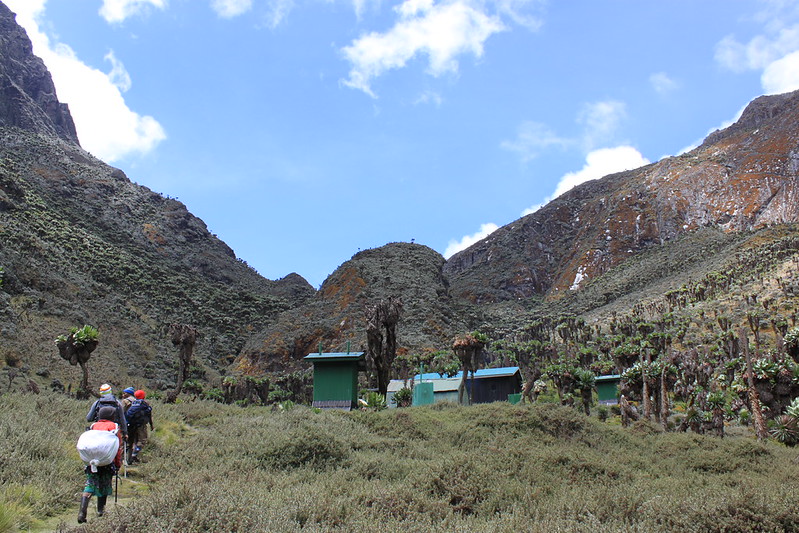
The 4-day Rwenzori Trek to John Matte Hut via the Central Circuit Trail is made for exactly that traveler for whom three days in a forest is not enough and nine days on a glacier is more than the calendar allows. Over four immersive days, your private guide leads you deep into the heart of the Rwenzori Mountains National Park, a UNESCO World Heritage Site in western Uganda, ascending through tropical montane forest, across mist-draped moorland, past thundering waterfalls and prehistoric giant heather, to John Matte Hut at 3,505 meters: the gateway to the Rwenzori’s extraordinary afro-alpine world. This is not a summit expedition. It is something richer and, for many trekkers, more transformative, a genuine immersion in one of Africa’s most extraordinary wilderness ecosystems, at an altitude and a depth that the shorter treks simply cannot reach.
The Central Circuit Trail is the historic route of the Rwenzori, the path traced by the Duke of Abruzzi’s 1906 expedition and by every serious Rwenzori mountaineer since. The four-day version carries you through its most biologically spectacular lower and middle sections: the ancient Podocarpus forest of the lower slopes, the bamboo and giant heather belt of the mid-mountain, and the vast Afro-alpine moorland of the upper valley, where giant lobelias and senecio groundsel stand like something evolution forgot to finish. John Matte Hut serves as a destination in its own right and a threshold for the full Rwenzori summit expedition, perched at the head of the upper Bujuku Valley with the glaciated central peaks filling the skyline above.
Every detail of this four-day expedition is arranged and managed by Rwenzori Trekking Expeditions, including private transfers from Entebbe or Kampala, Uganda Wildlife Authority permits, a certified guide and Bakonjo porter team, mountain hut accommodation, and all meals. What follows is everything you need to know, written by the Rwenzori Trekking Expeditions team, which has guided this trail in every season and knows it as well as you know a place you love.
Quick Facts About the 4-Day Rwenzori Trek to John Matte Hut
| Trek Detail | Information |
| Duration | 4 Days / 3 Nights |
| Route | Central Circuit Trail |
| Highest Point | John Matte Hut — 3,505m |
| Trek Distance | Approx. 40 km (return) |
| Difficulty | Moderate to Challenging |
| Max Altitude | 3,505 m (John Matte Hut) |
| Best Season | June–August & December–February |
| Starting Point | Nyakalengija Gate, near Kasese, Uganda |
| Group Size | 2–12 trekkers (private options available) |
| Accommodation | Mountain huts: Nyabitaba & John Matte |
| Meals | Full board throughout the trek |
| Permit Required | Yes, Uganda Wildlife Authority |
| Operator | Rwenzori Trekking Expeditions |
| Ideal For | Fit trekkers seeking an immersive, high-altitude Rwenzori experience without technical glacier sections |
Why Trek via the Central Circuit Trail?
Of the routes into the Rwenzori Mountains, the Central Circuit Trail is the one that carries the mountain’s full character. Other approaches give access to specific sections of the range; the Central Circuit opens the Rwenzori’s narrative from the beginning, entering through the dense, dripping tropical forest of the Nyakalengija approach and steadily ascending through every ecological zone the range contains. For a four-day itinerary, this route means encountering more biodiversity, more altitude, and more of the Rwenzori’s extraordinary landscape character than any equivalent short trek in the range.
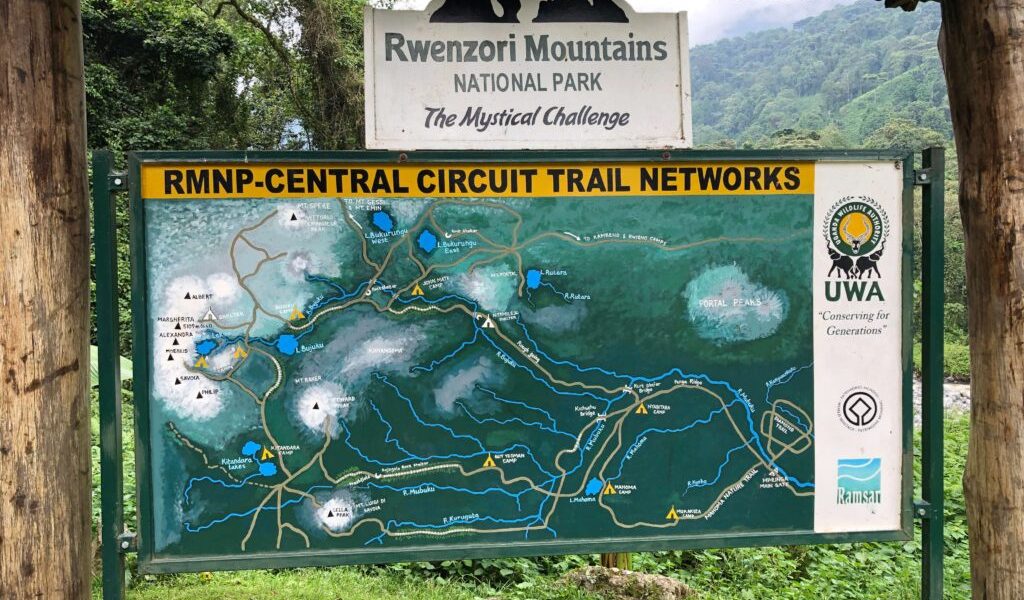
The Central Circuit trail is also the one with the deepest history. The route up the Mubuku River valley and into the Bujuku basin was first mapped by the Duke of Abruzzi’s 1906 Italian expedition, the team that made the first ascent of Margherita Peak, and it has served as the primary approach to the Rwenzori’s central massif ever since. The huts along the route carry the names of early explorers and their patrons. The landscape they described in their journals is, remarkably, largely unchanged. Trekking the Central Circuit is not merely a physical journey; it is a passage through mountain history.
The Central Circuit Trail is the only Rwenzori route that offers the complete ecological sequence, from tropical forest through bamboo, giant heather, Afro-alpine moorland, and glacial approach, in a single continuous traverse. The four-day version reaches the heart of this sequence at John Matte Hut, where the upper Bujuku Valley and the central peaks open before you in their full, extraordinary scale. |
Why Choose the 4-Day Rwenzori Trek to John Matte Hut?
The four-day John Matte Hut trek occupies a unique position in the Rwenzori trekking spectrum. It reaches higher, lasts longer, and penetrates the mountain’s ecosystem more deeply than the 3-day Mahoma Loop but makes none of the technical demands of the summit expeditions that require glacier travel and multiple acclimatization days above 4,000 meters. It is the right choice for the trekker who wants a genuine, physically demanding, high-altitude Rwenzori experience that fits within a four-day window without requiring mountaineering skills or prior glacier experience.
At John Matte Hut, at 3,505 meters, you stand in the Rwenzori’s Afro-alpine zone, the extraordinary high-altitude world of giant lobelias, groundsel forests, and glacially carved valley walls that the Victorian explorers described as unlike anything they had seen anywhere on earth. The views from the hut on a clear evening, up the Bujuku Valley toward the glaciated peaks of Speke, Baker, and Stanley, are among the finest mountain vistas in Africa. And the return journey through the lower forest, by now familiar and differently beautiful in the knowledge of what lies above it, delivers a completeness that shorter treks cannot.
This trek also functions as the ideal preparation for the full 9-day Margherita Peak Rwenzori expedition Central Circuit. Many of our clients complete the four-day route first — to know the mountain, to test their fitness and their response to altitude, and to develop the conviction that the full summit attempt is something they want to commit to. The two routes share the same trailhead, the same lower forest approach, and the same first mountain huts, making the four-day itinerary both a complete experience in its own right and the finest possible introduction to the Rwenzori’s upper world.
Experience Rwenzori Beyond Expectations
Spots Filling Fast — Schedule Your Trek Today
What Makes the 4-Day Rwenzori Trek to John Matte Hut Special?
Every Rwenzori trek is defined by the mountain’s extraordinary ecological layering, the fact that ascending the Rwenzori is, in biological terms, equivalent to traveling from equatorial Africa to the Arctic tundra within a single day’s walk. The four-day Central Circuit itinerary to John Matte is the shortest trek that reaches the point at which all of these layers become fully visible simultaneously. Standing at the doorway of John Matte Hut, you can look down through the heather and bamboo into the forest canopy below and look up through the giant lobelias of the moorland toward the snowfields of the central peaks. The full Rwenzori is present in a single view.
The Afro-Alpine World
The Rwenzori’s Afro-alpine zone, which is fully encountered for the first time on the approach to John Matte Hut, is one of the most visually extraordinary landscapes in Africa. Giant groundsel trees (Senecio adnivalis) stand four to six meters tall, their cabbage-like rosette heads mounted on shaggy, bark-wrapped trunks that look like something a film production designer might create for a science-fiction epic. Giant lobelias (Lobelia wollastonii) erupt from the bog in spires two meters tall. Between them, the trail crosses sphagnum moss so deep and so saturated that each step produces a soft, yielding compression underfoot. The light here when cloud permits has a particular quality: cold, clean, and luminous, as though the mountain generates its own photons.
The Bakonjo Porter Experience
No account of a Rwenzori trek is complete without the Bakonjo porters, the indigenous community whose knowledge, strength, and mountain culture are as central to the experience as the landscape itself.
The Bakonjo have lived on and around the Rwenzori slopes for generations, and their relationship with the mountain is one of deep, practical familiarity. Your porter team navigates the mud and the root-crossed trail with an ease that is itself a kind of performance; loads on their heads; and moves at a pace that makes trekkers quietly reconsider their self-assessments. The relationship that develops between trekker and porter over four days on the Central Circuit is consistently cited in our post-trek feedback as one of the journey’s most unexpected rewards.
The Mountain Hut Evenings
Life at the mountain huts, Nyabitaba and John Matte, has a quality that no hotel stay approximates. Dinner is served as darkness drops over the forest or the moorland, hot and substantial, prepared by your camp cook in conditions that would challenge a well-equipped urban kitchen. The conversation around the hut table, guides, porters, trekkers, and the mountain outside has a particular intimacy that altitude and remoteness confer. Your guide’s evening briefings, covering the next day’s terrain and the ecology and history of the section ahead, are not logistics. They are stories from a person who loves this mountain and wants you to understand it as deeply as possible in the days available.
Itinerary at a Glance: 4 Day Rwenzori Trek To Margherita Peak
Day | Summary |
Day 1 | Arrival at Entebbe / Kampala → Private transfer to Kasese (5–6 hrs) → Pre-trek briefing → Overnight Kasese |
Day 2 | Kasese → Nyakalengija Gate (1,646m) → Trek to Nyabitaba Hut (2,651m) → 5–6 hrs through montane forest |
Day 3 | Nyabitaba Hut → John Matte Hut (3,505m) → 6–7 hrs through bamboo, giant heather & Afro-alpine moorland |
Day 4 | John Matte Hut → Descent to Nyakalengija → Transfer to Kasese → Private return transfer to Kampala / Entebbe |
This itinerary is also offered as a 5-day option with an additional acclimatization and exploration day at John Matte Hut, allowing trekkers to explore the upper Bujuku Valley and Portal Peaks viewpoint before descent. Contact us to discuss which version best fits your schedule and fitness goals. |
Detailed 4-Day Rwenzori Trek to John Matte Hut — Day-by-Day Narrative
Day 1: Arrival — Transfer to Kasese — Pre-Trek Briefing
Your Rwenzori Trekking Expeditions representative meets you at Entebbe International Airport or your Kampala hotel and settles you into your private 4WD vehicle for the journey west. The road to Kasese, approximately 370 kilometers from Kampala, passes through the green heart of Uganda: the equatorial farmlands of the central plateau, the stunning papyrus wetlands of the Katonga River system, and the broad western plains where the Rwenzori eventually fills the windscreen, vast and dark and cloud-draped, in a way that photographs have not prepared you for.

Kasese, the gateway town to the Rwenzori, sits at the mountain’s foot with the particular energy of a place that exists in service of something larger than itself. Your guesthouse for the night is comfortable and well-positioned, with en-suite rooms, reliable hot water, and a kitchen that takes the business of feeding trekkers seriously. Over dinner, your lead guide conducts the pre-trek briefing, covering the route in detail, the ecological character of each day’s terrain, altitude awareness, equipment expectations, and any questions you bring to the table. Gear is checked and confirmed tonight. The trailhead will not wait for second thoughts.
Day 2: Nyakalengija Gate (1,646m) → Nyabitaba Hut (2,651m)
After breakfast and the short drive to Nyakalengija, the Rwenzori Mountains National Park’s northern gate, Uganda Wildlife Authority permit formalities are completed while your Bakonjo porter team assembles loads with the quiet, practiced efficiency of people who have been doing this work for generations. The gate itself is a modest structure that gives no hint of what lies beyond it. Within ten minutes of crossing it, the trail has swallowed you entirely.
The forest of the lower Rwenzori is primordial in the truest sense: undisturbed, ancient, and biologically extravagant. Podocarpus trees, the dominant canopy species at this elevation, rise thirty meters above the trail, their bark draped in moss and their roots forming a continuous, interlocking network underfoot that demands full attention and rewards it with a kind of kinetic engagement that flat trails cannot offer. The Mubuku River, which follows the valley below the trail, is heard before it is seen and accompanies the day’s walk as a constant, powerful presence.
Birdlife in the lower forest is exceptional. The Rwenzori turaco, one of Uganda’s most coveted sightings, flashes copper-red between branches at mid-canopy height. Handsome spurfowl call from the undergrowth. Various sunbird species patrol the forest margins. Your guide knows every call and every likely perch, and the pace of the trail here is generous enough to allow for proper wildlife stops without compromising the day’s schedule.
As the trail climbs through the upper forest toward Nyabitaba, the tree character changes; giant heather begins to replace the podocarpus, its trunks thickening and gnarling with altitude, its bark encased in moss two inches deep. The ridge on which Nyabitaba Hut sits appears through the heather in the mid-afternoon: a solid, weatherproof structure at the confluence of the Mubuku and Bujuku river valleys, with views down the valley and, on clear evenings, the first glimpse of the central peaks above. Dinner is hot and plentiful. The night, at 2,651 meters, is cool and quiet.
Guide Insight: “The lower forest between Nyakalengija and Nyabitaba is where most people first understand what makes the Rwenzori different from every other African mountain. The forest is alive in a way that the high-altitude zones are not: noisier, warmer, and more densely inhabited. I always tell trekkers to walk slowly here. The summit can wait.” — Senior Guide, Rwenzori Trekking Expeditions |
Day 3: Nyabitaba Hut (2,651m) → John Matte Hut (3,505m)
This is the day the Rwenzori reveals its most distinctive and celebrated character, the extraordinary Afro-alpine zone that has earned the range the title of “Africa’s Galapagos” among botanists and ecologists. The morning begins with a descent to the Mubuku River crossing on a suspended log bridge, one of several such structures that the Rwenzori trail system uses to navigate its river network, before the trail climbs decisively into the mid-mountain zone.
The forest character transforms rapidly and completely above the river crossing. Bamboo appears first, dense and close-canopied, the light through it soft and green. Then the bamboo yields way to giant heather, its trunks at this elevation as thick as a person’s waist, draped in grey-green lichen that gives the forest a twilight quality even at midday. And then, above the heather line, the moorland opens, and the Rwenzori becomes something unlike anything in the conventional catalogue of African landscapes.
Giant groundsels stand at head height and above, their prehistoric forms casting shadows across the trail. Giant lobelias erupt from the saturated peat in two-meter spires, their pale flower heads catching whatever light breaks through the cloud. Between them, the trail winds through sphagnum bog and tussock grass, always climbing and revealing new configurations of the same extraordinary cast of Afro-alpine plants. The upper valley of the Bujuku River, which the trail follows from the river crossing to John Matte Hut, has a scale and a remoteness that arrive as a physical sensation. The mountain is large here, and you are genuinely small within it.
John Matte Hut stands at the head of the valley, at 3,505 meters, its corrugated metal roof visible from fifteen minutes below on the trail. Named for the Ugandan mountain guide John Matte, one of the most significant figures of Rwenzori trekking history, it sits in a clearing above the last heather, with the Bujuku Valley falling away below and the glaciated peaks of Speke (4,890 m) and Baker (4,843 m) filling the skyline to the south on clear evenings. The sunset here, when clouds permit, is extraordinary: the glacier faces catch copper, then rose gold, then deep blue as the light fades over the Congo escarpment. Your cook has the stove running. The altitude is serious enough to notice in the body. The night air at John Matte has a cleanness and a cold that, in its way, is a kind of luxury.
Day 4: John Matte Hut (3,505m) → Descent → Nyakalengija → Kasese → Return Transfer
The morning at John Matte Hut, before the descent, before the packs are assembled, in the particular quiet of a mountain camp at first light, is worth rising early for. The valley below is still in shadow; the peaks above are already catching sun. The giant lobelias stand motionless in the cold air. If you have slept at 3,505 meters, the day announces itself with a clarity that lower elevations do not offer.
The descent that follows retraces the Central Circuit Trail through its full ecological sequence: Afro-alpine moorland, giant heather, bamboo, and finally the dense montane forest of the lower slopes, but retracing does not mean repetition. The forest seen on descent, in different light and from the different perspective of someone returning from altitude, is not quite the same forest as the one encountered on ascent. Details noticed but not fully registered on the way up, like a moss garden on a particular fallen trunk, the specific curve of the Mubuku Valley, and the quality of light through the Podocarpus canopy in the afternoon, resolve themselves on the return with a satisfying completeness.
By mid-afternoon, you reach Nyakalengija. Your dedicated vehicle is waiting. Cold drinks are in the cooler. The formality of departure, the handshakes with your porter team, and the guide’s final observations on what the mountain offered over four days have a weight that organized travel rarely achieves, because this is a place and a team that have genuinely given you something. The drive back to Kasese, and then the longer return east to Kampala or Entebbe, unfolds as a quiet, satisfied decompression. The Rwenzori stands behind you on the western horizon, dark, cloud-wrapped, and magnificent as when you first saw it, unchanged by your passage and indifferent to your departure, which is exactly as it should be.
Day-by-Day Altitude Profile
Day | Location | Altitude |
Day 1 | Kasese (overnight guesthouse) | ~1,000m |
Day 2 | Nyakalengija Gate → Nyabitaba Hut | 1,646m → 2,651m |
Day 3 | Nyabitaba Hut → John Matte Hut | 2,651m → 3,505m |
Day 4 | John Matte Hut → Nyabitaba → Nyakalengija → Kasese | 3,505m → 1,646m → ~1,000m |
How Does This Trek Compare? Route Comparison Table
Feature | 4-Day John Matte Trek (This Trek) | 9-Day Margherita Peak Expedition |
Duration | 4 Days | 9 Days |
Highest Point | John Matte Hut (3,505m) | Margherita Peak (5,109m) |
Difficulty | Moderate to Challenging | Very Challenging, technical |
Glacier Travel | No | Yes, crampons & ropes required |
Best For | Fit trekkers: Rwenzori introduction | Serious trekkers & climbers |
Vegetation Zones | Forest, bamboo, moorland | All zones + permanent snowfield |
Summit Cert. | John Matte Hut: completion certificate. | Margherita Peak summit cert. |
Acclimatisation | Moderate altitude gain | Full multi-day acclimatisation |
Price Range | Moderate | Premium expedition |
Experience Rwenzori Beyond Expectations
Spots Filling Fast — Schedule Your Trek Today
How Difficult Is the 4-Day Rwenzori Trek to John Matte Hut?
The four-day Central Circuit Trek to John Matte Hut is rated moderate to challenging and is the right choice for trekkers who are genuinely fit, comfortable with sustained physical effort, and willing to engage with trail terrain that is categorically different from a maintained park path. This is not a difficult expedition in the technical or mountaineering sense; there is no glacier travel, no roped sections, and no technical equipment required. But it is a serious mountain trek, and it should be treated as one.
The daily trekking time of five to seven hours on Days 2 and 3 takes place on terrain that is consistently wet, rooted, and occasionally muddy in ways that demand full concentration and good footwear. On Day 3, most trekkers will feel the significant altitude gain from 2,651 meters at Nyabitaba to 3,505 meters at John Matte, especially in the upper moorland section. Symptoms of mild altitude sickness (headache, reduced appetite, disturbed sleep) are common above 3,000 meters and are managed by your guide through pace regulation and hydration monitoring. The Day 4 descent is long — seven to eight hours of continuous downhill — and is demanding on the knees and ankles.
Our recommendation for preparation: three months of sustained cardiovascular fitness (running, cycling, and swimming combined with loaded hill walks) and at minimum two or three long day hikes in the month before departure. Trekking poles are strongly recommended for both the ascent and the descent. Waterproof, ankle-support boots that have been broken in before the trek are non-negotiable.
Category | Assessment |
Overall Difficulty | Moderate to Challenging |
Daily Trekking | 5–7 hrs (Days 2–3); 7–8 hrs (Day 4 descent) |
Max Elevation | 3,505m — John Matte Hut |
Altitude Gain | ~1,860m over 2 trekking days |
Terrain | Forest, bamboo, moorland, bog — rooted and wet |
Altitude Risk | Moderate above 3,000m — AMS symptoms possible |
Technical Sections | None — no glacier, no ropes, no crampons |
Minimum Fitness | Good — active lifestyle; structured prep recommended |
Recommended Age | 16+ (no upper age limit for fit, healthy adults) |
Key Equipment | Waterproof boots, gaiters, poles, layered clothing |
Experience Rwenzori Beyond Expectations
Spots Filling Fast — Schedule Your Trek Today
Best Time to Trek to John Matte Hut in the Rwenzori Mountains
The Rwenzori Mountains are one of the wettest places in Africa — a range that creates its own weather systems and receives rainfall in every month of the year. No operator who claims a “reliably dry” season in the Rwenzori is being honest with you. What exists are seasons of relative reduction in rainfall, and experienced operators, including our team, who guide this trail year-round schedule departures to take advantage of these windows while being entirely transparent about what any given month typically offers.
Primary Season: June to August
Uganda’s long dry season offers the most consistently navigable conditions on the Central Circuit Trail. Rainfall is reduced, though morning mist and afternoon clouds are standard in any month; trail surfaces are at their least muddy, and the upper moorland above Nyabitaba is accessible without the extreme bog conditions of the wet season. Summit views from John Matte Hut on clear evenings are most likely in this window. This is the most popular trekking season, and places on guided departures fill six to nine months in advance. Book early for June through August dates.
Secondary Season: December to February
Uganda’s short dry season offers a second excellent window; trail conditions are marginally less favorable than the primary season but still very manageable, and the forest in this period has a particular luminosity following the short rains. January is one of the finest months for birdwatching in the lower forest, with many species in breeding plumage and activity levels higher than in the dry season. The Christmas and New Year period sees strong trekker numbers, and advance booking is equally important for this window.
Shoulder Seasons: March–May and September–November
The wetter shoulder seasons are the Rwenzori at its most atmospheric, with clouds hanging low in the heather, waterfalls at full volume, and the forest dripping and darkly alive. Trail mud is more severe, and the upper moorland on the approach to John Matte Hut can require significantly more effort in wet conditions. Wildlife encounters are often richer in these months, and trekker numbers are considerably lower. We guide year-round with full, honest disclosure of conditions, and some of our most memorable expeditions have been in the shoulder seasons; the mountain rewards commitment equally, regardless of the weather it chooses to provide.
How to Get to the Rwenzori Mountains
The Rwenzori Mountains National Park is located in western Uganda, near the town of Kasese and approximately 370 kilometers from Kampala. The Central Circuit Trail begins at Nyakalengija Gate, accessible from Kasese via a short drive on a laterite road through the Rwenzori foothills.
By air, Entebbe International Airport (EBB) is the primary international gateway, served by Kenya Airways, Ethiopian Airlines, Turkish Airlines, Qatar Airways, RwandAir, and others. Domestic flights from Entebbe to Kasese Airport — operated by Aerolink Uganda — take approximately one hour and offer a practical time-saving option for trekkers with tight schedules, subject to flight availability. Rwenzori Trekking Expeditions privately arranges all airport logistics and road transfers.
By road, the overland drive from Kampala or Entebbe to Kasese takes five to six hours in comfortable 4WD vehicles with experienced, English-speaking drivers. The route passes through the Katonga wetlands, the equatorial farmlands of western Uganda, and the dramatic western rift valley, with the Rwenzori appearing on the horizon in the final hour of the drive as an unmistakable, cloud-wrapped mass. All road transfers include standard stops for the equator crossing, fuel, and refreshments.
What does the 4-Day Trek include?
The four-day John Matte Hut trek is offered as a fully inclusive expedition.
Rwenzori Trekking Expeditions curates and manages every element of the journey, from private airport transfer to summit certificate. There are no hidden fees, no surprise gate charges, and no logistical gaps for you to navigate on the mountain.
Category | What Is Covered |
Transfers | Private return transfers: Entebbe/Kampala ↔ Kasese ↔ Nyakalengija |
Park Fees & Permits | Uganda Wildlife Authority entry and trekking permits for all days |
Guide Services | Certified lead guide throughout; assistant guides per group size |
Porter Team | Full Bakonjo porter team for group and communal equipment |
Accommodation | Nyabitaba Hut (Night 2) + John Matte Hut (Night 3) + Kasese guesthouse (Nights 1 & 4) |
All Meals on Trek | Full board: breakfast, lunch, dinner, and hot drinks on all trekking days |
Emergency Equipment | First aid kit, pulse oximeter, emergency communication, rescue coordination |
Pre-Trek Briefing | Full route brief, equipment check, and altitude awareness session in Kasese |
Completion Cert. | 4-Day Central Circuit Trek completion certificate |
What Is Excluded?
Category | Notes |
International Flights | Arrange independently via your preferred carrier |
Uganda Visa | USD 50 on arrival or via e-visa. Go. Ugh, in advance |
Travel Insurance | Required — must include medical evacuation cover |
Personal Porter | Available at additional cost — highly recommended |
Gratuities | For guides and porters — voluntary but culturally significant |
Alcoholic Beverages | Not supplied at mountain huts |
Personal Gear | Your personal trekking equipment (see packing list) |
Pre/Post Accommodation | Kampala or Entebbe hotel nights before/after trek |
Safari Extensions | Gorilla trekking, game drives — arranged separately on request |
What Should I Pack for the 4-Day John Matte Hut Trek?
Packing for the Central Circuit Trail requires a layering strategy built around two certainties: the lower forest will be humid and warm, and the John Matte Hut at 3,505 meters will be cold. The transition between these two environments happens within a single day’s trekking, which means carrying both and managing layers actively throughout Day 3. The Rwenzori is wet in every season; waterproofing is not an upgrade; it is a structural requirement.
Item | Notes |
Waterproof Boots | Ankle-support, fully waterproof, broken in before the trek |
Gaiters | Knee-length strongly preferred, Rwenzori mud is serious |
Waterproof Jacket | Full-coverage outer shell — Gore-Tex or equivalent |
Waterproof Trousers | Essential above the bamboo zone |
Base Layer | Moisture-wicking thermal top — merino wool preferred |
Mid Layer | Fleece or down vest |
Warm Jacket | Down or heavy fleece for John Matte Hut evenings |
Trekking Poles | Adjustable — strongly recommended for ascent and descent |
Gaiters | Knee-length, Rwenzori mud is not ankle-deep; it is thigh-deep |
Sleeping Bag | -5°C rated minimum for John Matte Hut |
Sleeping Liner | Adds warmth and keeps hut bedding clean |
Headlamp | With spare batteries |
Dry Bags | To protect electronics, sleeping kit, and spare clothing |
Water Bottles | 2 litres minimum; purification tablets as backup |
Sunscreen | SPF 30+ even in overcast conditions at altitude |
Binoculars | 8×42 recommended for forest birdwatching |
Personal First Aid | Blister care, personal medications, antihistamine |
Camera | A waterproof case or dry bag strongly recommended |
Insect Repellent | DEET-based for lower forest sections |
How Safe Is the 4-Day Rwenzori Trek to John Matte Hut?
Safety on the Rwenzori is a function of preparation, qualified guidance, and honest communication, all of which are non-negotiable standards at Rwenzori Trekking Expeditions. The four-day John Matte Hut trek presents no technical mountaineering hazards and no glacier risk, making it one of the safer multi-day mountain treks in East Africa for well-prepared trekkers. We manage the primary safety considerations of altitude sickness, trail terrain, and weather through our operational protocols.
All lead guides hold Uganda Wildlife Authority certification and have completed formal wilderness first aid training. Every trekking party carries a comprehensive first aid kit, a pulse oximeter for continuous blood oxygen monitoring above 3,000 meters, emergency communication equipment, and supplemental oxygen for altitude emergencies. Our guides are trained in the recognition and management of altitude sickness symptoms and carry clear protocols for both managed descent and emergency evacuation. Mountain rescue insurance is included in the expedition fee.
The Rwenzori Mountains National Park trail system is well-maintained relative to other equatorial African mountain ranges, and the hut network provides reliable shelter at each night stop. The log bridge crossings and rooted forest sections of the lower trail require attention and appropriate footwear but present no extraordinary danger to trekkers who are properly equipped and guided. We have never lost a trekker to the mountain. We intend to maintain that record.
Safety Element | Provision |
Guide Certification | Uganda Wildlife Authority accredited; wilderness first aid trained |
Medical Equipment | First aid kit, pulse oximeter, supplemental oxygen per group |
Rescue Coordination | Emergency communication; mountain rescue insurance included |
Altitude Monitoring | Blood oxygen tracked from Day 2 onward with an oximeter. |
Weather Assessment | Pre-departure and daily assessment; route modifications as needed |
Porter Welfare | Proper equipment, fair pay, formal porter welfare policy |
Emergency Protocol | Descent protocol activated at first serious AMS symptom |
Pre-Trek Health Check | All clients complete health disclosure form before departure |
Experience Rwenzori Beyond Expectations
Spots Filling Fast — Schedule Your Trek Today
Frequently Asked Questions
The 4-day Central Circuit Rwenzori Trek to John Matte Hut is rated moderate to challenging and is best suited for trekkers with a good base fitness level rather than complete beginners. If you have completed multi-day hikes, are comfortable with sustained uphill effort, and have at least some experience on uneven terrain, this trek is an excellent choice. If you are new to mountain hiking, we recommend beginning with the 3-day Mahoma Loop Trek to the lake before committing to the John Matte Hut route. Our team is eager to discuss your specific fitness and experience level to help you choose the right Rwenzori itinerary.
The trek’s highest point is John Matte Hut at 3,505 meters. Most trekkers begin to notice altitude above 3,000 meters, typically as a mild headache, reduced appetite, or slightly disturbed sleep. These symptoms are normal at this elevation, and you can manage them through pace regulation, hydration, and your guide’s altitude monitoring. Serious altitude sickness (AMS) is uncommon below 3,500 meters in well-hydrated, fit trekkers, but it can occur, and our guides are trained to respond. Trekkers with specific cardiovascular or respiratory concerns should consult their physician before departure.
Night temperatures at John Matte Hut (3,505 m) typically range between 0°C and 8°C, depending on season and cloud cover. The temperature is cold enough to require a proper sleeping bag (rated to -5°C minimum), a warm insulation layer for the evening, and waterproof outer layers for any activity outside the hut after dark. Daytime temperatures on the ascent from Nyabitaba are milder but variable; the Rwenzori’s weather can shift from warm and humid in the lower forest to cold and wet in the upper moorland within an hour’s walking. Layering is the essential strategy.
On clear evenings, which are most common in the June–August primary season, the glaciated faces of Speke and Baker peaks are visible from John Matte Hut, along with the upper snowfields of the Stanley massif beyond. The views are extraordinary and among the finest mountain vistas accessible without glacier travel in East Africa. Clouds are common in the afternoon and evening even in the dry season, so the clearest views are typically at dawn, before the day’s weather system builds. Your guide will know the best vantage points from the hut for photography and observation.
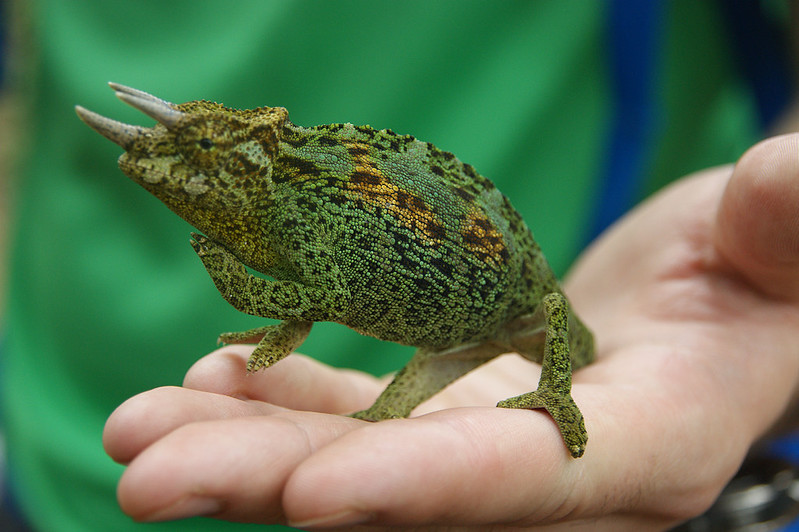
Wildlife on the 4-day Rwenzori Trek to John Matte Hut via the Central Circuit trail route includes black-and-white colobus monkey, red-tailed monkey, olive baboon, and L’Hoest’s monkey in the lower forest. Between Nyakalengija and Nyabitaba, birdwatchers regularly encounter the Rwenzori turaco, African green broadbill, various sunbird species, and numerous Albertine Rift endemic birds. The upper moorland above Nyabitaba supports Rwenzori duiker, African leopard (rarely seen), and the spectacular three-horned Rwenzori chameleon. Giant forest hog signs are present throughout, but the animals are nocturnal and rarely observed. The botanical wildlife, giant lobelias, groundsel trees, and sphagnum moss gardens are a wildlife experience unlike anything else in East Africa.
Your expedition fee includes the Bakonjo porter team for group and communal equipment, tents (if applicable), communal cooking equipment, and shared supplies. Personal porters — who carry your individual pack — are available at an additional daily cost and are strongly recommended for trekkers who want to move at a comfortable pace and preserve their energy for the environment rather than for the load. Many clients find that the relationship with a personal porter is one of the most memorable aspects of the Rwenzori experience. We are happy to discuss personal porter options when confirming your booking.
Yes, and this is one of the most popular combinations in Uganda’s adventure travel calendar. Bwindi Impenetrable National Park, home to approximately half the world’s remaining mountain gorillas, is approximately three to four hours south of Kasese by road. The 4-day Rwenzori trek to John Matte Hut combines naturally with a two-to-three-day gorilla trekking extension in Bwindi, and Rwenzori Trekking Expeditions curates seamless combined itineraries covering both experiences. Queen Elizabeth National Park (one hour east of Kasese) and Kibale Forest (two hours north) are additional combination options. Contact us to design your complete Uganda safari.
Rwenzori Trekking Expeditions operates on a clear, transparent booking and cancellation policy. A deposit of 30% of the expedition fee secures your dates, with the balance due 60 days before departure. Cancellations made more than 60 days before departure receive a full deposit refund, less a modest processing fee; cancellations made within 60 days are subject to a sliding scale as outlined in our booking terms. We strongly recommend travel insurance that includes cancellation cover, as well as the mandatory medical evacuation cover. Full policy details are provided at the time of booking confirmation.
Our standard guided departures operate with groups of between 2 and 12 trekkers. Private departures, for individuals, couples, families, or corporate groups, are available on request and are confirmed on any date that fits your schedule, with your dedicated guide and porter team. Private departures are the preferred option for those who want a fully personalized pace and itinerary flexibility, and they are priced transparently based on group size. Solo private trekkers are welcome and guided with the same entire team as any group departure.
Uganda requires proof of yellow fever vaccination for entry, and the yellow fever certificate is checked at immigration. Additional recommended vaccinations for Uganda include typhoid, hepatitis A and B, meningitis, and a tetanus booster. Malaria prophylaxis is recommended for all travelers to Uganda, including for the Rwenzori; the lower forest sections of the trek fall within a malaria-risk zone. Your physician or a travel medicine clinic can advise on the current recommendations for your specific health profile and origin country. All health documentation should be prepared at least six to eight weeks before departure.
Your guide carries a pulse oximeter and monitors blood oxygen saturation throughout the trek above 2,500 meters. If early symptoms of altitude sickness are identified, such as a persistent headache, nausea, loss of coordination, or significant oxygen desaturation, your guide will start the management protocol: rest, increased hydration, reduced pace, and, if necessary, supplemental oxygen administration. If symptoms do not improve or worsen, the protocol calls for immediate descent, which is the most effective treatment for altitude sickness at any level of severity. Your guide’s role is to make this decision confidently and without hesitation when required. Emergency rescue coordination through Uganda Wildlife Authority is available if descent on foot is not possible.
The four-day John Matte Hut trek is suitable for older children with a genuine interest in hiking and a base level of outdoor fitness. We recommend a minimum age of 16 for this route, given the daily trekking distances, altitude gain, and terrain character. Families with younger children (10–15) seeking a Rwenzori introduction are better served by the 3-day Lake Mahoma trek, which is considerably less demanding and equally rich in wildlife and forest experience. We are happy to advise you on family-appropriate Rwenzori options based on your group’s ages and fitness levels.
All lead guides with Rwenzori Trekking Expeditions speak fluent English and Rutoro, the regional language of western Uganda. Most also speak Lhukonjo, the language of the Bakonjo porter community. Several senior guides speak French and conversational Swahili. For groups with non-English speakers, please advise us at the time of booking so we can accommodate them with guide assignment or supplementary interpretation where possible.
The Rwenzori Mountains are one of the finest birdwatching destinations in Africa, and the Central Circuit Trail is the premier birding route in the range. The forest between Nyakalengija and Nyabitaba is a great place to see the Rwenzori turaco, African green broadbill, handsome spurfowl, various sunbird species, and many Albertine Rift endemics. The moorland above Nyabitaba supports Rwenzori nightjar, Rwenzori batis, and a range of high-altitude species. For dedicated birders, we can arrange slower-paced departures with additional stops and, on request, a specialist birding guide with ornithological expertise. The four-day Rwenzori Trek to John Matte Trail route offers more birding time in the productive lower forest than any of the summit expeditions, making it an excellent choice for birdwatcher trekkers.
Every itinerary we offer is a framework rather than a fixed product, and we regularly adapt the four-day John Matte Hut route in response to client needs. A five-day version adds an exploration day at John Matte Hut, allowing visits to the upper Bujuku Valley and the Portal Peaks viewpoint before descent. The route can also be extended into the full 9-day Margherita Peak expedition for trekkers who want to continue beyond John Matte. We seamlessly arrange pre- and post-trek extensions to Bwindi, Kibale, Queen Elizabeth, or Kampala cultural experiences. Speak to our team about designing the version of this expedition that is just right for your group.
The expedition fee reflects the fully inclusive character of the trek, all private transfers, Uganda Wildlife Authority permits, the certified guide and porter team, mountain hut accommodation, full-board meals, emergency equipment, and rescue insurance. Pricing varies by group size, season, and any customizations or extensions. We provide full, transparent pricing with no hidden fees within 24 hours of inquiry. Contact us at trek@rwenzoritrekkingexpeditions.com for a personalized quote.
All lead guides employed by Rwenzori Trekking Expeditions speak fluent English and Rutooro (the regional language of western Uganda). Most also speak Lhukonjo, the language of the Bakonjo porter community. Several of our senior guides speak French and basic Swahili. If your group includes non-English speakers, please advise us at the time of booking, and we will do our best to accommodate with guide assignment or supplementary translation.
The four-day Rwenzori trek to John Matte Hut is suitable for older children with a genuine interest in hiking and a base level of outdoor fitness. We recommend a minimum age of 16 for this route, given the daily trekking distances, altitude gain, and terrain character. Families with younger children (10–15) seeking a Rwenzori introduction are better served by the 3-day Lake Mahoma trek, which is considerably less demanding and equally rich in wildlife and forest experience. We are happy to advise you on family-appropriate Rwenzori options based on your group’s ages and fitness levels.
Nyabitaba and John Matte Huts are both equipped with basic long-drop toilet facilities, which are adequate and maintained to a reasonable standard relative to their setting. Washing facilities are rudimentary; cold water from nearby streams is available for basic washing. We carry biodegradable soap and personal wipes in our group supplies. Full hot showers are not available at mountain huts; trekkers should plan accordingly and embrace the mountain experience for what it is. Kasese guesthouse accommodation on nights 1 and 4 provides full hot shower facilities.
Why Book Your Rwenzori Trek With Rwenzori Trekking Expeditions?
The Rwenzori Mountains demand specialist knowledge, not the general familiarity of a multi-product East Africa operator, but the deep, season-by-season understanding that comes from exclusive, sustained focus on a single mountain range. Rwenzori Trekking Expeditions is a Ugandan-owned company with one specialization: the Rwenzori. We do not offer a hundred different safaris and include the Rwenzori as a checkbox. This mountain is our entire expertise, our daily conversation, and our abiding passion.
Our lead guides hold Uganda Wildlife Authority accreditation and wilderness first aid certification, and many have been guiding the Central Circuit Trail for a decade or more. Our Bakonjo porter team is paid living wages, provided with proper equipment, and supported by the only formal porter welfare policy operated by any Rwenzori trekking company. When you trek with us, the community that has sustained this mountain for generations benefits directly from your visit, which means the mountain itself benefits and continues to be the extraordinary place it is.
“We are not in the business of moving bodies up a mountain and back down again. We are in the business of helping people understand a place that most of them will never forget. That takes guides who know the Rwenzori the way you know a language you grew up speaking, not from studying, but from living inside it.” Founder, Rwenzori Trekking Expeditions |
Our approach to booking is personal and conversation-based. A member of our team with direct mountain experience handles every inquiry. Your itinerary is discussed and refined through a genuine exchange about your fitness, your schedule, your interests, and your vision of the experience, because a four-day Rwenzori expedition is not a commodity, and it should not be booked like one. We are here to make sure that when you step onto the Central Circuit Trail, everything has been considered so that your only task is to be present in one of the most extraordinary landscapes in Africa.
Experience Rwenzori Beyond Expectations
Spots Filling Fast — Schedule Your Trek Today
Book Your 4-Day Rwenzori Trek to John Matte Hut
The Rwenzori’s forest does not wait, and its glaciers, the ice that crowns the peaks visible from John Matte Hut, are retreating with every passing year. Climate scientists estimate that the Rwenzori’s permanent ice fields will largely disappear by 2030. The mountain itself will remain, and its forests and moorlands will remain, but the particular quality of standing at John Matte Hut with glaciated peaks above you, that specific experience, in that specific combination of elements, has a window, and that window is measurable.
If this itinerary has found you at the right moment, if you have read these pages and felt the particular pull of a mountain that has called travelers for two thousand years, the next step is a conversation. Not a booking form. A conversation with a member of the Rwenzori Trekking Expeditions team who has stood at John Matte Hut in the cold of a mountain morning and knows, exactly, what is waiting for you there.
Reach us at trek@rwenzoritrekkingexpeditions.com.