Gorilla trekking · Chimpanzee tracking · Margherita Peak 5,109m · Batwa Culture · Tree-Climbing Lions · Kazinga Channel boat cruise
Entebbe → Kampala → Kibale Forest NP → Kasese → Rwenzori (7 Days) → Queen Elizabeth NP → Bwindi Impenetrable Forest → Kampala → Entebbe
18 Days / 17 Nights | Margherita 5,109m | Gorilla + Chimp Permits | From $6,480 p/p |
The 18-Day Uganda Safari and Rwenzori Mountains Trek features Rwenzori Mountains trekking, gorilla trekking, chimpanzee tracking, Big Five wildlife game drives, plus Nile boat rides and a Batwa cultural experience. This 18-day Rwenzori Mountains trekking expedition & Uganda wildlife safari combines gorilla trekking in Bwindi, chimpanzee tracking in Kibale, wildlife safaris in Queen Elizabeth National Park, boat cruises on Kazinga Channel & the Nile River, cultural experiences, and leisure at Lake Bunyonyi.
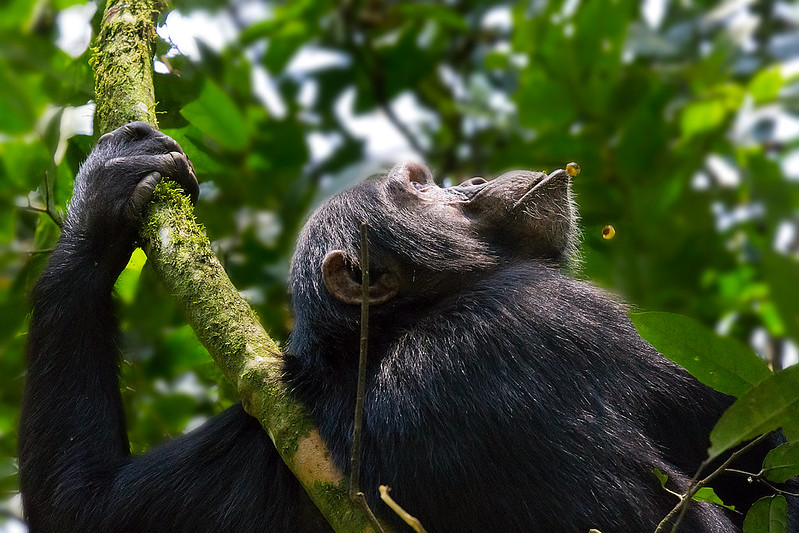 On Day Three, you track chimpanzees in Kibale Forest National Park, the continent’s primate capital, where 1,450 chimpanzees move through one of Africa’s oldest montane rainforests in social groups whose behavior mirrors our own in ways that never cease to be unsettling in the best possible sense. On Day Five through Day Eleven, you spend 7 consecutive days in the Rwenzori Mountains, Africa’s Mountains of the Moon, ascending through five distinct ecological zones to stand on the Stanley Glacier at 5,109 meters in the pre-dawn darkness with crampons on your boots and the whole of the Congo Basin beginning to turn gold below you. On days twelve and thirteen, you descend to the savannah and the Kazinga Channel, where hippo pods are at boat-rail distance and tree-climbing lions are in the fig trees of Ishasha. And on days fourteen through sixteen, Bwindi Impenetrable Forest delivers two of the most powerful wildlife encounters available anywhere on Earth: the mountain gorilla and the Batwa people, whose connection to this forest runs to a depth no academic description has yet adequately captured.
Rwenzori Trekking Expeditions manages this journey from your first transfer at Entebbe arrivals to your airport farewell on day eighteen. One operator. One point of contact. One standard of excellence. Your private safari vehicle and driver-guide will be available for the lodge days. Your certified mountain guide and dedicated porter team for the seven Rwenzori days. Your gorilla and chimpanzee permits were secured months in advance. Your lodge bookings at every stop. All of it was held, confirmed, and delivered so that your sole responsibility throughout is the experience itself.
Uganda receives fewer international visitors than any comparable African safari destination. The Rwenzori Mountains see fewer than 1,500 trekkers in a year. Bwindi allows a maximum of eight visitors per gorilla family each day. These numbers are not restrictions; they are the reason every encounter on this journey feels genuinely intimate, genuinely wild, and genuinely irreplaceable.
On Day Three, you track chimpanzees through Kibale Forest National Park, the continent’s primate capital, where 1,450 chimpanzees move through one of Africa’s oldest montane rainforests in social groups whose behavior mirrors our own in ways that never cease to be unsettling in the best possible sense. On Day Five through Day Eleven, you spend seven consecutive days in the Rwenzori Mountains, Africa’s Mountains of the Moon, ascending through five distinct ecological zones to stand on the Stanley Glacier at 5,109 meters in the pre-dawn darkness with crampons on your boots and the whole of the Congo Basin beginning to turn gold below you. On days twelve and thirteen, you descend to the savannah and the Kazinga Channel, with hippo pods at boat-rail distance and tree-climbing lions in the fig trees of Ishasha. And on days fourteen through sixteen, Bwindi Impenetrable Forest delivers two of the most powerful wildlife encounters available anywhere on Earth: the mountain gorilla and the Batwa people, whose connection to this forest runs to a depth no academic description has yet adequately captured.
Rwenzori Trekking Expeditions manages this journey from your first transfer at Entebbe arrivals to your airport farewell on day eighteen. One operator. One point of contact. One standard of excellence. Your private safari vehicle and driver-guide will be available for the lodge days. Your certified mountain guide and dedicated porter team for the seven Rwenzori days. Your gorilla and chimpanzee permits were secured months in advance. Your lodge bookings at every stop. All of it was held, confirmed, and delivered so that your sole responsibility throughout is the experience itself.
Uganda receives fewer international visitors than any comparable African safari destination. The Rwenzori Mountains see fewer than 1,500 trekkers in a year. Bwindi allows a maximum of eight visitors per gorilla family per day. These numbers are not restrictions; they are the reason every encounter on this journey feels genuinely intimate, genuinely wild, and genuinely irreplaceable.
The 18-Day Rwenzori Trekking & Uganda Safari (Gorillas, Chimpanzees, and Wildlife) begins with your arrival at Entebbe International Airport, where your Rwenzori Trekking Expeditions representative meets you for the private transfer to your Entebbe or Kampala hotel.
Day Two incorporates a curated Kampala city orientation, the Kasubi Tombs UNESCO World Heritage Site, the Gaddafi Mosque with its panoramic rooftop views, and the colorful Nakasero Market before the afternoon transfer west toward Fort Portal and the highland country of western Uganda.
Day Three opens the primate chapter: chimpanzee tracking in Kibale Forest National Park, the highest-density chimpanzee habitat in Africa, followed by the optional Bigodi Wetland Sanctuary afternoon walk.
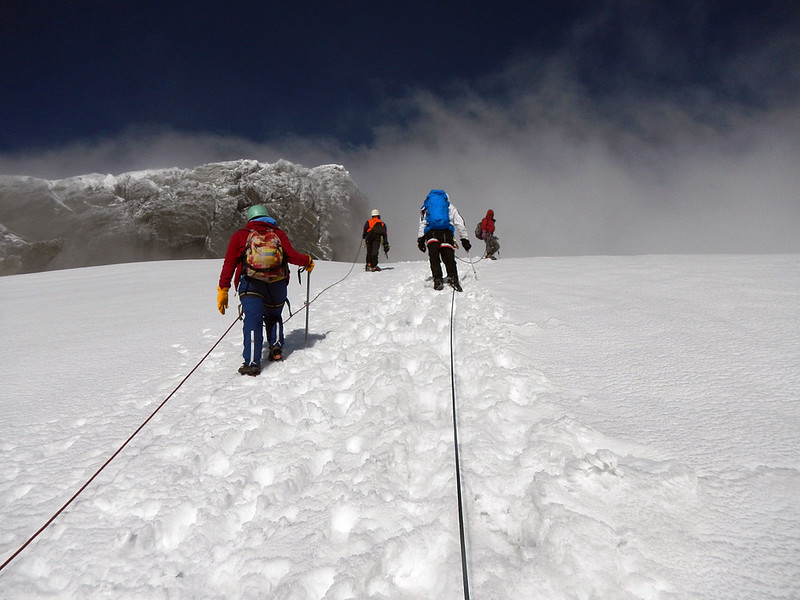 Day Four is the critical mountain transition: the short drive south from Kibale to Kasese, the gateway town for the Rwenzori Mountains, where the afternoon is dedicated entirely to mountain preparation, gear inspection, porter introductions, guide briefing, and the comprehensive acclimatization strategy walkthrough that sets the foundation for seven days of summit-focused effort. Days five through eleven unfold on the Central Circuit Trail: Nyakalengija to Nyabitaba Hut (2,651 m), Nyabitaba to John Matte Hut (3,505 m), John Matte to Bujuku Hut (3,962 m), a critical acclimatization day at Bujuku with the afternoon advance to Elena Hut (4,541 m), the pre-dawn summit push to Margherita Peak (5,109 m) and descent to Bujuku, the Scott-Elliot Pass crossing to the Kitandara Lakes (4,023 m), and the long final descent via Guy Yeoman Hut to the Nyakalengija trailhead and the transfer to Kasese.
Day 12 transfers the expedition from the mountain foothills to the savannah of Queen Elizabeth National Park: an afternoon game drive on the Kasenyi Plains.
Day Thirteen delivers a morning boat cruise on the Kazinga Channel and an afternoon drive in the Ishasha sector for tree-climbing lions.
Day fourteen is the transfer south through the Kigezi Highlands to Bwindi Impenetrable Forest, an afternoon of quiet forest immersion before the gorilla trek days begin.
Day Fifteen is the first gorilla trekking day.
Day Sixteen combines the Batwa community cultural experience with an optional second gorilla trek or afternoon forest walks.
Day Seventeen is the long road east back to Kampala, with stops at Lake Bunyonyi and the Equator monument.
Day Eighteen is the Entebbe departure.
Day 1: Entebbe International Airport, Transfer & Rest Overnight: Entebbe Lakeshore Hotel
Uganda announces itself from the descent into Entebbe with a view that stops the first-time arrival mid-sentence: Lake Victoria fills the southern horizon in an expanse of silver and blue so vast that the far shore is simply not there. Africa’s largest lake, the world’s second-largest freshwater body, and the source of the White Nile, it is the first thing Uganda shows you, before the terminal, before the passport queue, and before any of the extraordinary things that follow over the next seventeen days.
Your Rwenzori Trekking Expeditions representative is at arrivals, providing the efficiency and warmth that should characterize every handover on a well-managed African safari, which is so rarely the case. Luggage is handled, the vehicle is waiting, and the drive to your Entebbe hotel takes twenty minutes along a lakeshore road where the water appears and disappears between the bougainvillea and the mango trees. The hotel has been selected for its lake-facing position and its quality of rest because rest tonight matters more than any activity and because the jet-lagged body deserves a quiet introduction to Uganda before it begins in earnest.
The evening guide briefing covers the eighteen-day arc at a level of detail that transforms the journey from an itinerary into a comprehensible narrative: where you are going, in what order, and why each transition is structured the way it is. The guide knows this western corridor of Uganda with the intimacy of someone who has driven every road, walked every trail, and watched the gorillas in Bwindi and the sunrise from Margherita Peak more times than either can be easily counted.
Accommodation & Meals: Entebbe Lakeshore Hotel. Bed and breakfast. Full expedition briefing this evening.
Day 2: Kampala City Orientation, Drive to Fort Portal (5 hours)
The Kasubi Tombs are the most important single site in Kampala for understanding what Uganda is beyond its wildlife: the burial ground of four Buganda Kingdom kabakas (kings), a thatched UNESCO World Heritage Site of extraordinary architectural and spiritual significance, where the royal traditions of the Buganda people are maintained by a community of custodians who have kept continuous watch here for generations. Your guide introduces the Kasubi complex not as a tourist attraction but as a living institution, and you immediately see the distinction.
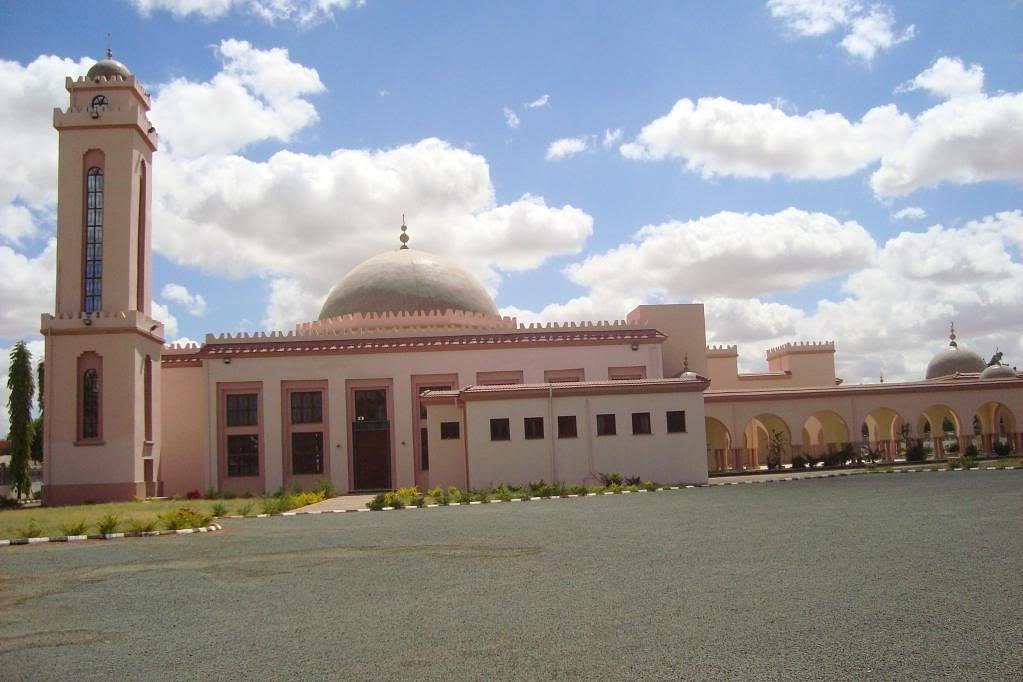
The Gaddafi National Mosque rises above Old Kampala on the hill that the British originally designated as the site for a cathedral, having been built in partnership with Libya’s government in the 1970s and completed in 2006. From the mosque’s minaret, open to all visitors, regardless of faith, the full panorama of Kampala’s seven hills is visible in a sweep that makes the city’s geography suddenly legible: the hills, the valleys between them, the distant gleam of Lake Victoria to the south, and the western horizon where the road you are about to take disappears toward Fort Portal and the mountains. The Nakasero Market and the Owino district, passed on the way out of the city, add the color and density of everyday Kampala: the fruit stalls, the boda bodas, and the layered noise of a city of two million that has long since learned to operate at full volume.
The Fort Portal highway climbs steadily west into the rolling tea-estate highlands of central Uganda, the landscape changing from city to cultivated green in the space of an hour. Fort Portal itself, Uganda’s self-styled City of Mountains, a highland town at 1,540 meters with a pleasant colonial-era center and direct views to the Rwenzori on clear evenings, is reached by late afternoon. The lodge has been selected for its combination of comfort and atmosphere; dinner here is the last proper restaurant meal before the mountain section begins in three days, and the kitchen is expected to do justice to the occasion.
Accommodation & Meals: Fort Portal Lodge. Full-board dinner. Early sleep — chimpanzees in Kibale wait at 07:30 tomorrow.
Day 3: Chimpanzee Tracking, Kibale Forest NP & Optional Bigodi Wetland Walk
The mandatory UWA ranger briefing at the Kanyanchu Visitor Centre at seven-thirty sets the rules for the encounter with the matter-of-fact precision of people for whom these rules are not merely administrative but genuinely consequential: maintain eight meters from the chimpanzees, lower voices when the trackers signal proximity, and do not use flash photography. Then the group enters the forest, and the briefing becomes immediately theoretical, because Kibale in full session, with calls echoing from the canopy above and the trackers already in radio contact with the community’s morning position, is not a place where rules feel like the most important thing happening.
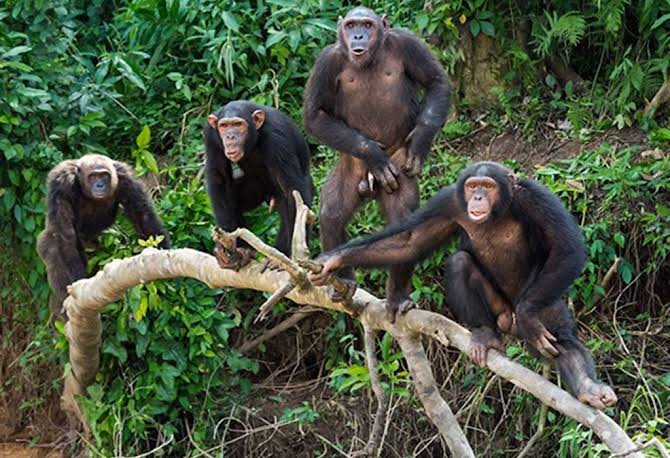
Kibale Forest National Park holds approximately 1,450 chimpanzees, the highest concentration in any protected area on the African continent. The habituated communities in the Kanyanchu section have been studied and tracked since the 1980s, and the quality of observation here is exceptional: feeding behavior, tool use, social hierarchy dynamics, maternal behavior, and inter-group aggression are all observable, documented, and visible to the attentive watcher who follows the guide’s positioning and the trackers’ quiet direction. Chimpanzees at a fruiting fig tree in the peak morning hours are genuinely extraordinary: the noise, the social complexity, and the sheer physical presence of animals that share 98.7% of our genetic material moving through a forest they understand completely.
The afternoon Bigodi Wetland Sanctuary walk, a community-run conservation initiative bordering the forest, offers birding of exceptional quality, with over 200 species recorded in a papyrus-and-forest-edge habitat that also supports red-tailed monkeys, L’Hoest’s guenons, and the photogenic black-and-white colobus. The walk is conducted by community guides from the villages adjacent to the sanctuary, and the income it generates is directly linked to local investment in the park’s long-term protection.
Accommodation & Meals: Kibale Forest Lodge. Full-board meals. Tomorrow, the short transfer south to Kasese will take place, and the mountains will begin the day after.
Day 4: Kibale Forest National Park → Kasese (~2 hours) | Mountain Briefing & Equipment Check | Overnight: Kasese Lodge
The drive from Kibale south to Kasese takes approximately two hours through Uganda’s western Rift Valley floor, a flat, open stretch of agricultural land and wetland between the Rwenzori escarpment to the west and the Rwenzori foothills to the east. From certain points on this road, the full mountain panorama is visible above the cloud line when conditions allow: dark ridgelines, higher slopes draped in the vegetation zones you will soon ascend through, and above it all, on the clearest days, the faint white glint of the Stanley Glacier that day nine’s pre-dawn departure will aim for.
Kasese is a functional, warm western Ugandan town with a strong Bakonzo cultural identity; the Bakonzo are the indigenous people of the Rwenzori foothills, and the mountain guide and porter team you are about to be introduced to are drawn from this community. The afternoon mountain briefing is conducted by your lead guide with the unhurried thoroughness of someone who understands that the quality of seven mountain days is determined in no small part by the quality of this preparation hour. Every item of gear is inspected. Sleeping bag ratings are checked against the Elena Hut temperature range (-10°C or below overnight). Waterproof claims on hardshell jackets are tested. Boot conditions are assessed. The seven-day Central Circuit route is walked through camp by camp, altitude by altitude, and day by day. Nothing ambiguous is left unclarified. The mountain is discussed honestly: its demands, its rewards, its weather variability, and the acclimatization strategy that will give the summit push the best possible probability of success.
Accommodation & Meals: Kasese Lodge. Full-board dinner. Get some rest; the Nyakalengija trailhead opens at 08:00 tomorrow morning.
Day 3: Rwenzori Day 1: Nyakalengija (1,646m) → Nyabitaba Hut (2,651m) | ~6.5 km | 4–5 hours
The Uganda Wildlife Authority registration point at Nyakalengija is the gate between the world below and the world above, and the transition it marks is immediate and complete. The porter team assembles with the precision of people who have done this hundreds of times: loads checked, equipment counted, harnesses noted, and then the park gate opens and the Rwenzori Mountains National Park receives you into the Afro-montane forest with the abruptness that ecological boundaries on these mountains always impose.
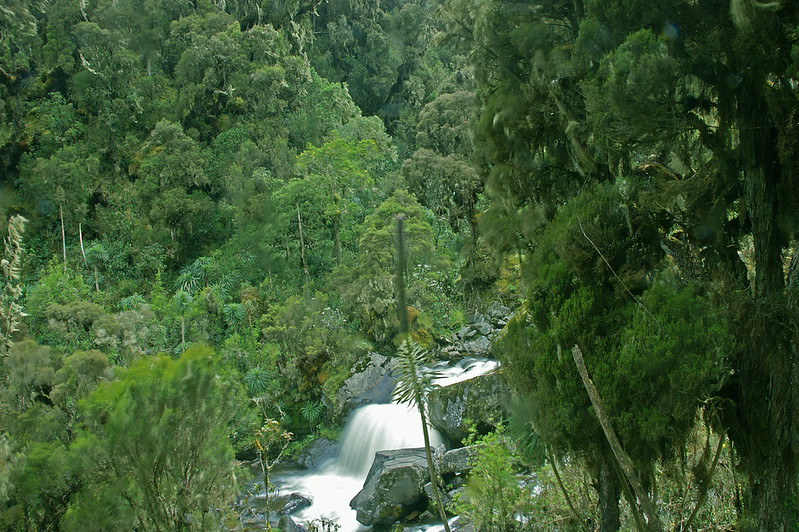
The Central Circuit Trail from Nyakalengija rises through Hagenia and Hypericum forest, its canopy closing above the path in a vault of leaves and branches draped in mosses and epiphytic plants. The Rwenzori turaco, the range’s avian emblem, its crimson wing patches unmistakable in flight, moves through the mid-canopy. Three-horned chameleons occupy low branches. The Mubuku River appears and disappears below the trail, its sound a constant beneath the forest sounds. The wooden bridge crossing marks the transition into the steeper ascent that carries the trail to Nyabitaba’s ridge at 2,651 meters, a commanding position with the Mubuku Valley visible below in the late afternoon mist. Dinner at the hut is the first of seven mountain meals prepared by your dedicated cook, who has been in the huts since the afternoon managing the supplies the porter team carried ahead.
Accommodation & Meals: Nyabitaba Hut (2,651m). Full-board mountain meals from today. Your dedicated guide and cook team manages all mountain hut nights.
Day 2: Rwenzori Day 2: Nyabitaba Hut (2,651m) → John Matte Hut (3,505m) | ~9 km | 5–6 hours
The Kurt Schafer Bridge over the Bujuku River is one of the Central Circuit’s defining moments, a narrow suspension crossing above a white-water rush that is simultaneously demanding and exhilarating, the kind of terrain feature that concentrates attention and delivers a reliable surge of aliveness. The descent from Nyabitaba to the bridge is the morning’s opening movement, and from the bridge the trail begins a sustained climb through the bamboo zone, signaling the transition from montane forest to the heather world above.

Highland bamboo at this altitude has a quality of density and scale that the lowland variety does not approach: thick-walled, thirty meters tall, filtering the light into green columns and muffling the sounds of the world below to near silence. Above the bamboo, the giant heather Erica arborea begins at six to eight meters, so thoroughly encased in sphagnum moss and pale Usnea lichen that the underlying wood is invisible. The effect is of trees transformed entirely into living matter, and the resulting landscape is among the most immediately distinctive in any mountain range anywhere in the world. John Matte Hut, at 3,505 meters, sits in a heather clearing with the first clear views of the higher massifs, Mount Stanley’s dark outline above the clouds on the western horizon.
Accommodation & Meals: John Matte Hut (3,505m). Full-board meals. Altitude effects begin here for most trekkers — hydration and rest are tonight’s priorities.
Day 7: Rwenzori Day 3: John Matte Hut (3,505m) → Bujuku Hut (3,962m) | ~7 km | 5–6 hours | Acclimatisation Day
The Bigo Bog is not a landscape that has equivalents. This experience needs to be stated directly, because neither the photographs nor the descriptions prepare you for it, and the only adequate preparation is to stand inside it. The Afro-alpine moorland of the Rwenzori, the zone entered today between John Matte and Bujuku, is a product of evolutionary isolation at equatorial altitude over millions of years, and the plants it has produced are unlike anything in the temperate mountain world or the tropical lowland world from which the surrounding reference points are drawn.
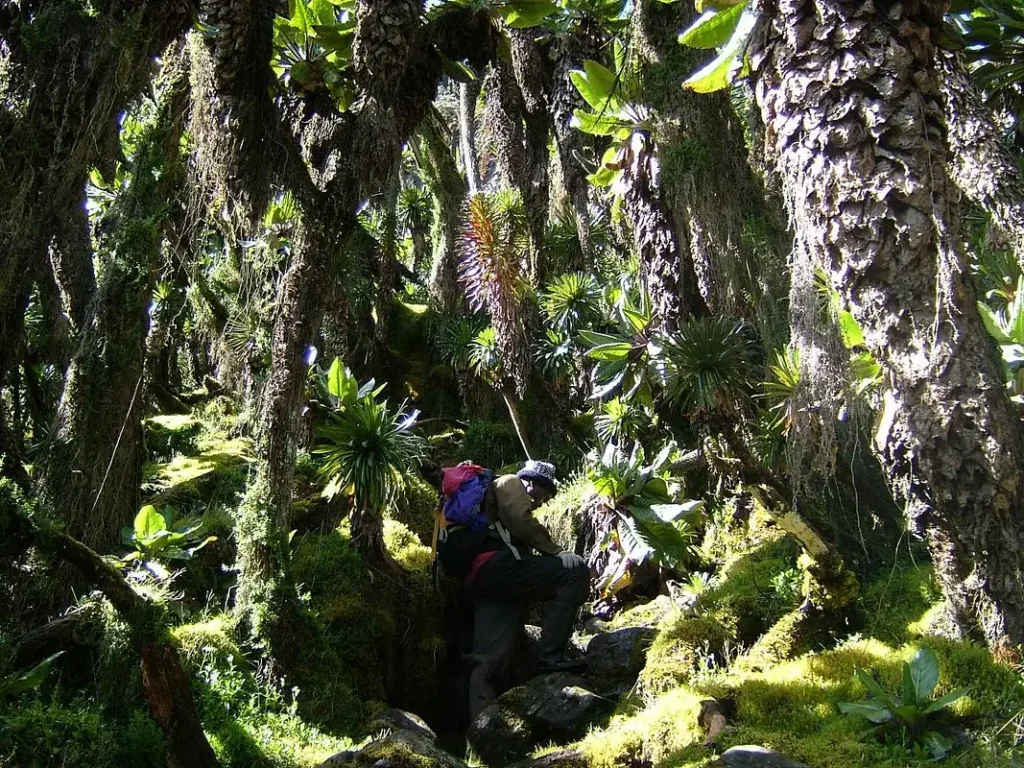
Giant Lobelia wollastonii stands in a silver-grey congregation above the waterlogged tussock grass, with each individual plant forming a rosette of velvet leaves that protect a central column of flower structure reaching three to four meters. Senecio adnivalis, tree groundsel, spreads its silver-backed canopies above the boardwalk at irregular intervals; its trunk is scaled, and its form is unmistakably tree-like, but its species belongs to the same genus as the garden weeds of suburban Europe, magnified beyond recognition by a million years of altitude and moisture. The boardwalk threads through the bog in long, straight sections, the guide’s pace measured, and the views in every direction a sustained exhibition of botanical improbability.
Lake Bujuku, at 3,962 meters, appears below the final rise as one of the expedition’s great rewards: a dark glacial tarn reflecting the Mount Stanley massif above it with photographic precision on still mornings. The Elena Glacier is visible from the lakeshore, the ice that Day Nine’s pre-dawn push will cross. Today is deliberately the shorter day of the Rwenzori section, structured to allow genuine acclimatization rest before the summit sequence begins.
Accommodation pace is also: Bujuku Hut (3,962m). Full-boadirection are Acclimatization day rest is the prescription. Please report any altitude symptoms to your guide immediately.
Day 8: Rwenzori day 4: Bujuku Hut (3,962m) → Elena Hut (4,541m) via Scott-Elliot Pass approach | Summit briefing
The morning at Bujuku is a preparation morning: a short acclimatization walk to 4,100 meters and back, timed to stimulate the physiological adaptations that the altitude demands without depleting the reserves that the next two days will require. At nearly 4,000 meters, the body is making measurable adjustments in blood chemistry, with increased red cell production, an elevated respiratory rate, and sometimes suppressed appetite. The deliberate pace of this morning reflects the guide’s careful management of these adjustments as much as any technical summit decision.
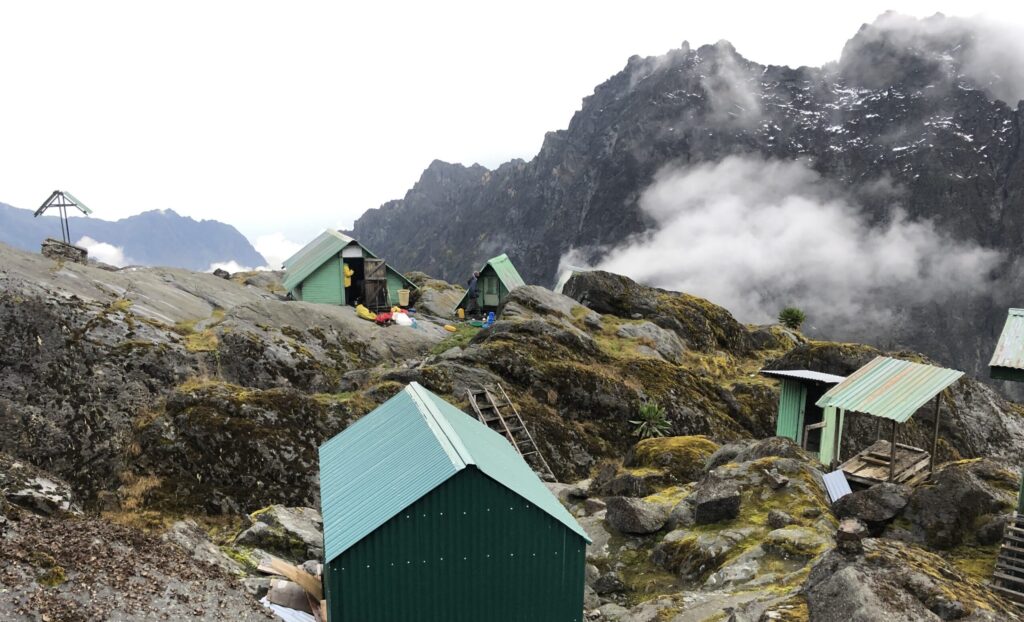
The afternoon advance to Elena Hut at 4,541 meters is a short but significant movement. The trail climbs steeply above Bujuku through the final Senecio groundsel zone, where plants reach six meters at the upper limit of their altitudinal range, before breaking onto bare rock above the lobelia moorland. Elena Hut, positioned on an exposed rocky shelf at the foot of the Stanley Glacier, is one of the most dramatically situated mountain shelters in Africa: a direct upward view to the glacier, a direct downward view across the cloud layer covering the valleys below, and, on clear evenings, a sky of stars so densely distributed that the constellation shapes are harder to find than the individual stars. The temperature inside the hut drops well below freezing overnight. Crampons are fitted and ice axes allocated this evening. The summit briefing is conducted with precision: departure time, glacier entry, rope sequence, and turnaround conditions. The alarm is set for four o’clock. Nothing remains to be decided except the summit itself.
Accommodation & Meals: Elena Hut (4,541m). Full-board meals: eat everything. Crampons fitted and checked. Alarm: 04:00. Sleep when the altitude and the anticipation allow.
Day 9: Rwenzori Day 5—Summit Day: Margherita Peak (5,109 m)→Descent to Bujuku Hut | 10–14 hours total
The four o’clock alarm at Elena Hut sounds in the absolute cold and absolute darkness of the high Rwenzori, and the response to it is the response that seven days of preparation and four days of altitude have produced: deliberate, layered, and focused. Every thermal layer goes on. The packed breakfast is consumed without ceremony. Your guide checks each crampon binding with the systematic thoroughness of someone for whom the distinction between properly secured and almost properly secured matters in a very specific way. The headlamps go on. The glacier is above.
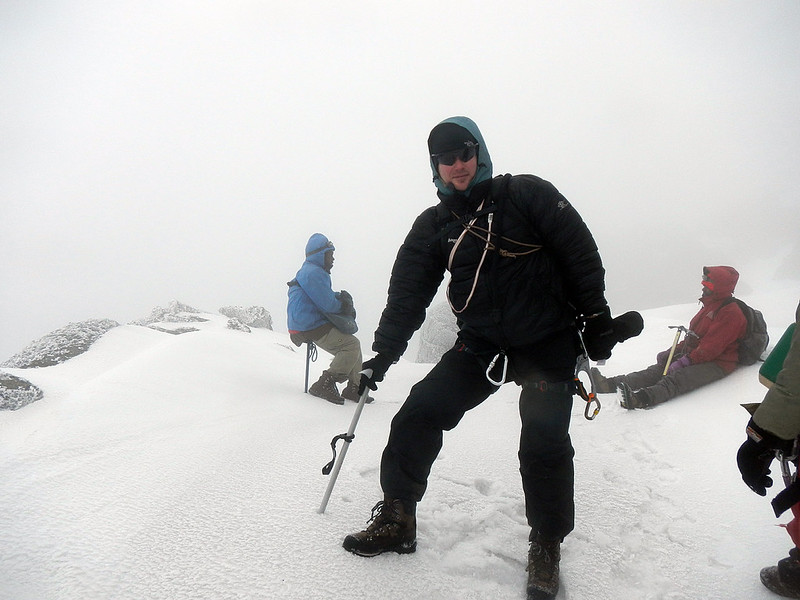
The Stanley Glacier in the pre-dawn hours is a world of blue-black ice and white headlamp circles, the sound of crampon placements sharp and certain on the ancient surface, the guide’s rope connecting the team with the quiet authority of established trust. The glacier has retreated by hundreds of meters over the past century; the dark rock scars on either side of the ice tell the story of its contraction with a geological plainness that no scientific report communicates as directly. On it now, with the ice solid beneath the crampons and the upper approach beginning to grey with the first suggestion of dawn, the knowledge of its impermanence makes every placement feel like something that should be noticed.
Dawn arrives on the Stanley Plateau in layers. Grey spreads along the eastern horizon. Amber. Gold. And then, as the summit rock appears above the glacier’s upper lip, the final scrambling approach over ancient crystalline gneiss with the guide close and the rope present, the full equatorial sunrise fires the Congo Basin to the west in a spectrum that has no name in any language. Margherita Peak at 5,109 meters. Africa’s third-highest summit. The Rwenzori’s apex. It is the highest point in Uganda. The view extends from the DRC’s forest immensity to the west to the Rift Valley plains to the east, the full Rwenzori ridge visible in both directions, the retreating glacier below your boots connecting you to a geography that runs from this peak to Lake Victoria to the White Nile to the Mediterranean Sea. The Duke of Abruzzi stood on this ridge in 1906. You are standing on it now.
The descent retraces the glacier to Elena, then continues back to Bujuku, a long, rewarding downward movement through every altitude zone traversed in the ascent, the body now working in a different register, the summit behind it and recovery beginning. Bujuku Camp welcomes the team with hot food and the hospitality of people who have been here before and know exactly what the evening requires.
Accommodation & Meals: Bujuku Hut (3,962m). Full-board meals. A summit certificate for Margherita Peak was presented. Rest completely. Two mountain days remain.
Day 10: Rwenzori Day 6: Bujuku Hut (3,962m) Over to Scott-Elliot Pass (4,372m), down to Kitandara Camp (4,023m) | ~8 km | 6–7 hours
Scott-Elliot Pass, at 4,372 meters, is named for the naturalist whose 1895 Rwenzori expedition documented these mountains for the wider scientific world, and the view from the pass earns the commemoration. The ascent from Bujuku climbs through the final lobelia and groundsel zones onto bare rock, gaining the narrow ridge that separates the Bujuku Valley to the north from the Kitandara system to the south. From the pass itself, the full scale of the Central Circuit’s geography is simultaneously visible: the valley you have come from, the lake basin you are descending to, and the arc of peaks from Baker to Stanley that forms the expedition’s mountaineering spine.
The descent to Kitandara is one of the Central Circuit’s finest walking stretches: a long, gradual traverse across the southern face of Mount Baker, with the twin Kitandara Lakes appearing below in stages, first a gleam of water, then the full extent of both tarns, and finally the camp positioned on the shoreline at 4,023 meters, with Baker’s east face reflected in the water on still evenings. The Kitandara Lakes are among the most serene high-altitude settings in eastern Africa, and the camp that evening has a quality of earned quiet, the summit behind, the descent ahead, and the landscape around you offering one of its finest moments without demanding anything further.
Accommodation & Meals: Kitandara Camp hut (4,023 m). Full-board meals. One mountain day remains. The summit is two days and a whole altitude range behind you.
Day 11: Rwenzori Day 7: Kitandara (4,023m) via Guy Yeoman Hut (3,261m) toNyakalengija (1,646m) | -15 km | 7–9 hours |
The last mountain day is the longest by distance and the most physically demanding on the knees, with a sustained descent of nearly 2,400 meters of altitude through the full vertical succession of Rwenzori vegetation zones. The route passes Guy Yeoman Hut at 3,261 meters on the Mubuku River, then descends through the heather zone, the bamboo, the Hagenia-Hypericum forest, and finally the lower montane forest above Nyakalengija in a sequence that reverses the ascent in a single, concentrated movement.
The re-entry into each vegetation zone has a different quality from the first time through it. The bamboo that was strange on Day Six is now familiar and almost comforting. The lower forest, when it arrives with its relative warmth and acoustic richness, feels almost tropical after a week above 2,500 meters: turacos are calling again, the river sounds louder as the valley floor approaches, and the smell of damp forest floor that has been absent for seven days returns as something unmistakably welcome. At the Nyakalengija gate, the porter tips are distributed in the particular warmth of a mountain partnership at its conclusion: people who have moved through extraordinary terrain together, the exchange of respect that runs deeper than any formal transaction. Your private vehicle is at the gate. Kasese in thirty minutes. Hot shower. Large dinner. The mountain is behind you. Seven days of extraordinary effort, all complete.
Accommodation & Meals: Kasese Lodge (post-trek). Full-board dinner. Summit certificate collection confirmed. Tomorrow: Queen Elizabeth National Park.
Day 12: Transfer From Kasese to Queen Elizabeth NP – Afternoon Game Drive
The transfer from Kasese to Queen Elizabeth National Park takes approximately ninety minutes, a distance that covers an enormous experiential shift, from the alpine foothills of the Rwenzori to the open, flat, golden savannah of the Rift Valley floor. The park entrance appears on the right of the road with the abruptness of a scene change: scrub acacia and open grassland replace the cultivation and forest of the foothills; Uganda kob move in herds across the plains in the middle distance; and the first warthogs trot with their tails upright across the game track that leads to the lodge.
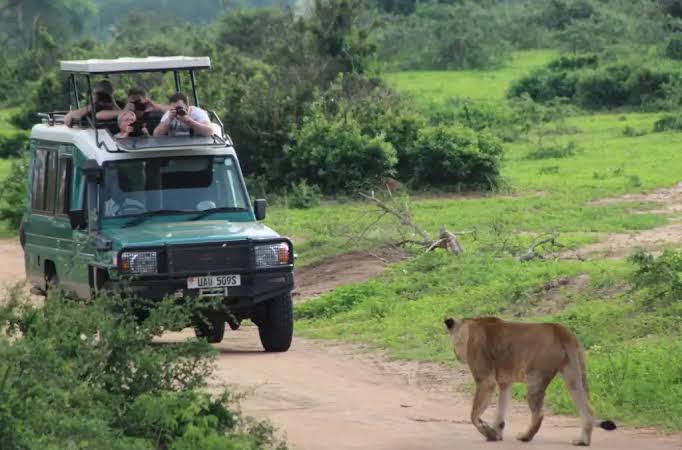
The afternoon Kasenyi Plains game drive is the body’s introduction to an entirely different kind of animal attention: the wide-horizon, open-country alertness of the savannah, where distance and movement and the quality of light all participate in the wildlife viewing in a way the forest never allows. Lions are the Kasenyi Plains’ signature species, and your driver-guide navigates the drainage lines and woodland edges with knowledge of current territory use that makes the difference between a productive lion game drive and an empty one. Elephants move through the acacia woodland at the plains’ western edge. Buffalo herds cross the open ground in the later afternoon. Uganda kob males display on the lek with the repetitive competitive authority of animals whose entire reproductive strategy depends on endurance.
Accommodation & Meals: Queen Elizabeth National Park, savanna position. Full-board dinner. The hippos in the channel below the Mweya Peninsula begin their nocturnal calls after dark, your first introduction to the Kazinga Channel that tomorrow’s boat cruise will reveal.
Day 13: Boat Cruise at Kazinga Channel – Afternoon Game Drive At Ishasha Sector
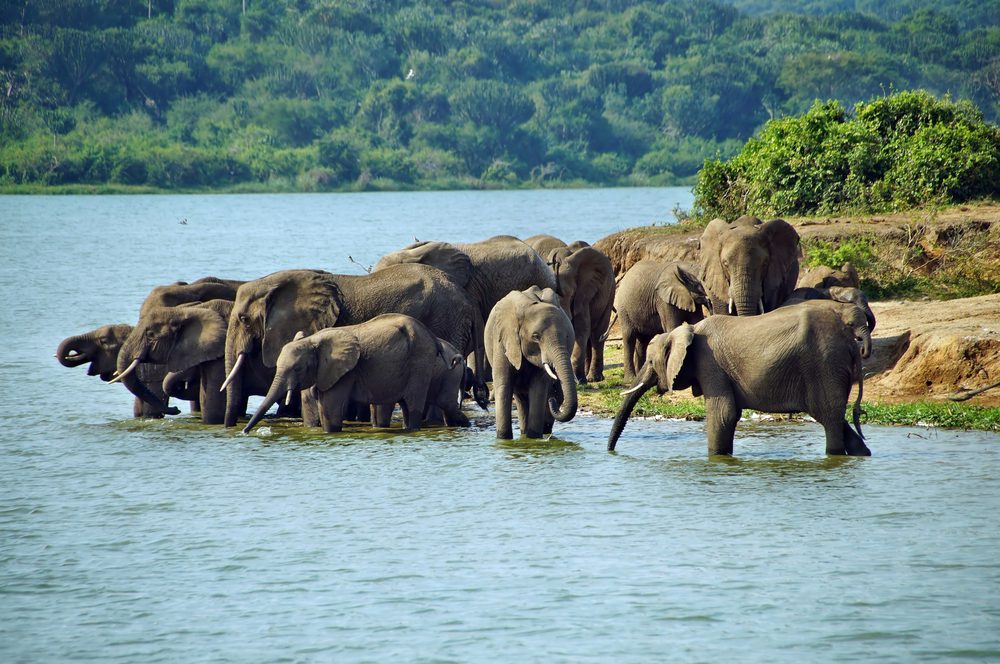
The Kazinga Channel boat safari at ten o’clock is one of those experiences that East African guides consistently rate among the two finest wildlife hours on the continent, and the consistency of that assessment is its own testament. The thirty-two kilometer waterway connecting Lake George and Lake Edward is the concentration point for an astonishing density of large animal life: several thousand hippos distributed along the channel’s banks and mid-water, their social dynamics visible at close range from the flat-bottomed boat; Nile crocodiles occupying every available sandbank in arrangements of sunbathing contentment; enormous elephant breeding herds wading to the channel’s edge to drink within meters of the hull; and African fish eagles hunting from dead trees above the bank with the precision of a species that has refined its technique over ten thousand years.
The birds on the Kazinga Channel are a chapter in themselves. The African skimmer’s low, water-surface flight pattern. The goliath heron displayed vast, motionless patience while perched on the bank. The yellow-billed stork’s cooperative fishing behavior. The pied and malachite kingfishers at the water’s edge are in flashes of color that the camera reflexes are always slightly too slow for. Over 600 bird species have been recorded in Queen Elizabeth National Park; the channel concentrates the water-associated fraction of that number into a single afternoon of exceptional ornithological density.
The drive south to Ishasha after lunch follows the Rift Valley floor with the Rwenzori on the western horizon, the same peaks, now seen from a completely different angle, their scale suddenly comprehensible as a geological rather than a trekking reality. Ishasha is famous for one specific wildlife behavior: lions resting in the branches of the large fig trees along the Ntungwe River. The afternoon game drive through the Ishasha sector is conducted with the deliberate patience that tree-climbing lions always require. They are present on most visits. They are never guaranteed. The search through fig tree corridors at the golden end of the afternoon is worth the drive, no matter the outcome.
Accommodation & Meals: Ishasha Sector Lodge. Full-board meals. Tomorrow: the highland road to Bwindi.
Day 14: Transfer From Isasha to Bwindi Impenetrable National Park
The road from Ishasha to Bwindi climbs immediately and dramatically into the Kigezi Highlands, Uganda’s most spectacular highland scenery, a world of terraced hillsides and deep valleys where the tea gardens cling to the slopes in geometric green and the mist fills the valleys between ridges like something deliberate. The Kigezi region is sometimes called Uganda’s Switzerland, a comparison that underestimates the Kigezi and is unfair to both. This is highland East African scenery at its most intricate and most agricultural, a landscape shaped over centuries by the Bakiga people, whose terracing methods have transformed some of the continent’s most challenging topography into productive farmland.
Bwindi Impenetrable National Park appears on the southern horizon as a dark, dense, unbroken wall of primary rainforest that is visually distinct from every managed or secondary forest encountered elsewhere on this journey. The forest is the real thing: a 25,000-year-old forest that survived the last ice age as a refugium, maintaining continuous forest cover when much of central Africa’s tree cover contracted to isolated remnants. The species richness produced by this continuity, which includes 120 mammal species, 350 bird species, and over 1,000 plant species, is visible in the forest’s structural complexity even from the road.
The afternoon is deliberately unscheduled. The lodge, positioned at the forest edge, has views directly into the canopy. L’Hoest’s monkeys appear in the trees adjacent to the accommodation. The forest sounds begin to accumulate as the afternoon progresses: birds, insects, and occasionally the distant, resonant chest beat of a silverback whose family group has moved within acoustic range. The gorilla trek briefing with the UWA ranger guide this evening prepares the group for tomorrow morning’s assignment: family group, terrain character, distance expectations, and the protocols that will govern the encounter.
Accommodation & Meals: Bwindi forest-edge lodge. Full-board dinner. Gorilla permit confirmed. Briefing complete. Sleep early; the 07:30 assembly is the beginning of the journey’s most anticipated morning.
Day 15: Bwindi, Gorilla Trekking with an $800 Permit
Seven-thirty at the Uganda Wildlife Authority park headquarters. The ranger guide distributes the family assignment for the day, with each group of up to eight assigned to a different habituated gorilla family, each with a distinct home range, a different dominant silverback, and a different composition of females, juveniles, and infants. The ranger’s briefing covers the protocols that every visitor knows in theory and experiences differently in practice: the seven-meter approach guideline, the face mask requirement, the voice register when the gorillas are located, and what to do if a silverback displays or makes a mock charge. Then the forest opens, and the tracker team ahead in the trees sends the signal that the family’s morning position is known, and the trek begins.
Bwindi’s forest terrain is serious. The slopes are steep, the vegetation is dense, the trails cut by the rangers are functional rather than comfortable, and the combination of altitude, humidity, and gradient makes the trek a genuine physical effort rather than a forest walk. Trekking poles are essential. The effort makes the encounter meaningful; you arrive at the gorilla family having worked for the privilege, and the contrast between the trek’s effort and the encounter’s stillness is intentional. It is the architecture of the experience.
When the family appears, and it always appears differently, the first sighting is never the way it was described beforehand; the hour begins. A silverback at rest against a tree trunk, his dark eyes conducting a brief, complete assessment before returning to the vegetation he was browsing. A mother gorilla holds an infant whose small fingers grip her fur with absolute trust, while the infant’s eyes track everything in the clearing with the alert curiosity of a young animal learning the boundaries of the world. Juveniles in the undergrowth playing with the specific, physical, endlessly renewable energy of young primates who have not yet learned to conserve themselves. The hour is measured in its own time, which is not clock time, and it ends always before it feels complete.
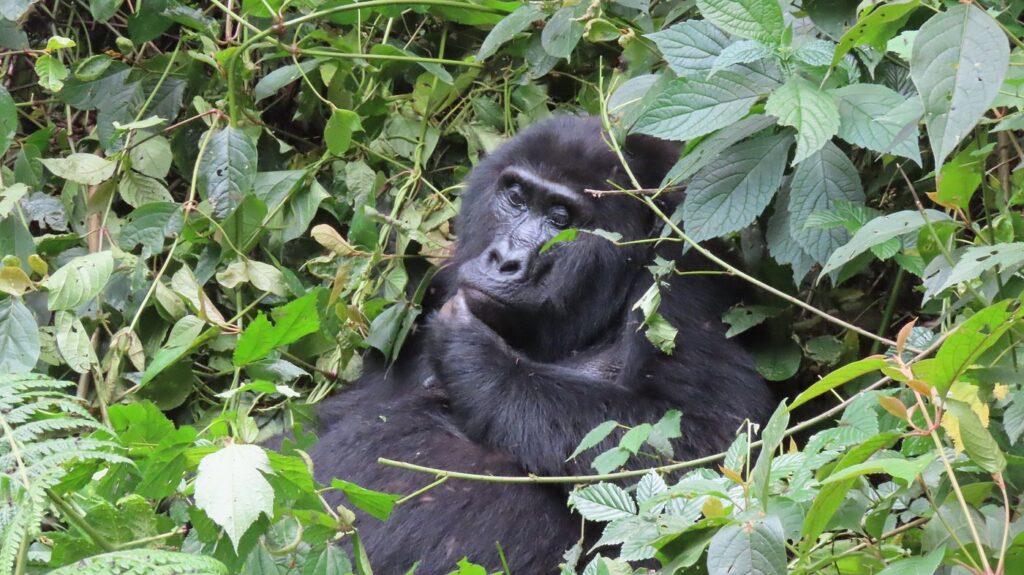
The conservation reality that the $800 permit price represents is not separate from the experience: it is the mechanism by which the gorillas are alive, the forest is protected, and the rangers are funded, trained, and equipped. Uganda’s mountain gorilla population, approximately 459 individuals in Bwindi and the Virunga volcanoes combined, is the only one that is growing. The system of permit revenue, community benefit, and ranger protection that the UWA has built around Bwindi is one of the most successful conservation models in Africa. Every permit contributes to its continuation.
Accommodation & Meals: Bwindi forest-edge lodge. Full-board meals. The afternoon is at leisure — the gorilla encounter benefits from unhurried reflection. Tomorrow: the Batwa.
Day 16: Bwindi: Batwa Community Cultural Experience
The Batwa, or the Twa people, were the forest-dwelling inhabitants of Bwindi for centuries before the national park’s establishment in 1991. Their eviction from the forest, without compensation or alternative livelihood, was one of conservation’s darker chapters in this region, and the Batwa Trail is part of the community’s answer to that dispossession: a guided walk led by Batwa community members that demonstrates the forest skills, knowledge systems, and cultural practices of a people whose relationship with this specific ecosystem ran to a depth that no external observer has fully mapped.
The trail lasts two to three hours and covers fire-making by friction; the identification and use of medicinal plants that the Batwa developed over generations of forest living; honey harvesting from the wild beehives that are among the forest’s most important food resources; and the interpretation of forest sounds, bird calls, animal movements, and wind patterns in terms that carry information about what is happening in the forest beyond the line of sight. The Batwa guides conduct the trail with a pride that is entirely without performance: this body of knowledge they carry, skills they practice, and a landscape they know as intimately as any people have ever known any place. The closing traditional dance and music session, accompanied by explanations of the specific social contexts in which each song belongs, is genuinely moving.
The optional second gorilla trek on Day Sixteen is available for those who wish to add a second permit at an additional cost. The assignment to a different habituated family guarantees an entirely new encounter, new terrain, new individuals, and the second day’s emotional texture is consistently reported as different from the first. Speak to your Rwenzori Trekking Expeditions consultant about availability and pre-booking requirements.
Accommodation & Meals: Bwindi forest-edge lodge. Full-board meals. On the forest’s last evening, the sounds of Bwindi came in through open windows for the final night.
Day 17: Transfer From Bwindi to Entebbe via Lake Bunyonyi for 8 hours total
The last full day of the safari begins before breakfast, marked by a departure that is also, in some sense, an arrival, as the journey resolves into something that will require weeks to fully process and a lifetime to completely absorb. The Bwindi lodge’s forest canopy offers its final morning of bird calls and primate movement before the vehicle is loaded and the road east begins.
Lake Bunyonyi, thirty minutes from Bwindi, is one of East Africa’s most beautiful crater lakes, a series of steep, terraced hillsides dropping to dark water in which twenty-nine small islands are distributed in arrangements that seem intended rather than geological. The optional forty-five-minute boat trip on the lake, through channels between the islands with the terraced hills above reflected in still water, is a quiet, sensory conclusion to seventeen days of intense experience. No wildlife, no altitude, no technical demands, just the lake and the light and the Kigezi hills.
The Equator monument at Kayabwe, a concrete ring straddling the zero-degrees-latitude line on the Kampala-Masaka highway, provides the last of the journey’s light-register moments: the southern-hemisphere water draining clockwise, the northern-hemisphere water draining counterclockwise, and the equatorial water draining straight down the plug hole with no rotational preference. The physics of the demonstration are marginal and the theatre is excellent, and after seventeen days that spanned a glacier at 5,109 metres and a forest floor with a silverback three metres away, the Equator stop provides exactly the right note of uncomplicated joy to close the journey on.
Arrive in Kampala or Entebbe in the evening. The farewell dinner with your guide team, the mountain guide, if availablemarginal, occasion, and your safari driver-guide is an opportunity to review the journey in the cmeters of the people who made it possible. Eighteemeters. Four parks. Gorillas, chimpanzees, Margherita Peak, tree-climbing lions, hippos, and Batwa fire stories. Uganda.
Accommodation & Meals: Kampala or Entebbe hotel. Farewell dinner included. A transfer to Entebbe Airport is arranged for tomorrow.
Day 18: Departure
The final morning offers time depending on your departure flight: the Uganda Wildlife Education Centre (Entebbe Zoo, with rehabilitated wildlife including chimpanzees, lions, and shoebill storks in accessible enclosures) and the Entebbe Botanical Gardens on the Lake Victoria lakeshore are both within twenty minutes of the airport and provide a gentle final Ugandan experience before the departure hall. Your Rwenzori Trekking Expeditions representative accompanies you to Entebbe for the airport farewell, luggage confirmed, check-in assisted, and the specific warmth of a guide saying goodbye to people who have been somewhere significant together.
The flight home carries something that eighteen days in Uganda always produces: a recalibrated understanding of what the living world contains.
The gorilla’s gaze. The glacier at pre-dawn. The chimpanzee in the canopy above your head. The Batwa elder demonstrates fire from two sticks.
These are not memories that soften with distance. They are the kind that sharpen.
Accommodation & Meals: Entebbe International Airport. Breakfast included. Transfers to all departure terminals pre-arranged.
Included in Your Package
All private vehicle groterminals areport is included throughout: Entebbe arrival transfer, all inter-park transfers, and final Entebbe departure transfer | ✓ |
All accommodation: Entebbe hotel (1 night), Fort Portal lodge (1 night), Kibale forest lodge (1 night), Kasese pre-trek lodge (1 night), 7 nights Rwenzori mountain huts (Central Circuit), Kasese post-trek lodge (1 night), Queen Elizabeth NP lodge (1 night), Ishasha sector lodge (1 night), Bwindi forest lodge (3 nights) — 18 nights total | ✓ |
All meals as specified: full-board on Rwenzori mountain (Days 5–11); breakfast and dinner at all lodges (lunch included Days 3, 13, 14, 17) | ✓ |
Chimpanzee tracking permit — Kibale Forest NP ($200–250 USD value — included) | ✓ |
Gorilla trekking permit — Bwindi Impenetrable Forest Day 15 ($800 USD value — included) | ✓ |
Batwa Trail cultural experience — Day 16 (community fee included) | ✓ |
All UWA national park entry fees: Kibale, Rwenzori Mountains NP (7 days), Queen Elizabeth NP, Bwindi Impenetrable NP | ✓ |
Certified senior mountain guide, private, your group only, Days 5–11 | ✓ |
Assistant mountain guide for technical sections (Elena Hut and summit day) | ✓ |
Dedicated porter team, personal kit portage up to 18 kg per trekker on mountain | ✓ |
Dedicated mountain cook: all Rwenzori meals prepared and managed | ✓ |
All technical summit equipment: crampons, ice axe, harness, safety helmet, managed ropes | ✓ |
Rubber boots are hired as mandatory for Central Circuit bog sections, all sizes, provided free | ✓ |
Emergency oxygen canister and wilderness first-aid kit, carried at all times on mountain | ✓ |
Kazinga Channel afternoon boat cruise — Queen Elizabeth NP (Day 13) | ✓ |
Kasenyi Plains game drive — Queen Elizabeth NP (Day 12 afternoon) | ✓ |
Ishasha sector tree-climbing lion game drive — Queen Elizabeth NP (Day 13 afternoon) | ✓ |
Kampala city tour — Day 2 (Kasubi Tombs, Gaddafi Mosque, Nakasero Market) | ✓ |
Equator stop, Day 17 | ✓ |
Summit certificate for Margherita Peak ascent | ✓ |
10% of proceeds are directed to Bakonzo community schools and Batwa livelihood programs. | ✓ |
Not Included
International flights to and from Entebbe International Airport (EBB) | ✗ |
Uganda tourist visa ($50 USD for most nationalities): apply at visas. immigration.go.ug before departure. | ✗ |
Comprehensive travel and medical evacuation insurance — mandatory; must include mountaineering above 5,000m, emergency helicopter evacuation, and gorilla trekking | ✗ |
Personal sleeping bag (minimum -5°C rating required; -10°C strongly recommended for Elena Hut nights) | ✗ |
Personal trekking clothing: thermal layers, waterproof hardshell jacket and trousers, down jacket, gaiters | ✗ |
Trekking poles (strongly recommended for the Rwenzori section; available for hire in Kasese) | ✗ |
Personal porterage above 18 kg guideline on mountain | ✗ |
Alcoholic beverages throughout | ✗ |
Personal medications, including altitude sickness prophylactics (Diamox consult your personal doctor) | ✗ |
Tips for mountain guides, porters, safari driver-guide, and lodge staff (discretionary but highly encouraged) | ✗ |
Optional second gorilla permit Day 16 ($800 USD additional, subject to availability) | ✗ |
Optional Gorilla Habituation Experience upgrade (full-day format available on request) | ✗ |
Lake Bunyonyi boat trip, Day 17 (small additional cost, optional) | ✗ |
Optional white-water rafting in Jinja (available as a post-safari addition) | ✗ |