The 6-day Rwenzori Portal Peaks trek via the Central Circuit trail summits Kuhuma & Rutara Peaks with Rwenzori Trekking Expeditions‘ private guides. Trek 6 days to Kitandara Lakes beneath Baker, Speke & Stanley; no technical climbing is required.
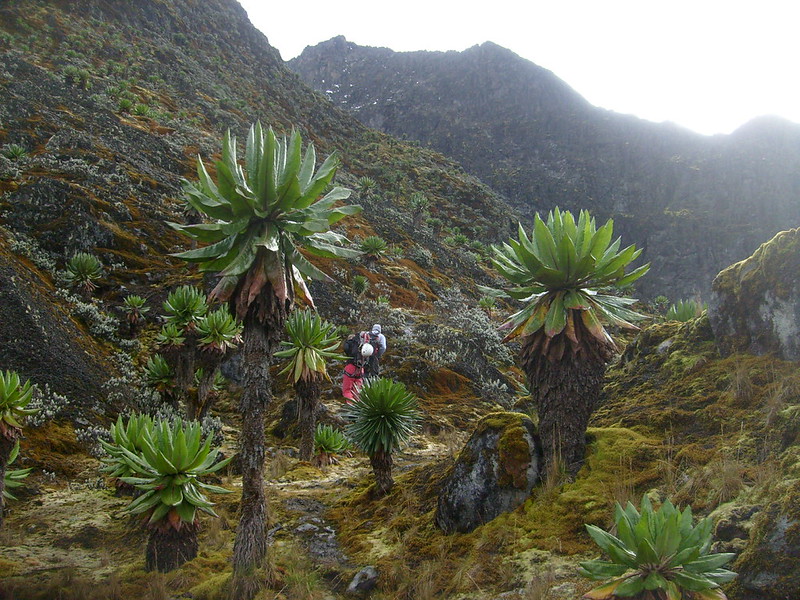 The 6-Day Rwenzori Portal Peaks Trek via the Central Circuit Trail is our carefully paced introduction to true high-altitude trekking in the Rwenzori Mountains of western Uganda, built for hikers who want the altitude, the drama, and the sense of achievement of a major African summit without the ropes, crampons, or glacier travel that Margherita Peak demands. The route climbs from Nyakalengija at 1,640 meters through the Bakonzo farmlands and dense montane forest to Nyabitaba Camp, then on through bamboo and moss-hung forest to John Matte Camp at the foot of the Bujuku Valley, before a challenging, honest climb to Bukurungu Rock Shelter sets you up for summit day, a simultaneous ascent of Kuhuma Peak (4,134 meters) and Rutara Peak (4,050 meters), together known as the Portal Peaks, with the entire Rwenzori range spread out below. The final 2 days retrace the route back down through John Matte and Nyabitaba to Nyakalengija, legs tired, cameras full, and every one of you can now say you have stood above 4,000 meters in the Mountains of the Moon.
We are Rwenzori Trekking Expeditions experts, and this itinerary reflects decades of collective guiding experience on the Central Circuit Trail inside Rwenzori Mountains National Park, a UNESCO World Heritage Site. Whether you are a solo hiker chasing a first serious summit, a couple wanting an adventure with real substance to it, a family with capable teenagers, or a small group of friends looking for a trek that belongs entirely to you, this itinerary is built around your fitness, your pace, and a route plan with no one else’s schedule attached to it, your private guide, your dedicated porter team, and huts and camps chosen for exactly this journey.
Itinerary at a Glance
- Day 1: Nyakalengija (1,640m) to Nyabitaba Camp (2,650m): the park gate and the Afro-montane forest
- Day 2: Nyabitaba Camp to John Matte Camp (3,505m): bamboo forest, Kurt Schafer Bridge and the Bujuku Valley
- Day 3: John Matte Camp to Bukurungu Rock Shelter: the heather zone and the climb into thinner air
- Day 4: Summit Day: Kuhuma Peak (4,134m) and Rutara Peak (4,050m), the twin Portal Peaks, then back to Bukurungu
- Day 5: Bukurungu Rock Shelter back to John Matte Camp: the descent, and a second look at everything you climbed
- Day 6: John Matte Camp to Nyabitaba to Nyakalengija: bamboo, forest and the walk back to solid ground
Day 1: Nyakalengija to Nyabitaba Camp
Your private guide and porter team meet you at the Rwenzori Mountains Services headquarters in Nyakalengija shortly after breakfast, and the morning briefing has the particular energy that only the first day of a real mountain trek carries. The trail leaves the settlement through Bakonzo farmland, banana groves, small homesteads, and elephant grass taller than your head before reaching the national park gate, where registration formalities are handled quickly and without fuss by your guide while you take in your first proper view of the range ahead.
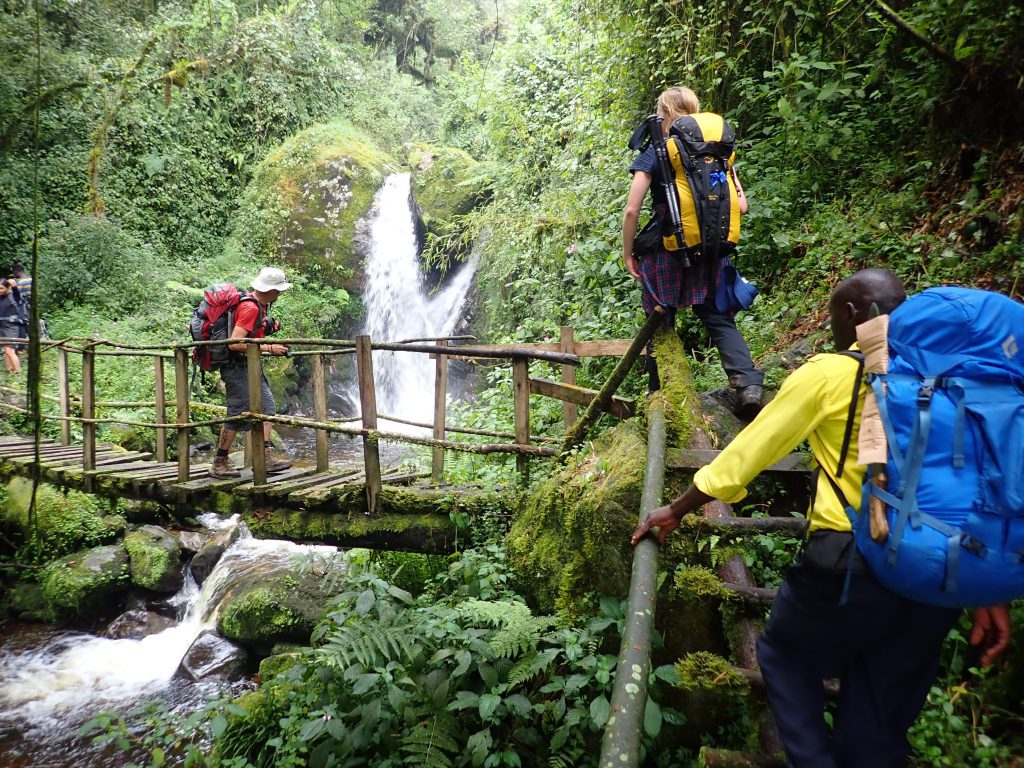
Once inside the park, the path follows the Mubuku River upstream through dense Afro-montane forest, a shaded, steady climb alive with birdsong, and it is not unusual to catch a troupe of monkeys crashing through the canopy or, with real luck, the flash of a three-horned chameleon on a low branch beside the trail. Roughly eight kilometers and four to five hours after leaving Nyakalengija, the trail lifts sharply onto the Nyabitaba Ridge, where the timber hut at 2,650 meters commands a fine outlook back down the valley you have just climbed. Dinner here is hearty and unhurried, and a curated evening around the hut, swapping first impressions of the forest with your guides, sets the tone for the days still to come.
Day 2: Nyabitaba to John Matte Camp to Kurt Schafer Bridge and the Bujuku Valley
The trail drops out of Nyabitaba through thick bush and forest and, within half an hour, reaches Kurt Schafer Bridge, the crossing point where the Bujuku and Mubuku rivers meet in a tangle of white water, a natural marker for where the real climb of the day begins. From here the path climbs for close to two hours through mountain forest and moss-covered rock into the bamboo zone, dense and green and loud with birdlife, before reaching Nyamulejju Rock Shelter, an old camping spot used by early expeditions and now simply the best lunch stop on the route: on a clear day, Mount Stanley and Mount Speke stand visible from the shelter’s mouth. The afternoon continues climbing through mountain forest until the trail finally opens onto John Matte Camp at 3,505 meters, eleven kilometers and roughly seven hours from Nyabitaba, where a large, satisfying meal and the cold, clear waters of the nearby Bujuku River, irresistible to most trekkers after a day like this, mark the end of the walking. From camp, on a clear evening, the Margherita Glacier is visible, cradled between the Alexandra and Margherita peaks of Mount Stanley, a first proper glimpse of the ice that crowns the range.
Day 3: John Matte Camp to Bukurungu Rock Shelter
The day begins with a sunrise worth setting an early alarm for, the Bujuku Valley catching the first light while your camp cook prepares breakfast, and it is a fitting send-off for what is, honestly, the hardest single day of the trek. The climb to Bukurungu Rock Shelter is a sustained, muddy, five-hour ascent through the Heather-Rapanea zone, tough underfoot but never technical, and your guide’s deliberately unhurried pacing is what keeps legs and lungs working together rather than against each other. The reward for the effort comes in glimpses rather than grand vistas: Rwenzori red duikers are moving quietly through the undergrowth, rock hyraxes are sunning themselves on boulders, and giant heather draped in moss is closing in on both sides of the trail as the vegetation thins with altitude. Bukurungu Rock Shelter itself is one of the most atmospheric camps on the entire Central Circuit trail, a natural rock overhang used by trekking parties for generations, and the early night here, cold, clear, and quiet, is deliberate: tomorrow starts before dawn.
Day 4: Summit Day to Kuhuma Peak and Rutara Peak, the Portal Peaks
You and your guides are up and moving early, boots laced and headlamps on, for the day this entire trek has been building tow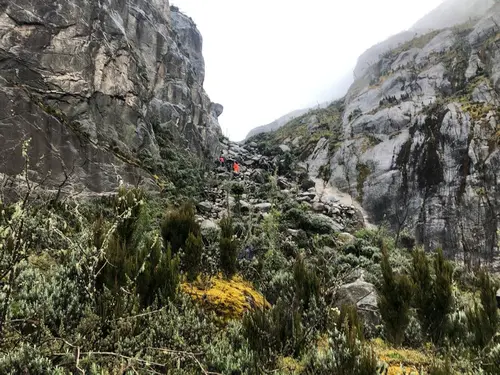 ard: the simultaneous ascent of Kuhuma Peak at 4,134 meters and Rutara Peak at 4,050 meters, together known as the Portal Peaks.
The climb opens with a genuinely steep pull over exposed rock, hands as much as feet doing the work in places, before easing into a less demanding but still testing scramble to the twin summits. What waits at the top, weather permitting, is the reason every guide on this route talks about this day differently from the rest: an unbroken panorama across the Rwenzori massif, the glaciated crowns of Stanley, Speke, and Baker standing in a line against the equatorial sky, and the particular, hard-earned silence of standing above 4,000 meters on a mountain range most travelers to East Africa have never heard of. After taking photographs, the careful and unhurried descent back to Bukurungu Rock Shelter leads to a warm dinner and an early night at the camp you left in darkness that morning.
Day 5: Bukurungu Rock Shelter to John Matte Camp
With the summit behind you, day five offers a chance to actually look at the country you climbed through while half-focused on the effort of the ascent. The descent through the heather and alpine zones retraces yesterday’s route in reverse, and the lighter mood in the group is obvious: shoulders looser, cameras out more often, and conversation returning to the trail. The Rwenzori red duikers and rock hyrax that stayed largely out of sight during the harder climb up are more often glimpsed on the way down, and the dramatic terrain around Bukurungu, properly appreciated now rather than endured, tends to earn a second, longer look. By the time John Matte Camp appears again at 3,505 meters, most trekkers are ready for another swim in the Bujuku River and an evening spent trading summit photographs by lamplight.
Day Six: John Matte Camp to Nyabitaba to Nyakalengija
The final day is a long, satisfying descent through bamboo forest and the same moss-covered, occasionally muddy trail that carried you up on day two, though it feels entirely different walking it downhill with a summit behind you. Nyabitaba arrives around midday, and a stop for lunch and a hot cup of tea at the hut where this whole journey began is as much a moment of reflection as it is a meal—most trekkers spend it quietly comparing notes on which day was hardest and agreeing, almost without exception, that day three earned the honor. From Nyabitaba the trail continues down through marshy sections and forest to the park gate and on into Nyakalengija, where your dedicated vehicle will be waiting to carry you back to Kasese for a hot shower and a proper meal. You arrive with tired legs, a memory card full of images no stock photograph could replicate, and the genuine, well-earned right to say you have stood above 4,000 meters in the Mountains of the Moon.
What’s Included
Every Portal Peaks departure is run as a private trek rather than a scheduled group tour, and the fee is built to remove decision-making from your mountain days entirely.
Your private guide and full porter team are assigned to you alone for all six days, alongside your camp cook, three meals a day prepared fresh on the mountain, and accommodation in the Nyabitaba and John Matte huts plus camping at Bukurungu Rock Shelter.
National park entrance fees for each night spent inside the park are included, along with technical summit equipment for the Kuhuma and Rutara ascent, free use of rubber boots for the muddier sections of trail, pre-trek briefings, and a certificate of completion for those who reach the Portal Peaks and return.
On request, we also arrange your airport transfers, pre- and post-trek accommodation in Kasese, and gear rental for any kit you would rather not fly with.
What’s Excluded
International flights to Entebbe, Uganda; visa fees;
Each traveler is responsible for travel insurance with high-altitude trekking and evacuation cover, as well as for personal trekking gear not taken from our rental store.
Gratuities for your guide, porters, and cook, customary and genuinely appreciated on a trek this physically demanding for the crew, are not built into the quoted price, and we are happy to advise on appropriate amounts when you book.
Transfers to and from the trailhead outside your booked package.
Alcoholic drinks
Any activities beyond the Rwenzoris, a Queen Elizabeth National Park game drive, for instance, are quoted separately, so your itinerary stays exactly as detailed or as extensive as you want it.
How to Get to the Rwenzori Mountains
Every Portal Peaks trek begins at the Rwenzori Mountains Services headquarters in Nyakalengija, a small settlement in the shadow of the range roughly twenty minutes from Kasese town in western Uganda, and reaching it is straightforward once you know the route. Most of our travelers fly into Entebbe International Airport and either drive the four to six hours west through the Rift Valley escarpment toward Kasese or take a short charter flight to Kasese Airstrip, which is under thirty minutes away by road from Nyakalengija. The overland route from Kampala runs through Fort Portal or Mbarara, each roughly six to eight hours from the capital, and either leg can be broken into a two-day journey with a night at Queen Elizabeth National Park, where an early game drive along the Kazinga Channel makes a fine warm-up for the mountains ahead. The park entrance and registration point sits right at Nyakalengija itself, which is what makes the Central Circuit Trail the more accessible of the range’s two major routes; no long transfer deep into the hills is required before your boots hit the trail. Full driving and flight logistics, along with our recommended travel days, are laid out on our Getting to Rwenzori Mountains page, and once your dates are set, we handle every transfer: private vehicle, driver-guide, and airport pickup, so the only decision left to you is the window seat.
Best Time to Trek the Portal Peaks
The Rwenzoris sit almost astride the Equator and draw weather from both the Atlantic and Indian Ocean air streams, so rain is a possibility on any day of the year, but two windows consistently deliver the firmest trails and the clearest summit views. The long dry season from June through August and the shorter one from December through February are when the ascent to Bukurungu is least likely to be a slog through standing mud and when Kuhuma and Rutara are most likely to be free of clouds at the moment you reach them. The shoulder months of March to May and September to November bring softer light and quieter trails, which photographers tend to love, but also more mist on summit day and a muddier climb out of John Matte. We guide this route in every month of the year and adjust pacing, footwear, and pole technique accordingly; if your travel dates are fixed rather than flexible, tell us and we will tell you plainly what to expect underfoot. Our Best Time to Visit Rwenzori Mountains guide breaks the seasons down month by month for those planning around a fixed window.
How Difficult Is the Six-Day Portal Peaks Trek
We built this itinerary specifically as the honest entry point into high-altitude Rwenzori trekking, and it earns that reputation fairly. There is no glacier travel and no roped climbing on the standard route; the two summit days involve a steep scramble over rock rather than technical mountaineering, and sturdy boots and steady footwork are all that is required.
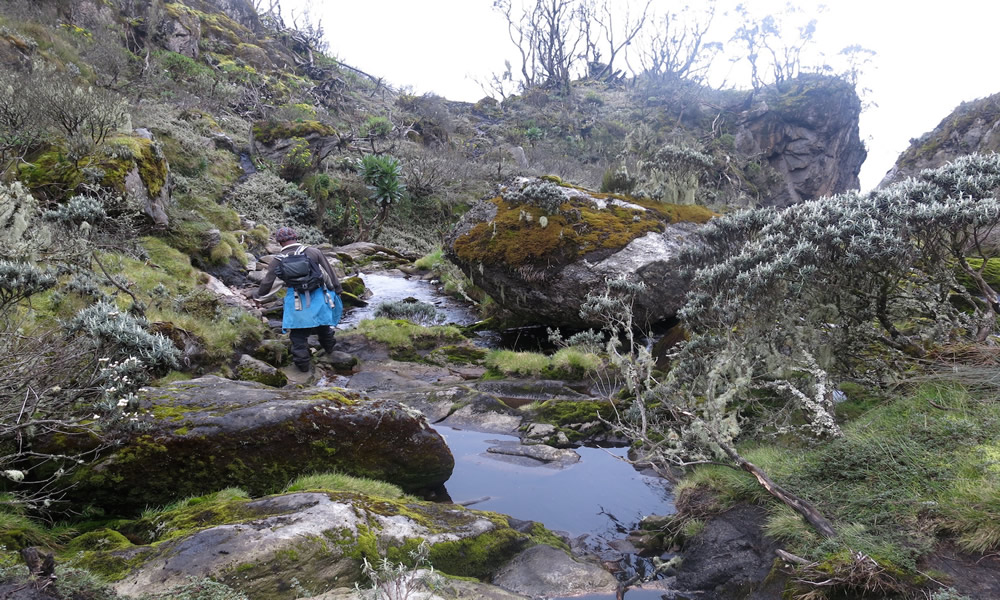
The challenge instead comes from sustained altitude gain over six days, a genuinely tough five-hour muddy ascent from John Matte to Bukurungu on day three, and the thin air of summit day itself, when Kuhuma’s 4,134 meters puts real demands on a body that has not spent time above 4,000 meters before. Trekkers with a reasonable base of cardiovascular fitness, regular hill walking, running, or a few months of stair training can manage this route comfortably, and the itinerary’s built-in pacing, climbing high to Bukurungu and returning the same way, already reduces the risk of altitude sickness considerably. First-time high-altitude hikers, capable teenagers traveling with family, and trekkers well into their sixties join us on this exact itinerary every season; what carries them to the summit is not raw athleticism but honest preparation and a guide who knows exactly when to slow the pace. If you are weighing this trek against our other routes, our Rwenzori Trekking Excursions’ overview compares difficulty across the full range, from gentle two-day introductions to the twelve-day traverse of four major peaks.
What to Wear and Pack for the Rwenzori (Gear Rental Available)
The Rwenzoris earn their old name, “the Mountains of the Moon,” partly because the climate shifts so completely between zones; you may leave Nyakalengija in a T-shirt and reach Bukurungu Rock Shelter in driving mist within the same day.
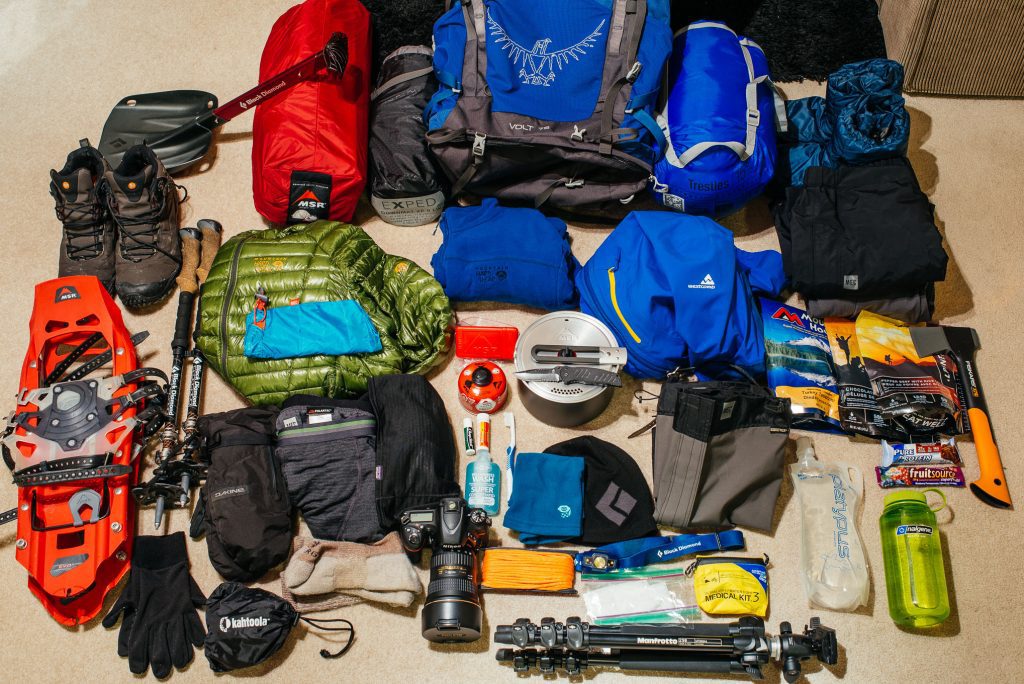
Layering is everything here: a moisture-wicking base layer, a warm mid-layer such as fleece or light down, and a genuinely waterproof outer shell with a hood are non-negotiable, as is a pair of broken-in waterproof hiking boots with real ankle support for the muddy, rooted trail between John Matte and Bukurungu. Trekking poles earn their keep on both the day-three ascent and the long descent on day six, and a warm hat, gloves, and neck gaiter matter more than most first-timers expect, since temperatures at Bukurungu regularly drop close to freezing overnight. We ask every client to bring a warm sleeping bag rated to at least zero degrees Celsius, a headlamp with spare batteries, sunglasses and high-SPF sunscreen for the exposed summit push, and water purification tablets or a filter as a backup to the boiled water our cooks provide in camp. Rubber boots for the muddiest sections, along with technical summit equipment where terrain requires it, are supplied as part of your trekking package, so no one needs to arrive with a duffel full of specialist mountaineering kit; simply tell us your sizes and preferences when you book, and everything will be waiting for you at Nyakalengija. Our complete, downloadable checklist lives on the Rwenzori Packing List page, and our overview of the Rwenzori vegetation zones explains exactly why the kit list looks the way it does: you are dressing for four distinct climates in one week, not one.