Where Is Weismann’s Peak?
Weismann’s Peak sits within Rwenzori Mountains National Park in western Uganda, close to the border with the Democratic Republic of Congo and roughly 400 kilometers west of Kampala. It forms the summit of Mount Luigi di Savoia, a long, ice-carved ridge lying to the northeast of the range’s higher, better-known massifs, Mount Stanley and Mount Speke. Approached most commonly via the Kilembe Trail out of the town of Kilembe near Kasese, the peak overlooks a striking basin of glacial lakes, including Lake Kopello, Lake Africa and Lake Bugata, with views on a clear day extending across the entire central massif cluster of the range. Its relative isolation from the busier Central Circuit trailhead at Nyakalengija is part of what keeps visitor numbers low, even by the already modest standards of Rwenzori trekking.
All the Mountain Ranges of the Rwenzori
The Rwenzori is not a single mountain but a compact cluster of six major glaciated massifs, each with its character, history, and climbing demands. Mount Stanley is the highest and best known, its Margherita Peak reaching 5,109 metres to claim the title of Africa’s third-highest summit. Mount Speke follows at 4,890 metres at its Vittorio Emanuele Peak, directly across the Bujuku Valley from Mount Baker, whose own highest point, Edward Peak, stands at 4,843 metres. Mount Luigi di Savoia, home to Weismann’s Peak at 4,620 metres, lies to the northeast of this central cluster, while Mount Emin, at 4,798 metres at Umberto Peak, and Mount Gessi, whose highest point Bottego Peak stands at approximately 4,715 metres, occupy the range’s more remote and rarely visited northern reaches. Each massif carries its own glacial history, its own approach trail, and its own particular reward, and Weismann’s Peak’s position within this wider system is what allows this itinerary to deliver views of three neighboring massifs from a single, non-technical summit.
Routes to Weismann’s Peak
Via the Kilembe Trail (the Standard Approach)
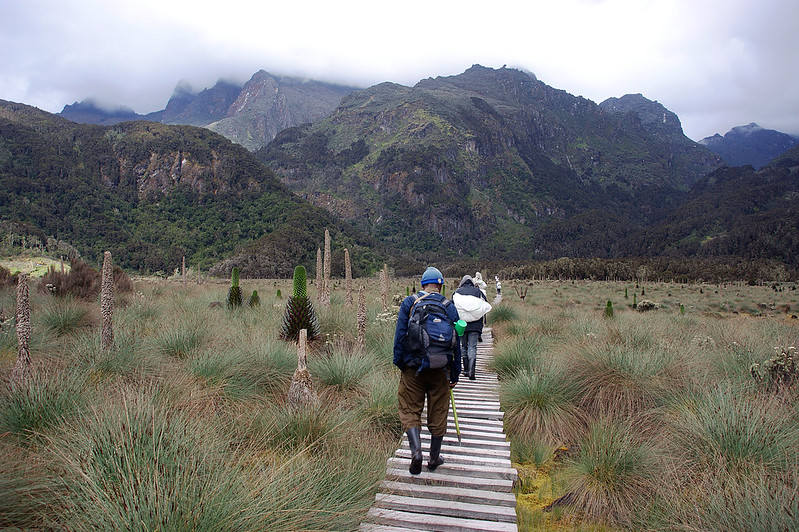
The great majority of successful Weismann’s Peak ascents use the Kilembe Trail, departing from the trailhead near Kilembe town and climbing in stages through Sine Camp, at roughly 2,596 metres in the Afro-montane forest zone; Mutinda Camp, at roughly 3,688 metres in the bamboo and heather zones, with the option of a side excursion to Mutinda Lookout for sweeping early views across the range; and Bugata Camp, at approximately 4,100 metres, set high above a chain of glacial lakes with the first close views of Weismann’s Peak itself. From Bugata, a focused early-morning push of three to four hours leads to the summit via the shores of Lake Kopello, with the final approach steepening over solid rock before the trail levels onto the broad, moss-covered summit dome. Most itineraries then descend via a different route through the Nyamwamba Valley to Kiharo Camp, followed by a final descent day back to the Kilembe trailhead, giving the complete Kilembe approach a typical duration of five to six days of trekking.
Via the Central Circuit Trail
Weismann’s Peak is not part of the standard Central Circuit Trail loop out of Nyakalengija, which instead threads through the Bujuku Valley toward Mount Stanley, Mount Speke, and Mount Baker. That said, several extended expeditions combine both trails into a single, longer traverse, entering via the Central Circuit trail to take in Bujuku Hut, Scott Elliot Pass and Kitandara Lakes before connecting across to the Kilembe side of the range to add Weismann’s Peak to the itinerary. Trekkers specifically drawn to Weismann’s Peak should treat the Kilembe Trail as the direct, efficient route, and consider a combined Central Circuit trail and Kilembe traverse only if the extra days and the wider tour of the range’s central massifs genuinely appeal, since the combined itinerary is considerably longer than a dedicated Kilembe ascent.
Attractions and Highlights Along the Weismann Route
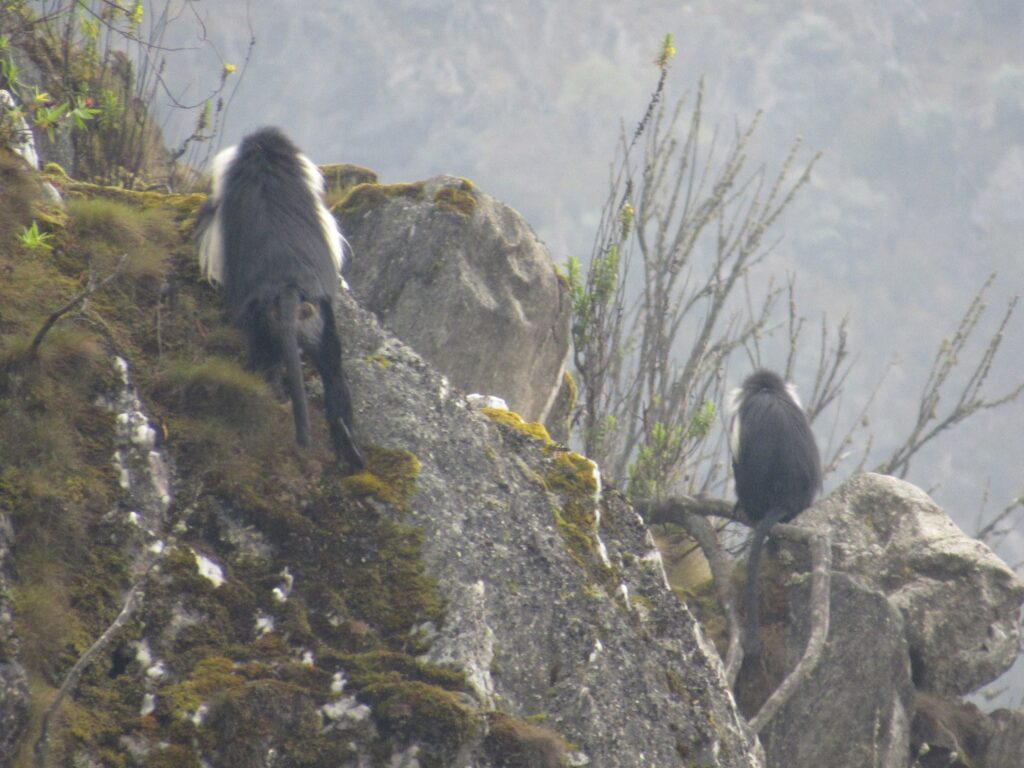
The approach to Weismann’s Peak is, in its own right, one of the most rewarding short introductions to the Rwenzori’s ecological range available anywhere in the park. The lower days move through dense Afro-montane forest alive with black-and-white colobus monkeys and blue monkeys before climbing into the bamboo forest and the moss-draped giant heather zone, where old man’s beard lichen hangs from every branch.
Above Mutinda, the trail crosses genuinely otherworldly Afro-alpine terrain, tussock grass and everlasting flowers interspersed with towering giant lobelia, before Bugata Camp delivers sweeping views across Lake Kopello and Lake Africa toward Weismann’s Peak itself. The summit reward is considerable: on a clear day, Mount Stanley, Mount Speke and Mount Baker are all visible together, along with the basin of glacial lakes below, a panorama that rivals any other viewpoint in the range for sheer breadth. The descent through the Nyamwamba Valley adds dense stands of giant groundsel and further sightings of the endemic Rwenzori red forest duiker, a shy antelope now more easily spotted since a historic wildfire opened up sections of the alpine zone.
How Difficult Is Weismann’s Peak? Level of Difficulty and Safety
Weismann’s Peak is generally considered a non-technical summit, and it is this quality, more than any other, that distinguishes it from Margherita Peak or Mount Speke’s Vittorio Emanuele Peak, both of which demand genuine glacier travel and rope work. That said, non-technical does not mean easy: the approach involves four to five consecutive days of sustained trekking across genuinely muddy, boggy and occasionally waterlogged terrain, particularly through the bamboo zone below Mutinda Camp and the tussock crossings above it, and the cumulative altitude gain from the Kilembe trailhead at roughly 1,450 metres to the summit at 4,620 metres is considerable. The final few hundred metres to the summit itself steepen over solid rock, and in icy or snow-affected conditions, which can occur at any time of year given the range’s unpredictable weather, a fixed rope may be used for safety on this section, handled entirely by your guide.
Safety on this route rests on the same fundamentals that apply across the Rwenzori: a mandatory UWA park ranger and licensed mountain guide accompanying the group at all times, careful daily pacing to support acclimatisation, and honest, continuous communication between guide and client about fatigue, altitude symptoms and changing weather. We consider Weismann’s Peak a strong choice for fit, experienced multi-day trekkers who want a genuine high-altitude achievement without technical glacier travel, and a poor choice for anyone attempting their first multi-day mountain trek, given the sustained distances and altitude involved.
A Note on Conditions Rope assistance on the final summit approach depends entirely on current ice and rock conditions, which vary by season and cannot be guaranteed in advance. Our guides assess this section fresh on the morning of every summit attempt and carry the equipment needed to handle it safely either way. |
How to Get to Weismann’s Peak
Most travellers begin their journey by flying into Entebbe International Airport, Uganda’s main international gateway. From Entebbe, the Kilembe trailhead lies roughly 400 kilometres west, near the town of Kasese in the shadow of the range, a private road transfer of around 8 to 9 hours that we typically break at the equator crossing and, where the itinerary allows, with an overnight near Fort Portal or Queen Elizabeth National Park before continuing on. For those short on time, domestic flights connect Entebbe to Kasese airstrip in under an hour, considerably shortening the overland journey; we arrange these charters directly for clients who prefer to preserve trekking days over travel days. From Kasese, the final approach to the Kilembe trailhead and UWA ranger post is a short private drive, arranged as part of your itinerary.
Every transfer we arrange, from airport to trailhead and back, uses a private vehicle with a dedicated driver, never a shared shuttle. Our Rwenzori Mountains travel guide provides a broader look at logistics and planning across the range, covering transport, permits, and regional context in more depth.
Best Time to Climb Weismann’s Peak
June through August and December through February offer the most reliable conditions for a Weismann’s Peak attempt, with generally firmer trail conditions across the boggy lower sections and a meaningfully higher chance of a clear summit panorama across Mount Stanley, Mount Speke, and Mount Baker. The June to August window tends to bring the driest underfoot conditions of the year, while December and January often deliver the clearest summit mornings, alongside excellent wildlife viewing in the lower forest zones. We generally advise caution around the wetter windows of March to May and September to November, when persistent cloud cover reduces the odds of a clear summit view and the trail’s boggier sections become considerably harder going, though the climb remains achievable year-round for well-prepared trekkers who understand the trade-offs involved.
What to Pack for Weismann’s Peak (Gear and Rental)
Layering is essential given the range this trek covers, from warm lowland forest to genuinely cold, occasionally icy conditions on the summit ridge. A technical base layer, an insulating mid-layer such as fleece or light down, and a genuinely waterproof and windproof outer shell form the foundation, with a heavier insulated down jacket earning its place at Bugata Camp and on the pre-dawn summit push, where temperatures regularly fall below freezing.
- Sturdy, well-broken-in waterproof hiking boots with solid ankle support for the bog and rock sections
- Full-length gaiters, given how boggy the bamboo and tussock zones become in wetter months
- Waterproof hardshell jacket and trousers, plus a warm insulated jacket for camp and summit day
- A warm hat, insulated gloves, and a lighter liner glove for the cold pre-dawn summit start
- A four-season sleeping bag rated to at least minus 5°C, available for rental
- Trekking poles, particularly valuable through the boggy Namusangi Valley crossing
- Headlamp with spare batteries for the early summit departure
- Personal first-aid kit, sunscreen and UV-rated sunglasses
Depending on seasonal conditions, our guides may recommend crampons for the final summit approach; while we can arrange rental crampons, trekkers who own a well-fitted pair are welcome to bring them. A rope, where required for the summit’s exposed final section, is carried and handled entirely by our mountain guide as part of your package.
Full gear rental, including sleeping bags, gaiters, cold-weather layers and crampons, can be arranged in advance through our team, simply let us know your sizes when booking, or see our Rwenzori packing and gear rental guide for a complete breakdown of what to bring versus what to rent.
What You Need to Do Before Climbing Weismann’s Peak
A solid base of hiking or cardiovascular fitness, built over at least eight to twelve weeks beforehand, makes a genuine difference to how comfortably the sustained daily distances and cumulative altitude gain are managed; this trek is not a route to arrive at undertrained. We recommend a general medical check-up ahead of booking, particularly for trekkers with any history of respiratory, cardiac, or altitude-related issues, and travel insurance covering high-altitude trekking and emergency evacuation is a condition of joining this expedition. Uganda Wildlife Authority trekking permits and park fees are arranged on your behalf as part of your itinerary, and a valid Uganda visa, obtainable online in advance of travel, is required for entry. We ask every client to arrive with realistic expectations of the physical demand involved and to communicate openly with their guide throughout the climb, particularly regarding fatigue or any symptoms of altitude illness.
Porters and Guides for Weismann’s Peak
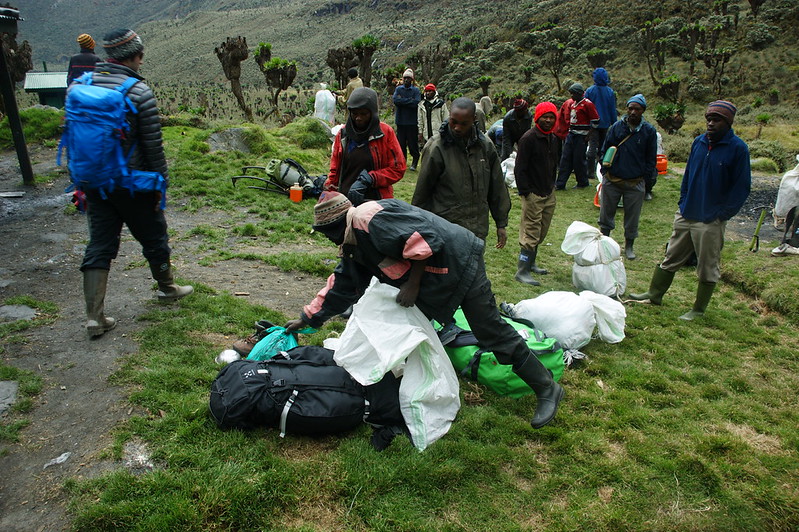
A licensed mountain guide and a Uganda Wildlife Authority park ranger accompany every group on this route as a mandatory requirement of trekking within Rwenzori Mountains National Park, and our itinerary additionally includes a full porter team and dedicated camp cook, all drawn from communities local to Kilembe with deep, generational familiarity with this particular trail. Porters carry camp equipment, food and group gear, allowing clients to trek with only a light daypack of personal essentials, and tipping for guides, porters and cooks, while customary and appreciated, is handled separately from your package cost, with guidance on appropriate amounts provided ahead of your departure.
Related Itineraries to Weismann’s Peak
Trekkers drawn to Weismann’s Peak for its scenery and non-technical character often find our 4-Day Mutinda Lookout Trek via the Kilembe Trail a natural shorter companion, sharing the same early camps and giving a genuine taste of the route without the full summit push. Those wanting to compare Weismann’s Peak against a full technical summit should look to our 6-Day Margherita Peak or 7-Day Margherita Peak itineraries via the Kilembe Trail, both of which pass through similar lower forest and bamboo zones before continuing on to glacier travel and rope work that Weismann’s Peak does not require. Travellers who want the Rwenzori’s dramatic scenery without any peak-specific commitment should also consider our 6-Day Portal Peaks Trek via the Central Circuit trail, which takes in views of Mount Baker, Mount Speke and Mount Stanley from Kitandara Lakes. We build a dedicated Weismann’s Peak itinerary to match your fitness, dates and group size on enquiry, typically running five to six days from the Kilembe trailhead.
Cost of Rwenzori Trekking to Margherita Peak (For Comparison)
Prospective trekkers researching Weismann’s Peak often ask how its cost compares to a Margherita Peak summit attempt, given that both are frequently discussed together as Rwenzori objectives. As a general guide, a fully supported Margherita Peak expedition, including park fees, guides, porters, camp accommodation, meals and technical summit equipment, typically runs longer than a Weismann’s Peak trek, given the additional acclimatisation day and technical glacier travel that Margherita demands, and costs scale accordingly with the extra days, specialist equipment and higher guide-to-client ratios required for safe glacier travel. Weismann’s Peak, by contrast, generally costs less overall, reflecting its shorter duration and non-technical character, while still including the same standard of licensed guiding, full porter support, and park permit fees. We provide a precise, current quotation for either route or a combination of both within a single wider Rwenzori itinerary upon enquiry, since costs shift with group size, season, and current park fee schedules.
Combine Weismann’s Peak with Gorillas, Chimpanzees, and Wildlife.
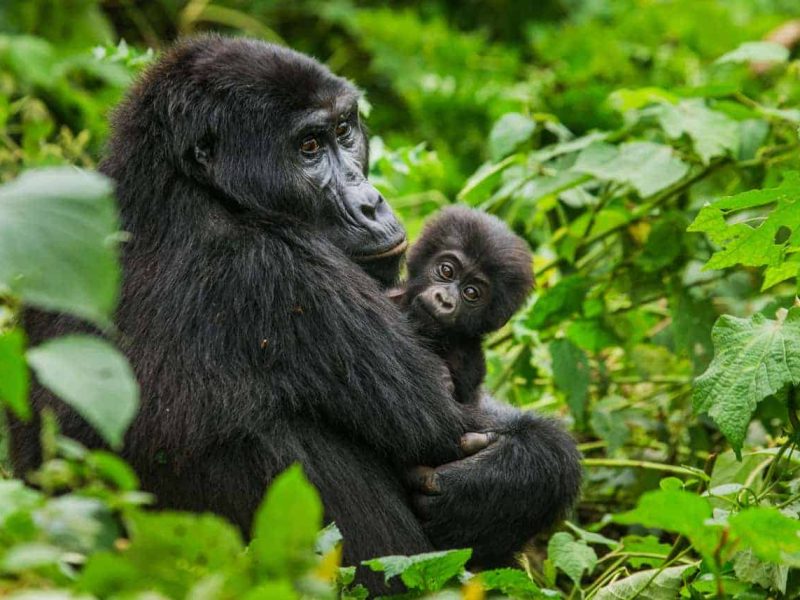
Weismann’s Peak sits within comfortable reach of some of Uganda’s finest wildlife experiences, and many of our clients fold this trek into a wider itinerary rather than treating it as a standalone trip. Bwindi Impenetrable National Park and Mgahinga Gorilla National Park, both a scenic drive south of the Rwenzori, offer mountain gorilla trekking and habituation experiences that fit well with a mountain expedition like this, while Kibale Forest National Park, even closer to Kasese, is widely regarded as East Africa’s top chimpanzee trekking destination.
Queen Elizabeth National Park, directly adjoining the Rwenzori foothills, adds classic savannah wildlife viewing, tree-climbing lions and boat cruises along the Kazinga Channel within an hour or two of the Kilembe trailhead. We regularly build combined itineraries pairing a Weismann’s Peak trek with any or all of these experiences, sequenced to allow proper recovery time after the climb before continuing on to wildlife viewing.
What’s Included
On the mountain, Rwenzori Trekking Expeditions arranges a standard Weismann’s Peak trek so that you don’t have to make any logistical decisions.
- Accommodation in mountain huts along the Kilembe Trail for the duration of the trek
- All park entry and trekking permit fees for Rwenzori Mountains National Park
- A dedicated UWA-licensed mountain guide and mandatory park ranger throughout
- Full porter and cook team, tents, cooking equipment, and camp furniture
- All meals on the mountain from your first lunch to your final lunch, prepared fresh at each camp
- Rope and safety equipment for the summit’s exposed final section, where conditions require it
- Private road transfers between Kasese and the Kilembe Trailhead
- Pre-trek briefing and summit completion certificate
What’s Excluded
A short list of items remain outside the package, generally by client preference or personal requirement rather than necessity.
- International and domestic flights to and from Uganda
- Uganda visa fees and travel/medical/evacuation insurance
- Accommodation in Kasese or Kampala before and after the trek
- Personal hiking clothing and equipment not listed as rental items
- Tips and gratuities for guides, porters, and cooks
- Alcoholic and bottled beverages beyond standard camp drinking water