Trek Weismann’s Peak (4,627m) on Mount Luigi di Savoia via the full Central Circuit Trail in 6 days. The 6-day Weismann’s Peak trek via the Central Circuit Trail on the Rwenzori Mountains takes you to Weismann’s Peak (4,627 m) on Mount Luigi di Savoia, following the full Central Circuit Trail.
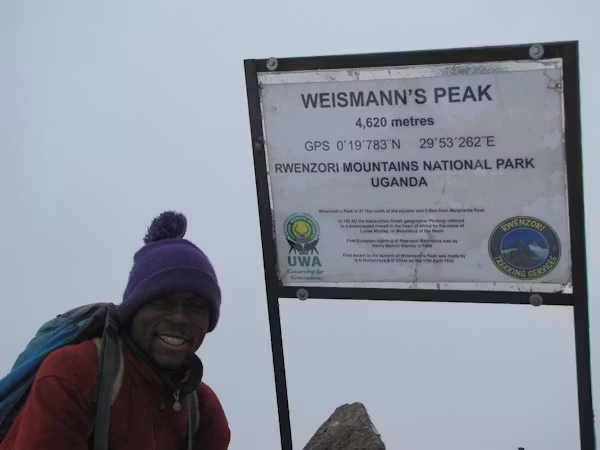
Mount Luigi di Savoia, part of the 6 Rwenzori Mountains Range, is one mountain in Uganda that most of the world has never heard of, yet its summit (Weismann’s) is the peak that experienced trekkers describe as one of the most rewarding high-altitude achievements in all of Africa. Weismann’s Peak, the highest point on Mount Luigi di Savoia in the Rwenzori Range, stands at 4,627 meters above sea level, embedded in the heart of the Mountains of the Moon and accessible via the full Central Circuit Trail in just six remarkable days. This 6-day Weismann Peak Rwenzori trek starts at Nyakalengija, climbs through ancient montane forest and surreal giant heather moorland, crosses the luminous Kitandara Lakes basin, and summits Weismann’s Peak before looping back to the trailhead, providing a complete and immersive experience of the Rwenzori Mountains without the extended technical demands of the Margherita Peak glacial summit. Rwenzori Trekking Expeditions runs this route year-round as a private, fully guided expedition, with staffed mountain huts, all meals, a dedicated porter team, and the kind of on-the-ground expertise that turns a challenging mountain journey into the adventure of your life.
Weismann’s Peak is the best goal for serious trekkers who want a complete Rwenzori experience, all six ecological zones, the famous Kitandara Lakes, and a real high-altitude summit, without the glacial technical demands of Margherita Peak. Six days. One unforgettable mountain. |
Quick Facts About the 6-Day Weismann’s Peak Trek
DETAIL | INFORMATION |
Trek Duration | 6 Days (5 days on the mountain + 1 travel day) |
Summit | Weismann’s Peak, Mount Luigi di Savoia 4,627 m / 15,180 ft |
Route | Central Circuit Trail (full loop, anti-clockwise) |
Trail Difficulty | Moderate to challenging, suited to fit recreational trekkers |
Highest Altitude | 4,627m (Weismann’s Peak) |
Lowest Altitude | 1,646m (Nyakalengija Trailhead) |
Start / End Point | Nyakalengija Village, near Kasese, Western Uganda |
Group Size | Private, your dedicated guide and porter team |
Best Months | January–February and June–August |
Mountain Huts | Staffed huts with beds, bedding, and cooked meals |
Technical Summit Gear | None required; trekking poles strongly recommended |
Minimum Age | 14 years (under 18 requires guardian consent) |
Porter Ratio | 1 porter per trekker (additional available) |
Physical Prep | Recommended: cardiovascular fitness essential |
Altitude Profile: 6-Day Central Circuit to Weismann’s Peak
CAMP / LOCATION | ALTITUDE | ECOLOGICAL ZONE |
Nyakalengija (Trailhead) | 1,646 m / 5,400 ft | Cultivation / Forest Edge |
Nyabitaba Hut (Night 1) | 2,652 m / 8,701 ft | Montane Forest |
John Matte Hut (Night 2) | 3,414 m / 11,201 ft | Giant Heather / Bog |
Bigo Hut (Night 3) | 3,450 m / 11,319 ft | Giant Heather Moorland |
Kitandara Hut (Night 4) | 4,023 m / 13,199 ft | Afro-Alpine / Lakeside |
Weismann’s Peak (Summit) | 4,627 m / 15,180 ft | Summit / Rocky Ridge |
Freshfield Pass | 4,282 m / 14,049 ft | Afro-Alpine |
Guy Yeoman Hut (Night 5) | 3,261 m / 10,699 ft | Heather Moorland |
Nyakalengija (Exit, Day 6) | 1,646 m / 5,400 ft | Forest Edge |
Itinerary at a Glance
DAY | SUMMARY |
Day 1 | Nyakalengija Trailhead (1,646m) → Nyabitaba Hut (2,652m) | 4–5 hrs | Montane Forest Entry |
Day 2 | Nyabitaba Hut (2,652m) → John Matte Hut (3,414m) | 6–7 hrs | Into the Giant Heather |
Day 3 | John Matte Hut (3,414m) → Bigo Hut (3,450m) | 4–5 hrs | Bog Garden Traverse |
Day 4 | Bigo Hut (3,450m) → Kitandara Hut (4,023m) | 5–6 hrs | The Kitandara Lakes |
Day 5 | Summit Day: Kitandara Hut → Weismann’s Peak (4,627m) → Guy Yeoman Hut (3,261m) | 7–9 hrs |
Day 6 | Guy Yeoman Hut (3,261m) → Nyabitaba Hut → Nyakalengija (1,646m) | 5–6 hrs | Exit & Transfer |
Detailed 6-Day Weismann’s Peak Trek Itinerary
DAY 1 | Nyakalengija to Nyabitaba Hut — First Steps into the Forest Nyakalengija (1,646 m) → Nyabitaba Hut (2,652 m) | 4–5 Hours | ~7 km |
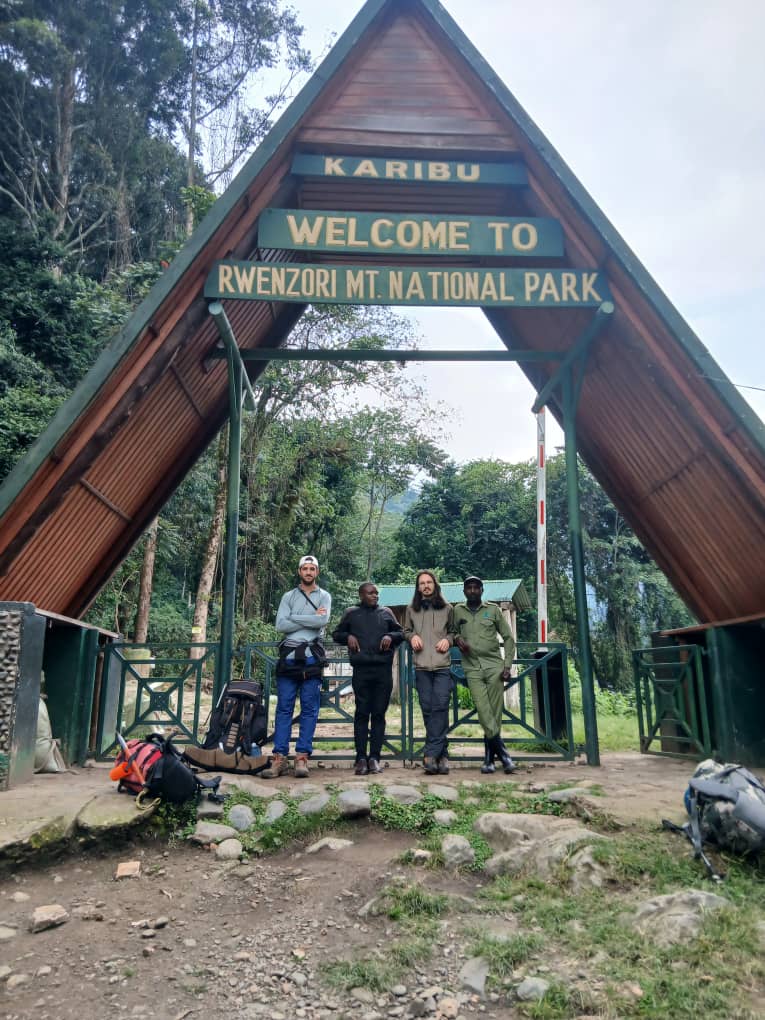
The Rwenzori begins not with a dramatic announcement but with a quiet crossing over a wooden bridge over the Mubuku River at the edge of Nyakalengija village, beyond which the trail enters the montane forest and the world outside ceases to exist. Your private guide handles the park registration formalities while you watch the porters organize loads with the practiced efficiency of a team that knows every kilometer of the trail ahead. The smell of the forest, earth, moss, and green moisture reaches you before you take your first step.
The ascent through the lower forest is steady and richly atmospheric. Ancient Hagenia trees arch overhead, their trunks thick with ferns and orchids, filtering the equatorial light into something dim and green and cathedral-like. Rwenzori turacos move through the canopy above in flashes of crimson and green. The trail gains altitude gradually, crossing the Mubuku River a second time before the first real climb brings you out above a ridge with a widening view down the valley behind and the hint, through a gap in the trees, of the higher mountain above.
Nyabitaba Hut arrives in a clearing that feels like a reward: a solid stone structure with a wide timber veranda, views south down the Mubuku Valley, and the smell of the cook’s dinner already drifting out. The first evening in the Rwenzori has a particular quality: the mountain above is invisible in clouds, the forest below is alive with sound, and the realization, settling in as the light fades, is that you are completely, wonderfully committed.
Accommodation Nyabitaba Hut (2,652 m), staffed mountain hut | Meals: Breakfast, Lunch, and Dinner included | Walking Time: 4–5 hrs |
DAY 2 | Nyabitaba Hut to John Matte Hut, Into the Giant Heather Nyabitaba (2,652 m) → John Matte Hut (3,414 m) | 6–7 Hours | ~9 km |
The second day is where the Rwenzoris reveal their ecological strangeness, and the transition from familiar mountain forest to something entirely otherworldly begins in earnest. The trail descends briefly from Nyabitaba before crossing the Bujuku River on a log bridge and climbing the far bank into the lower heather zone, where the trees thin, the moss thickens on every surface, and the first stands of giant tree heather appear, their trunks wrapped in hanging lichen that sways in the moisture-laden air.
Above 3,000 meters, the landscape shifts decisively. The heather grows to six, seven, or eight meters in height, forming dark tunnels over the trail through which the light is reduced to a filtered grey-green. The ground underfoot becomes spongy and unpredictable, the first tentative bog sections that will demand more serious navigation in the days ahead. Your guide moves with complete confidence through this terrain, reading the ground, choosing the line, and maintaining a pace that carries the team steadily upward without outrunning anyone’s acclimatization.
The first giant groundsel, Senecio trees with their thick corky trunks and alien rosette heads, appear on the valley slopes above 3,200 meters, and their presence signals that you have entered a landscape that exists nowhere else on earth in quite this form. John Matte Hut sits in a wide meadow clearing with long views up two converging valleys, and on a clear afternoon, the dark forms of the upper peaks emerge from the cloud above. Named for the legendary Rwenzori guide of the early twentieth century, the hut is a place of genuine mountain history, and tonight’s dinner, prepared by your mountain cook, tastes all the better for it.
Accommodation John Matte Hut (3,414 m) | Meals: Breakfast, Lunch, Dinner | Walking Time: 6–7 hrs | Altitude Note: Mild headache possible, hydrate well, and report to guide |
DAY 3 | John Matte Hut to Bigo Hut, The Bog Garden Traverse John Matte (3,414 m) → Bigo Hut (3,450 m) | 4–5 Hours | ~6 km |
Today the Rwenzoris offer their most distinctly peculiar gift: the Bigo Bog, a high-altitude wetland of such bizarre beauty that seasoned mountain travellers find themselves stopping every few hundred metres simply to stare. The elevation gain between John Matte and Bigo Hut is negligible, barely 36 meters, but the terrain through which those meters pass is the most demanding and visually arresting of the lower circuit.
The bog is a vast living carpet of sedge, sphagnum moss, and the waxy rosettes of everlasting flowers, threaded by streams of crystalline clarity that have their source in the glaciers of the upper mountain. Giant lobelias, Lobelia wollastonii, a species found only in East Africa’s high mountains, stand a meter tall at the bog edges, their silver-green spikes catching the diffuse mountain light. Your guide navigates the firm pathways through the morass with the intuitive certainty of accumulated experience, pointing out the pressure points, reading the ground, and keeping the team on routes that have been memorized over many seasons.
Today is also a day for the Rwenzori’s celebrated birdlife. The Rwenzori double-collared sunbird, the strange and beautiful Rwenzori batis, and the handsome Rwenzori turaco are all regular sightings in the heather and bog-edge vegetation. Bigo Hut, reached by early afternoon, sits above a stream junction at the threshold of the high mountain, and this evening your guide conducts a thorough health check, oxygen saturation readings, headache assessment, hydration, and appetite review before the day ahead.
Accommodation Bigo Hut (3,450m) | Meals: Breakfast, Lunch, Dinner | Walking Time: 4–5 hrs | Daily O₂ saturation monitoring begins |
DAY 4 | Bigo Hut to Kitandara Hut—The Jewel of the Rwenzoris Bigo (3,450 m) → Kitandara Hut (4,023 m) | 5–6 Hours | ~7 km | Altitude Gain: +573 m |
The approach to Kitandara is the day that trekkers most often describe first when they speak of the Rwenzoris. The trail climbs out of the Bigo Bog and enters the upper heather zone, the vegetation growing sparser and more sculptural as the altitude increases, the air thinning perceptibly, each breath now something to pay attention to. The landscape opens progressively, ridge lines appearing where before there was only cloud and heather, and then, around a final bend in the trail, after a last short descent, the Kitandara Lakes appear below.
Two darkly luminous bodies of water at 4,023 meters, set in a glacially carved basin framed by the steep walls of Mount Luigi di Savoia on one side and Mount Baker on the other, the Kitandara Lakes are among the most photographed landscapes in the Rwenzori Mountains National Park, and no photograph adequately represents them. The water is the color of strong tea, tinted by the tannins of the surrounding bog vegetation, and on still mornings it mirrors the peaks above with a precision that blurs the boundary between mountain and reflection. Giant groundsels crowd the shoreline. The silence, broken only by the wind and occasional calls of alpine birds, is absolute.
Kitandara Hut sits above the upper lake’s northern shore, with a veranda from which the view across the water to the southern faces of the massif is one of the finest mountain vistas in East Africa. Tomorrow’s summit route, the steep shoulder of Weismann’s Peak rising above the Freshfield Pass to the south, is visible from here, and the sighting of it has a focusing effect that tends to make the evening’s conversation quieter and more purposeful. Tonight, sleep at altitude is the priority. Your guide has already briefed the summit plan. The alarm is set for 4:30 AM.
Accommodation Kitandara Hut (4,023 m)—lakeside alpine hut | Meals: Breakfast, Lunch, Dinner | Walking Time: 5–6 hrs | Summit Briefing: Route, timing, and conditions reviewed this evening |
DAY 5 | SUMMIT DAY — Weismann’s Peak & Descent to Guy Yeoman Hut Kitandara (4,023m) → Weismann’s Peak (4,627m) → Freshfield Pass → Guy Yeoman Hut (3,261m) | 7–9 Hours |
The pre-dawn start from Kitandara Hut has a particular quality that trekkers remember for years: the lake below utterly still, reflecting unusually dense stars and bright at this altitude, the cold sharp enough to make the hands ache through gloves, and ahead the dark silhouette of the ridge that leads to Weismann’s Peak. Headtorches come on. The cook has prepared hot tea and a solid breakfast in the dark. By 5:00 AM, the team is moving.
The trail climbs the western slope of the Kitandara basin above the upper lake, gaining altitude quickly on a steep but well-defined path. As the light grows in the east, a deep orange line that appears first above the forested plains far below and then spreads rapidly across the sky, the scale of the Rwenzori massif becomes fully visible for the first time: Mount Stanley to the north, its glaciers pale and massive; Mount Baker’s dark flanks to the east; and ahead, the ridge that leads to Freshfield Pass at 4,282 meters.
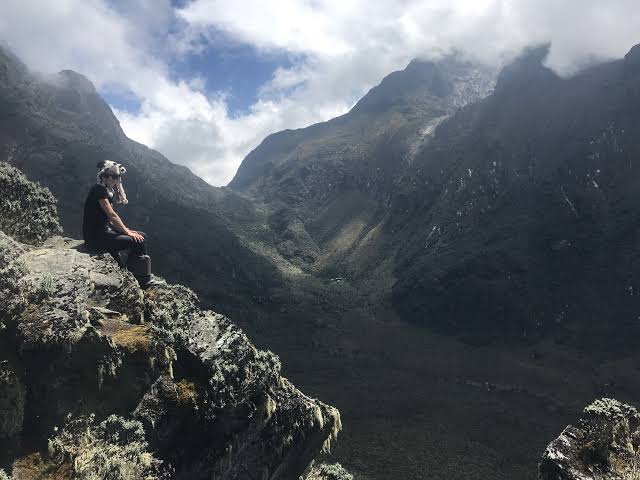
From Freshfield Pass, the summit of Weismann’s Peak is a steep 45-minute push directly above, a scramble on solid rock and firm earth that requires hands as well as feet for the final section but involves no technical rope work, no glacier, and no crampons. The exposure is real, the ridge falls away sharply on both sides, and the effort at this altitude is genuine. But the summit itself is a broad, rocky outcrop with 360-degree views that justify every step of the five days preceding it.
To the north, the full Central Circuit valley system unfolds below, the path of the last four days readable in the landscape like a story already told. To the west, the Congo Basin stretches to a horizon that seems impossibly far. To the south, the descent route of the Freshfield Circuit falls away into the heather and bog of the southern circuit. And everywhere, the Rwenzori Mountains reveal themselves in full, a range of extraordinary complexity and beauty that the flatlands below cannot prepare you for.
The descent from Weismann’s Peak returns through Freshfield Pass and then drops via the southern circuit into the Guy Yeoman Hut valley, a long afternoon of steady descent through heather and moorland that brings the legs to a pleasant, familiar ache. Guy Yeoman Hut, at 3,261 meters in its own clearing, feels warm and generous after the heights of the day. Dinner this evening is the best meal of the trek, every bite earned, every conversation punctuated by the shared memory of the summit that sits above, somewhere in the cloud.
Accommodation Guy Yeoman Hut (3,261 m) | Meals: Breakfast, Packed Lunch, Dinner | Summit: 4,627 m, Weismann’s Peak, Mount Luigi di Savoia | Total Walking Time: 7–9 hrs |
DAY 6 | Guy Yeoman Hut to Nyakalengija—The Circuit Completed Guy Yeoman (3,261m) → Nyabitaba Hut → Nyakalengija (1,646m) | 5–6 Hours | Exit & Transfer |
The final morning on the mountain carries a particular mix of feelings that every trekker knows: the body already anticipating the softer world below, the mind reluctant to leave the clarity that altitude and effort have produced. The trail descends through lower moorland, the heather giving way progressively to taller, darker forest vegetation, the temperature rising noticeably with every 100 meters of descent, and the sounds changing from wind and birdsong to the fuller, richer chorus of the montane forest.
Nyabitaba Hut marks the final resting point before the exit, a familiar landmark now, with its veranda and view down the Mubuku Valley confirming that the circuit is almost complete. Lunch here has a celebratory quality. The porters, who have carried loads up and down these trails with a cheerfulness and competence that never wavered across six days, gather for the tip ceremony at the trailhead, a moment that is handled with discretion and genuine warmth by your lead guide, who knows each porter by name and by the particular combination of skills and history they bring to the mountain.
Nyakalengija receives the team in late afternoon: the banana plantations, the cooking fires, and the children curious about the group emerging from the park. Your private vehicle is waiting. The transfer back to Kasese takes less than an hour, the road running through a landscape that seems almost impossibly ordinary after six days in the Rwenzoris. Dinner in Kasese is ordered with the appetite that only genuine mountain effort produces, and the evening’s reflection on what the mountain offered, on what it demanded, and on the specific quality of standing on Weismann’s Peak in the early morning light is the best kind of conversation.
Transfer Nyakalengija → Kasese | Private vehicle | Meals: Breakfast, Lunch, Dinner | Porter Tip Ceremony at trailhead, guidance and facilitation provided |
What Is Included?
Every element of the Rwenzori Trekking Expeditions experience is designed so that from the moment your expedition begins, your entire attention belongs to the mountain. The following is the full scope of what your 6-day Weismann’s Peak expedition encompasses.
Fully Included in Your Package
Your expedition includes all mountain hut accommodation for five nights on the trail with meals and hot drinks, a certified and experienced lead guide dedicated to your private group, a full porter team at a ratio of one porter per trekker, all park entrance and conservation fees for Rwenzori Mountains National Park, all meals on the mountain from breakfast on Day 1 through lunch on Day 6, a comprehensive medical kit including a pulse oximeter, altitude sickness medication, and first-aid supplies, trekking poles available on request, a detailed pre-trek briefing with equipment checklist and fitness guidance provided upon booking, and all private road transfers between your Kasese accommodation and the Nyakalengija trailhead. No hidden fees, no last-minute park gate surprises, and no logistical uncertainty from the moment of booking to the moment of exit.
Not Included
International flights to and from Uganda, domestic flights within Uganda, and travel insurance are outside the package. Travel insurance is not optional and must include emergency mountain rescue and evacuation coverage to a minimum of 5,000 meters. Personal equipment, including clothing, a personal sleeping bag, trekking boots, and a pack, is the trekker’s responsibility (sleeping bag hire is available on request). The core package also excludes personal gratuities for guides and porters, alcoholic beverages, additional accommodation nights in Kasese, and any pre- or post-trek safari extensions.
Why Choose the Weismann’s Peak Trek?
Weismann’s Peak occupies a singular position in the geography of the Rwenzori range, perched on the crest of Mount Luigi di Savoia at 4,627 meters. It commands an unobstructed panorama that takes in the glacial walls of Mount Stanley to the north, the sweeping Kitandara Lakes below, the forested valleys of the southern circuit, and on clear mornings, the dark equatorial plains of the Democratic Republic of Congo spreading westward to the horizon. It is the kind of view that makes experienced trekkers go quiet.
Unlike Margherita Peak, Weismann’s Peak requires no glacier crossing, no crampons, and no technical rope work. The ascent from the Freshfield Pass is a steep but entirely non-technical scramble on solid rock and earth, accessible to any trekker with genuine fitness, proper footwear, and a willingness to push hard for the final hour. This makes it the ideal summit objective for trekkers who want to stand on a genuine Rwenzori high point without the extended expedition logistics of the 7-day Margherita Peak route.
It is also, the guides of Rwenzori Trekking Expeditions will tell you, one of the most beautiful places in East Africa. The Kitandara Lakes, which sit in a glacially carved basin directly below the summit, are among the most photographed landscapes in the Rwenzoris, two darkly luminous alpine tarns at 4,023 meters, surrounded by giant groundsels and everlasting flowers, with the peak reflected in their surface on still mornings. Standing above them on Weismann’s Peak, the full scale of the Rwenzori massif becomes legible for the first time.
What Makes Weismann’s Peak Special?
Named for the German zoologist and evolutionary biologist August Weismann, the peak on Mount Luigi di Savoia sits at the meeting point of the Rwenzori’s two remarkable ecological systems, the northern circuit’s giant heather moorlands and the southern circuit’s Afro-alpine valleys. From its summit, both worlds are visible simultaneously. The approach via Freshfield Pass offers what experienced Rwenzori guides consider the single finest viewpoint in the entire national park: a vantage from which the full sweep of the Central Circuit trail, the Kitandara Lakes basin, and the glacial peaks of Stanley and Baker are visible in a single, extraordinary panorama.
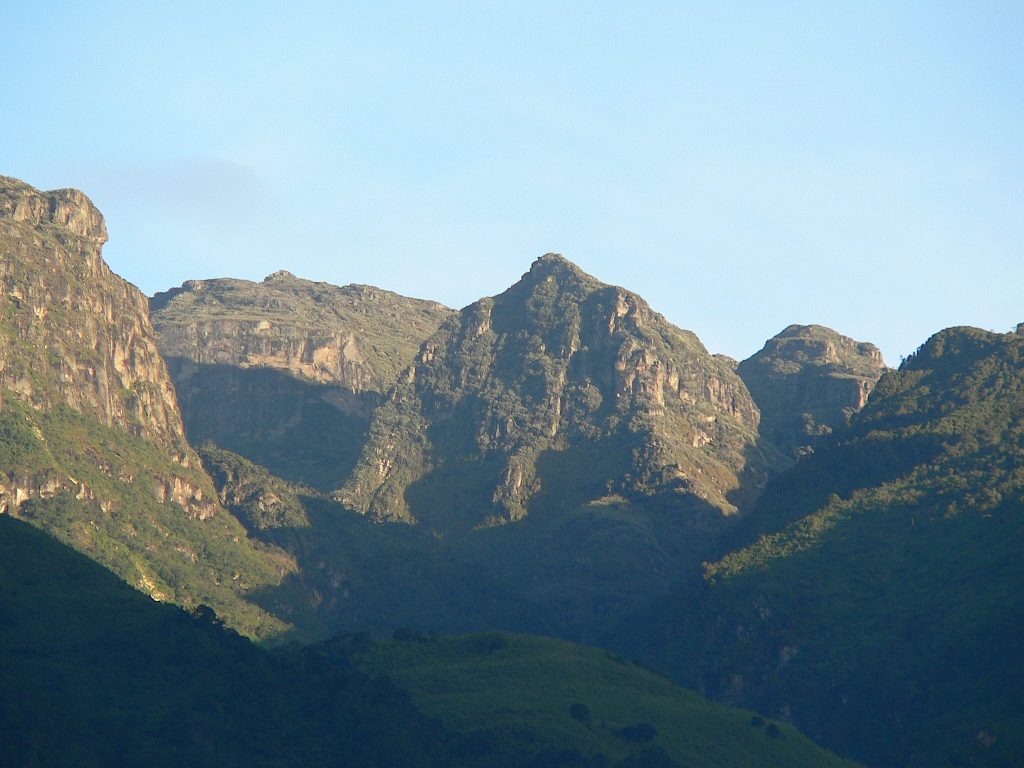
Weismann’s Peak is also notable for what it does not require. Unlike Margherita Peak, there is no glacier, no crampon work, and no pre-dawn technical rope sequence. The summit is accessible to any trekker with solid high-altitude fitness and a willingness to push hard on a steep but non-technical ascent. This makes it the ideal first high-altitude African summit and a deeply satisfying objective in its own right, not a consolation prize for those who cannot reach Margherita.
How Difficult Is the Weismann’s Peak Trek?
The 6-day Weismann’s Peak Rwenzori expedition on the Central Circuit Trail is rated moderate to challenging, a demanding trek that rewards good preparation but is accessible to fit recreational trekkers without prior high-altitude or technical climbing experience. The main physical demands are sustained cardiovascular effort over several days, balance and core strength on the bog terrain of Days 2–3, and the ability to push hard at altitude on the summit day from Kitandara Hut.
Terrain and Specific Challenges
The Bigo Bog and John Matte Bog sections require careful foot placement and sustained concentration; trekking poles are strongly recommended and genuinely useful. The climb from Kitandara to Freshfield Pass (600 metres of gain) and the final scramble to Weismann’s Peak demand genuine effort at 4,000 to 4,600 metres, where the air is thin enough to make a steep step feel significantly harder than it would at sea level. The descent on Day 5 from Weismann’s Peak all the way to Guy Yeoman Hut is long and leg-testing, and Day 6’s exit from Guy Yeoman to Nyakalengija, while mostly downhill, covers significant distance.
Altitude Considerations
The highest sleeping point on this itinerary is Kitandara Hut at 4,023 meters, below the threshold at which severe altitude sickness typically becomes a serious risk, but well into the range where acclimatization symptoms (mild headache, reduced appetite, slightly disturbed sleep) are normal and expected. The acclimatisation profile of the Central Circuit Trail, with gradual daily altitude gains and adequate rest time at each hut, is well suited to this route. Your Rwenzori Trekking Expeditions guide monitors oxygen saturation daily and applies the universal altitude protocol: if AMS symptoms do not respond to rest and hydration, descent is mandatory.
Who Is This Trek Right For?
The 6-day Weismann’s Peak expedition is ideal for trekkers who have completed multi-day mountain routes such as Kilimanjaro (any route), Mont Blanc approaches, Andean treks above 4,000 metres, or similar sustained high-altitude walking. It is also well suited to highly fit beginners who are committed to three months of serious cardiovascular and strength training in the lead-up to departure. Rwenzori Trekking Expeditions provides a detailed pre-trek fitness program to every confirmed client.
Why Trek via the Central Circuit Trail?
The Central Circuit Trail is the Rwenzori’s definitive route, a complete loop of the high massif that takes you through every ecological transition the range has to offer. Beginning and ending at Nyakalengija on the northern side of the park, the circuit traverses montane forest, giant heather moorland, open bog gardens, Afro-alpine valleys, and the spectacular Kitandara Lakes basin before ascending to Weismann’s Peak via the Freshfield Pass.
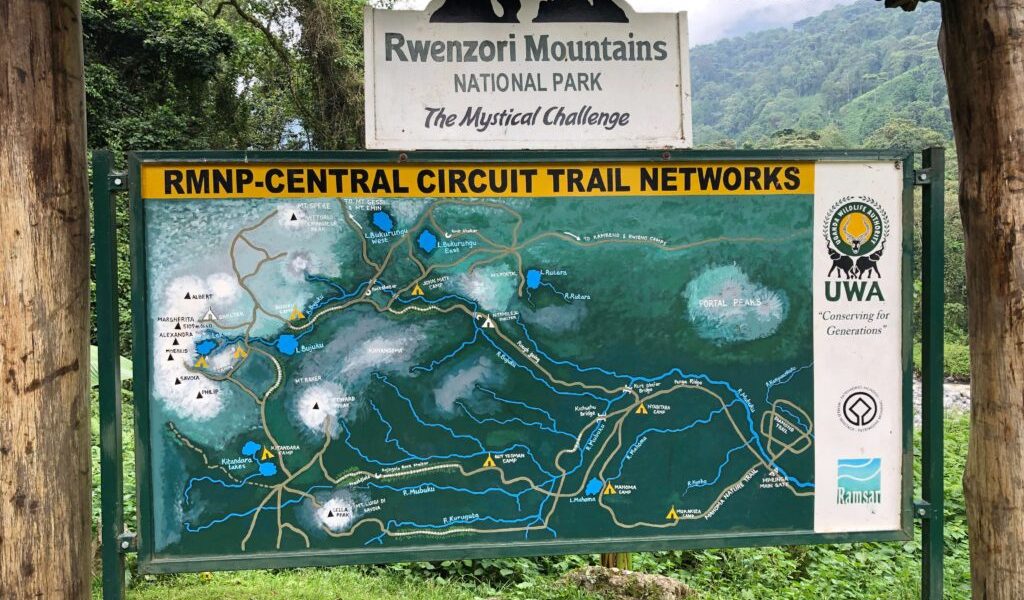
No other route in the Rwenzoris offers this completeness of experience in a single journey, and no other itinerary structure gives your body the gradual altitude gain that makes the high-altitude days feel earned rather than punishing.
For trekkers whose primary goal is not the glacial summit of Margherita Peak but who want the full depth and drama of the Rwenzori Mountains, the 6-day Weismann’s Peak expedition on the Central Circuit Trail is the definitive answer. It is the route the Rwenzori Trekking Expeditions guides choose when they want to show first-time visitors everything these mountains are.
Central Circuit Trail vs. Kilembe Trail — Key Differences
FEATURE | CENTRAL CIRCUIT | KILEMBE TRAIL |
Starting Point | Nyakalengija (1,646m) | Kilembe (1,440m) |
Loop or Linear? | Full loop — same start & end | Linear — different start & end |
Ecological Zones | All 6 zones | 4–5 zones |
Kitandara Lakes | Yes — via Freshfield Pass | Yes — different approach |
Acclimatisation | Gradual and well-structured | Steeper profile |
Weismann’s Peak Access | Via Freshfield Pass, excellent | Direct but steeper |
Best For | Full Rwenzori experience seekers | Linear route preference |
Infrastructure | Staffed huts, all meals | Staffed huts, all meals |
How to Get to the Rwenzori Mountains
The Rwenzori Mountains National Park is accessed from Kasese town in western Uganda, the nearest major settlement to the Nyakalengija trailhead and the base of operations for all Rwenzori Trekking Expedition departures. From Entebbe International Airport (EBB), the overland transfer to Kasese is about 370 kilometers via the Kampala–Mbarara–Kasese highway, taking six to seven hours by private vehicle. This route goes through Uganda’s equatorial heartland, crosses the Equator at Kayabwe, and enters the dramatic western rift country where the Rwenzoris rise like a wall of cloud above the savanna. Rwenzori Trekking Expeditions arranges all airport collections, road transfers, and onward logistics as a seamlessly coordinated element of your expedition package.

For those arriving on tighter connections, domestic flights operate between Entebbe and Kasese Airport (KSE), reducing transfer time to approximately one hour. From Kasese, the drive to Nyakalengija takes a further 22 kilometers along a good dirt road, handled by your private vehicle on the morning of Day 1.
Best Time to Trek Weismann’s Peak
January to February, Short Dry Season
The January–February window offers the most settled weather of the year on the Rwenzori Central Circuit. Trail conditions are at their most manageable, the bogs are firm, the heather is dry enough to move through quickly, and the upper mountain enjoys its clearest skies. Summit day from Kitandara Hut in late January or early February frequently offers views that are clear to the distant plains of western Uganda. Daytime temperatures at Kitandara range from 0°C to +8°C; summit temperatures are -5°C to -10°C with any wind. This period is the window most recommended by the Rwenzori Trekking Expeditions guides for first-time visitors.
June to August, Long Dry Season
The long dry season from June to early September provides the most reliable trekking conditions of the year and the highest probability of clear summit panoramas. July and August are the statistical peak months for visibility on Weismann’s Peak. The trail conditions are excellent, the bogs traversable with confidence, and the Kitandara Lakes in late July produce some of the most extraordinary mirror reflections of the peaks above. If schedule flexibility is available, the first two weeks of August represent the optimum window.
Wet Season Trekking
The wetter months, from March to May and October to November, bring more precipitation to the trail but also fewer trekkers, a greener and more dramatically lush mountain, and a raw, elemental quality to the experience that seasoned mountain travellers find deeply compelling. Summit success rates on Weismann’s Peak are somewhat lower in these periods due to reduced visibility rather than technical difficulty. Rwenzori Trekking Expeditions operates year-round and provides a current conditions update to all clients at the time of booking.
What Should I Pack for the Weismann’s Peak Trek?
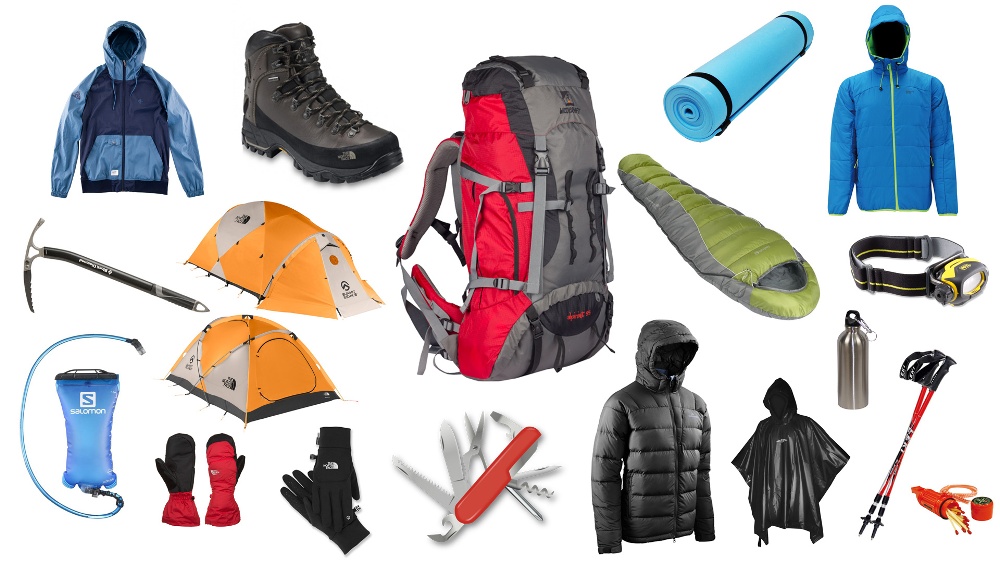
The Rwenzori Mountains have a well-earned reputation for being among the wettest mountain environments in Africa, and the packing philosophy that serves well here is built around one principle above all others: there is no such thing as too waterproof. Every confirmed client receives a comprehensive, season-specific packing list from the Rwenzori Trekking Expeditions team. The following represents the essential categories.
Clothing System
A technical moisture-wicking base layer, merino wool is the preferred choice of the RTE guides, as its ability to retain warmth when damp forms the foundation of the clothing system. Above it, a mid-layer fleece or lightweight down jacket handles the temperature range from the warm lower forest to the cold Afro-alpine environment above Kitandara. The critical outer layer is a fully waterproof, breathable shell jacket rated to at least 10,000 mm hydrostatic head; the Rwenzori rain is persistent and penetrating, and a substandard waterproof will leave you cold and miserable before the end of Day 2. Waterproof over-trousers, warm trekking trousers, thermal underlayers for Kitandara nights, a warm hat, and gloves rated to at least -5°C complete the essential clothing list.
Footwear
Waterproof, ankle-supporting trekking boots with a firm midsole are the non-negotiable foundation of your equipment list. The Rwenzori bogs will defeat trail runners and low-cut shoes decisively; the rocky summit scramble on Weismann’s Peak requires a boot with genuine sole stiffness and grip. Boots must be fully broken-in before departure; the Rwenzori trail is not the place for new footwear. Gaiters are strongly recommended for the bog sections of Days 2 and 3.
Sleeping and Day Pack
A sleeping bag rated to -10°C is required for Kitandara Hut at 4,023 meters, where temperatures drop significantly after dark. A sleeping bag liner adds warmth and hygiene and is strongly recommended. A day pack of 25–30 liters carries your summit-day essentials, water, snacks, a warm layer, headtorch, and camera, while your main bag is carried by your porter. Trekking poles are available for hire from the Rwenzori Trekking Expeditions team if you prefer not to bring your own.