6-Day Weismann's Peak Trek via the Kilembe Trail | Rwenzori Mountains

Hike to the top of Weismann’s Peak (4,620m) via Rwenzori’s Kilembe Trail in 6 days. The 6-Day Weismann Peak Trek via the Kilembe Trail is a high-altitude Rwenzori Mountains expedition designed for travelers who want to reach Weismann Peak without undertaking a full Margherita Peak expedition and for those who would rather stand on a quieter, less-photographed summit than join the crowds heading for Africa’s third-highest point. The journey begins from the Kilembe area near Kasese and follows a route through montane forest, bamboo, giant heather, and the distinctive Afro-alpine landscapes of the Mountains of the Moon. Depending on the verified camp sequence and current route conditions, the trek combines demanding daily hiking with remote mountain camps and culminates in a high-altitude summit experience before descending back toward the Kilembe Trail exit.

Rwenzori mountains Trekking Guide

Below, you will find everything you need to decide whether this is your trek: the honest difficulty picture, the day-by-day route, the camps you will sleep in, what it costs, and what previous trekkers have asked before booking.

We wrote this 6-day Rwenzori trek to Weismann’s Peak page, the way we brief our clients before they commit in full, without softening the hard days or inflating the easy ones. Rwenzori Trekking Expeditions is a Uganda-owned operator based in Kasese, working exclusively inside Rwenzori Mountains National Park, and Weismann’s Peak by the Kilembe Trail is one of the routes we know best.

Highlights: 6-Day Weismann Peak Trek Via Kilembe Trail

  • Day 1: Kasese/Kilembe Trailhead → Sine Camp — Forest ascent into the Rwenzori
  • Day 2: Sine Camp → Kalalama Camp—Bamboo into heather forest
  • Day 3: Kalalama Camp → Mutinda Camp—Rising into Afro-montane moorland
  • Day 4: Mutinda Camp → Hunwick’s Camp—Into the high Afro-alpine zone
  • Day 5: Hunwick’s Camp → Weismann’s Peak Summit → Hunwick’s Camp—Summit Day
  • Day 6: Hunwick’s Camp → Kilembe Trailhead — Full descent and farewell to the mountain

6-Day Weismann’s Peak Trek via Kilembe Trail at a Glance

Duration

6 days / 5 nights on the mountain

Location

Rwenzori Mountains National Park, western Uganda (UNESCO World Heritage Site)

Route

Kilembe Trail (southern approach, via Kasese)

Summit Objective

Weismann’s Peak, 4,620 m, Mount Luigi di Savoia massif

Trek Style

High-altitude trekking peak: no ropes, crampons, or glacier travel required

Difficulty

Hard: Sustained multi-day ascent with a demanding summit day

Highest Point Reached

4,620m (Weismann’s Peak summit)

Group Size

Private departures for solo travelers, couples, families, and groups up to 8

Start / End Point

Kilembe Trailhead, near Kasese, southwestern Uganda

Camps Used

Sine Camp, Kalalama Camp, Mutinda Camp, Hunwick’s Camp

Best Months

Mid-December–February and June–August (drier windows)

Park Authority

Uganda Wildlife Authority (UWA)

CTA Banner Widget — Rwenzori Trekking Expeditions

Experience Rwenzori Beyond Expectations

Spots Filling Fast — Schedule Your Trek Today

Who Should Choose the 6-Day Weismann’s Peak Trek?

This itinerary earns its place on our books because it serves a specific kind of traveler well, and we would rather tell you plainly who that is than sell the trek to everyone.

This Trek Is Particularly Suitable For:

  • Experienced hikers who have completed at least one or two multi-day treks in the past two years.
  • Fit adventure travelers comfortable with 5–9 hours of walking on consecutive days.
  • Trekkers with limited time who still want a genuine high-altitude summit objective.
  • Travelers wanting a serious Rwenzori goal without committing to the full Margherita Peak expedition.
  • People who specifically want to explore the Kilembe Trail rather than the more heavily trafficked Central Circuit.
  • Photographers drawn to Afro-alpine landscapes: giant lobelias, ancient heather forest, and glacier-carved valleys.
  • Travelers who prefer a quieter, more remote mountain experience with far fewer trekkers on the trail.
  • Trekkers looking for a genuine alternative to Margherita Peak that still delivers a real summit.

This Trek May Not Be Right for You If:

  • You are looking for a casual day hike rather than a multi-day mountain expedition.
  • You dislike wet, muddy, or boggy trail conditions — the Rwenzori is one of the wettest mountain environments on Earth.
  • You are uncomfortable with basic, remote mountain hut accommodation rather than a lodge or hotel.
  • You are unable to commit to several consecutive days of physical exertion.
  • You want a luxury hotel-style experience during the mountain phase of the trip (our pre- and post-trek stays in Kasese can absolutely be arranged at that standard).
  • You have not had time for any basic physical preparation before arrival.

What Is the Kilembe Trail?

The Kilembe Trail is the southern route into the Rwenzori Mountains, beginning near the former copper-mining town of Kilembe, roughly thirty to forty minutes from Kasese. It is the newer of Uganda’s two principal Rwenzori trekking routes, developed to open up the range’s southern flank as an alternative to the long-established Central Circuit, which approaches from Nyakalengija to the north. Where the Central Circuit loops through the interior toward Mount Stanley, the Kilembe Trail climbs more directly up the Nyamwamba and Nyamugasani valley systems, giving trekkers a different sequence of forest, bamboo, heather, and Afro-alpine terrain and access to a different set of Rwenzori objectives depending on the itinerary chosen.

On this particular six-day itinerary, the Kilembe Trail carries you from the montane forest at the valley floor, through the bamboo zone, into ancient heather woodland, and finally onto the open Afro-alpine moorland below Weismann’s Peak, before returning by the same corridor to Kilembe. For the complete route history, camp network, and comparison with the Central Circuit, see our Complete Kilembe Trail Guide.

What Is Weismann’s Peak?

Weismann’s Peak stands at 4,620 metres, one of three named summits on the ridge of Mount Luigi di Savoia, the lowest and southernmost of the Rwenzori’s six great glaciated massifs. The ridge also carries Sella Peak (4,626–4,627m), the technical highest point of the massif, and Stairs Peak (4,545m). Weismann’s is the summit reached by standard trekking itineraries; Sella’s approach involves more exposed scrambling and is climbed far less often. All three figures are consistent across the principal Rwenzori route operators and reference sources, and we are confident quoting 4,620m for Weismann’s Peak without qualification.

The peak is reached from Hunwick’s Camp on the inner side of the massif, along a rocky ridge line that requires sure-footedness and a head for exposure but involves no roped climbing, no crampons, and no glacier crossing in normal conditions. It is, in the language mountaineers use, a high-altitude trekking peak rather than a technical mountaineering objective — the principal challenge is the thin air and the terrain underfoot, not technical climbing skill.

The summit itself is a narrow rocky crest with drops on multiple sides, from which the view is genuinely exceptional: Mount Stanley and the glaciers around Margherita Peak to the north, Mount Baker’s ridgeline to the south, and on the clearest mornings the Kitandara valley system and the volcanoes of the Virunga chain far to the southwest across the Democratic Republic of Congo border. It differs from Margherita Peak (5,109m) in three important respects: it is roughly 500 metres lower, it requires no glacier travel or technical equipment, and it sees a small fraction of the traffic — which for many of our clients is precisely the appeal. Mountain conditions are never static, and a rockfall, storm damage, or a change in UWA operating guidance can alter summit-day specifics from one season to the next; we always confirm current trail conditions with our guides before departure and will tell you plainly if anything about the approach has changed since this page was written.

Daily Itinerary Table For 6-Day Weismann’s Peak Kilembe Trail

Day

Route

Main Highlight

Overnight

1

Kilembe – Sine Camp

Forest ascent, colobus and blue monkeys

Sine Camp, 2,596m

2

Sine – Kalalama

Bamboo into heather forest, chameleons

Kalalama Camp, ~3,134m

3

Kalalama – Mutinda

Rising into open Afro-montane moorland

Mutinda Camp, 3,588m

4

Mutinda – Hunwick’s

Giant lobelias, groundsels, high ridgeline

Hunwick’s Camp, ~3,974m

5

Weismann’s Peak

Summit attempt, 360-degree high panorama

Hunwick’s Camp, ~3,974m

6

Descent to Kilembe

Full return through every vegetation zone

End of trek — Kasese

CTA Banner Widget — Rwenzori Trekking Expeditions

Experience Rwenzori Beyond Expectations

Spots Filling Fast — Schedule Your Trek Today

Detailed 6-Day Itinerary

Day 1: Kasese/Kilembe to Sine Camp

Your expedition begins in Kasese, where your private vehicle and dedicated guide collect you for the short transfer to the Kilembe Trailhead, a former copper-mining settlement at the mouth of the Nyamwamba Valley. Here the formalities of a serious mountain expedition are handled without fuss: UWA registration, a full trek briefing covering the route, the altitude profile, and emergency protocols, and the introduction to the guide and porter team who will share the next six days with you. It is here, too, that Weismann’s Peak stops being a name on an itinerary and becomes a physical shape on the northern horizon.

The trail leaves the trailhead and enters dense Afro-montane rainforest, part of a national park that has been protected as a UNESCO World Heritage Site since 1994. Hardwood trunks disappear under moss and epiphytic orchids, ferns crowd the forest floor, and the calls of forest birds, among them the Rwenzori turaco, carry through a canopy alive with movement. Black-and-white colobus monkeys move through the upper storey in loose troops, and blue monkeys forage lower down; keep your eyes on the branches as much as the trail.
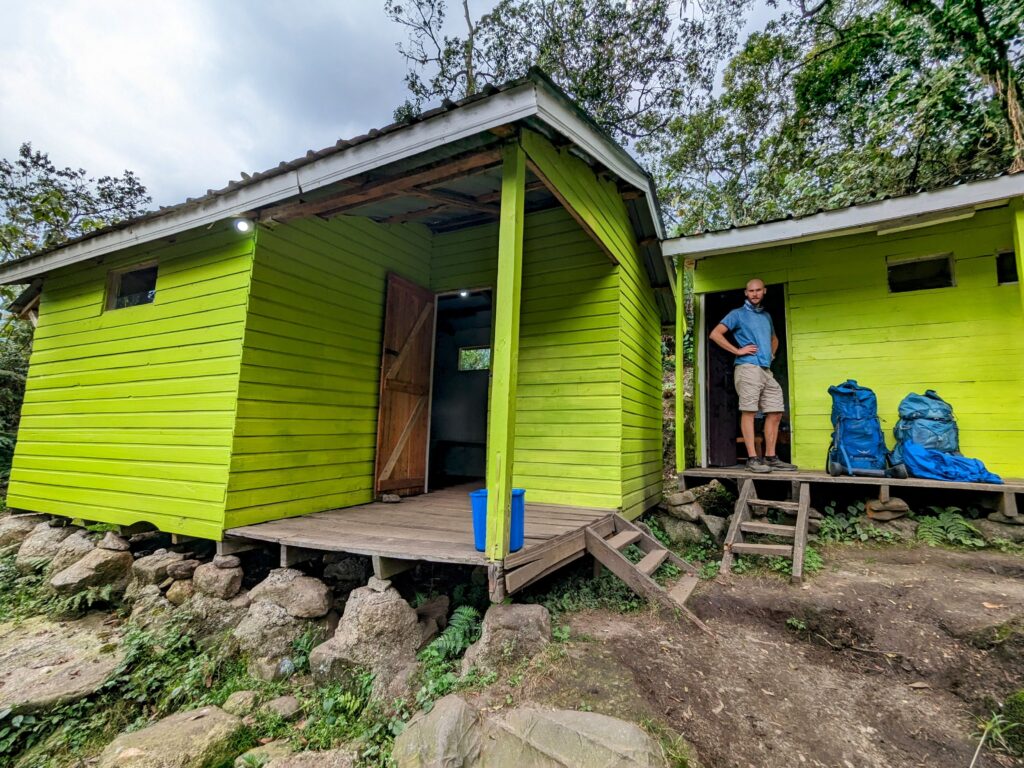
Sine Camp-where to sleep along Kilembe trail of Rwenzori Mountains National Park Kilembe Trail accommodation(s)


The gradient builds steadily through the morning and sharpens in the afternoon as the path climbs toward the transition zone where the forest yields to the first stands of mountain bamboo, and Sine Camp appears in a sheltered clearing beside a running stream.


Detail

Information


Route

Kilembe Trailhead → Sine Camp


Altitude

~1,450m → 2,596m (gain of roughly 1,146m)


Walking Time

Approximately 6–7 hours


Terrain

Forested valley trail, stream crossings, steady then steepening ascent


Meals

Lunch en route or on arrival, dinner at camp (per your confirmed meal plan)


Overnight

Sine Camp, 2,596 m


Day 2: Sine Camp to Kalalama Camp

This is the day the landscape begins its transformation. Leaving Sine Camp, the trail climbs out of the last of the tall forest and into a dense corridor of mountain bamboo, its stems creaking overhead in the wind and its understory rich with moss and orchids. The gradient here is honest work, steep, and occasionally slippery in wet conditions, and it rewards patience rather than speed. Watch the branches at eye level for the three-horned chameleon, a species found only in these mountains and most often seen basking motionless on heather stems in this zone.

As the bamboo thins, tree heather takes over: gnarled, ancient-looking trunks strung with pale curtains of old man’s beard lichen, the light filtering through in shifting grey-green shafts. Streams cross the trail at intervals, running fast and cold over mossy boulders. Kalalama Camp sits within this heather zone, a modest, well-used waypoint camp that provides trekkers their first true sense of how far above the valley floor they now stand, with the descending ridgelines of the Nyamwamba Valley receding below.

Detail

Information

Route

Sine Camp → Kalalama Camp

Altitude

2,596m → approximately 3,134m (gain of roughly 538m)

Walking Time

Approximately 3–4 hours

Terrain

Bamboo corridor into heather- Rapanea woodland, steep sections

Overnight

Kalalama Camp, ~3,134 m

Day 3: Kalalama Camp to Mutinda Camp

Above Kalalama, the heather forest thickens before it begins, almost abruptly, to open. This is the day travelers on the Kilembe Trail often describe as the moment the Rwenzori stops resembling any mountain range they have seen before. The trees shorten and space out; tussock grass and peat begin to dominate the ground beneath your boots; and views open steadily wider with every ridge crossed, back down the valley toward Kasese and, on a clear afternoon, the flatlands beyond the park boundary. Sections of boggy, saturated ground appear depending on recent rainfall; gaiters and waterproof boots earn their place here.

Mutinda Camp sits at the edge of this transition, in a wide, sheltered bowl beside a mountain stream, framed by heather giving way to the first true Afro-alpine plant life on the horizon above. This day matters more than its modest distance suggests: it is where trekkers register, often for the first time, that they have left one mountain environment behind and entered an entirely different one, the beginning of the giant lobelia and groundsel landscape that makes the Rwenzori globally distinctive.

Detail

Information

Route

Kalalama Camp → Mutinda Camp

Altitude

~3,134m → 3,588m (gain of roughly 454m)

Walking Time

Approximately 4–5 hours

Terrain

Upper heather zone into open Afro-montane moorland, boggy in sections

Overnight

Mutinda Camp, 3,588 m

Day 4: Mutinda Camp to Hunwick’s Camp

Day 4 is the high-altitude transition day and the longest, most demanding link on this itinerary. Above Mutinda, tree heather finally surrenders entirely to open Afro-alpine moorland: giant lobelias stand four to five meters tall, their silver rosettes cupping the morning’s condensation; giant groundsels form strange, architectural silhouettes against the sky; everlasting flowers carpet the ground between them. The terrain underfoot turns rockier and more rugged as the trail climbs toward the high ridge system that carries Bamwanjara Pass, with the profile of Weismann’s Peak now visible ahead for long stretches at a time.

The result is a full, demanding mountain day, moving through exposed high terrain where weather can shift quickly, and arriving at Hunwick’s Camp on the rim of the inner Rwenzori, in the shadow of the massif, you will climb the following morning. Malachite sunbirds, found only in these mountains and the Virunga highlands, work the lobelia flower spikes in the bogs along the way; approach quietly and you are likely to see them at close range.
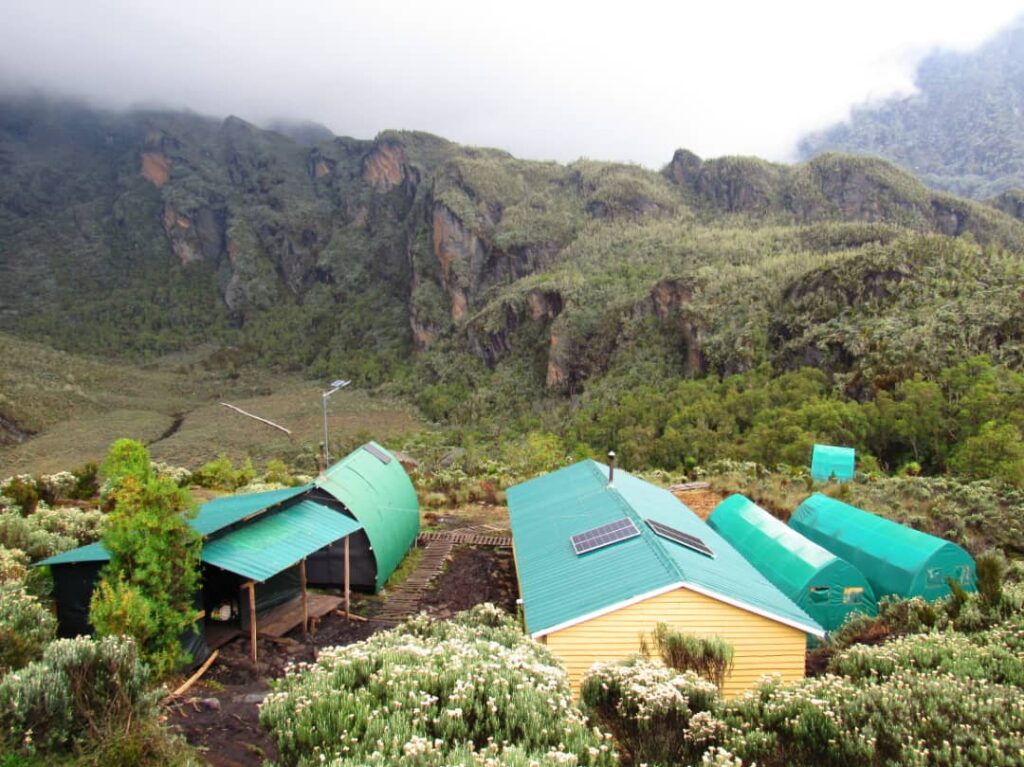
Hunwick's Camp of Kilembe trail Rwenzori route trails. ahere to stay/sleep or accommodations


This six-day itinerary compresses what several longer Kilembe Trail programs split across two overnight stops (typically via an intermediate high camp near Bamwanjara Pass) into a single long day between Mutinda and Hunwick’s. It is deliberately included here rather than smoothed over, because it is the most physically demanding link day on the route, and travelers deserve to know that going in. 

Detail

Information


Route

Mutinda Camp → Hunwick’s Camp


Altitude

3,588 m → approximately 3,974 m, via higher intermediate terrain near Bamwanjara Pass


Walking Time

A long day, confirm current estimate; typically 7–9 hours on comparable Kilembe itineraries


Terrain

Afro-alpine moorland, giant lobelia and groundsel zone, rocky and exposed ridge sections


Overnight

Hunwick’s Camp, ~3,974 m, subject to your confirmed itinerary and current operational conditions


Day 5: Weismann’s Peak Summit Attempt and Return to Camp

This day is the emotional centerpiece of the expedition. Your guide wakes the group in darkness, and after a hot drink and a light breakfast, final layers and headlamps are checked before departure. The ascent from Hunwick’s Camp climbs a rocky ridgeline toward Weismann’s Peak, steep and demanding sure-footedness but requiring no ropes, no crampons, and no glacier crossing. The air at this altitude is genuinely thin, and your guide’s slow, deliberate pace is the single most useful tool you have; resist the urge to rush.
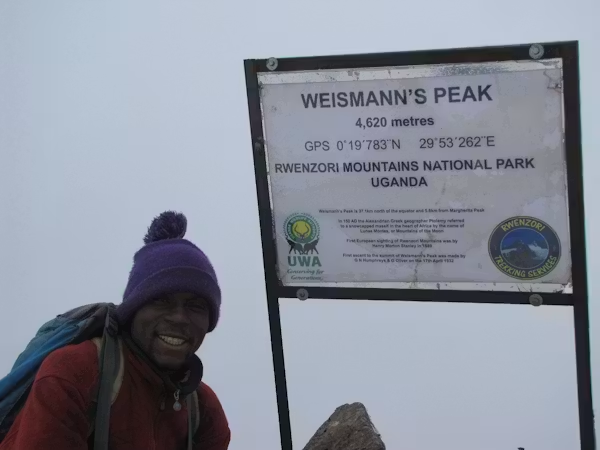
5 days Hie To weismann Peak Rwenzori Trekking

Weather and trail conditions permitting, the final approach delivers you onto a narrow rocky summit crest with drops on multiple sides and a view that ranks among the finest in the range: Mount Stanley’s glaciers to the north, Mount Baker’s ridgeline to the south, and the folded valleys of the inner Rwenzori spread below in every direction. Time at the top is necessarily short; the cold, the wind, and the long descent ahead all argue against lingering, but it is enough for photographs and a quiet moment of earned satisfaction before the descent begins, retracing the ridge back down to Hunwick’s Camp for a second and final night.


On Summit Success

Summit success is never guaranteed. The decision to continue toward Weismann’s Peak on any given morning depends on weather, trail and summit conditions, individual health, acclimatization, and the judgment of your expedition guide. Our goal is to attempt the summit responsibly, respecting both the mountain and the safety of every trekker in the group, not to promise an outcome no operator can honestly guarantee.

Detail

Information


Route

Hunwick’s Camp → Weismann’s Peak (4,620m) → Hunwick’s Camp


Altitude

3,974m → 4,620m → 3,974m (gain and loss of roughly 646m each way)


Walking Time

A long summit day—typically 8–10 hours round trip; confirm current estimate


Terrain

Rocky ridge ascent, exposed summit crest, no technical climbing


Overnight

Hunwick’s Camp, ~3,974m (second night)


Day 6: Descent from the Upper Rwenzori to Kilembe

The final day is a long, satisfying descent that retraces the route back down through every zone you climbed on the way up, in reverse and at speed: Afro-alpine moorland giving way to heather, heather to bamboo, and bamboo to the tall forest of the lower Nyamwamba Valley. Legs that have carried you to 4,620m and back do the remaining work almost on autopilot, while the changing vegetation and returning birdsong mark your progress back toward the world you left six days earlier.

The 6-Day Weismann’s Peak Trek via the Kilembe Trail concludes with a return from one of Africa’s most distinctive high mountain environments, and a private transfer delivers you back to Kasese, where a hot shower, a proper meal, and the first opportunity to process what you have just achieved are waiting.


A full descent from Hunwick’s Camp to the Kilembe Trailhead in a single day is a very long final push. 

Detail

Information


Route

Hunwick’s Camp → Mutinda → Kalalama → Sine → Kilembe Trailhead


Altitude

~3,974m → ~1,450m (loss of roughly 2,524m)


Walking Time

A long final day, confirm current estimate; likely 9–11 hours or split over two days


Terrain

Full descent through Afro-alpine, heather, bamboo, and forest zones


End

Kilembe Trailhead → private transfer to Kasese


What’s Included

  • Trekking permits and applicable Uganda Wildlife Authority park fees.
  • A professional, experienced mountain guide.
  • Mountain support team, including porters.
  • Mountain hut accommodation for all five nights.
  • Meals during the trek, as specified in your confirmed itinerary.
  • Trek transfers specified in the itinerary (Kasese to Kilembe Trailhead and return).
  • Drinking water, according to your operating plan.

What’s Excluded

  • International flights.
  • Uganda visa fees.
  • Comprehensive travel insurance, including medical evacuation cover.
  • Personal trekking equipment (sleeping bag, hiking boots, and clothing).
  • Alcoholic beverages.
  • Personal expenses.
  • Tips for guides and porters.
  • Any services not specifically listed in your confirmed itinerary.
CTA Banner Widget — Rwenzori Trekking Expeditions

Experience Rwenzori Beyond Expectations

Spots Filling Fast — Schedule Your Trek Today

Why Choose a 6-Day Weismann’s Peak Trek Via Kilembe Trail?

Six days is not an arbitrary length. It is the amount of time this particular objective genuinely requires, and it suits several kinds of traveler especially well.

Want More Than a Short Rwenzori Trek

Six days let you move more deeply and gradually into the mountain environment than any three- or four-day Kilembe itinerary can, taking you through every major vegetation zone the Rwenzori has instead of just a single lower slice.

Have Limited Time

For travelers who cannot commit to the ten to fourteen days that a full Margherita Peak or multi-peak expedition demands, six days is enough time to reach a genuine 4,600 m+ summit and return without dangerously compressing the acclimatization schedule.

Want the Kilembe Experience

The route offers the changing ecological zones and the remote, lower-traffic character that define the Kilembe Trail, which many experienced trekkers now prefer to the busier Central Circuit Trail.

Want a Major Summit Objective

Weismann’s Peak provides a legitimate high-altitude goal, above 4,600m, without requiring the glacier travel, technical equipment, and additional acclimatization days that Margherita Peak involves.

How Difficult Is the 6-Day Weismann’s Peak Trek?

This 6-day Margherita Peak trek via Kilembe sits firmly in the demanding category, and we would rather you arrive prepared than surprised.

Altitude

The 6-day Margherita Peak trek via Kilembe Trail reaches 4,620 m at its highest point, well above the elevation where altitude can affect even physically fit, experienced travelers. Two consecutive nights above 3,900m at Hunwick’s Camp add to the cumulative demand.

Terrain

Expect mud, wet trail surfaces, exposed rock, tree roots, steep ascending and descending sections, and boggy peat ground in the upper moorland, particularly outside the drier months.

Weather

The Rwenzori can produce rain, mist, cold, and wind on any day of the year, and conditions on the open ridges above 4,000m can change within the space of an hour.

Consecutive Trekking

Six days of sustained daily hiking, most of it uphill for the first four days, requires genuine cardiovascular and muscular endurance rather than a single day’s fitness.

Summit Day

Day 5 is typically the most demanding single day of the trip: a pre-dawn departure, thin air above 4,000m, and a long round trip back to camp.

In summary: the 6-Day Weismann’s Peak Trek via the Kilembe Trail is best suited to fit well-prepared travelers who are genuinely comfortable spending several consecutive days in remote, high-altitude mountain conditions.

How Fit Do I Need to Be?

Recommended preparation in the two to three months before your trek:

  • Regular cardiovascular training, running, cycling, or swimming, three to four sessions per week.
  • Long walks and hikes on varied, hilly terrain, building toward full-day outings.
  • Stair climbing and hill repeats build the specific leg strength needed for ascending and descending.
  • Targeted leg-strength exercises: squats, lunges, and step-ups.
  • Training with a loaded daypack to condition your shoulders and back for the real thing.
  • Multi-day hiking practice, where possible, builds familiarity with consecutive-day fatigue.

For a complete, structured plan, see our How to Prepare for a Rwenzori Trek guide.

Altitude and Acclimatization

Altitude sickness can affect any traveler regardless of age or fitness level; being in excellent physical shape does not eliminate the risk. Our guides are trained to monitor every member of the group throughout the trek and to take symptoms seriously. The moment you report headache, nausea, dizziness, or unusual breathlessness, you should never hide or downplay these symptoms. Itineraries can and sometimes must be adjusted for safety, including turning back before the summit, and that decision always rests with the guide’s professional judgment on the day. We do not offer medical guarantees of any kind; what we offer is careful, attentive monitoring and a guide team that will always prioritize your safety over reaching the top.

When Is the Best Time for the 6-Day Weismann’s Peak Trek?

Drier Periods

Mid-December through February and June through August tend to bring firmer trail conditions and clearer summit views and are the periods we most often recommend for this itinerary.

Wetter Periods

The remaining months bring greener, more dramatic landscapes but wetter, muddier trail conditions, particularly in the upper moorland sections.

The Rwenzori Mountains can receive rain throughout the year, and mountain weather can change quickly regardless of season. Trekkers should carry appropriate waterproof and warm clothing on every departure date, without exception.

What Should I Pack for the 6-Day Weismann’s Peak Trek Kilembe Trail?


Waterproof Clothing

  • Waterproof jacket (Gore-Tex or equivalent)
  • Waterproof trousers
  • Rain cover for your daypack

Warm Clothing

  • Fleece or lightweight down mid-layer
  • Insulated jacket for camp and summit morning
  • Warm gloves and a warm hat

Trekking Gear

  • Waterproof hiking boots with ankle support
  • Telescopic trekking poles
  • Headlamp with spare batteries
  • Daypack (20–25 L) for summit day essentials

Personal Items

  • UV-protective sunglasses
  • High-SPF sunscreen and lip balm
  • Personal medication and a basic first-aid kit
  • Reusable water bottles or a hydration bladder

For the complete list, including layering strategy and footwear guidance, see our Complete Rwenzori Mountains Packing List.

How Much Does the 6-Day Weismann’s Peak Trek Cost?

Actual cost depends on several factors:

  • Group size and whether the departure is private or joins other travelers.
  • The specific services included in your chosen package.
  • Transfers between Kasese, the trailhead, and your accommodation.
  • Pre- and post-trek accommodation arrangements.
  • Any personal equipment rental required.

Private departures can be customized for solo travelers, couples, families, and private groups of up to eight. Contact Rwenzori Trekking Expeditions for a current quotation based on your travel dates and group size.

CTA Banner Widget — Rwenzori Trekking Expeditions

Experience Rwenzori Beyond Expectations

Spots Filling Fast — Schedule Your Trek Today

Kilembe Trail vs. Central Circuit for Weismann’s Peak

The Kilembe Trail is the standard, direct approach to Weismann’s Peak, and this six-day itinerary is built entirely around it. The Central Circuit trail, which approaches the Rwenzori from Nyakalengija to the north, can reach the Weismann’s Peak area only as part of longer, combined multi-peak traverses via the Kitandara valley system; it is not a practical standalone route to this particular summit, and we do not offer it as one. The comparison below is offered for context, not as two equally valid paths to the same six-day objective.

Factor

Kilembe Trail (This Itinerary)

Central Circuit

Starting Point

Kilembe Trailhead, near Kasese

Nyakalengija, north of the range

Duration for Weismann’s

6 days, standalone itinerary

6-day Central Circuit Itinerary

Camps

Sine, Kalalama, Mutinda, Hunwick’s

Nyabitaba, John Matte, Bujuku, Kitandara, and others

Scenery

Bamboo, heather, and moorland zones distinctive to the south

Bujuku Valley, Lake Bujuku, classic central massif views

Traffic

Considerably quieter, fewer trekkers

The most heavily used Rwenzori route

Best For

A dedicated, efficient Weismann’s Peak objective

Travelers combining Weismann’s with Margherita or other peaks

Weismann’s Peak vs. Margherita Peak

Feature

Weismann’s Peak

Margherita Peak

Elevation

4,620m

5,109m, Africa’s third-highest summit

Typical Duration

6 days via Kilembe Trail

7–10 days via Kilembe Trail or Central Circuit

Summit Conditions

Rocky ridge, exposed but non-glaciated

Glacier crossing required on the final approach

Technical Requirements

None, trekking peak, no ropes or crampons

Rope, harness, crampons, and ice axe required

Best For

Fit trekkers wanting a serious summit without technical climbing

Trekkers seeking Uganda’s highest point and prepared for glacier travel

Gorilla Trekking and Safari Extensions

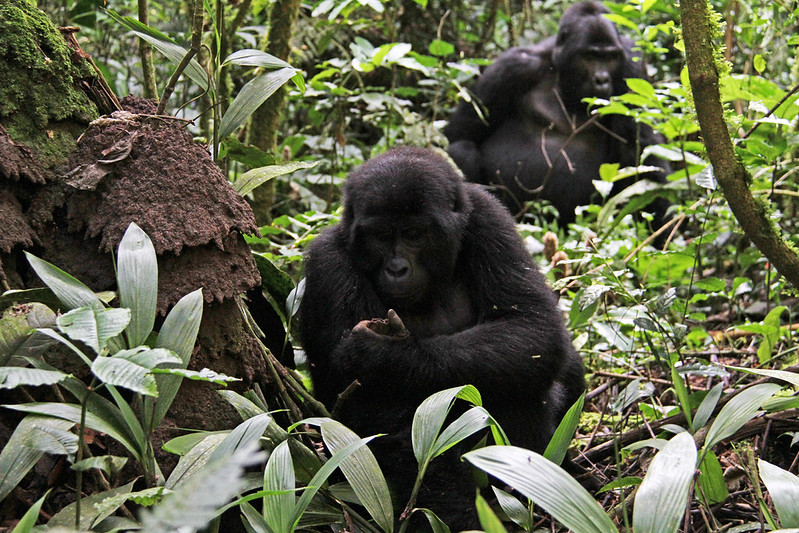
Many of our clients combine this trek with time in Uganda’s primate and wildlife parks before or after their mountain days. Bwindi Impenetrable Forest National Park and Kibale National Park offer gorilla and chimpanzee trekking, while Queen Elizabeth National Park provides game drives and boat safaris, all within comfortable reach of Kasese and easily woven into your itinerary as a private extension. Ask us to build a combined mountain-and-safari program around your travel dates.
 

Why Plan Your Kilembe Trail Trek With Rwenzori Trekking Expeditions?

Rwenzori Trekking Expeditions specializes in helping travelers understand and prepare for trekking in the Rwenzori Mountains. We believe that the best mountain experience begins before the first day on the trail, with clear information about the route, realistic expectations, appropriate preparation, and an itinerary that genuinely matches the traveler’s goals rather than a generic template.

As a Uganda-owned operator working exclusively within Rwenzori Mountains National Park, our route knowledge is specific rather than general: we know the Kilembe Trail’s camps, its weather patterns, and its seasonal quirks in detail, and we build every itinerary, including this one, as a private departure, tailored to solo travelers, couples, families, and groups of up to eight, rather than slotting you into a fixed group schedule. Our pre-trek planning is thorough and honest, our fitness and packing advice is specific to the route you are actually climbing, and our guides make safety-first decisions on the mountain without exception. Support continues before, during, and after your trek, from your first enquiry through your return transfer to Kasese.

CTA Banner Widget — Rwenzori Trekking Expeditions

Experience Rwenzori Beyond Expectations

Spots Filling Fast — Schedule Your Trek Today

Frequently Asked Questions About the 6-day Weismann's Peak Trek via Trail

The trek runs six days and five nights on the mountain, from the Kilembe Trailhead to the summit of Weismann’s Peak and back.

The Kilembe Trail begins at the Kilembe Trailhead, a former copper-mining settlement roughly thirty to forty minutes by road from Kasese town in southwestern Uganda.

Weismann’s Peak stands at 4,620 meters, one of the named summits of Mount Luigi di Savoia, the lowest of the Rwenzori’s six major massifs.

Yes. It sits in the demanding category, with sustained multi-day ascent, high-altitude terrain above 3,900m for two nights, and a genuinely challenging summit day. It is not suitable for beginners.

No. It is a high-altitude trekking peak. The route to the summit involves steep, rocky terrain but no ropes, crampons, or glacier crossing under normal conditions.

We do not recommend this 6-day Weismann Peak trek via the Kilembe Trail itinerary for complete beginners. It suits fit, experienced hikers, ideally those with some prior multi-day trekking experience.

Mid-December through February and June through August are the drier windows and our general recommendation, though the Rwenzori can receive rain at any time of year.

You will sleep in mountain huts at Sine, Kalalama, Mutinda, and Hunwick’s Camps, basic, functional shared accommodation rather than lodges or hotels.

Yes, Porter support is included as part of the mountain support team on this itinerary

Prior multi-day hiking experience is strongly recommended, given the sustained altitude and consecutive-day demands of this route.

Your guide will monitor all trekkers throughout the trek. Any symptoms should be reported immediately, and the itinerary may be adjusted, including turning back, for your safety.

Yes. This 6-day Weismann Peak Rwenzori trekking itinerary is offered as a private departure for solo travelers, couples, families, and groups of up to eight.

Some specialist equipment can be arranged in advance; ask us when booking. Personal boots and a sleeping bag suited to sub-zero camp temperatures are your responsibility.

Pricing depends on group size and services included. Contact us directly for a current quotation based on your travel dates.

Neither is objectively better; they suit different priorities. The Kilembe Trail is quieter and more direct for Weismann’s Peak specifically, while the Central Circuit is the standard route for Margherita Peak and multi-peak traverses.

Yes. Bwindi Impenetrable Forest and Kibale National Park are both within reach of Kasese and can be added before or after your trek.

Yes. Queen Elizabeth National Park, close to Kasese, is a popular addition for game drives and boat safaris.

Coverage is limited to non-existent above the lower camps. Treat the trek as a full digital disconnection and inform contacts at home in advance.

Facilities are basic at the mountain camps. Expect limited washing facilities rather than hot showers once above Sine Camp.

Most trekkers rest in Kasese for a night before continuing to a safari park or Fort Portal. We can arrange comfortable post-trek accommodation.

Comprehensive travel insurance, including high-altitude medical evacuation cover, is strongly recommended for any trek above 3,500m and should be arranged before departure.

As a private departure, groups typically range from a solo traveler up to 12 people traveling together, rather than joining strangers on a fixed date

CTA Banner Widget — Rwenzori Trekking Expeditions

Experience Rwenzori Beyond Expectations

Spots Filling Fast — Schedule Your Trek Today

Why Book Your Rwenzori Trek with Rwenzori Trekking Expeditions?

The difference between a remarkable Rwenzori expedition and a transformative one is almost entirely a question of who guides it. The Rwenzori Mountains are complex, ecologically extraordinary, logistically demanding, and for the uninitiated, potentially disorienting. The team at Rwenzori Trekking Expeditions has accumulated the kind of mountain knowledge that is available only through years of consecutive seasons on the same trails, across all weather patterns, with trekkers of every fitness level and every expectation.

Certified, Community-Rooted Guides

Every lead guide on a Rwenzori Trekking Expeditions expedition is Uganda Tourism Board certified, Uganda Wildlife Authority licensed, and trained in wilderness first aid to a minimum of WAFA standard. They are also, without exception, from the communities surrounding the national park, having grown up within sight of these mountains and understanding them with an intimacy that no amount of external training can replicate. This connection between guide and mountain is the quality that trekkers most consistently mention in post-expedition feedback.

Responsible, Community-Positive Operations

Rwenzori Trekking Expeditions pays porters above the industry standard, operates within regulated weight-per-load limits, provides porters with appropriate equipment and insurance, and designs every expedition to channel meaningful economic benefit into the Nyakalengija and Kasese communities. The guides are career professionals. The porters are not seasonal laborers; they are specialists. Choosing Rwenzori Trekking Expeditions means choosing an operator whose business model is actively beneficial for the mountain and the people who live beside it.

Uncompromising Safety Standards

Every expedition carries a full medical kit, including a pulse oximeter, altitude medication, and a Gamow bag for high-altitude emergencies. Daily health monitoring is standard protocol. The altitude management approach is clear and non-negotiable: if a client’s condition requires descent, descent happens. No summit is worth a preventable crisis, and the team is trained to make that call before it becomes urgent.

Complete Logistical Excellence

From airport collection to mountain exit, from park fee processing to the tip ceremony at the trailhead, every logistical element of your expedition is handled with complete professionalism and without any burden falling on you. The mountain gets your attention. The team manages everything else.

CTA Banner Widget — Rwenzori Trekking Expeditions

Experience Rwenzori Beyond Expectations

Spots Filling Fast — Schedule Your Trek Today

Final Recommendation

If you want a genuine, high-altitude Rwenzori summit without the 7-plus days and technical glacier travel that Margherita Peak demands, and you are drawn to a quieter, less-trafficked route through some of the most distinctive landscapes in East Africa, the 6-Day Weismann’s Peak Trek via the Kilembe Trail deserves serious consideration. It asks real fitness and real commitment of you across six consecutive days, and it repays that commitment with a summit few other travelers will ever stand on.

CTA Banner Widget — Rwenzori Trekking Expeditions

Experience Rwenzori Beyond Expectations

Spots Filling Fast — Schedule Your Trek Today

Scroll to Top