Discover a day in the life of a Rwenzori porter, from early morning preparation and carrying expedition supplies to mountain camps, meals, and daily challenges.
A day in the life of a Rwenzori porter begins long before many travelers step onto the trail and often ends after trekkers have reached camp and settled in for the evening. Porters are an essential part of many Rwenzori trekking expeditions, carrying designated luggage, food, cooking equipment, and other supplies through some of the most challenging terrain in the Rwenzori Mountains. Their work can involve steep climbs, muddy trails, rain, cold temperatures, slippery vegetation, and long trekking days, yet they often overlook their contribution. Understanding what a Rwenzori porter does from morning to evening gives travelers a deeper appreciation of the people who help make a multi-day mountain expedition possible and highlights why responsible treatment, fair compensation, reasonable loads, proper equipment, and respect matter throughout the trek.
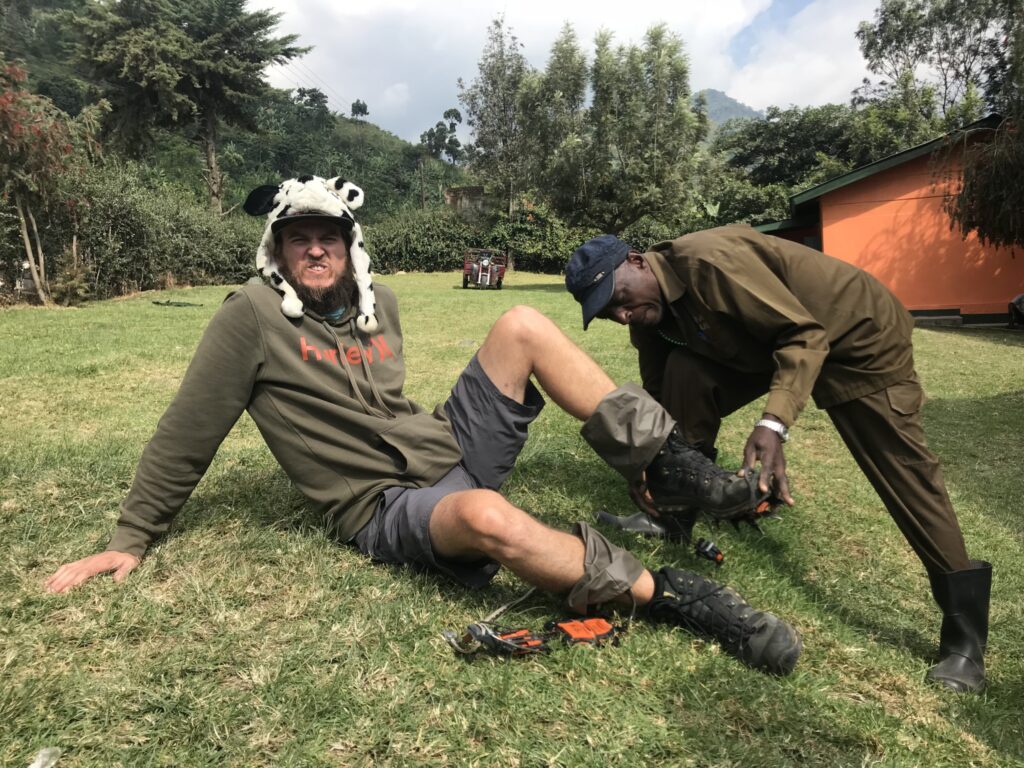
Long before the first trekker laces a boot, someone else is already awake. A young man from a village on the lower slopes of the Rwenzori is folding a sleeping mat, eating quickly, and setting off in the half-dark toward Nyakalengija or Kilembe, carrying almost nothing of his own because everything he owns for the coming days fits into a single small bag. By the time you step onto the trail with a light day pack and a full night’s sleep behind you, he has already weighed loads, shouldered close to twenty-five kilograms of someone else’s expedition, and started walking, often faster than you, often further ahead.
Every account of Rwenzori trekking talks about glaciers, ridgelines, and the moment Margherita Peak appears through the cloud. Almost none of them discuss the porter: the person whose day makes that moment possible. This guide exists to change that, to walk you, hour by hour, through what a Rwenzori porter’s day actually looks like, and to be completely honest about the welfare, wages, and working conditions behind it, so that when you book your own Rwenzori trek, you understand exactly who is carrying it with you.
In short: a Rwenzori porter’s day begins before dawn with a load-weighing ritual at the trailhead, continues through hours of steep, muddy trail carrying a capped 25-kilogram load, and does not end when camp is reached; it continues into tent or hut setup, water collection, and meal preparation, often finishing well after the trekkers themselves have settled in for the night. Porters are certified local professionals, overwhelmingly drawn from the Bakonzo community native to the Rwenzori foothills, and porter work is one of the most direct ways a trekker’s spending supports the people and communities of this mountain. Understanding their day is not a side note; it is the foundation of your entire expedition.
A Rwenzori Porter’s Day at a Glance
Time | What’s Happening |
Before Dawn | Porters travel to the trailhead assembly point; personal kit is minimal and packed the night before. |
Early Morning | Loads are weighed on a spring scale and assigned by the head guide; the 25 kg limit is strictly enforced. |
Morning Trek | Porters set off, often ahead of or alongside the trekking group, moving efficiently despite the heavier load. |
Midday | A short break for food and rest, timed around the group’s own midday stop. |
Afternoon Trek | Continued climbing or descending to reach the next hut or camp, frequently arriving before the trekkers. |
Camp Arrival | Immediate work begins: setting up sleeping space, collecting and treating water, and starting the cooking fire. |
Evening | Meal preparation and service for trekkers, followed by the porter team’s own communal meal and rest. |
Night | Simple, shared sleeping arrangements, often colder and more basic than trekker accommodation. |
Who Is a Rwenzori Porter?
A Rwenzori porter is a trained, certified local professional responsible for carrying expedition equipment and personal luggage across some of the most physically demanding terrain in East Africa. Porters are overwhelmingly drawn from the Bakonzo community, the indigenous people whose ancestral homeland covers the foothills and lower slopes of the range on both the Ugandan and Congolese sides of the border. For many Bakonzo families, porter work is one of the primary and most reliable sources of formal income available in the district, funding school fees, healthcare, and household security in a way few other local jobs can match.
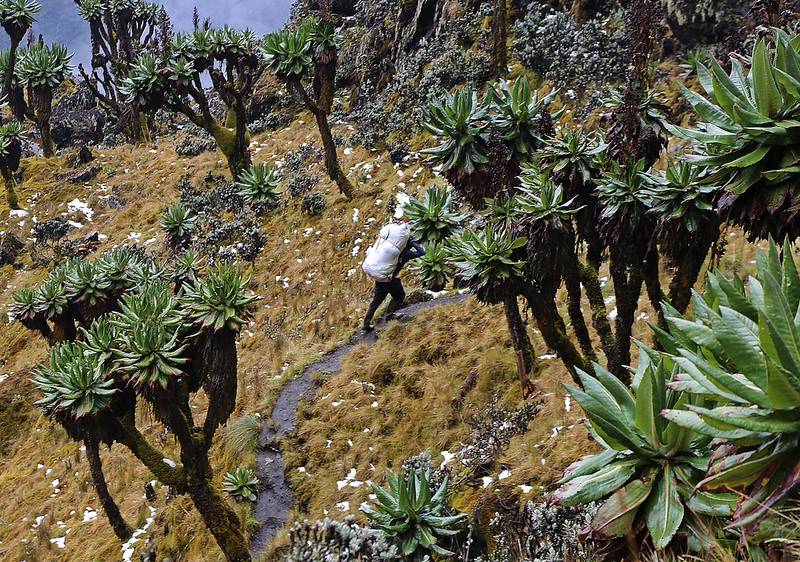
Becoming a porter is rarely a quick decision. It typically begins young, often shadowing an older relative on the trail before being certified to carry independently under the standards maintained by the trail management bodies responsible for the range’s main routes. From there, a capable and reliable porter has a genuine career path ahead of him, one that, over years, can lead all the way to assistant guide and eventually head guide certification. It is common on this mountain to meet senior guides who started, a decade or more earlier, exactly where every new porter starts today.
What Does a Rwenzori Porter Do?
A porter’s role involves much more than just carrying weight. Across a single trekking day, a porter may be responsible for:
- Carrying assigned trekker luggage and shared expedition equipment.
- Helping set up sleeping arrangements at each hut or camp.
- This includes collecting and treating water for cooking, drinking, and washing.
- This role also includes assisting the cook with meal preparation and camp logistics.
- This role also includes supporting trekkers on difficult sections of the trail when needed.
- This role also involves keeping communal equipment, tents, gas canisters, and food supplies dry, organized, and accounted for.
On routes without fixed huts, this role expands further still, as the entire camp, including tents, kitchen area, and group shelter, among others, must be built from nothing each evening and taken down again each morning.
Before Travelers Start Walking
A porter’s day is already well underway by the time trekkers arrive at the trailhead. Many porters live within walking distance of Nyakalengija or Kilembe and set off from home in the dark to reach the assembly point on time, carrying little more than a sleeping mat, a change of clothes, and whatever personal food supplements the trek’s provisions. This quiet, unseen head start is the first of many ways a porter’s working day is longer than a trekker’s.
Morning Preparation
The single most important ritual of the entire day happens before anyone takes a step: the load weighing. Every bag destined for the mountain is placed on a spring scale at the assembly point, under the direct supervision of the head guide and the relevant trail management authority. This process exists for one reason above all others, to protect porter welfare by ensuring no individual is asked to carry more than is safe over multiple demanding days.
Once weighed, loads are assigned with real thought rather than at random. Communal equipment, tents on routes without huts, cooking gear, gas canisters, food supplies, and emergency kits are assigned to the strongest and most experienced members of the team, since the whole expedition depends on it, regardless of whose personal bag ends up where. Trekker bags are typically assigned to the same porter for the duration of the trek, so a working familiarity builds up day by day.
What Does a Porter Carry?
- Trekker luggage: the main pack of the traveller they are assigned to, packed and handed over each morning.
- Shared camp equipment: tents on non-hut routes, cooking pots, stoves, and gas canisters.
- Food supplies: provisions for the entire group across the length of the trek.
- Personal kit: their minimal overnight essentials, fitted around the group load.
- Emergency and safety equipment: first aid supplies and additional gear carried in case conditions change.
A responsibly managed Rwenzori porter load is capped, weighed, and enforced, never left to guesswork or well-meaning intentions.
This weight limit is precisely why our page on how to pack for a Rwenzori trek matters as much for the people carrying your gear as it does for you; every unnecessary kilogram in a trekker’s bag is a kilogram someone else must carry up the same muddy passes all day, for several days in a row.
The First Hours on the Trail
Once loads are weighed and assigned, the day’s walking begins, and this moment is where a common misconception meets reality. Porters are not simply following along behind the group; they are, in effect, setting the operational tempo of the entire expedition.
Walking Behind the Expedition
Many first-time trekkers are surprised to learn that porters often do not spend the day trailing quietly at the back. More often, the porter team moves out ahead of or well alongside the main trekking party, at a noticeably efficient pace, despite carrying two to three times the weight of a typical daypack. This is not a display of strength; it is operational necessity. Porters need to reach camp early enough to prepare it properly before weary, cold trekkers arrive, which means their working rhythm through the first hours is often faster and more sustained than the group’s own.
Where porters do walk alongside or near the back of the group, it is typically to offer support on a difficult section, steadying a trekker on a slick descent, or helping across an exposed stream crossing, a quiet, constant form of care that is easy to underestimate until you have needed it yourself.
Midday Break
Around the midpoint of the day’s stage, the group pauses for trekkers to rest, have a snack, and dry out slightly if the weather allows; porters take a similar break, though often shorter and more efficient, timed to keep the group’s overall schedule on track. This is frequently one of the best moments for a trekker to properly meet their team: to learn names, share a laugh, and begin to see the day from more than one perspective.
Afternoon Trek
The afternoon stretch is where fatigue genuinely starts to register, for trekkers and porters alike, though it shows differently. A trekker’s afternoon slows as legs tire under a light pack. A porter’s afternoon is a study in disciplined pacing, maintaining a working rhythm under a heavy, fixed load across the same steep, muddy, root-covered terrain, because the day’s work is not finished until camp is set up on the other end of it.
Arriving at Camp
Reaching camp is not the end of a porter’s working day; in many respects, it is where the second half begins. Porters who arrive ahead of the trekking party move immediately into setup: preparing hut space or pitching tents, laying out mattresses, and getting communal cooking equipment organized, all before the main group has even come into view.
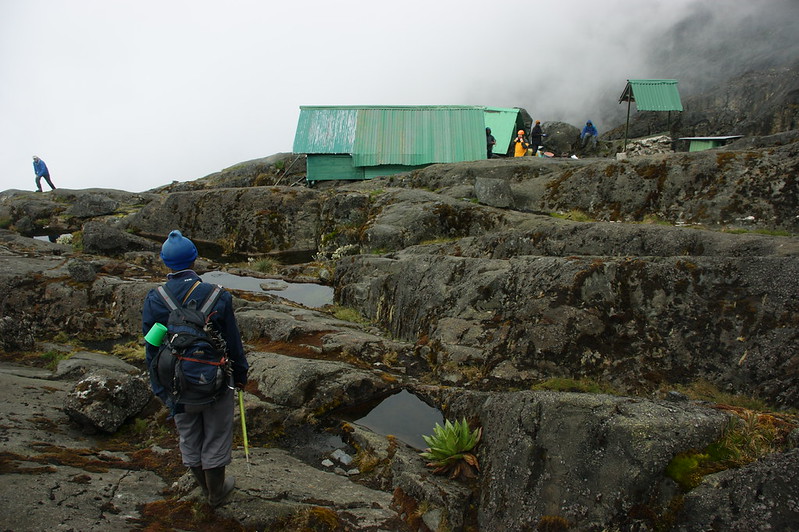
When Travelers Rest, the Team Still Works
This is perhaps the most important thing for any trekker to understand about a Rwenzori expedition: the moment you sit down, remove your boots, and finally rest is when your team’s second job begins. Water has to be collected and treated, often from a source some distance from camp. Firewood or cooking fuel has to be managed. A hot drink and a snack need to be ready for a group that arrives cold, muddy, and glad to see it waiting, a small institutional kindness that experienced Rwenzori trekkers consistently name as one of the most memorable details of the entire trip.
Evening & Dinner
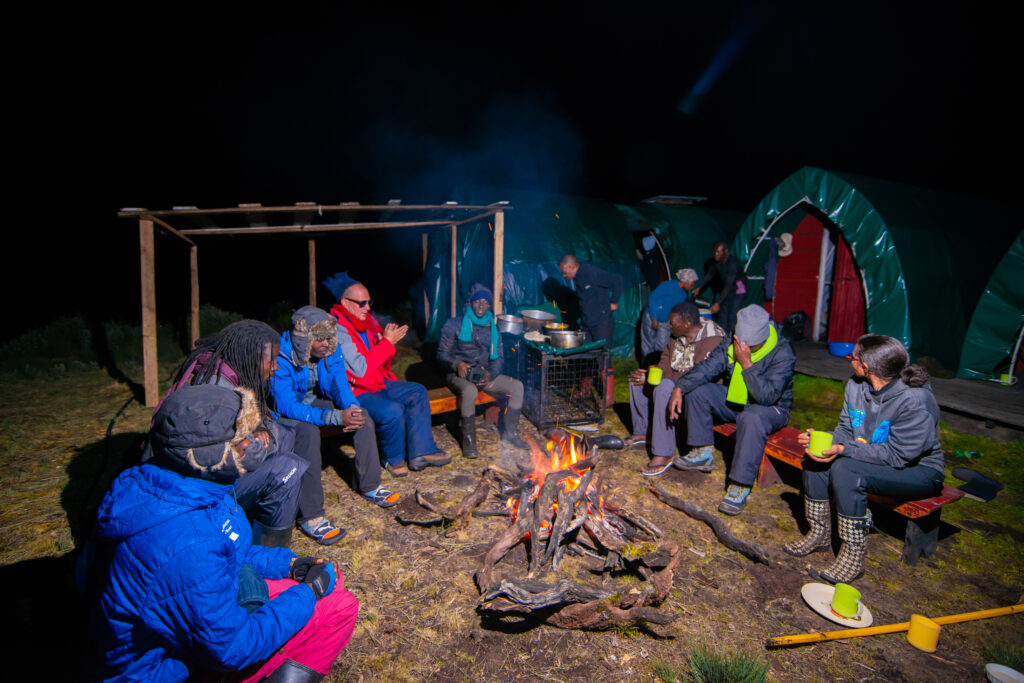
The cook, working closely with the porter team, begins preparing dinner well before the trekkers settle in, drawing on supplies the same porters carried up that morning. Once trekkers have eaten and begun winding down for the night, the porter team typically shares its separate evening meal, often heartier and more calorie-dense, reflecting the physical demands of the day’s carry. This is where the genuine camaraderie of a Rwenzori trekking team becomes visible: conversation, laughter, and sometimes music shared among people who know this mountain intimately.
Where Do Porters Sleep?
Sleeping arrangements for porters are simpler and more communal than trekker accommodation. On routes served by fixed mountain huts, the arrangement typically means a dedicated, more basic porter area within the hut structure, separate from where trekkers sleep. On routes without huts, it means shared tent space within the same camp the team has just built from nothing. Nights above 3,500 meters are genuinely cold for everyone, and porters manage these conditions with fewer technical layers than most international trekkers carry, relying on experience, shared warmth, and whatever fire can be kept going.
The Physical Challenges of Porter Work
Every obstacle that makes a Rwenzori trek demanding for a trekker is a materially harder problem for someone carrying a heavy, fixed load.
- Weight and terrain together: a stream crossing, a fallen-tree scramble, or an exposed pass becomes a different balance and judgment challenge entirely once a 25-kilogram load is added to the equation.
- Cumulative fatigue: the same muscle strain and joint stress that affects trekkers over consecutive days affects porters more severely, day after day, trek after trek, and across an entire season.
- Weather as routine, not disruption: for a porter, rain is less an occasional inconvenience and more a constant practical concern, keeping food, tents, and gas equipment dry while managing his comfort with a limited change of clothing.
- Footwear demands: gumboots are standard for many porters precisely because the range’s mud and stream crossings make typical hiking boots impractical at this pace, load, and repetition.
This is why porter fitness, experience, and proper equipment are not incidental details; they are central to how safely and smoothly your entire expedition runs.
More Than Carrying a Backpack
It is easy, from the trekker’s side, to think of a porter’s job as simply carrying weight from one point to another. In practice, a porter is simultaneously a logistics coordinator, a camp builder, a water manager, a kitchen assistant, and, very often, an informal source of encouragement on the trail’s hardest stretches. The physical carrying is the most visible part of the job. The judgment, the pacing, the constant, quiet problem-solving that keeps an expedition running smoothly, that is the part most trekkers never see.

Porter Welfare & Ethical Trekking
Porter welfare on the Rwenzori is not an abstract ideal; it is a set of specific, enforceable standards, and how seriously an operator takes them says everything about the kind of trek you are booking.
- The 25-kilogram weight limit: a hard-won standard, set and enforced by the trail management authorities, that caps how much any individual porter can be asked to carry.
- Fair, transparent wages are base pay set at sustainable levels for the local economy and are understood by every trekker to be meaningfully supplemented by fair tipping.
- Proper equipment provision: responsible operators supply or ensure adequate footwear, rain protection, and sleeping equipment for their porter teams, not just their clients.
- Safety and rest: reasonable daily distances, adequate food, and a working pace that does not compromise porter health for the sake of a faster itinerary.
- Respect and dignity: porters were treated, spoken to, and represented as skilled professionals—not anonymous labor—throughout the trekking experience.
Porter welfare standards vary considerably across operators on this mountain, even though clear minimums exist. The difference is not always visible from a price list; it is visible in how a team is treated on the trail.
What Responsible Travelers Should Look For
- An operator that openly discusses its porter weight limits and wage structure without being asked.
- Evidence of fair, transparent tipping guidance rather than vague suggestions left to guesswork.
- A team that appears properly equipped for the conditions, with boots, rain gear, and warm layers, not improvising with whatever is available.
- A visible sense of respect and rapport between guides, porters, and the operator’s office staff.
- A willingness to explain exactly how many porters your specific itinerary requires and why.
Choosing well here is not simply an ethical footnote to your trip; it is one of the most meaningful ways your trekking spend genuinely supports the Bakonzo communities that make Rwenzori trekking possible.
Why Hire a Porter?
Some first-time trekkers, aiming to save cost or prove something to themselves, consider carrying their own full pack. On the Rwenzori, such an approach is rarely the right instinct, for reasons that go well beyond comfort.
- It changes your actual trek: carrying a lighter daypack rather than a full multi-day load lets you focus energy on the terrain itself, the mud, the altitude, and the steep ground, rather than sheer load-bearing endurance.
- It supports the local economy directly: porter wages and tips are one of the most direct forms of economic benefit a trekker’s spending brings to Bakonzo families and Kasese District.
- It is how the mountain’s logistics actually work: camps are built, water is sourced, and meals are prepared by a coordinated team; porter support is part of the operational structure of Rwenzori trekking, not an optional add-on.
- It is safer: a lighter personal load reduces fatigue-related risk on steep, slippery terrain, particularly at altitude.
Hiring porters, in short, is not a luxury layered on top of a Rwenzori trek; it is one of the load-bearing structures, quite literally, that the entire experience depends on.
What Travelers Should Carry
With porters handling your main luggage, your own daypack should be reserved for what you genuinely need within reach during the day’s walk.
- Water and a means of purification or refill.
- Waterproof jacket and layers for sudden weather changes.
- Snacks and any personal energy supplements.
- Camera or phone, with a power bank if needed.
- Sun protection, a hat, and sunscreen, even on overcast days.
- PersoBring personal first aid items and any regular medication you may need. head torch for any unexpectedly late arrival into camp.
Focusing on keeping your daypack light not only enhances your comfort on the trail but also embodies the spirit of fair and considerate trekking that this entire guide promotes.
Porters on Different Rwenzori Routes
A porter’s day shifts meaningfully depending on which route your trek follows.
- Central Circuit Trail: served by fixed mountain huts, so porter work centers on hut setup, water collection, and meal logistics rather than building a camp from scratch.
- Kilembe Trail: similarly served by designated trekking camps, with a broadly comparable daily rhythm to the Central Circuit.
- Routes without fixed huts: here the porter role expands considerably; tents, a full kitchen setup, and the group shelter must be carried, assembled, and dismantled at every stop, adding meaningfully to the day’s total workload.
This is one of the clearest practical differences between route types, and it directly affects how many porters your specific itinerary requires: a detail your Rwenzori Trekking Expeditions planning team will always confirm with you in advance.
A Day-in-the-Life Timeline
Time | Porter Activity |
Before Dawn | Travel to the trailhead; final personal packing at home. |
6:00–7:00 AM | Load weighing and assignment at the assembly point, supervised by the head guide. |
7:00 AM onward | Trek begins; porters move ahead of or alongside the group at an efficient pace. |
Midday | Short rest and food break, timed around the group’s schedule. |
Early-Mid Afternoon | Continued trekking to the next hut or camp, often arriving ahead of the trekkers. |
On Arrival | Camp setup: shelter, mattresses, water collection, and fire or stove preparation. |
Early Evening | Meal preparation and service for trekkers; hot drinks ready on arrival. |
Evening | The porter team’s own communal meal, conversation, and rest. |
Night | Simple, shared sleeping arrangements help manage the cold, but the limited technical gear makes this challenging. |
What a Porter Actually Earns
An honest answer to this question requires two figures held together: the base daily wage and the tip. Base wages are set at minimum standards established by the relevant trail management organizations, calibrated to be commercially sustainable for operators while still providing meaningful income by the standards of the local Kasese District economy. Combined across a full trekking season, base wages and fair tips together can meaningfully support an entire household, funding school fees, healthcare, and daily necessities in a district where formal, monetized income is difficult to come by.
On their own, though, base wages are modest. This is precisely why the tip a trekker leaves at the end of an expedition is not a nice-to-have gesture; it carries real, tangible economic weight for the people who earn it, and it is the part of a porter’s income that trekkers have the most direct influence over. Understanding this before you arrive, rather than treating it as an afterthought calculated hastily at the trailhead, is one of the simplest and most meaningful things a responsible traveller can do.
Tipping Rwenzori Porters
Recommended tip amounts vary by role, group size, and trek duration, and we set out specific, practical figures in our dedicated tipping guide so you can budget properly before you arrive rather than improvising at the trailhead. As a general principle, tip generously, in cash and in denominations porters can actually use locally, and, where possible, present tips collectively to the lead guide for fair distribution across the whole team.
The Final Morning: The Song
There is a moment that unfolds on the final morning of almost every Rwenzori expedition, just after the last mountain breakfast, when the entire team, guides, cook, and every porter gather before the descent to the trailhead and sing a farewell song. It is unrehearsed and wholehearted, a genuine expression of Bakonzo joy and communal celebration, and it tends to catch first-time trekkers completely off guard, in the best possible way.
From the trekker’s side, this moment is often described as the emotional high point of the entire trip. From the team’s side, having carried the same demanding load up the same passes, sometimes for the seventh or eighth time that season, it is something different: a genuine closing ritual, a release, and a moment of collective pride in a job done well. Tips are traditionally gathered into a single envelope at this point and presented to the lead guide for distribution among the whole team, closing the expedition the way it began: together, as one crew.
Meet the People Behind Your Trek
Every Rwenzori Trekking Expedition itinerary is carried, quite literally, by a team of skilled Bakonzo professionals, guides, cooks, and porters, many of whom have spent years, in some cases decades, building an intimate knowledge of this range that no guidebook can replicate. Taking a few minutes at camp to learn names, ask questions, and simply talk with your team consistently changes the character of a Rwenzori trek for the better. The mountain is extraordinary. The people who make it accessible to you are, just as often, the part that travelers remember most.
Our Porter Standards
Rwenzori Trekking Expeditions treats porter welfare as a non-negotiable operating standard, not a marketing line.
- Strict adherence to the enforced maximum load limit for every porter, on every trek.
- Fair, transparent wages, with clear tipping guidance shared with every traveller before departure.
- Proper footwear, rain protection, and sleeping equipment provided or ensured for our full mountain team.
- Itineraries planned with realistic daily distances that do not compromise porter safety for the sake of speed.
- Direct, respectful communication between our office, our guides, and every porter on the mountain.
When you book with us, you are not simply hiring a trekking service; you are joining a team that has already committed, long before you arrived, to doing the job properly.
Frequently Asked Questions
How much weight does a Rwenzori porter carry?
Rwenzori porters are limited to a maximum load, generally capped at around 25 kilograms, a standard set and enforced by the relevant trail management authorities. Every bag is weighed at the trailhead before departure, and any load found over the limit is repacked on the spot.
What time does a Rwenzori porter’s day start?
A porter’s working day effectively begins before dawn, often with a walk from a nearby village to the trailhead assembly point, followed by load weighing and assignment under the head guide’s supervision.
Do porters walk ahead of or behind trekkers?
Porters typically move ahead of or alongside the trekking group rather than trailing behind, despite carrying substantially heavier loads, a practical necessity so camp can be prepared before trekkers arrive.
How much should I tip a Rwenzori porter?
Recommended tips vary by role, group size, and trek length. We provide specific, practical figures in our dedicated tipping guide so you can budget confidently before you travel.
Where do Rwenzori porters come from?
The overwhelming majority of Rwenzori porters are members of the Bakonzo community, the indigenous people whose ancestral homeland covers the range’s foothills and lower slopes.
Can a porter become a guide on the Rwenzori?
Yes, this is a well-established career path. Porters who build experience and reliability over multiple seasons can progress toward assistant guide and eventually head guide certification.
Where do porters sleep on a Rwenzori trek?
On hut-served routes, porters typically sleep in simpler, dedicated communal quarters separate from trekker accommodation. On routes without huts, they share tent space within the camp they build each evening.
Is hiring a porter mandatory?
Porter and guide support is a standard and expected part of Rwenzori trekking logistics, built into how routes, permits, and safety planning function on this mountain.
Book Your Rwenzori Trek
You now know what we ask of those who carry out your Rwenzori expedition and what we ask of ourselves in return. Every load is weighed. Every wage is fair. Every itinerary is paced with genuine respect for the team walking it alongside you. Nothing about how your trek is staffed, supported, or resourced is left to chance, because the mountain itself asks enough of everyone involved without an operator cutting corners on top of it.
When you trek with Rwenzori Trekking Expeditions, you are not just booking a route to a summit. You are joining a team of guides, cooks, and porters, who have already committed to doing the trek the right way, long before you arrive. Tell us your dates, your route, and your goals, and let us build the properly resourced, fairly run expedition that both you and your team deserve.
Enquire with Rwenzori Trekking Expeditions today, and start planning a Rwenzori journey you can feel genuinely proud of, from the first load weighed at dawn to the last song sung at the trailhead.