The honest answer, the working formula, and the responsible-tourism case all apply to the team that carries your expedition.
For most Rwenzori treks, expect roughly one porter per trekker, plus a lead guide and a cook, as the practical minimum, with additional porters and a dedicated rescue porter added for any Margherita Peak summit bid. A solo trekker on a full summit expedition typically travels with a support team of four to five people; a group of four typically travels with six to nine.
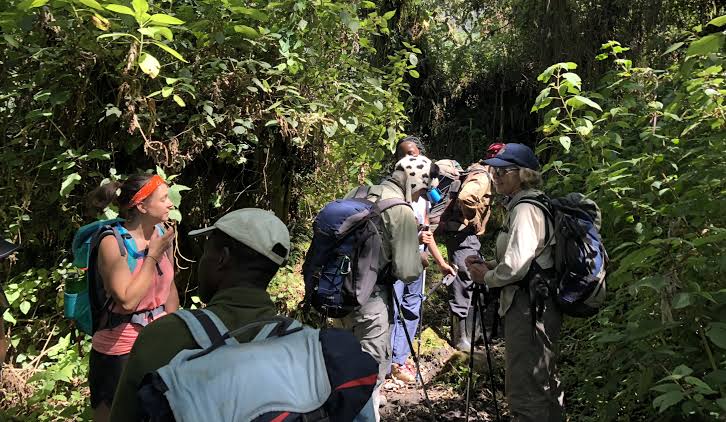
There is no single number of porters that is appropriate for every Rwenzori trek; the right figure depends on your group size, your route, the length of your itinerary, and the equipment your expedition genuinely needs to carry. What does stay constant, on any responsibly run trek, is the load limit: no porter should carry more than roughly 18 to 20 kilograms of expedition equipment, a welfare standard we treat as non-negotiable rather than aspirational.
Why Do I Need Porters on a Rwenzori Trek?
The Rwenzori is not a single volcanic cone with a well-worn path to the top. It is a genuine mountain range, formed by tectonic uplift rather than volcanic activity, threaded with boggy valleys, steep and often muddy ridgelines, dense forest, and glaciated terrain above 4,500 meters on the final approach to Margherita Peak. Both major routes, the Central Circuit Trail and the Kilembe Trail, cross terrain that is genuinely demanding underfoot in a way few other African mountains match, and every day on the trail depends on a support team carrying food, cooking equipment, communal shelter components, safety supplies, and, on summit routes, technical glacier gear.
Porters are the mechanism that makes a multi-day Rwenzori expedition possible at all. Without them, every trekker would need to personally carry days of food, a share of cooking equipment, group safety supplies, and technical gear across genuinely difficult terrain, a demand that would make the mountain inaccessible to all but the most extreme ultralight mountaineers. The porter system is not an add-on service; it is the logistical backbone of the expedition and a key source of formal income for the Bakonzo communities around the base of these mountains.
The Rwenzori Porter System Is Unlike Anything Else in East Africa
Before any staffing number will make real sense, it helps to understand why the Rwenzori Mountains need a larger, more specialized support team than most other African mountains in the first place. Unlike Kilimanjaro or Mount Kenya, both of which sit on a single volcanic massif, the Rwenzori is a block-fault range thrown up by tectonic uplift, a tangle of ridges, deep valleys, waterlogged bogs, and glaciated upper slopes that makes the terrain considerably more complex than a straightforward volcanic cone.
The Central Circuit Trail crosses five distinct vegetation zones, from tropical forest and bamboo at the base to giant heather and giant lobelias in the Afro-alpine zone above roughly 3,500 meters, before reaching genuinely glaciated ground on the final approach to Margherita Peak. The Kilembe Trail climbs through its own equally demanding sequence of ecosystems from the south. What both routes share is a physical character that surprises most first-time visitors: they are wet almost year-round, consistently steep, and technically serious underfoot in a way that few other African treks require travellers to reckon with. Sustained rain, boggy valley crossings, and temperatures that fall well below freezing at the highest camps are simply part of daily life on this mountain, for trekkers and staff alike, and it is this terrain, more than convention, that shapes how large and how specialized a Rwenzori support team genuinely needs to be.
Who Regulates the Rwenzori Porter System?
Trekking inside Rwenzori Mountains National Park falls under the authority of the Uganda Wildlife Authority, which requires every trekking party to be accompanied by a registered park guide. This is enforced at both principal trailheads, Nyakalengija on the Central Circuit Trail and the Kilembe Trail entry point on the southern approach, and unsupported solo trekking is not permitted under park regulations. This requirement exists because the navigational complexity, weather unpredictability, and genuine remoteness of the range make unsupported travel a real danger, not just a formality that confident hikers can waive.
Porters sit alongside this guide requirement as a practical necessity rather than a strict legal mandate, but for any multi-day expedition they are effectively indispensable, since the communal food, equipment, and safety supplies a trek depends on cannot reasonably be carried by trekkers and guides alone. Community-based trail management structures operating in partnership with the park authority set additional standards for porter employment, load limits, and crew welfare on the ground, and any operator running expeditions in the Rwenzori works within this combined framework. The practical result is a minimum crew composition for any serious itinerary: a registered lead guide, a cook, and at least one porter per trekking member on most standard routes, with additional specialized crew, including an assistant guide and a dedicated rescue porter, required for summit and multi-peak expeditions.

How Porter Numbers Are Determined
Three factors, considered together, determine the right-sized team for any given trek.
1. Your Group Size
Group size affects porter numbers, but not in a straight line. A solo trekker still requires a lead guide, a cook, and enough porters to carry communal cooking equipment, food, and safety supplies, so a one-person trek is never a one-porter trek. Larger groups need proportionally more porters for personal luggage but can share communal equipment and food supplies more efficiently, so the per-person porter requirement actually tends to fall as the group grows.
2. The Length of Your Trek
Every additional day on the mountain adds weight: more food, more fuel for cooking, and a greater cumulative supply load. A short trek such as the one- to three-day Diamond Trail requires a noticeably lighter support team than a full nine-day summit expedition, simply because there are fewer days of supplies to carry.
3. Your Trekking Route
The Central Circuit Trail and the Kilembe Trail both require broadly similar staffing for equivalent itineraries, though specific hut and camp logistics differ slightly between them. Any route that includes a Margherita Peak summit bid adds technical glacier equipment, crampons, ropes, and ice axes to the collective load, along with the mandatory rescue porter provision, regardless of which trail you approach from.
Standard Porter-to-Trekker Ratios: What to Expect on Each Route
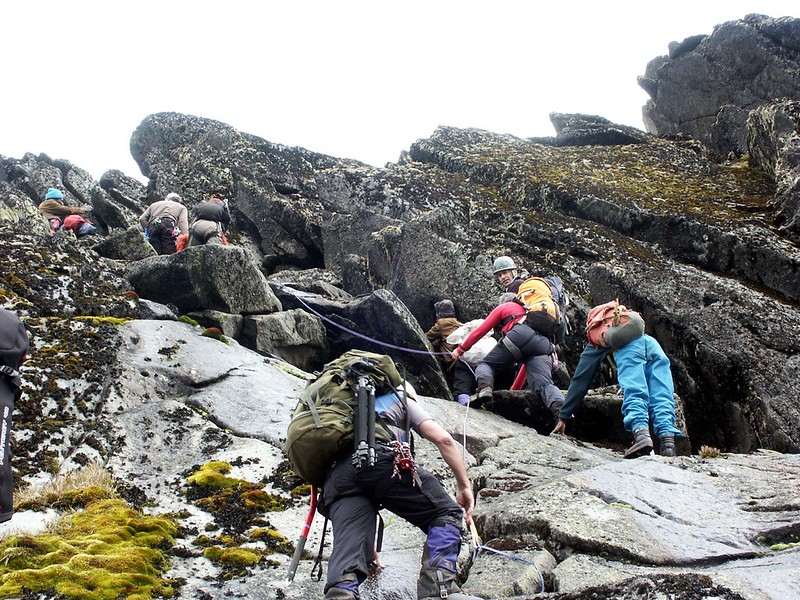
Porter allocation ultimately comes down to your route, your group size, and your objective, whether that is a short lower-altitude trek or a full Margherita Peak summit bid. The table below sets out the standard team composition we plan around for our main itinerary types, though every figure is confirmed individually against your specific kit and group before departure.
Trek | Trekkers | Guides | Cook | Porters |
Diamond Trail / short forest trek (1–3 days) | 1–2 | 1 | 1 (combined) | 1–2 |
Central Circuit or Kilembe Trail, solo trekker (7–9 days) | 1 | 1 | 1 | 2–3 |
Central Circuit or Kilembe Trail, small group (7–9 days) | 2–4 | 1–2 | 1 | Roughly 1 per trekker |
Margherita Peak summit expedition | 2–4 | 1–2 | 1 | 1 per trekker, plus a dedicated rescue porter |
Multi-peak expedition (10–13+ days) | 2–4 | 1 lead + assistant | 1 | 4–6, plus rescue porter |
For the shorter, lower-altitude routes, support requirements are correspondingly lighter, since these trails avoid the technical upper mountain and involve simpler food logistics. For the mid-length summit routes, the standard allocation of roughly one porter per trekker, plus guide and cook, means a solo trekker travels with a team of three to four, and a group of four travels with a team of six to eight once an assistant guide is added for technical sections. The larger multi-peak expeditions require significantly more logistical support again, driven by genuine mathematical necessity, the cumulative weight of food, fuel, technical gear, and safety equipment for ten, thirteen, or more days, rather than by any tendency toward overstaffing.
How Many Porters Do I Need as a Solo Traveler?
A solo trekker on a standard multi-day summit route should expect a support team of at least four people: a lead guide, a cook, and two to three porters. This is not padding; the communal weight of a week’s food, cooking equipment, safety supplies, and, on summit itineraries, technical glacier gear remains the same whether one or more trekkers are walking. On a short, low-altitude trek such as the Diamond Trail, a solo trekker’s team can be considerably leaner, often just a guide and one combined cook-porter.
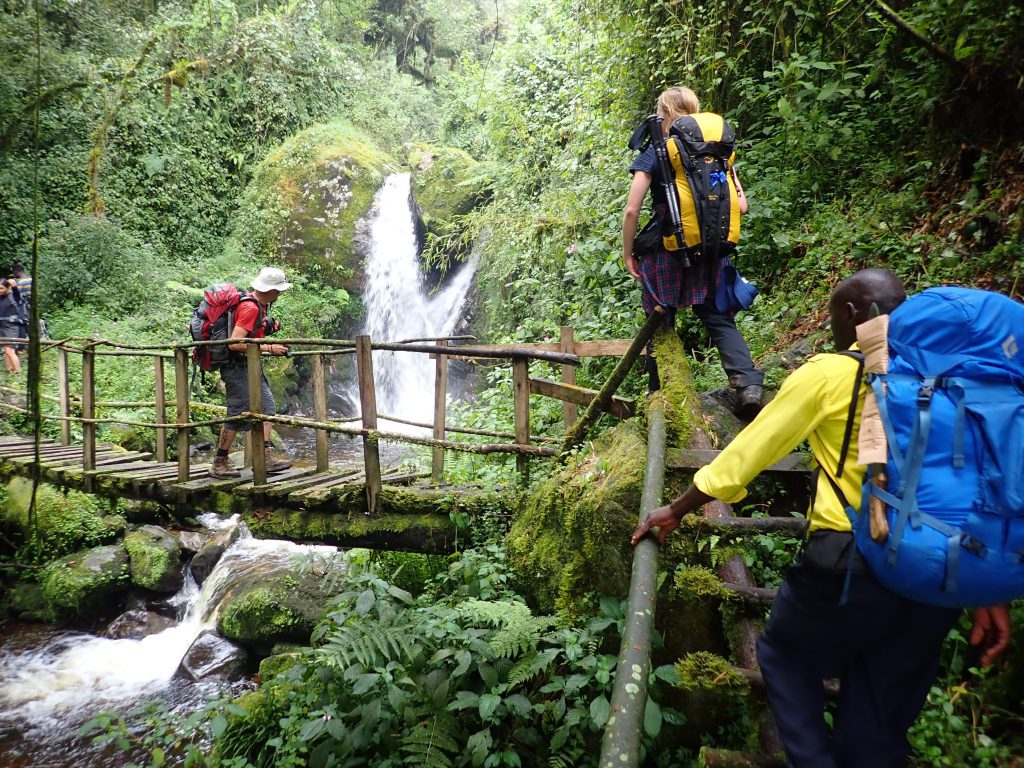
How Many Porters Do I Need for Two People?
A pair of trekkers on a standard summit itinerary typically requires a lead guide, a cook, and around two to three porters, sharing the communal equipment load between them more efficiently than a solo trekker can. On a full Margherita Peak bid, a dedicated rescue porter is added regardless of the fact that only two people are trekking, since this provision is about safety infrastructure, not about individual client numbers.
How Many Porters Do I Need for a Family?
Families trekking together, particularly with children on gentler short treks or the Diamond Trail, benefit from the same efficiency of scale as any small group: personal porterage scales with the number of people, but shared cooking and camp equipment does not need to be duplicated. We size family teams individually, factoring in the ages and carrying preferences of younger trekkers, and we are always glad to discuss exactly what a family-specific team will look like before you book.
How Many Porters Do I Need for a Group Trek?
For larger groups, porter numbers should be calculated from the total expedition load rather than multiplied mechanically per person. A group of four on a full summit expedition typically travels with a lead guide, often an assistant guide, a cook, and around four porters, plus a rescue porter for the glacier stage, making a total team size of seven to eight. Groups joining a shared departure benefit from pooling communal equipment across the whole party, which is generally the most cost-effective way to access a full-sized, properly resourced support team.
How Many Porters Do I Need for Margherita Peak?
Every genuine Margherita Peak expedition we organize includes, at minimum, a lead guide, a cook, roughly one porter per trekker for the standard trekking days, and a dedicated rescue porter for the glacier stage above Elena Camp. For a solo climber, the answer means a team of four to five; for a group of four, a team of seven to nine is typical, depending on the specific route and how much technical equipment the group’s climbing plan requires. The rescue porter provision deserves particular emphasis: because evacuation from the upper mountain can take many hours even under optimal conditions, having a team member specifically briefed and equipped for a rapid descent is a genuine safety requirement, not a discretionary extra, on any expedition we consider responsibly resourced.
What Does a Rwenzori Porter Carry?
- A share of communal camping equipment, including tents, ground sheets, or sleeping mat components where applicable.
- Multi-day food supplies for the group, allocated across the team from the trailhead or from resupply points along the route.
- Cooking equipment, including pots, gas canisters, and kitchen stores.
- Communal safety and first aid supplies, plus components of a lightweight stretcher or evacuation kit on longer treks.
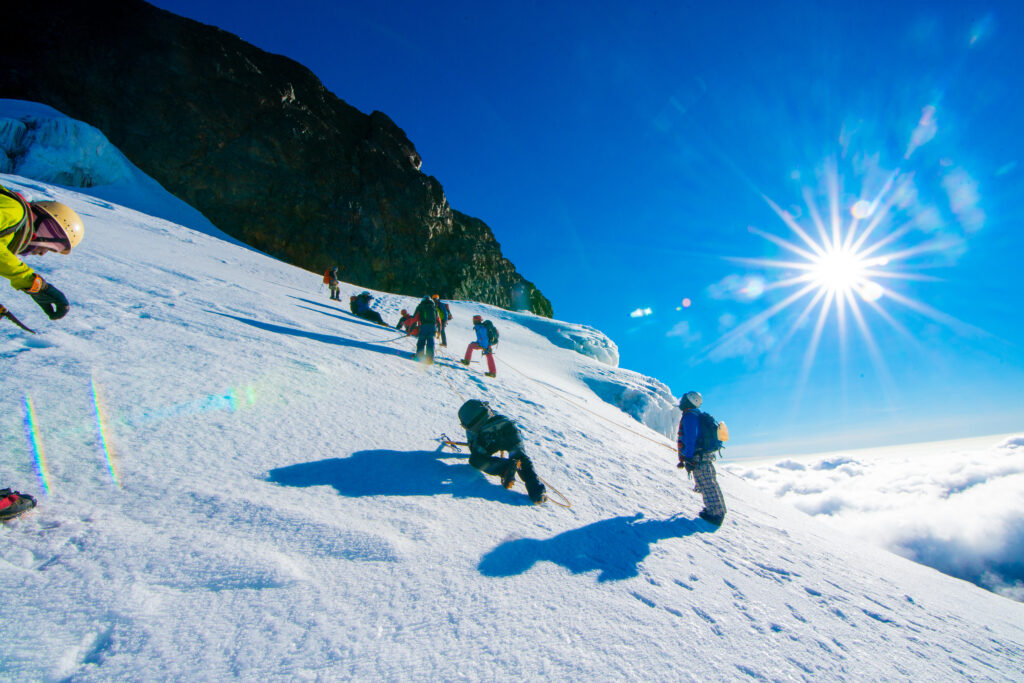
- On summit itineraries, a share of the technical glacier equipment used for the final ascent, including ropes and ice hardware.
What Should I Carry Myself?
Most trekkers carry a lighter daypack containing water, snacks, a camera, rain gear, and any layers they might need to add or remove during the day, while a porter carries the bulk of their main duffel or kit bag. On the final summit push above Elena Camp in particular, we recommend carrying as little personal weight as possible, since conserving energy for the altitude and technical demands of the glacier stage is a genuine physiological priority, not a matter of comfort alone.
How Much Weight Can a Rwenzori Porter Carry?
Standard practice across the Rwenzori limits each porter to approximately 18 to 20 kilograms of expedition equipment, excluding their own personal gear. This figure is grounded in occupational health guidance for sustained load-carrying on steep, unstable terrain, and it is treated as a firm welfare standard by every responsible operator.
This translates into a practical luggage allowance for trekkers of roughly 12 to 15 kilograms of personal kit per person, once the porter’s share of communal equipment is factored in, though the exact figure varies by route and group size, and our team will confirm your specific allowance well before departure. A quoted price built around fewer porters carrying heavier loads should be treated as a welfare and safety concern rather than a bargain, and we would encourage any traveller comparing quotes to ask directly how many porters are included and what each is expected to carry.
What’s in a Porter’s Load? Why 18 Kilograms Is Not Arbitrary
It is easy to picture a porter carrying little more than a single duffel bag of a trekker’s belongings. The reality on a Rwenzori summit expedition is considerably more layered, and understanding it explains why the load limit sits exactly where it does. A porter’s pack may combine a share of communal camping gear, multi-day food supplies allocated from specific resupply points along the route, cooking equipment and fuel, communal safety and medical supplies including the expedition first aid kit, and, on summit itineraries, a portion of the technical glacier equipment used on the final approach. None of this is guesswork on our side: the total weight of communal expedition equipment is calculated for the group before departure, and each porter’s pack is weighed accordingly.
The 18-to-20-kilogram figure itself is not an arbitrary number chosen for convenience. It reflects occupational health principles applied to sustained load-carrying on steep, unstable alpine terrain, where weight carried above this threshold increases spinal loading, knee-joint stress, and fall risk in a way that does not scale in a straight line. Responsible operators hold this limit not because porters would refuse to carry more, but because doing so is a basic act of protecting people whose livelihoods depend on their physical health holding up over years of this work, not just over a single trek.
The Full Support Team: More Than Just Porters
The word “porter” is sometimes used loosely to describe an entire mountain crew, but a serious Rwenzori expedition has a structured team with distinct roles that go well beyond load-carrying.
The Lead Guide
At the head of the team is a registered guide with years of route knowledge and direct responsibility for every safety decision made on the mountain, from pacing and navigation to the judgement calls that matter most on the glaciated approach to Margherita Peak. On the technically demanding summit stage, this experience is not a convenience; it is the difference between safe movement and a serious incident.
The Cook
A dedicated cook is a non-negotiable member of the team, not an optional comfort. Sustained high-altitude trekking in cold, wet conditions carries real caloric demands, and a well-fed trekking party has a materially better chance of a strong summit push than a depleted one. Producing hot, proper meals at altitude, in a small kitchen tent or hut cooking area, after carrying a full load to get there, is a genuine skill that shapes morale across a multi-day expedition.
The Rescue Porter
On every full summit bid, the team includes a rescue porter, specifically briefed and equipped to support a rapid descent should a medical emergency arise in the upper mountain zones. Given that evacuation from above Elena Camp can take many hours depending on weather and terrain, this role is an operational necessity rather than an excess of caution, and it is the mechanism that makes a fast, assisted response possible if something goes wrong at altitude.
Why Porter Welfare Matters
The Rwenzori receives a fraction of the visitor numbers seen on Kilimanjaro each year, which means porter employment here carries proportionally greater economic weight for the Bakonzo families who depend on it. This work is physically demanding, undertaken in genuinely harsh conditions: cold rain, thick mud, and steep and unstable terrain, and the people who do it deserve fair pay, proper equipment, and real protection regardless of how competitively an operator prices their trip. Global guidance on this subject, including the standards published by the International Porter Protection Group, provides a useful independent benchmark against which any operator’s practices can be measured.
The Responsible Tourism Case for the Full Porter Team
There is a dimension to porter numbers that goes beyond logistics and deserves to be stated plainly rather than tucked into a footnote. Because the Rwenzori attracts a comparatively small number of trekkers each year against a mountain range of genuine scale, the economic footprint of any single expedition is proportionally more significant here than in almost any other East African mountain tourism setting. Porter employment is one of the most direct and meaningful sources of formal, monetized income available to Bakonzo families living around the base of these mountains, supporting school fees, healthcare, and food security for dependents in a remote region with few economic alternatives.
Seen through this lens, the question of porter numbers stops being purely a cost calculation and becomes a responsible tourism question. Accepting a properly sized team is not extravagance; it is a direct and tangible way of channelling a trip’s economic value into the community that makes the trip possible. Choosing an operator that reduces porter numbers below what a route genuinely requires does not simply cut a cost, it removes income from people who have built their livelihoods around this work.
What Should a Responsible Trekking Company Provide?
A responsible operator should be able to answer every one of the following questions clearly and without hesitation.
Are guides and porters paid fairly for their work?
A fair, transparent wage that meets or exceeds locally set rates, independent of client tips, is the baseline standard we consider non-negotiable.
Is there a clear luggage/load policy?
Every trekker should be told, before departure, the exact personal luggage allowance and the maximum weight each porter will carry.
Are meals provided to the trekking team?
Guides, cooks, and porters should receive adequate food throughout the expedition, not only the paying trekkers.
Where do porters sleep?
On both major routes, porters sleep in designated staff areas within the established hut network, the same camps covered in our Rwenzori accommodation guide, rather than being left to find their own shelter.
Are porters appropriately equipped for the mountain environment?
Waterproof outer layers and suitable footwear should be provided or required for every porter working in the same cold, wet conditions that demand high-quality gear from paying trekkers.
Are adequate rest periods built into the expedition?
Itineraries should allow porters genuine rest between demanding days, rather than back-to-back maximum-effort stages with no recovery built in.
What Happens If a Porter Becomes Sick or Injured?
A responsible operator has a clear evacuation and medical support plan for staff, not only for clients, including access to first aid and a route to further care if needed.
Is There a Transparent Tipping System?
Trekkers should be told clearly how gratuities are collected and distributed among the team. Our full breakdown is available in our Rwenzori Trekking Tipping Guide.
Can I Reduce the Number of Porters?
This is a fair and common question, and it deserves a direct answer: within limits, yes, but those limits are narrower than most first-time trekkers expect, and there are good reasons a responsible operator will decline to go below certain minimums.
Where Genuine Flexibility Exists
Experienced trekkers travelling with a genuinely minimal personal kit and willing to carry their pack throughout may have a legitimate case for a slightly leaner team on shorter, lower-altitude routes such as the Diamond Trail. Similarly, shared group departures that pool communal cooking equipment, hut accommodation, and food supplies across several trekking parties reduce the per-person porter requirement without touching porter welfare at all. Joining a shared departure is, in fact, the most effective and most ethical way to lower the overall cost of a Rwenzori trek.
Where Flexibility Effectively Ends
Any itinerary that includes a Margherita Peak summit bid requires a rescue porter as a minimum safety provision, and this requirement is not something we will negotiate away for any operator worth trusting. Technical glacier equipment, ropes, ice axes, crampons, and helmets generate a fixed collective weight that must be carried by the team regardless of individual trekker preference. Routes passing through the genuinely remote upper mountain require food and medical supplies that add irreducible weight to the load. If an operator agrees readily to cut your porter count well below what your route requires, treat that as a signal about how they may be managing other aspects of expedition safety, not as a bargain worth taking. The honest answer we give every trekker who asks this question is the same: we will explain exactly why we recommend the team size we do, based on your route, your kit, and the safety margin your trek genuinely needs.
Should I Hire More Porters to Make My Trek Easier?
Additional porter support beyond the standard allocation is entirely possible and, for some trekkers, a genuinely worthwhile investment. An extra porter can carry additional personal luggage or camera equipment or simply reduce the daypack weight a trekker carries themselves, which can meaningfully ease the physical demands of a longer expedition. We are always glad to add porter support for trekkers who want it; the cost is modest relative to the improvement in comfort, and it never comes at the expense of another team member’s load, since we calculate additional support as genuinely additional rather than redistributed.
Can I Trek Without a Porter?
Carrying your own personal pack throughout the trek is entirely possible for fit, experienced trekkers, and some choose to do so. What is not possible is trekking without any porter team at all: the communal food, cooking equipment, safety supplies and, on summit routes, technical glacier gear still need to be carried by someone, and a registered guide is mandatory for any trek inside Rwenzori Mountains National Park, with solo unsupported trekking not permitted under park regulations. Carrying your own personal bag reduces the porter allocation assigned to your individual luggage; it does not eliminate the core support team the expedition genuinely requires.
What Happens When Expeditions Are Under-Portered?
The consequences of an under-staffed expedition are not abstract, and they are worth understanding before price becomes the only factor in a decision. When the porter-to-load ratio is insufficient, individual porters either carry loads above the safe threshold, raising injury risk and slowing the whole team’s progress, or equipment gets left behind that should have gone up the mountain. Left-behind equipment can mean inadequate food at high altitude, a missing piece of the medical kit, insufficient cold-weather gear for camps above 4,000 meters, or absent safety equipment for the glacier stage.
This is a major inconvenience on a mountain where overnight temperatures at the highest camps drop well below freezing and the technical approach to Margherita Peak requires roped movement with ice axes and crampons. It is a potential expedition-ending problem, and in the wrong conditions, a genuinely dangerous one. The Rwenzori’s substantial rainfall at almost every altitude compounds this further, since the weight of wet gear, if not properly managed by a full team, strains even well-staffed expeditions, a challenge that experienced operators plan around and inexperienced or cost-cutting ones frequently do not.
Porter Support Across Every Style of Rwenzori Trek
Porter Support on Luxury Rwenzori Treks
Private and luxury itineraries typically involve a higher staff-to-trekker ratio than standard group departures, sometimes including a dedicated personal porter, additional camp support staff, and a private cook assigned solely to a smaller party. This higher ratio is a genuine feature of the luxury experience, not an inefficiency, and it allows for a noticeably more relaxed pace, greater flexibility, and additional personal comfort throughout the expedition.
Porter Support for Mid-Range Travelers
Mid-range travellers can focus on finding the right balance between comfort and value: a standard, properly resourced team sized to the route and group, without the additional personal staff that defines a fully private luxury departure. This is where the great majority of our itineraries sit, and it remains entirely compatible with fair porter treatment and a safe, well-supported expedition.
Porter Support for Budget Travelers
The most effective and genuinely ethical way to reduce cost is to join a shared group departure, where communal equipment, cooking supplies and camp logistics are shared across a larger party, lowering the per-person cost without reducing any individual porter’s wage or increasing any porter’s carrying load. We would caution strongly against any offer that reduces cost by simply assigning fewer porters to carry the same total weight — that is a welfare compromise dressed up as a discount.
How Much Does Porter Support Cost?
Porter costs are built into the overall price of every itinerary we quote, reflecting fair wages, proper equipment and adequate food provisions for the full support team. The specific driver of cost is less about the mountain you choose and more about route, duration, group size and service level, as covered in full in our Rwenzori trek cost guide. Requesting additional porter support beyond the standard allocation adds a modest, transparently quoted amount to your total price.
Is Porter Tipping Included?
No. Porter, guide and cook wages are included in your trek price and are never dependent on tips to reach a fair level. Tipping is a separate, voluntary way of thanking the team for good service, and our full Rwenzori Trekking Tipping Guide sets out exactly how much to budget and how the process works.
Tipping Your Porter Team: A Practical Guide
Gratuities are important to the people who receive them, so including a short practical summary alongside the full details in our dedicated Rwenzori Trekking Tipping Guide is worthwhile. A commonly used baseline is to budget somewhere in the region of 8 to 12 percent of your total trek cost for gratuities, shared across the whole support team; however, the formula-based approach in our full guide gives a more precise figure for your specific group and route.
- The lead guide typically receives the most generous individual gratuity, as their experience and decisions directly impact your safety and summit outcome.
- The assistant guide and cook typically receive a comparable but slightly lower amount.
- Porters are generally tipped on a daily-rate basis, reflecting the physically demanding nature of their work across the full duration of the trek.
- On larger groups, the per-person contribution toward the shared team is proportionally lower, since the total team size and its overall gratuity stay broadly similar regardless of how many trekkers are sharing the cost.
How Group Tips Are Distributed
When trekking as part of a group, the simplest and fairest approach is a shared tipping pool, contributed to by each trekker and presented as a single total at the end of the trek, then divided among the team according to role and seniority by the lead guide. This ensures every member of staff, including camp-based cooks trekkers may see less often, is properly included. On the final night of the trek, this is typically organized through a simple envelope system: the group agrees on a total, the money is handed over, and the lead guide distributes it according to the team’s hierarchy. Trekkers who prefer to tip individuals directly are equally welcome to do so, provided they carry appropriate denominations in US dollars or Ugandan shillings and let their guide know in advance so nothing is duplicated or missed.
How Many Porters Are Needed for Different Rwenzori Treks?
The Standard Porter-to-Trekker Ratios table earlier in this guide provides the full breakdown by route and objective. As a quick recap: short forest treks need the leanest teams, standard summit routes settle around one porter per trekker, and multi-peak expeditions require the largest support teams of all, driven by cumulative food, fuel, and technical equipment rather than by convention.
Questions to Ask Rwenzori Trekking Expeditions
Before booking any Rwenzori expedition, we encourage every traveller to ask their operator the following questions and to expect clear, specific answers rather than vague reassurance.
- How many porters will accompany my trek?
- What does each porter carry?
- What is my personal luggage allowance?
- What is the maximum porter load your company enforces?
- Are porter services included in the price?
- Are porter wages included, independent of tips?
- How many guides will accompany us?
- Will a cook accompany the expedition?
- Where do porters sleep?
- Are meals provided to the full trekking team, not only clients?
- What equipment is provided to porters for cold, wet conditions?
- How are porter tips handled?
- What happens if a porter becomes sick or injured on the mountain?
- Can I request additional porter support if I want it?
- Does the number of porters change depending on the route?
How Rwenzori Trekking Expeditions Determines Porter Requirements
Every staff allocation we plan works through the same sequence so that the final team size reflects genuine logistical need rather than a rough estimate.
- Group size: how many trekkers there are and their personal preferences for carrying their own kit.
- Route: Central Circuit, Kilembe Trail, or a specific peak combination, each with its own camp and terrain logistics.
- Number of days: the direct driver of total food, fuel, and supply weight.
- Personal luggage: the client kit that porters will carry, weighed and confirmed before departure.
- Food and supplies: calculated precisely for the full duration and group size, not estimated.
- Camping and hut logistics: include the communal shelter and cooking equipment required for the specific route.
- Summit equipment and technical glacier gear added for any Margherita Peak or high-peak objective.
- Reasonable porter loads, with every kilogram allocated within the 18- to 20-kilogram welfare limit.
- Final support-team structure, confirmed and communicated to you well before you arrive in Uganda.
Our Commitment to Responsible Porter Support
- We enforce a maximum porter load of approximately 18 to 20 kilograms of expedition equipment on every trek we organize.
- Every guide, porter, and cook working with us receives a fair, agreed wage that does not depend on client tips.
- We provide our trekking staff with appropriate waterproof clothing and equipment for the mountain environment.
- We ensure adequate food provisions for the full trekking team throughout every expedition, not only for paying clients.
- We include a dedicated rescue porter on every itinerary that features a Margherita Peak summit bid.
- We give every trekker an accurate, itemized staff breakdown before departure, so nothing about your support team is left to guesswork.