Find the complete guide to Rwenzori guides and porters, covering their roles, certification, tipping, the Bakonzo people, ethics, and safety.
No one climbs the Rwenzori Mountains alone, and no one who has actually stood on Margherita Peak got there without the quiet, sustained work of a Rwenzori guide and a porter team walking beside them. A Rwenzori trek through this range is rarely, if ever, the achievement of one person; it is the combined work of a guide who reads the mountain’s weather, terrain, and your condition hour by hour, and a team of porters who carry the tents, food, and equipment that make a two- to thirteen-day Rwenzori expedition through equatorial rainforest, bog, heather, and glacier physically possible at all. Understanding who these people are, what they do, how they are treated, and what is expected of you as a traveller is central to planning a Rwenzori trek. This guide is at the center of it all.
The People Behind Every Rwenzori Trek
Rwenzori trekking is a remote mountain experience, and professional guides and porters play an important role in helping travelers navigate the trails, manage their equipment, and safely experience the different environments of the Rwenzori Mountains. Rwenzori Guides leads and supports trekkers throughout the expedition, while Rwenzori porters can carry designated luggage and trekking supplies, reducing the physical load carried by travelers. The exact guide and porter arrangements depend on the trekking route, itinerary, group size, and services included in the package.

This Rwenzori Porters & Guides complete guide answers, in full, every practical question a traveller has before booking: whether a Rwenzori guide is required, whether you need a Rwenzori porter, what each role actually does, how these teams are trained and certified, how many people your trek will realistically need, how much to tip and how that tip is presented, what happens if you cannot continue, and what ethical porter treatment looks like in practice rather than in a marketing slogan. It also introduces you to the Bakonzo community whose mountain this is and sets out, in detail, the policy we hold ourselves to as an operator, because we believe the people who carry your trek deserve the same transparency we ask travellers to extend to us.
The Rwenzori Team Structure: Who Does What
A successful Rwenzori expedition is rarely the work of one person, however skilled. Behind every trekker on the trail stands a coordinated team, and understanding each role and how many of each you will typically have helps travellers appreciate what they are paying for and how to acknowledge each team member appropriately.
Role | Function | Typical Number per Group |
Lead Guide | Route navigation, safety management, briefings, altitude monitoring, and final summit decisions | 1 per group (mandatory) |
Assistant Guide | Rear-of-group supervision, secondary navigation, porter liaison, and emergency backup | 1 per group for larger or technical trips |
Cook | Meal preparation and hot drinks at every camp, dietary management, and camp hygiene | 1 per group (mandatory) |
Personal Porter | Carries an individual client’s daypack or personal equipment, optional add-on | 1 per 1-2 clients (client choice) |
Equipment Porter | Carries shared group equipment: tents, food, cooking gear, and technical equipment | Scaled to total group load; typically 4-10+ |
Park Ranger | Park boundary safety and wildlife awareness within Rwenzori Mountains National Park | Assigned at the park gate as required |
The Lead Guide: The Most Important Person on the Mountain
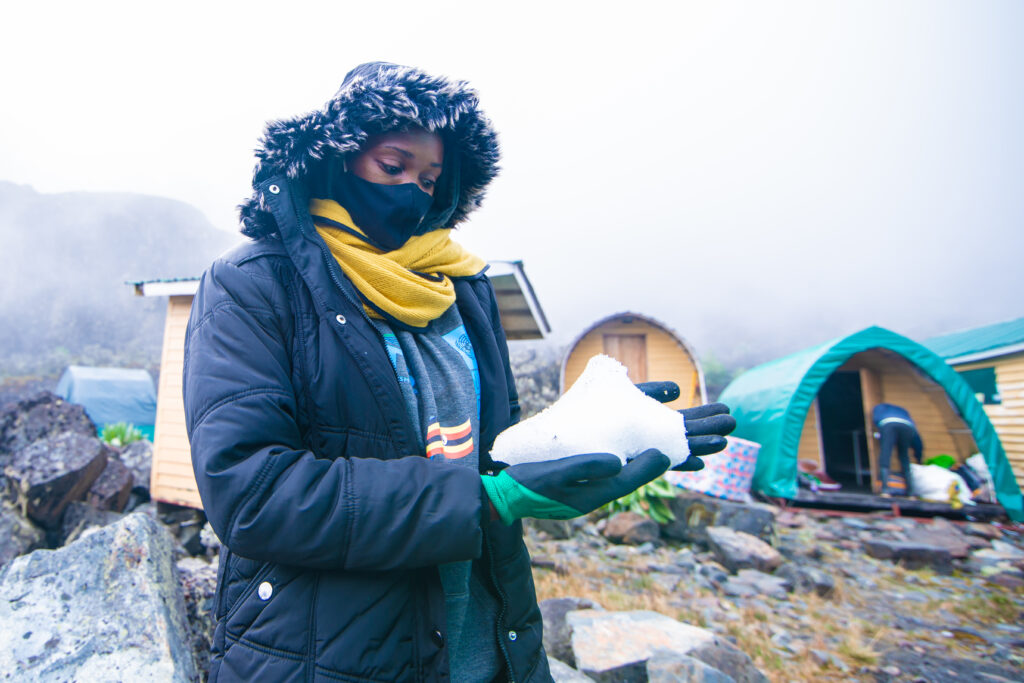
The lead guide carries overall responsibility for the group’s safety, route navigation, acclimatization management, weather assessment, and summit decision-making. They are the person who will tell you on summit day whether conditions justify continuing, regardless of how close the summit feels, and they are also the person who monitors every member of the group for altitude symptoms throughout the trek. When your lead guide advises caution, they draw on years of specific experience on this exact mountain, and you should take that advice seriously.
The Assistant Guide: The Backbone of Group Management
On larger or more technical departures, an assistant guide typically walks toward the rear of the group, ensuring no one falls behind, that difficult sections are managed safely, and that any developing issue is communicated forward to the lead guide immediately. The assistant guide is also frequently the primary liaison between the guiding team and the porter team, coordinating load distribution and camp logistics that happen alongside the day’s walking.
The Cook: An Underappreciated but Essential Role
The mountain cook produces hot, calorie-dense meals and a constant supply of hot drinks from a small mountain kitchen at altitudes that make ordinary cooking genuinely difficult; water boils at a lower temperature as elevation increases, fuel must be carefully rationed, and food left uncovered cools rapidly in the Rwenzori’s cold air. The cook often leaves camp before other members of the team to have the next meal ready on arrival, and the quality of a group’s nutrition across a six- to thirteen-day expedition has a direct, measurable effect on summit success and overall morale.
Porters: The Foundation of Everything
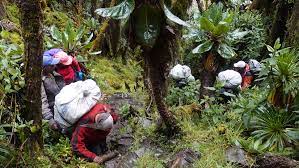
A porter carries every piece of equipment that is not in your daypack, including your sleeping bag, spare clothing, shared cooking equipment, several days of food, and, on summit attempts, technical gear such as crampons, ropes, and harnesses. Porters typically reach camp ahead of the trekking group, with tents already pitched and water heating, an achievement that reflects both physical conditioning and an intimate familiarity with the terrain built over years of work on these specific trails.
The Bakonzo People: The Mountain Is Their Inheritance
The overwhelming majority of Rwenzori guides and porters come from the Bakonzo community, the Bantu-speaking people whose homeland lies in the foothills and middle slopes of the range in Uganda’s Kasese District. The Bakonzo have farmed, drawn water from, and lived alongside this mountain for generations, and their relationship with it is not simply occupational. It is closer to inheritance. The Rwenzori’s rivers, fed by its glaciers and high-altitude rainfall, sustain the agricultural life of the foothill communities below, and the mountain’s weather patterns shape the rhythm of Bakonzo seasonal life in ways that predate any guided trekking industry by centuries.
This depth of relationship is evident on the trail to an attentive traveller. A Bakonzo guide is rarely working from memorized notes; they are drawing on a lived, inherited familiarity with the mountain, passed from parent to child long before any formal certification existed, layered onto their years of professional guiding experience. They recognize which sections of the trail become genuinely hazardous in heavy rain, which river crossings run dangerously high by afternoon, and what a particular pattern of cloud building over a specific ridge typically means for the following day. That knowledge cannot be taught in a classroom in a single season; it is the product of a community’s sustained, generational presence on this exact landscape.
For many Bakonzo families in the communities near Kilembe and Nyakalengija, income from mountain trekking is not a supplementary earning; it is a central pillar of household livelihood, supporting school fees, healthcare, and the basic stability of family life during and beyond the trekking season. Choosing an operator that pays fairly, employs consistently, and treats its guide and porter teams with genuine respect is not simply exemplary business practice; it is a direct, tangible contribution to the economic well-being of the community that has been this mountain’s human custodian for longer than any operator has existed.
Ethical Porter Practices on the Rwenzori
Ethical porter treatment is not a single gesture; it is a set of concrete standards that should be visible in how an operator actually runs its expeditions, not simply stated in its marketing. We set out our standards here in detail, because a traveller has every right to know exactly how the people carrying their trip are treated.
Fair Compensation
Porters should be paid fairly for the physical demands and skill of their work, at rates that reflect the specific conditions of the Rwenzori, longer itineraries, wetter terrain, and more remote logistics than many other East African treks, rather than a rate borrowed from a different mountain or a different country. Fair compensation means wages that are agreed upon and paid consistently and promptly at the conclusion of the expedition, not negotiated informally on the trail or left contingent on tips.
Reasonable Loads
Porters should never be overloaded. A defined maximum carrying weight, generally in the region of twenty to twenty-five kilograms in line with the standards enforced by the trail management bodies overseeing the Rwenzori’s routes, should be set, communicated clearly, and enforced, with any excess luggage requiring an additional porter rather than an additional burden on an existing one. Loads should be weighed at the trailhead before departure, and a traveler has a right to ask their operator what the porter weight limit is and to trust that it is genuinely observed.
Appropriate Equipment
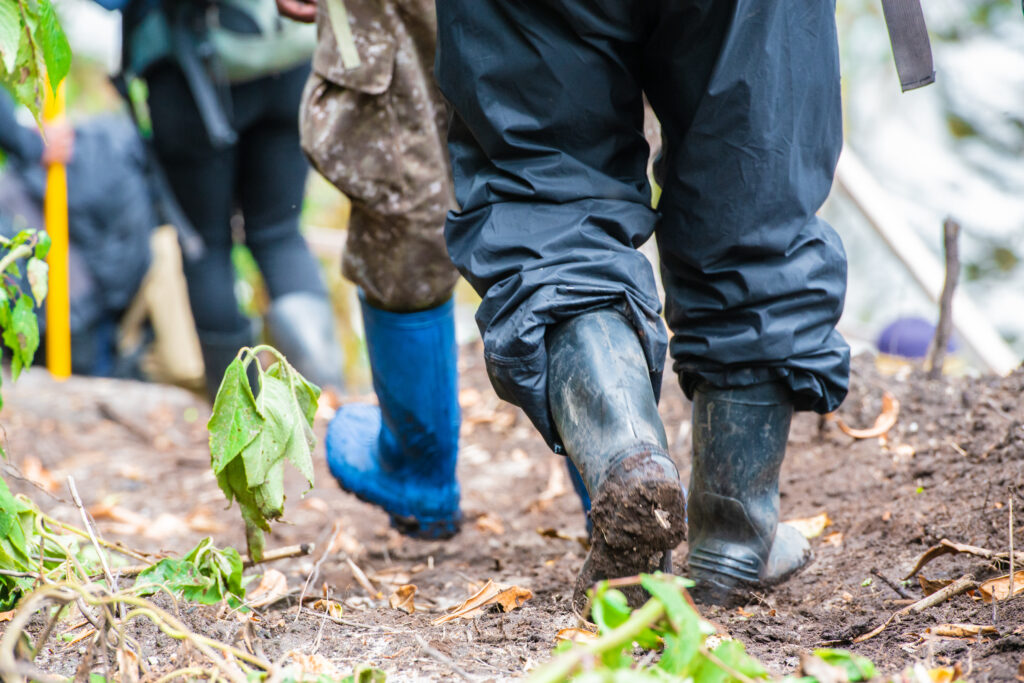
Porters working in Rwenzori conditions, cold, wet, and often muddy terrain at altitude, require proper footwear, waterproof outer layers, and adequate sleeping equipment to do their job safely. Rubber boots, durable and waterproof, have become standard-issue footwear for good reason in this consistently wet range of Rwenzori trekking. A responsible operator provides or requires this equipment as a condition of employment, rather than expecting porters to supply their gear for conditions that would challenge a well-equipped trekker.
Food and Accommodation
The trekking team, including guides, cooks, and porters, should receive nutritious meals and adequate shelter at each camp to protect them from cold and wet conditions. A team that is well fed and properly sheltered works more safely and more effectively and deserves no less consideration than the travellers they are supporting.
Respect
Both the operator and the traveller should treat porters and guides as professional members of the expedition team rather than as background labour. This means clear communication, acknowledgement of their expertise, and the same basic courtesy extended to any colleague on a shared undertaking.
Working Conditions
Our standards for the trekking team cover rest (adequate sleep and recovery time built into each day’s schedule, not simply the traveller’s schedule), weather protection (waterproof and insulated equipment appropriate to the range’s persistent moisture), accommodation (proper tents and, where available, shelter distinct from travellers’ but equally protective), food (hot, calorie-adequate meals matched to the physical demands of the work), and safety (the same emergency response and first-aid readiness extended to any member of the expedition, not only to paying clients).
Our Porter Policy: Our Commitment to Rwenzori Porters
We publish this policy because we believe transparency, not reassurance, is what actually builds trust. This policy is what we commit to for every porter who works on a Rwenzori Trekking Expedition departure.
Commitment | What This Means in Practice |
Fair wages | Porters are paid at rates that reflect the physical demands of Rwenzori-specific conditions, agreed in advance and paid in full and on time. |
Clear job responsibilities | Every porter knows precisely what they are carrying, for how many days, and what is expected of them before the trek begins. |
Reasonable loads | A defined maximum carrying weight is set and enforced; excess luggage is assigned to an additional porter rather than added to an existing load. |
Proper clothing and equipment | Waterproof outerwear, appropriate footwear, and adequate sleeping equipment are provided or required as a condition of employment. |
Meals | Nutritious, calorie-adequate meals are provided throughout the expedition, prepared with the same care as meals served to travelers. |
Accommodation | Appropriate shelter is provided at every camp, protecting the team from the range’s cold and wet conditions. |
Rest | Daily schedules account for adequate rest and recovery time for the full trekking team, not only for travellers. |
Respectful treatment | Porters and guides are treated as professional colleagues, with clear communication and acknowledgement of their expertise. |
No discrimination | Employment and treatment on the mountain are free from discrimination on any basis; opportunity is determined by skill, reliability, and experience. |
Transparent tipping | Tipping guidance is communicated clearly to travellers in advance, and any pooled or group tips are distributed transparently among the team. |
Opportunity for feedback | Porters and guides have a direct channel to raise concerns or feedback about conditions, treatment, or logistics without fear of losing future work. |
Certification, Training, and Professional Standards
Guiding on the Rwenzori is a regulated profession, not an informal arrangement, and understanding the standards behind it helps explain why route-specific, certified guides matter as much as they do on this particular range.
Are Rwenzori Guides Certified?
Yes. Guides operating within Rwenzori Mountains National Park are certified through the Uganda Wildlife Authority, the government body responsible for managing the park, working alongside the trail management organizations that oversee guiding on the Kilembe Trail and the Central Circuit Trail, respectively. Certification demands demonstrated competency in route knowledge, client management, first aid, altitude sickness recognition, and emergency evacuation procedures, assessed through theoretical and practical evaluation, with periodic renewals required.
Glacier and Technical Competency
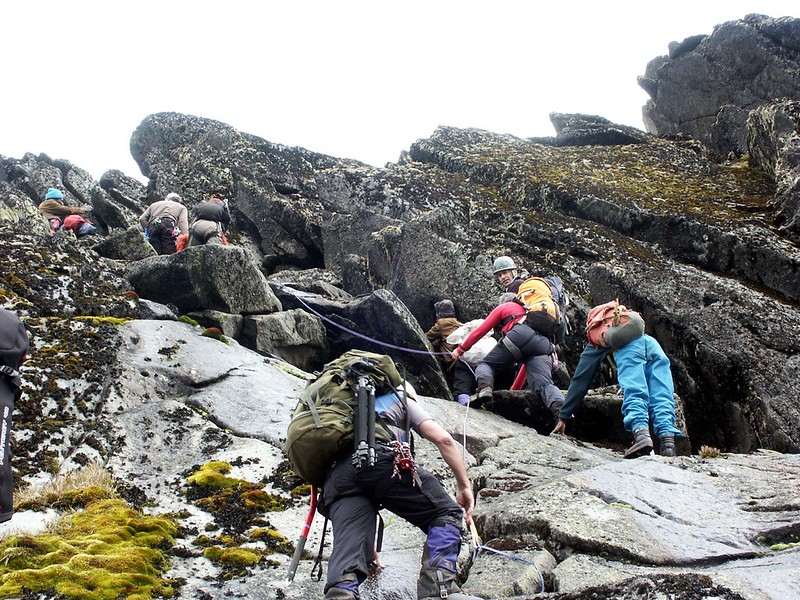
Guiding a summit attempt on Margherita Peak requires a further, more specialized layer of competency beyond standard trekking certification: glacier travel, correct use of crampons and ice axes, managing a roped team, and crevasse rescue technique.
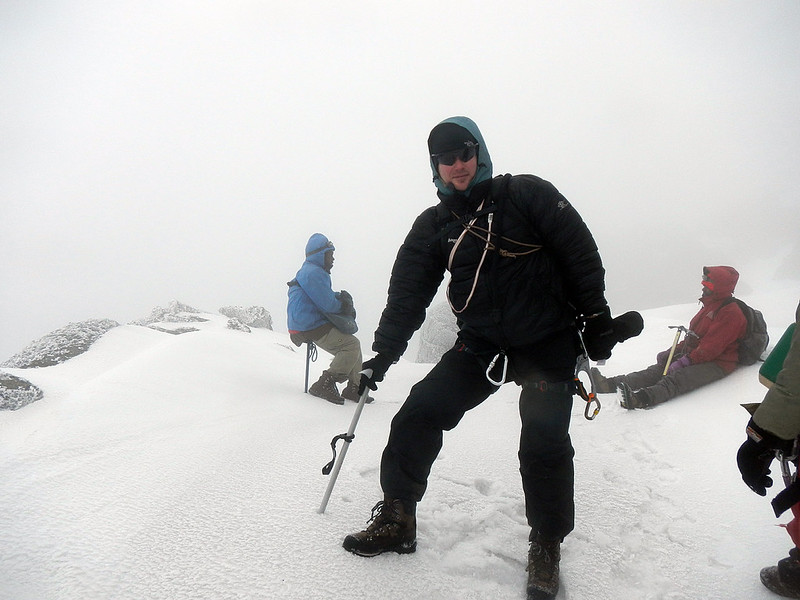
This technical qualification is assessed separately, and not every certified Rwenzori guide holds it. When a summit attempt on Margherita Peak, or a technical objective such as Mount Baker’s Edward Peak, is part of your itinerary, the guide assigned to that stage should hold this specific glacier competency, not simply general mountain guiding certification.
First Aid and Altitude Management Training
Certified Rwenzori guides are trained in first aid for remote outdoor environments and in recognizing the early stages of acute mountain sickness, as well as its more serious forms: high-altitude pulmonary and cerebral edema. Guides commonly carry a pulse oximeter to monitor oxygen saturation throughout the trek and are trained to interpret readings in the context of both altitude and the individual trekker’s condition. Descent remains the definitive response to serious altitude illness, and a properly trained guide will recommend it without hesitation when the situation calls for it, regardless of a traveller’s preference to continue.
Beyond formal certification, the strongest Rwenzori guides combine that training with continuous, informal learning built directly from the mountain itself: updated techniques as the Stanley glacier continues to retreat and change character, evolving best practices in altitude medicine, and the accumulated pattern recognition from years spent leading expeditions through every season the range produces.
How Many Porters Do I Need?
There is no single correct number of porters for a Rwenzori trek, and any operator quoting a fixed figure without knowing your specific trip is guessing. Porter requirements are determined by the number of travellers in your group, the duration of your trek, the amount of personal luggage and equipment involved, the specific route you are following, your camping arrangements, any specialised equipment required (glacier gear for a Margherita Peak or Mount Baker summit attempt, for instance), and the operational logistics of your particular itinerary. A short two-day forest trek for a solo traveller requires a fundamentally different porter team than a thirteen-day, six-peak expedition for a group of six. The number of porters should be determined by the actual logistical requirements of the expedition rather than by a fixed number applied to every trek, and we calculate this individually for every itinerary we plan. As a broad guide, a solo trekker or pair on a standard summit itinerary typically travels with somewhere between four and six equipment porters in addition to the guide and cook, while larger groups scale proportionally.
What Does a Porter Carry?
Category | Typically Carried by Porters |
Camping equipment | Tents, sleeping mats, camp furniture, and cooking shelters |
Food and kitchen supplies | Meals, cooking fuel, stoves, pots, and drinking water for camp use |
Traveller overnight luggage | Your main duffel bag containing clothing, sleeping bag, and personal items not needed during the day |
Group and emergency equipment | Ropes, first-aid kits, radios, and supplemental oxygen were carried. |
Technical summit gear | Crampons, ice axes, and harnesses for Margherita Peak or Mount Baker summit attempts |
Waste management supplies | Equipment for the Leave No Trace practices we follow throughout the park |
Should I Carry My Own Backpack?
Most travellers should expect to carry a small daypack containing the items they need during the day, while porters carry designated overnight luggage and expedition supplies whenever porter service is included in the trek. Your daypack should hold water, a rain jacket, a warm layer, snacks, your camera, personal medication, important documents, and sunscreen, everything you might need without waiting for the group to stop and unpack a duffel bag carried elsewhere in the line.
Guides for Different Rwenzori Routes
Guiding the Rwenzori is not a single, uniform skill; different routes demand different expertise, and matching the right guide experience to your chosen trail is part of how we plan every trek.
Kilembe Trail Guides
Guides on the Kilembe Trail need genuine endurance for long mountain days, sound judgement on wet and muddy terrain that can shift character within a single afternoon, comfort managing steep, technical sections through the forest and heather zones, and solid experience with high-altitude trekking as the route climbs toward its higher camps. Our full route breakdown is available in the Kilembe Trail Guide.
Central Circuit Guides
Central Circuit Trail guides require precise route navigation across the historic loop around the range’s core massifs, experience managing hut-to-hut trekking logistics, comfort with the circuit’s high-altitude sections, and, for parties attempting a summit, direct experience coordinating summit-day logistics from the circuit’s high camps. Full detail is available in our Central Circuit Trail Guide.
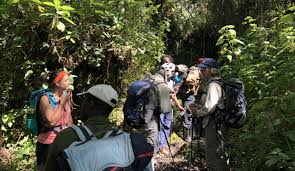
Margherita Peak Guides
Summit expeditions to Margherita Peak require a distinct, more specialised category of mountain support than ordinary trekking. Glacier travel, roped movement, and the judgement required to manage a technical summit stage safely call for guides with specific glacier and high-altitude summit experience beyond standard trekking qualifications. Our complete breakdown of what this involves is set out in the Margherita Peak Complete Guide.
What Should I Look for in a Rwenzori Guide?
A qualified Rwenzori guide should demonstrate genuine mountain guiding experience specific to the range, detailed knowledge of your particular route rather than general East African trekking familiarity, current first-aid training, a working understanding of altitude physiology and acclimatization, clear emergency procedures they can explain before you depart, strong communication skills, especially important when assessing how you are feeling throughout the trek, up-to-date knowledge of current local conditions, trail state, river levels, and weather patterns, and, for any technical summit attempt, direct prior experience with that specific objective rather than general mountaineering background alone.
What Happens If I Become Sick or Exhausted?
If you begin to feel unwell, have altitude symptoms, feel exhaustion, or have anything else affecting your ability to continue safely, tell your guide immediately rather than waiting to see if it passes. Your guide will assess the situation, considering your symptoms, the terrain ahead, and the options realistically available at that point in the route. The trekking team then considers the safest course of action together, which may mean adjusting the day’s itinerary, slowing the pace, or, when necessary, recommending descent. In more serious situations, established emergency procedures are activated without delay.
The principle that matters most here: reaching the summit should never be treated as more important than a traveller’s safety. A guide who is willing to end a summit attempt early, when the situation genuinely calls for it, is doing their job correctly, and that willingness is exactly what allows travellers to trust their judgement on every other decision throughout the trek.
Guide-to-Client Ratios
Guide numbers are determined according to group size, route, summit objective, and operational safety requirements, rather than a single fixed ratio applied to every trek. Private and technical summit expeditions, such as a Margherita Peak or Mount Baker attempt, may require a different guide structure from a standard group trek, including additional assistant guides for glacier or rope work. We set the guide structure for each departure based on these specific factors rather than a generic industry default.
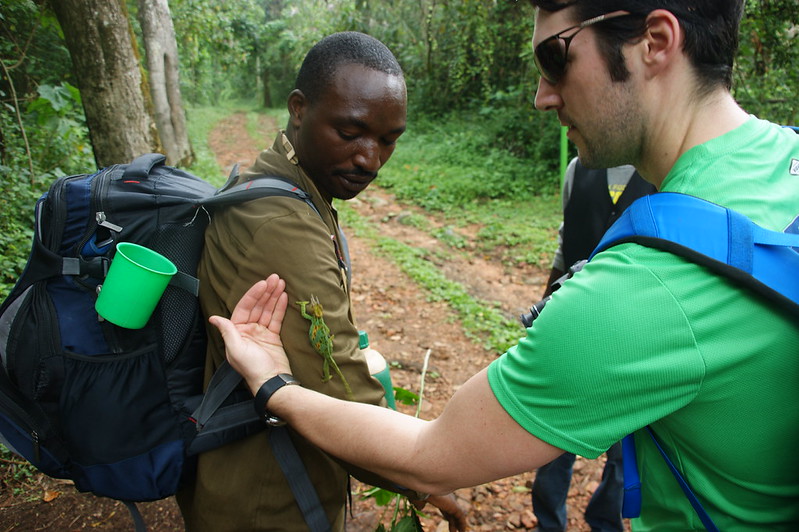
The Complete Tipping Guide for Rwenzori Porters and Guides
Tipping on the Rwenzori is best understood as a genuine, expected component of how guides, porters, and cooks are compensated for their work, rather than as an optional bonus reserved for exceptional service alone. It should never, however, be treated by an operator as a substitute for a fair base wage; tipping recognizes appropriate service on top of that wage, and the two should never be confused. Because appropriate amounts vary with trek length, group size, and route, we provide indicative guidance below and encourage every traveller to confirm the current recommendations with us directly before departure.
Team Member | Suggested Tip (Per Day) | Notes |
Lead Guide | $15-$20 | Senior role carrying overall safety responsibility; adjust upward for exceptional leadership |
Assistant Guide | $15-$20 | Comparable seniority to the lead guide on larger or technical departures |
Cook | $10-$12 | Often an underappreciated role; consistently good food at altitude meaningfully supports summit success. |
Personal Porter | $8-$10 | If you engaged a dedicated personal porter for your daypack |
Equipment Porter (each) | $8-$10 | Typically pooled and divided evenly by the lead guide among the equipment porter team |
Park Ranger | $5-$10 | Optional but appreciated where a ranger accompanies your group |
As a practical planning example, a two-person group on a standard eight-day summit itinerary, travelling with a lead guide, an assistant guide, a cook, and five porters, should budget in the broad range of roughly $450 to $600 in total tips for the whole team, or somewhere around $225 to $300 per person, at the midpoint of the ranges above. This is a meaningful sum that should be planned for explicitly in your pre-trip budgeting rather than treated as pocket change at the trailhead, since tipping is separate from your package price and is paid directly to the team in cash.
We recommend carrying tips in US dollars in small and medium denominations, since large notes can be difficult to exchange in Kasese, with Ugandan shillings also acceptable. Where tips are pooled across the wider team, the lead guide should distribute that pool transparently according to role, and travelers are welcome to ask exactly how a pooled tip will be divided before handing it over. Tipping is generally a way of recognizing excellent service; it should never replace fair wages. The appropriate amount can reasonably reflect service quality and trek duration, and travellers should always confirm the current recommended practice with their operator, since norms can shift over time.
What Is the Tip Ceremony for the Rwenzori?
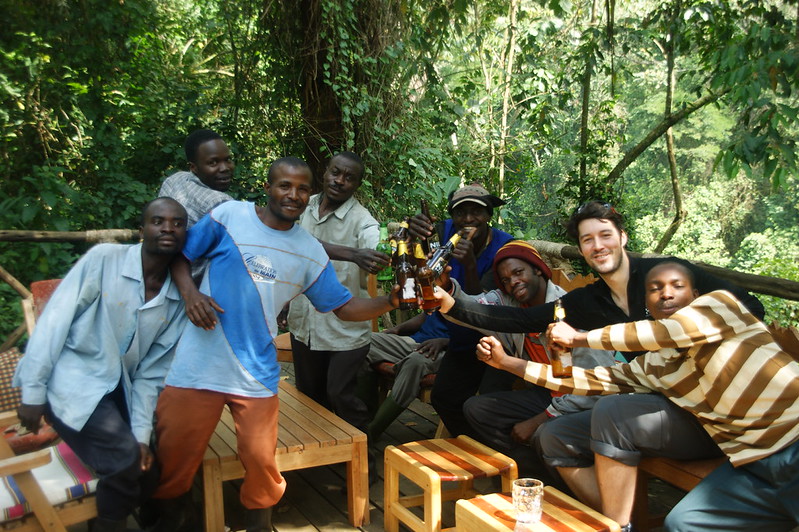
On many Rwenzori expeditions, tipping is marked by a genuine, informal tradition rather than a quiet handover. Typically on the final morning on the mountain, after breakfast at the last camp, the full trekking team, guides, cook, and porters together gather with the client group. Team members will often sing, a warm, spontaneous send-off that catches many first-time trekkers by surprise and that travellers frequently describe as one of the most emotionally memorable moments of the entire expedition. A member of the client group typically offers a short word of thanks, which the lead guide translates for any team members who are more comfortable in the local language, before the tip is presented to the lead guide for transparent distribution among the team according to role. Allow fifteen to twenty minutes for this ritual in your final morning’s schedule rather than treating it as an interruption to the descent; for many travellers, it is the moment that closes the expedition with the most genuine warmth.
Equipment Donations: A Thoughtful Alternative to Cash
Many travellers finish a Rwenzori trek wanting to leave something behind for the team beyond a cash tip, and good-quality equipment can be a genuinely useful gift when it is offered thoughtfully. Waterproof jackets, warm mid-layers, headlamps, and good socks, still clean and fully functional, are welcomed by guides and porters working in conditions that quickly wear down personal gear. What is not helpful is worn-out or damaged equipment, boots that are no longer waterproof, jackets with broken zips, or bags with failing seams, since these items become a disposal burden in communities without the infrastructure to deal with them, rather than a genuine gift. If in doubt, ask your guide before departure whether a specific item would be useful, and avoid donating medication or food without first discussing it directly with the guide team, since unsolicited supplies can complicate rather than help their existing protocols.
Can I Trek Without a Porter?
You can choose to trek without a porter, carrying your own full pack, though a guide remains a requirement regardless of that choice. Without a porter, you carry considerably more weight every day of the trek, which typically means greater physical demand, faster accumulated fatigue, and, for many travellers, less mental and physical freedom to actually take in the scenery around you rather than manage the burden on your back.
With a porter, you carry only a light daypack, conserving energy for the terrain itself rather than the weight on it, and you are able to focus far more of your attention on the mountain, the giant lobelias, the mist, and the birdlife than on the logistics of carrying a full expedition kit. Hiring a porter also directly supports local employment tied to mountain tourism, extending the practical benefit of your trek beyond your own experience. We present this option as a genuine choice rather than a pressured upsell: some travellers value the personal challenge of carrying their kit, and that choice deserves respect. For most travellers, though, hiring a porter is one of the most quietly transformative decisions they make abouforir trek.
Why Hiring a Porter Can Improve Your Rwenzori Experience
Hiring a porter is not simply about making the trek easier. It can also be a practical way to support the people whose livelihoods depend on mountain tourism. When porter services are organized responsibly, travelers benefit from reduced loads, while local mountain workers gain employment from the tourism economy. In the communities living at the base of the Rwenzori, this employment is often directly tied to the presence and behavior of trekking operators like ours. A porter is not simply a service you purchase; over the course of a week or more on the mountain together, they become a genuine part of your expedition, someone whose skill and effort you come to notice and, more often than not, deeply appreciate by the time you reach the trailhead again.
The Human Story Behind the Mountain Team
Generations on the Mountain
The single most important thing to understand about the guides and porters of the Rwenzori is something no certification table fully captures: the depth of their relationship with this mountain is measured in generations, not years of employment. A guide in their mid-twenties who has worked the Kilembe Trail for several seasons has likely also absorbed knowledge of the range through a father’s or grandfather’s stories since childhood, long before they ever carried a professional qualification. That layered inheritance, formal training built on top of a lifetime, and often a family lineage of informal mountain knowledge, produces a quality of guiding that experience alone, however extensive, rarely replicates elsewhere.
An Economic Lifeline for Mountain Communities
For many Bakonzo families near Kilembe and Nyakalengija, income from guiding and portering is not just extra money; during the trekking season, it is often their main source of income, helping to pay for school fees, healthcare costs, and the basic stability of family life in ways that the agricultural economy of the foothills alone cannot reliably provide. Consistent, fairly paid employment across a season allows families to plan rather than simply manage month to month, and the aggregate effect of a well-run trekking economy on these communities is genuinely significant.
The Pride of Certification
For a young Bakonzo guide, earning formal certification represents more than a professional credential; it is a formal, external acknowledgement of knowledge that has often already been passed down through a family for generations. The most senior Rwenzori guides, those who have led expeditions across every season the mountain produces, trained younger guides, and built the trust of their communities over decades, hold a level of social standing that reflects the genuine, hard-earned depth of what they know.
A Farewell Marked, Not Just Ended
The warmth that often surrounds a trek’s final morning, a shared song, a few words of thanks, and a tip presented with real ceremony is not a performance staged for visiting trekkers. It is a genuine way of marking that something real took place over the preceding days, between people who began the week as strangers and, more often than not, end it with a real bond built through shared discomfort, shared achievement, and mutual respect. Trekkers consistently describe it as one of the most vivid moments of their trip, long after the ache in their legs has faded.
How to Be a Good Expedition Client: What the Team Needs From You
The relationship between a trekker and the Rwenzori expedition team runs in both directions, and how you engage with your guide and porter team genuinely affects how smoothly and how safely your expedition unfolds. A few simple principles make a real difference.
Trust your guide’s assessment, even when it is not what you want to hear. The trekkers who run into the most serious difficulty on this range are rarely the least fit; they are often strong, determined trekkers who override a guide’s correct read of a developing problem because they trust their judgement over years of specific mountain experience they do not have.
Be honest about how you are feeling. Downplaying a headache or dismissing early fatigue because you would rather not be the reason the group slows down removes your guide’s ability to manage risk properly. Guides are there to get you up and back down safely, not to judge you for struggling.
Respect the agreed weight limits and packing instructions. Sticking to the baggage allowance you agreed with your operator is one of the simplest, most concrete ways to protect your porters’ well-being.
Learn names and use them. Taking a few minutes to learn your guide’s, cook’s, and porter’s names, and to ask about their families or their years on the mountain, meaningfully changes the character of the week you spend together, for you and for them.
What Travellers Should Bring for Their Guide and Porter Team
Rather than unnecessary gifts, the most genuinely useful thing you can bring is consideration built into how you pack.
- Use clear, sturdy luggage rather than fragile or awkward bags that are difficult to carry over rough terrain.
- Protect your bag with waterproof liners or covers, since a porter carrying a soaked duffel bag for a week is carrying unnecessary extra weight along with the water itself.
- Keep your baggage to a reasonable, previously agreed weight, and label your bags clearly so porters can quickly identify and distribute them at each camp.
- Pack your personal essentials, medication, documents, and chargers separately and clearly so you don’t misplace anything across a multi-day trek.
- Respecting the agreed weight limits is, in itself, one of the most meaningful things a traveller can do for the wellbeing of the porter team.
Rwenzori Guide & Porter Options for Different Travellers
Budget Travellers
For travellers prioritising value, we focus on essential, well-run guide services, shared group logistics that keep costs reasonable, and practical porter arrangements sized to genuine need rather than added extras, all without compromising the safety and ethical standards that apply to every departure we run.
Mid-Range Travellers
Mid-range arrangements typically include comfortable pre- and post-trek accommodation in Kasese or Fort Portal, the option of private or small-group trekking instead of joining a larger scheduled departure, and enhanced logistical support, additional porter capacity, and more flexible pacing that smooth the experience without moving into a fully private, bespoke structure.
Luxury Travellers
Luxury on the Rwenzori is not about turning a remote mountain hut into a five-star hotel; no operator can genuinely deliver that above the tree line, and any that claims to is not being honest with you. It is about exceptional planning, private logistics, experienced mountain leadership, personalized pacing matched to your fitness and preferences, quality equipment prepared in advance, seamless service before and after the expedition, private transfers, premium lodges at either end of the trek, and a guide-to-client ratio built specifically around your group rather than a shared schedule.
How Our Trekking Team Works: From Trailhead to Summit
Before you ever reach the trailhead, your guide leads a thorough pre-trek briefing, reviewing your route, your equipment, and what each day will genuinely demand of you, while the porter team is already organizing food, fuel, and equipment for the days ahead. At the trailhead, you see a small crowd of activity: bags being weighed and distributed, final equipment checks, which resolves within minutes into a moving column: guide at the front setting pace, porters carrying the expedition’s weight, and you walking with only what you need for the day on your back.
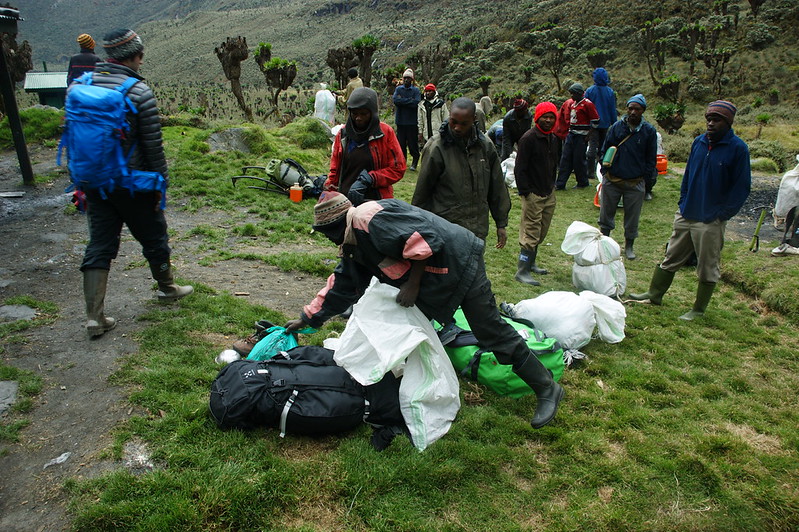
Through each day of guide-led trekking, your guide manages pace, points out terrain hazards before you reach them, and checks in on how you are feeling at a frequency that increases with altitude, while, unseen ahead of you on the trail, the porter team is already breaking down and re-establishing camp so that by the time you arrive, tents are pitched, water is heating, and the coming night’s shelter is ready. Acclimatization days are built deliberately into the schedule, giving your body time to adjust while your guide monitors symptoms across the group. When a summit attempt is part of your itinerary, additional guides and specialized equipment join the team for that specific stage, with glacier travel handled with the same quiet competence as the forest sections below. Descent reverses the process: camps are struck, equipment is repacked, and the whole team—travellers and staff together—moves back down through the zones you climbed in reverse before returning to your lodge, where, more often than not, both groups finally get their first proper rest of the week. What the traveller experiences as a journey through an extraordinary landscape is, behind it, a continuously managed operation, and the skill of a good trekking team is that this management is felt only as ease, never as friction.