Discover a practical 16-week training plan for a Rwenzori trek, covering hiking endurance, strength, stairs, uphill training, recovery, pack training, and summit preparation.
A good 16-week Rwenzori training plan builds cardiovascular endurance, uphill and downhill hiking ability, leg and core strength, balance, pack-carrying capacity, and recovery habits in that order, so the final weeks focus on mountain-specific movement rather than on fitness you should already have built. The right plan flexes around your current fitness, the route you have chosen, and your summit objective, because a three-day introduction to the Central Circuit Trail and a Margherita Peak expedition are simply not preparing you for the same days on the mountain. It is worth stating plainly, before anything else: fitness cannot eliminate altitude risk. A traveler can arrive superbly conditioned and still develop altitude-related illness, because training strengthens the body’s capacity for exertion while acclimatization prepares it for reduced oxygen, two related but genuinely different processes, and conflating them is one of the more common misjudgements we see among first-time high-altitude trekkers.
Guides who have spent years walking the Bakonzo trails between the montane forest and the Afro-alpine moorland tend to notice the same pattern, expedition after expedition. It is rarely the strongest-looking traveler who moves best through the Rwenzori. It is the one whose training matched the mountain, someone who trained for repetition, for wet ground underfoot, for the particular ache of a fourth consecutive uphill morning rather than someone who simply trained hard. This guide exists to help you become that second kind of traveler.
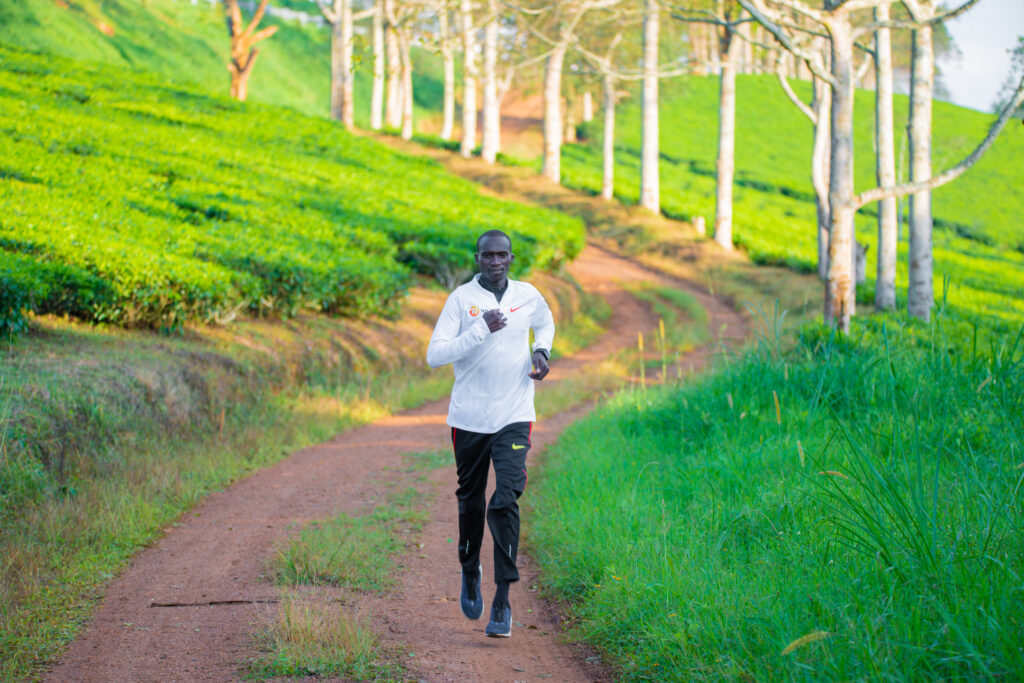
What Makes Rwenzori Training Different
It would be a disservice to treat the Rwenzori Mountains as just another high-altitude hiking destination, because the range asks more of the body than distance and elevation alone. This is not a single test of endurance; it is several tests running concurrently, and a training plan that only addresses one of them will leave gaps precisely where the mountain is least forgiving.
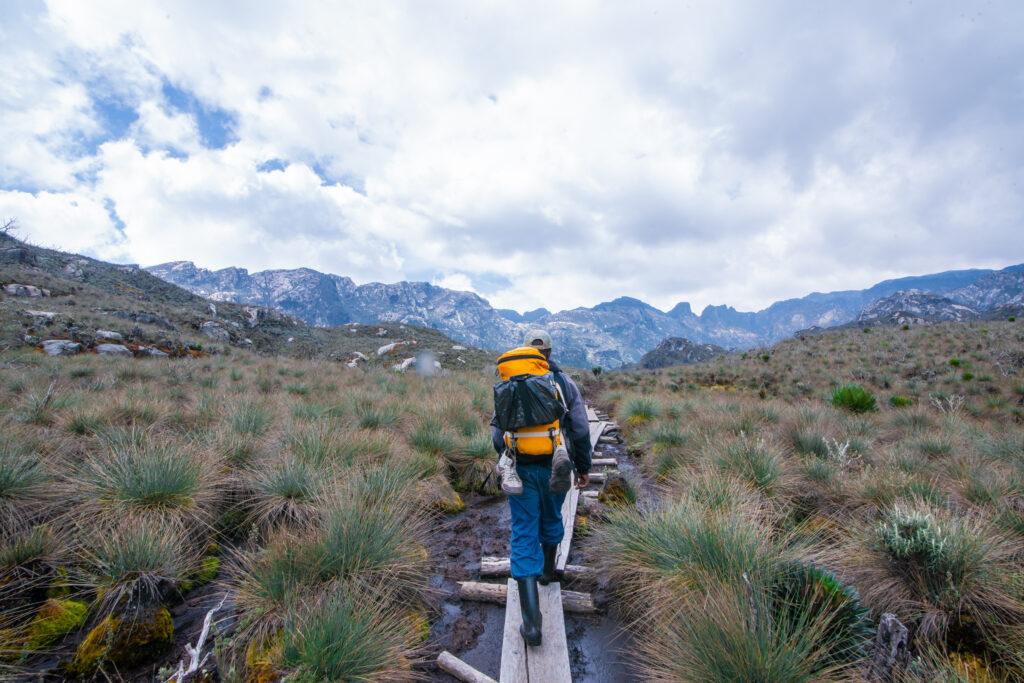
The days themselves run long. Depending on your chosen itinerary, a traveler may spend five to nine hours moving through forest, bog, and moorland in a single session, and that duration needs to be built deliberately rather than assumed. The terrain then compounds the challenge by refusing to stay level: the trail climbs steeply through mossy montane forest, drops through root-tangled hollows, and repeats that pattern for days, so the legs must learn to cope equally well with ascent and with descent, which draw on quite different muscle groups and different kinds of control.
Underfoot, the ground itself is rarely predictable. Between the Central Circuit’s Bigo Bog and the higher moorland approaches, roots, loose stone, and waterlogged peat mean that ankles, knees, hips, and the smaller stabilizing muscles around each joint are working constantly, not just when the trail points uphill. Add genuine mud and consistent wet conditions, and the Rwenzori earns its reputation as one of Africa’s wettest ranges honestly, creating a physical environment that punishes anyone who has only ever trained on dry, even ground.
Perhaps the most underestimated factor is the accumulation of consecutive days. Someone capable of a single strenuous twenty-kilometer hike may still find themselves struggling on day three of a trek, not because that day is harder in isolation, but because fatigue does not reset overnight. Training therefore has to rehearse tiredness carried forward, not just single efforts performed while fresh. Layered on top of all of these considerations is the simple physiological fact of altitude: breathing becomes noticeably harder as you climb, and while conditioning helps you handle exertion more efficiently at any given oxygen level, it does not prevent altitude sickness outright. Finally, the cold and damp of camp life between trekking days test your ability to recover, to eat well, to sleep adequately, and to warm up properly even when conditions are working against you. A training plan for the Rwenzori must prepare you for all these challenges together, because that is how the mountain presents them.
Who This Plan Is For
No single sixteen-week program suits every traveler who books a Rwenzori trek, and we would be doing you no favors pretending otherwise. Families traveling with older children, solo trekkers chasing a personal milestone, couples pacing an anniversary adventure, and groups of friends training together all arrive with different starting points, and the plan below is meant to be adapted rather than followed to the letter by everyone alike.
A beginner with a limited hiking background should treat the early weeks with real patience, building gently before adding load or intensity. Someone who is recreationally active, a regular gym-goer, or a casual weekend walker can progress a little faster through the same structure, while an experienced hiker with prior multi-day trekking behind them should weigh their preparation more heavily toward mountain-specific sessions rather than general fitness, since that foundation is often already in place. Travelers aiming specifically for Margherita Peak need a plan with a stronger emphasis on sustained endurance, elevation gain, and, where the route calls for it, technical familiarity, while those training for the Kilembe Trail or the Central Circuit Trail should calibrate their volume to the specific duration of their chosen itinerary. Older or returning athletes benefit from individualized progression and unhurried recovery between demanding sessions, and private or luxury travelers, whatever comfort the rest of the expedition offers, should not assume that comfort extends to the trail itself; fitness still needs to match the physical reality of the days ahead. Our guiding team works with exactly this range of clientele, from first-time mountain trekkers to seasoned international climbers, and the honest starting point for any of them is an accurate read of their own current condition, not an aspirational one.
Building the Sixteen Weeks: Four Training Phases
Rather than presenting sixteen weeks as a long, undifferentiated block, it helps to think of your preparation in four distinct phases, each with its own purpose. Progress moves logically from general fitness toward something that increasingly resembles the actual trek so that by the time you reach the Rwenzori, your body already recognizes the demands being placed on it.
Phase 1: Weeks 1 to 4: Build Your Base
The opening month is about consistency rather than intensity. This is where you establish a rhythm of regular walking and easy cardiovascular training, introduce basic strength work, begin mobility practice, and start paying attention to balance on uneven ground. Recovery habits such as proper sleep and sensible pacing between sessions should be established here too, since they will matter far more later in the plan than they do now. The goal of Phase 1 is simply to teach your body, and just as importantly your schedule, to train consistently. Nothing here should feel heroic; it should feel sustainable.
Phase 2: Weeks 5 to 8: Build Endurance and Strength
With a consistent habit in place, the second month raises the demands gradually. Hiking duration increases, uphill walking and stair climbing become regular fixtures, and leg and core strength work intensifies. Weekend hiking becomes a fixed part of the week rather than an occasional extra, and this phase is also the point at which moderate pack carrying is introduced, alongside longer continuous sessions and, occasionally, some back-to-back activity across a weekend. By the end of Phase 2, the aim is straightforward: you should feel genuinely comfortable spending several hours on your feet, rather than merely capable of it.
Phase 3: Weeks 9 to 12: Make Training Mountain-Specific
This phase is where the plan decisively turns toward the Rwenzori itself. Long hikes, steep climbs and controlled descents, stair sessions, uneven terrain, and repeated back-to-back hiking days all take center stage, along with pack training using your actual trekking pack, practice with trekking poles, and, where it can be done safely, some deliberate wet-weather hiking. This is also the sensible window in which to properly test your footwear under load. The objective of Phase 3 is for your training to start resembling the actual demands of the trek, not an abstract approximation of fitness.
Phase 4: Weeks 13 to 16: Peak, Simulate, and Taper
Weeks thirteen and fourteen build toward the highest appropriate training volume you will reach in the entire program. Week fifteen is reserved for your final significant long hike or mountain simulation, the last major rehearsal before the real thing. Week sixteen then tapers deliberately. This period is the phase where the most common and costly mistake in trek preparation tends to happen: trying to force a late, dramatic improvement in fitness during the final days before departure. Resist that instinct. The goal of the final phase is not to arrive at your fittest possible moment; it is to arrive fit, rested, healthy, and confident, which is a different and far more useful state to be in on day one of the trek.
A Weekly Training Template
A plan is only useful if it is followed, and a follow-able plan needs a template you can return to week after week. The structure below is a starting point, not a rigid prescription. Someone preparing for a longer Margherita Peak expedition may need a slightly different weekly rhythm from someone training for a shorter, lower-altitude introduction to the range, and your operator can help you adjust the balance accordingly.
Day | Training Focus |
Monday | Rest or gentle mobility work |
Tuesday | Cardiovascular training plus strength session |
Wednesday | Uphill walking, stairs, or hills repeat. |
Thursday | Easy cardio combined with mobility work |
Friday | Strength training |
Saturday | Long hike, increasingly with a loaded pack |
Sunday | Easy recovery walk, or a second, shorter hike |
The Five Pillars of Rwenzori Fitness
Beneath the sixteen-week structure sit five fitness qualities that, taken together, cover almost everything the Rwenzori will ask of you. Every session in the plan ultimately serves one or more of these pillars, and understanding them helps you adapt the program intelligently rather than following it mechanically.
Cardiovascular Endurance
Brisk walking, hiking, incline treadmill work, cycling, and stair-machine sessions all build the aerobic engine you will rely on for hours at a time on the mountain. The goal here is not to become a quick runner; running can help, but speed is largely irrelevant on Rwenzori’s terrain. What matters is the capacity to keep moving steadily for hours without excessive fatigue setting in, and that quality is built through consistent, moderate-effort sessions rather than occasional intense ones.
Hiking Endurance
This is, without question, the centerpiece of the entire plan. Nothing else fully substitutes for time spent walking, because hiking trains the specific muscles, tendons, and movement patterns a multi-day trek requires in a way that gym-based cardio simply cannot replicate. The plan builds progressively toward longer outings for exactly this reason, because there is no shortcut around time on your feet.
Leg Strength
Squats, step-ups, lunges, split squats, calf raises, and controlled step-downs all belong in your weekly strength work. Step-ups in particular deserve attention, since climbing on the Rwenzori involves repeatedly lifting your body weight upward, often onto an uneven or slightly unstable surface, and that is precisely the movement pattern step-ups rehearse.
Core and Stability
Planks, side planks, dead bugs, bird dogs, controlled carries, and balance exercises round out your strength program. None of these exercises is about aesthetics or bodybuilding; it is about improving stability on uneven ground and building resistance to the kind of fatigue that causes form to break down late in a long trekking day, which is often when minor injuries occur.
Downhill Conditioning
This is the pillar most trekking preparation guides neglect, and it deserves more attention than it usually receives. Descending places significant, repetitive strain on the quadriceps and knees, and it is entirely possible to arrive on the mountain with excellent uphill fitness and still suffer badly on the way down. Step-downs, controlled downhill walking, stair descents, and long hikes that include genuine descent all belong in your training from Phase 2 onward.
Training With a Pack: Without Overdoing It
Pack training deserves a careful, honest explanation, because it is an area where over-preparation is just as common a mistake as under-preparation. You do not need to train with the maximum weight you might theoretically carry on the trek. Most travelers on a Rwenzori expedition rely on porters, which means your personal daypack on any given day can remain genuinely light, typically carrying little more than water, a layer, snacks, and a camera, while your main duffel travels separately. Training should reflect that reality rather than an exaggerated worst case.
Start light and introduce your actual trekking backpack progressively through Phase 2 and Phase 3, building toward whatever weight you realistically expect to carry as a daypack on the mountain itself. Clarifying what belongs in your daypack and what your porter carries is worth doing well before departure. Our guides to what a Rwenzori porter carries and how many porters you will need for your itinerary go into that division in detail and are worth reading alongside this plan.
Training for Consecutive Days
A Rwenzori trek is not one long hike; it is a sequence of demanding days stacked one after another, and that distinction should shape your training directly. Early in the plan, a single weekend-long hike is sufficient. As Phase 2 progresses, introduce a second, shorter hike the following day, a long Saturday followed by a moderate Sunday, so your body begins to learn what it feels like to move well while carrying some residual fatigue. Later still, in Phase 3, you can extend the plan further: a moderate Friday, a long Saturday, and a moderate recovery hike on Sunday. This is not about turning every weekend into an ordeal. It is about teaching your legs and your mind that tiredness on day two, or day four, is normal and manageable, not a sign that something has gone wrong.
Elevation Gain, Not Just Distance
A fifteen-kilometer walk on flat pavement and a fifteen-kilometer mountain trek are not remotely equivalent, and treating them as interchangeable is one of the more common errors we see in trekkers’ self-reported training logs. As your plan progresses, deliberately seek hills, stairs, incline treadmill sessions, mountain trails, and repeated climbs, and track elevation gain and pack weight alongside distance and duration rather than relying on distance as your only measure of progress. A shorter hike with substantial climbing will prepare you for the Rwenzori far better than a longer one on level ground.
Altitude: What Training Can and Cannot Do
This section is the most important in this guide, and we prefer to be direct rather than reassuring. Can training prevent altitude sickness? No. Excellent cardiovascular fitness does not guarantee protection against altitude illness, and a traveler can be genuinely very fit and still develop altitude-related problems on the mountain. Training conditions your muscles, your cardiovascular system, and your endurance for the physical work of trekking; acclimatization is a separate physiological process that prepares your body specifically for reduced oxygen at altitude. Confusing the two, or assuming that one substitutes for the other, is a mistake worth avoiding entirely.
For a fuller picture of how acclimatization actually works and how it should shape your itinerary and pacing on the mountain, our Rwenzori altitude guide and our dedicated notes on altitude sickness and acclimatization are the right next stops, and both connect directly to the route-specific preparation you will find on our Margherita Peak pages. If you have any underlying health concerns relevant to high-altitude travel, we would encourage you to discuss them with a qualified healthcare professional well before departure, rather than leaving that conversation until you are already on the trail.
Route-Specific and Technical Preparation
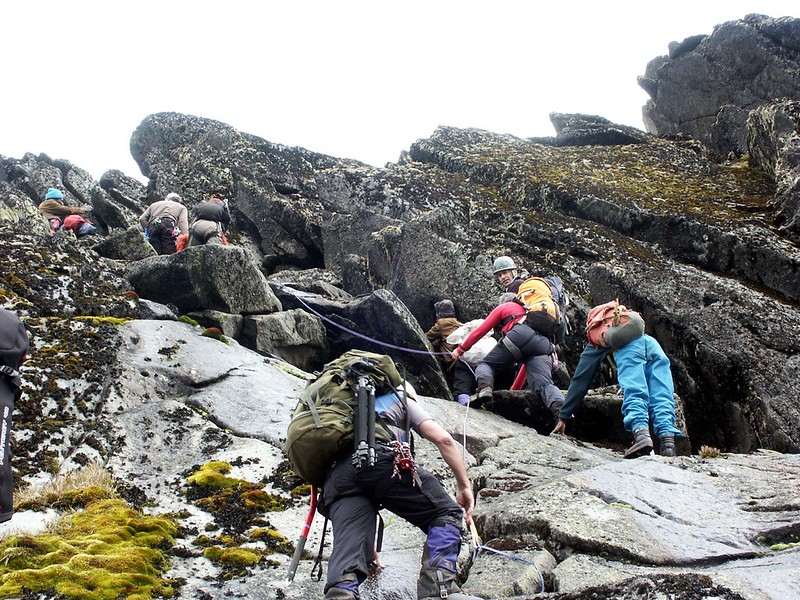
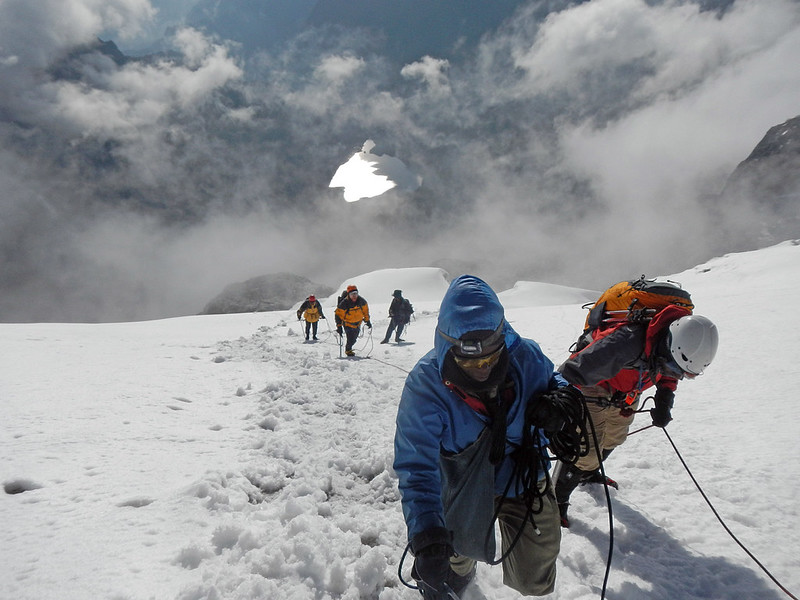
For most Rwenzori itineraries, the preparation described above is sufficient. Trekking fitness, the capacity to handle long approach days on the Central Circuit or the Kilembe Trail, is largely a matter of endurance, strength, and time on your feet, and it applies broadly across most of our route guides. Margherita Peak and other technical summit objectives, however, sit in a different category. Depending on current conditions and your chosen route, preparation for these objectives can extend into scrambling, rope-assisted movement, glacier travel technique where applicable, general climbing technique, and familiarity with technical footwear, harnesses, and helmets. General gym fitness, however impressive, does not automatically prepare a traveler for this kind of terrain, and we would rather say so plainly now than have that gap discovered partway up the mountain. If a technical summit is part of your plan, your preparation conversation with us should begin earlier, not later.
Footwear and Equipment Rehearsal
A training plan is incomplete if it addresses only your body and ignores your equipment. During the later weeks of the program, you should be actively testing your trekking boots, socks, backpack, trekking poles, rain gear, base layers, waterproof layers, gloves, and headlamp under realistic conditions. The first day of your trek should never be the first day you wear your boots, and the same rule applies just as firmly to your loaded backpack. Equipment that fits and performs well in a shop, or even on a short local walk, can behave quite differently after six hours on wet, uneven ground, better to discover that during training than midway up the Central Circuit Trail.
The Rwenzori Training Simulation
Somewhere between two and four weeks before departure, plan a challenging but manageable hiking weekend designed specifically to resemble your upcoming trek. A long, uphill-focused day followed by a moderate hike completed while carrying some residual fatigue is the ideal shape for this weekend. Pay close attention during it to your time on your feet, elevation gain, how your backpack sits after several hours, how your footwear performs, how your trekking poles feel, and how well you manage hydration, food, clothing, and recovery afterward. The point of this simulation is not to prove to yourself that you are capable of climbing the Rwenzori. It is to surface any problems, a blister forming, a strap that chafes, or a food choice that does not sit well, while you still have time to fix them, rather than discovering them for the first time on the mountain itself.
Recovery as Part of Training
It would be a mistake to treat recovery as an afterthought squeezed in between the sessions that matter. Rest days, sleep quality, hydration, nutrition, mobility work, sensible management of soreness, gradual progression, and the discipline to avoid excessive training all belong inside the plan itself, not outside it. Put simply, recovery is part of the training plan, not time wasted between workouts. Your body adapts and strengthens during rest, not during the session itself, and skipping that half of the equation undermines everything the hard sessions were meant to achieve.
Fueling Your Training
Nutrition guidance here is meant to stay practical rather than prescriptive. Adequate overall energy intake matters more than any single nutrient, and within that, carbohydrates support endurance while protein supports recovery between sessions. Hydration deserves consistent attention throughout training, not just on your longest hikes. Just as importantly, use your long training hikes to practice eating on the move and to test the specific snacks and meals you intend to rely on during the trek itself. Your fueling strategy should not be worked out for the first time on day three of the expedition; it should be developed through trial and error during your preparation.
Tapering: The Final Two Weeks
Many trekkers, understandably anxious in the final stretch before departure, make the same mistake: they try to peak on the trail rather than tapering into it. The final week or two of your plan should reduce overall training volume while maintaining some light movement and deliberately avoiding last-minute extreme hikes, heavy strength sessions, new exercises, new footwear, or dramatic changes to your diet. In the final week, you gain no meaningful fitness that offsets the fatigue such efforts create. The objective of tapering is simple: arrive in Uganda fresh, not exhausted.
Training by Route
Because our trekkers head toward quite different objectives, it is worth calibrating your training specifically to the route you have chosen.
Training for the Central Circuit Trail
Preparation here should focus on long hiking days, sustained elevation gain, uneven terrain, and, most importantly, endurance over consecutive days, since the Central Circuit’s rewards come from sustained effort over its full duration rather than any single demanding stretch.
Training for the Kilembe Trail
The Kilembe Trail rewards a slightly different emphasis: sustained climbing ability, comfort on genuinely steep terrain, leg endurance across long mountain days, and, as covered above, deliberate attention to descending well, since the trail’s character relies more on climbing gradient than the Central Circuit Trail does.
Training for Margherita Peak
A Margherita Peak objective adds higher overall endurance demands, steeper sustained terrain, technical preparation where your specific route requires it, familiarity with cold-weather equipment, and confidence on exposed ground near the summit. Preparation for summit day deserves particular focus in your final training phases, and it connects directly to our dedicated Margherita Peak pages, which cover the summit push in detail.
Whichever route you are training for, matching your preparation to our relevant itinerary and trek-duration pages before you commit to a schedule will help you train with the right endpoint in mind, rather than training generically and hoping it fits.