Getting To Rwenzori: How Your Arrival Shapes Your Accommodation Plan
Almost every international trekker enters Uganda through Entebbe International Airport, on the shores of Lake Victoria. From there, the road journey to Kasese takes roughly five to six hours, running through Kampala, Mbarara, and the Ankole highlands before the Rwenzori ridge line comes into view. A domestic flight between Entebbe and Kasese airstrip cuts that journey to about an hour, at a higher fare, and is worth considering for travelers who would rather not add a long road trip to an already long international one.
For most travellers arriving on an overnight international flight, a single night in the Kampala or Entebbe area before continuing on to Kasese is a wiser plan than pressing straight through to the mountain on the same day. A flight of six, ten, or fourteen hours across time zones deserves a flat bed and a proper meal before the real preparation begins, and starting the long road journey, let alone the trek itself, while still running on aircraft sleep rarely serves anyone well. The same logic applies in reverse at the end of the expedition: where your schedule allows it, an extra night in Kasese or Kampala before an international departure gives a body that has just completed several demanding mountain days a further window to recover before the flight home.
In Entebbe, the Boma Guest House is a consistently recommended choice for its calm gardens and reliable service, while Lake Victoria Hotel sits directly on the lakeshore with a pool and a restaurant well used to early and late transfers. In Kampala, the Kampala Serena Hotel and Sheraton Kampala represent the city’s full-service, luxury end, with efficient concierge support for early airport runs, while the Protea Hotel and Hotel Africana offer a reliable mid-range standard in convenient, central locations.
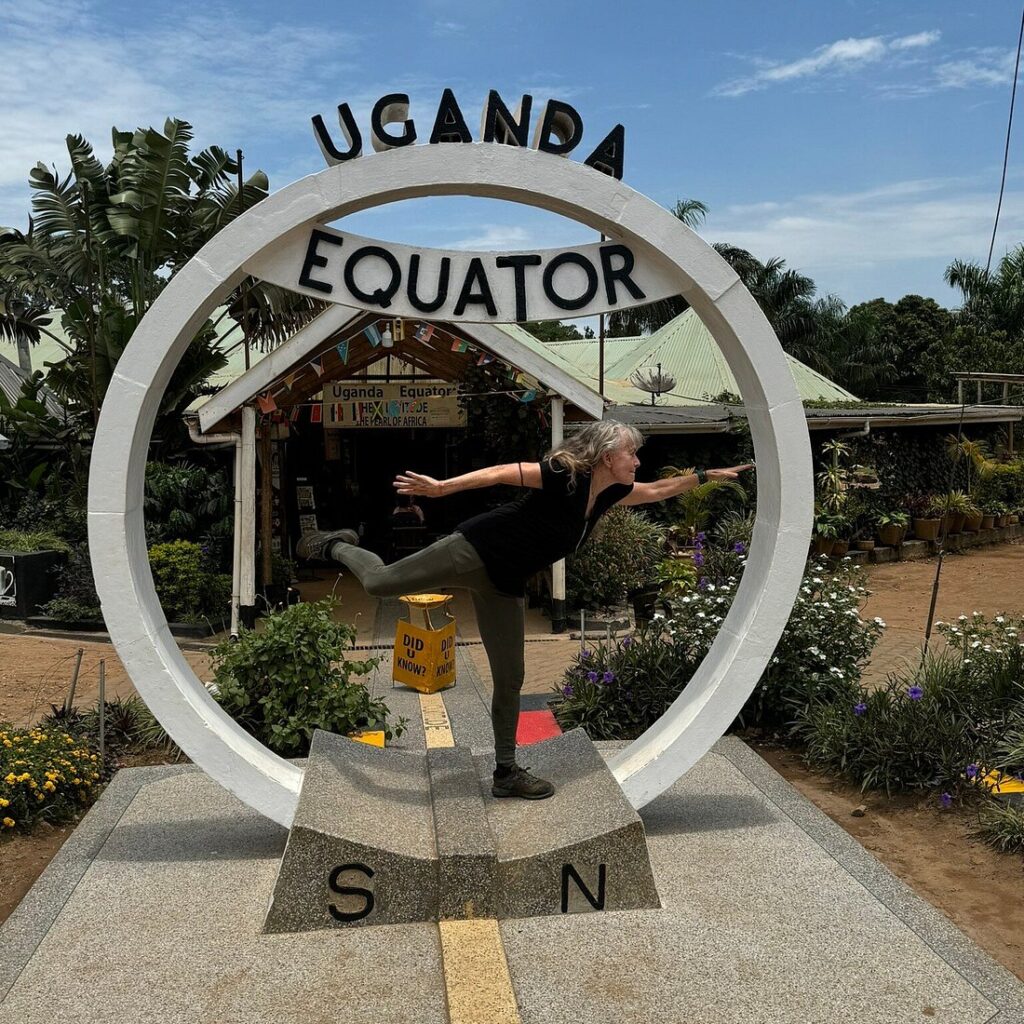
One small detour worth knowing about for travellers driving the Kampala–Kasese road is the equator crossing near Kayabwe, a brief and enjoyable roadside stop directly on the route that adds only a few minutes to the journey and rounds out the sense that this trip, start to finish, is genuinely Ugandan.
Accommodation Before the Rwenzori Trek by Traveller Type
Different travelers arrive with different priorities, and the right accommodation strategy shifts accordingly.
Budget Travellers
A budget traveller is usually best served by accommodation that is clean, simple, and conveniently located, with reliable transport, a proper breakfast, secure luggage storage, and excellent overall value. You do not need an expensive hotel simply because you are climbing a major mountain the next morning; what matters most is that you arrive rested and organized, not that you arrive impressed by the lobby.
Midrange Travellers
Midrange travellers typically prefer comfortable private rooms with private bathrooms, restaurant facilities, reliable Wi-Fi, comfortable beds, secure parking, breakfast, convenient transfers, and luggage storage. This tier tends to offer the best balance between genuine comfort and sensible cost, and it is where the majority of Rwenzori trekkers are happiest to spend their pre- and post-trek nights.
Luxury Travellers
Luxury travellers tend to look for premium rooms or suites, high-quality dining, quiet surroundings, private transfers, personalised service, spacious rooms, excellent beds, comfortable lounges, premium post-trek recovery, and flexible check-in and check-out arrangements that accommodate an unpredictable mountain schedule. For a luxury Rwenzori expedition, the pre- and post-trek hotel supplies precisely the comfort that is naturally unavailable in remote mountain huts, and it is where the difference between a good trip and an exceptional one is often decided.
Where to Stay Before the Kilembe Trail
The Kilembe Trail begins from the Kilembe side of the Rwenzori range, and if you are trekking via this route, your accommodation should be selected together with your transfer plan rather than in isolation. The most important consideration is not simply finding the closest hotel to the trailhead on a map but ensuring your trekking operator can coordinate the full sequence cleanly: hotel, equipment check, transfer, Kilembe trailhead, and then the trek itself.
If you arrive the day before, you give yourself enough time to rest and prepare properly rather than beginning the trek immediately after a stressful transfer. Ask your Rwenzori Trekking Expedition Expert about Kilembe Trail accommodation options and the mountain camps used during the trek itself, so the whole route, from hotel bed to summit ridge, is planned as one continuous experience. The RTS Trekkers Hostel in Kilembe town is within walking distance of the trailhead itself, which suits trekkers who want to attend a pre-trek briefing and meet their guide team without a morning vehicle transfer; travellers who prefer a proper hotel a short drive away can base themselves in Kasese instead and transfer out on the morning of departure.
Where to Stay Before the Central Circuit Trail
Travellers using the Central Circuit Trail should similarly coordinate their accommodation with the actual starting point and the transfer arrangements that connect them to it. A well-planned pre-trek night allows you to meet your guide, confirm the route, check your backpack, organize porter luggage, confirm transport, prepare water and snacks, and rest properly before the first trekking day begins.
This groundwork is especially valuable for longer Central Circuit itineraries and summit expeditions, where the margin for a rushed or disorganized start is considerably smaller than it might first appear. Ruboni Community Camp, on a hillside near the Nyakalengija gate, is the standout choice for trekkers who want a Rwenzori view from their own balcony the night before departure, along with a genuine community-tourism element; Tours Holiday Inn Camp Base, closer still to the gate itself, suits budget-conscious groups who simply want proximity and simplicity.
How Many Nights Should I Stay Before the Trek?
For most international travellers, one night before the trek is a sensible minimum. Arriving earlier can be genuinely beneficial, however, if you have travelled a long distance, if your flight arrives late, if you are coming from Kampala or another distant destination, if you would simply prefer a relaxed start, if you need to purchase or rent equipment, if you want additional time to recover from travel, if you are undertaking a longer summit expedition, or if you intend to include a safari or other activity either side of the climb. For a once-in-a-lifetime Rwenzori expedition, there is very little advantage in rushing the beginning.
Should I Stay Two Nights Before a Rwenzori Trek?
A second night can be genuinely worthwhile for travelers who want a slower, more comfortable preparation period. It gives you time to recover fully from international travel, check every piece of equipment at leisure, adjust your itinerary if needed, explore the local area, enjoy a relaxed briefing with your guide, absorb any unexpected travel delays without consequence, and begin the trek feeling properly fresh rather than merely present. For private, luxury, or high-value expeditions in particular, adding an extra preparation night is one of the simplest and most effective ways to reduce travel stress before the climb begins.
What Should the Hotel Provide Before the Trek?
A good pre-trek property should ideally offer the following, each of which plays its own small but meaningful role in how well you begin the expedition.
Comfortable Sleeping
You want a proper night’s rest before beginning several days of demanding mountain trekking; this is not the night to economize on a good mattress.
Food
An early breakfast, or a takeaway breakfast prepared the evening before, can be genuinely useful when departing at first light.
Water
Reliable access to drinking water is important in the hours before you begin the expedition, particularly if you are still adjusting to the altitude and climate.
Secure Luggage Storage
You will not take every item you have brought to Uganda into the mountains, so your operator may be able to arrange secure storage for whatever remains behind.
Communication
Reliable phone or internet access can be useful for finalizing last-minute travel arrangements before you lose connectivity on the mountain.
Space for Equipment Preparation
A private room, or a suitable equivalent space, makes it far easier to lay out and organize your trekking equipment without rushing.
What Happens to My Luggage During the Trek?
You will not normally take every item you bring to Uganda into the mountains. Your trekking operator can advise you on what belongs in your trekking bag, what belongs in the porter-carried luggage, what should stay at the hotel, what should remain in your vehicle, and how the storage arrangements are organized from start to finish. This is one of the clearest reasons why choosing an operator that manages the entire logistics chain, accommodation included, makes the trek considerably easier to prepare for. Pack for the expedition itself, not for carrying your entire holiday up the mountain.
Where Should I Stay After the Rwenzori Trek?
After several days in the mountains, returning to comfortable accommodation becomes an important part of recovery rather than a mere formality. A post-trek night gives you time to take a proper shower, sleep in a comfortable bed, eat a substantial meal, dry out wet trekking equipment, charge your electronics, organize your luggage, recover physically, and simply celebrate having completed the trek. For many travellers, the contrast between a simple mountain hut and a comfortable lodge afterwards is one of the most memorable parts of the entire journey.
Why Stay One Night After the Trek?
You may technically be able to leave immediately after descending, but we generally recommend considering a post-trek night, particularly after a Margherita Peak attempt, a seven-to-ten-day-or-longer expedition, a technical summit climb, a wet-weather trek, a long descent day, or any physically demanding itinerary. Your body has just completed a major mountain expedition. Give yourself the time to recover before beginning the next part of your journey.
Gear, Laundry, and the Small Logistics of Coming Back Down
Several days of Rwenzori trekking produce a genuinely impressive pile of damp, mud-streaked, and lichen-crusted clothing and equipment, none of which belongs anywhere near the inside of a clean travel bag or an airline hold suitcase without a proper wash first. Most properties in the Kasese area offer a laundry service, though a full twenty-four hours is a realistic minimum turnaround for heavy, saturated mountain gear, so this time frame is worth factoring into your onward schedule rather than assuming same-day service.
One habit worth adopting before you ever set off is packing a separate, sealed bag of clean travel clothes and basic toiletries and leaving it in secure storage at your pre-trek hotel. Opening that bag on your return, rather than digging through a trekking pack for something wearable, is a small comfort that makes a disproportionate difference after several days on the mountain, and it is exactly the kind of detail a well-coordinated operator will remind you to prepare before departure.
Money, Connectivity, and Health Practicalities Around Kasese
Kasese functions as a genuine district capital rather than a purpose-built tourist town, and it carries the practical infrastructure that implies working ATMs at the main banks, a functional though modest foreign-exchange market for USD, GBP, and EUR, a district hospital, and several private clinics for minor pre-trek concerns such as a blister, a stomach upset, or a last-minute medication query, with Kampala’s international-standard hospitals as the appropriate referral point for anything more serious. It is sensible to arrive in Kasese already carrying sufficient Ugandan shillings, since mountain gratuities, last-minute gear hire, and small purchases are all settled in cash, and to have comprehensive travel insurance in place that specifically covers high-altitude trekking and emergency medical evacuation, with the insurer’s emergency number saved in your phone before you leave for the trailhead. None of this needs to complicate your accommodation planning; it simply belongs in the same conversation, since your operator can and should confirm all of it as part of preparing you properly for departure.
What Is the Best Post-Trek Accommodation?
Your ideal post-trek accommodation depends largely on what you intend to do next.
If You Are Continuing a Safari
Choose accommodation that makes your next transfer convenient so the momentum of your Uganda journey continues smoothly.
If You Are Flying Home
A comfortable overnight stay allows you to recover properly before beginning the long journey home, rather than travelling straight from the mountain to the airport.
If You Are Continuing Around Uganda
Your accommodation can be selected around your next destination, keeping the wider itinerary efficient.
If You Simply Want to Relax
Upgrade to a premium lodge and turn the final night into a genuine recovery experience; you have earned it.
Can I Combine a Rwenzori Trek With a Safari?
Absolutely. The Rwenzori Mountains can be incorporated into a far wider Uganda itinerary. Depending on your travel plans, you may combine the trek with wildlife safaris, gorilla trekking, chimpanzee trekking, cultural experiences, and time in Queen Elizabeth National Park, Kibale Forest, Bwindi Impenetrable National Park, Murchison Falls National Park, or elsewhere across the country. In this situation, your pre- and post-trek accommodation should be planned as part of the entire journey, rather than booked independently and stitched together after the fact.
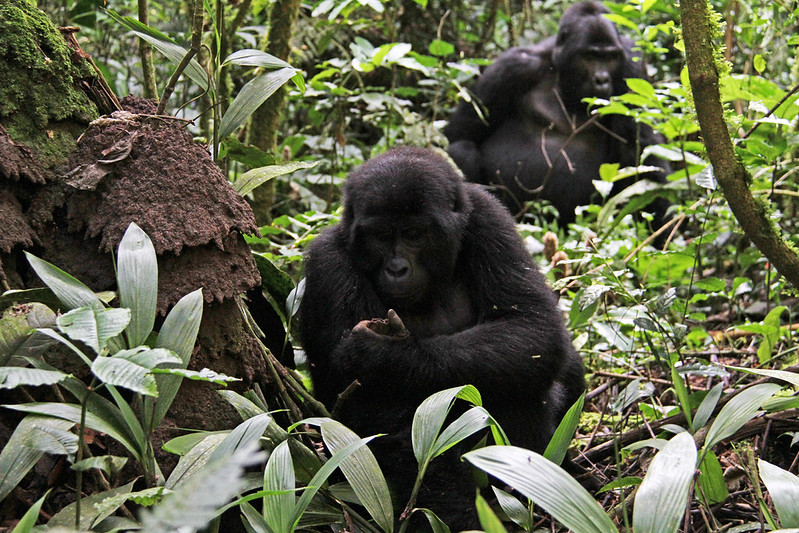
Queen Elizabeth National Park sits roughly an hour’s drive from Kasese, which makes it the single most convenient wildlife addition for trekkers who want tree-climbing lions, a boat cruise along the Kazinga Channel, and a gentle transition from mountain exertion into safari mode without losing a full day to travel. Mweya Safari Lodge, on a peninsula where the Kazinga Channel meets Lake Edward, is the park’s best-known property and offers evening views back toward the Rwenzori’s distant glaciers across the water. Bwindi Impenetrable Forest, which is home to about half of the world’s remaining mountain gorillas, is another four to five hours by road through the Kabale highlands and fits naturally with the Rwenzori as the second chapter of a single Ugandan story, with glaciated peaks giving way to dense, primate-filled lowland forest. Accommodation around Bwindi ranges from the luxury tented Sanctuary Gorilla Forest Camp, set within the forest boundary itself, to the mid-range and luxury Gorilla Safari Lodge and Mahogany Springs Lodge in the Buhoma and Rushaga sectors. Travellers routing between the Rwenzori and Bwindi via Kisoro often break the journey at Papaya Lake Lodge on Lake Mutanda, one of Uganda’s most scenic stops. Fort Portal and the neighboring Kibale Forest, roughly seventy kilometers northeast of Kasese on the road back toward Kampala, offer excellent chimpanzee tracking for travellers with a spare day or two either side of the mountain, while Murchison Falls National Park in the north, some four to five hours from Kampala, suits those who fly into Uganda several days ahead of their trek date and want the country’s biggest waterfall and its finest big-game viewing folded into the same trip. In every case, the sequencing of hotels and lodges across these destinations is best planned as a single itinerary rather than a series of separate bookings.
Best Accommodation Strategy for a Rwenzori Trek
Rather than asking only “Which is the best hotel?” it is worth asking the more useful question, “Which accommodation makes my entire Rwenzori expedition easier, safer, and more comfortable?” The best choice should match your trekking route, your arrival time, your departure time, your budget, your group size, your comfort expectations, your summit objective, your transfer arrangements, and your onward travel plans, all considered together, rather than any single factor in isolation.
Mountain Accommodation vs. Hotel Accommodation
One of the most common misconceptions about Rwenzori trekking is that you can expect hotel-standard comfort throughout the mountain itself. There is an important distinction between what awaits you before and after the trek and what you can expect during it.
Before / After the Trek | During the Trek |
Hotel or lodge | Mountain hut / camp |
A private room may be available. | Shared mountain accommodation |
A private bathroom may be available | Basic washing facilities |
Reliable electricity | Limited or no electricity |
Wi-Fi may be available | Connectivity is unreliable. |
Restaurant dining | Trekking meals |
A hot shower may be available. | Basic washing |
Comfortable bed | Mountain sleeping arrangement |
This is why the hotel before and after your trek matters so much. It provides a level of comfort that you cannot realistically replicate deep in the high Rwenzori, where the wilderness, quite properly, remains in charge.
What the Mountain Huts Themselves Are Like
On the Central Circuit Trail, trekkers move between a sequence of wooden mountain huts positioned roughly a day’s walk apart: Nyabitaba at around 2,651 metres, John Matte at 3,380 metres, Bujuku at 3,960 metres, Elena at 4,541 metres, Kitandara at 4,023 metres, and Guy Yeoman at 3,505 metres.

On the Kilembe Trail, the equivalent sequence runs through Sine at 2,596 metres, Kalalama at 3,147 metres, Mutinda at 3,588 metres, Bugata at 4,062 metres, Hunwick’s at 3,974 metres, Margherita Camp at 4,485 metres and Kiharo at 3,460 metres. Each hut provides a sleeping platform with a mattress, a communal cooking area, and basic toilet facilities: a genuine and welcome step up from tenting in the Rwenzori’s notoriously wet climate, but a mountain shelter nonetheless, not a lodge. Knowing this sequence in advance helps put the value of your pre- and post-trek hotel nights into proper context: they are the only two nights in the entire expedition with a private bathroom, and they should be chosen accordingly.
What Does “Luxury” Mean on a Rwenzori Trek?
Luxury Rwenzori trekking should never be marketed as five-star accommodation on the mountain itself. The high-altitude environment makes that unrealistic, and any operator suggesting otherwise is not being entirely honest with you. Instead, genuine luxury means improving every part of the expedition that can realistically be improved: premium pre-trek accommodation, private transfers, private guides, small trekking groups, experienced mountain staff, personalized meals, quality trekking equipment, appropriate porter support, carefully planned acclimatisation, a flexible itinerary, premium post-trek accommodation, and dedicated travel coordination from arrival to departure.
The mountain remains wild. The service surrounding the mountain experience can, and should, be exceptional.
What About Midrange Accommodation?
Midrange travellers can strike a good balance between comfort and cost. A good midrange strategy runs simply: a comfortable hotel before the trek, basic mountain huts and camps during the trek, and a comfortable hotel again afterwards. This gives you the authentic Rwenzori mountain environment without paying for unnecessary luxury accommodation on either side of it.
What About High-Net-Worth Travellers?
For high-net-worth travellers, accommodation is part of a fully personalised expedition rather than a single line-item decision. Rather than simply selecting the most expensive hotel available, the focus should be on seamless logistics: airport arrival, private vehicle, premium hotel, equipment preparation, private mountain guide, porter team, personalized meals, private trekking arrangements, post-trek recovery accommodation, and, where relevant, safari extensions, gorilla trekking extensions, and flexible onward travel. The result is not merely an expensive trek. It is a fully managed African mountain expedition, built around you from the first phone call to the final farewell.
Questions to Ask Before Booking Your Hotel
Before confirming any accommodation, it is worth establishing exactly where the hotel is and how far it genuinely sits from your trailhead, whether transport and breakfast are included, and whether breakfast can be served early enough for your departure. Confirm whether you can store luggage securely while trekking, whether Wi-Fi and hot water are available, and whether the property can accommodate a late check-in should your transfer arrive behind schedule. Ask, too, whether you can return to the same property after the trek, whether there is a restaurant on site, whether dietary requirements can be accommodated, and whether your trekking company is able to coordinate the booking directly on your behalf. In practice, these questions matter far more than a hotel’s star rating alone.
Accommodation and Your Rwenzori Trek Budget
You should think of your accommodation budget in three distinct stages. The first is pre-trek accommodation, the hotel or lodge you stay in before entering the mountains. The second is mountain accommodation, the huts and camps included within your trekking package, which vary depending on the route and itinerary you choose. The third is post-trek accommodation, the hotel or lodge you return to after completing the expedition.
When comparing trekking quotations, make sure you clearly understand whether the price includes pre- and post-trek accommodation or quotes them separately. A cheap trekking package can appear inexpensive simply because important accommodation and logistics have been quietly excluded from the figure you are shown.
Your Accommodation Checklist
Before your Rwenzori trek begins, it is worth confirming that your pre-trek hotel is booked, that your trailhead transfer is confirmed, and that a proper trekking briefing has been arranged. Make sure luggage storage is in place, that your mountain accommodation is confirmed for every night of the route, and that your post-trek accommodation is already secured rather than left to be arranged on the way down. Confirm your meals and any dietary requirements in advance, arrange an early breakfast if your departure time requires it, and make sure your airport or onward transfer, along with your emergency contact information, are all settled well before you leave for the trailhead.
How Rwenzori Trekking Expeditions Can Organize Your Accommodation
Planning a Rwenzori trek involves connecting a great many small logistical details, and it is precisely at these seams, between hotel and trailhead, between descent and recovery, that a trip can either come together beautifully or quietly unravel. At Rwenzori Trekking Expeditions, we plan accommodation as part of the wider expedition rather than treating it as a separate hotel booking left to chance.
We coordinate the full relationship between arrival, hotel, trek briefing, trailhead transfer, the mountain trek itself, descent, recovery hotel, and your next destination, allowing you to concentrate entirely on the experience rather than worrying about how each individual component connects to the next. For private and premium travellers, accommodation can also be selected around your preferred level of comfort, your itinerary, your transfer requirements, and your onward safari plans so that every stage of the journey feels considered, not improvised.
The Complete Tipping Guide for Rwenzori Porters and Guides
Tipping on the Rwenzori is best understood as a genuine, expected component of how guides, porters, and cooks are compensated for their work, rather than as an optional bonus reserved for exceptional service alone. It should never, however, be treated by an operator as a substitute for a fair base wage; tipping recognizes appropriate service on top of that wage, and the two should never be confused. Because appropriate amounts vary with trek length, group size, and route, we provide indicative guidance below and encourage every traveller to confirm the current recommendations with us directly before departure.
Team Member | Suggested Tip (Per Day) | Notes |
Lead Guide | $15-$20 | Senior role carrying overall safety responsibility; adjust upward for exceptional leadership |
Assistant Guide | $15-$20 | Comparable seniority to the lead guide on larger or technical departures |
Cook | $10-$12 | Often an underappreciated role; consistently good food at altitude meaningfully supports summit success. |
Personal Porter | $8-$10 | If you engaged a dedicated personal porter for your daypack |
Equipment Porter (each) | $8-$10 | Typically pooled and divided evenly by the lead guide among the equipment porter team |
Park Ranger | $5-$10 | Optional but appreciated where a ranger accompanies your group |
As a practical planning example, a two-person group on a standard eight-day summit itinerary, travelling with a lead guide, an assistant guide, a cook, and five porters, should budget in the broad range of roughly $450 to $600 in total tips for the whole team, or somewhere around $225 to $300 per person, at the midpoint of the ranges above. This is a meaningful sum that should be planned for explicitly in your pre-trip budgeting rather than treated as pocket change at the trailhead, since tipping is separate from your package price and is paid directly to the team in cash.
We recommend carrying tips in US dollars in small and medium denominations, since large notes can be difficult to exchange in Kasese, with Ugandan shillings also acceptable. Where tips are pooled across the wider team, the lead guide should distribute that pool transparently according to role, and travelers are welcome to ask exactly how a pooled tip will be divided before handing it over. Tipping is generally a way of recognizing excellent service; it should never replace fair wages. The appropriate amount can reasonably reflect service quality and trek duration, and travellers should always confirm the current recommended practice with their operator, since norms can shift over time.
What Is the Tip Ceremony for the Rwenzori?
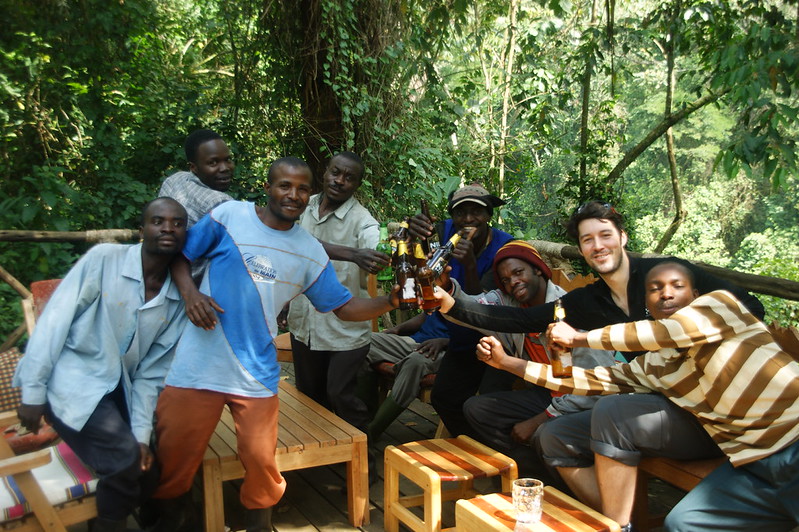
On many Rwenzori expeditions, tipping is marked by a genuine, informal tradition rather than a quiet handover. Typically on the final morning on the mountain, after breakfast at the last camp, the full trekking team, guides, cook, and porters together gather with the client group. Team members will often sing, a warm, spontaneous send-off that catches many first-time trekkers by surprise and that travellers frequently describe as one of the most emotionally memorable moments of the entire expedition. A member of the client group typically offers a short word of thanks, which the lead guide translates for any team members who are more comfortable in the local language, before the tip is presented to the lead guide for transparent distribution among the team according to role. Allow fifteen to twenty minutes for this ritual in your final morning’s schedule rather than treating it as an interruption to the descent; for many travellers, it is the moment that closes the expedition with the most genuine warmth.
Equipment Donations: A Thoughtful Alternative to Cash
Many travellers finish a Rwenzori trek wanting to leave something behind for the team beyond a cash tip, and good-quality equipment can be a genuinely useful gift when it is offered thoughtfully. Waterproof jackets, warm mid-layers, headlamps, and good socks, still clean and fully functional, are welcomed by guides and porters working in conditions that quickly wear down personal gear. What is not helpful is worn-out or damaged equipment, boots that are no longer waterproof, jackets with broken zips, or bags with failing seams, since these items become a disposal burden in communities without the infrastructure to deal with them, rather than a genuine gift. If in doubt, ask your guide before departure whether a specific item would be useful, and avoid donating medication or food without first discussing it directly with the guide team, since unsolicited supplies can complicate rather than help their existing protocols.
Can I Trek Without a Porter?
You can choose to trek without a porter, carrying your own full pack, though a guide remains a requirement regardless of that choice. Without a porter, you carry considerably more weight every day of the trek, which typically means greater physical demand, faster accumulated fatigue, and, for many travellers, less mental and physical freedom to actually take in the scenery around you rather than manage the burden on your back.
With a porter, you carry only a light daypack, conserving energy for the terrain itself rather than the weight on it, and you are able to focus far more of your attention on the mountain, the giant lobelias, the mist, and the birdlife than on the logistics of carrying a full expedition kit. Hiring a porter also directly supports local employment tied to mountain tourism, extending the practical benefit of your trek beyond your own experience. We present this option as a genuine choice rather than a pressured upsell: some travellers value the personal challenge of carrying their kit, and that choice deserves respect. For most travellers, though, hiring a porter is one of the most quietly transformative decisions they make abouforir trek.
Why Hiring a Porter Can Improve Your Rwenzori Experience
Hiring a porter is not simply about making the trek easier. It can also be a practical way to support the people whose livelihoods depend on mountain tourism. When porter services are organized responsibly, travelers benefit from reduced loads, while local mountain workers gain employment from the tourism economy. In the communities living at the base of the Rwenzori, this employment is often directly tied to the presence and behavior of trekking operators like ours. A porter is not simply a service you purchase; over the course of a week or more on the mountain together, they become a genuine part of your expedition, someone whose skill and effort you come to notice and, more often than not, deeply appreciate by the time you reach the trailhead again.
The Human Story Behind the Mountain Team
Generations on the Mountain
The single most important thing to understand about the guides and porters of the Rwenzori is something no certification table fully captures: the depth of their relationship with this mountain is measured in generations, not years of employment. A guide in their mid-twenties who has worked the Kilembe Trail for several seasons has likely also absorbed knowledge of the range through a father’s or grandfather’s stories since childhood, long before they ever carried a professional qualification. That layered inheritance, formal training built on top of a lifetime, and often a family lineage of informal mountain knowledge, produces a quality of guiding that experience alone, however extensive, rarely replicates elsewhere.
An Economic Lifeline for Mountain Communities
For many Bakonzo families near Kilembe and Nyakalengija, income from guiding and portering is not just extra money; during the trekking season, it is often their main source of income, helping to pay for school fees, healthcare costs, and the basic stability of family life in ways that the agricultural economy of the foothills alone cannot reliably provide. Consistent, fairly paid employment across a season allows families to plan rather than simply manage month to month, and the aggregate effect of a well-run trekking economy on these communities is genuinely significant.
The Pride of Certification
For a young Bakonzo guide, earning formal certification represents more than a professional credential; it is a formal, external acknowledgement of knowledge that has often already been passed down through a family for generations. The most senior Rwenzori guides, those who have led expeditions across every season the mountain produces, trained younger guides, and built the trust of their communities over decades, hold a level of social standing that reflects the genuine, hard-earned depth of what they know.
A Farewell Marked, Not Just Ended
The warmth that often surrounds a trek’s final morning, a shared song, a few words of thanks, and a tip presented with real ceremony is not a performance staged for visiting trekkers. It is a genuine way of marking that something real took place over the preceding days, between people who began the week as strangers and, more often than not, end it with a real bond built through shared discomfort, shared achievement, and mutual respect. Trekkers consistently describe it as one of the most vivid moments of their trip, long after the ache in their legs has faded.
How to Be a Good Expedition Client: What the Team Needs From You
The relationship between a trekker and the Rwenzori expedition team runs in both directions, and how you engage with your guide and porter team genuinely affects how smoothly and how safely your expedition unfolds. A few simple principles make a real difference.
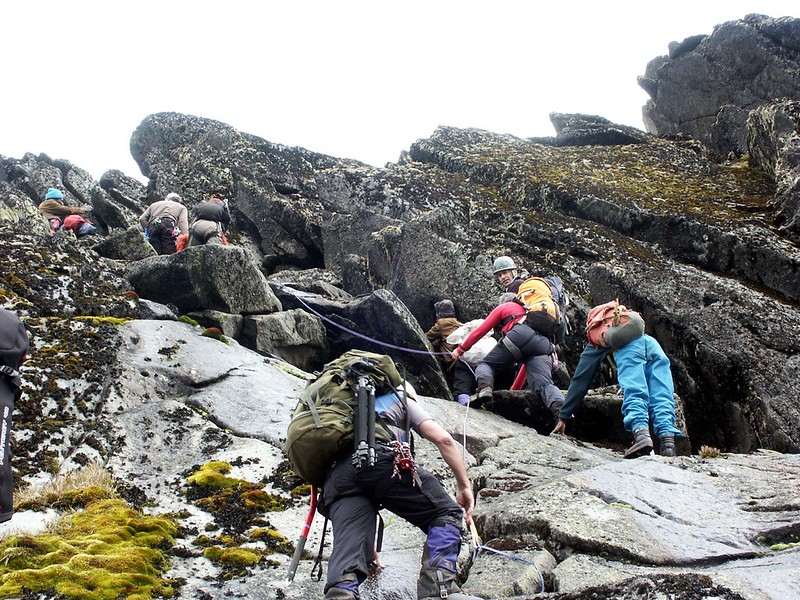
Trust your guide’s assessment, even when it is not what you want to hear. The trekkers who run into the most serious difficulty on this range are rarely the least fit; they are often strong, determined trekkers who override a guide’s correct read of a developing problem because they trust their judgement over years of specific mountain experience they do not have.
Be honest about how you are feeling. Downplaying a headache or dismissing early fatigue because you would rather not be the reason the group slows down removes your guide’s ability to manage risk properly. Guides are there to get you up and back down safely, not to judge you for struggling.
Respect the agreed weight limits and packing instructions. Sticking to the baggage allowance you agreed with your operator is one of the simplest, most concrete ways to protect your porters’ well-being.
Learn names and use them. Taking a few minutes to learn your guide’s, cook’s, and porter’s names, and to ask about their families or their years on the mountain, meaningfully changes the character of the week you spend together, for you and for them.
What Travellers Should Bring for Their Guide and Porter Team
Rather than unnecessary gifts, the most genuinely useful thing you can bring is consideration built into how you pack.
- Use clear, sturdy luggage rather than fragile or awkward bags that are difficult to carry over rough terrain.
- Protect your bag with waterproof liners or covers, since a porter carrying a soaked duffel bag for a week is carrying unnecessary extra weight along with the water itself.
- Keep your baggage to a reasonable, previously agreed weight, and label your bags clearly so porters can quickly identify and distribute them at each camp.
- Pack your personal essentials, medication, documents, and chargers separately and clearly so you don’t misplace anything across a multi-day trek.
- Respecting the agreed weight limits is, in itself, one of the most meaningful things a traveller can do for the wellbeing of the porter team.
Rwenzori Guide & Porter Options for Different Travellers
Budget Travellers
For travellers prioritising value, we focus on essential, well-run guide services, shared group logistics that keep costs reasonable, and practical porter arrangements sized to genuine need rather than added extras, all without compromising the safety and ethical standards that apply to every departure we run.
Mid-Range Travellers
Mid-range arrangements typically include comfortable pre- and post-trek accommodation in Kasese or Fort Portal, the option of private or small-group trekking instead of joining a larger scheduled departure, and enhanced logistical support, additional porter capacity, and more flexible pacing that smooth the experience without moving into a fully private, bespoke structure.
Luxury Travellers
Luxury on the Rwenzori is not about turning a remote mountain hut into a five-star hotel; no operator can genuinely deliver that above the tree line, and any that claims to is not being honest with you. It is about exceptional planning, private logistics, experienced mountain leadership, personalized pacing matched to your fitness and preferences, quality equipment prepared in advance, seamless service before and after the expedition, private transfers, premium lodges at either end of the trek, and a guide-to-client ratio built specifically around your group rather than a shared schedule.
How Our Trekking Team Works: From Trailhead to Summit
Before you ever reach the trailhead, your guide leads a thorough pre-trek briefing, reviewing your route, your equipment, and what each day will genuinely demand of you, while the porter team is already organizing food, fuel, and equipment for the days ahead. At the trailhead, you see a small crowd of activity: bags being weighed and distributed, final equipment checks, which resolves within minutes into a moving column: guide at the front setting pace, porters carrying the expedition’s weight, and you walking with only what you need for the day on your back.
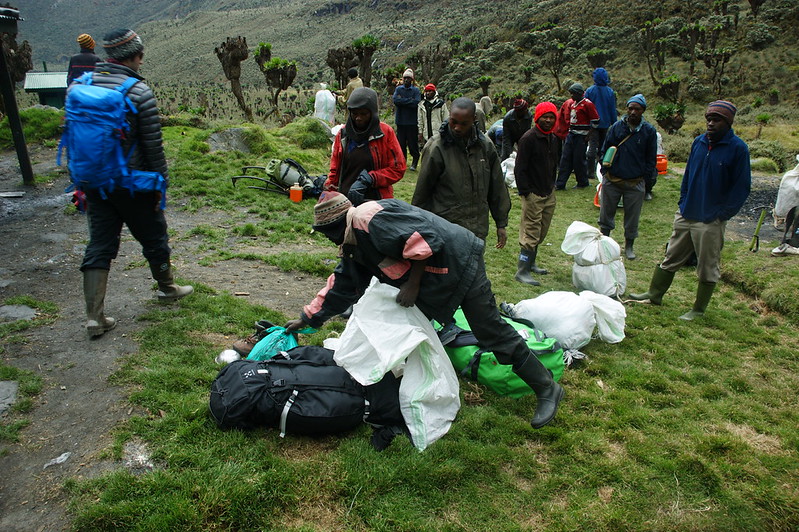
Through each day of guide-led trekking, your guide manages pace, points out terrain hazards before you reach them, and checks in on how you are feeling at a frequency that increases with altitude, while, unseen ahead of you on the trail, the porter team is already breaking down and re-establishing camp so that by the time you arrive, tents are pitched, water is heating, and the coming night’s shelter is ready. Acclimatization days are built deliberately into the schedule, giving your body time to adjust while your guide monitors symptoms across the group. When a summit attempt is part of your itinerary, additional guides and specialized equipment join the team for that specific stage, with glacier travel handled with the same quiet competence as the forest sections below. Descent reverses the process: camps are struck, equipment is repacked, and the whole team—travellers and staff together—moves back down through the zones you climbed in reverse before returning to your lodge, where, more often than not, both groups finally get their first proper rest of the week. What the traveller experiences as a journey through an extraordinary landscape is, behind it, a continuously managed operation, and the skill of a good trekking team is that this management is felt only as ease, never as friction.