How much should I tip my Rwenzori guide, porter, cook, or other trekking staff? If you are planning a trek in the Rwenzori Mountains, you may be wondering about how much you should pay Rwenzori guides, porters, cooks, and other Rwenzori staff. Tipping is a common way for travelers to recognize excellent service after a successful mountain expedition, but it should be understood as a voluntary thank-you rather than a replacement for fair wages. The appropriate amount depends on the length and difficulty of your trek, group size, quality of service, number of staff, and the role each person played in your expedition. This guide explains how Rwenzori tipping works, how much travelers can consider giving, how to distribute tips fairly, and what responsible travelers should know before starting their trek.
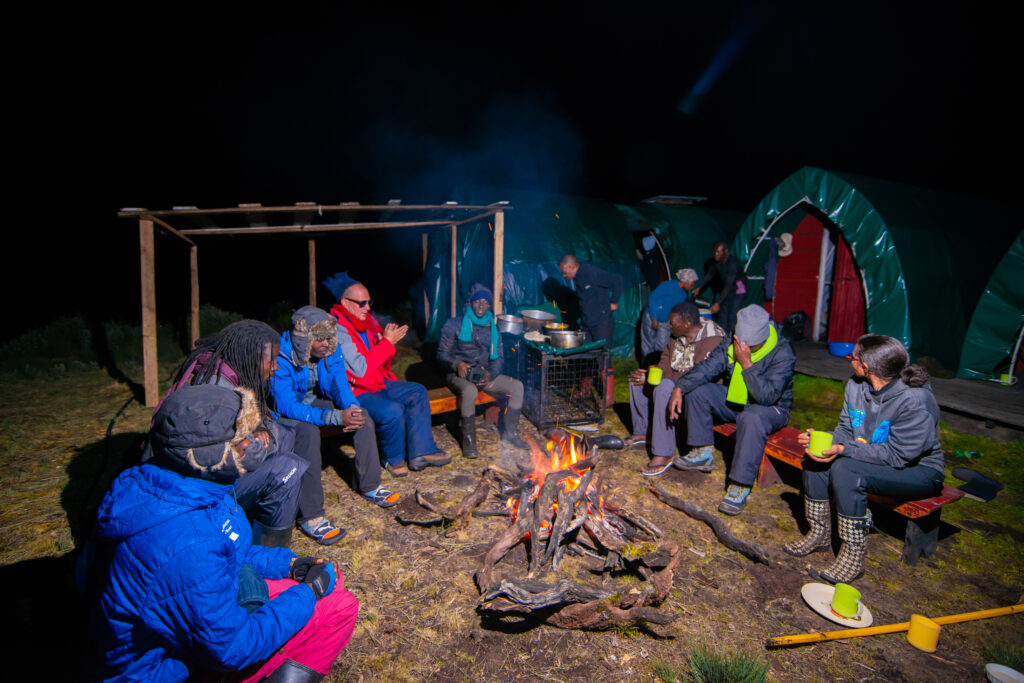
As a practical daily benchmark, plan to tip your lead guide roughly $15 to $20 per day, an assistant guide the same range, your cook $10 to $12 per day, and each porter $8 to $10 per day, with the total shared across your group and adjusted for group size and trek length. On a standard seven- to eight-day Margherita Peak summit itinerary, a solo trekker or couple should budget somewhere in the region of $300 to $700 in total tips for the full support team, separate from the trek price itself. Tipping on the Rwenzori is not a fixed formula but a considered gesture, and the sections below explain how to calculate it for your trek, when and how to hand it over, and our policy on wages, loads, and the welfare of the people who make your expedition possible.
Is Tipping Mandatory on a Rwenzori Trek?
Tipping is not a legal or contractual requirement on a Rwenzori trek, but it is a firmly established and genuinely expected part of how mountain staff across East Africa, not only in Uganda, are compensated for their work. No one will refuse to guide you or carry your bag if you don’t tip, and no clause in your booking obliges you to pay a specific sum. In practice, however, tipping functions as a structural part of the income mountain workers rely on, and arriving at the trailhead without having planned for it puts you in the uncomfortable position of making an important decision under time pressure on the final morning, with cash you may not have prepared. We would rather you understand the situation fully in advance than discover it as an afterthought.
Why Do Travelers Tip Rwenzori Trekking Staff?
Travellers tip Rwenzori guides, porters, and cooks for the same reason they tip in most parts of the world where service work is genuinely skilled and physically demanding: a base wage, however fairly set, does not fully capture the value of exceptional individual effort, and a tip is the internationally recognised way of saying that a specific person’s work is seen and appreciated. On the Rwenzori, this practice matters more than it does on a heavily commercialized mountain elsewhere in East Africa. The range receives a fraction of the annual visitor numbers seen on Kilimanjaro, which means the tourism economy around Kasese and Kilembe is more directly shaped by each individual trekking party than many travelers realize. A generous, thoughtfully calculated tip is not simply a nice gesture; it is a meaningful contribution to a household’s income in a region where mountain work remains one of the more reliable sources of formal employment.
Who Should You Tip on a Rwenzori Trek?
Your Rwenzori trekking team is built from several distinct roles, and understanding what each person actually does helps you tip with genuine intention rather than simply distributing cash at the end of the trip.

Lead Guide
Your lead guide carries overall responsibility for navigation, pacing, weather assessment, altitude monitoring, and the safety decisions that shape every day of your trek, including, on a summit itinerary, the technical judgement required for glacier travel and the final call on whether conditions justify continuing to Margherita Peak. This is the most senior role on the mountain and the one whose decisions most directly affect your safety, which is reflected in the tipping guidance below.
Assistant Guide
On longer or larger departures, an assistant guide supports the lead guide, typically managing the rear of the group, assisting trekkers who are moving more slowly, and coordinating with the porter team on logistics and camp timing. Assistant guides are experienced mountain professionals in their own right, not trainees, and their contribution deserves comparable recognition to the lead guide’s.
Rwenzori Porters
Porters carry the equipment, food, and luggage that make a multi-day expedition physically possible, managing loads of roughly twenty to twenty-five kilograms across wet, uneven, and often technical terrain that many trekkers find demanding with nothing more than a light daypack. Porter work is the physical foundation of your entire trek, and it is consistently the role most easily under-tipped by first-time visitors who have not fully appreciated what the job actually involves.
Trekking Cook
Your cook produces hot, calorie-dense meals from a basic mountain kitchen in cold, damp conditions that make even simple cooking genuinely difficult, often working ahead of the group so a warm meal is ready when you reach camp. The cook’s contribution to morale and physical recovery across a long itinerary is significant, and it is a role easy to overlook simply because it happens out of sight.
Specialized Summit Support
On a Margherita Peak or Mount Baker summit attempt, additional specialized support, porters trained specifically for glacier-stage logistics, or a guide assigned solely to the technical summit push may join the team for that stage of the expedition. This support carries a distinct set of skills and risks beyond standard trekking and should be recognized accordingly if deployed on your specific itinerary.
Recommended Daily Tip Amounts by Role
Role | Suggested Tip (Per Day) |
Lead Guide | $15-$20 |
Assistant Guide | $15-$20 |
Cook | $10-$12 |
Porter (each) | $8-$10 |
Specialized Summit Support | $10-$15 (per stage, where deployed) |
These figures are daily rates, calculated per trekker where a group is sharing a guide and cook and per porter individually where each porter is tipped separately. The worked examples below show exactly how these rates translate into a total tip pool across trek lengths of different durations.
How Much Should I Tip for a 3-Day Rwenzori Trek?
A short three-day trek, typically a forest and waterfall route without a summit attempt, usually travels with a lead guide, a cook, and one or two porters depending on group size and luggage. For a solo trekker with one guide, one cook, and two porters, a reasonable calculation runs as follows: the guide at $15 per day across three days comes to $45, the cook at $10 per day across three days comes to $30, and two porters at $8 per day each across three days comes to $48 in total. Added together, these figures produce a total tip pool of roughly $123 for the full three-day trek, or a broadly comparable amount scaled down slightly if you are travelling as part of a small group sharing the same guide and cook.
How Much Should I Tip for a 5-Day Rwenzori Trek?
A five-day itinerary, often a Margherita Peak attempt via a fast route or a non-summit trek into the range’s higher zones, typically involves a lead guide, a cook, and two to three porters. Using the same method, a solo trekker’s guide tip at $15 per day across five days comes to $75, the cook at $10 per day across five days comes to $50, and two porters at $8 per day each across five days comes to $80. This produces a total tip pool in the region of $205 for the full five-day trek, before any additional recognition for particularly exceptional service.
How Much Should I Tip for a 7-Day Rwenzori Trek?
A seven-day trek, our most common summit itinerary length, generally includes a lead guide, an assistant guide, a cook, and a larger porter team, often four porters for a couple travelling together. For two trekkers sharing a team, the calculation runs as follows: the lead guide at $18 per day across seven days comes to $126, the assistant guide at $15 per day across seven days comes to $105, the cook at $11 per day across seven days comes to $77, and four porters at $8 per day each across seven days comes to $224. Added together, these figures produce a total tip pool of approximately $532 for the group, or roughly $266 per person, a figure worth budgeting for explicitly alongside your trek fee.
How Much Should I Tip on a Margherita Peak Trek?
A full Margherita Peak summit expedition, typically running seven to eight days with technical glacier support built into the final stage, usually travels with a lead guide, an assistant guide, a cook, and a larger porter team of five or more to manage both standard camping equipment and technical summit gear. For two trekkers on an eight-day summit itinerary, a representative calculation runs as follows: The lead guide at $18 per day across eight days comes to $144, the assistant guide at $16 per day across eight days comes to $128, the cook at $11 per day across eight days comes to $88, and five porters at $8 per day each across eight days comes to $320. Added together, these figures produce a total tip pool of roughly $680 for the group, or approximately $340 per person, reflecting the additional technical support and longer duration involved in a genuine summit attempt.
Should I Tip Each Porter Individually?
There are two common approaches to distributing tips on a Rwenzori expedition, and each has genuine advantages worth weighing against your group’s circumstances.
Individual Tipping
Under individual tipping, each trekker or the group collectively hands a separate, labelled amount directly to each guide, the cook, and each porter by name. The advantage of this approach is transparency and personal acknowledgement; each team member knows precisely what they received and directly from whom, and the moment of handing over an envelope with a name on it tends to create the most genuine, memorable farewell. The disadvantage is that it requires more preparation, correct denominations, individually prepared envelopes, and accurate name spellings, gathered in advance of the final morning.
Group Pooled Tipping
Under pooled tipping, the group calculates a total sum and hands it to the lead guide, who is then responsible for dividing it fairly among the team according to role and contribution. The advantage here is administrative simplicity, particularly useful for larger groups where individually tracking contributions and denominations becomes cumbersome. The disadvantage is a loss of direct transparency; travellers cannot verify exactly how the pool was divided, and some porters may feel less directly acknowledged than they would through a personal handover. We generally recommend individual tipping wherever group size and logistics allow it, precisely because the personal acknowledgement matters as much as the amount, but a well-managed pooled approach, with a guide you trust, remains a perfectly acceptable alternative for larger groups.
When Should I Give the Tip?
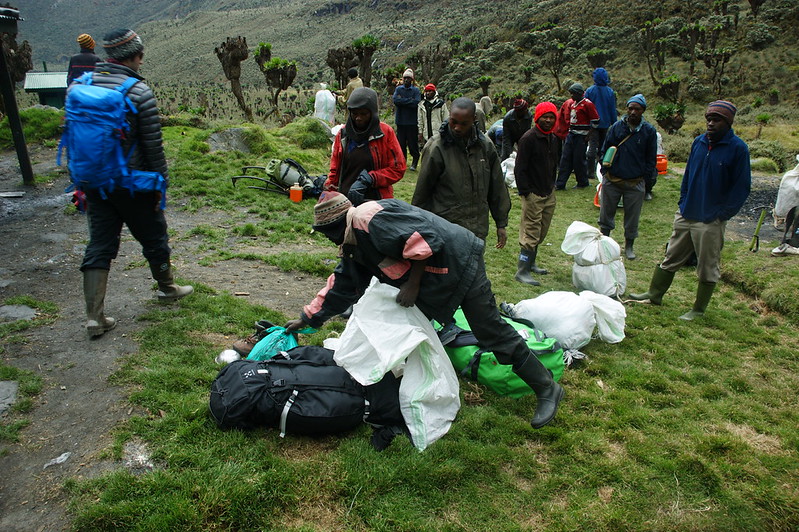
The right moment to tip is at the end of the final trekking day, once the full descent is complete and the entire team, guide, cook, and porters, is gathered together, typically at the park gate or the point where the crew formally hands over to road transport. Resist the temptation to tip on summit day itself, however emotionally powerful that moment feels; the team still has real descent responsibilities ahead of them, and a tip handed over too early can create the impression, intentional or not, that the expedition is already complete before the crew’s work actually is. Prepare your tip envelopes the evening before your final day so the moment itself can be unhurried, personal, and properly focused on the people receiving it rather than on last-minute cash counting.
Should I Tip in US Dollars or Ugandan Shillings?
Ugandan shillings are generally the more practical and more genuinely useful currency for tipping mountain staff based in and around Kasese, since exchanging small-denomination foreign currency locally involves travel, time, and exchange fees that reduce the real value of the tip before it ever reaches the recipient. US dollars are usually accepted and appreciated where offered, particularly in larger denominations, but a supply of Ugandan shilling notes in a range of denominations gives you the most flexibility and shows the most practical consideration for the people you are tipping. We recommend converting your tipping budget to shillings in Kampala or Entebbe before you travel to Kasese, since exchange rates and denomination availability are generally better there than in smaller towns near the trailhead.
Is Tipping Included in the Rwenzori Trek Price?
No. Tipping is entirely separate from your trek price and should be budgeted as an additional cost when planning your total expedition spend. Your trek fee covers park fees, staff wages, food, camping equipment, and logistics; tips are a direct, personal acknowledgement of service on top of that base cost, paid in cash to the team at the end of the trek. Any operator suggesting that tips are effectively baked into the price, or that they are unnecessary because wages are already fair, is not giving you an accurate picture of how mountain worker compensation actually functions in this region.
What Is the Difference Between Wages and Tips?
Wages are the fixed, contracted payment that a guide, cook, or porter receives from us, their employer, for leading or supporting your trek; this amount is agreed in advance and paid regardless of how the trek goes. Tips are a separate, voluntary payment made directly by you, the traveller, to recognise the quality of the service you received. The two should never be confused or treated as substitutes for one another; a fair wage is an employer’s obligation, while a tip is a traveller’s choice, and an operator that relies on tips to make up for an inadequate base wage is not treating its staff fairly, regardless of how generous individual trekkers happen to be.
What If I Cannot Afford a Large Tip?
If your budget is tight, tip within your genuine means, at or somewhat below the lower end of the suggested ranges, rather than skipping the gesture altogether or going into debt over it. A modest tip, given with real warmth and direct personal acknowledgement, is received far better than an absent one, and mountain staff generally understand that travellers arrive with different budgets. If cost is a significant concern, mention it to us when planning your trek so we can help you set realistic expectations for your specific itinerary and group size well before you reach the trailhead, rather than working it out under pressure on the final morning.
What If the Service Was Exceptional?
When a guide, cook, or porter genuinely goes beyond the ordinary demands of their role, a porter who quietly takes on extra weight for a struggling group member, a cook who produces something remarkable under difficult conditions, or a guide whose judgement on a summit day is the reason your group returned safely, additional recognition above the standard range is entirely appropriate and always noticed. There is no fixed ceiling on generosity; the ranges given throughout this guide are a floor for fair recognition, not a cap on how far you can go when someone has genuinely earned more.
What If the Service Was Poor?
If you feel a specific team member’s service was genuinely lacking, please raise it directly with your lead guide or with us before adjusting that individual’s tip significantly downward, as there is often context, illness, a personal circumstance, or an unclear instruction that explains the behavior a traveller might otherwise read as poor performance. Sharp reductions in tips without discussion prevent understanding and unfairly penalize a moment in a challenging job. Genuinely serious concerns, safety lapses, or clear negligence should be raised with us directly and will be taken seriously as a matter of both service quality and staff accountability.
How Much Should a Group Tip?
For larger groups, the most useful way to think about tipping is the total amount each role receives in absolute terms, since the lead guide’s overall workload increases only modestly with group size while the total tip pool available to them, if calculated per person, can grow substantially. The table below illustrates a representative tipping budget for a group of six trekkers on a standard seven-day summit itinerary.
Role | Daily Rate | Days | Total for Role |
Lead Guide | $8 per trekker per day | 7 | $336 (6 trekkers) |
Assistant Guide | $6 per trekker per day | 7 | $252 (6 trekkers) |
Cook | $5 per trekker per day | 7 | $210 (6 trekkers) |
Porters (6 total) | $4 per trekker per porter per day | 7 | $168 per porter |
Additional Support Staff | $4-$6 per trekker per day (where used) | 7 | Varies by role |
As this table shows, the per-trekker contribution can reasonably decrease as group size grows, while the absolute total received by each staff member remains generous and appropriate. We are always glad to help a group work through this calculation for their specific itinerary well ahead of departure.
Are Porters Paid Fairly?
Yes. Our porters receive a fair base wage, agreed and paid in full before tips are ever considered, set at a rate that reflects the physical demands of Rwenzori-specific conditions rather than a rate borrowed from a different mountain or country. Tips supplement this wage; they do not substitute for it, and no porter working on our expeditions depends on traveller generosity simply to receive a fair baseline income for their work.
Are Porter Loads Managed Responsibly?
Yes. Every porter’s load is weighed at the trailhead against an established maximum of approximately twenty to twenty-five kilograms, enforced without exception. Where a traveller’s luggage exceeds their allocated allowance, we arrange an additional porter rather than adding the excess weight to an existing load, and our guide team monitors load distribution and porter condition throughout the trek, not only at the point of departure.
Are Trekking Staff Provided with Adequate Meals?
Yes. Guides, cooks, and porters receive nutritious, calorie-adequate meals throughout the expedition, prepared with the same care and attention as meals served to travellers, because a well-fed team works more safely and sustainably on a demanding multi-day itinerary.
Where Do Guides and Porters Sleep?
Guides and porters are provided with proper tents and, where camp facilities allow, dedicated shelter separate from travellers’ accommodation but equally protective against the range’s cold, wet conditions. Sleeping arrangements are planned as carefully for the support team as they are for the clients they are supporting.
Are Staff Properly Equipped for Mountain Conditions?
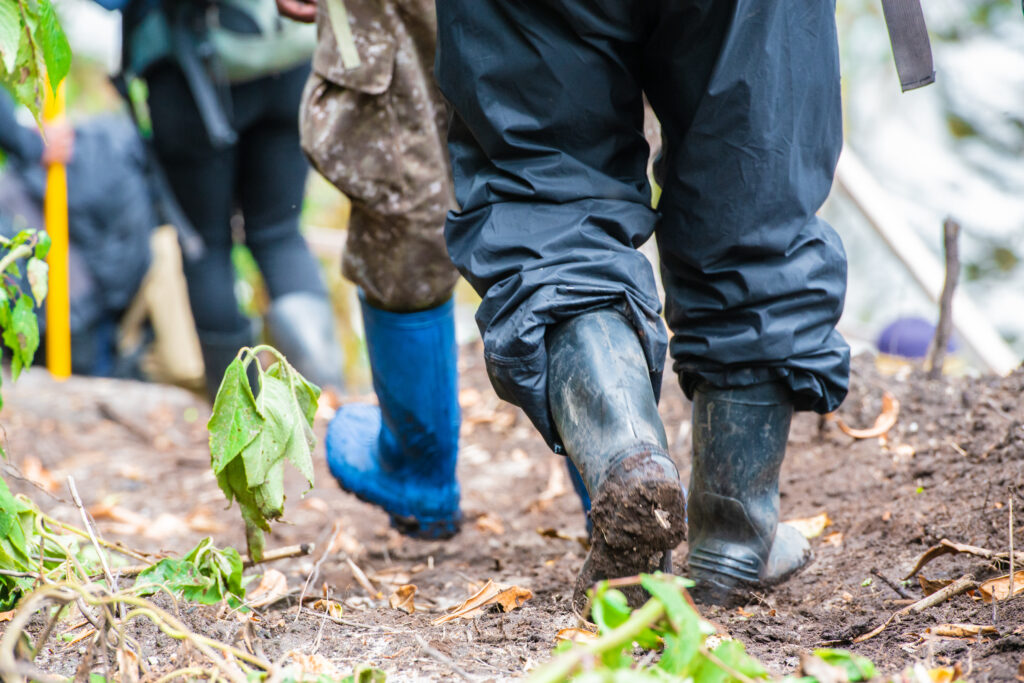
Yes. Waterproof outerwear, appropriate footwear, most commonly durable rubber boots suited to the range’s persistent mud and river crossings, and adequate sleeping equipment are provided or required as a condition of employment on every departure we operate, because equipping staff properly for the exact conditions they face is a basic safety obligation, not an optional courtesy.
What Happens If a Porter Becomes Sick or Injured?
Any porter showing signs of illness or injury is assessed immediately by the lead guide, who has first-aid training and manages the situation with the same seriousness given to a client’s health concern. Depending on severity, the action may mean adjusting that individual’s workload, arranging their descent, or activating broader emergency procedures, and a porter who cannot continue for health reasons is never left without support or fair treatment as a result.
How Are Group Tips Divided?
If a group chooses pooled tipping instead of individual distribution, the lead guide divides the total amount among the team based on role, seniority, and contribution, following the general proportions set out in the per-role guidance on this page. We ask every lead guide to communicate this distribution honestly and are glad to confirm the general approach with any traveller who asks before handing over a pooled tip, since transparency here is precisely the kind of detail we believe should never be left vague.
How Rwenzori Trekking Expeditions Handles Tipping
We treat tipping as a matter of transparency, not persuasion. Every traveller who books with us receives clear, written tipping guidance well before departure, broken down by role and adjusted for their specific itinerary and group size, so that nothing about the final morning’s tip ceremony comes as a surprise. We never pool tips without a traveller’s knowledge, we never suggest that tips are mandatory beyond the genuine cultural expectation described throughout this guide, and we never use tipping guidance as a way to quietly compensate for wages that should already be fair. Our pre-departure briefing includes a specific conversation about tipping logistics, recommended cash preparation, and an introduction to your crew by name so that by the time you reach the trailhead, this is one detail you no longer need to think about, only to enjoy.
Rwenzori Tipping Checklist
Check | Why It Matters |
Tip budget calculated against your specific itinerary and group size | Avoids under-preparing or over-guessing on the final morning |
Cash was converted to Ugandan shillings before reaching Kasese. | Ensures the tip is immediately usable by mountain staff |
Small and medium denominations sourced in advance | Allows precise, dignified individual amounts without needing change |
Envelopes or labelled amounts prepared the evening before your final day | Keeps the tip ceremony unhurried and personal |
Crew names confirmed with your guide in advance | Allows genuine, personal acknowledgement at the moment of tipping |
Decision made on individual vs. pooled tipping | Ensures the distribution method suits your group size and preferences |