Rwenzori Mountains National Park Entrance fees costs $35 per person per day for Non Foreign Residents, $25 Usd for Foreign Residents, 15000 for East African residents, foreign children (15 – 5) year at $5 USD, and free for children under 5 years old.
Detailed Entrance fees and permits for Rwenzori Mountains National Park: $35 per day UWA fees, peak charges, trail costs, and how to book.
A distinctive silence envelops you at the Nyakalengija trailhead, wet, old, and infused with the aroma of highland forest, signaling that you are about to undertake an extraordinary mountain experience. The Rwenzori Mountains, renowned as the Mountains of the Moon, have captivated adventurers since Ptolemy hypothesized about snow-covered equatorial peaks supplying the Nile’s headwaters. The Rwenzori Mountains, ascending steeply from Uganda’s western Rift Valley between clouds and glaciers, need respect, preparedness, and, most importantly, knowledge from all who enter their domain.
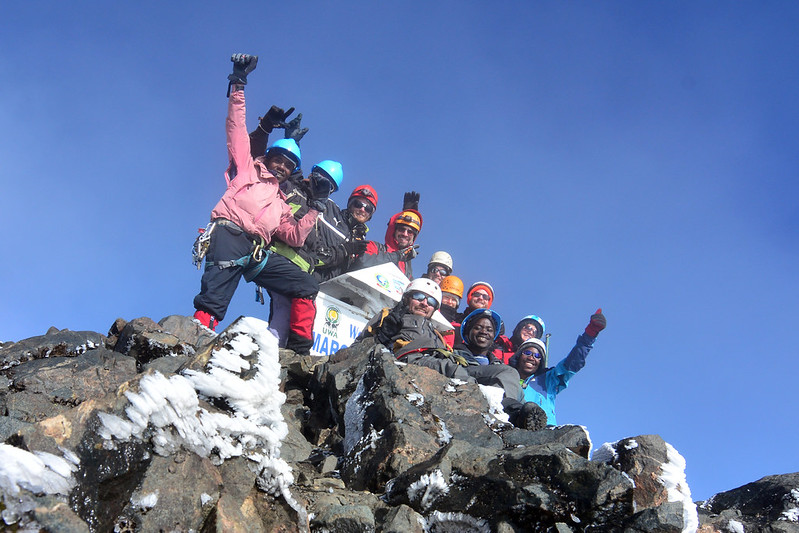
That understanding commences far in advance of strapping your footwear. The process commences with meticulous planning, encompassing a comprehensive awareness of the prerequisites for accessing this UNESCO World Heritage Site, the associated costs, and the significance of each dollar spent at the park entrance as a contribution to a broader initiative beyond your personal experience. This article aims to address all inquiries regarding Rwenzori Park entrance fees and permissions, even those you may not have considered. Regardless of whether you intend to undertake the complete Central Circuit Trail to Margherita Peak, navigate the remote Kilembe Trail, or go on an extensive multi-peak Rwenzori Mountains Expedition encompassing Mount Stanley, Mount Speke, and Mount Baker, knowing the cost structure is a key initial step.
Is a permit required for trekking in the Rwenzori?
This is undoubtedly the first question most foreign hikers have, and its response is one of the things that truly sets Rwenzori apart from many other popular mountain destinations in Africa. In contrast to gorilla trekking in Bwindi Impenetrable Forest or chimpanzee tracking in Kibale, which necessitate advance permits that are limited in availability and often sold out months ahead, trekking the Rwenzori Mountains does not require a distinct, reservable hiking permit in conventional terms. You will not face a permit lottery, a yearly quota system, or the possibility of landing in Uganda only to find that your mountain slot has already been taken.
The Rwenzori employs a daily fee for park entry, managed by the Uganda Wildlife Authority (UWA), the organization responsible for the conservation and sustainable administration of Uganda’s national parks and wildlife. All trekkers entering Rwenzori Mountains National Park are required to pay a charge for each day spent within the park’s boundaries. This fee serves as the principal means by which UWA regulates visitor access, generates funds for conservation efforts, and supports the welfare of the traditional Bakonzo populations, whose traditional ties to these mountains extend through centuries of history and belief.
This is important for you as a trekker because it means you don’t have to book months in advance just to get a ticket slot. It is essential to have your finances sorted prior to arriving at the gate, as the total cost of your Rwenzori trekking Safari consists of daily park entrance fees for the entire duration of your Rwenzori Expedition. During a 7-day Rwenzori summit adventure, the daily costs significantly contribute to your overall budget and should be meticulously considered from the beginning.
The Uganda Wildlife Authority implements a graded pricing structure that differentiates among three types of visitors: foreign non-residents, foreign residents, and East African citizens. This is a common procedure throughout Uganda’s national parks, and the Rwenzori was particularly exempt from the broad UWA tariff hikes that impacted numerous other Ugandan parks in recent years, rendering it one of the more affordable major mountain destinations on the continent concerning Park entrance fees relative to experience.

Non-Resident Foreigners
The appropriate cost of park entrance fees for most foreign trekkers from the United States, the United Kingdom, Europe, Australia, Asia, and other regions is USD $35 per person per day. This is the charge applicable for each calendar day spent within the park, starting from the day of entry to the day of leaving. During a typical 9-day summit Rwenzori trekking along the Kilembe Trail, the park entrance costs total USD $315, exclusive of the basic trekking cost provided by your operator. The 7-day Central Circuit Rwenzori trekking incurs park fees amounting to USD $245. These statistics are not trivial; they constitute a substantial and budgeted line item, and any credible operator will disclose them fully in their pricing structure, as we do in all our Rwenzori trekking packages.
Foreign Residents
A discounted charge of USD $25 per person per day is paid by foreign citizens and expatriates who are lawfully residents of Uganda. This category necessitates confirmation of residency and is authenticated at the park entrance. If you reside in Kampala or elsewhere in Uganda on a long-term visa or work permit, this price is applicable to you and signifies a substantial savings on extended expeditions.
Citizens of East Africa
Citizens of Uganda and other East African Community member nations including Rwanda, Kenya, Tanzania are charged a fee of UGX 15,000 per individual each day in local currency. East African trekkers have progressively recognized the Rwenzori as a significant mountaineering destination nearby, and this graduated pricing structure demonstrates UWA’s overarching dedication to rendering Uganda’s remarkable natural heritage accessible to both regional and international tourists.
Children/Minors | Rwenzori Park Fees & Permits
Children are charged a substantially reduced fee of USD $5 per individual, irrespective of their resident or non-resident status. The Rwenzori is unsuitable for very young children due to the physical demands of even the lower-elevation trails; however, for families with older, physically adept teenagers, this rate renders family trekking at the park’s lower reaches, including the splendid Mahoma Loop, truly attainable.
Methods and Locations for Payment of Park Fees
UWA has substantially upgraded its payment infrastructure recently due to the implementation of the National Payment System Act, which required a shift to a cashless system throughout Uganda’s national parks. Entrance fees for the Rwenzori National Park are now payable through mobile money or credit card at the entry gate; trekkers should not anticipate paying solely in cash. This is especially significant for international visitors who may possess US dollar notes: although US dollars continue to serve as the operational currency for all fee transactions and trekking quotations in the Rwenzori, the cashless payment mandate necessitates that the actual transaction at the gate is conducted electronically.
Registered operators, such as Rwenzori Trekking Expeditions, often manage the mechanics of fee payment within the logistics of expeditions for trekkers. Fees for the Central Circuit Trail are collected at the Nyakalengija park gate, the conventional access point located at the northern extremity of the Rwenzori range. While Park Entrance fees on the Kilembe trail, is managed at UWA rangers’ post is located about 2.2 kilometers from the Trekkers’ Hostel at Kyanjuki in Kilembe, at an altitude of 1,727 meters, where trekkers receive a briefing on park regulations prior to continuing their ascent. Your guide will manage the gate procedures; but, it is essential for you to comprehend the nature of your payment and its rationale, as this awareness links you to the conservation initiative in which you are engaged merely by your presence.
It is essential to clarify that Rwenzori Mountains National Park Entrance fees are submitted directly to UWA, rather than to the trekking operator. The operator’s package cost includes: services, guides, porters, cooks, equipment, hut housing, and operational costs. The admission fee for UWA park is a distinct governmental levy, payable at the gate, and it is allocated directly to Uganda’s national conservation budget. Certain operators incorporate these fees into their package price for convenience, while others itemize them separately. Consistently verify with your operator which model is applicable to avoid any unforeseen issues at the gate on the first day.
Extra Charges: Summit Ascents and Prolonged Accommodations
The standard admission cost of $35 per day permits access to the park; however, the Rwenzori’s remarkable multi-peak terrain necessitates comprehension of supplementary pricing categories for dedicated mountaineers.
Additional Peak Charges
The six prominent peaks of the Rwenzori—Mount Stanley, Mount Speke, Mount Baker, Mount Emin, Mount Gessi, and Mount Luigi di Savoia—each present a unique summit objective, characterized by individual approaches and challenges. Upon committing to a major peak during your expedition, any subsequent peak you desire to pursue incurs an additional fee of USD $100 for each extra peak. This price is distinct from the daily park entrance fee and accounts for the enhanced utilization of park resources, guide proficiency, and infrastructure associated with multi-peak crossings.
Trekkers undertaking an extensive expedition encompassing multiple summits, such as linking Margherita on Mount Stanley with Vittorio Emanuele on Mount Speke and Edward Peak on Mount Baker, should account for the additional peak fees in their overall budget from the outset of their planning. We welcome you to explore the framework of our multi-peak expedition itineraries, crafted to provide optimal transparency and predictability in costs of Rwenzori Trekking.
Additional Day Fees
Should your Rwenzori Trekking Expedition be prolonged beyond its initially scheduled duration, whether due to meteorological conditions, acclimatization requirements, or the frequent inclination to linger in these remarkable high-altitude terrains, each supplementary day in the park beyond the original itinerary incurs a charge of USD $150 per day. This rate exceeds the regular daily entry fee and signifies the unexpected nature of the extended stay. This is a simple practical lesson: plan for emergency days from the beginning of your adventure. The Rwenzori mountains region records one of the highest average annual rainfall totals globally, exceeding three meters per year, and the weather can necessitate rest days for even the most athletic and seasoned trekkers. A planned extra day is consistently less expensive than an unanticipated prolongation.
What’s Included in the Rwenzori Park Fee
It is important to pause and comprehend what your park entrance fee specifically finances, as this is not a mere theoretical conservation charge. It is a fee that directly supports the mountain you are exploring. Rwenzori Mountains National Park encompasses over 386 square miles of highly biologically diverse and ecologically delicate landscape in Africa. The park’s infrastructure, including its maintained trail network, manned huts and campgrounds, ranger presence, anti-poaching initiatives, and care of sacred Bakonzo cultural sites, is partially supported by the cash generated at the park entrance.
The glaciers of the Rwenzori are decreasing. This claim is not an exaggeration but a substantiated scientific fact: the ice fields that contributed to the mythological significance of the Mountains of the Moon have significantly decreased over the last century, and the rate of loss is intensifying. The UWA is tasked with monitoring and documenting environmental alterations, preserving the park’s distinctive flora and fauna, including endemic species of the Albertine Rift, its 217 bird species, and its colossal lobelias, groundsels, and heathers, which are unparalleled globally in size, while also safeguarding the mountain for future generations. Your park entry fee is, in the most literal sense, an investment in that endeavor.
The UWA framework also governs the management and care of the mountain’s eighteen sacred Konzo sites, which are designated, documented, and safeguarded as places of worship inside the park’s boundaries. The Bakonzo people do not perceive their connection with the Rwenzori, where the summits are the abode of their primary deity, Kitasamba, whose name is often prohibited from being uttered on the mountain, as a tourism commodity. The park management framework aims to respect the living cultural reality. By paying your entry fee, you are, albeit in a little yet significant manner, engaging in that commemoration.
Understanding the Total Cost of a Rwenzori Trek.
The park entrance fee constitutes one element of a multifaceted cost structure, and dedicated trekkers greatly benefit from comprehending each element thoroughly prior to finalizing a departure date. A reputable operator such as Rwenzori Trekking Expeditions delineates the overall cost of the Rwenzori excursion into several distinct categories.
The Operator Trek Charge | Rwenzori Park Fees & Permits
The Operator Trek Fee encompasses the primary payment made to the trekking company, which covers all essentials for the expedition: seasoned mountain guides; an adequate number of porters (typically one per hiker, with the option for additional support); a chef responsible for meal preparation; all meals throughout the trek; accommodations in the park’s huts or camps; required climbing equipment such as crampons, ice axes, rubber boots, and harnesses for glacier ascents; along with expenses associated with maintaining a licensed operation within the national park.
The Entrance Fees & Permits for UWA Park – Rwenzori National Park
The Uganda Wildlife Authority Park Entrance Fee is a daily charge of $35 USD, as detailed in this page, payable directly to the Uganda Wildlife Authority at the park entrance. The entire cost for a 7-day Central Circuit hike amounts to USD $245. During a ten-day expedition with aspirations to conquer multiple peaks, the cost approaches or surpasses USD $350, with supplementary peak fees added.
Trekkers lacking specialized gear, especially technical summit equipment such as crampons, ice axes, and suitable high-altitude boots, can rent equipment at the operator’s base office. The expense is supplementary to the trek fee but affordable, and it alleviates the logistical challenges of hauling sophisticated mountain gear via international flights. Our gear and equipment guide offers a comprehensive inventory of necessary items to bring and those available for local rental.
Tipping for Porters and Guides
This is not an official cost; rather, it constitutes an ethical commitment that dedicated trekkers incorporate into their budget. The porters and guides of the Rwenzori constitute the mountain’s unrecognized infrastructure. They carry huge loads over rough terrain that would be hard for most high-altitude hikers. They know every change in the weather, every shortcut that they can take when the route calls for it, and every camp where the stove flame will fight to fill the room. Their expertise is comprehensive, and their patience is exceptional. The conventional tipping ranges suggested by operators significantly augment their income and directly circulate inside the local Bakonzo economy. Allocate funds for it and contribute lavishly.
Trail-by-Trail Fee Context – Rwenzori Park Fees & Permits
The cost structure is applicable to all three primary trail systems in the Rwenzori; nonetheless, it is beneficial to examine how the fees correlate with the unique duration and characteristics of each route.
The Central Circuit Trail Of Rwenzori
The Rwenzori Central Circuit trail/route, is the traditional route of the Rwenzori Mountains, which starts at Nyakalengija and goes around the entire high Rwenzori with access to all six major Peaks of Rwenzori Mountains. The journey to Margherita Peak can be accomplished in as little as seven days, while an eight or nine-day duration facilitates a more enriching experience and improved acclimatization. The park entrance price for a typical seven-day circuit is USD $245 at a rate of $35 per day.
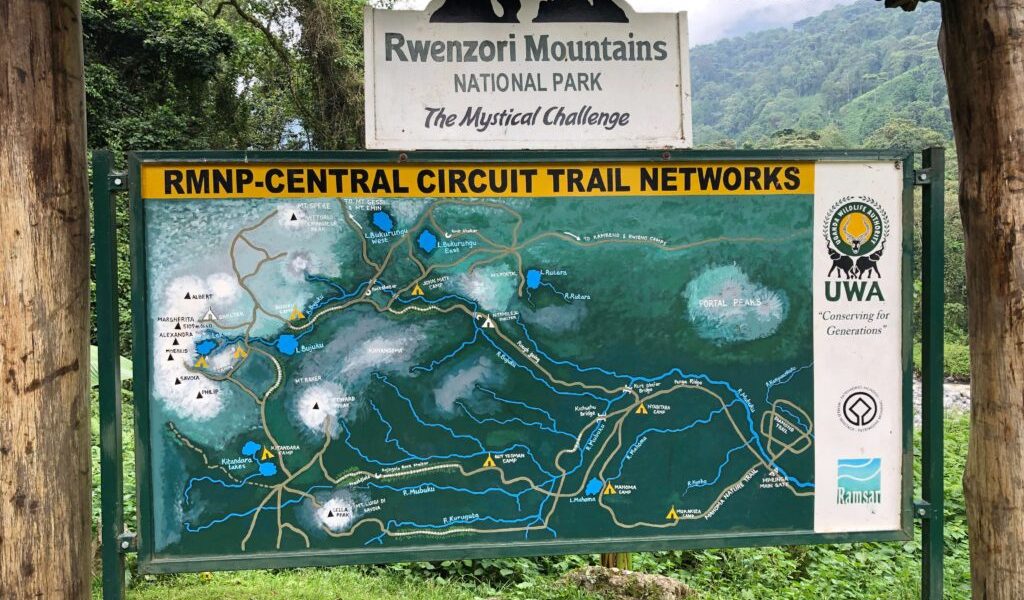
The Central Circuit delineates a route that traverses the diverse ecosystems of the Rwenzori, commencing in the dense rainforest at the base, progressing through bamboo and heather zones, and culminating at the distinctive high-altitude plateau and glacial summits over 4,500 meters.
The Kilembe Trail | Rwenzori National Park Fees
The Kilembe Trail, rising from the copper-mining town of Kilembe on the southern route, has been established as a unique and often more striking access to the high Rwenzori. It traverses a terrain of remarkable natural diversity, passing through nine lakes in a high valley unparalleled in Africa. An 8-Day Kilembe Trail Rwenzori Mountains trekking expedition to Margherita Peak requires seven nights of park entrance fees amounting to USD $245, in addition to the operator’s trekking cost. A 10-day Rwenzori trekking expedion to various summits, including: Mount Speke, Mount Stanley, Mount Baker & Weiseman, will entail fees of USD $315 for park access, in addition to the requisite peak prices. The Kilembe Trail’s confluence of biological diversity, striking landscapes, and comparative seclusion relative to the Central Circuit trail renders it one of the most gratifying mountain treks on the continent for those prepared to dedicate the time.
The Bukurungu Trail Route
The Bukurungu Trail heads up from Kitumba via a secluded rarely traveled route, and is mostly used for expeditions aiming at Mount Gessi and the western summits. This route is the least used of the three major Rwenzori trail routes and possesses a distinctive wilderness quality that attracts trekkers in search of ultimate solitude and difficulty. Fees are applied uniformly on a daily basis, and the normally extended approach time of the route results in a total park fee contribution that is generally on the higher end of the regular range. For individuals who have already traversed the Central Circuit Trail and Kilembe Trail and seek to see an aspect of the Rwenzori that is mostly unexplored by tourists, the Bukurungu presents an exceptional endeavor.
The Mahoma Loop Trail
The Mahoma Loop is the most accessible circuit in the Rwenzori, a circular path that can be traversed in two to three days without ascending to high alpine zones, meandering through montane forest and providing exceptional birdwatching opportunities as well as a compelling introduction to the mountain’s lower-elevation ecosystem. The Mahoma Loop, priced at $35 each day for non-residents, results in a total of USD $70 in park admission fees for two days, rendering it one of the most economical methods to visit a UNESCO World Heritage Site of this significance. For trekkers contemplating longer Rwenzori treks, it serves as an exceptional reconnaissance opportunity to evaluate the mountain’s characteristics and one’s fitness prior to undertaking a whole summit attempt.
Process of Reserving Your rwenzori Trek and Paying Fees
It’s one thing to figure out the cost structure; it’s quite another to navigate the actual reservation procedure, which is where hiring a trained operator makes a huge practical difference. At Rwenzori Trekking Expeditions, the procedure is as follows.
You start by getting in touch with us and letting us know the dates you have in mind, the trail you have selected, your goals for which peak(s) you will be summiting, and the size of your group. We offer a detailed, listed cost breakdown that distinctly separates our operator package fee from the Uganda Wildlife Authority park entrance costs relevant to your particular itinerary. Upon confirmation and deposit payment, we manage all pre-expedition logistics, encompassing coordination with Uganda Wildlife Authority, allocation of your guiding team, getting ready with your equipment, and planning of your trailhead transportation.
Upon departure, you will reach at the Nyakalengija park gate for the Central Circuit trail, or the Kilembe rangers’ post for the Kilembe Trail, where your guides handle the gate procedures with Uganda Wildlife Authority rangers. The entrance fee is processed here, and you receive a briefing on park laws prior to the commencement of the journey. Park fees may be paid at this juncture via the UWA cashless payment system (credit card or mobile money) or, in certain instances, incorporated into a pre-arranged operator payment. Kindly verify the precise mechanics with us upon booking.
It is important to note that all trekking expenses, including the operator fee and park admission fees, are non-refundable once the expedition has begun. Weather-related delays or prolonged stays result in the extra daily charges outlined previously. Comprehensive travel insurance encompassing trip interruption, medical evacuation, and high-altitude rescue is important for the Rwenzori; it is a fundamental aspect of prudent expedition planning, and we will address these issues during our pre-departure meeting.
The Rwenzori Shows Extraordinary Significance
Pause momentarily at Elena Hut, situated at 4,541 meters, on a clear morning. Observe the sunrise dissipate the mist over the Stanley Plateau, unveiling Margherita Peak suspended in a pale sky, and contemplate the value of this moment. The Rwenzori, when evaluated solely on park entrance prices relative to experiential value, is among the most underestimated prominent mountain locations globally.
Contemplate the contrast. Kilimanjaro, which is technically less complex, environmentally less diversified, and significantly more congested, imposes Park Entrance Fee prices that far exceed those of the Rwenzori. The cost of a regular Kilimanjaro summit permit is several hundred dollars, excluding any expenses for guides or crew. The Rwenzori demands a daily entry fee of $35 for park access, encompassing comprehensive guiding and porter services. It also offers summit experiences that are equally elevated but provide greater diversity and aesthetic appeal, all at a cost that genuinely represents the worth of an expedition.
There aren’t many tourists who visit the Mountains of the Moon. They represent an authentic wilderness, an atmosphere where the path may vanish into a thigh-deep bog, where heather trees reach heights of five meters and have moss as if it were an overcoat, where the colossal groundsel forests of the Bigo Bog plateau resemble a surreal vision, and where the remaining summit glacier emanates a frigid, primordial luminescence, unrelated to the equatorial sun radiating above. The experience significantly exceeds the cost of admission. Basically, the entry fee is just the cost of getting into Rwenzori Mountains National Park.
Frequently Asked Questions about the Rwenzori Park Entrance Fees & Permits
Do I need a special permit to trek in Rwenzori Mountains National Park?
There is no distinct trekking permit for the Rwenzori Mountains, in contrast to the gorilla trekking permits mandated in Bwindi Impenetrable Forest and Mgahinga National Park. There is no requirement to reserve a specific permit slot months in advance or to be concerned about restricted daily quotas for the mountain. Entry to Rwenzori Mountains National Park is regulated by a daily charge system managed by the Uganda Wildlife Authority. Each trekker incurs a cost of USD $35 per day (for international non-residents) for every day spent within the park, payable at the park entrance on the day 1 of the trek. Advance permit booking is unnecessary; nonetheless, it is highly advisable to arrange your entire trip through a licensed operator well in advance to ensure guide availability, especially during peak trekking seasons.
What is the entrance charge for Rwenzori Mountains National Park?
The Uganda Wildlife Authority’s current Park entry fee for Rwenzori Mountains National Park is USD $35 per person per day for foreign non-residents, which pertains to the bulk of international visitors from the US, UK, Europe, Australia, and Asia. Foreign residents in Uganda incur a fee of USD $25 per individual per day, whereas East African citizens are charged UGX 150,000 per individual per day. Children are billed at a discounted cost of USD $5 per individual. The costs are payable at the park entrance and are supplementary to any charges for trek packages provided by operators.
How are the park fees paid, and can I pay in cash?
The Uganda Wildlife Authority has instituted a cashless payment system throughout its national parks in accordance with the National Payment System Act. Entrance costs to the park can be settled using a credit card or mobile money at the gate. Trekkers should not depend exclusively on cash US dollars for gate transactions, despite the fees being advertised and computed in US dollars. Your trekking operator will inform you of the exact payment procedures relevant to your entry point. Nyakalengija serves as the entry point for the Central Circuit, while the Kilembe trail rangers’ post facilitates access to the Kilembe Trail, often overseeing gate payment as an aspect of expedition logistics.
What does the park entrance price cover?
The daily park entry fee for Rwenzori Mountains National Park includes your permitted presence for that day, access to the trail network and park amenities, including manned huts, the assistance of UWA park rangers at critical locations along the route, and a donation to the conservation fund that supports ecosystem management, anti-poaching initiatives, trail conservation, and the safeguarding of the mountain’s 18 revered Bakonzo cultural sites. The services of your private mountain guide, porters, chef, food, equipment, and accommodation in the mountain huts are not included; these are addressed separately through your operator’s package charge.
What is the total cost of park fees for a complete Rwenzori trek to Margherita Peak?
The total cost of park entry charge is based upon the particular path and the length of your adventure. A foreign non-resident incurs a total of USD $245 in park fees for a 7-day Central Circuit hike (7 days × $35). The park cost for an 8-day Kilembe Trail trek to Margherita Peak amounts to USD $280 (8 days × $35). During a 10-day multi-peak trip, the park fees amount to USD $350, with an extra USD $100 for each additional peak beyond the original target. These fees are independent of the operator’s fundamental trek fee and should be allocated as a separate line item in the budget. Our expedition pricing page displays all fees with complete transparency.
Is there a charge for climbing specific peaks in the Rwenzori range?
In addition to the usual daily park entrance cost, there is an extra charge of USD $100 for each additional peak hiked beyond your original summit objective of your excursion. Trekkers organizing multi-peak excursions, such as connecting Margherita on Mount Stanley with summits on Mount Speke and Mount Baker during a prolonged Rwenzori trekking expedition, must account for these extra peak costs in the overall expedition budget from the planning phase. An extra price of USD $150 per day will be charged for any unanticipated extension of your stay in the park beyond the initially agreed time frame.
Is travel insurance necessary for a Rwenzori trek?
Comprehensive travel insurance is not merely recommended for a Rwenzori excursion; it is a fundamental requirement of prudent planning. The mountain’s elevation poses a risk of altitude sickness, the weather can be severe and may prolong your ascent, and the route to the peak includes icy sections that require specialized equipment and present the typical hazards associated with high-altitude climbing. Your insurance must specifically cover trekking and hiking at high altitudes, medical emergencies, and having to cut short your Rwenzori trek. Verify with your insurance that the maximum altitude of your intended excursion, reaching 5,109 meters on Margherita Peak, falls within the policy’s covered elevation limits.
What is the best time of year to trek the Rwenzori, and does it affect fees?
Park entrance prices are fixed throughout the year and do not fluctuate with the seasons. The Rwenzori features two principal seasons that significantly influence trekking conditions: the drier months from December to February and June to August generally provide clearer skies and perfect summit conditions, although the region’s notable rainfall ensures that no month is consistently dry. The rainy seasons, from March to May and September to November, result in increased rainfall that complicates routes and heightens the likelihood of necessitating extra contingency days, incurring an additional price of USD $150 per day. Scheduling your journey during the dry periods mitigates that risk; nonetheless, the mountain’s distinctive features, such the moss, mist, and unusual flora diversity, are often most pronounced in the wet conditions.
What is the recommended advance booking period for a Rwenzori trek?
Although there is no permit quota system necessitating months of prior reservations as seen in gorilla trekking, it is highly advisable to schedule your Rwenzori trekking safari at least three to six months in advance, especially if you aim to climb during the dry high seasons. This provides your operator with the opportunity to verify guide availability, arrange your comprehensive logistical package, offer guidance on pre-trek fitness preparation and gear procurement, and ensure that your Rwenzori excursion insurance, flights, and in-country logistics are coordinated. Last-minute reservations may occasionally be feasible, although they restrict your choices and heighten the likelihood of complications. Get in touch with us in advance, and we will arrange an adventure that fits your schedule, level of fitness, and objectives while treating the Mountains of the Moon with the respect they deserve.
Begin Your Rwenzori Expedition
The Mountains of the Moon don’t make an announcement. They conceal themselves within clouds, they descend with equatorial precipitation, they appear unexpectedly in a gap of brilliant sky between storms, and then they disappear once again, perhaps assessing your focus. To traverse their domain is to immerse oneself in a realm that appears authentically pre-human in its magnitude and peculiarity, a domain of primordial ice and extraterrestrial vegetation, accompanied by a quiet so profound that the only one audible sound is your breath, laboring slightly at elevation, vibrant. The daily charge is $35. The mountain is irreplaceable.
If you are committed to a Rwenzori trek, whether your objective is to reach the summit of Margherita Peak at 5,109 meters, traverse the Central Circuit, explore the nine lakes of the Kilembe Valley, or engage in an immersive experience within one of Africa’s most remarkable and least-explored wilderness regions, we are prepared to assist you in planning every detail. Our staff has dedicated years to these trails, enduring various weather conditions and seasons, and we use that experiential knowledge to every adventure we create.
Contact Rwenzori Trekking Expeditions today to commence preparing your excursion. Provide your dates, aspirations, skill level, and group size, and we will respond with a customized, openly priced proposal encompassing all expenses from the park entrance to the top glacier and return.
The Mountains of the Moon await. They have been waiting an extended period and exhibit remarkable patience.